- Paste
- Wipe
- Wipe
How to clean oven door glass, including between the panes
Clean oven door glass with a bicarbonate of soda paste and a plastic scraper, use oven cleaner safely, and reach the grease trapped between the panes.

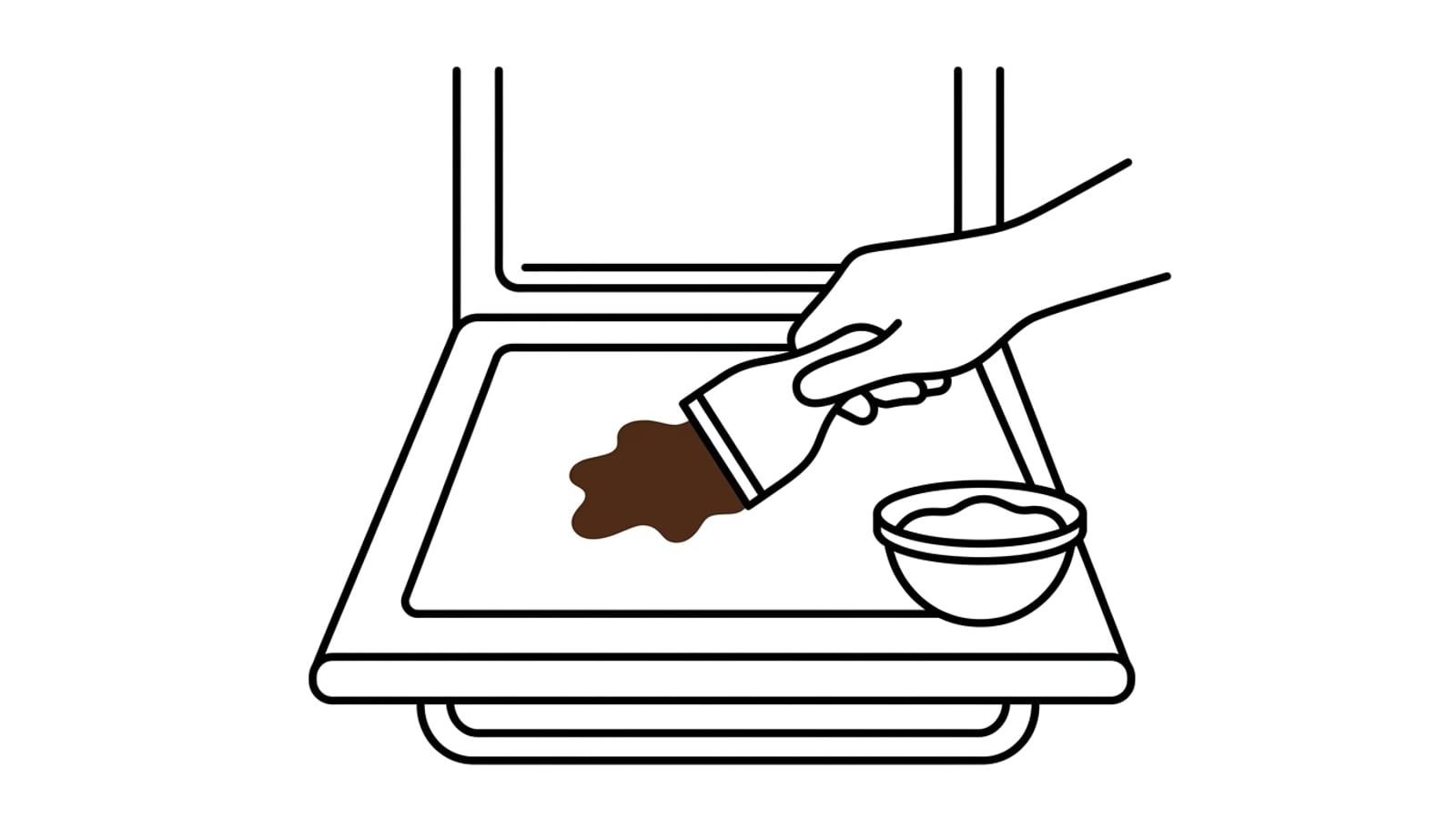
Spread a paste of bicarbonate of soda and water over the cold inside glass, leave it for 20 minutes, then wipe it off and ease brown spots away with a plastic scraper held flat, keeping oven cleaner for the marks that stay. Grease between the panes comes out only when the inner glass does, so take the door apart only if your oven’s manual shows how, with the hinges locked first.
For most oven doors, bicarbonate of soda does the job. Spread a paste of it over the inside glass while the oven is cold, leave it for 20 minutes, then wipe it off and ease any brown spots away with a plastic scraper held flat. Oven cleaner is for the marks that stay, and only one whose label says it is for oven glass. Grease between the panes comes out only when the inner glass does, and your oven’s manual decides whether that is a job you can do.
Before you start: a cold oven and the manual
Clean the glass only when the oven is off and completely cold. Warm glass dries the paste before it can work, and a sudden change of temperature can crack a pane.
Find the manual, or look the model up on the maker’s website; the model number is usually on a label around the oven opening. The manual says whether the door comes off, whether the inner glass lifts out, and what must not touch the glass. Makers differ: Bosch’s guide to cleaning oven glass says not to use a glass scraper or glass cleaner, while Neff’s own guide cleans its panes with glass cleaner.
| Part of the door | Use | Never |
|---|---|---|
| Inside glass | Bicarbonate of soda paste and a plastic scraper; oven cleaner made for glass | A metal scraper, wire wool or a scourer |
| Between the panes | Warm soapy water, with the glass out as the manual shows | A coat hanger pushed through the vents |
| Outside glass | Warm water and a drop of washing-up liquid | Oven cleaner or anything abrasive |
| Door seal | A cloth wrung out in warm soapy water, used gently | Oven cleaner, pulling at it or soaking it |
The inside glass: a bicarbonate of soda paste
- Open the door fully and wipe off crumbs and loose grease with a damp cloth.
- Mix a few spoonfuls of bicarbonate of soda with just enough water for a paste about as thick as toothpaste.
- Wearing rubber gloves, spread it over the inside glass, thickest on the brown patches. Keep it off the rubber door seal, where it is hard to get out.
- Leave it for at least 20 minutes, or an hour or more for heavy grease, misting it with water if it starts to dry.
- Wipe it off with a damp cloth, rinsing it often, and ease softened spots away with a plastic scraper or an old plastic card held almost flat to the glass.
- Wipe again with a cloth wrung out in clean water until no white film is left, then dry the glass.
Tip: a white haze once the glass has dried is bicarbonate left behind, not a scratch. Wipe it again with a cloth wrung out in clean water, then buff it dry.
Baked-on brown marks: patience, then oven cleaner
Brown marks are fat the heat has baked into a hard layer, and they come off a layer at a time. Put the paste back on for an hour or two, keep it damp, and work at the marks with the scraper held flat on the wet glass. It may take two or three rounds.
Never use a razor-blade hob scraper, a knife, wire wool, a scouring pad or scouring powder on the glass. Which? warns that any kind of scourer can leave tiny scratches in oven door glass, and scratches leave it vulnerable to shattering. If your manual allows a mildly abrasive cleaner, the next step up is a cream oven paste made for toughened glass, such as the oven paste in our Cupboard: patch test it on a corner and use it with a soft sponge and light pressure.
Using oven cleaner safely
If marks remain, use an oven cleaner, after checking that its label says it is for oven glass (not every one is) and that your manual allows it. AEG, for one, says an oven cleaner is fine on its door glass for particularly stubborn food.
- With the oven off and cold, put on rubber gloves and eye protection, open a window, and keep children and pets out of the kitchen.
- Patch test it on a corner of the glass, then put it on the glass and nowhere else. Spray cleaners go onto a cloth first and are wiped on, so the mist stays off the rest of the oven.
- Keep it off the door seal, the hinges, the frame and handle, painted or aluminium trim, the controls and any catalytic liners.
- Leave it only as long as the label says.
- Wipe it off with a damp cloth, rinsing it often, until none is left, then wipe with clean water and dry.
Never mix oven cleaner with another product, or put a second product on before the first is rinsed away.
Between the panes: what your oven allows
The panes are spaced apart to keep the outside of the door cool. Steam and fine drops of fat get carried into the gap, and cleaning liquid runs in through the slots in the door, leaving a film you can’t reach from either side.
Many ovens are built so the inner glass lifts out for cleaning, as AEG says of its own; others don’t come apart at all. Your manual says which you have, and its steps come before anything here.
Taking the door off
- With the oven cold, lay a folded towel on a flat surface, ready for the door.
- Open the door fully and open the locking levers on both hinges as the manual shows. Bosch says to open them fully and keep your fingers well away from the hinges, which are sprung.
- Close the door partway, to the angle the manual gives, then lift it up and out with both hands.
- Lay it front side down on the towel.
Taking out the inner glass
- Take off the trim along the top of the door, as the manual shows, to free the glass.
- Lift the panes out one at a time, holding them by their faces, without knocking the edges.
- Note the order and which way round each pane goes, or take a photo: some have a coated side, and Beko, for one, says the shiny side of the last pane faces into the oven.
- Wash each pane in warm soapy water, using the paste on baked-on marks, and rinse it.
- Dry every pane completely with a lint-free cloth, because a drip left inside is sealed in once the door is back together.
- Refit the panes in the same order and way round, then the trim. Hang the door and close both hinge levers before you shut it: Neff warns that if the hinge locks aren’t properly closed, the door may come away.
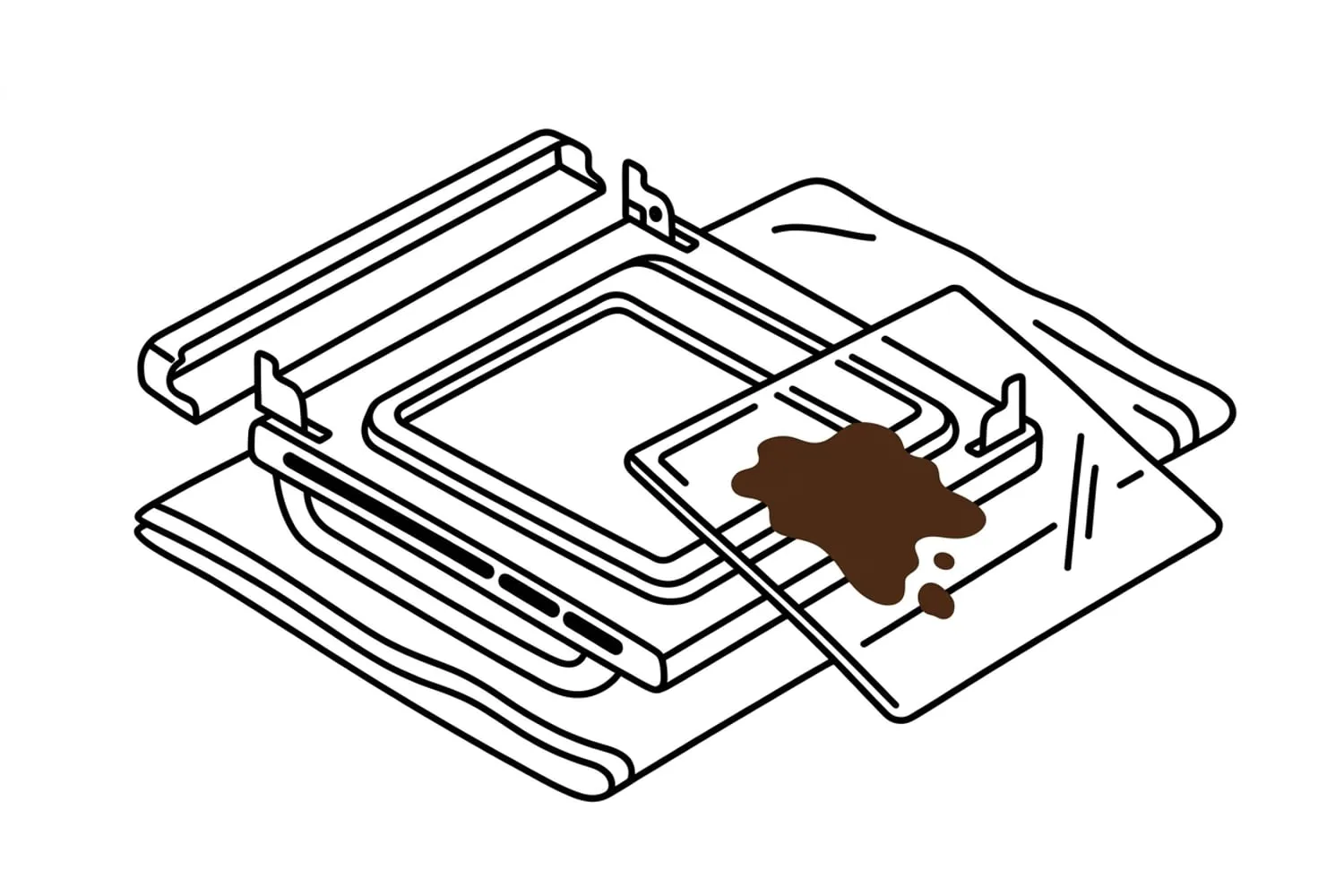
If the manual doesn’t show how to take the glass out, ask the maker’s service team rather than forcing the door. Skip the wire coat hanger and cloth some guides push through the vents: the metal can scratch the glass, and the damp cloth leaves streaks out of reach. If a pane is chipped or cracked, stop using the oven until it has been replaced.
The outside glass, the frame and the door seal
Wash the outside glass with a soft cloth wrung out in warm water and a drop of washing-up liquid, wipe it with clean water and buff it dry. Use glass cleaner only if your manual allows it, sprayed onto the cloth so nothing runs into the controls or the vents. Wipe a stainless steel frame and handle along the grain with the soapy cloth and dry them; keep oven cleaner and scourers off the frame, handle and any painted or printed areas.
Wipe the door seal gently with a cloth wrung out in warm soapy water, without pulling at it or soaking it, and never put oven cleaner or a scourer on it. If it is torn, flattened or coming loose, your oven’s maker can supply a new one.
Keeping the glass clear
- Wipe splashes off once the oven has cooled, before you next cook, so they never need scrubbing.
- Cover roasting tins with a lid or foil, or use a roasting bag, so less fat spits onto the door.
- Wring cloths out well and don’t spray the door while it’s open, so nothing runs into the vents.
- Clean the grease on the tiles, worktop and cupboard doors around the oven with the Stain Finder’s method for grease and cooking oil. Its warning applies here too: oven cleaner can strip worktops and painted cupboards.
Self-cleaning ovens
A pyrolytic programme heats the oven high enough to turn food to ash: Beko’s guide to its pyrolytic ovens gives 480°C, with the door locked until the cycle is over. Take the shelves and accessories out first, and wipe out the ash with a damp cloth once the oven is cold. Check the manual before using any oven cleaner in a self-cleaning oven.
Catalytic liners are the rough panels on the sides and back of some ovens. They absorb grease, which breaks down when the oven runs hot: AEG’s guide to catalytic liners says to run the oven at 250°C for about an hour, and not to put cleaners on the liners themselves. The door glass isn’t catalytic, so it still needs the paste.
If the oven is part of a move-out clean, our end of tenancy cleaning checklist puts it in order with the rest of the kitchen, and there are more methods in our Kitchen guides.
Questions
How do you clean between the glass on an oven door?
Take the inner glass out, if your oven is made for it: the manual or the maker’s website shows how for your model. With the oven cold, you usually lock the hinges, lift the door onto a towel, take off the trim along the top and lift the panes out, noting their order and which way round they go. Wash and dry them completely, then refit them exactly as they came out. If your door isn’t designed to come apart, ask the maker’s service team rather than forcing it.
Can you use oven cleaner on oven door glass?
On the inside glass, usually, as long as the oven cleaner’s label says it is for oven glass and your oven’s manual allows it. Wear rubber gloves and eye protection, open a window, and keep it off the door seal, the hinges, the frame and any catalytic liners. Leave it only as long as the label says, then wipe it off completely. The outside glass only needs warm water and washing-up liquid.
Why is there grease between the glass in my oven door?
An oven door has two or more panes with an air gap between them, which keeps the outside of the door cool. Over time, steam and fine drops of fat get carried into that gap, and cleaning liquid runs in through the slots in the door, leaving a film you can’t reach from either side. Taking the inner glass out, where your oven allows it, is the only way to clean it off.
Should you mix bicarbonate of soda and vinegar to clean an oven?
No. The fizz looks busy, but the acid and the alkali cancel each other out and leave mostly water. Bicarbonate of soda works better on its own, as a paste left to soften the grease. A white film on the glass afterwards is just bicarbonate, and a cloth wrung out in clean water takes it off.
Sources
Read next
- End of tenancy cleaning checklist: room by roomA room-by-room checklist for cleaning a rented home back to its check-in inventory, with what a landlord can and cannot charge for and the photographs to take.
- How to get biro and ink out of clothesBallpoint needs isopropyl alcohol, gel and felt-tip need cold water: how to tell the inks apart, and what to do when a pen has been through the wash.

Stain Finder: a free stain removal guide
Find your stain