- Rinse
- Scrub
- Rinse
- Dry
How to Clean Stainless Steel Sink, Start to Finish
How to clean a stainless steel sink: remove water spots, limescale, and rust without damaging the finish, and keep the drain clear with simple supplies.

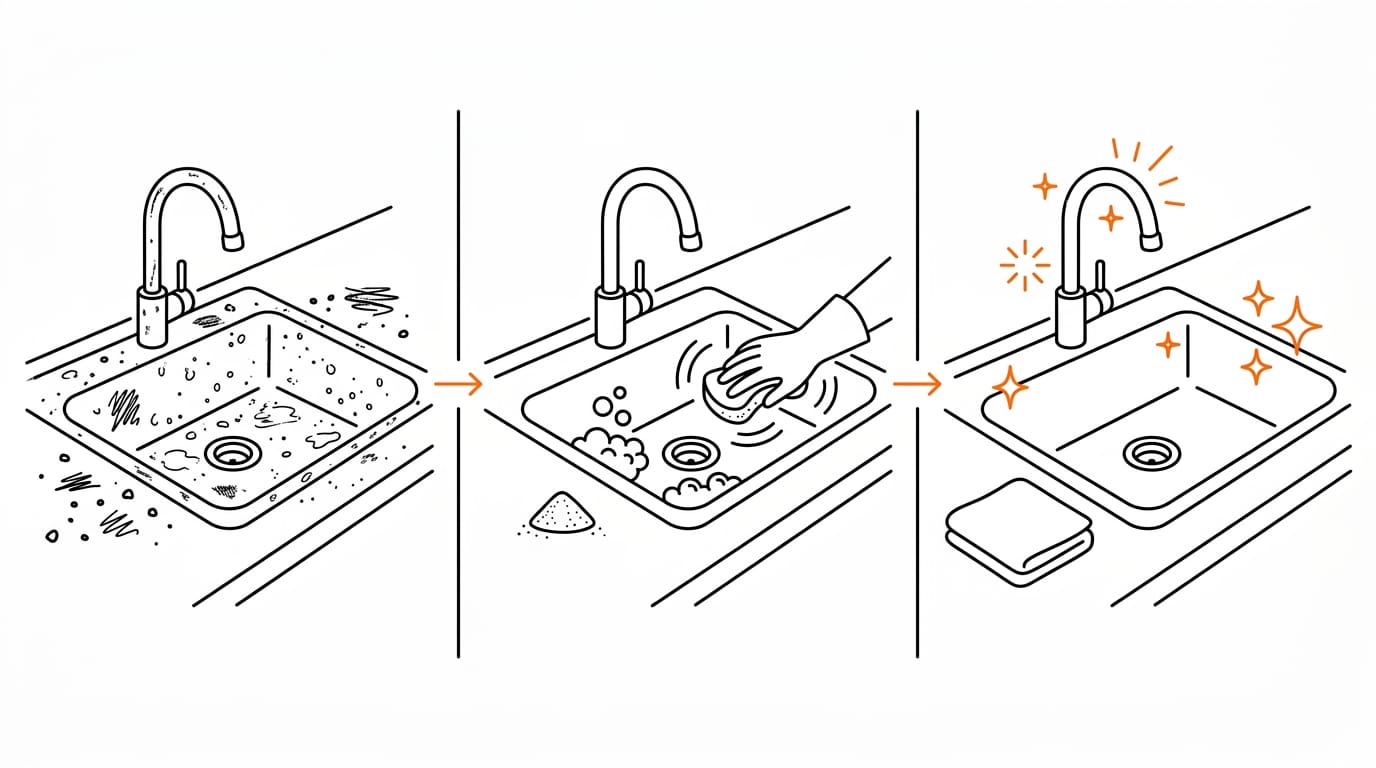
Cleaning a stainless steel sink means removing food, water spots, and stains without scratching or damaging its finish. Use washing-up liquid, a soft sponge, and strokes along the grain; rinse and dry after cleaning, and treat limescale or rust with products suited to the sink’s finish. Regular gentle care keeps the basin brighter and helps prevent stubborn marks, scratches, and corrosion.
Your stainless steel sink sees more action than almost anything else in the kitchen. Washing-up, hot pans, and whatever’s been sitting in the plughole all leave their mark.
If you’ve spotted water spots, a dull haze, or a stubborn brown mark that wasn’t there last week, you might think the finish is ruined. It usually isn’t.
In this post, we’ll cover everyday care, quick fixes for stains and limescale, the mistakes that can damage the finish, and how to keep the drain clear too. Most of the job uses things already under your sink.
How to Clean Your Stainless Steel Sink
Keeping a stainless steel sink clean is mostly about gentle, regular care. Below, you’ll find a daily routine, store-bought polish, a homemade cleaner, and a method for stubborn marks.
Is Dawn dish soap safe for stainless steel?
Yes, a regular washing-up liquid such as Dawn is safe for everyday cleaning. Work a little onto the soft side of the sponge, not the scouring side, then rinse thoroughly and dry afterward.
Consider a flatmate who uses washing-up liquid on the soft sponge after doing the dishes, then rinses and dries the sink with a tea towel. No separate product needed.
Store-bought stainless cleaners and polish
Pick a brand-specific cleaner made for stainless steel if you want extra shine, and follow its label. Apply sparingly with a cloth, then buff with a second dry cloth. The polish seals the surface and reduces fingerprints. Less is more.
Yes, you can use Cif on a stainless steel sink too, as long as you treat it like any other cream cleaner: work it in with the soft side of the sponge, then rinse thoroughly and dry afterward.
How can I make homemade sink cleaner?
Here’s the recipe:
- Start with pure vinegar essence as your base.
- Dilute 1:10 with water: one part essence to ten parts water.
Consider a host who keeps a spray bottle of this under the sink and wipes the basin after each dinner party, saving a trip to the shop for a dedicated cleaner.
Stick to this simple mix and skip additive-laden cleaners, the ones with a long list of extras. It’s also a biodegradable option, which suits anyone who wants a simpler mix going down the drain.
Soak, then neutralize with baking soda
Soak the stain in the diluted vinegar solution for 5 to 10 minutes. Then sprinkle on baking soda, which acts as the neutralizer and calms the acid before you rinse.
Scrub gently with the soft side first, and only reach for a nylon pad if the mark hangs on. Gentle wins.
Everyday Care to Keep the Sink Clean
Small habits keep your sink bright, so you’re rarely facing a big scrub. Here’s how to build them in.
How can I make my stainless sink shine?
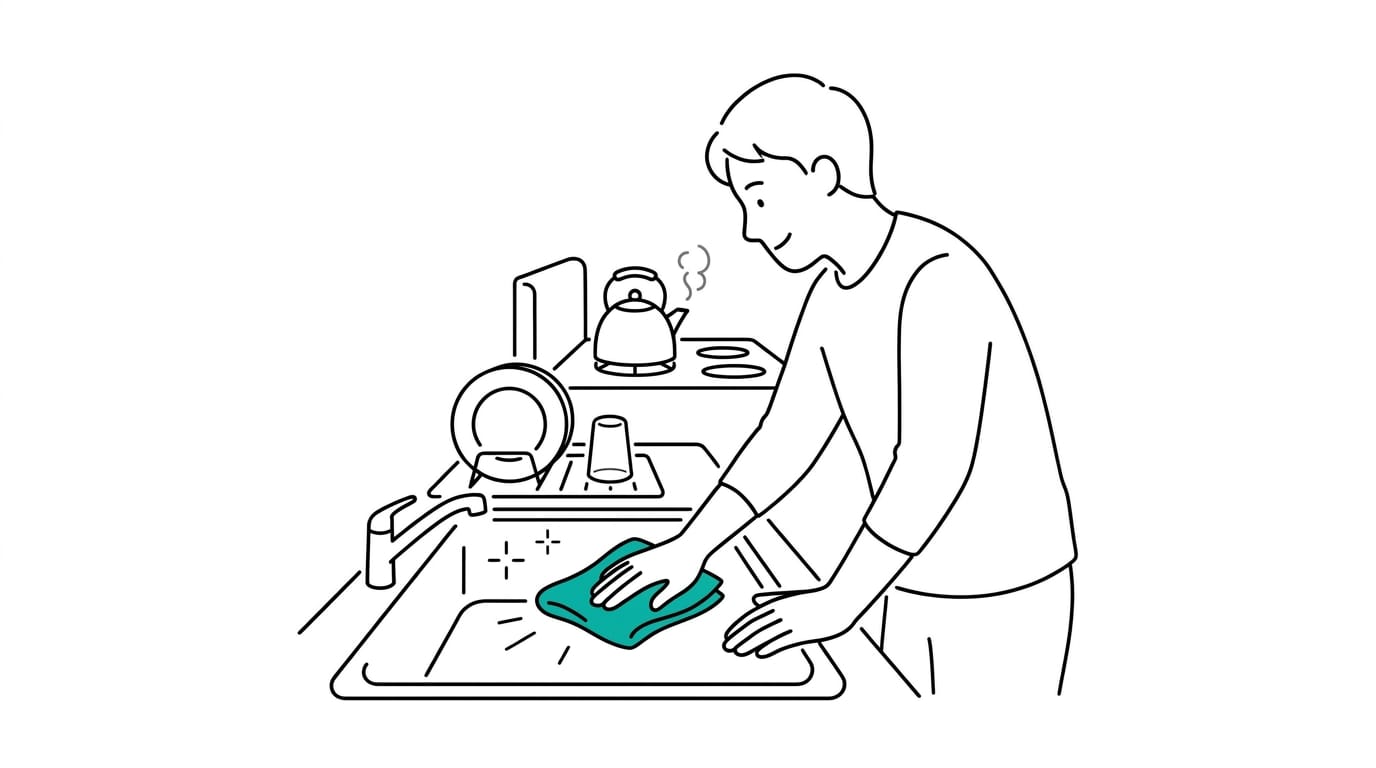
The secret to a shiny sink is clearing away water and food residue before it dries. Wipe after each use, rinse with clean water, then dry with a soft cloth so water marks have less chance to form. A microfibre cloth is the one we recommend.
Picture a parent who rinses the sink after dinner and wipes it dry while the kettle boils. It stays gleaming with almost no effort.
Setting a regular cleaning schedule
Routine beats rescue. Clean right after use wherever you can, then add a weekly clean and a basic clean every 3 to 4 weeks.
A deep clean is for a bowl that looks dull or grimy despite your routine. Work through these steps:
- Rinse the sink with clean water to remove loose debris.
- Scrub the whole bowl with a sponge or cloth, following the grain.
- Rinse again with clean water.
- Dry with a soft cloth or microfibre cloth.
Scrub with the grain, not in circles
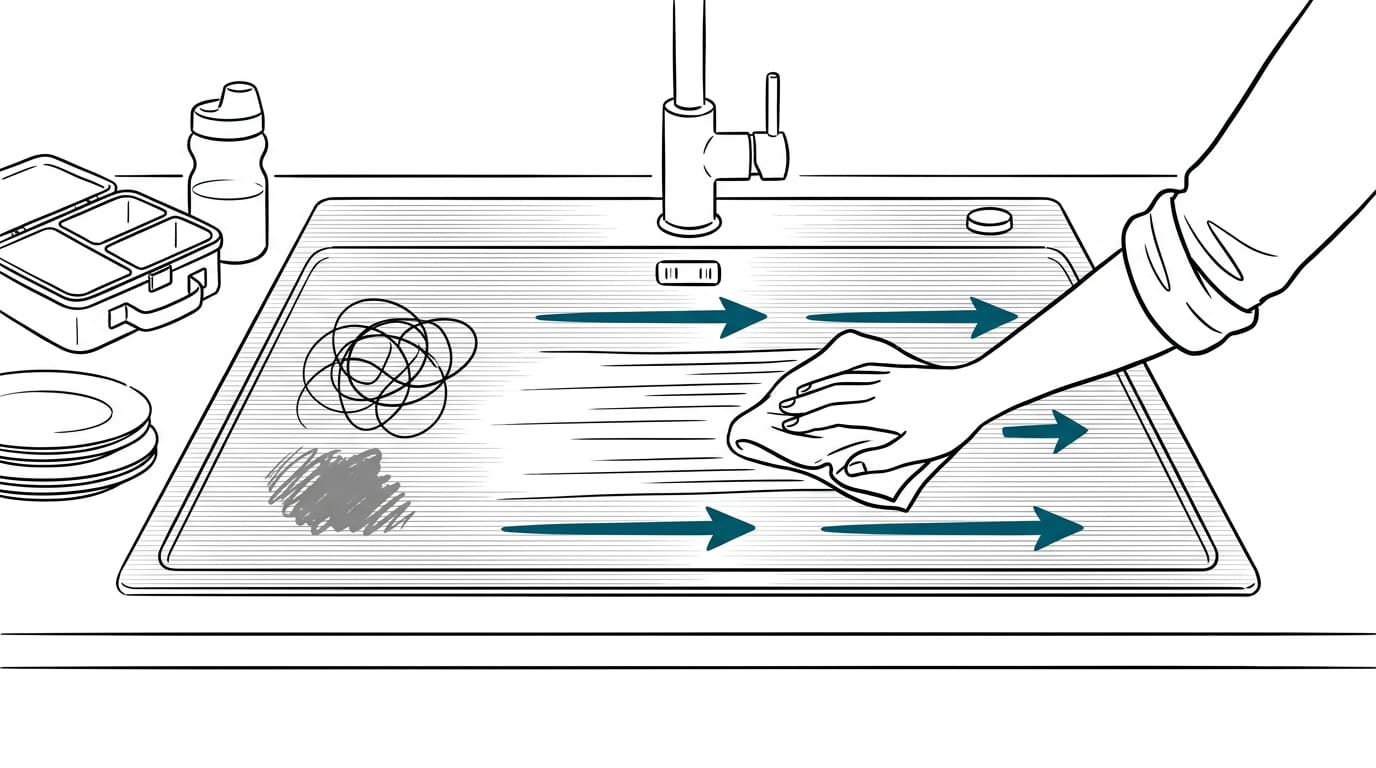
Many stainless sinks have a grain, faint lines running one way across the metal. Scrub with the grain, not against it, following the brushing direction with a sponge or cloth. Circular motions can leave a dull, swirled look.
Think of a tenant who scrubs in circles and wonders why the sink looks cloudy. Long strokes along the grain give a cleaner, more even finish. Small change, big difference.
Protect the sink with racks and baskets
A bottom sink rack keeps plates, pans, and cutlery off the metal. Rinse baskets after use too, so food and grit don’t sit against the sink. Racks and baskets also protect the surface from scratches.
Consider a host who stacks roasting tins after a dinner party. On a rack, they sit on a cushion instead of grinding against the bowl.
Dealing with Stains, Limescale and Rust
Most marks on a steel sink come from limescale, hard water, or rust. Match the fix to the mark you’re looking at.
Remove limescale and stop it returning
Limescale is the chalky build-up left when water dries on the steel. Wipe it with a cloth dampened in white vinegar or lemon juice, then rinse well.
Stopping it coming back is less about scrubbing and more about drying. Dry the basin after each use, then give it a light stainless steel polish to seal the surface. Think of a busy parent who dries the sink after the evening dishes.
The build-up never gets going, so Saturday’s clean is a quick wipe, not a scrub. That’s the whole habit.
Marks left by hard or softened water
Hard or softened water can leave these marks:
- Brown, rust-like stains. They can look like real rust, so check before you reach for anything strong.
- White film. This is mineral residue. Wipe with a little white vinegar, then rinse and dry thoroughly.
- Over-softened water. If you have a water softener, too much softening can leave its own marks. Check the setting if the finish changes.
Drying after every use is still your best habit here.
Removing rust with the right products
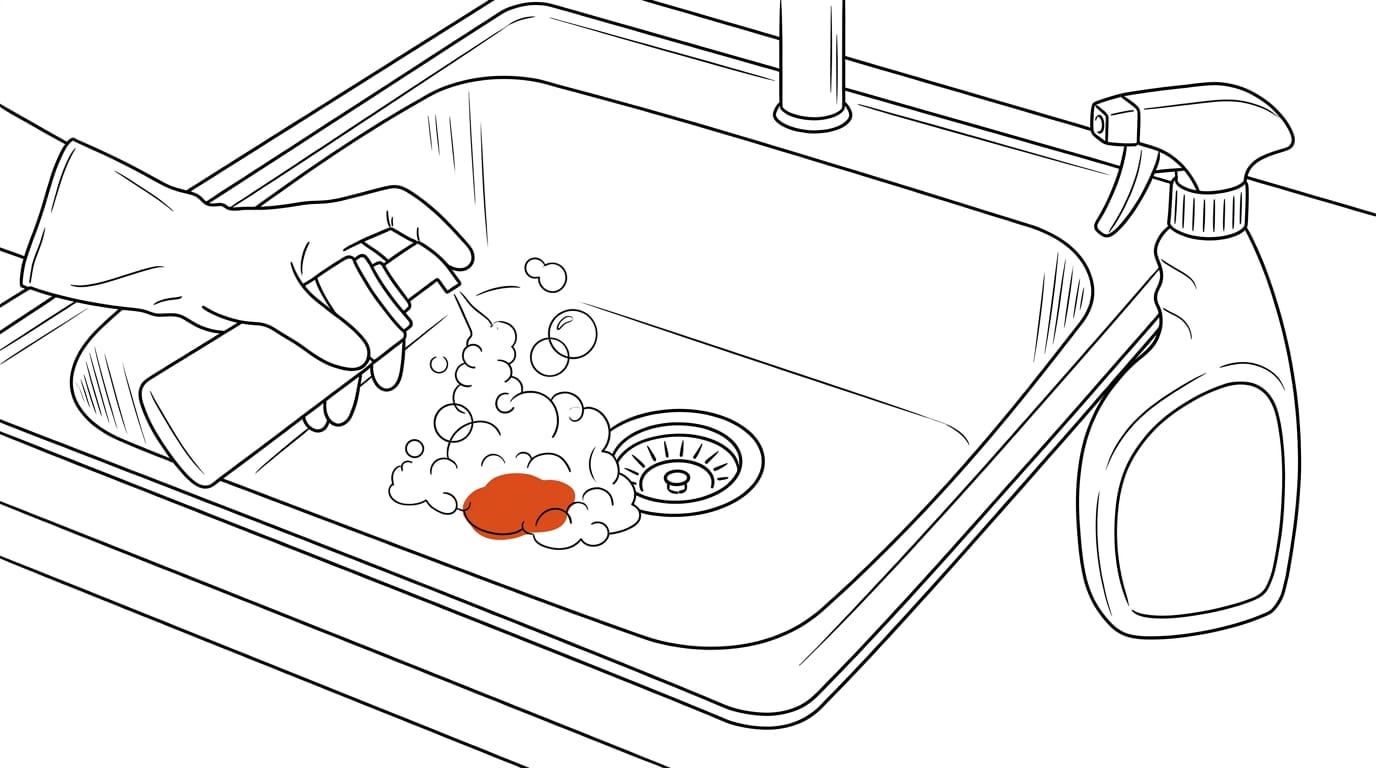
For genuine rust, use a rust remover made for stainless steel and follow the label. If the mark is light, try a foam cleaner before anything stronger.
Mistakes That Can Ruin Your Sink
Some common habits can scratch, corrode, or mark your sink, even when you’re only trying to help it. Here’s what to keep away from the steel.
Avoid steel wool and scouring pads
Steel wool feels like the fastest way through a baked-on mark. For example, a home cook scrubbing burnt pan residue may clear it in seconds, but the fine scratches left behind are where trouble starts. Keep these away from the sink:
- Steel wool
- Wire brushes
- Scouring pads
Scratches can invite rust and pitting, tiny pits in the metal where corrosion takes hold. Choose gentle tools over harsh ones.
Can I use Windex on my stainless sink?
Windex is a glass cleaner, so it’s best kept for mirrors and windows rather than your sink. The same goes for other glass cleaners and hydrogen peroxide: read the label first, and rinse well afterwards.
Bleach is the bigger worry. According to a technical report on 304L stainless steel corrosion, bleach can damage this steel. Picture a tenant grabbing the bleach for a quick sparkle before handing back the keys.
Rinsing straight away, rather than later, is what counts. Keep these points in mind too:
- Bleach causes corrosion: keep it off the basin entirely.
- Rinse if it touches the sink: flush the area with plenty of water as soon as it happens.
- No aggressive cleaners: stick with gentle, everyday options.
- No silver cleaning baths: skip soaking the sink in them.
Items and residue left in the sink
Small leftovers can mark the basin without you noticing. Watch for these:
- Rubber mats and wet sponges: they trap water and grime against the steel, so clear them out after each use.
- Dried liquid soap: left to dry, it forms a film, so rinse it away while it’s still wet.
- Food particles: bits left behind can discolor the surface, so rinse them down before they dry.
A quick rinse after washing up beats a long scrub later.
Caring for Different Sink Finishes
Not every stainless steel sink finishes the same way, so check yours first.
Care for brushed and polished finishes
Brushed sinks have fine lines in one direction, so when you polish, always follow the brushing direction.
Think of a parent wiping the kitchen sink after the school lunch dishes: working along the lines keeps the finish even, while circular scrubbing can leave it patchy.
Don’t scrub one mark until it shines. Vigorous spot polishing can leave an uneven patch, and repeated rubbing can change the gloss level. Steady, even strokes beat hard scrubbing.
Satin, linen and Durinox need gentle care
Satin, linen and Durinox are more delicate, so treat them gently, not harshly. Use only a damp microfibre cloth, and skip polishing agents, even ones that promise a quick shine. Gentle is the goal.
Durinox resists fingerprints, so you’ll notice them less between cleans. Take a tenant who cleans a rented flat’s sink with the same scourer they use on the oven.
On a delicate finish, that habit can mark the surface, while a damp microfibre cloth keeps it clean and intact.
Checking which methods suit each finish
Before you try a method, check that it suits your finish. Some methods suit all finishes, while others aren’t for mirror finishes:
- Suits all finishes. Use it on brushed, satin, or mirror sinks.
- Not for mirror finishes. Keep it off mirror-polished sinks, even if it’s fine on brushed steel.
Imagine a home cleaner with a brushed kitchen sink and a mirror-finish guest bathroom. Checking first means both stay looking their best, with no second round of fixing.
Keeping the Drain Clear
A slow drain usually starts as a small build-up you can clear in minutes, so acting early saves you a lot of hassle. Here’s how to clear it, keep it clear, and deal with the sink grid over the plughole too.
Clear blocked and slow drains
Think of a home cook who finishes the washing-up and notices the water lingers in the basin a little longer each night. Catching that early is far easier than waiting for a full backup. Work through these in order:
- Drain treatment product: Pour in a drain treatment product and follow the label closely. Never mix it with another drain cleaner.
- Overnight treatment: For a stubborn slow drain, leave the treatment to work overnight, then rinse it away in the morning.
- Flush with hot water: Once the treatment has done its job, run hot tap water down the drain to wash away anything it loosened.
- Preventative maintenance schedule: Don’t wait for the next slow drain. Build a simple routine, such as a hot flush after the evening washing-up, and stick to it.
It’s always easier to prevent a clog than to clear one. A quick daily flush beats a big clean-out later. Little and often wins.
To clean a sink grid, lift it out if it comes free, or scrub it in place if it doesn’t. Use a soft brush and warm washing-up liquid, working along the grain of the steel, then rinse and dry it to avoid water spots.
Keeping a stainless steel sink looking its best comes down to a few simple habits: dry it after use, deal with stains while they’re fresh, and choose gentle methods that suit your finish.
Start with cold water and washing-up liquid, and reach for the cupboard basics only when you need them. Skip harsh chemicals and abrasive pads, which can leave fine scratches that dull the surface.
Do that, and your sink will look its best for much longer, with far fewer scrubbing sessions. A little attention each week beats a big rescue job later on.
References
Questions
What is the best cleaner for a kitchen sink?
A mild washing-up liquid, such as Dawn, is best for everyday kitchen sink cleaning. Apply it with the soft side of a sponge, then rinse thoroughly and dry with a soft cloth.
How can I make my stainless steel sink shine?
Rinse away food residue and dry the sink after each use with a soft or microfibre cloth. For extra shine, use a stainless steel polish made for your sink’s finish and buff along the grain with a dry cloth.
How to clean a sink grid?
Lift the grid out if it comes free, or clean it in place if it does not. Scrub it with a soft brush and warm washing-up liquid, working along the steel’s grain, then rinse and dry it.
How to deep clean a sink?
Rinse the sink to remove loose debris, then scrub the whole bowl with a sponge or cloth, following the grain of the steel. Rinse again and dry with a soft cloth or microfibre cloth.
How to get white film off a stainless steel sink?
White film is usually mineral residue from hard or softened water. Wipe it with a little white vinegar, then rinse the sink well and dry it thoroughly.
Is Dawn dish soap safe for stainless steel?
Yes. Dawn and other regular washing-up liquids are safe for stainless steel when used with a soft sponge; rinse the sink thoroughly and dry it afterward.
Can I use Windex on my stainless steel sink?
It is better to avoid Windex on a stainless steel sink because it is a glass cleaner. Use a gentle sink cleaner instead, and rinse well if Windex gets on the steel.
Can I clean my stainless steel sink with white vinegar?
Yes, white vinegar can help remove limescale and mineral film from stainless steel. Use it briefly, then rinse the sink thoroughly and dry it; for a homemade cleaner, dilute vinegar essence with water at a ratio of 1:10.
Sources
More in Kitchen
- How to Clean Quartz Countertops, From Daily Wipes to StainsHow to clean quartz countertops: wipe away daily messes, tackle water spots and stubborn stains, and learn which everyday products can damage the finish.
- How to clean oven door glass, including between the panesClean oven door glass with a bicarbonate of soda paste and a plastic scraper, use oven cleaner safely, and reach the grease trapped between the panes.

Stain Finder: a free stain removal guide
Find your stain