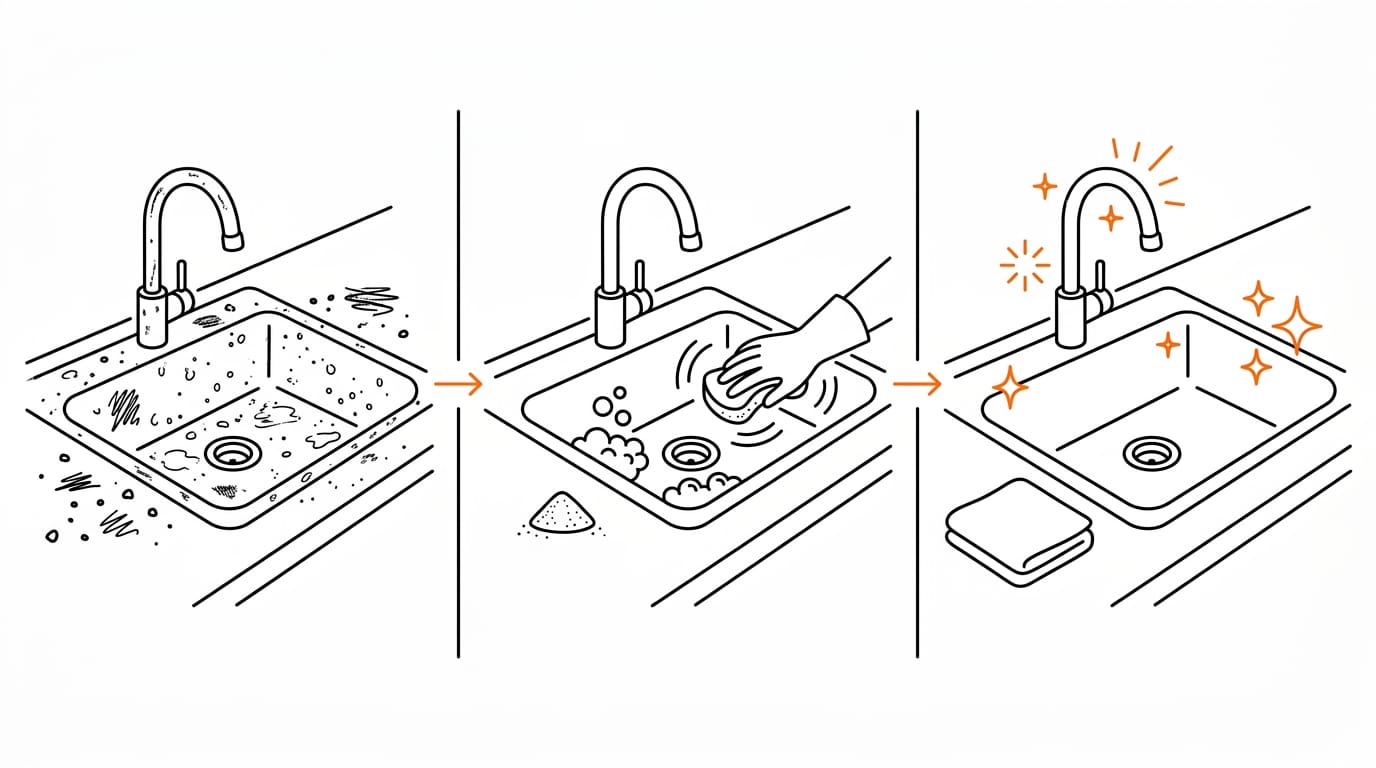
- WipeWarm
- Rinse
- Dry
- Buff
How to Clean Quartz Countertops, From Daily Wipes to Stains
How to clean quartz countertops: wipe away daily messes, tackle water spots and stubborn stains, and learn which everyday products can damage the finish.

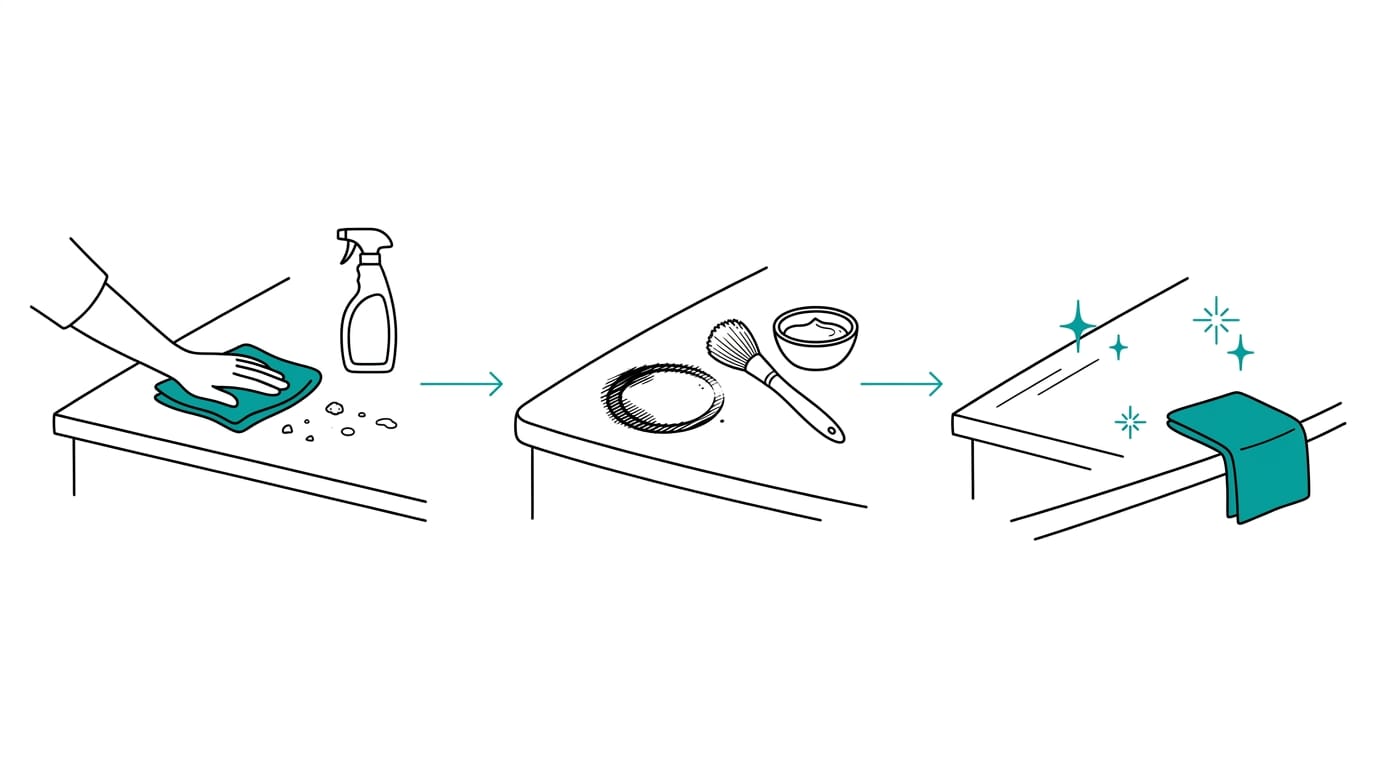
Quartz countertops are engineered stone with a nonporous surface that is easy to clean and does not need sealing. Wipe them with warm water and mild soap, rinse and dry, and tackle spills quickly; use targeted, gentle methods for stains while avoiding bleach, abrasive scrubbers, harsh chemicals and direct heat. In practice, prompt care and suitable products help prevent marks and keep the finish looking its best.
Picture a busy weeknight: tomato sauce splashed by the hob, a mug ring on the side, butter smudged near the bread bin. Your quartz countertop is usually where those marks land, and it’s one of the easier surfaces to keep looking its best.
This guide covers the whole job, from quick daily wipe-downs to fast stain-first fixes for water spots and stubborn marks.
You’ll also get straight answers on everyday products like Cif, Fairy and cleaning wipes, plus the habits to avoid so you’re not undoing your good work.
Why Quartz Countertops Are Easy to Clean
Wondering why so many kitchens have quartz? The short answer is that its surface does much of the hard work for you.
A surface that resists liquids and bacteria
Engineered quartz has a nonporous surface, which means liquids have very little room to get in.
A materials study on resin-based artificial stones found the cured material has good impermeability and reduced internal porosity, so it resists both liquid penetration and staining.
Think of a parent wiping tomato sauce off the worktop after tea. The sauce sits on the surface rather than soaking in, so one quick wipe usually clears it before it leaves a mark.
The same surface helps with hygiene. Quartz is resistant to bacteria, and with fewer pores for grime to hide in, it’s easier to sanitize than porous stone. Less scrubbing, less worry.
Low upkeep that lasts for busy families
Quartz doesn’t need sealing or polishing, so there’s no extra job to add to the weekly list. It’s also durable enough for busy family life, with school bags, homework and the odd dropped mug.
Is quartz or granite easier to clean? For everyday care, quartz is the easier of the two. Compared with porous natural stone such as granite, its nonporous surface gives spills less chance to soak in.
Hardness matters too. The Mohs hardness scale is used to compare quartz countertops with other materials, and quartz is one of the minerals on it. A microhardness study of Mohs scale minerals tested the first nine minerals on the scale, quartz included.
Keeping Quartz Clean Day to Day
Daily quartz care is quicker than you’d think, and we’ll cover the essentials below.
How to get smudges off quartz countertops?
Smudges come off quickly if you act straight away:
- Wipe with a soft cloth or sponge dipped in warm water and mild soap.
- Rinse with clean water, not more soap, to lift away residue.
- Dry the surface or let it air dry.
- Buff with a microfiber cloth for a streak-free finish on matte or polished surfaces.
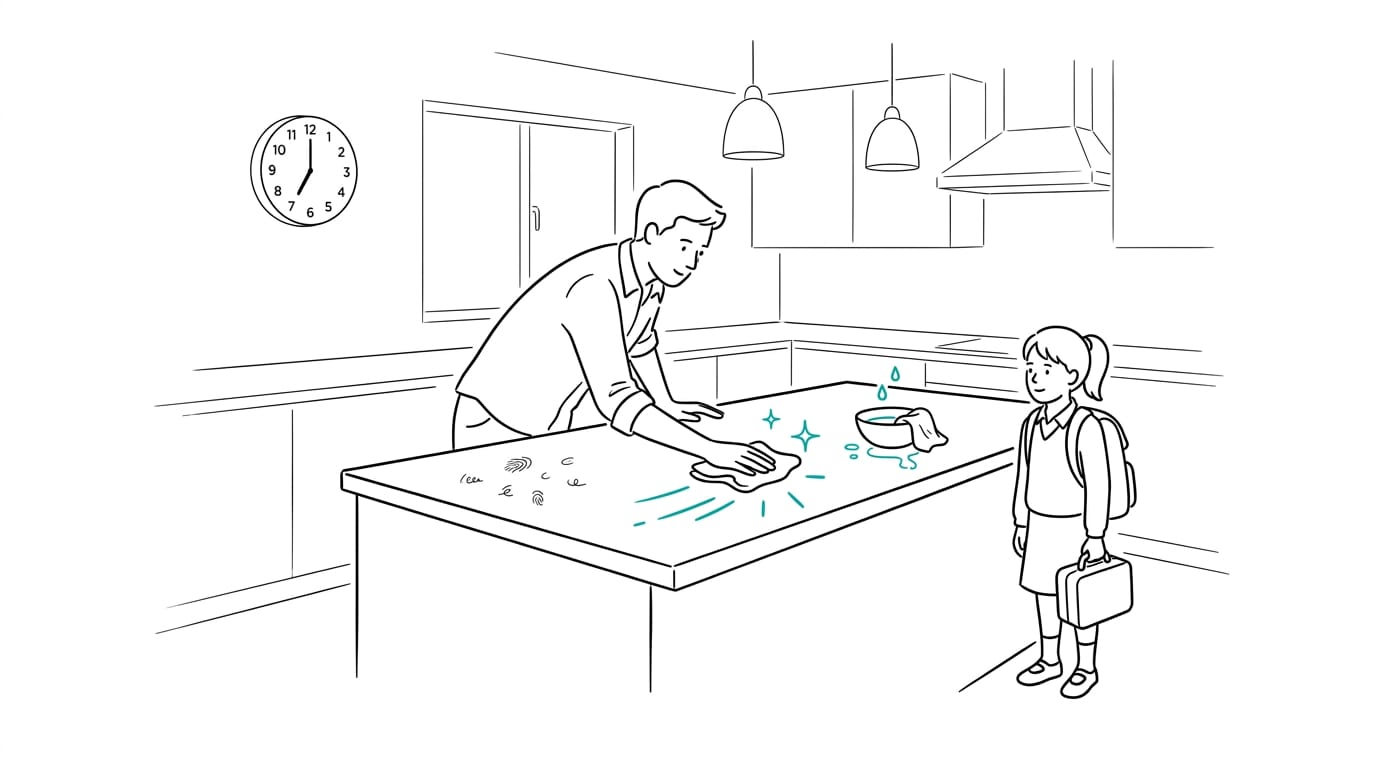
Think of a parent wiping fingerprints off the island before the school run. Warm water, a drop of mild soap and one cloth clear it in moments, and that’s the whole job.
Gentle cleaners approved for quartz
These are good everyday options:
- A mild dish detergent or Simple Green
- Fairy liquid, which works fine
- pH-neutral (neither acidic nor alkaline) quartz-safe cleaners
- A degreasing cleaner for sticky residue
Check the label for quartz suitability before you buy. A tenant who keeps one bottle of Fairy liquid under the sink for daily wipes skips buying a separate cleaner.
For a weekly deep-clean, go over the whole surface with your gentle cleaner, then use the degreaser on any greasy patches.
Lifting dried-on food without scratching
Dried-on food needs patience, so work in this order:
- Wet the surface first so the food softens.
- Lift it with a plastic putty knife.
- Finish with a degreaser to clear any greasy film.
Avoid metal scrapers, which can scratch the finish, so lift it, don’t force it. Picture a host with cheese sauce baked onto the worktop after dinner. A damp surface, a putty knife and a quick degreaser wipe have it gone before the washing-up is done.
Killing germs on your countertop
When you want to disinfect, these are handy to keep on hand:
- 70% isopropyl alcohol, an alcohol-based disinfectant
- Lysol disinfectant spray
- Bleach-free disinfectant wipes
Check the label for quartz suitability first. A parent might wipe the worktop with a bleach-free wipe once the lunch boxes are unpacked, so it’s ready for the next meal.
Getting Rid of Stains and Water Spots
Not every mark on a countertop needs the same fix, so start by working out what you’re dealing with. Then we’ll match the right method to the problem.
Telling marks, stains and water spots apart
Check whether the mark wipes away. Surface marks sit on top, so a damp cloth often lifts them. A stain has soaked in and stays after wiping. Water spots are a separate case, caused by mineral buildup: minerals left behind as hard water dries.
Once you’ve identified the mark, match the method to it. Using the wrong fix only wastes time.
Lifting ink, marker and dye
Ink, marker and dye respond to 70% isopropyl alcohol, a common rubbing alcohol. Dampen a soft cloth with it rather than pouring it onto the surface. Then dab, don’t rub, working from the outside of the mark inward, since rubbing can spread the colour.
Think of a parent who finds a felt-tip mark on the kitchen countertop after homework. A cotton pad with a little alcohol lifts it quickly, with no scrubbing session needed.
Finish by rinsing thoroughly with clean water and drying the surface, so no alcohol residue is left behind.
Treating food and wine stains fast
Food and drink marks are best dealt with early. Work through these steps:
- Mix baking soda with a little water to make a paste.
- Spread it over the stain and let it sit for 10 minutes.
- Wipe it away, then rinse and dry the surface.
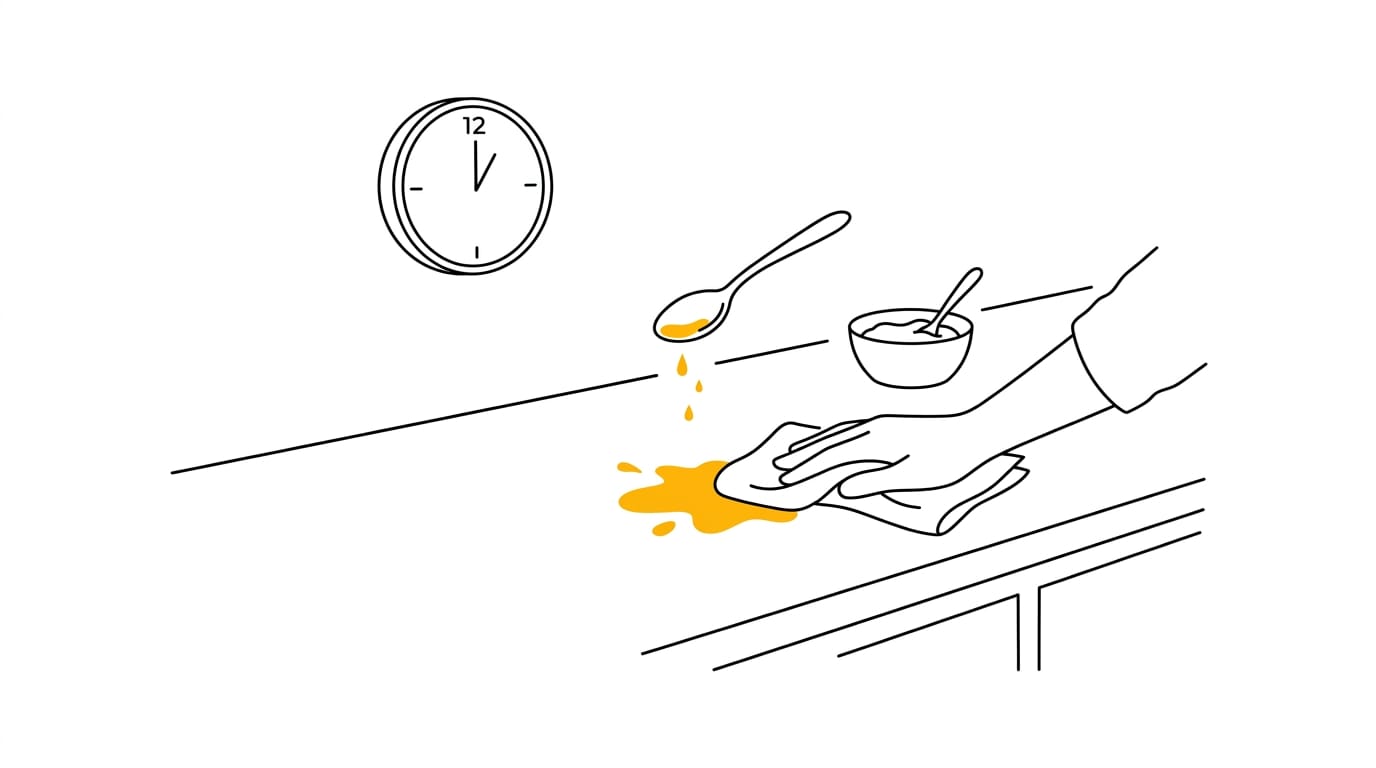
Treat the mark sooner rather than later, because the longer it sits, the more it can take hold. Wine, coffee and turmeric are the ones to watch.
Consider a home cook who spills turmeric from a curry onto a pale countertop: wiping it up straight away gives the colour the least chance to set. A mark left overnight is much harder to shift.
Removing sticky residue, scuffs and metal marks
A Goo Gone-style adhesive remover handles sticky residue from tape or labels. For metal marks, try a white eraser, rubbing gently. A melamine sponge can lift stubborn scuffs, but use it with care: press lightly, since it works like a fine abrasive.
Before any of these touches the visible surface, test it in an inconspicuous area, such as a corner hidden behind the kettle. Every time.
Clearing hard water spots and cloudy film
Apply a diluted vinegar solution to hard water spots, but keep contact brief. Rinse with clean water and dry immediately, so new spots don’t form as the surface dries.
Cloudy film can come from soap scum, a residue that builds up when soap is left on the surface. Use less detergent rather than more, since extra soap is what feeds the film.
When burns and yellowing won’t come out
Burn marks can’t be cleaned away, so they need professional repair. Yellowing comes from oils or from ultraviolet (UV) light, so it’s a different problem from a fresh mark.
Avoid bleach, because it can leave a faint mark called bleach ghosting. That damage is irreversible. Once it’s there, it stays.
Products and Habits to Avoid
A handful of common cleaners and tools can dull or mark quartz, so it pays to know what to keep off the surface and what to do when you’re unsure.
Can you use bleach on quartz?
Bleach is a poor match for quartz. It can discolour the resin that binds the stone, leaving faint, ghost-like marks. Dark quartz shows that damage more clearly, so the risk is bigger on black countertops.
Check your wipes too. Some disinfecting wipes contain bleach, so read the label first.
Can you clean a quartz sink with bleach? Better not. Sinks need the same care as the countertop.
Harsh chemicals to keep off quartz
Keep these well away from your countertops:
- paint thinner
- turpentine
- oven cleaner
- drain cleaner
Picture a tenant who sprays oven cleaner near the hob and catches a splash on the countertop. A quick wipe, straight away, stops it sitting on the stone.
Watch the pH too: it measures how acidic or alkaline a product is, and very high or very low readings are the ones to avoid.
Can you use Scrubbing Bubbles on quartz? It depends on the formula, so check the label for bleach or other harsh ingredients. If that doesn’t settle it, ask your supplier first.
Scrubbers and powders that dull the finish
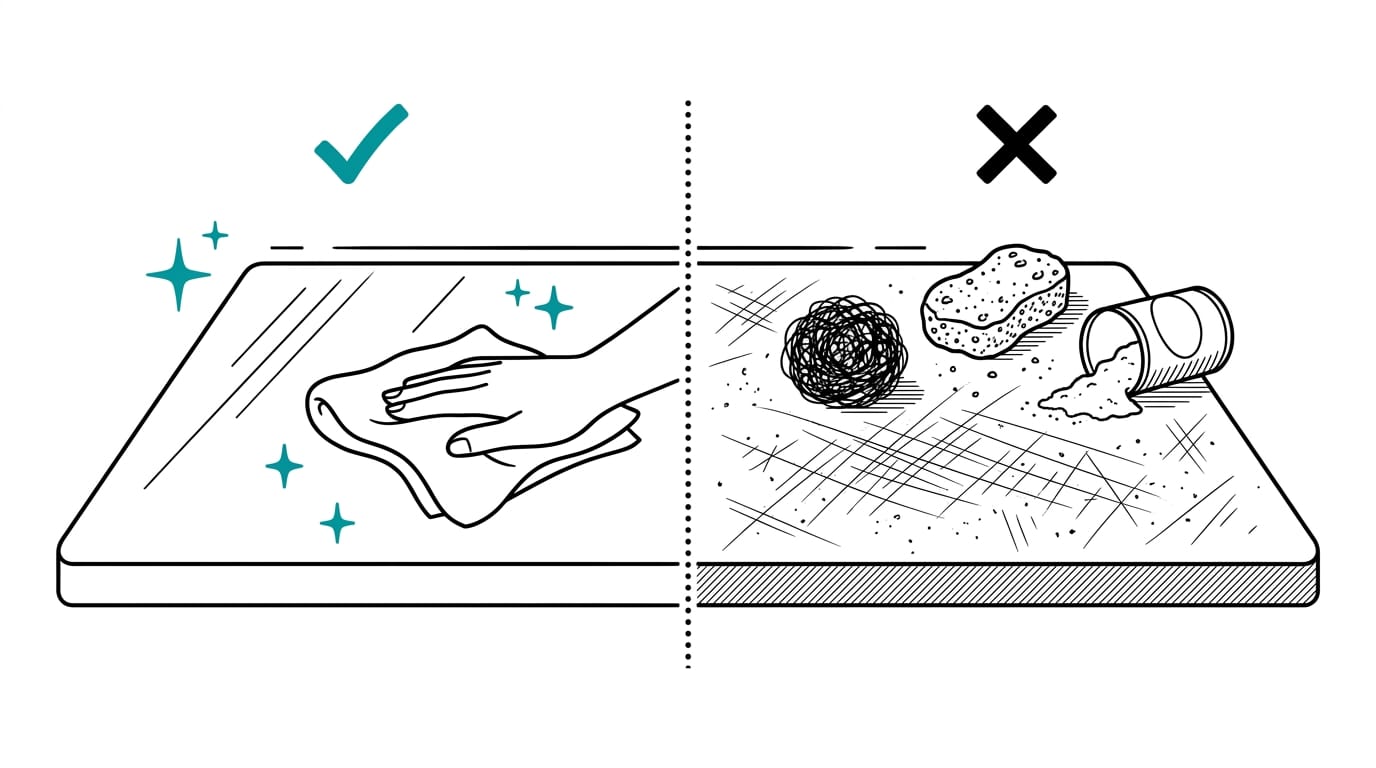
Anything abrasive, meaning gritty enough to wear a surface away, will dull the finish. Abrasive powders do exactly that, and steel wool and pumice are far too rough for quartz. Bar Keepers Friend powder is abrasive too, so leave it on the shelf.
For a tougher mark, use a non-abrasive powder instead.
Can you use Cif on quartz? Best to skip it. Cif cream is an abrasive scrub, so it belongs in this group. You want gentle cleaning, not aggressive scrubbing, and gentle wins.
Debated cleaners and when to ask
Glass cleaner is a debated product, so check with your supplier before using it on quartz. Vinegar isn’t for daily use, so save it for the occasional job.
When a label doesn’t settle it, ask your supplier before you spray. A quick message beats guessing.
Simple Habits That Prevent Stains
A few small habits keep your quartz looking new. Most take seconds and save you a bigger job later.
Wipe up spills right away
When something lands on the worktop, act fast. Blot or wipe it straight away rather than leaving it to sit. The usual culprits are:
- Wine
- Citrus
- Dark foods
Lighter colours show stains more clearly, so a pale worktop deserves a quick wipe even sooner.
Think of a parent who knocks a glass of red wine across the island during Sunday lunch. Grabbing a damp cloth at once means the mess is gone before the kids finish their pudding.
Blot the spill rather than rubbing it, so you lift it off instead of working it in.
Protect the surface from heat
Always set hot dishes on a trivet or mat, and never put a hot pan directly on the quartz. Thermal shock is the damage a sudden change in temperature can cause, and it carries a risk of cracking the surface.
Consider a home cook who lifts a roasting tin straight out of the oven and sets it on the counter. A trivet takes a second to fetch and protects the worktop from that sudden shift.
Using cutting boards to avoid scratches
Quartz is scratch-resistant, not scratch-proof. It stands up well to daily life, but it can still pick up marks if you chop directly on it.
Make a cutting board your default. Knives can also dull against the surface, so a board protects both your worktop and your blades. Keep one by the hob and it’s always to hand. Board first, every time.
Why you never need to seal it
Non-porous means liquids don’t soak into the surface, so there’s nothing a sealer needs to protect. Sealers sit on top rather than inside, and they wear unevenly over time, leaving patches that look different from the rest of the worktop.
Picture a homeowner who seals a brand new worktop because they assume it needs it. A damp cloth after each meal does the job instead, with nothing to reapply. No sealant, no fuss.
Keeping quartz in top shape doesn’t take a cupboard full of products. It comes down to wiping up spills while they’re fresh, choosing gentle everyday cleaners, and steering clear of the habits that dull or damage the surface.
Think of it like looking after a favourite pair of shoes: a little care every day beats a big rescue job later. Stick with these steps and you’ll keep a worktop you’re proud to cook on.
Act fast, keep it gentle, and your quartz will stay in great shape.
References
Questions
What is the best way to clean quartz stone?
Clean quartz with a soft cloth or sponge, warm water, and a little mild soap. Rinse with clean water and dry or buff with a microfiber cloth to prevent streaks. Avoid abrasive cleaners and harsh chemicals.
How to get smudges off quartz countertops?
Wipe smudges with a soft cloth or sponge dipped in warm water and mild soap. Rinse away soap residue with clean water, then dry or buff with a microfiber cloth.
Can you clean a quartz sink with bleach?
No. Avoid bleach on a quartz sink because it can discolour the resin and leave permanent ghost-like marks. Clean it with warm water and mild soap instead.
Can I use Cif on quartz?
It is best to avoid Cif cream on quartz because it is abrasive and can dull the finish. Use a mild, non-abrasive cleaner instead.
Can I use Clorox wipes on my quartz countertops?
Check the wipes’ ingredients and label before using them. Some Clorox wipes may contain bleach, which can discolour quartz; choose a bleach-free wipe labelled as suitable for quartz, or use mild soap and water.
Do and don'ts with quartz countertops?
Do wipe spills promptly and clean with warm water, mild soap, and a soft cloth. Do use a cutting board and trivets, and rinse away soap residue. Don’t use bleach, harsh chemicals, abrasive powders, or rough scrubbers, and don’t put hot pans directly on the surface.
Can you use fairy liquid on quartz?
Yes. Fairy liquid is a mild dish detergent that works for routine quartz cleaning. Use a small amount with warm water, then rinse with clean water to remove residue.
Is quartz or granite easier to clean?
Quartz is generally easier to clean for everyday use because its nonporous surface gives spills less chance to soak in. Granite is porous natural stone, so it may need sealing and more care to prevent staining.
Sources
More in Kitchen
- How to Clean Stainless Steel Sink, Start to FinishHow to clean a stainless steel sink: remove water spots, limescale, and rust without damaging the finish, and keep the drain clear with simple supplies.
- How to clean oven door glass, including between the panesClean oven door glass with a bicarbonate of soda paste and a plastic scraper, use oven cleaner safely, and reach the grease trapped between the panes.

Stain Finder: a free stain removal guide
Find your stain