Distilled White Vinegar for Laundry: The Complete Guide
Distilled white vinegar for laundry can soften clothes, clear soap residue, and tackle odors. Learn how much to use and which safety cautions matter.

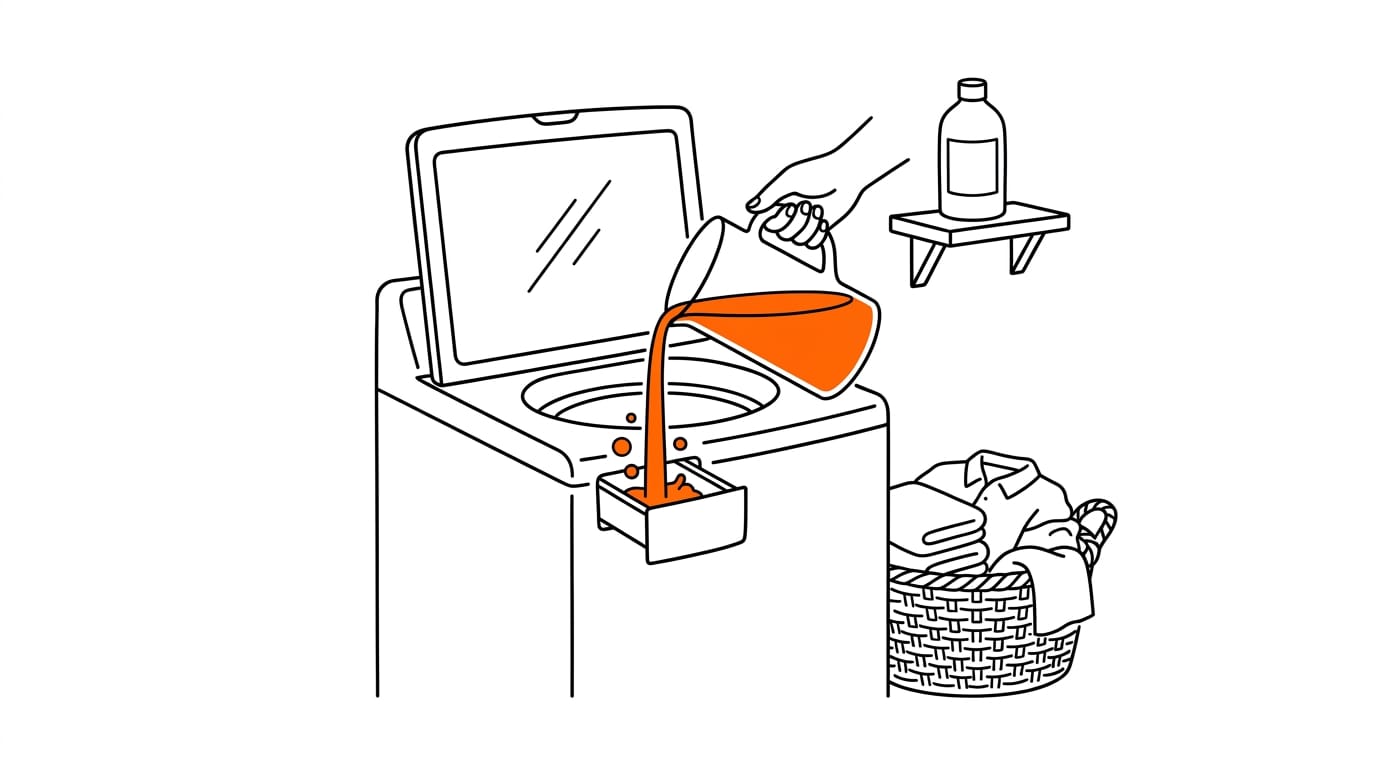
Distilled white vinegar is a mild-acid laundry aid that can soften fabrics, remove soap and softener residue, reduce odors, and brighten dingy whites. Add about half a cup to the rinse for routine loads, and use targeted soaks or pretreatment for specific problems; it works best on residue, odors, and light stains, not deep stains or heavy mildew. Check care labels and spot-test fabrics, never mix vinegar with bleach, and avoid using it on stone surfaces.
Think of the bottle of distilled white vinegar tucked under your kitchen sink. It’s cheap, it’s already in the cupboard, and it’s surprisingly handy in the laundry room too.
Distilled white vinegar is a mild acid, and it can soften clothes, clear away stubborn soap residue, and tackle some odors and stains. It’s not a magic fix for everything, though.
In this guide, we’ll cover how much to use, what it does well, where it falls short, and the safety cautions that many guides skip.
Why Distilled White Vinegar for Laundry Works
Distilled white vinegar earns its spot in the laundry room by doing several jobs at once. Here’s what it does and where to be careful.
What vinegar does for your clothes
- Whitens and brightens. Vinegar lifts the dull, greyish look from white shirts.
- Deodorizes. It tackles sour, musty smells in gym kit and damp towels.
- Softens fabrics. A vinegar rinse can leave towels and sheets feeling softer.
- Avoids harsh chemicals. It’s a milder option than harsher products on the shelf.
Not every garment suits vinegar, so check the care label first, and test a hidden seam if a fabric’s care is unclear. Never mix vinegar with bleach, since the combination can release harmful fumes.
Why it’s cheap, gentle and eco-friendly
Consider a renter who handles towels, school shirts, and the odd gym sock with one bottle, so the bill stays small. Vinegar is non-toxic and biodegradable, so it breaks down easily.
It’s gentler for sensitive skin, and with no dyes, there’s less chance of dye irritation. It’s also safe for high-efficiency (HE) washers, the low-water machines many homes use. Simple, cheap, and kind to the machine.
Why choose distilled white over cider vinegar
Cider vinegar is a fine kitchen staple, but it’s a less suitable pick for laundry. It’s less about whether vinegar works and more about which kind you grab.
| Feature | Distilled white | Cider vinegar |
|---|---|---|
| Tannins and dyes | None | Present |
| Fabric staining | Won’t stain | Can stain |
| Needs dilution | No | Yes |
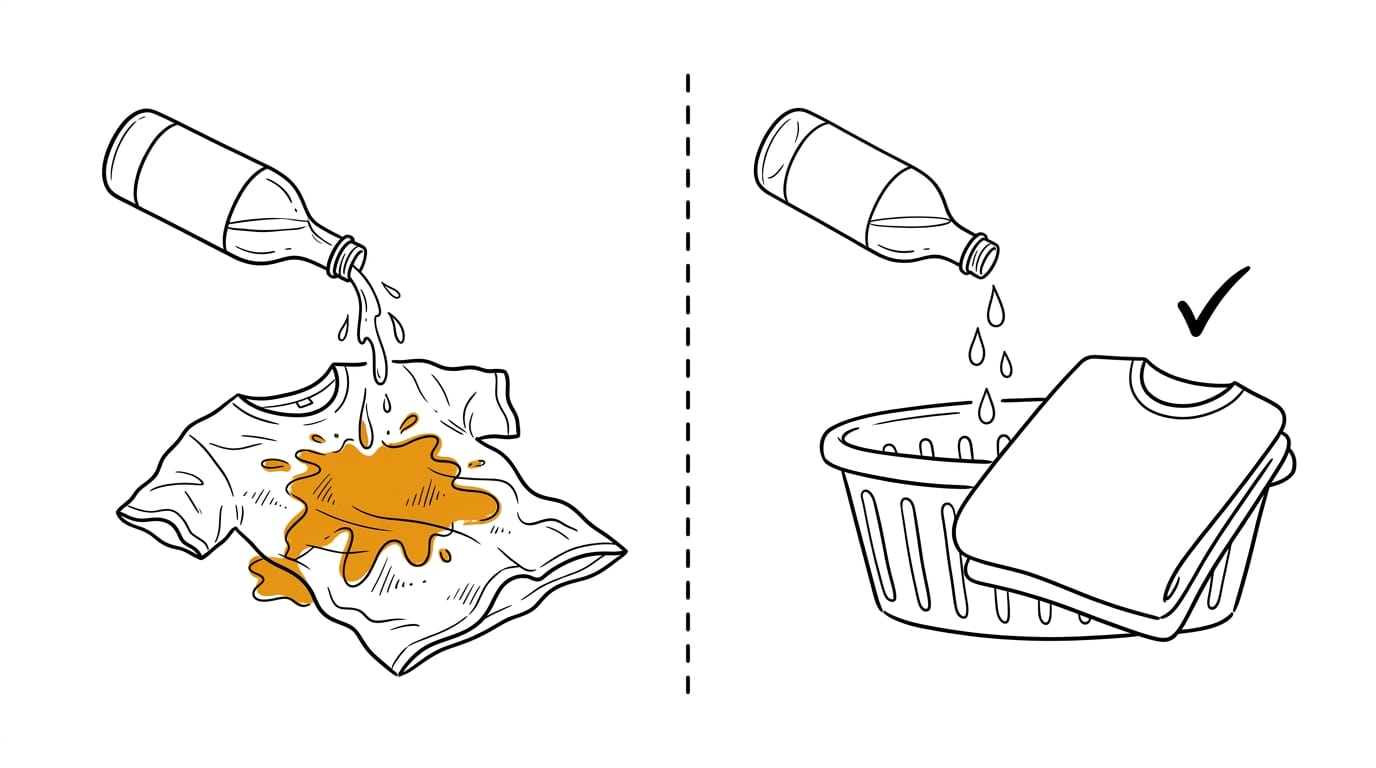
Cider’s tannins are plant compounds that can mark fabric, so the safer bet is distilled white. Distilled white contains five percent acetic acid, the sharp compound that gives vinegar its bite.
According to Harvard’s The Nutrition Source, that strength can kill some household pathogens but not all, so it isn’t a replacement for a commercial disinfectant.
Why the vinegar smell doesn’t linger
Picture a host washing guest towels before a dinner party. The vinegar goes in the rinse, and you’ll notice its smell most when you open the bottle. By the time the towels are dry, it’s largely gone, and it doesn’t transfer to the rest of your laundry.
If you want a fragrance, scented vinegar with essential oils is a separate product, so check its label first.
How Vinegar Softens Clothes and Clears Residue
Vinegar works on your laundry in a few distinct ways, from loosening stubborn film to keeping lint under control. Here’s what it does and how to use it.
Breaking down residue that stiffens fabric
Towels and jumpers that feel stiff often have a residue of soap and softener building up over time.
Vinegar can dissolve soap and fabric-softener residue from fabrics, and The Nutrition Source at Harvard notes that it appears to work particularly well on soap scum. It also helps lift trapped body soil.
Less buildup, softer fabric. Think of a parent whose school jumpers have turned scratchy after months of softener. A vinegar rinse clears the film, and the knit feels gentler against your child’s skin again.
How much vinegar to add per load
Use half a cup of distilled white vinegar per load, added in one of two ways:
- Add it to the softener dispenser.
- If your machine has no dispenser, add it during the rinse cycle, diluted with a little water.
Never combine it with a commercial softener in the same load. Pick one, not both.
Cutting down lint and pet hair
Adding vinegar during the rinse cycle helps cut down on lint and pet hair, so less of it clings to clothes. Consider a dog owner who rinses a throw blanket with half a cup of vinegar.
Fewer hairs stick to the fabric, which means less to pick off by hand before the blanket goes back on the sofa.
Why vinegar beats store-bought softener
It’s less about adding a scent and more about getting fabric clean. Here’s how it stacks up:
- Scent-free. There’s no added fragrance, so it suits anyone sensitive to perfume.
- Cheaper. A single bottle of distilled white vinegar goes further than a bottle of softener, load after load.
- Hypoallergenic. It’s a gentler choice for people with sensitive skin or allergies.
- Keeps washer and dryer cleaner. Vinegar helps keep softener residue from building up inside your washer and dryer.
Banishing Odors and Freshening up Laundry
Musty towels, sweaty underarms, and a load that smells off all have simple vinegar fixes. Here’s how to tackle each one.
Fixing mildew and musty-smelling towels
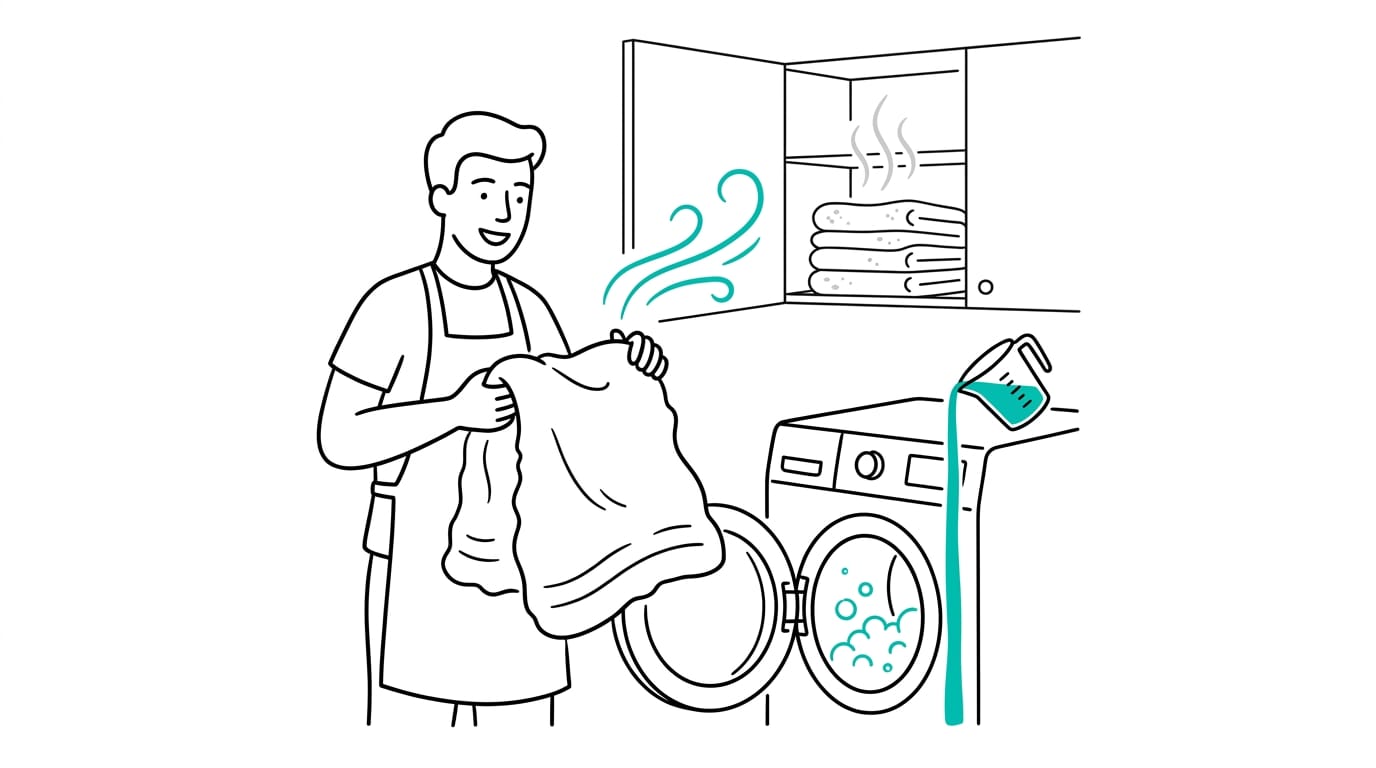
We don’t have verified details on how hotels keep their towels so white and fluffy, so we won’t guess at their methods. At home, a hot vinegar wash is a practical place to start.
Picture a host whose guest towels turned musty after a summer in the linen cupboard. According to Cleaning Guides, vinegar can help with small amounts of mildew on towels, and a hot wash can freshen them without buying a new set.
- Add 2 cups of distilled white vinegar to a hot wash.
- Follow with a normal detergent cycle.
It’s built for small amounts of mildew, not a heavy patch, and the towels come out smelling fresh.
Tackling underarm odor and stains
For underarm patches, follow these steps:
- Spray the stain with undiluted vinegar.
- Let it sit for 10 minutes.
- Brush away any stiff residue.
Vinegar also cuts through deodorant buildup and prevents yellowing. Less buildup, less yellow.
Putting vinegar in the detergent drawer
Pour 1/2 cup of vinegar into the detergent compartment, and it neutralizes odors. Use the drawer rather than the drum. If you add it straight to the drum, dilute it first.
We don’t have verified research on how baking soda helps laundry, so we won’t make claims about it here. For the odors in this section, vinegar is the one to reach for.
Making Whites Brighter and Treating Stains
Vinegar can help tired whites look brighter and give fresh marks a head start, but it has clear limits. Here’s where it works and where it stops.
Bringing dingy whites back to life
Think of a parent with a drawer of greying school socks. To revive them:
- Mix 1 cup of vinegar per gallon of water.
- Boil the mixture, then soak the whites overnight.
- Launder as usual.
It suits cotton socks, underwear, and dishcloths, so that drawer is a good place to start.
Can vinegar really lift stains from clothes?
Just the light ones. Vinegar works best on light surface stains, not deep ones. For tough marks, hydrogen peroxide is the better choice.
For a light mark, pretreat with a mix of vinegar and cider vinegar, then check the stain is gone before drying. Only then dry.
Balsamic vinegar stains follow the same rules. Pretreat a fresh splash on a shirt the same way. If it has dried into the fabric, treat it as a deep stain and reach for hydrogen peroxide instead.
Pretreating clothes when hand-washing
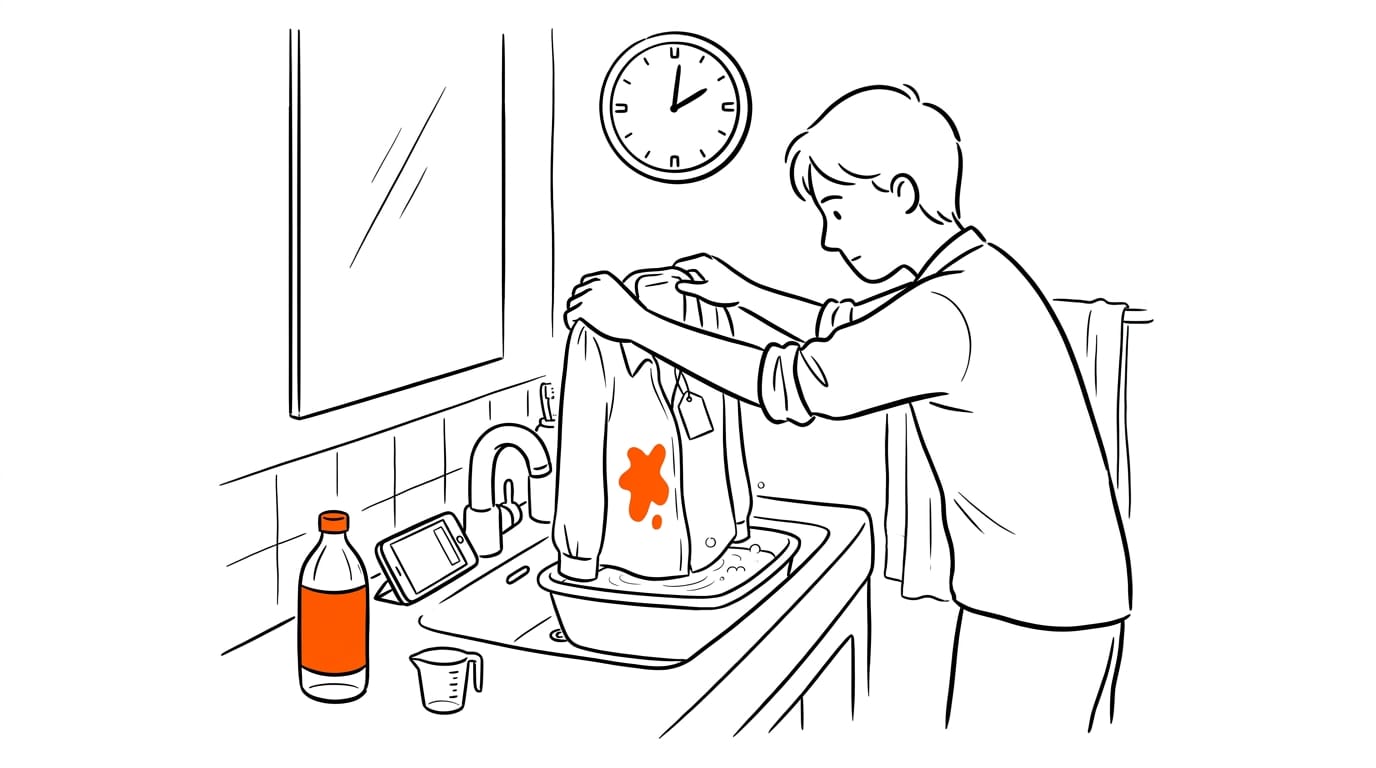
Consider a student hand-washing a stained blouse in the bathroom sink the night before a presentation. A quick vinegar-water soak gives the stain a head start before the wash. Here’s the order:
- Check the care label first.
- Spot-test a hidden seam, so you know the fabric handles the mix.
- Soak the item in 1 cup of vinegar per gallon of warm water.
Cleaning Your Washer and Laundry Room Surfaces
Your washer and the surfaces around it need regular upkeep, and vinegar can help with several of these jobs. Here’s where it fits, and where to hold back.
Deep cleaning your washing machine
Think of a parent who keeps catching a musty smell on the school shirts. A deep clean is a quick reset, and it means one less thing to fix before the next load.
Martha Stewart’s front-load washer guide notes that vinegar can help prevent mold fed by residue, the buildup left behind after each wash.
If you don’t have washer cleaner tablets, it suggests adding 2 cups of vinegar to the drum and running a hot water cycle.
Run the hottest, longest cycle your machine offers. You can also pair vinegar with baking soda for a deeper clean. Plan on cleaning it quarterly rather than waiting until it smells. While you’re in there, check the rubber seal and hoses for wear.
Wiping exteriors without damaging stone
Mix 1 part vinegar with 2 parts water, then wipe down the outside of your washer and dryer. Stone is the exception. Leave marble, granite, and limestone out of the mix entirely.
Washing mildew off shower curtains
Cloth shower curtains get moldy, and the wash is where you can fight back. Add vinegar to the load, and clean it monthly.
Caring for your iron and fixing fabric
Iron care comes down to three tasks:
- Descale the steam vents. Clear out the mineral buildup (scale) that can collect in them.
- Remove scorch marks. Test any treatment on a hidden spot first.
- Erase hem or seam holes. Use the same hidden-spot test before you treat the fabric.
Used the right way, distilled white vinegar earns its place in your laundry routine. It can soften fabrics, rinse away residue, freshen up tired clothes, and give some stains a head start, as long as you know its limits.
Match the amount to the job, test a hidden spot before you treat a visible one, and skip it where it doesn’t belong. That way, you get the results you want without the guesswork.
With a little know-how, that humble bottle can do far more than you’d expect.
References
- Vinegar • The Nutrition Source — hsph.harvard.edu
- Does White Vinegar Deodorise Laundry? — cleaningguides.co.uk (2025)
- How to Clean a Front-Load Washer and Prevent Mold for Good — marthastewart.com (2026)
Questions
How to make white clothes white with vinegar?
Use distilled white vinegar to help brighten white clothes. For cotton socks, underwear, and dishcloths, mix 1 cup of vinegar per gallon of water, bring the mixture to a boil, and soak the whites overnight before laundering as usual. For a musty towel load, use 2 cups in a hot wash, then run a normal detergent cycle.
How do hotels keep their towels so white and fluffy?
Hotels commonly rely on well-sorted loads, effective detergent, suitable wash temperatures, thorough rinsing, and careful drying to keep towels white and fluffy. At home, avoid excess fabric softener, which can leave residue that makes towels stiff, and use a vinegar rinse to help clear buildup and soften them.
How to clean dirty towels?
Wash towels with detergent at the hottest temperature allowed by their care labels, and avoid overloading the machine. For musty towels or small amounts of mildew, add 2 cups of distilled white vinegar to a hot wash, then run a separate cycle with normal detergent. Dry them promptly and thoroughly.
How does baking soda help laundry?
Baking soda is mildly alkaline and can help neutralize some acidic odors and support detergent performance, though results depend on the water and soil. It can also be used with vinegar for some washer-cleaning routines, but do not mix the two in the same laundry compartment or expect the bubbling reaction to boost cleaning.
Why are my towels hard?
Towels often become hard because soap and fabric-softener residue builds up in the fibers. A rinse with half a cup of distilled white vinegar can help dissolve that film and leave towels softer. Using too much detergent or softener can contribute to the problem.
What clothes should not be washed with vinegar?
Avoid vinegar on fabrics whose care labels warn against acids, and use particular caution with delicate materials such as silk, acetate, and some rayon. It can also damage or dull natural stone surfaces such as marble, granite, and limestone. When unsure, check the care label and test a hidden area first.
Which white vinegar to use for laundry?
Use plain distilled white vinegar, typically labeled as 5% acidity. It has no dyes or tannins that could stain fabric, unlike cider vinegar, and it generally does not need dilution for laundry use. Do not use cleaning vinegar if its stronger concentration is not suitable for the garment or washer instructions.
Should you wash new towels before using them?
Yes. Wash new towels before using them to remove manufacturing residue, lint, and any finish applied during production. Use detergent and follow the care label; avoid excessive fabric softener, which can reduce towel absorbency.
Sources
- Vinegar • The Nutrition Source, hsph.harvard.edu
- Does White Vinegar Deodorise Laundry? - Cleaning Guides, cleaningguides.co.uk,
- How to Clean a Front-Load Washer and Prevent Mold for Good, marthastewart.com,
More in Stain Removal
- How to Get Oil Stains Out of Clothes, Fresh or Set-InHow to get oil stains out of clothes: Blot first, treat cooking or motor oil by stain type, then wash and check before drying to avoid setting marks.
- How to get biro and ink out of clothesBallpoint needs isopropyl alcohol, gel and felt-tip need cold water: how to tell the inks apart, and what to do when a pen has been through the wash.

- How to get blood out of clothes, sheets and carpetCold water first, because heat sets blood: how to get fresh and dried blood out of clothes, sheets, carpets, sofas and mattresses, and what never to do.
Stain Finder: a free stain removal guide
Find your stain