How to Get Oil Stains Out of Clothes, Fresh or Set-In
How to get oil stains out of clothes: Blot first, treat cooking or motor oil by stain type, then wash and check before drying to avoid setting marks.

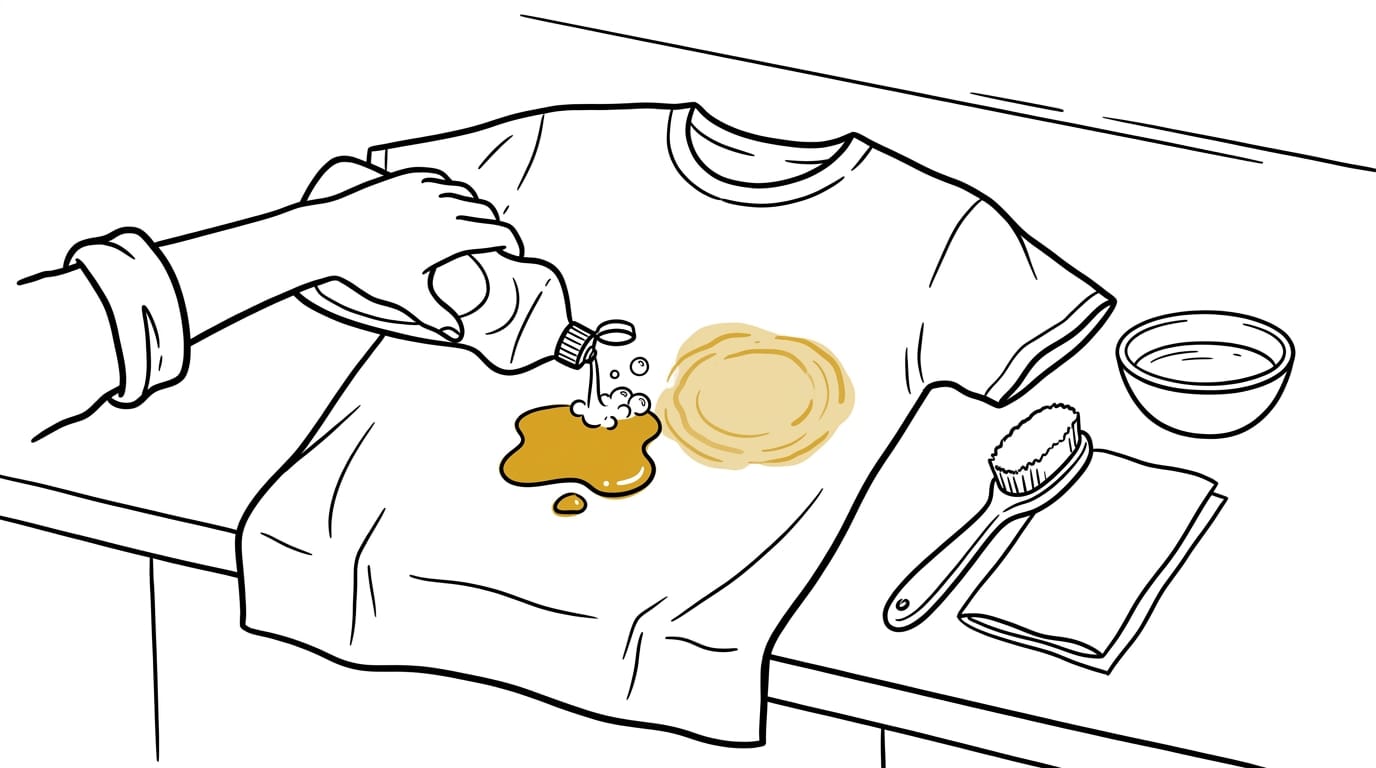
Oil stains are greasy marks that plain water alone usually cannot remove from clothing. Blot up excess oil without rubbing, apply absorbent powder, then gently pre-treat with a grease-cutting cleaner such as dish soap before washing according to the care label. Check the stain before drying and repeat treatment if needed, since heat can set a remaining mark and dried or motor-oil stains may need a longer soak or extra passes.
You’ve just splashed cooking oil down the front of your favourite shirt, or your work trousers picked up a smear of engine grease in the garage.
Your first instinct might be to panic, but oil stains are very manageable when you tackle them in the right order. Oil doesn’t rinse out the way a water-based spill does, so it needs its own approach.
In this guide, we’ll cover fresh, dried, and set-in marks, the fabric differences to watch for, and what to avoid so you don’t make things worse.
Why Getting Oil Stains Out Is Hard
Oil stains feel stubborn for a reason, and knowing that reason shapes what you do next. Can oil permanently stain clothes? Oil can become very hard to remove once it sets, which is why timing matters most.
Act quickly on fresh stains
Treat the stain as soon as you spot it. Fresh stains respond better than marks that have had time to settle, and once oil has worked into the fabric it becomes a set-in stain, which is much harder to remove. Speed wins.
For example, a parent who spots a splash of olive oil on a school jumper at breakfast can blot it straight away with kitchen roll before the school run. The same spill left until tea time could be a much tougher job.
It’s less about how hard you scrub and more about how soon you start.
Why plain water doesn’t remove oil
Oil doesn’t break down in water, so a quick rinse under the tap rarely lifts the mark on its own. Water alone won’t do it.
Oil needs extra effort or a product to lift it, whether that’s a grease-cutting product applied first or a bit more patience at the sink.
Consider a tenant who rinses a cooking oil splash from a work shirt under the cold tap, then finds a greasy shadow still there once it dries. Pre-treating it first is what keeps the shirt out of the bin.
Soak up Excess Oil First
Before you reach for any cleaner, deal with the excess oil sitting on top of the fabric. Removing as much as you can now means less work for everything that follows. Every minute counts.
Blot gently and lay the garment flat
Work through these steps in order:
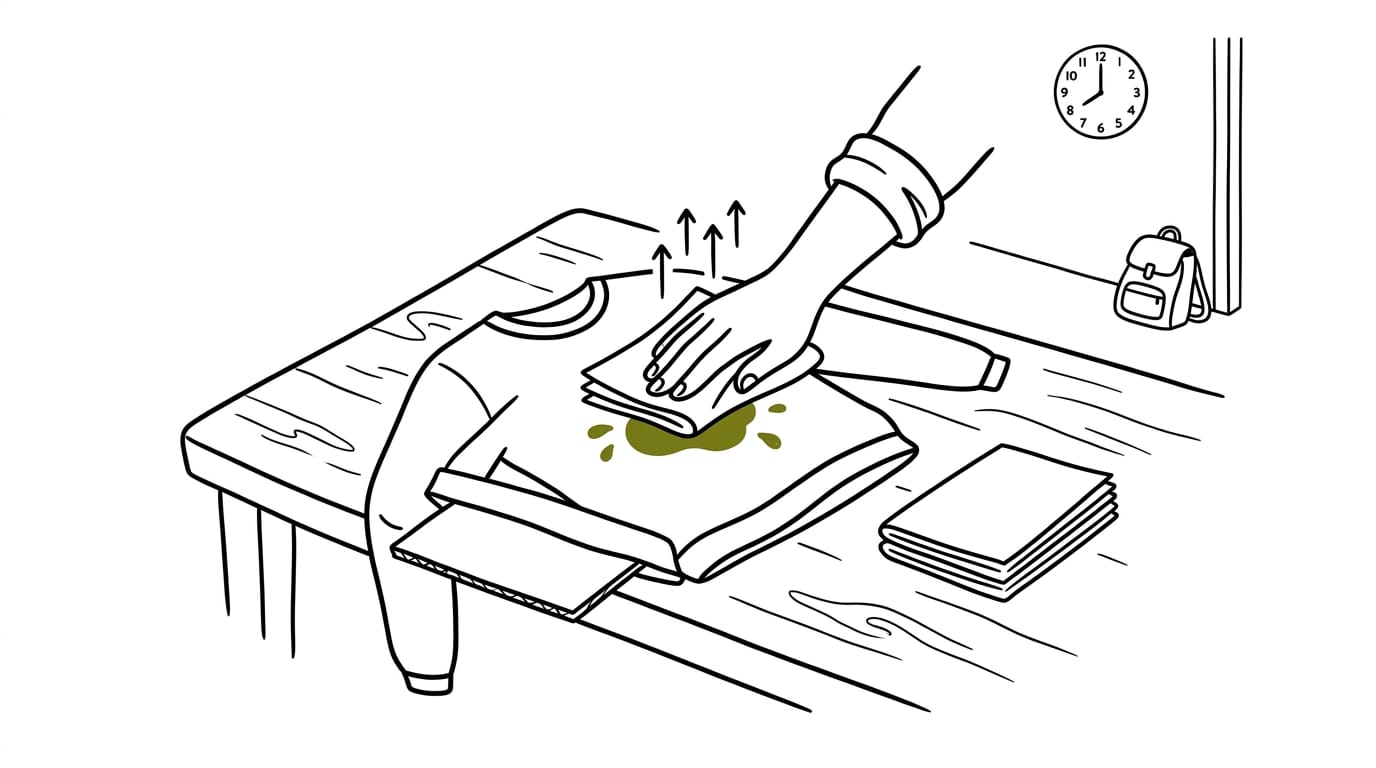
- Slide a towel or piece of cardboard under the stain so any oil that soaks through has somewhere safe to land.
- Lay the garment flat on a hard, clean surface.
- Press a folded paper towel or clean rag onto the stain.
- Blot, don’t rub. Lift straight up and switch to a clean section for each press.
Rubbing pushes oil deeper into the fibres, while blotting lifts it out. Think of a parent who spots olive oil on a school jumper just before the bell. Blotting it gently on the way out the door leaves far less to treat when they get home.
Let absorbent powder pull out the oil
Once the surface is blotted, cover the spot with an absorbent powder to draw out what’s left. Your options:
- Baking soda: the usual pick, since it draws out grease well and likely sits in your kitchen cupboard already.
- Cornstarch or baby powder: good alternatives if that’s what you’ve got to hand.
Sprinkle a thin layer over the stain and leave it for 10 to 30 minutes. Then brush or scrape the powder away. If it changes colour as it sits, the oil is still moving into it, so repeat with fresh powder until it stops changing colour.
Cleaners and Treatments to Try
Most of what you need is probably already in your cupboards. Pick the cleaner that suits the stain and the fabric, not the fanciest label.
Using dish soap to cut the grease
Dish soap is designed to cut grease. For example, a parent who spots cooking oil on a school jumper can dab on a little dish soap before the stain sets. Here’s how:
- Check colour safety first by testing a hidden spot.
- Apply a small amount directly to the stain.
- Rub gently with a soft cloth.
- Let it sit for about 5 minutes.
Less is more here.
Other cleaners, including aloe and mechanic soap
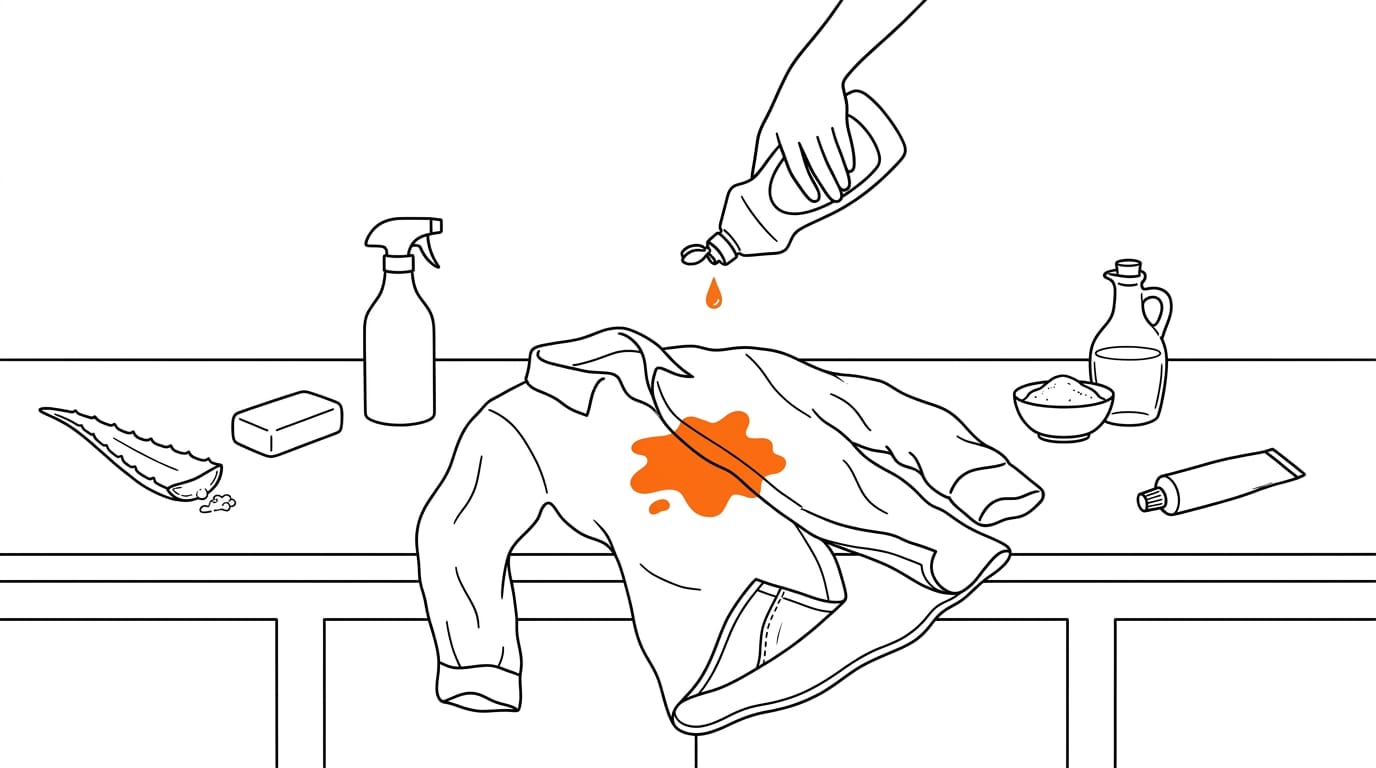
Beyond dish soap, try aloe vera gel as a gentle scrub. Mechanic’s soap, such as GoJo or Fast Orange, is made for grease on hands, so it’s worth a go on a tough mark.
A pre-treatment is anything you apply to a stain before the wash, and a stain spray can do that job. You don’t need an expensive stain remover, though: start with what you have.
Does vinegar and baking soda remove oil stains? They’re a backup, not a first pick, so start with dish soap. Test a hidden spot first.
Does toothpaste work on grease? It’s often suggested, but it isn’t made to cut grease, so keep it as a last resort.
Tools for gently scrubbing the stain
Work the cleaner in gently with one of these:
- Old toothbrush: for small, stubborn marks.
- Damp sponge or rag: for blotting and wiping.
- Dull scraping tool: for lifting off excess before you start.
Fabric decides how hard you go: silk and wool need the lightest touch, while synthetics still need a colour check.
Washing and Drying After You Treat It
Treating the mark is only half the job. How you wash and dry the garment afterward decides whether the stain stays gone, so here’s what we’d suggest next.
Follow the care label when washing
Start with the care label, which sets out the water temperature and fabric limits you need to respect.
- Choose hot, warm, or cold water depending on the method you used.
- Wash with a plant-based detergent.
- Wash items you’ve cleaned with mechanics’ soap separately from the rest of the load.
So can oil get washed out of clothes? Often, yes, once the treatment has loosened it. Does oil wash out in machine? It can, as long as you’ve pre-treated the mark and followed the care label.
For example, a parent who’s blotted cooking oil from a school shirt can wash it on the label’s setting and have it ready for the morning instead of the bin.
Dry carefully and repeat for set-in stains
Drying is where a stain you thought was beaten can set for good, so check the mark before the dryer, not after.
Dry per the label directions. If you used the aloe method, air dry the garment instead.
If the mark is still visible, repeat the treatment and wash again before the garment goes near heat. Set-in stains may need a second pass, so don’t feel like you’ve failed. Look first. Dry second.
Dealing with Motor Oil and Stubborn Stains
Motor oil and dried grease are the stains that tempt people to give up too early. The good news is that both respond well to patience and what’s already under your sink.
How do I remove black oil stains from clothes?
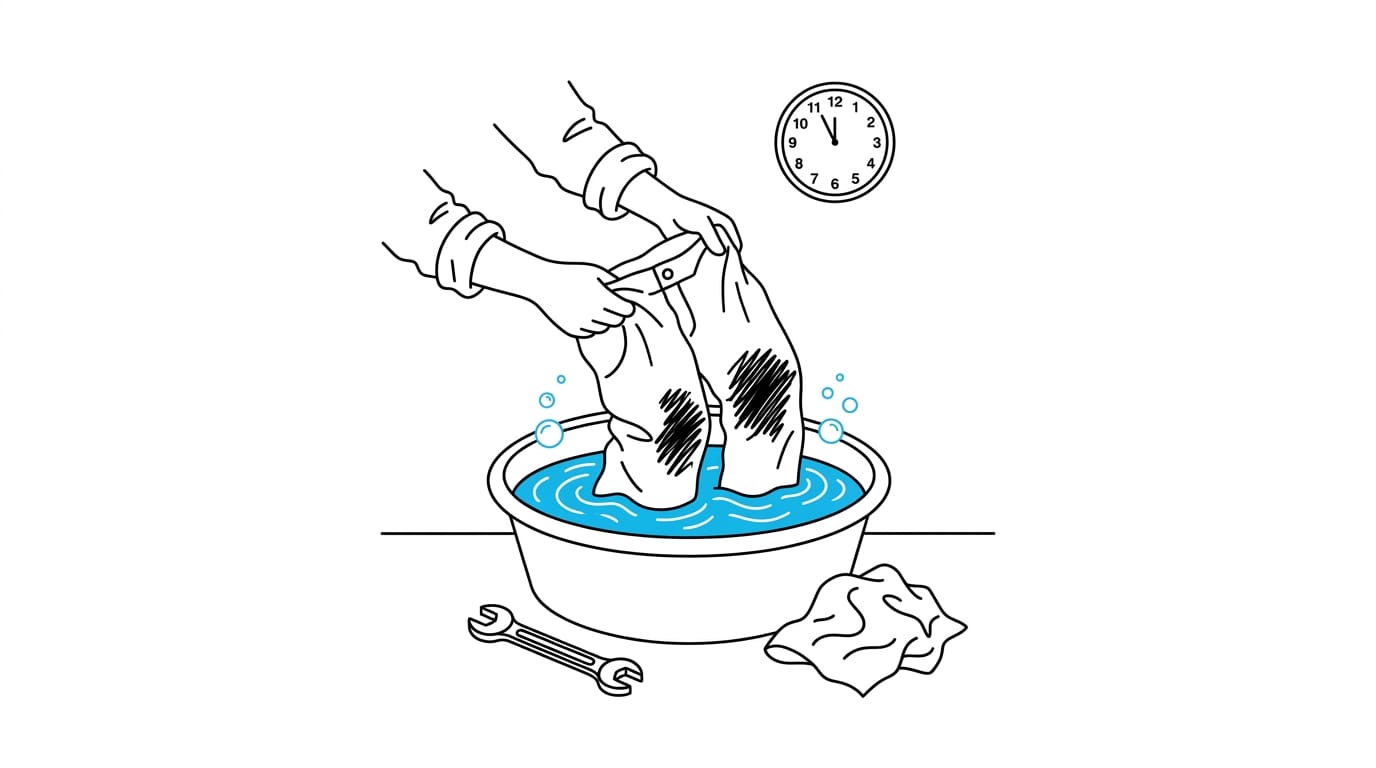
Think of a weekend mechanic who comes in with a black smear across the knee of their work trousers. An overnight cold soak means those trousers can go in the wash without the smear still staring back at them. Here’s the method:
- Follow the initial steps from earlier in this guide before anything else.
- Soak the stain in cold water mixed with a little detergent.
- Leave it to soak for several hours, or overnight for a stubborn mark.
- Wash the garment as normal once the mark has lifted.
This soak is the heart of black oil stain removal. Keep the water cold rather than warm, so the oil doesn’t set further. Patience does most of the work.
How can I remove dried grease stains from clothes?
Dried grease takes a little more effort than a fresh mark, and it’s about repeating the process rather than rushing it. Consider a parent who finds a greasy streak on a school jumper after a week at the bottom of a bag. Here’s how we’d tackle it:
- Mix dish detergent with baking soda into a paste.
- Scrub the paste into the stain with an old toothbrush.
- Repeat the process as needed until the mark fades, then wash as normal.
Do that and the jumper goes in the wash with the mark already on its way out.
Stop Oil Stains Before They Start
Oil is far easier to prevent than to remove, so a little protection up front saves a lot of scrubbing later. Prevention beats scrubbing.
Gear that keeps oil off your clothes
Four options do most of the work:
- Wear an apron. Think of a home cook frying sausages on a Sunday evening. An apron tied over a good top takes seconds to put on, and it catches the spitting fat before it reaches the shirt underneath. Keep one on the hook by the cooker so it’s always within reach.
- Oil-repellent workwear. These jackets and trousers are made to shed oil rather than soak it up, so a splash wipes off instead of sinking in. They suit mechanics, cooks, and tradespeople who handle oily kit all day.
- OilBlok stain-blocking technology. Some garments are sold with OilBlok, a stain-blocking technology. Check the product details to see whether a piece includes it, and treat it as an extra layer rather than a reason to skip the apron.
- Outfit work crews. If you run a team, such as a kitchen or workshop crew, equip everyone with aprons and oil-repellent workwear from day one. Nobody is left scrubbing their own shirt at the end of a shift.
Set up these habits once, and most splashes never get the chance to set.
Oil stains can look like a lost cause, but the order you work in makes all the difference. Blot up the excess first, treat the mark with what’s already in your cupboard, and check it before anything goes near the dryer.
Fresh, dried, and set-in marks each need slightly different handling, and you’ll give your clothes the best chance of coming back clean. The next time oil lands on a sleeve, you won’t reach for panic.
You’ll reach for the right order, and that’s what saves the shirt.
Questions
How do I remove black oil stains from clothes?
Blot the stain to lift excess oil, then cover it with baking soda, cornstarch, or baby powder for 10 to 30 minutes and brush it off. Soak the stain in cold water mixed with a little detergent for several hours or overnight, then wash according to the garment’s care label. Check the stain before drying and repeat the treatment if it remains.
How can I remove dried grease stains from clothes?
Mix dish detergent with baking soda to make a paste, then gently work it into the dried grease with an old toothbrush. Repeat as needed until the mark fades, then wash according to the care label. Avoid machine drying until you’ve checked that the stain is gone.
How do you get grease stains out of already dried clothes?
Treat dried grease with a paste of dish detergent and baking soda, gently scrubbing it in with an old toothbrush. Repeat the treatment if needed, then wash the garment and check the stain before drying; heat can set any remaining oil.
Can oil permanently stain clothes?
Oil can become very difficult to remove once it sets, but that does not mean it will always permanently stain clothing. Promptly blotting and pre-treating the mark, then checking it before using a dryer, gives you the best chance of removing it.
Can oil get washed out of clothes?
Often, yes, but oil usually needs pre-treatment because it does not break down in water and a plain rinse may leave a greasy mark. Loosen it with a grease-cutting cleaner or detergent, then wash according to the care label and check the garment before drying.
Does vinegar and baking soda remove oil stains?
Baking soda can help absorb oil, but vinegar and baking soda together are a backup rather than the first choice for removing an oil stain. Start with dish soap, test it on a hidden area, and wash the garment according to its care label.
Can you take off grease stains from clothes?
Yes. Blot excess grease, use an absorbent powder, then apply a grease-cutting cleaner such as dish soap and wash according to the care label. Treat the stain again if it remains, and do not put the garment in the dryer until you’ve checked that it is gone.
Does toothpaste remove grease stains?
Toothpaste is not made to cut grease, so it is not a reliable first choice for grease stains. Dish soap is a better option; test any cleaner on a hidden area and check the stain before drying.
More in Stain Removal
- Distilled White Vinegar for Laundry: The Complete GuideDistilled white vinegar for laundry can soften clothes, clear soap residue, and tackle odors. Learn how much to use and which safety cautions matter.
- How to get biro and ink out of clothesBallpoint needs isopropyl alcohol, gel and felt-tip need cold water: how to tell the inks apart, and what to do when a pen has been through the wash.

- How to get blood out of clothes, sheets and carpetCold water first, because heat sets blood: how to get fresh and dried blood out of clothes, sheets, carpets, sofas and mattresses, and what never to do.
Stain Finder: a free stain removal guide
Find your stain