- RinseCold
- DabMins
- Soak30 min
- CheckCold
- WashLabel
- NeverHot
How to get blood out of clothes, sheets and carpet
Cold water first, because heat sets blood: how to get fresh and dried blood out of clothes, sheets, carpets, sofas and mattresses, and what never to do.

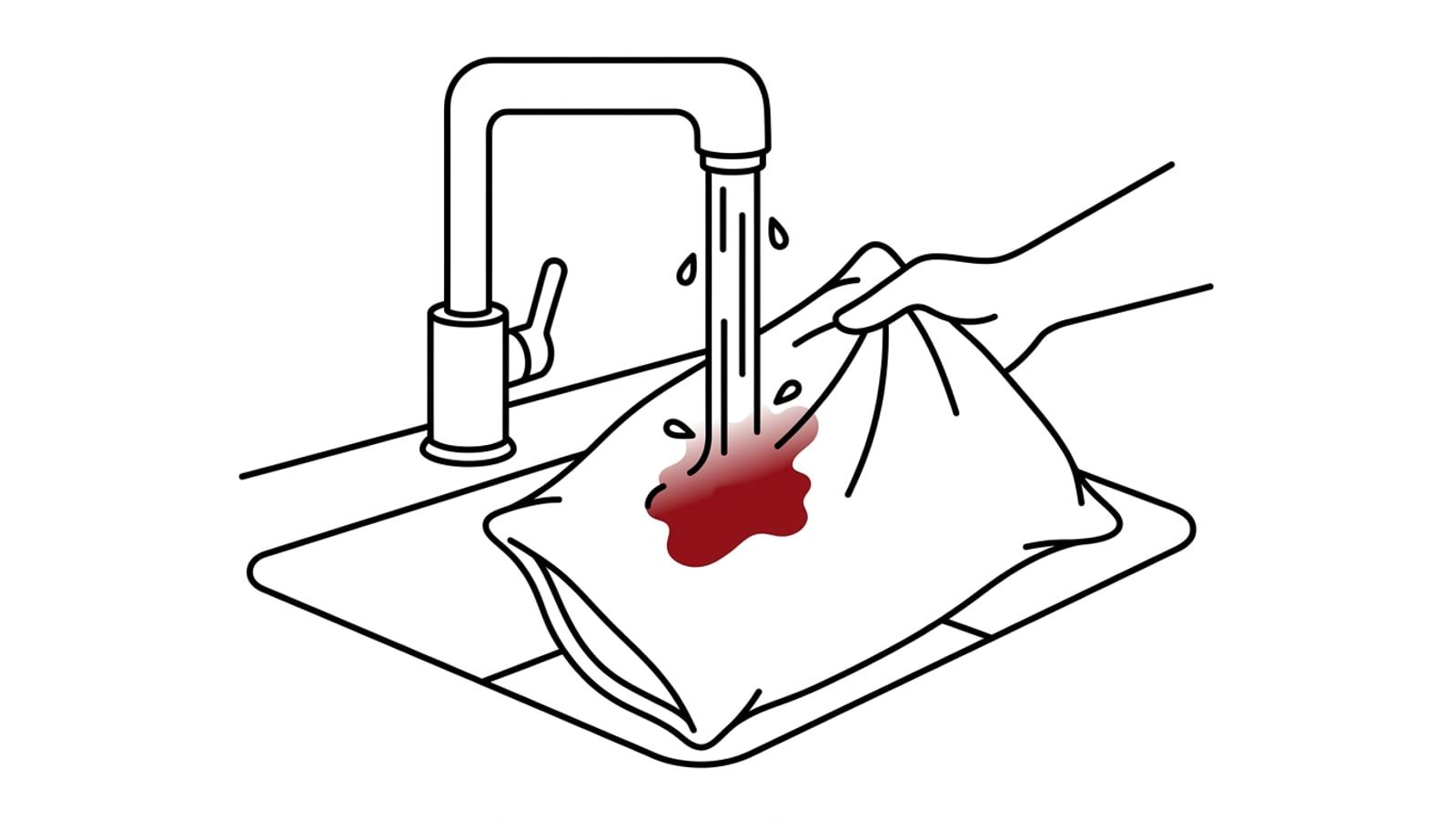
Treat blood with cold water, never hot: blot rather than rub, and rinse washable fabric from the back before soaking it in cold water with biological detergent (a wool detergent for wool and silk). On carpets, sofas and mattresses, dab with washing-up liquid in cold water, use as little liquid as you can, and keep heat away until the mark has gone.
Fresh blood usually comes out with cold water: rinse it through from the back of the fabric, soak it in cold water with biological detergent (a wool detergent for wool and silk), and keep heat away until the mark has gone. It is a protein stain, and heat cooks protein into the fibres, so hot water, the iron or the tumble dryer can turn an easy stain into a stubborn one.
Cold water first, and never hot
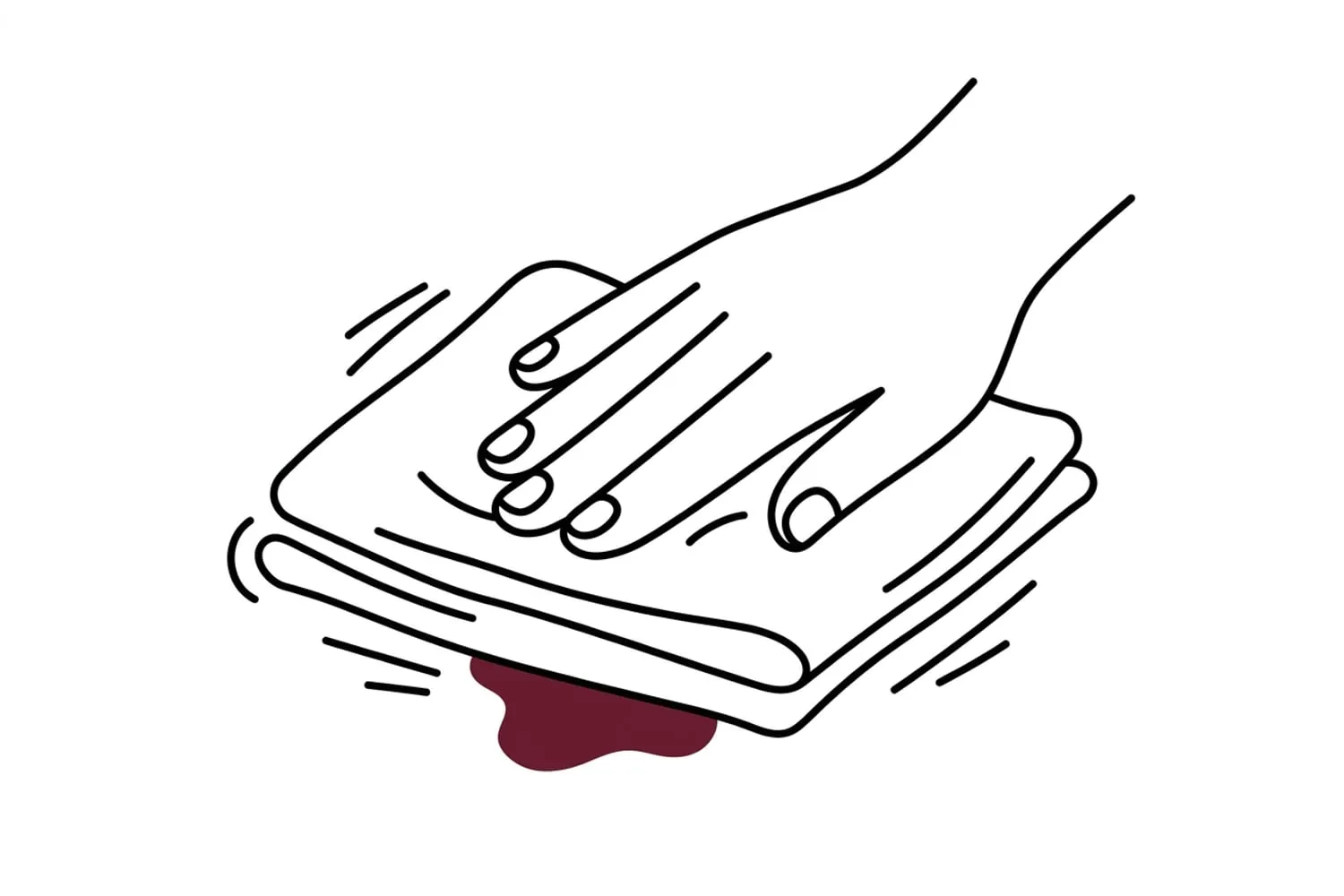
Whatever the blood is on, start the same way. Blot up what you can with a white cloth or kitchen roll, pressing rather than rubbing, because rubbing spreads the stain and works it deeper into the fibres. Then use cold water, and nothing warm, until you are sure the mark has gone.
What comes next depends on the surface. The Stain Finder’s entry for blood has the same methods in short, with tiles, grout and other hard surfaces too.
| Surface | First step | Then |
|---|---|---|
| Washable clothes and bedding | Rinse from the back under the cold tap | Soak in cold water with biological detergent, then wash |
| Wool and silk | Blot, then dab with cold water | A wool detergent, or a dry cleaner |
| Carpets and rugs | Blot, then dab with cold water | Washing-up liquid in cold water, rinse, blot dry |
| Sofas | Check the cleaning label | As for carpets, with even less water |
| Mattresses | Blot with a barely damp cloth | A little washing-up liquid lather, blot, air dry |
Fresh blood on clothes and sheets
For washable cotton, linen and synthetics, work through these steps in order and stop when the mark has gone. Wool and silk have their own section below.
- Turn the fabric inside out and hold the stain under the cold tap, so the water pushes the blood out the way it came in.
- Dab a little biological liquid detergent or washing-up liquid onto what is left, leave it for a few minutes, then rinse in cold water.
- Soak it in cold water for 30 minutes, in a bucket or the bath for a sheet, so the stained part stays under.
- Check the mark. If it is still there, repeat the detergent and the soak with fresh cold water.
- Once the mark has gone, wash at the temperature on the care label.
- Dry it on an airer or the line, and check it again in daylight before it goes near the tumble dryer or the iron.
Tip: patch test anything stronger than cold water and detergent. Dab a little on an inside seam or hem, leave it for as long as you would on the stain, then rinse and let it dry. If the colour has moved or the fabric looks different, use something gentler.
Dried and set-in blood
A dried stain takes longer, so give it time rather than stronger products. Soak it in cold water for a few hours first to loosen it.
Next, soak it in cool or lukewarm water with biological detergent, never hot. Its enzymes break down protein stains such as blood, but they need time: at least 30 minutes, and longer for an old mark. Rinse, check, and repeat while the stain is still fading.
If a shadow is left, treat it with a laundry stain remover before the next wash, used as the pack directs and within the care label. Read the pack first: many are not for wool, silk or leather, and an oxygen-based one, the oxi kind, is a mild bleach, so patch test it on colours. The ones we recommend are in the Cupboard. On white cotton and linen, 3% hydrogen peroxide is the other option: dab it on, leave it for a minute or two, then rinse and wash. It is a bleach too, so patch test it first.
A mark that has been ironed or tumble dried may leave a faint shadow whatever you do. A dry cleaner can sometimes lift it, so tell them it is blood and roughly how old it is.
Wool, silk and dry-clean-only fabric
The enzymes that make biological detergent good at blood also attack wool and silk, which are protein fibres themselves, as our comparison of bio and non-bio detergent explains. For wool, blot, rinse from the back with cold water, then hand wash it in cold water with a wool detergent, such as Lakeland’s wool wash, and dry it flat. Do not wring or rub it, because wet wool felts when it is worked.
For silk, blot and dab with cold water only, and take it to a dry cleaner if the mark stays. Blot anything labelled dry clean only, then take it straight to the dry cleaner and say what the stain is.
Carpets, sofas and mattresses
You cannot soak a carpet or a mattress, so the work is blotting, with as little water as possible. Too much soaks into the backing or the filling, where it dries slowly and can draw the stain back up to the surface.
Carpets and rugs
Blot up what you can, then mix a few drops of washing-up liquid into a mug of cold water. Dab the stain with a clean white cloth dipped in it, working from the outside in so the mark does not spread, and blot with a dry cloth until no more colour comes off. Dab with plain cold water to rinse out the soap, which would otherwise attract dirt, then press a thick pad of kitchen roll on top to draw out the damp. A wool carpet needs gentler products than a synthetic one, so patch test anything stronger in a corner first.
Do this by hand rather than with a machine. A spot cleaner sprays and extracts in one pass, but some keep the water warm as they run, as the Bissell SpotClean ProHeat in our Cupboard does, and heat sets blood. Whether a machine is worth having for the spills that do come round is in whether to hire or buy a carpet cleaner, and cleaning a whole carpet is in Floors & Carpets.
Sofas and mattresses
Check the sofa’s cleaning label first, usually under a seat cushion or on the frame. If the covers come off and the label says they are washable, treat them like clothes. If not, use the carpet method with even less water: a cloth wrung out until it is barely damp, a little lather rather than liquid, and plenty of blotting. Blot velvet, silk and anything whose label says dry clean only, then call an upholstery cleaner. On leather, wipe with a cloth dampened in cold water and use the cleaner the sofa’s maker recommends.
A mattress gets the same treatment. Blot, dab with the lather, blot again, and let it dry completely, with a window open if you can, before you make the bed.
What never to do with blood
- Never use hot water, a hot wash, a steam cleaner, the iron or the tumble dryer until the mark has gone.
- Never rub at a stain with a cloth. Blot it, so it does not spread or sink deeper.
- Never use biological detergent on wool or silk.
- Never mix cleaning products. Bleach with ammonia gives off chloramine fumes, and bleach with an acid such as white vinegar or limescale remover gives off chlorine gas, as the UK Health Security Agency’s guidance on sodium hypochlorite explains. If a guide suggests ammonia for old blood, keep bleach well away from it, and rinse between any two products.
Other stains, from red wine to biro, are in Stain Removal.
Questions
Does hot water set a blood stain?
Yes. Blood is a protein stain, and heat fixes protein into the fibres, so rinse and soak in cold water and keep the item away from the tumble dryer and the iron until the mark has gone. Once it has, wash it at the temperature on the care label.
Can I use biological detergent on wool or silk?
No. The enzymes that break down blood also break down wool and silk, which are protein fibres themselves. Use cold water and a wool detergent, and take anything labelled dry clean only to a dry cleaner.
Will an old blood stain still come out?
Often, with a long cold soak, then biological detergent and time, then a stain remover. A mark that has been through a hot wash or the tumble dryer may leave a faint shadow, and a dry cleaner can sometimes lift it if you tell them what it is.
Sources
- Remove Stains From Blood, University of Georgia Cooperative Extension
- How to Remove Pesky Stains, Mississippi State University Extension
- Sodium hypochlorite: general information, UK Health Security Agency,
More in Stain Removal
- How to get red wine out of carpet, sofas and clothesBlot, cold water, then washing-up liquid with a little white vinegar: how to get fresh and dried red wine out of carpet, sofas and clothes, in that order.
- How to get biro and ink out of clothesBallpoint needs isopropyl alcohol, gel and felt-tip need cold water: how to tell the inks apart, and what to do when a pen has been through the wash.
- How to get oil and grease out of clothesSoak up the oil with a powder, break it up with washing-up liquid and wash as warm as the label allows. Fresh spills, washed-in spots, sportswear and bike oil.
Stain Finder: a free stain removal guide
Find your stain