- Blot
- DabCold
- Mix10 min
- Dab
- Rinse
How to get red wine out of carpet, sofas and clothes
Blot, cold water, then washing-up liquid with a little white vinegar: how to get fresh and dried red wine out of carpet, sofas and clothes, in that order.

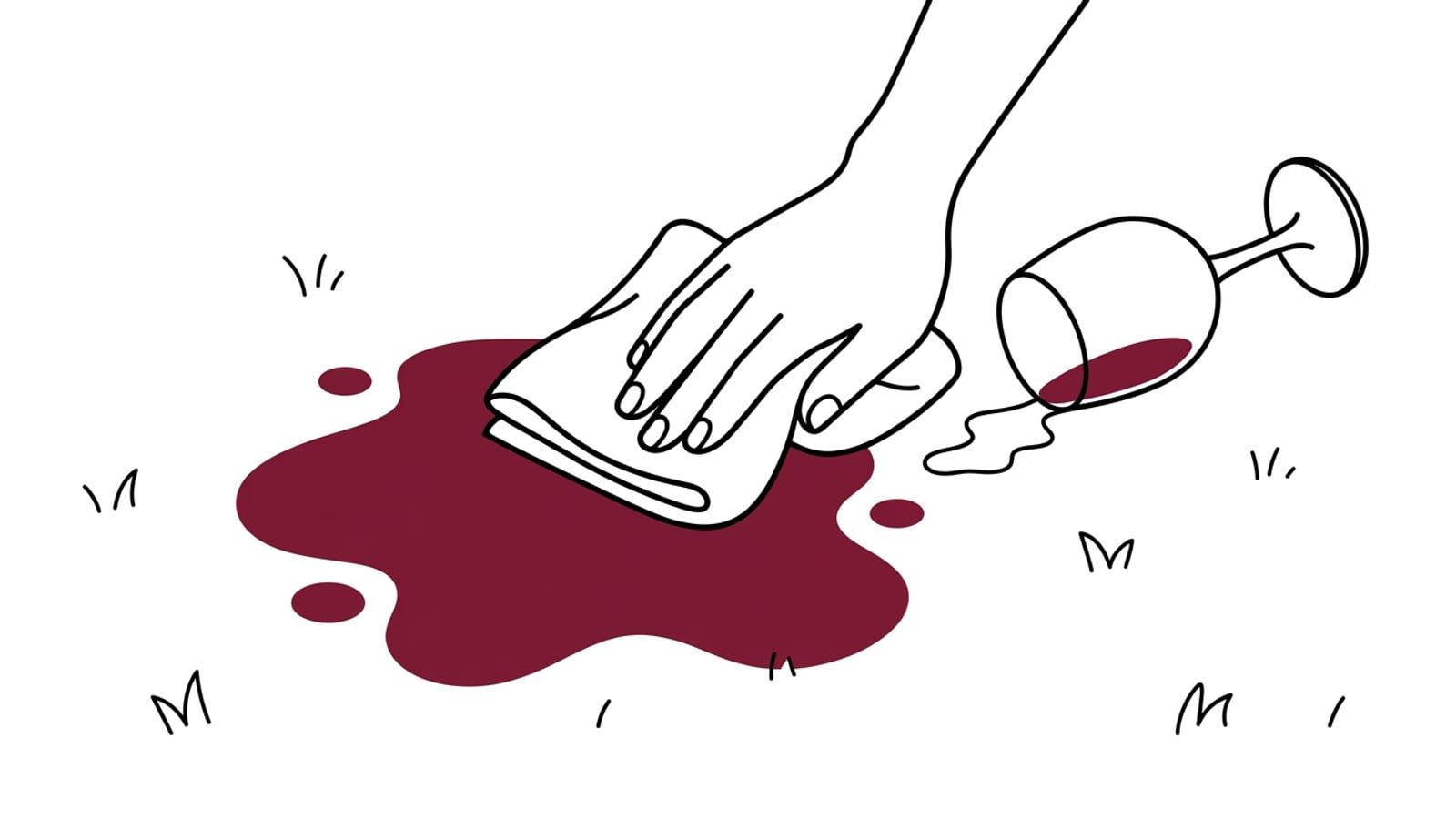
Blot red wine straight away from the outside in, pressing rather than rubbing, then dab on cold water and blot until no more colour comes up. On carpets and sofas, follow with a few drops of washing-up liquid and a tablespoon of white vinegar in a mug of cool water, rinse with clean water and weigh down kitchen roll to dry it; on washable clothes, rinse cold through the back, work in washing-up liquid and keep heat away until the pink has gone.
Fresh red wine usually comes out if you blot it at once, keep it cold, and use washing-up liquid with a little white vinegar before anything stronger. It is tannin with a strong red dye that spreads fast, sets as it dries and fixes with heat, so speed and cold water do most of the work.
Blot first, then cold water
Press a white cloth or a wad of kitchen roll onto the spill and lift it, turning to a clean part as it colours, and work from the outside in so the stain doesn’t spread. Don’t rub: it pushes the wine deeper and frays a carpet’s pile. Leave coloured cloths and tea towels in the drawer, because they can give up their own dye to a wet carpet.
Then dab on cold water, never hot, and blot it off. On a carpet or a sofa, use as little as you can: water that reaches the backing carries the stain down and brings it back up as it dries. The red wine entry in the Stain Finder has the same steps, with hard surfaces too.
| Surface | First | Then |
|---|---|---|
| Synthetic carpet | Blot, then dab with cold water | Washing-up liquid and vinegar mix, rinse, weigh down |
| Wool carpet | Blot, then dab with cold water | The same mix, sparingly, or a WoolSafe-approved product |
| Sisal, seagrass, coir, jute, viscose | Blot with dry kitchen roll only | A specialist cleaner |
| Sofas | Check the cleaning label | The carpet method, with a barely damp cloth |
| Washable clothes and linen | Cold water through the back | Washing-up liquid, then an oxygen soak if pink is left |
| Wool clothes | Blot, then rinse with clean water | A wool detergent in tepid water |
| Silk and dry clean only | Blot only | The dry cleaner, as soon as you can |
Red wine on carpet, step by step
- Blot hard, from the outside in, until the cloth comes away almost clean.
- Dab on cold water a little at a time and blot again, until no more colour comes up.
- Mix a few drops of washing-up liquid and a tablespoon of white vinegar into a mug of cool water. Patch test it on a hidden spot, such as the carpet inside a wardrobe: wait 10 minutes, blotting the stain meanwhile, and if the carpet’s own colour comes off on a white cloth, stop and call a professional.
- Dab the mix onto the stain with a clean white cloth and blot, from the outside in. Repeat while colour is still lifting.
- Rinse by dabbing with a cloth dampened in clean water, then blot.
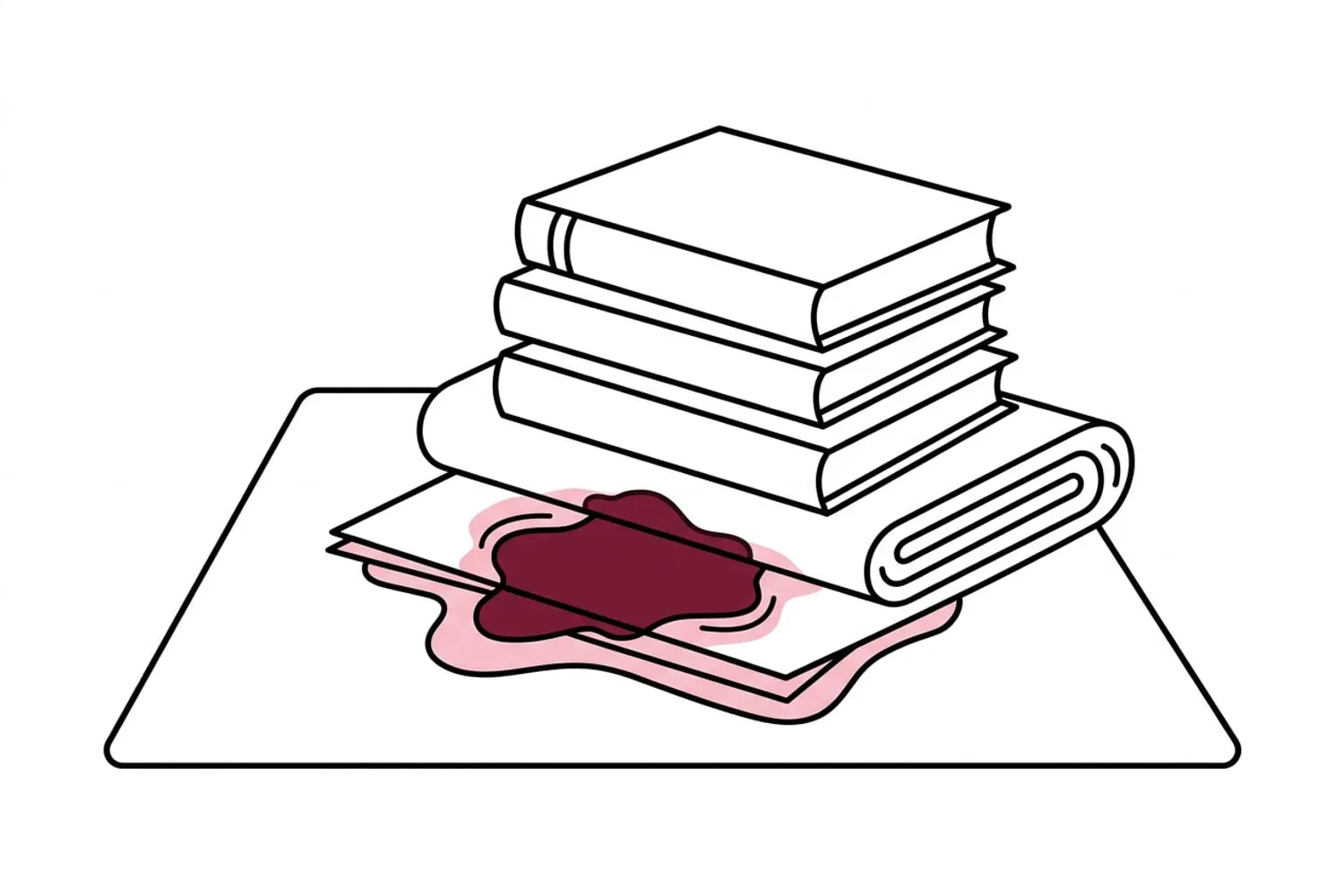
- Weigh down a thick pad of kitchen roll on the spot for an hour, with heavy books on top and a plastic bag between them. Swap the pad if it is still drawing up colour.
- Fluff up the pile with your fingertips and let it dry before you walk on it.
Tip: once the patch is dry, run your hand over it. If the pile feels stiff or sticky, soap is still in it and will collect dirt, so dab it again with clean water and blot it dry.
If a mark is left, use a carpet stain remover and follow its label exactly. Dr. Beckmann’s Carpet Stain Remover, one of the stain removers in our Cupboard, says to work it in lightly without soaking, wait three minutes and blot with a damp, light-coloured cloth. It is oxygen-based, a mild bleach, so patch test it first, and it isn’t for silk, velvet or fabric that marks with water.
Wool and natural-fibre carpets
Wool
Wool takes the same order, done more gently: cold or cool water, the smallest amount of everything, and blotting rather than scrubbing, because heat and scrubbing can shrink and felt it. Check the carpet maker’s care guide before the mix goes on: makers such as Penthouse Carpets ask for a WoolSafe-approved cleaning product, no bleach and no rubbing. Many stain removers aren’t for wool either, so read the label first.
Sisal, seagrass, coir, jute and viscose
Plant fibres and viscose, the fibre in many silky rugs sold as art silk or bamboo silk, don’t take water well. WoolSafe’s guide to fine fibres, which covers sisal, seagrass, coir and viscose, warns that water-based spot removers can distort the pile and leave marks, and sends large spills and set-in stains to a professional. Jute is a plant fibre too, and needs the same care. Blot with dry kitchen roll until nothing more comes up, keep water and the vinegar mix off, and call a specialist cleaner while the stain is fresh.
Dried and old red wine stains
A dried stain needs time more than a stronger product. On carpet:
- Dab on cold water and leave it for a few minutes to soften.
- Work through the washing-up liquid and vinegar mix, blotting between rounds. It can take two or three.
- Rinse with clean water and weigh down kitchen roll to dry it.
- If a mark is still there, try a carpet stain remover made for the fibre, after a patch test.
On clothes, soak the stain in an oxygen-based stain remover as the pack directs, within the care label, then wash it as the label says and check it before drying. Repeat while it is still fading. A stain that has been through a hot wash or the tumble dryer may have set for good, though a dry cleaner can sometimes lift it if you say what it was. Never use hot water, an iron or a steam cleaner to loosen old wine: heat fixes the dye.
Sofas and upholstery
Check the cleaning label first, usually under a seat cushion or on the frame. If the covers come off and the label says they are washable, treat them like clothes. If not, clean them in place, with even less water than a carpet gets.
- Blot hard, from the outside in.
- Dab with a cloth wrung out in cold water until it is barely damp, and blot.
- Patch test the mix on a hidden part of the same fabric, then dab it on with a barely damp cloth and blot.
- Rinse with a cloth dampened in clean water, blot, and dry the patch quickly, with a window open or a fan on it.
Too much water leaves a ring on upholstery as it dries. Blot velvet, silk and anything marked for dry cleaning, then call an upholstery cleaner. On leather, blot, wipe with a damp cloth and use the cleaner the sofa’s maker recommends, never alcohol, which strips the finish. A mattress takes the same barely damp method, as in our guide to getting blood out of clothes, sheets and carpet.
Clothes and table linen
For anything washable, work through these in order and stop once the stain has gone:
- Blot up what you can with kitchen roll.
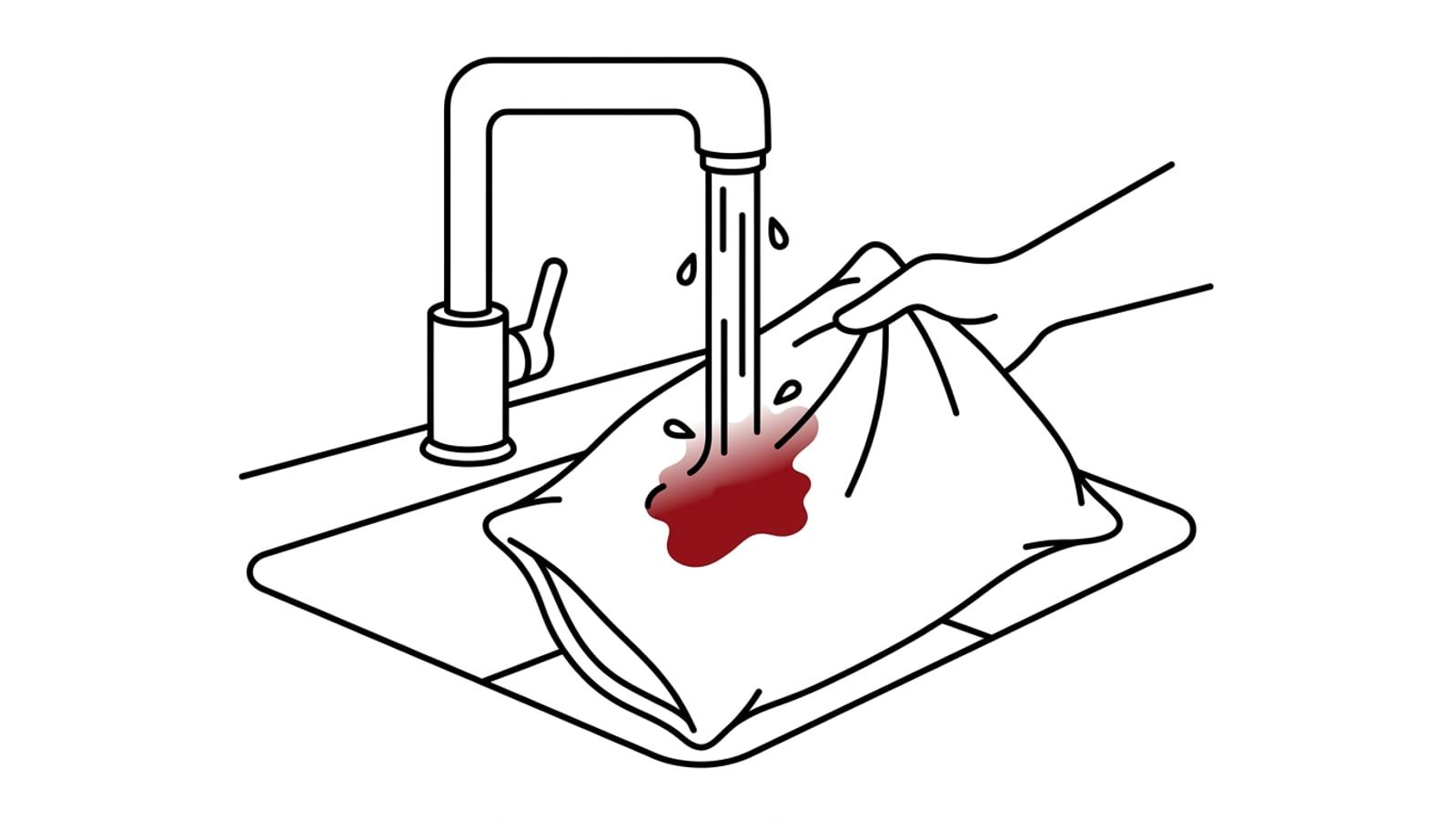
- Stretch the stained part over a bowl and pour cold water through the back, so it pushes the wine out the way it came in.
- Work in washing-up liquid or liquid detergent with your fingertips, leave it for 15 minutes, and rinse.
- If pink is left, soak it in an oxygen-based stain remover as the pack directs, within the care label.
- Wash as the care label says, and check the stain has gone before it goes near the tumble dryer.
Soak a tablecloth in the bath or a bucket, so the stained part stays under. For wool, the Woolmark Company advises rinsing with clean water, then dabbing on a wool detergent diluted in tepid water before a rinse and a wash. Blot silk and anything marked dry clean only and take it to a dry cleaner, saying it is red wine: water alone can leave a ring on fabric that isn’t meant to get wet.
Salt, white wine, fizzy water and other extras
Most of the extras people reach for do less than blotting and cold water.
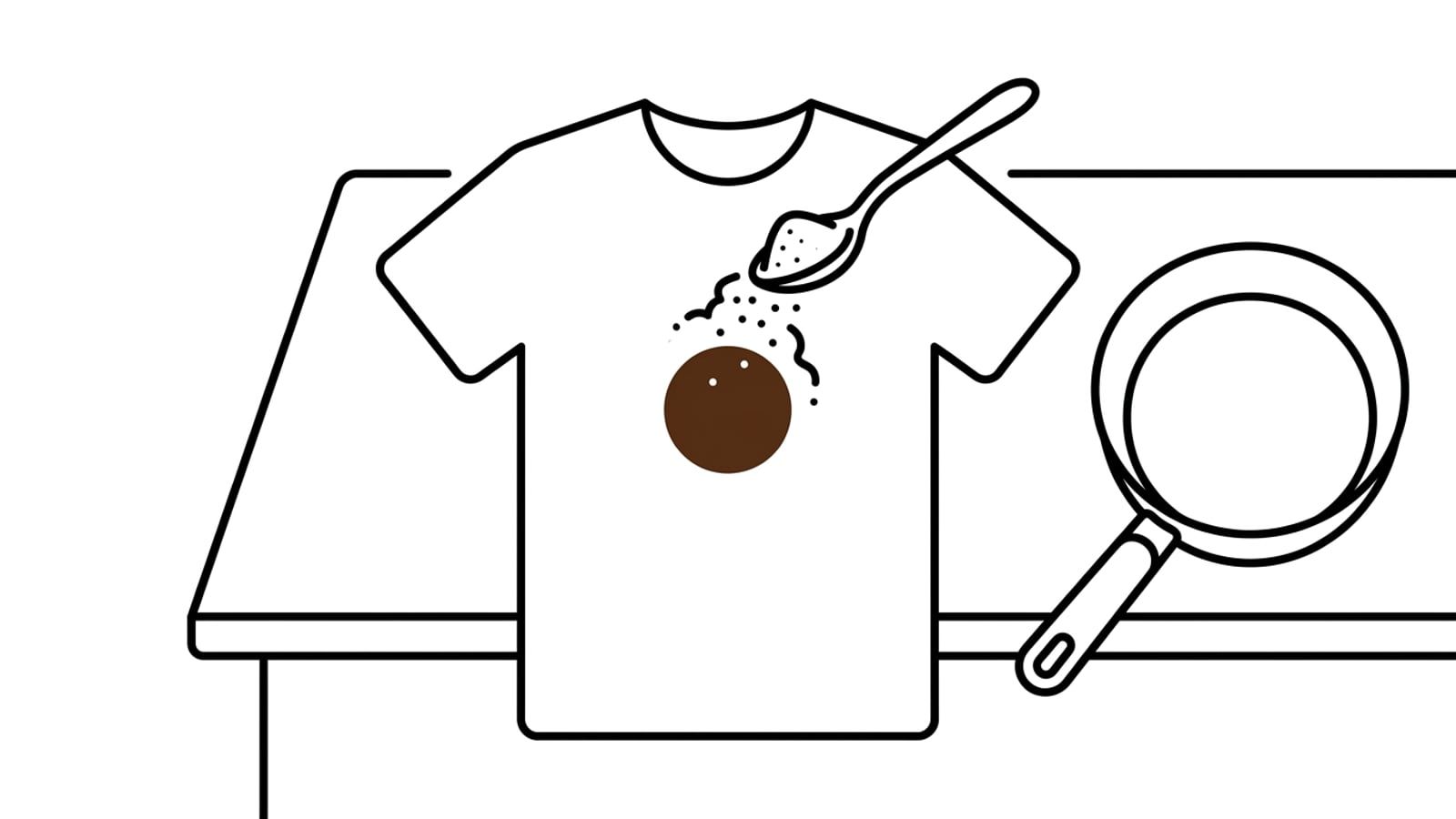
- Salt soaks up liquid, so it draws some of a fresh spill into itself, but kitchen roll does that without leaving grains in the pile, and salt does nothing for wine that has already soaked in.
- White wine dilutes the red. In a Which? test on carpet tiles, it took two helpings to shift fresh and dried red wine, and Which? suggests it if there is no cleaning product in the house. Washing-up liquid in water did best of all the home remedies, which is why it is in the mix above.
- Fizzy water dilutes the wine as cold water does. The University of Georgia Extension’s method for wine on carpet sponges with cool water and then fizzy water before a mild detergent, white vinegar and a weighted pad, much as above, so use whichever you have, dabbed on rather than poured.
- Bicarbonate of soda stays off carpet, grout and anything else porous for this job: in the Which? test it reacted with the wine and left the carpet with a blue tinge.
- Bleach and hydrogen peroxide stay off carpet, because they can lift its own colour and leave a pale patch. Bleach must never meet the vinegar in the mix, or ammonia, either: with an acid it gives off chlorine gas, and with ammonia, chloramine fumes.
When to call a professional
Call a carpet or upholstery cleaner when:
- a wool carpet hasn’t responded to blotting and cold water, or the carpet is sisal, seagrass, coir, jute or viscose;
- a big spill has soaked through to the underlay;
- the stain is still there after two or three rounds, or it has been steam cleaned or ironed;
- the sofa is velvet, silk or leather, or its label says dry clean only.
Ring while the stain is fresh, and say what it is and what you have already put on it. The National Carpet Cleaners Association’s Find a Cleaner directory searches its members by postcode, and WoolSafe lists approved cleaners for wool and natural fibres. If the whole carpet needs a clean afterwards, compare hiring or buying a carpet cleaner first.
More methods, stain by stain, are in Stain Removal.
Questions
Does salt get red wine out of carpet?
Not on its own. Salt soaks up liquid, so it can draw some of a fresh spill up into itself, but kitchen roll does the same job without leaving grains in the pile, and salt does nothing for wine that has already soaked in. If you have used it, vacuum it all up once it is dry, then carry on with cold water and the washing-up liquid mix.
Does white wine get red wine out?
It can, because it dilutes the red. In a Which? test on carpet tiles, white wine took two helpings to remove both fresh and dried red wine, and Which? suggests it if there is no cleaning product in the house. Washing-up liquid in water did better in the same test, so use that if you have it, and rinse with clean water afterwards whichever you use.
Can you get dried red wine out of carpet?
Often, yes. Soften it with cold water, then work through the washing-up liquid and white vinegar mix, blotting between rounds, and expect it to take two or three goes. If a mark is still there once the carpet is dry, try a carpet stain remover made for the fibre after a patch test, or call a professional carpet cleaner and tell them what you have tried.
Does vinegar remove red wine stains?
It helps, as part of a mix: a tablespoon of white vinegar and a few drops of washing-up liquid in a mug of cool water is the one for carpets and sofas. Patch test it first, then rinse it out with clean water, which takes the smell with it. Keep vinegar off marble and limestone, which acids etch, and never use it where bleach has been, because bleach and an acid together give off chlorine gas.
Sources
- Remove Stains From Alcoholic Beverages, Beer, Wine, University of Georgia Cooperative Extension
- Best carpet stain removers, tested and reviewed, Which?,
- Cleaning and Maintenance of Fine Fibres, The WoolSafe Organisation
- Removing stains from wool, The Woolmark Company
More in Stain Removal
- How to get blood out of clothes, sheets and carpetCold water first, because heat sets blood: how to get fresh and dried blood out of clothes, sheets, carpets, sofas and mattresses, and what never to do.
- How to get biro and ink out of clothesBallpoint needs isopropyl alcohol, gel and felt-tip need cold water: how to tell the inks apart, and what to do when a pen has been through the wash.
- How to get oil and grease out of clothesSoak up the oil with a powder, break it up with washing-up liquid and wash as warm as the label allows. Fresh spills, washed-in spots, sportswear and bike oil.
Stain Finder: a free stain removal guide
Find your stain