- Lift
- Absorb
- Brush
How to get oil and grease out of clothes
Soak up the oil with a powder, break it up with washing-up liquid and wash as warm as the label allows. Fresh spills, washed-in spots, sportswear and bike oil.

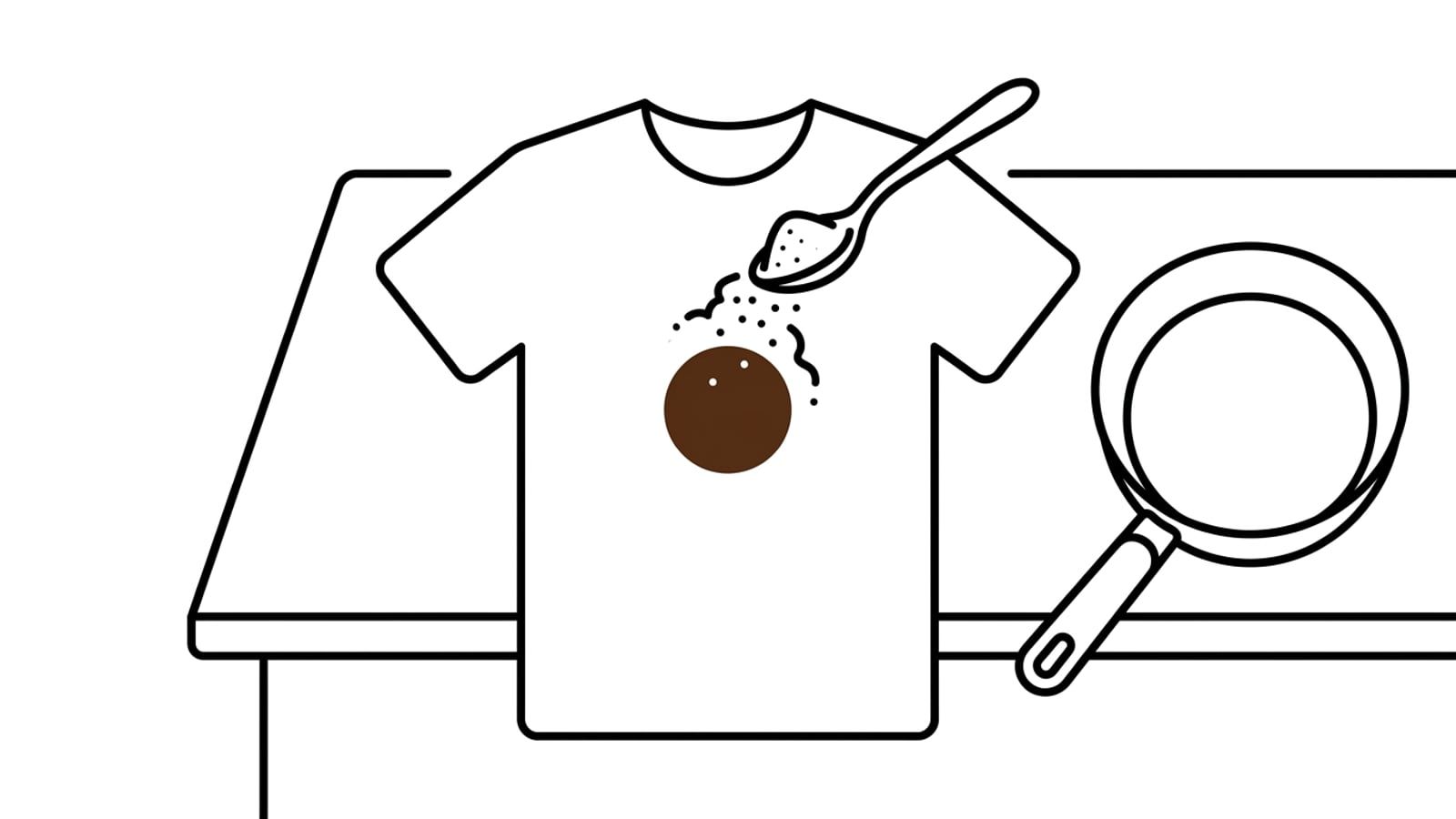
Blot the oil, cover it with bicarbonate of soda or cornflour for 15 minutes, then work washing-up liquid into both sides, leave it for 10 minutes and wash at the warmest temperature the care label allows. Air-dry it and check it in daylight before it goes near the tumble dryer, because oil marks hide while the fabric is wet and heat sets them.
Most oil and grease comes out of clothes in three steps: soak up what you can with bicarbonate of soda or cornflour, break up the rest with washing-up liquid, then wash at the warmest temperature the care label allows. Water on its own runs off oil, which is why it comes last, and nothing goes in the tumble dryer until you are sure the mark has gone.
The fabric decides how far you take it.
| Fabric | After blotting | Then |
|---|---|---|
| Cotton, linen and denim | Powder, then washing-up liquid on both sides | The warmest wash on the label |
| Polyester, sportswear and stretch | Powder, then washing-up liquid or a stain remover for grease | The label’s temperature, then air-dry |
| Washable wool | Powder, then a little washing-up liquid, dabbed in | A hand wash or wool cycle, with wool detergent |
| Silk and dry-clean-only | Powder, tipped off rather than brushed | A dry cleaner |
Blot, then soak up the oil with a powder
Fresh oil is still liquid, and every drop you lift now is one the wash doesn’t have to shift.
- Lift off any food or butter with a blunt knife, then blot with kitchen roll, pressing rather than rubbing: rubbing spreads oil and works it deeper into the fibres.
- Lay the garment flat and cover the stain with bicarbonate of soda or cornflour.
- Leave it for 15 minutes to draw out the oil.
- Brush it off over the sink. If the powder has gone damp and clumpy, put on a fresh layer and wait again.
Leave water out of it for now. It runs straight off oil and won’t lift it.
Washing-up liquid, then the warmest wash the label allows
Washing-up liquid is made to break up grease, and it does the same job in fabric as it does on a pan.
- Patch test it on an inside seam first.
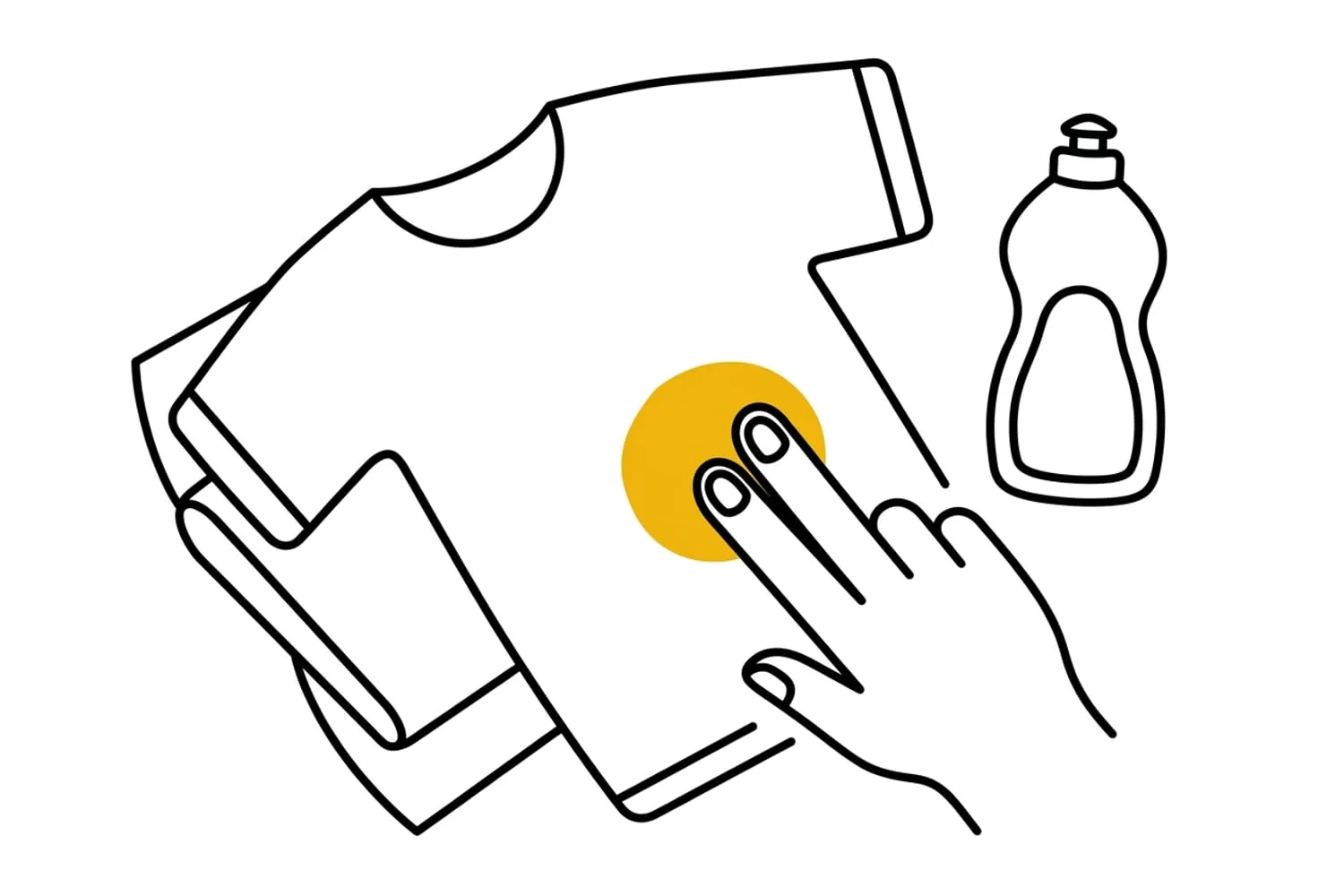
- Work a few drops into both sides of the stain with your fingertips, and leave it for 10 minutes.
- Rinse in warm water.
- Wash at the warmest temperature the care label allows.
- Check the stain has gone before you dry it.
Heat helps detergent lift oil, so use all the warmth the label gives you, and no more. The number in the tub on the care label is the highest temperature the garment can take, as GINETEX’s guide to the care symbols explains: a 40 means 40°C or cooler. One bar under the tub means a gentler cycle and two bars a very gentle one, as for wool. A hand in the tub means hand wash only.
A biological detergent helps too, because its enzymes break down fats as well as protein stains, even in a cool wash. Keep it away from wool and silk, though: bio and non-bio detergent compared explains which loads suit which.
Not every oily mark is food. Ballpoint ink is oil-based as well, but it needs a solvent rather than washing-up liquid, and getting biro and ink out of clothes has the method.
Oil spots that show up after the wash
Oil hides while fabric is wet. A splash from the pan or a drip of salad dressing can go through the whole wash unseen and appear as a darker, slightly see-through spot once the clothes are dry. Caught before the tumble dryer, these spots often come out with a second round.
- Keep the garment out of the tumble dryer and away from the iron.
- Lay it on a pad of kitchen roll and work washing-up liquid into both sides of each spot.
- Leave it for at least 10 minutes, and longer for an old mark.
- Rinse in warm water and wash again at the warmest temperature the label allows.
- Dry it on an airer and check it in daylight. Repeat while the spots are still fading.
If they still won’t shift, a pre-wash stain remover made for fat and grease is the next step, such as Dr. Beckmann’s Stain Devils Fat and Sauces. Read the pack first, because that one is not for leather, suede, acetate or rayon. The stain removers we recommend are in the Cupboard. Use one product at a time, and rinse each out before you try the next.
Tip: hold the dry garment up to a window. A patch that looks darker, and lets more light through than the fabric around it, is oil that is still there.
Polyester, sportswear and stretch fabrics
Polyester repels water, which is why it dries fast, and the same property draws oil into it. University of Alberta textile researchers describe polyester as naturally attracting oil from skin, and found that the smelly compounds it takes up don’t completely wash out, which is also why gym kit can keep a smell after washing.
So act quickly, and let the pre-treatment do the work, because the label often keeps these clothes to a cool wash.
- Blot and use the powder as above.
- Work washing-up liquid into both sides and leave it for 10 minutes, or use a pre-wash stain remover for grease as its pack says.
- Wash at the temperature on the label, with biological detergent if you have it.
- Air-dry and check. Repeat the washing-up liquid and the wash while the mark is still fading.
Keep to the label even when it says 30°C. Heat damages elastane, the fibre that gives leggings and sports tops their stretch.
Wool, silk and dry-clean-only clothes
- Wool: blot and use the powder, brushing it off gently. If the label allows washing, dab a little washing-up liquid into the mark with your fingertips, rinse by dabbing with cool water, then hand wash it in a wool detergent or use the wool cycle. Don’t rub or wring it, because wet wool felts when it is worked, and keep biological detergent away from it: the enzymes attack wool.
- Silk: blot, cover the mark with cornflour, then tip the powder off and shake the fabric rather than brushing it. Take it to a dry cleaner if a mark is left.
- Dry clean only: blot, use the powder, and take it to the dry cleaner as soon as you can, saying it is oil and what kind. Don’t put water or washing-up liquid on it first, as water alone can leave a ring.
Dry cleaners clean with solvents that dissolve oil, so an oil stain is a job they are well set up for.
Bike chain and engine oil
Chain oil and engine oil are usually black with grime, so the mark is darker and heavier than a splash from the pan. They need the same order, with a little more patience.
- Scrape off any thick grease with a blunt knife, then blot without spreading the black.
- Cover it with bicarbonate of soda or cornflour, leave it for 15 minutes and brush it off.
- Work washing-up liquid into both sides and leave it for 10 minutes, or use a pre-wash stain remover made for lubricants and oils.
- Wash it on its own at the warmest temperature the label allows.
- Check it, and repeat from step 3 while the mark is still fading.
The University of Georgia’s extension guide to grease stains follows the same order: a powder to absorb as much as possible, a pre-wash stain remover, then the hottest wash the fabric can take, repeated if the mark is still there.
For a stain remover, Dr. Beckmann’s Stain Devils Lubricants and Oils (£2.99 for 50ml from the maker in October 2026) names bicycle and motor oil on its label. Test a little on a hidden spot and let it dry; if the colour hasn’t changed, dampen the stain with it, leave it for 10 to 15 minutes, blot and wash. Unlike washing-up liquid it is highly flammable, so use it with a window open and away from flames, keep it out of your eyes, and don’t use it on wool, silk, leather, suede, acetate or rayon.
Leave petrol and engine degreaser in the garage: both are flammable, and neither is made for fabric. Overalls or work clothes soaked in engine oil are a job for a dry cleaner.
Why the tumble dryer comes last
Heat sets oil. Once a mark has been through a hot dryer or under an iron it may never fully come out, and because oil hides while the fabric is wet, you can’t judge it straight out of the machine. Dry anything you have treated on an airer or the line, then check it in daylight.
There is a safety reason too. Fire services warn that grease and oil left in laundry, kitchen tea towels especially, can catch fire after tumble drying, particularly when the load is left in the drum or folded into a pile while it is still warm. Staffordshire Fire and Rescue Service’s advice is to wash oily laundry at a temperature, and with a detergent, that will remove the oil, to let the dryer finish its cool-down cycle, never to leave washing in it overnight, and to dry tea towels on the line where you can.
The same order works on carpets and sofas, with far less water. The Stain Finder’s entry for grease and cooking oil has the steps for those and for hard surfaces, and the rest of our stain removal guides cover everything from blood to rust.
Questions
Does washing-up liquid get oil out of clothes?
Yes. It is made to break up grease, and it does the same job in fabric: work it into both sides of the stain with your fingertips, leave it for 10 minutes, then rinse in warm water and wash at the warmest temperature the care label allows. Soak up what you can with bicarbonate of soda or cornflour first, so there is less oil left for it to deal with.
Can you get oil out of clothes after they have been washed and dried?
Often, if they dried on a line or an airer. Work washing-up liquid into both sides of the spot, leave it for longer than you would a fresh mark, then wash again as warm as the label allows, and repeat while the spot is still fading. A mark that has been through the tumble dryer or under an iron is set and may leave a shadow, though a dry cleaner can sometimes still lift it.
Does bicarbonate of soda get oil out of clothes?
It does the first part of the job. Spread over fresh oil, bicarbonate of soda or cornflour soaks up what is still sitting in the fabric, so leave it for 15 minutes and brush it off. It won’t break down the oil already in the fibres, so follow it with washing-up liquid and a warm wash.
How do you get oil out of polyester?
Quickly, because polyester attracts oil and holds on to it. Blot, soak up what you can with a powder, then work washing-up liquid or a pre-wash stain remover for grease into both sides before washing at the temperature on the care label. Air-dry it and check it before it goes anywhere near the tumble dryer, and repeat while the mark is still fading.
Sources
- Remove Stains From Grease (Automotive, Cooling, Vaseline), University of Georgia Cooperative Extension
- Care symbols, GINETEX
- Research reveals why it’s hard to get the smell out of polyester, Folio, University of Alberta,
- Businesses and homes issued with tumble dryer fire warning, Staffordshire Fire and Rescue Service,
More in Stain Removal
- How to get biro and ink out of clothesBallpoint needs isopropyl alcohol, gel and felt-tip need cold water: how to tell the inks apart, and what to do when a pen has been through the wash.
- How to get blood out of clothes, sheets and carpetCold water first, because heat sets blood: how to get fresh and dried blood out of clothes, sheets, carpets, sofas and mattresses, and what never to do.
- How to get red wine out of carpet, sofas and clothesBlot, cold water, then washing-up liquid with a little white vinegar: how to get fresh and dried red wine out of carpet, sofas and clothes, in that order.
Stain Finder: a free stain removal guide
Find your stain