How to Get Red Wine Out of Clothes, Fresh or Dried In
How to get red wine out of clothes: follow a cupboard-first order for fresh, dried-in, and heat-set stains, with fabric-specific washing steps.

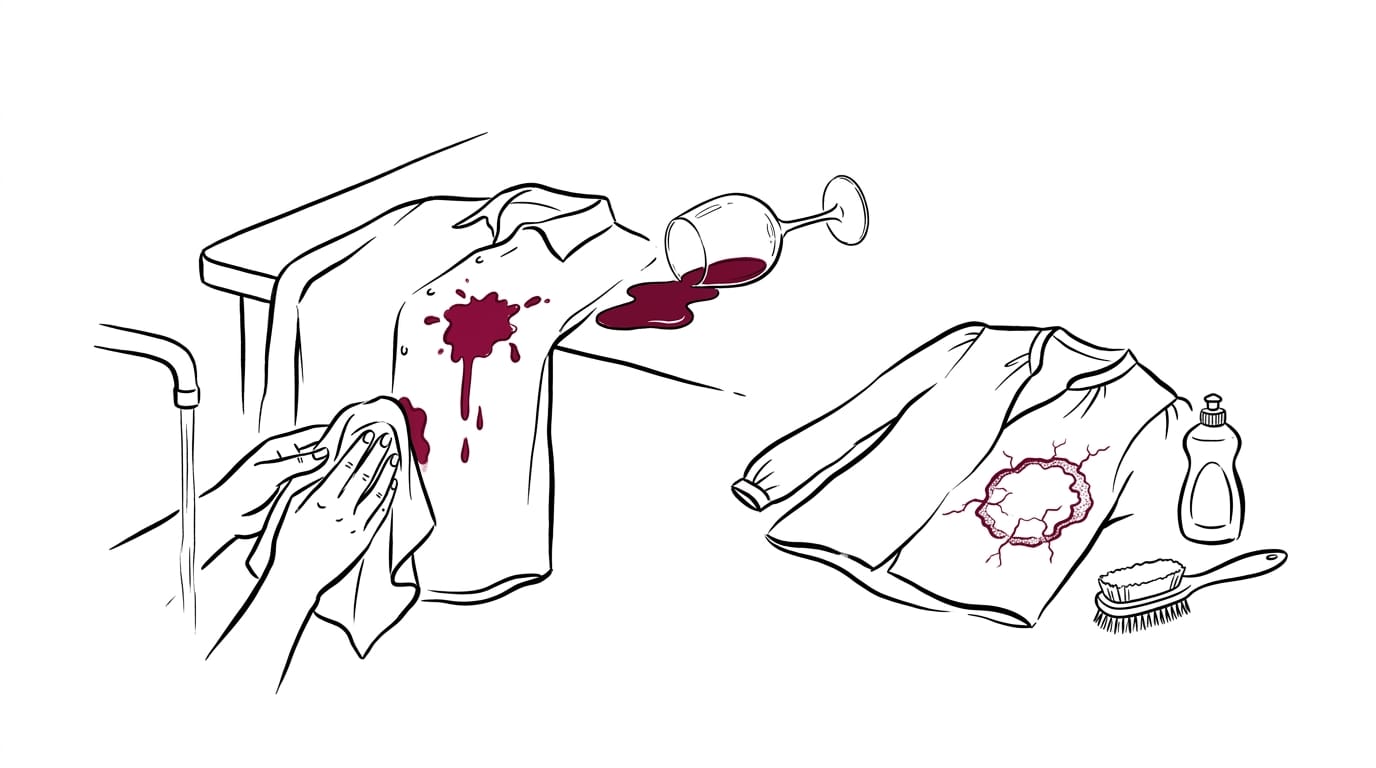
Getting red wine out of clothes means lifting the spill before it settles into the fabric, then treating the remaining mark with cold water and detergent or a suitable stain remover. Blot, never rub, rinse from the back, and avoid hot water or machine drying until the stain is gone; delicate fabrics may need a professional cleaner. Acting quickly and repeating gentle treatments for dried stains gives clothes the best chance of recovery.
Picture the moment: a glass tips at dinner and a dark red splash lands across your white shirt. Treating it works the same way as mopping up a spill on the kitchen floor: the faster you move, the less there is to clean up.
This guide covers fresh stains, dried-in marks, and heat-set stains across different fabrics. You’ll get a method for each, a cupboard-first order to try things in, and plain advice on which stain removers are worth buying.
Get Red Wine Out of Clothes Fast
Red wine on your clothes feels like an emergency, but the first few minutes are your best chance. Here’s how to act quickly without making the stain worse.
Blot first and never rub it in
Start by blotting up any wine still sitting on the surface. Press gently with a clean white cloth so the liquid lifts up rather than sinking deeper into the fibres. Rubbing spreads the stain and works it further into the weave, so blot, don’t rub.
Turn to a fresh part of the cloth as it soaks up colour.
Cold water and rinsing the reverse side
Hot water can set red wine into fabric, so stick with cold water every time. Dilute the remaining wine by dabbing the area with cold water, then rinse from the back of the fabric.
Flushing from behind pushes the wine out the way it came in, instead of driving it through to the other side.
Act fast, even at the restaurant
Fresh stains are far easier to lift than old ones, so speed matters most. Picture a parent at a family dinner who splashes red onto a white school shirt.
Instead of waiting until they get home, they ask the waiter for a glass of club soda and dab the spot straight away, so the stain has less time to settle in. Speed wins. Treat the stain quickly, even when you’re miles from home.
The shirt goes into the wash that night instead of the bin.
Common Household Fixes and Cleaners
Start with what’s already in your kitchen. Most fresh red wine spills respond to a bottle from the fridge or a box from the cupboard.
Lift stains with club soda and salt
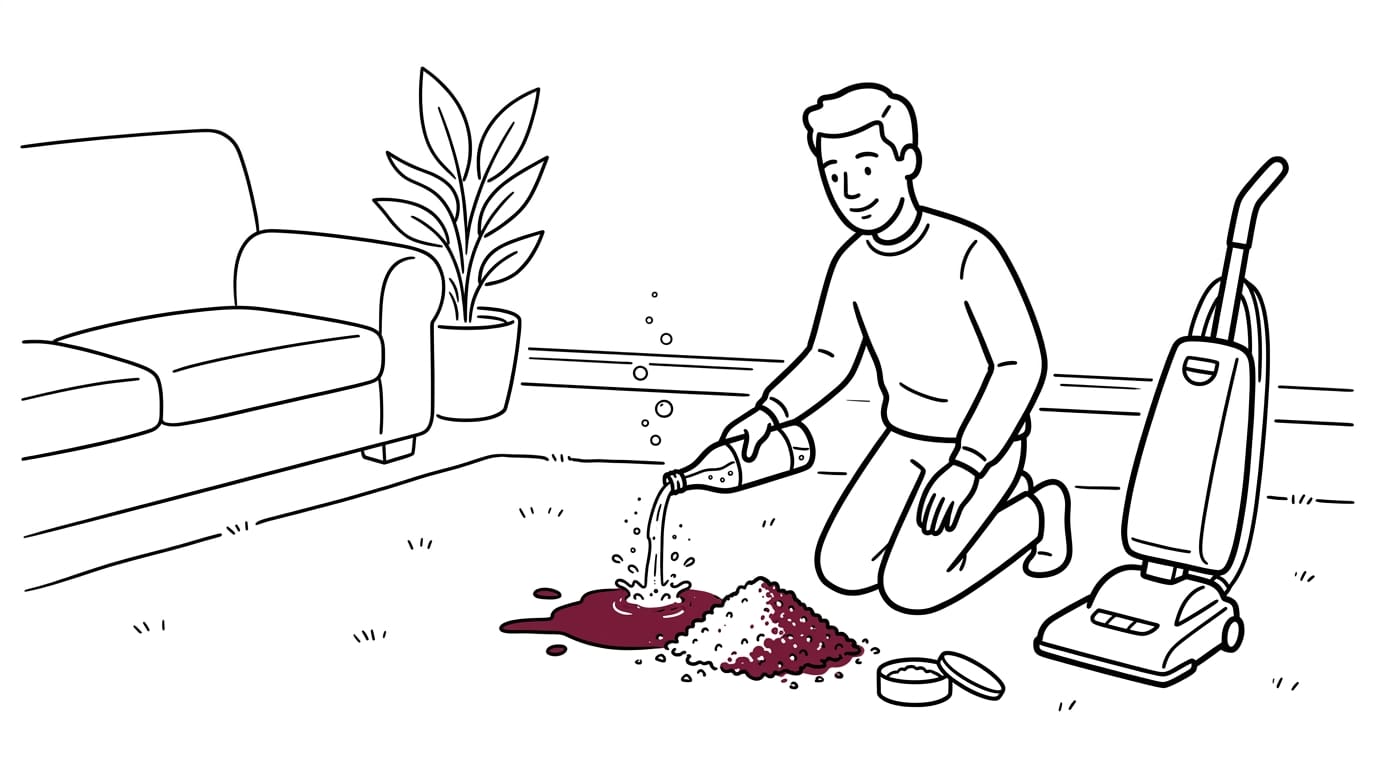
Club soda is the first thing to reach for. Its carbonation (the fizz) helps lift the wine out of the fibres. Picture a host with a splash across a cream carpet: pour club soda over the spot, then cover it with a layer of salt.
The salt buffers the spill and absorbs the wine as it lifts. Leave it for about 20 minutes, then vacuum or brush off the salt. That’s a quick job with no trip to the cleaner’s.
Absorb wine with baking soda or salt
Sometimes you want to soak up the wine rather than rub it in. Mix bicarbonate of soda (the same as baking soda) with a little water into a paste, spread it over the mark, and leave it for 10 to 20 minutes.
Or skip the paste, sprinkle salt or bicarbonate of soda straight onto the fresh spill, and leave it for the same 10 to 20 minutes. Once it’s dry, vacuum up the residue. Both come from the cupboard, so there’s nothing to buy.
Vinegar mixes that lift wine stains
Start with white vinegar diluted in water rather than the neat bottle. For a tougher mark, pair the vinegar with club soda, or add a small squirt of laundry detergent to the mix.
Consider a flatmate who spills wine on a cotton shirt: dab on the diluted vinegar, then rinse with a drop of dish soap in water to tackle any lingering smell.
The shirt goes back in the wardrobe instead of the bin, and it won’t smell like the party the next morning.
Test peroxide mixes before using them
Hydrogen peroxide can be combined with baking soda into a paste, or with dish detergent into a cleaning mix. Before you use either, test a hidden area, such as an inside seam, to see how the fabric reacts.
Skip peroxide on delicate fabrics, and never mix vinegar with peroxide. Test first, every time.
Other tricks and their limits
- White wine. The idea is that white wine neutralizes the red pigment. It adds more liquid to the fabric, so treat it as a last resort, not a fix.
- Boiling water. Heat can set red wine into the fabric, so use it only as a stopgap while you look for a better option.
- Bleach. Save it for white or light clothing, and check the care label first.
- Oxygen versus chlorine bleach. On colours, check the label for oxygen bleach rather than chlorine bleach, and test a hidden area before you commit.
Treat these as backups, not first moves.
Washing Wine Out of Fabrics Step by Step
Once the stain is fresh, the wash does most of the work. Pick the product that suits the fabric.
Pretreat, wash cold, then check
Start by pretreating the mark before it goes near the machine. Work a little laundry detergent into it with your fingers, then leave it for a few minutes.
Think of a parent who’s spilled red wine on a white school shirt: a dab of detergent on the collar gives the wash a head start.
Next, wash on a cold cycle rather than a warm one, since heat can set the stain.
Last, check before drying. If you can still see red, pretreat again. Don’t put it in the dryer yet.
Store-bought stain removers to consider
If detergent isn’t enough, try a dedicated remover:
- OxiClean spray: a spray to pretreat the mark before washing.
- Oxygen-based removers: a category to look for on the label.
- Store-bought stain remover: a general-purpose product works if you follow the label.
- Product recommendations: if you buy only one, make it the OxiClean spray.
- Eco and refill options: some oxygen-based removers come in greener, refillable formats.
Handling silk, wool, and other delicates
Delicates need a lighter touch.
- Silk and wool: blot with a soft cloth and use light pressure. Scrubbing can damage the fibres.
- Dry clean only: if the label says so, skip the home wash and use a professional.
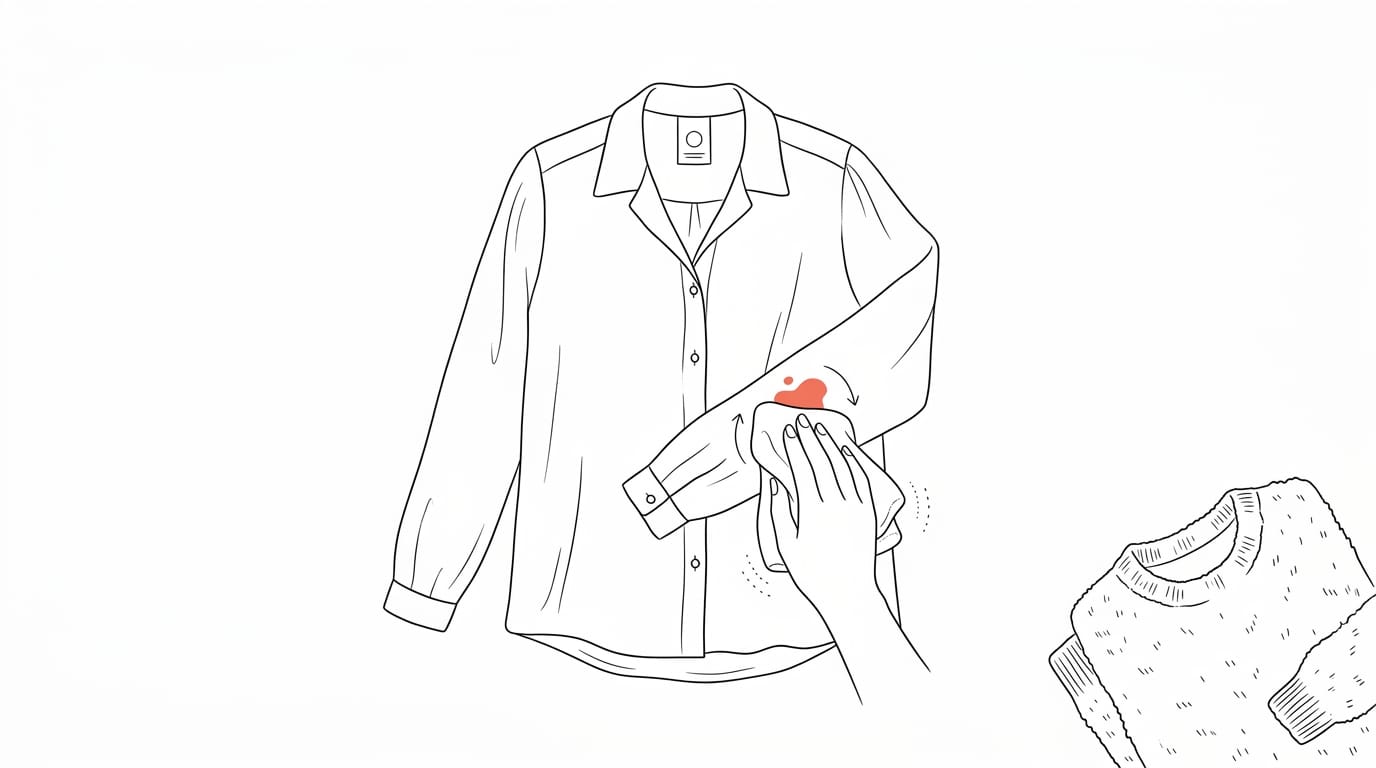
- Sweater and T-shirt tips: dab rather than rub, and work from the back of the stain so it doesn’t spread.
- Consult a professional cleaner: when you’re unsure, ask before you try anything else. When in doubt, stop.
When Wine Has Already Dried In
Dried wine looks like a lost cause, but it’s usually still treatable. Work through these steps in order:
Soften and treat a dried stain
- Rub in detergent first: Work a little liquid detergent into the stain with your fingertips. The goal is to loosen the stain, not force it out, so keep the pressure gentle.
- Soak in cold water: Soak the garment in cold water. Don’t use hot, because heat can set the wine further into the fabric.
- Rehydrate the dried stain: Dampen the mark with cold water so the wine softens again and the detergent can get underneath it.
- Apply stain remover: Dab your usual stain remover onto the mark, follow the label, and give it time to work before you check.
- Expect multiple treatments: Dried wine rarely lifts in one go. Repeat the steps until the colour fades, and you’ll know you’re making progress when the mark looks paler each time.
Picture a parent who finds a red wine splash on a school blouse the next morning, already stiff and dark at the edges.
A quick rub with washing-up liquid and a cold soak can loosen the colour before the wash, so the blouse is saved for school instead of the bin.
If the stain has already been through the dryer, the heat may have set it, so treat it as a tougher job and keep going. Patience pays off.
Cleaning Wine off Carpet and Couches
Wine on carpet or a couch can feel like a lost cause, but both respond to the same basics: act fast, use little liquid, and dry properly.
Getting wine out of carpet
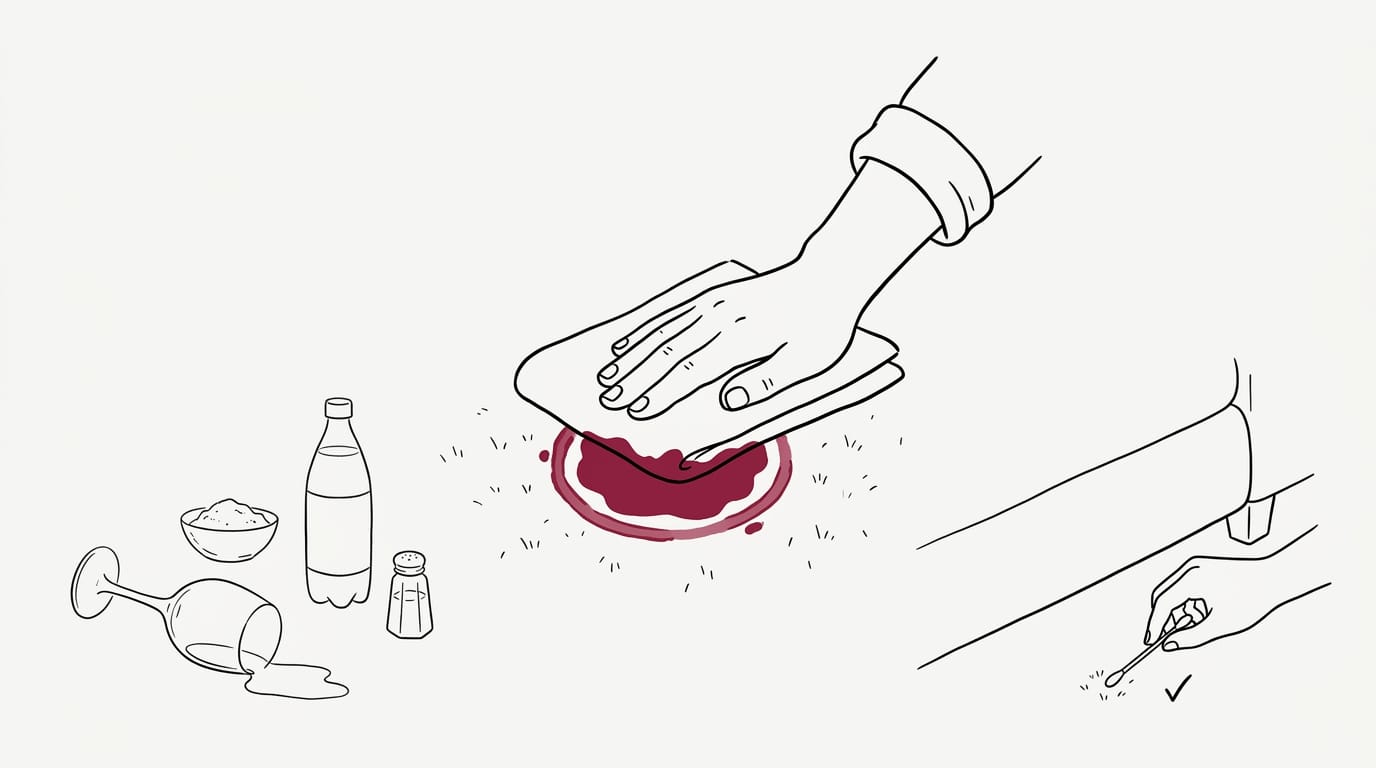
Start by blotting up excess wine with a clean white cloth. Blot, don’t rub, or you’ll push it deeper into the fibres. Then try one of these cupboard staples:
- Baking soda paste: Mix baking soda with a little water into a thick paste, spread it over the stain, let it dry, then vacuum it up.
- Club soda and salt: Dab the stain with club soda, sprinkle salt over the damp patch, then vacuum once it’s dry.
- Vinegar solution: Mix white vinegar with water, dab it onto the stain, then blot with clean water to rinse.
Test an inconspicuous spot first. A tenant with a stain by the front window might try the vinegar mix on a hidden patch under the sofa, checking for colour change or fraying before going near the stain. That quick check is cheap insurance.
Treating wine on couches and upholstery
Use minimal liquid. Wine can soak through to the padding, so work in small amounts. Aim to remove the wine, not flood the fabric.
Hair dryer to dry. Once it’s clean, dry the spot with a hair dryer on a cool setting, keeping it moving. Keep it cool rather than hot, because heat can set any leftover wine.
Prevent mildew. Damp padding can grow mildew, so dry the fabric fully and open a window or run a fan.
Test hidden area. Try your method on the underside of a cushion or the back of the sofa first. Only treat the visible stain once the fabric holds up.
Quick Answers at a Glance
Most red wine stains respond to the same calm first move, but the next step depends on whether the mark is fresh, dried, or heat-set, and what it’s sitting on. Use the picks below to act before it bonds.
Which method to use and why
Start by matching your stain to its situation:
| Situation | Method to try first |
|---|---|
| Fresh spill, still wet | Cold water from the back of the fabric, then blot |
| Dried, not yet set | Soak in cold water, then treat gently |
| Heat-set | Treat gently and avoid any further heat |
Each method works for a reason. A cold-water rinse flushes wine out before it bonds with the fibres, and blotting lifts the liquid instead of pushing it deeper. Skipping heat matters most of all, because warmth locks in whatever is left.
Picture a parent who spots a splash of red on a school shirt just before the school run. A quick rinse under the cold tap, then a gentle blot, means the shirt goes in with the wash instead of the bin. Fast action beats a hard scrub.
Can you use the same method on a carpet or sofa? Yes, but work from the edge inwards with a damp cloth, not a wet one. Delicate silk or wool? Test any product on a hidden seam first.
Don’t put it in the dryer to check. Heat locks in whatever’s left, so confirm it’s clear first.
Work through these in order, using only what’s already under the sink, and stop as soon as the mark has gone:
- Rinse with cold water from the back of the fabric.
- Blot with a clean, dry cloth, never rub.
- Work a few drops of mild liquid detergent into the spot, then rinse cold.
- Check the mark is gone, then wash as the care label allows.
Red wine is a common mishap, but it doesn’t have to mean a lost garment or a ruined rug. Match the method to whether the stain is fresh, dried, or heat-set, start with what’s already in your cupboard, and move quickly.
Those few reliable basics, used promptly, will do more for you than a cabinet full of gadgets.
Act fast, act right, and that red splash stays a story, not a stain.
Questions
How do you remove old red wine stains?
For an old red wine stain, dampen it with cold water and gently work liquid laundry detergent into the mark. Let it sit, then rinse or soak in cold water and repeat as needed; use an oxygen-based stain remover if the fabric care label allows. Avoid hot water and drying until the stain is gone, since heat can set it.
How to get red wine out of a couch?
Blot the couch stain with a clean cloth, working from the outside toward the center, and avoid rubbing or soaking the upholstery. Test a small amount of diluted white vinegar or upholstery-safe cleaner in a hidden spot, then dab the stain with a lightly damp cloth and blot with clean water. Dry it fully with a fan or a hair dryer on a cool setting, and follow the upholstery care label.
How do I use bleach to whiten sheets?
Check the sheet care label first and use chlorine bleach only if the fabric and color are compatible. Add the measured amount according to the bleach label to the washer’s bleach dispenser, not directly onto the sheets, and never mix bleach with vinegar, ammonia, or other cleaners. Oxygen bleach is a gentler alternative for many fabrics; follow its label directions.
Does white vinegar remove red wine?
White vinegar diluted with water can help lift some red wine stains, especially when they are fresh. Dab it on, then blot and rinse with cool water; for an old stain, detergent or an oxygen-based stain remover may work better. Test first on a hidden area, as vinegar can affect some fabrics and dyes.
Does salt help remove blood stains?
Salt may absorb some liquid from a fresh blood stain, but it is not a reliable blood remover. Rinse the stain promptly with cold water and treat it with laundry detergent or an enzyme stain remover; avoid hot water, which can set blood into fabric.
Does blood stain permanently?
Blood does not always stain permanently, but dried or heat-treated stains can be difficult to remove. Rinse with cold water and treat the fabric before washing, then check the stain before using a dryer, since heat can make it harder to remove.
Can vinegar remove old blood stains?
Vinegar may help with a faint, older blood stain, but it is generally less effective than cold water and an enzyme-based laundry detergent. Test it on a hidden area first, dab rather than rub, and avoid heat until the stain is gone. Do not mix vinegar with bleach.
Read next
- Hydrogen Peroxide for Blood Stains: Fresh vs. DriedHydrogen peroxide for blood stains tackles fresh and dried marks; see which fabrics are safe and when enzyme cleaner or oxygen bleach works better.
- How to get red wine out of carpet, sofas and clothesBlot, cold water, then washing-up liquid with a little white vinegar: how to get fresh and dried red wine out of carpet, sofas and clothes, in that order.
- Vinegar and Baking Soda Toilet Cleaner: Full GuideVinegar and baking soda can handle everyday toilet rings; see how to use them, what plumbers say, and when stubborn stains need more for a fresher bowl.
Stain Finder: a free stain removal guide
Find your stain