Wood Heater Cleaning: Ash, Glass, Flue and Safety Basics
Wood heater cleaning gets easier with better burning habits, safe ash removal, glass cleaning, plus simple checks for creosote and worn stove parts.

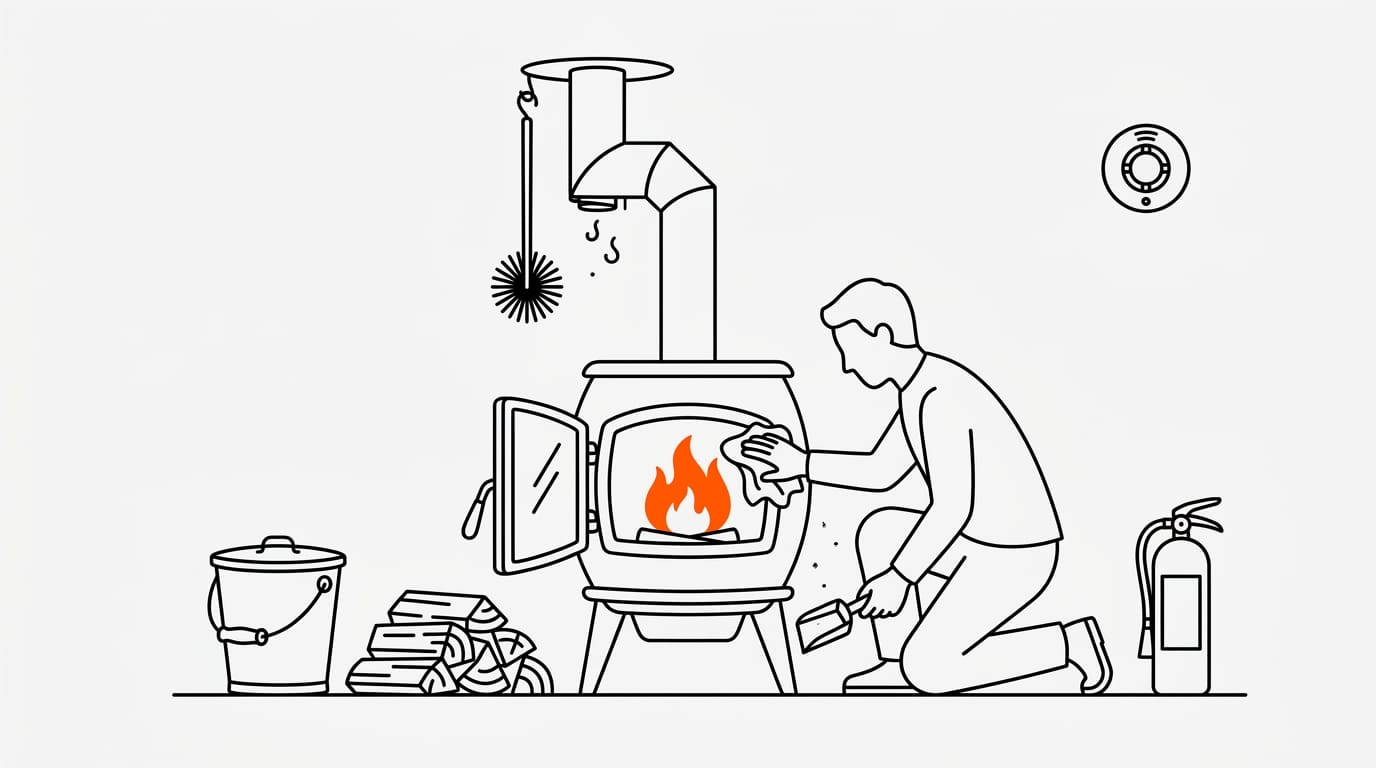
Wood heater cleaning is the regular removal of ash, soot, and residue from the stove, its glass and hearth, and the flue that carries smoke outside. Let the heater cool before cleaning, handle ash safely, use methods suited to each surface, burn dry firewood, and check seals, vents, and parts for damage. Regular care helps keep cleaning manageable, while professional flue inspections and sweeping address combustible creosote and problems beyond routine upkeep.
Think of your wood heater like a good pair of boots. A quick wipe after each muddy walk keeps them looking sharp, while ignoring the grime turns a small job into a big one.
Cleaning your heater works the same way: a little regular care keeps the glass clear, the firebox tidy, and the flue (the pipe that carries smoke out of your home) free of buildup.
In this post, we’ll walk through removing and handling ash, cleaning the glass and inside of the stove, and checking for creosote (a sticky, tarry residue that builds up from smoke).
You’ll also find safe methods that use items you may already have at home.
Burning Habits That Ease Wood Heater Cleaning
Good cleaning starts before you ever open the ash pan, with the habits you bring to the woodpile and the firebox. It’s less about scrubbing and more about preventing the mess, so we’ll start with the wood itself.
Burn only properly dried firewood
Wet wood creates smoke and soot, and both end up on your glass and in your flue. Less smoke means less scrubbing.
- Check the moisture. Firewood should read 19% or less on a moisture meter. A small, hand-held meter does the job, as the Department of Environmental Conservation recommends.
- Buy from reputable sources. Ask how long the wood has been drying before you hand over the cash.
- Air-dry it for at least a year. Softwoods need at least six months to dry, while hardwoods need at least 12, according to the Department of Environmental Conservation.
What to keep out of the firebox
Skip these entirely:
- Wrapping paper
- Christmas trees
- Pizza boxes and charcoal
For example, a parent who tosses wrapping paper and a pizza box into the stove may get a sudden surge of flame that ignites the creosote, the sticky, flammable residue that coats the flue, turning an easy burn into a bigger cleaning job.
Where and how to store firewood
- Keep it away from the house. Stack wood a good distance from your walls, not against them.
- Pest prevention. A tidy stack in an open spot gives pests fewer places to settle in.
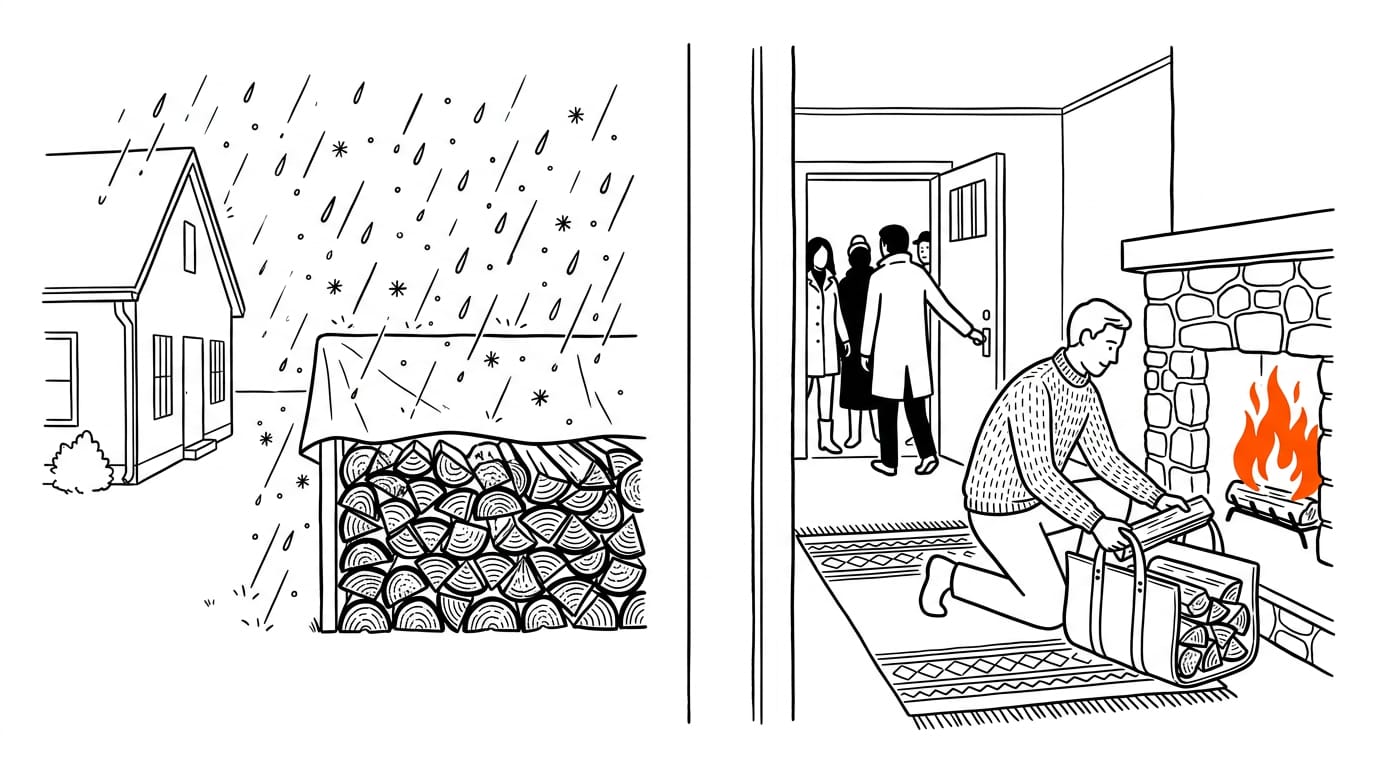
- Covered wood rack. A cover keeps rain and snow off the logs, so the drying stays put.
- Log carrier or indoor rack. For example, a host who fills a log carrier before guests arrive keeps bark and loose debris off the hearth rug.
When to upgrade an older stove
- Modern stoves burn cleaner. The Washington State Department of Ecology reports that old, uncertified wood stoves emit about 50-60% more pollution than new, certified wood stoves.
- Struggling despite dry wood. If your stove still fills the glass with soot even with properly dried firewood, the appliance itself may be the problem.
Consider a homeowner whose older stove blackens the glass every evening, even with well-seasoned logs. A newer certified model could mean far less scrubbing. Good wood can only do so much.
Removing and Handling Ash Safely
Removing ash is a safety job first and a cleaning job second. Work through it in order: cool it, gear up, then decide what to keep.
Cool ash fully before throwing it out
- Wait 48 hours or more. The Westchester Fire Department advises allowing ashes to cool for at least 48 hours before transferring or disposal.
- Use a metal can with a lid. Scoop the cooled ash into it and close the lid.
- Store it outdoors, away from buildings. Keep the can well clear of the house and other structures.
Ash can look cool on top while still holding heat underneath, so hidden embers are the real danger. Cool it first.
Gear and tools for ash cleanup
Have these ready before you open the firebox:
- Shovel and broom for scooping and sweeping up spills.
- Shop vac with a HEPA (high-efficiency particulate air) filter to catch the fine dust a broom leaves behind.
- Respirator mask so you aren’t breathing in ash dust.
- Gloves and safety glasses to protect your hands and eyes.
Think of a first-time owner clearing the heater on a Sunday morning. With the shovel, shop vac, and gloves laid out in the hallway, the ash goes into the can in one tidy run and the living room carpet stays clean.
Reusing ash and keeping a base layer
Leave about an inch of ash on the floor as a base layer rather than scraping the box bare. It insulates the next fire.
Cooled ash can also go on the garden or into the compost.
Some owners use a creosote-reducing powder too, which is worth knowing about if build-up worries you.
How to Clean Inside a Wood Burning Stove?
Cleaning the inside of a wood burning stove comes down to one rule: let it cool completely, then work surface by surface. That covers the firebox (the chamber where the fire burns), the hearth, the glass, and the grates.
Lifting soot and smoke stains off hearths
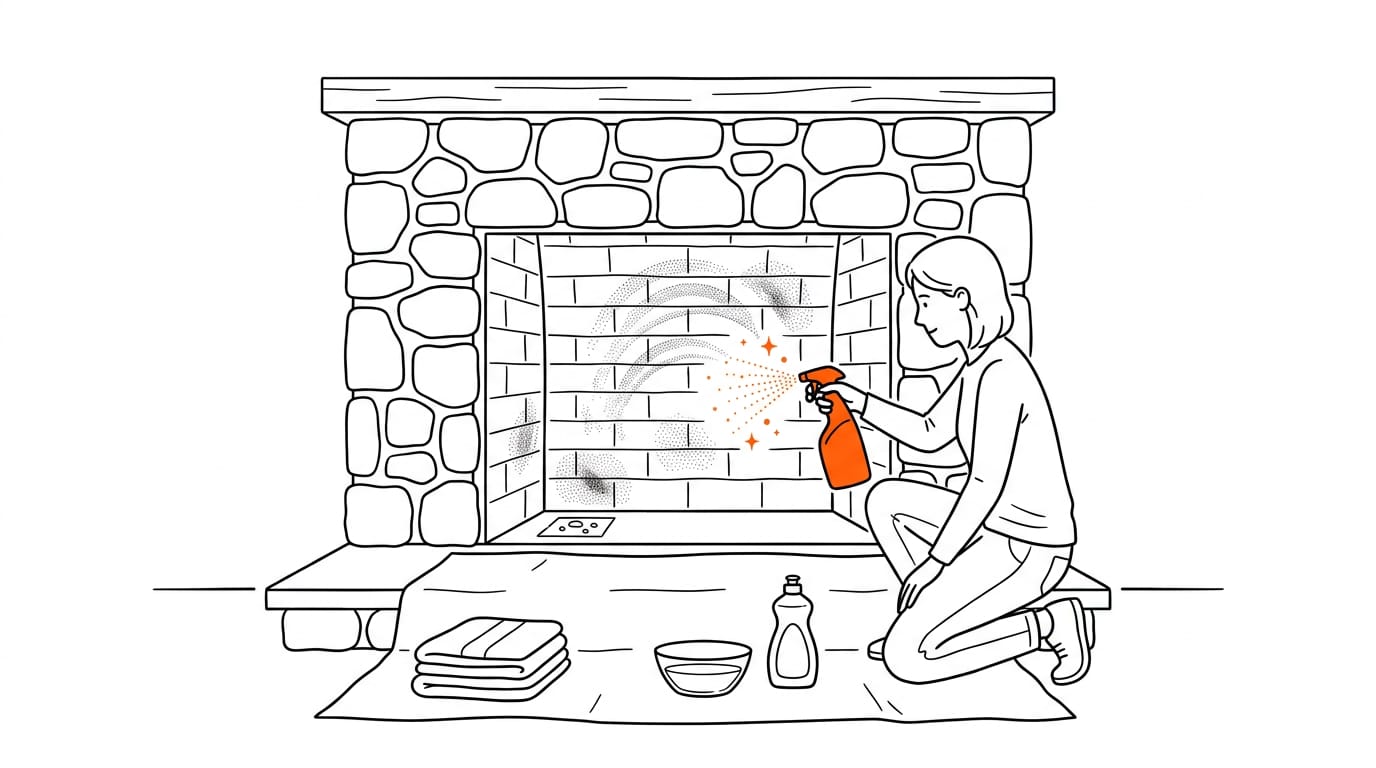
Soot and smoke settle on the hearth, the protective floor in front of the stove, so prep it first. Lay a tarp with towels on top so drips land on fabric you can wash rather than your floor.
Test a spray-on hearth cleaner on a hidden patch before you go further. Then spray, don’t scrub, and build up with several light applications, since one pass rarely lifts a stain. Keep the room ventilated while you work.
For brick, Dawn dish soap is the method to try, so yes, it can clean brick, but test it on a hidden patch first. Want to make your own homemade fireplace cleaner? Mix a little dish soap into warm water, then test and spray it the same way. Patience wins.
Clean glass doors with ash, skipping ammonia
Skip ammonia cleaners on the glass and reach for the ash instead. Dip a damp rag into cool ash, rub it over the glass, then rinse the rag and repeat until the haze lifts.
Think of a parent who likes movie nights by the fire: a quick ash rub keeps the glass clear enough that the flames are the show, not the smudges.
Scrub grates and screens, then dry fully
Take grates and screens outside for a grill brush scrub, so loose residue lands on the lawn rather than the rug. Wash them with dish soap and a rag, then dry completely, not just until they look dry, so no moisture is left on the metal.
Caring for the outside of the stove
Think of a family who keeps a dry cloth beside the woodbasket: a quick dust before guests arrive keeps the stove looking cared for. Here’s how to keep the outside in shape:
- Dry, lint-free cloth. Use it for dusting the exterior first.
- Avoid water on cast iron. Reach for the dry cloth instead.
- Damp rag on enamel. Enamel can take a damp rag, so wipe it down and dry it after.
- Empty ash pan. Keep it emptied so the next fire starts clean.
Deep clean when the season winds down
Once everything’s cold, give the stove a fuller clean at season’s end:
- Shop vac with a high-efficiency particulate air (HEPA) filter. It picks up fine ash from the firebox and the corners around it.
- Simple ash pan emptying. It’s optional, but a quick clear-out keeps things tidy.
- Book a chimney service. A pro can handle the parts you can’t reach yourself.
Routine Checks on Key Stove Parts
A few quick checks before the first fire can prevent smoke leaks and costly damage.
Testing door seals with the dollar bill
Your door seal (the gasket that keeps smoke from leaking around the door) is the first thing to test. Close the door on a dollar bill, then try to pull it out. If it slides free, the seal has lost its grip.
- Test several spots, covering the full perimeter and corners.
- Watch for fraying, which lets in air and lets embers escape.
- Gaps also waste heat, so a loose seal costs warmth as well as safety.
Think of a parent who runs this check every October. When the bill slides out near the hinge, they replace the gasket before the first fire. The result: a warm room and no sparks on the rug.
Inspecting the parts inside the stove
With the stove cold, check these parts:
- Catalytic combustor: If your stove has one, it’s the part that helps burn off smoke before it leaves. Look for cracks and ash blockages, and follow the maker’s service guidance.
- Fire brick cracks: Look for cracks in the firebox bricks, and replace any that crumble.
- Rust or damage: Check the firebox walls and welds for rust or warping.
- Dampers and air vents: Make sure the damper moves freely and the vents aren’t jammed.
Should I leave air vents open or closed?
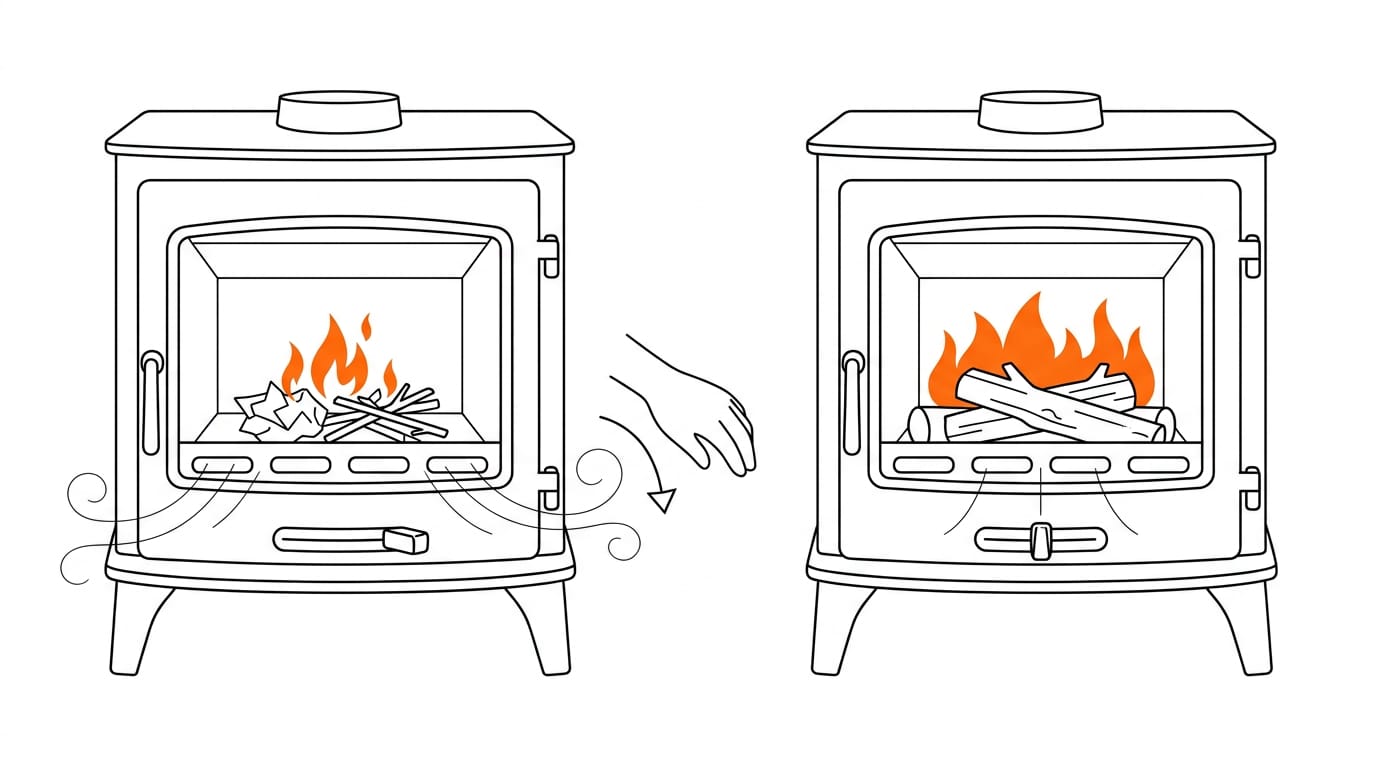
Keep them open while the fire catches, then turn them down once it’s burning steadily. Here’s why:
- Check for blockages: Ash can choke the vents, so clear them before you light up.
- Backdraft risk: Restricted airflow can push smoke back into the room, so never shut the vents fully on a live fire.
- Efficient burning: A steady air supply helps wood burn more completely, with less smoke.
Clear vents, steady fire.
Safety Checks and When to Get Help
A clean stove burns well, but a safe one needs regular checks too.
Why creosote makes chimney checks essential
Creosote is the buildup that forms in your flue as wood burns. The guide Improving fireplace efficiency advises a yearly professional inspection and cleaning to catch it early.
The Chimney Safety Institute of America puts it plainly: whatever form it takes, creosote is highly combustible. Don’t wait for a warning sign.
FindChimneySweepers explains that NFPA 211, the fire safety standard from the National Fire Protection Association, sets a 1/8-inch creosote threshold for sweeping.
Once buildup hits that depth, book a pro sweep for a deep clean. Think prevention, not repair.
Do Duraflame logs clean chimneys? Our verified sources don’t cover that brand, so we can’t confirm it. Treat any creosote log as an extra, not a stand-in for the yearly inspection.
Best times to schedule chimney work
Book in the off-season, when the stove is cold. Late summer is prep time, and booking before the busy fall rush keeps you ahead.
How often depends on use. Think of a family who runs the stove all winter. They’ll want the flue checked more often than the yearly minimum, booked before the coldest weeks.
You’ll hear about the 3-2-10 chimney rule, but our verified sources don’t spell out its numbers, so ask your sweep how it applies to your flue.
Signs it’s time to call a professional
Some problems need a pro, not a brush. Watch for these:
- Hairline cracks and venting issues. Any crack in the chimney, or smoke that won’t vent properly, means it’s time to call.
- Persistent soot stains. Soot that keeps returning around the stove after cleaning is worth a professional look.
- Possible damper malfunction. A damper that sticks or won’t close fully needs checking before your next fire.
Alarms and safe distances from the stove
Make sure you have working smoke alarms and carbon monoxide (CO) detectors, and test them. Check your stove’s manual for clearances to walls and furniture, and keep combustibles back.
Think of a tenant who spots a dark patch on the wallpaper behind the stove. Telling the landlord early beats a bigger repair later.
Check the floor and walls around the stove for scorching or discoloration.
Keeping your wood heater clean comes down to a few steady habits: handle ash with care, wipe the glass and inside of the stove, and keep an eye on the flue for creosote. Match the method to each surface and stain, and the job stays quick and manageable.
When a check turns up something you’re unsure about, or the flue needs more than a routine clean, don’t hesitate to get help. A little attention now means a warmer, safer home all winter long.
References
- Westchester Fire Department Issues Important Safety Reminder for Proper Ash and Ember Disposal — westchester-il.gov (2026)
- How to Season Firewood and Cut Costs, Smoke, and Fuel Use — dec.vermont.gov (2026)
- Two decades later, popular grant program keeps costs and air pollution down — ecology.wa.gov (2026)
- Improving fireplace efficiency — hdl.handle.net (1978)
- NFPA 211 Explained for Homeowners — findchimneysweepers.com (2026)
- Preventing Chimney Fires — csia.org (2026)
Questions
What is the 3-2-10 rule for chimneys?
The 3-2-10 rule is a chimney-height guideline: the chimney should extend at least 3 feet above the roof where it passes through and be at least 2 feet higher than any part of the building within 10 feet. A chimney professional can confirm how the rule applies to your roof and local requirements.
How to clean the inside of a wood burning stove?
Let the stove cool completely, then remove loose ash and soot from the firebox with a shovel and a shop vac fitted with a HEPA filter. Wear gloves, safety glasses, and a respirator to limit exposure to ash dust, and leave about an inch of ash on the floor as an insulating base layer. Clean the glass separately with a damp rag dipped in cool ash, then rinse and repeat.
How to remove ash from a fireplace?
Wait at least 48 hours for ashes to cool fully, since embers can remain hot beneath the surface. Wearing gloves and a mask, scoop them into a lidded metal container and store it outdoors, well away from buildings. Leave about an inch of ash in the firebox as a base layer.
How often should you clean your fireplace?
Have your chimney professionally inspected and cleaned at least once a year, and more often if you use the stove heavily or buildup warrants it. Clean the stove itself as needed, and give it a fuller cleaning when the heating season ends. Creosote buildup of about 1/8 inch is a reason to arrange a professional sweep.
How can I make homemade fireplace cleaner?
Mix a small amount of dish soap into warm water. Test the solution on a hidden area first, then apply it to the hearth or brick in several light applications and keep the room ventilated. Avoid ammonia on stove glass.
How do you make old brick look new again?
Clean the brick first with a mild dish-soap solution and a soft brush, testing a hidden spot before treating the whole surface. Rinse carefully and let it dry; if the brick is stained, damaged, or still looks worn, consider professional cleaning or masonry repair rather than applying paint or sealant without checking that it is suitable.
Should I leave the air vents open or closed on my wood burning stove?
Keep the air vents open while the fire catches, then turn them down once the fire is burning steadily. Do not close them fully while a fire is live, because restricted airflow can cause smoke to enter the room and make combustion less complete.
Will Dawn dish soap clean brick?
Yes. A small amount of Dawn dish soap mixed with warm water can be used to clean brick. Test it first on a hidden patch, and use light applications rather than scrubbing aggressively.
Sources
- NFPA 211 Explained for Homeowners | FindChimneySweepers, findchimneysweepers.com,
- Westchester Fire Department Issues Important Safety Reminder for Proper Ash and Ember Disposal | Village of Westchester, westchester-il.gov,
- How to Season Firewood and Cut Costs, Smoke, and Fuel Use | Department of Environmental Conservation, dec.vermont.gov,
- Two decades later, popular grant program keeps costs and air pollution down - Washington State Department of Ecology, ecology.wa.gov,
- Improving fireplace efficiency, hdl.handle.net,
- Preventing Chimney Fires — The Chimney Safety Institute of America, csia.org,
More in Floors & Carpets
- How to Get Hair Dye Off Wood Floor FastHow to get hair dye off a wood floor fast: choose a cleaner based on the finish, lift fresh drips safely, and avoid damage to nearby surfaces.
- Cleaning Grout with Baking Soda and Hydrogen Peroxide GuideCleaning grout with baking soda and hydrogen peroxide lifts grime with a simple paste; see when it works, what to avoid, and which method fits your grout.
- Is it worth buying a carpet cleaner, or hiring one?What hiring a carpet washer, buying one or paying a professional costs in pounds, which carpets to keep machines off, and how to avoid over-wetting.

Stain Finder: a free stain removal guide
Find your stain