How to Get Hair Dye Off Wood Floor Fast
How to get hair dye off a wood floor fast: choose a cleaner based on the finish, lift fresh drips safely, and avoid damage to nearby surfaces.

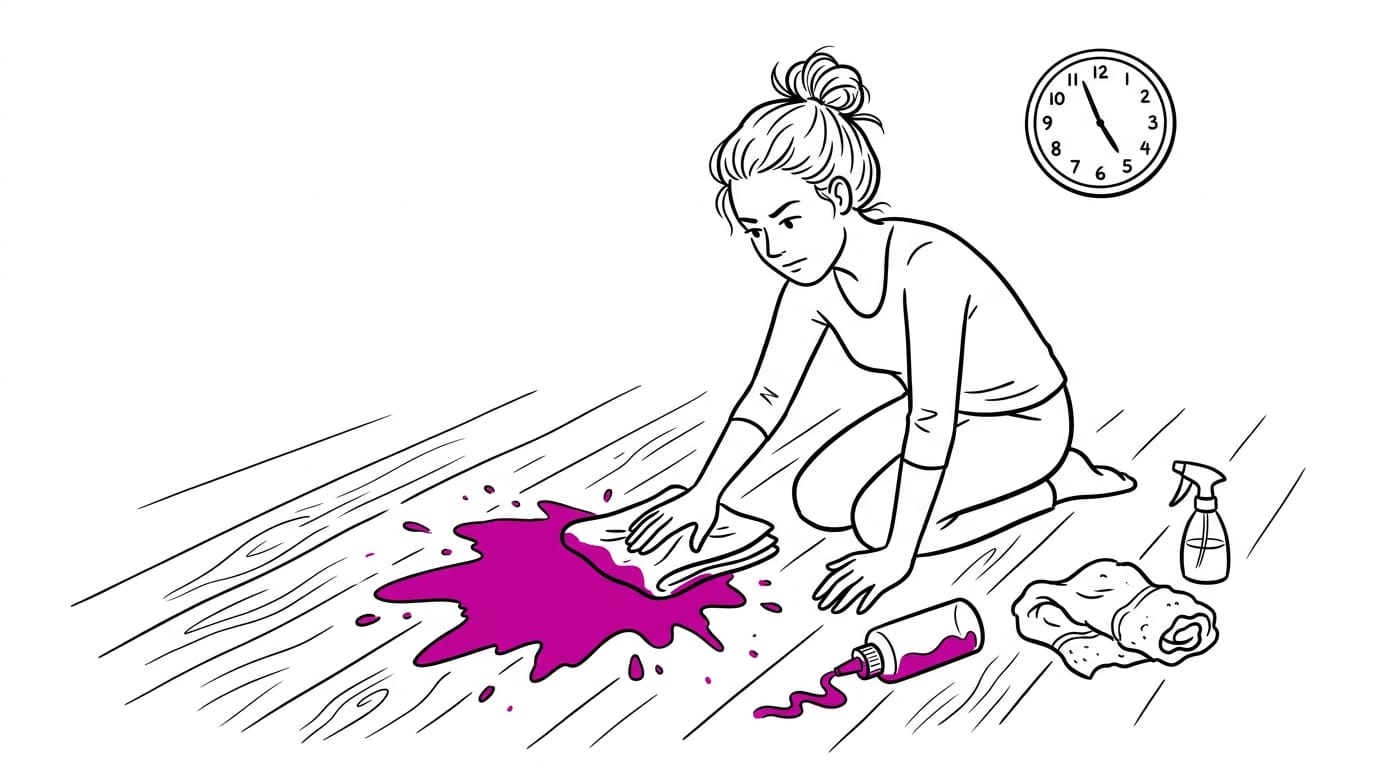
Hair dye can stain wood floors when its pigments soak into the grain, especially on unsealed or worn boards. Blot fresh spills quickly, then use a damp cloth and the mildest suitable cleaner, testing it in a hidden spot first; dab rather than scrub, avoid bleach and excess water, and dry the floor promptly. Fast, careful cleanup gives the stain the best chance of lifting while protecting the floor’s finish.
Picture this: you’re halfway through a home hair colour, the towel slips, and a dark drip lands right on the hallway floorboards. Your first instinct might be to panic, but a fresh dye spot is far easier to lift than you’d think.
Treating it works like a wine spill on the sofa: act fast, before it soaks into the grain.
This guide covers getting hair dye off your wood floor fast, how the finish (the protective coating on top of the wood) shapes your approach, and what to do once a stain has soaked in.
Get Hair Dye off Wood Floor Fast
Hair dye on wood is much easier to lift when you act in the first few minutes, so speed matters as much as technique. Here’s why the clock starts the moment a drip of hair dye hits the floor.
Why fresh dye needs quick cleanup
Clean while the dye is still wet, and aim to lift it rather than work it into the grain. For example, a parent touching up a teen’s roots in the bathroom can grab a damp cloth before the drip reaches the hallway boards, saving the floor and the evening.
Speed wins. Three things raise the stakes:
- Set stains are harder. Once dye dries, it takes far more effort to remove.
- Pause dyeing to clean. If a spill happens mid-application, stop and wipe it up before you carry on.
- Porous surfaces stain deeper. Unsealed or worn wood soaks up dye, so the colour sinks further the longer it sits.
Why untreated dye can stain for good
Hair dye is a mix of colour pigments and chemicals made to bond with hair, not wood, so once it soaks in, it can permanently stain. The exact mix varies by brand, so check the box if you’re unsure.
Porous materials are the most at risk, which is why unsealed or worn boards need the fastest response. Acting quickly also protects the subfloor beneath the boards from damage.
Which Cleaners and Products to Use
Plenty of cleaners can lift hair dye, but wood is less forgiving than tile. The right pick depends on how fresh the mark is and what your floor is finished with.
Store-bought stain removers to try
Shop-bought stain removers are the easiest place to start, especially if you want something made for the job. Follow the bottle instructions exactly.
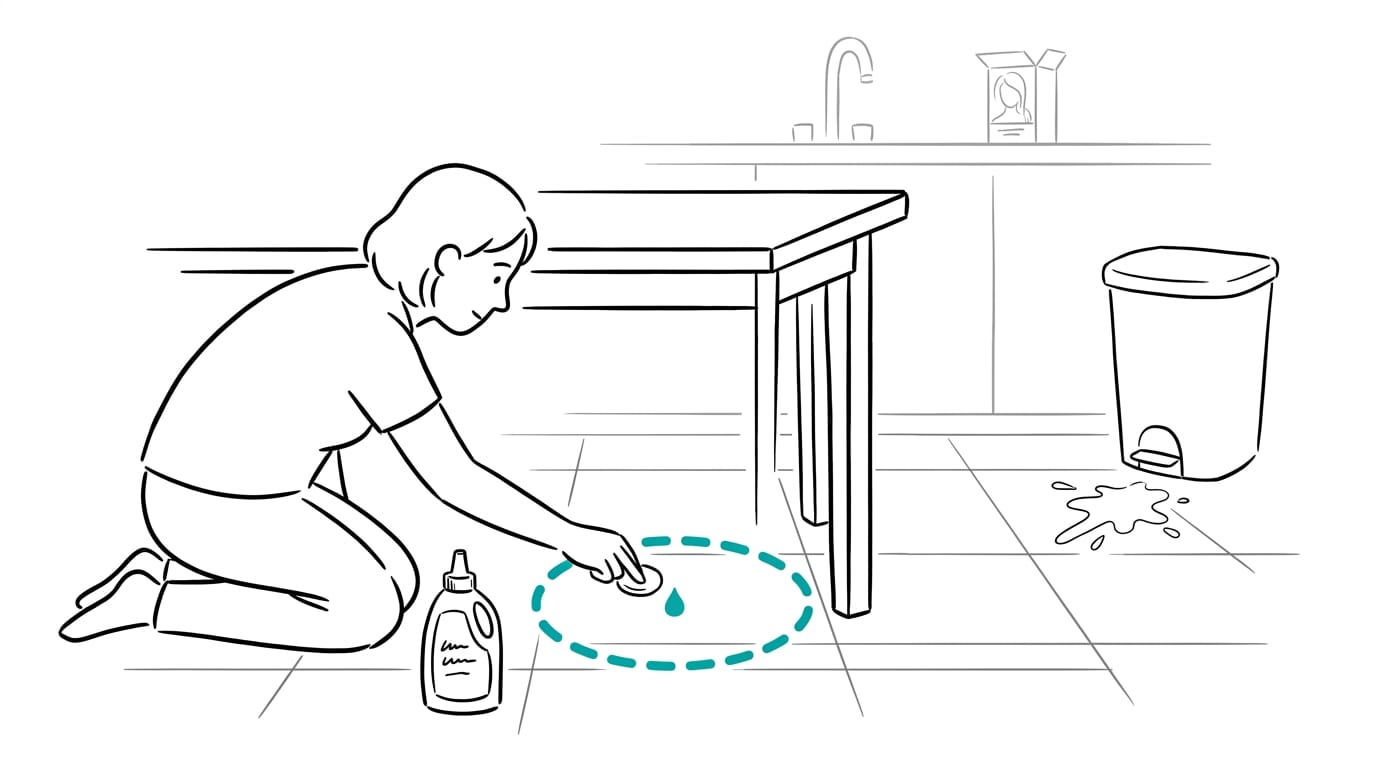
Then run a spot test on a small, hidden patch of floor, since that shows whether the product will dull the finish. Test before you treat the stain, not after.
For example, a parent who dyed a teen’s hair at the kitchen sink and found a splash near the bin can test a corner under the table first. Then they can tackle the splash without guessing.
Can vinegar and baking soda remove dye?
Vinegar and baking soda are a classic pantry pair, and they’re gentle enough to try on wood. The common combinations are:
- Equal parts vinegar and baking soda: mix them and apply with a cloth.
- Baking soda and water paste: stir into a thick paste, spread it over the mark, and wipe it away after a few minutes.
- Baking soda with dish detergent: add a small squeeze of dish soap to the paste if the plain version isn’t shifting the mark.
- Vinegar with lemon juice: add a splash of lemon juice to the vinegar for a citrus twist.
Wondering whether Dawn dish soap will remove hair dye? It’s worth trying in that paste, but it can’t promise to lift every mark.
So can vinegar remove dye, or dye transfer? It can lift dye sitting on the surface, like marks that rub on from a towel or a hand, but it may not shift dye that has already sunk in.
Peroxide and bleach for tough stains
Hydrogen peroxide works as a bleaching agent, which is why people reach for it when gentler options fail. Save it for stubborn marks. For those, mix peroxide with baking soda into a paste, work it in, and wipe it off.
Bleach diluted with water is a tile option. Skip it on wood.
Using rubbing alcohol on fresh dye
Rubbing alcohol dissolves fresh dye, so act while the mark is still wet. Dab it on with a cloth or cotton ball rather than pouring it onto the boards, then rinse the area and dry it straight away.
Consider a renter who splashed dye across a bedroom floor on a Sunday. A cotton ball of rubbing alcohol, used quickly, gives the mark the best chance before it settles in.
Magic Erasers and toothpaste on light stains
A Magic Eraser scours surface stains, the marks sitting on top of the finish rather than sunk into it. Toothpaste is a gentler option for light stains, applied with an old toothbrush you keep just for this job.
Both can dull glossy finishes, so keep the pressure light and check the sheen as you go.
Safety Checks and Mistakes to Avoid
Hair dye on a wood floor can feel urgent, and that rush is when mistakes happen. Slow down. If the dye has already soaked in, it’s tempting to scrub harder, so run these checks before you start.
Test a hidden spot before you start
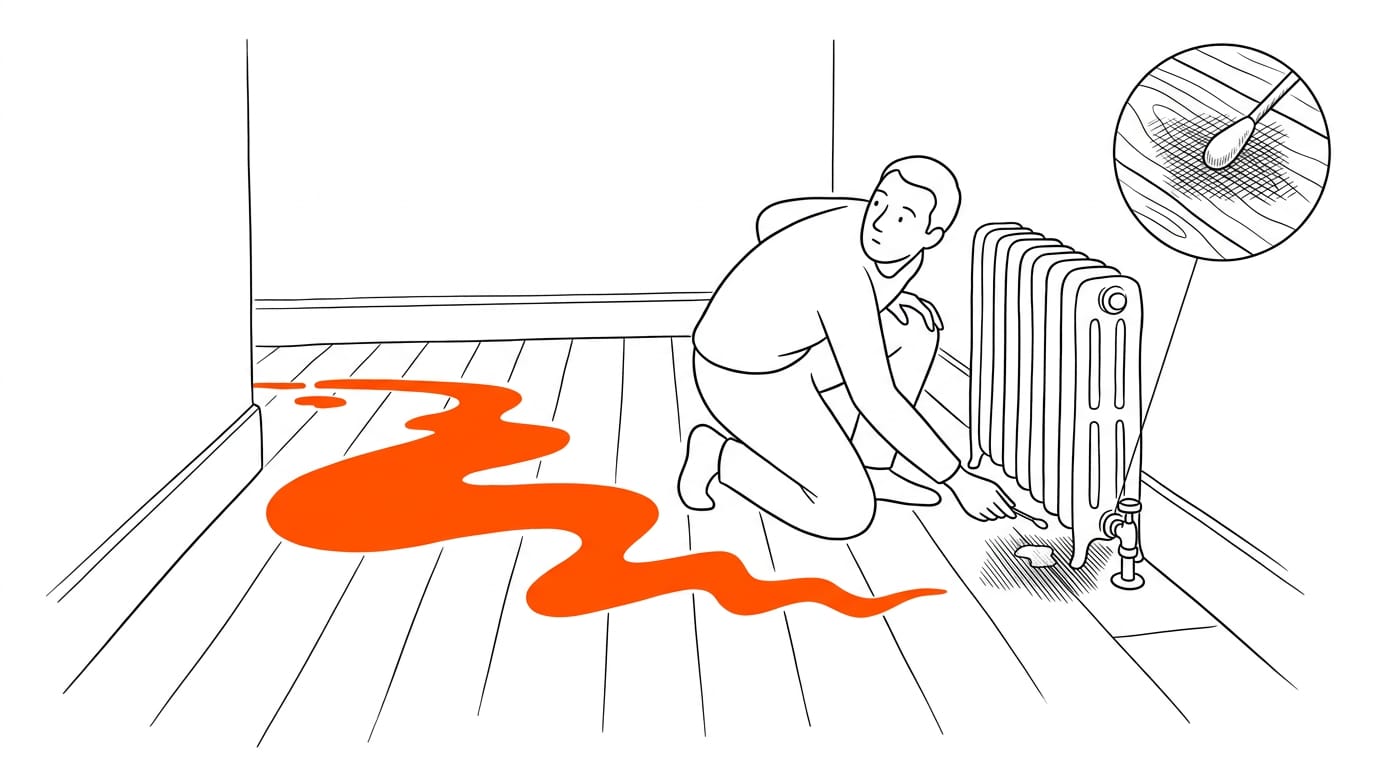
Always try your method on an inconspicuous area first, such as a corner under a rug or a spot behind the door. Peroxide may discolor the surface, so what lifts the stain could leave a mark on the wood itself.
Once the test spot dries, check it in good light to see whether the flooring has bleached.
Think of a tenant who finds dye splashed across the hallway boards. A dab of peroxide in the spot behind the radiator shows the wood darkening, so they switch to a gentler approach and avoid a patch that would show every time someone walks in.
Keep from damaging the floor
The aim is to lift the dye, not to scrub it away. Keep these habits in mind:
- Gentle pressure. Don’t rub too harshly. Dab and lift instead.
- No abrasives. Skip steel wool and harsh scrubbers, which can scratch the finish you’re trying to protect.
- One product at a time. Don’t mix cleaning products, since you can’t predict how they’ll react.
- Less water. Excess water harms wood, so keep your cloth damp, never dripping.
Steps for Applying the Cleaner
Once you’ve picked your cleaner, start gentle and only step up if the stain won’t budge. Work from the mildest option to the firmest, and stop as soon as the colour begins to lift.
Work the solution into the stain
Picture a renter who spots a streak of hair dye on the hallway floorboards just before the check-out inspection. Here’s what they do:
- Dampen a clean cloth with the cleaner. A grubby cloth just spreads the dye around.
- Work into the stain gently, using small dabs or circles rather than long scrubs. Heavy scrubbing tends to push the dye across the floor instead of lifting it.
- Let the cleaner sit for several minutes so it has time to loosen the colour.
- Repeat as needed, switching to a fresh part of the cloth each time. Patience wins here.
Wrapping up and letting it dry
When the colour has lifted, wipe the area with a damp, warm cloth. This removes the cleaner residue, so nothing is left sitting on the boards.
Avoid leaving slick spots behind. Wipe up any drips straight away, and don’t let the cleaner pool in one place.
Then avoid excess moisture: keep the cloth barely damp, and dry the area with a clean towel once you’re done. Wood doesn’t need a soak, and too much water is the last thing the boards need.
Tips for Other Surfaces Nearby
Dye doesn’t always stay on the floor, so check the walls, worktops, and cupboard doors nearby too. Before you start, know whether your wood is sealed or unsealed, since the two need different handling.
If you rent, check your tenancy agreement before you use anything on the floor, and ask your landlord if the terms are unclear.
Options for painted walls and tile
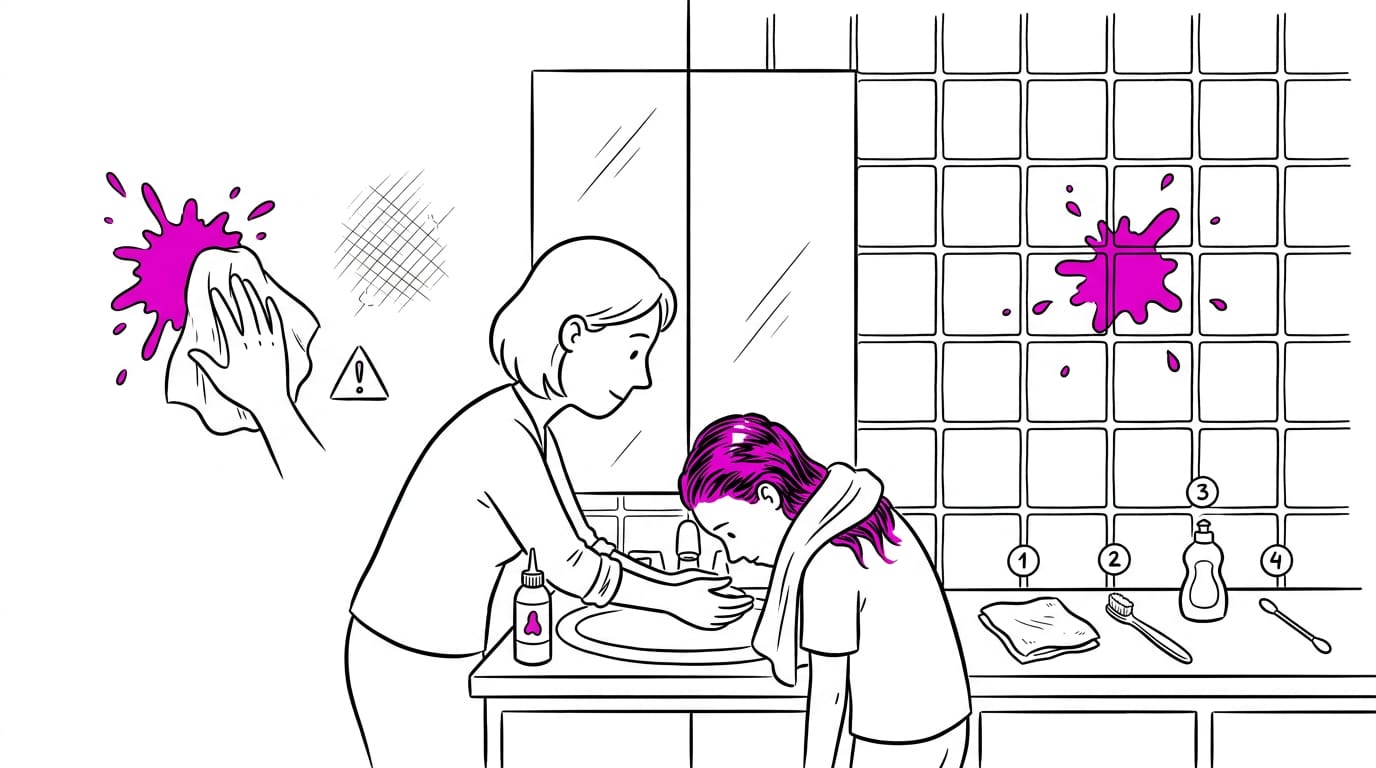
Picture a parent colouring a teenager’s hair over the bathroom sink, with dye spattering the wall behind and a splash landing on the tiles beside it. Painted walls leave you with fewer options, since harsh cleaning can damage the paint along with the dye.
If removal fails, you’ll need to repaint that patch. Tiled walls give you more room to work, so you can try a few gentle methods in turn before deciding.
Handling counters, laminate, and vinyl
Kitchen surfaces are often more forgiving, but each one reacts differently, so match your method to the material:
- Glossy surfaces: easier to clean, so a quick wipe may be all you’ll need.
- Granite: can dull, so avoid anything abrasive.
- Laminate and vinyl: a paste or rubbing alcohol is worth trying.
Start gentle, then step up.
How to Prevent Spills Before They Happen
The easiest hair dye stain to remove is the one that never lands. A few minutes of setup before you open the box protects your floor far better than any cleanup later.
Keep towels and a spill kit ready
Lay towels while you dye. Spread old towels across the floor before you start, not after the first drip. Choose ones you won’t mind ruining, and cover the whole area where you’ll be standing, kneeling, or leaning.
Prevention really is better than cure. It’s about before the drip, not after it. Consider a parent touching up their own roots at the bathroom sink, with an old towel already folded under the stool.
When a drop lands, it soaks into the cotton instead of the boards, and the floor is still spotless when the job is done.
Keep a dye-day spill kit within arm’s reach, so you’re never hunting for a cloth with dye on your hands. Have these ready before you mix anything:
- Old towels or spare cloths
- Plain kitchen roll for blotting
- A bowl of water for rinsing cloths
- Disposable gloves
Set it all out first. A mess you planned for is a lot easier to clean up.
So, the next time a dye drip hits the floor, you know the plan: act fast, check your finish, and work through the steps in order. Start gently, test in a hidden spot first, and you’ll give your floor the best chance of looking just as it did before.
A few minutes of care now can save you from a bigger repair job later. Keep your go-to products within reach and a quick clean-up habit in place, and a small mess stays a small mess.
Act fast, act right, and your wood floor will thank you.
Questions
What is hair dye made of?
Hair dye contains colour pigments and chemicals formulated to bond with hair. The exact ingredients vary by brand, so check the product packaging for a specific formula.
How to remove hair dye from a porcelain sink?
Blot fresh dye from the porcelain sink with a damp cloth, taking care not to spread it. Try a suitable stain remover or a paste of baking soda and dish soap, then rinse well; test cleaners in a discreet spot first and avoid abrasive scrubbers that could scratch the surface.
How to remove hair dye stains?
Blot fresh hair dye promptly rather than rubbing it, then use a cleaner suited to the stained material. On washable surfaces, try a stain remover or a baking soda and dish soap paste; test first, use gentle pressure, and rinse or wipe away residue. For dye that has soaked into a porous material, removal may be difficult or incomplete.
Can vinegar remove dye transfer?
Vinegar can help remove dye transfer that is sitting on a surface, such as colour rubbed off by a towel or hand. It may not remove dye that has soaked into the material, so test it in a hidden spot first.
Will Dawn dish soap remove hair dye?
Dawn dish soap may help lift hair dye when mixed into a baking soda paste, but it will not remove every stain. Test the mixture on a hidden spot first and use gentle pressure to avoid damaging the surface.
More in Floors & Carpets
- Cleaning Grout with Baking Soda and Hydrogen Peroxide GuideCleaning grout with baking soda and hydrogen peroxide lifts grime with a simple paste; see when it works, what to avoid, and which method fits your grout.
- Wood Heater Cleaning: Ash, Glass, Flue and Safety BasicsWood heater cleaning gets easier with better burning habits, safe ash removal, glass cleaning, plus simple checks for creosote and worn stove parts.
- Is it worth buying a carpet cleaner, or hiring one?What hiring a carpet washer, buying one or paying a professional costs in pounds, which carpets to keep machines off, and how to avoid over-wetting.

Stain Finder: a free stain removal guide
Find your stain