Tile and Grout Cleaning Explained: Methods and Costs
Tile and grout cleaning tackles murky grout without dulling tile glaze. Compare DIY steps with professional options and typical UK costs before you start.

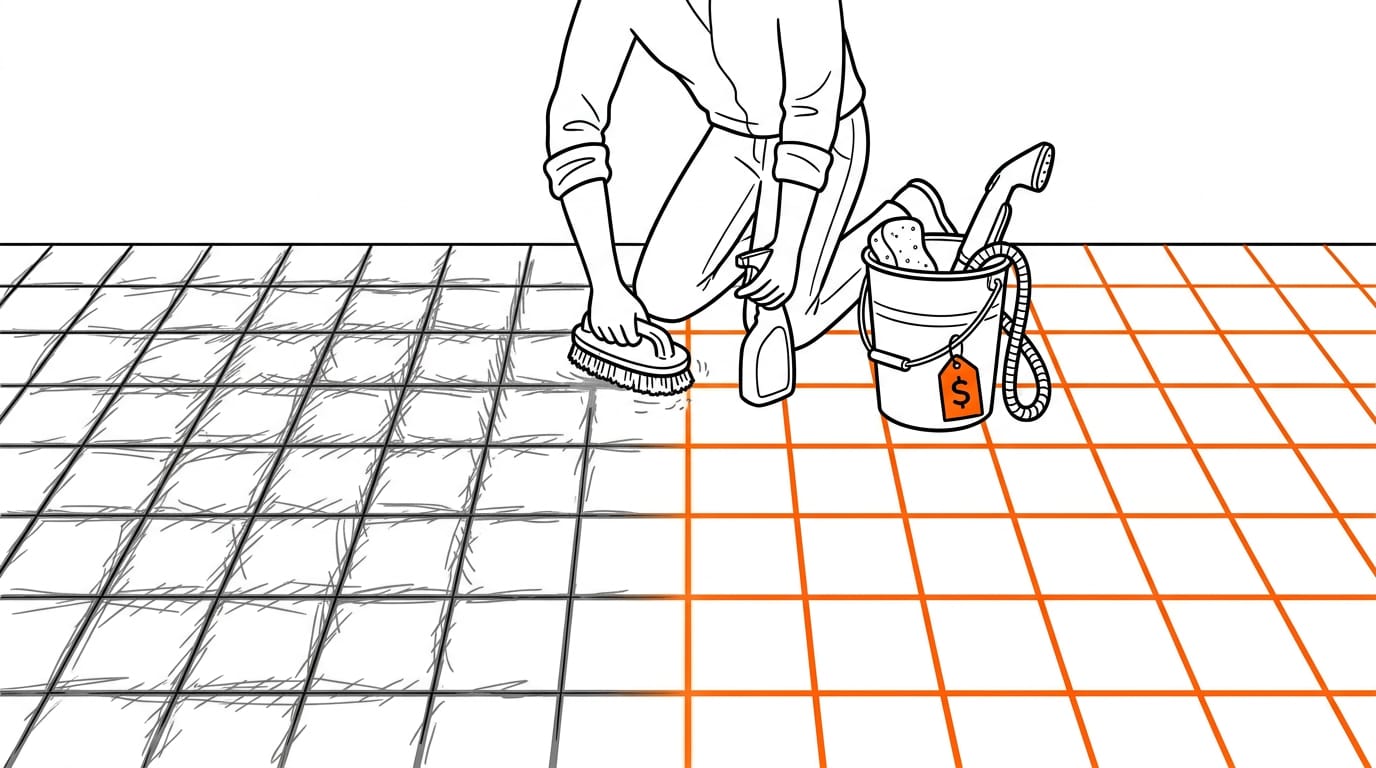
Tile and grout cleaning removes dirt and stains from tile surfaces and the porous filler between them, which absorbs spills and needs different care from the tile. Start with gentle methods, remove loose dirt, scrub and rinse, and match products to the material; avoid vinegar on natural stone and test cleaners on a hidden spot. DIY suits small patches, while professionals can extract embedded grime from larger or stubborn jobs, and sealing clean, dry grout helps protect it from future spills.
Picture the kitchen floor after a busy weekend. The tiles look fine from a distance, but the lines between them have gone a murky grey, and a dark mark by the bin won’t budge.
Those lines are grout, a porous filler that holds tiles in place. It soaks up dirt and spills, so it needs different treatment from the tile face, or you risk dulling the glaze or driving stains deeper.
You’ll find when to call a professional, how to clean it yourself, what it costs in the UK, and the order to work in so you get it right first time.
Professional Tile and Grout Cleaning
Sometimes grout is past a weekend scrub. Here, we’ll cover what a pro does, the kit they use, and when to hand the job over.
What happens during a pro cleaning
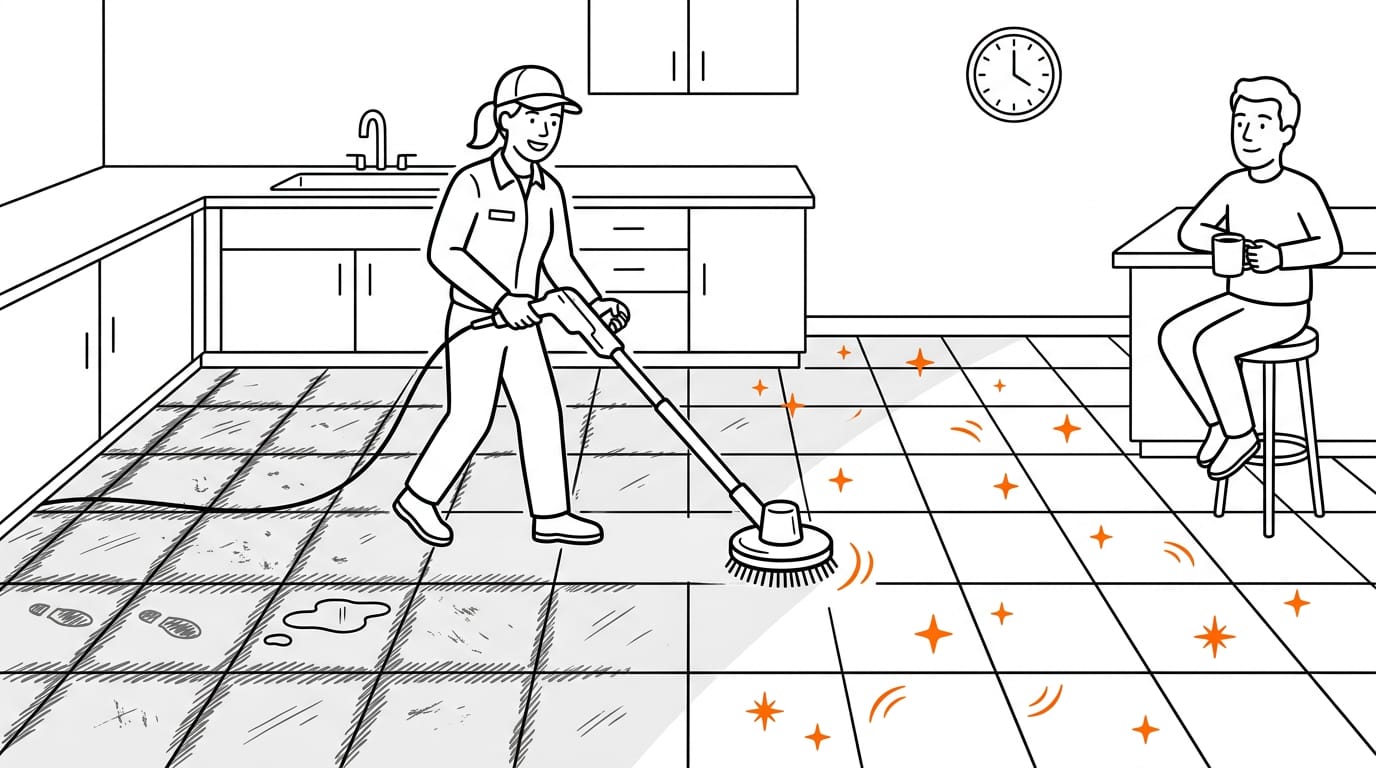
The visit runs in this order:
- On-site assessment and quote: the technician checks the job and prices it before any work starts.
- Sweep and vacuum dry dirt: loose grit comes up first, so it won’t turn to mud.
- Chemical spray to suspend dirt: a solution loosens the grime so it lifts rather than smears.
- Machines using steam, brushes, and vacuum: the grout gets agitated and the dirty liquid is pulled away.
- Final rinse: a clean water pass removes the solution and the last of the grime.
- Small room under an hour: a small room can be finished in under an hour.
Think of a parent whose bathroom floor has gone grey at the bath edge. Book a pro, and the room is sorted before the school run is over, with no weekend lost to a bucket and brush. The weekend stays yours.
The machines and products pros use
Their kit has three parts:
- Industrial-grade machines: built to work grout harder than any hand brush.
- Commercial-grade products: made for trade use, not the supermarket shelf.
- Equipment built for porous surfaces: grout is porous, so it needs tools that pull liquid and grime back out.
Dirt sinks deep into the grout, where a sponge rarely reaches and elbow grease can’t always follow. The job is less about scrubbing and more about extracting.
Why hiring a pro makes sense
- Dingy grout dulls nice tile: even good tiles look tired against grey grout.
- Foot traffic, spills, and wrong products: busy floors take a beating, and a rushed product choice can make things worse.
- No time or mobility to scrub: a pro does the hard work when you’re short on time or kneeling is hard on your back.
- Results look like new: the finish is hard to match with a sponge alone.
Tough problems pros take care of
- Mold and mildew: dark patches in damp corners that need more than a quick wipe.
- Soap scum: a film that builds up on tile and grout and dulls the surface.
- Embedded dirt and grease: grime sunk into the grout that surface cleaning rarely reaches.
- Stains and water damage: marks that have soaked in and need proper treatment to lift.
Surface cleaning deals with what sits on top. These problems sit below the surface, so they need a deeper approach.
Why you can trust the service
- Trained, experienced technicians: people with the training and hands-on experience to do the job right.
- Customer reviews: according to Best Tile, Grout & Stone Cleaning Companies in Chicago, IL, customer reviews and technician experience can help you evaluate a provider.
- One-year warranty: a set period of backup after the job.
- Same-day restoration: the floor can be brought back the same day.
- Free consultation: a chance to ask questions and weigh your options first.
- Care instructions for customers: clear guidance on keeping the results going between visits.
Cleaning Tile and Grout Yourself
Tile and grout cleaning means lifting dirt and stains from tiles and their grout lines. Doing it yourself (DIY, for short) is worth trying first, using what’s already in your cupboards.
Walk through the DIY cleaning steps
Work through these in order:
- Remove surface dirt first. Wipe away loose dirt before you scrub.
- Start with water and brushing. Scrub tiles and grout lines with warm water and a stiff brush.
- Warm water and vinegar mix. If water alone fails, spray on warm water mixed with white vinegar, then scrub again.
- Baking soda on grout lines. Sprinkle it along the lines and work it in with a toothbrush.
- Store-bought sprays and pastes. Use these only if the cupboard basics don’t shift the mark.
- Rinse thoroughly afterward. Wipe with clean water so no cleaner residue is left behind.
Think of a home cleaner with a sticky kitchen floor. Warm water and a brush clear most of it, so the vinegar mix is only needed for one stubborn patch.
Match the method to the mark: start gentle and move up only if the stain stays.
What should you not use on ceramic tile?
Avoid mixing bleach with vinegar, since the combination creates a dangerous chemical reaction. Natural stone is the exception to vinegar, so keep it off that surface.
For delicate tile, start with plain water and a toothbrush, and test any product on a small hidden spot first.
Is toilet bowl cleaner okay on tile grout? It’s made for toilets, not tiles, so skip it and choose a commercial grout cleaner labelled for tile. Read first, scrub second.
What to have on hand
Gather these before you start:
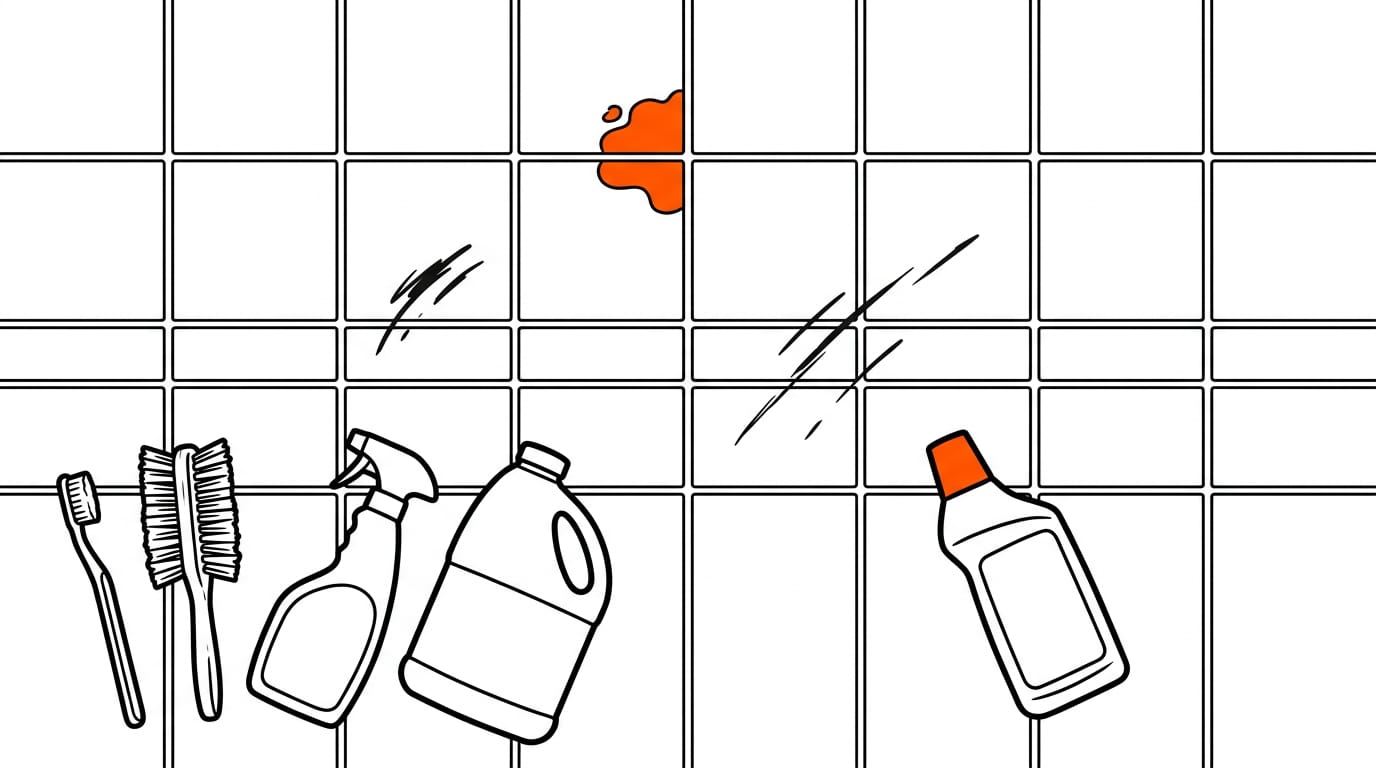
- Toothbrush, standard or electric, for grout lines.
- Stiff bristle brush for the tile surface.
- Spray bottle for your vinegar mix.
- White vinegar, kept away from natural stone.
- Commercial grout cleaner for stubborn marks.
Use cupboard items first. Save the commercial grout cleaner for marks that won’t budge.
Where DIY cleaning gets hard
DIY works for small patches but stalls as jobs grow:
- Time and effort required. Scrubbing grout by hand takes real patience.
- Project size. A splash zone is manageable, but a whole bathroom floor is much harder.
- Availability of right materials. A missing product can stall the whole job.
Can you clean grout off tile after it dries? Yes, but it takes more scrubbing than a fresh smear.
Renting a cleaner and what to expect
Think of a landlord getting a flat ready between tenants. One afternoon with a cleaner rental could save a whole weekend of scrubbing. Before booking, weigh these:
- Local availability. Cleaner rentals are available locally, so check what’s near you.
- Rental terms. Terms run from hourly to monthly, so pick the shortest that fits the job.
- Total cost. Rental plus supplies may cost more than the rental alone.
- Hire a pro instead. For a large job or stubborn marks, a professional cleaner may be the simpler option.
What Tile and Grout Cleaning Costs
Wondering what a clean will set you back? Most quotes come down to how the company bills and what the job involves.
What most people pay nationwide
The national average for tile and grout cleaning runs from $190 to $250. Some companies quote a flat fee for the whole job, while others charge per square foot, so ask for the total rather than the rate before you book.
Think of a tenant with a bathroom and kitchen grout to clean before the deposit check. Comparing totals shows which quote really costs less.
How companies charge for the work
Here’s how the charges usually break down:
- Per square foot: About 75 cents per square foot.
- Hourly rate: $30 to $50 an hour for hand cleaning, so you pay for time rather than area.
- Minimum service fee: A set minimum means a small job can cost more per square foot than the rate suggests.
- Hand cleaning: Expect higher prices, so ask for it only when the grout truly needs it.
Ask about the minimum before you book.
What pushes the price up or down
Several things move the quote:
- Tile and grout type: The material decides the method, and the method decides the time.
- How dirty the surfaces are: Heavier build-up takes longer to lift, and more time means a bigger bill.
- Regional labor rates: Local rates vary, so the same job can be quoted differently from area to area.
- Furniture moving: Shifting furniture can add $25 or more to the bill.
- Sealant application: Sealing the grout adds cost, so check whether it’s included in your quote.
It’s the extras, not the base rate, that catch most people out. Read every line.
Other Services for Hard Surfaces
Once the tiles are clean, a few extra jobs can protect the result or refresh the look.
Sealing the surface after cleaning
Once grout and tiles are clean and dry, a sealant is the next step, since it protects the surface against the next spill. Both can be sealed, though grout usually soaks up liquid first.
The sealant you choose affects the cost, so check what’s included before you book.
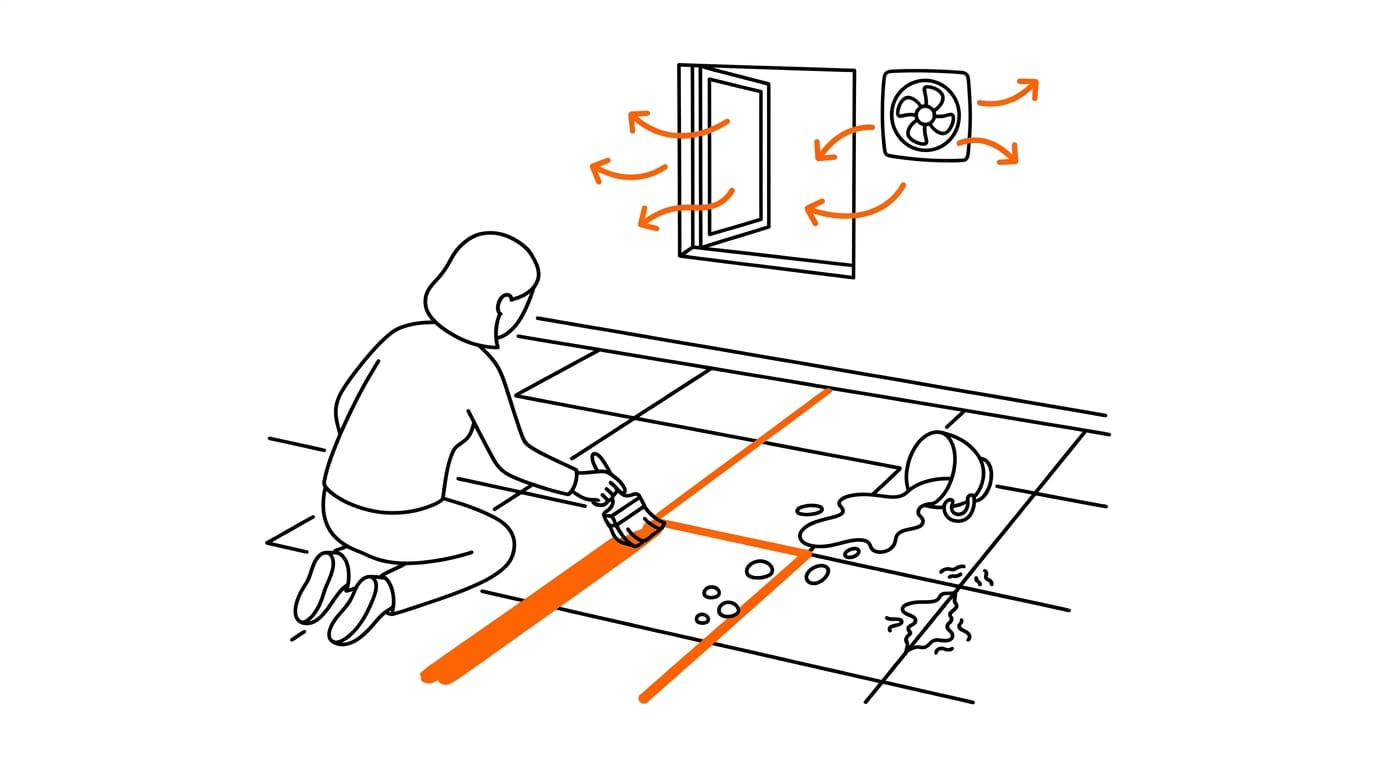
A home cleaner finishing a kitchen floor for a busy family can seal the grout so the next spilled tea wipes away instead of soaking in. Preventing grime from returning comes down to two things: sealing and ventilation.
Sealing keeps dirt out, while good airflow helps moisture clear from bathrooms and kitchens.
Recolouring grout and caulking work
Faded grout doesn’t always mean a full replacement. Grout recolouring applies a colourant over the existing grout, so the floor looks fresh without any tiles coming up.
Caulking is the flexible sealant along joints, such as where a bath meets the wall. Think of a tenant preparing a flat for handover who needs a grey bath edge looking finished again. A fresh bead of caulk does that.
Treat tile cleaning as a separate job. Clean the tiles first, then recolour or caulk, so the new finish isn’t sealed over leftover dirt.
Caring for natural stone surfaces
Natural stone rewards a gentle hand, so choose cleaners made for stone. Stone cleaning and sealing go together: clean first, then seal, so the protection locks in a clean surface.
Honing smooths stone to a soft, matte finish, while polishing brings it up to a glossy shine. Consider a host whose marble hearth has dulled after years of guests and candles. Polishing might be all it needs to look its best again.
Where This Service Is Available
Before you book, it helps to know two things: whether we reach your address, and what kind of space needs cleaning. Here’s how coverage breaks down:
Areas we cover around Charleston
Our service area runs across the Charleston, South Carolina counties, plus the surrounding cities and nearby islands. Not sure your street is included? Ask before you book.
Picture a homeowner who spots dirty grout (the filler between tiles) around the shower and isn’t sure anyone nearby will take the job. One quick call answers that before they spend a whole weekend on their knees. Outside the areas above?
Check our other location pages before you assume we can’t help.
Homes, offices, and restaurant kitchens
This is less about how big a building is and more about how much traffic its tile takes. Here’s what we handle in each setting:
- Residential service. Bathrooms, kitchen backsplashes, entryways, and tiled floors in houses and apartments. A parent whose entryway takes the school run’s muddy shoes every morning can book one visit to deep-clean the grout instead of fighting it alone.
- Commercial and restaurant kitchens. Greasy floors and walls where spills collect in the grout. A restaurant owner with dark grout behind the line can book a clean on a closed day and open the next morning with a kitchen ready to work.
- Offices and restrooms. Restroom tile sees heavy daily use, so its grout often shows wear first. An office manager who books a restroom clean before a busy week gives staff and visitors a space that looks cared for.
Tile and grout cleaning comes down to matching the method to the surface in front of you. The tile type, the grout and the stain all change the answer, and getting that match right saves you from dull glaze, faded lines and a second round of scrubbing.
Whether you tackle it yourself or call in a professional, start gentle, work in the order we’ve set out, and test on a small patch first. Get the match right first time, and your floors will look their best for longer.
References
- Best Tile, Grout & Stone Cleaning Companies in Chicago, IL — bestpickreports.com
Questions
What is tile and grout cleaning?
Tile and grout cleaning is the process of lifting dirt and stains from tile surfaces and the grout lines between them. Grout is porous and can absorb spills and grime, so it often needs different treatment from the tile.
Can you clean grout off tile after it dries?
Yes. Dried grout can be cleaned off tile, but it usually takes more scrubbing than removing a fresh smear. Use a method suited to the tile and test it on a hidden area first.
Is it okay to use toilet bowl cleaner on tile grout?
No. Toilet bowl cleaner is made for toilets, not tile grout, so choose a commercial grout cleaner labelled for tile instead. Follow the product directions and rinse the surface thoroughly.
What should you not use to clean ceramic tile?
Avoid mixing bleach with vinegar, as the combination creates a dangerous chemical reaction. Do not use vinegar on natural stone, and test products on a small, hidden area before applying them to delicate ceramic tile.
Sources
- Best Tile, Grout & Stone Cleaning Companies in Chicago, IL, bestpickreports.com
More in Bathroom
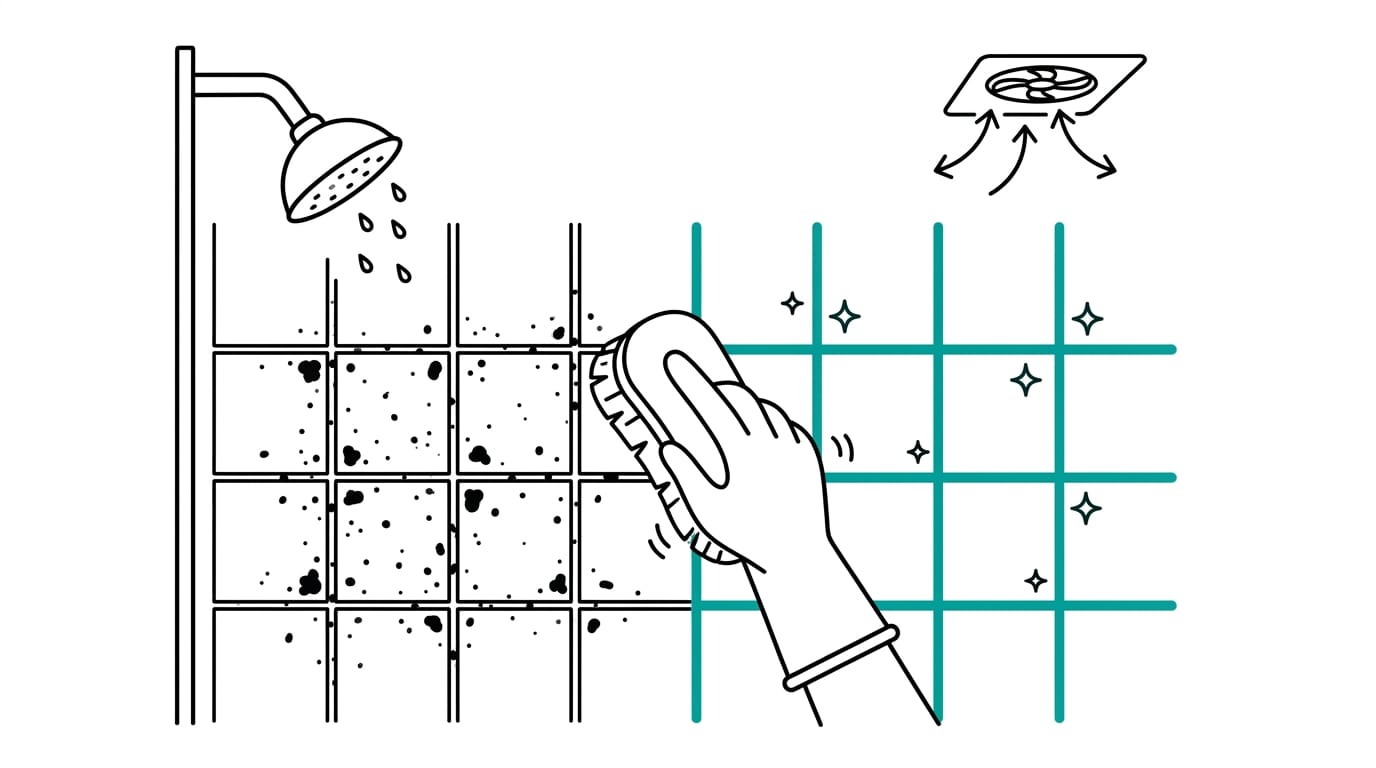
- Black Spots in Shower Grout: Causes and FixesBlack spots in shower grout are usually mold or mildew. Check shower safety, clean the growth in the right order, and prevent spots from returning.
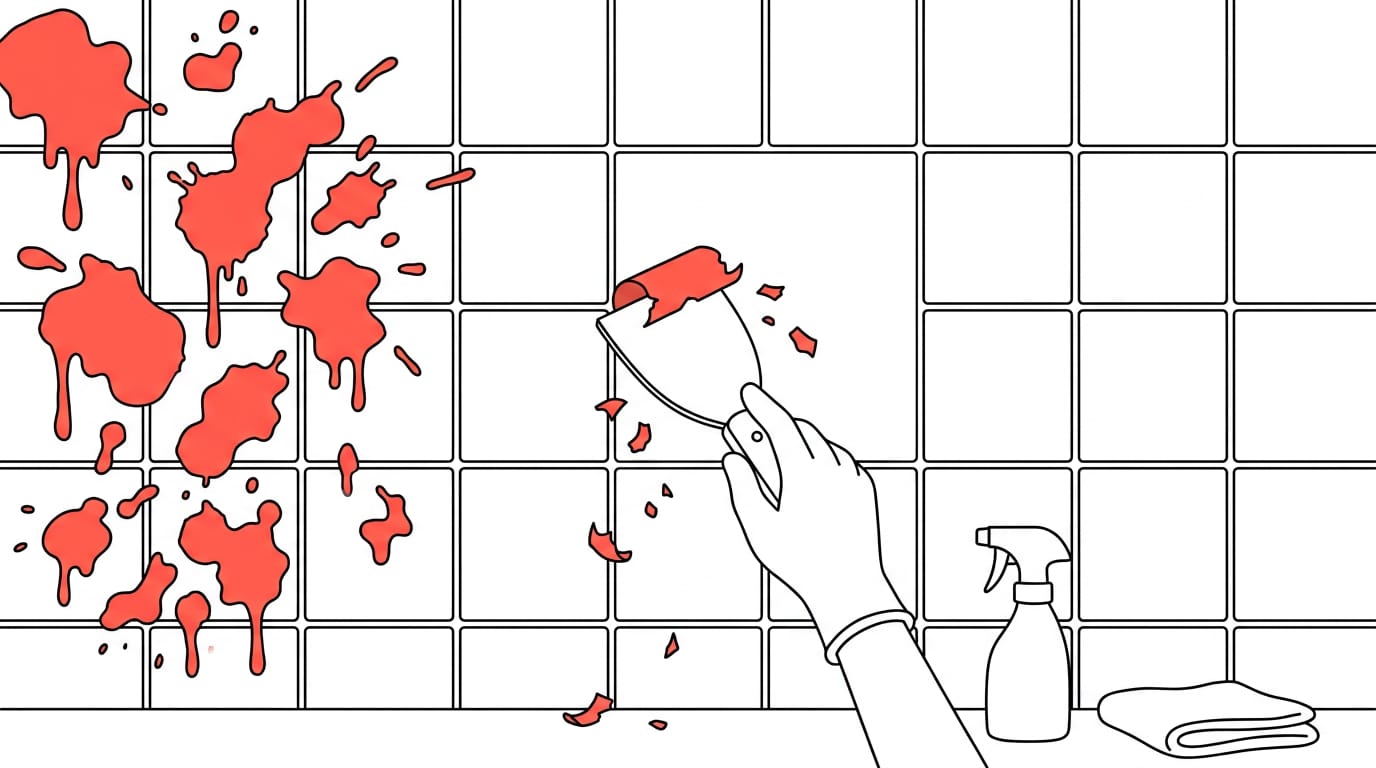
- How to Remove Paint from Tile: A Complete GuideHow to remove paint from tile depends on whether it’s wet, dry, water-based, or oil-based. Use cupboard staples to lift paint from tile and grout safely.
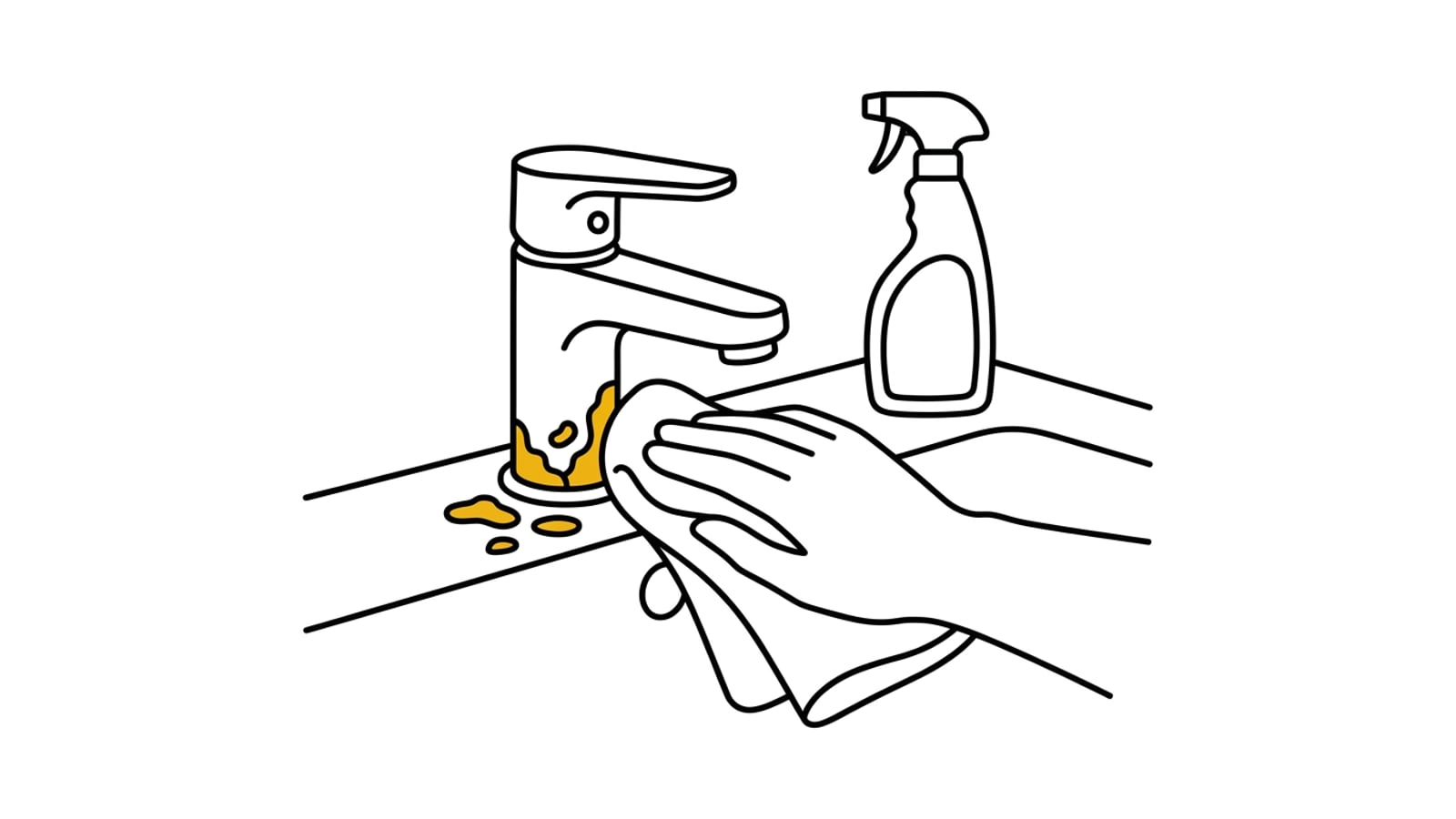
- How to remove limescale from taps, showers and toiletsHow to dissolve limescale on taps, showerheads, screens and toilets with the acid each can take, what acids damage, and why descaler never meets bleach.
Stain Finder: a free stain removal guide
Find your stain