How to Remove Paint from Tile: A Complete Guide
How to remove paint from tile depends on whether it’s wet, dry, water-based, or oil-based. Use cupboard staples to lift paint from tile and grout safely.

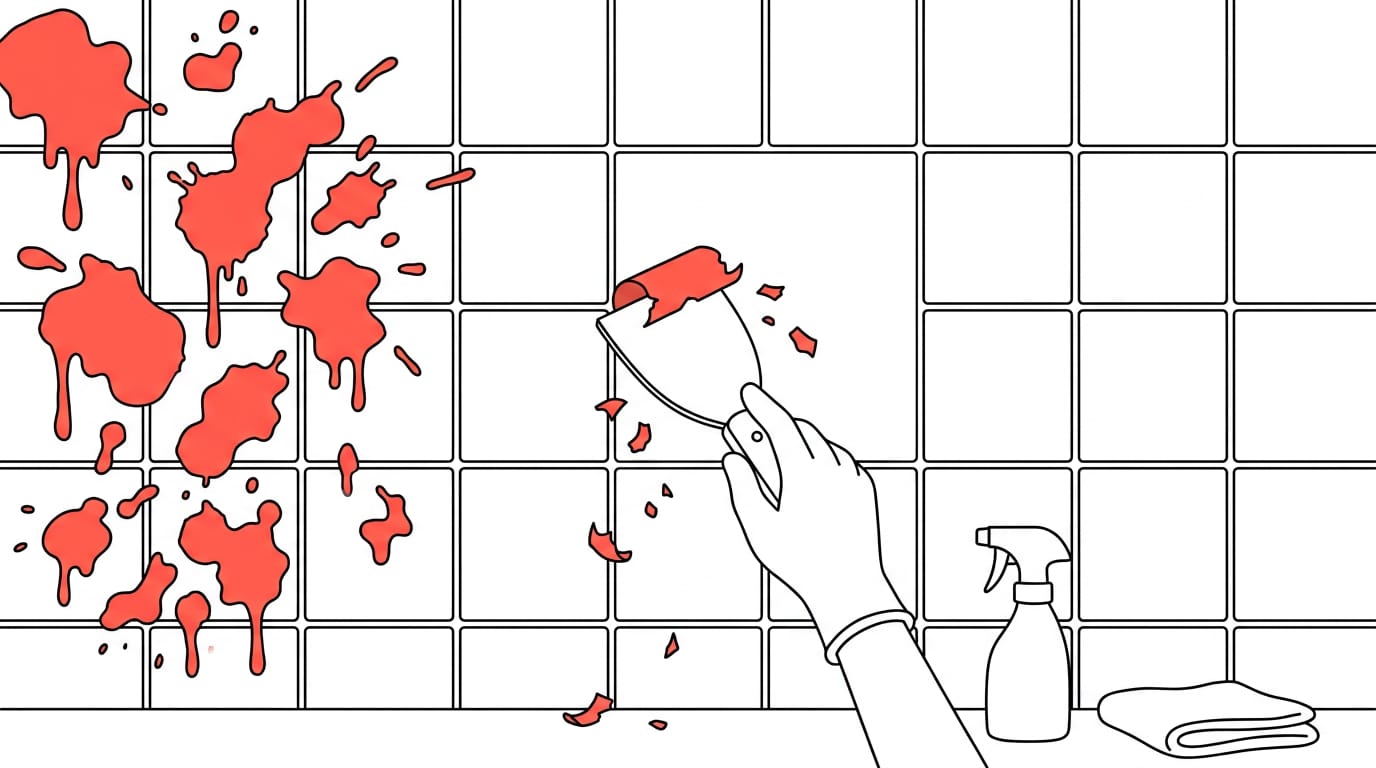
Removing paint from tile means loosening the paint and lifting it without scratching or damaging the tile or grout. Start with warm water and mild soap for fresh paint, then use a gentle scraper or a suitable softening method for dried paint, choosing based on whether it is water-based or oil-based and testing products on a hidden spot first. Work patiently, rinse afterward, and ventilate when using removers so most paint spills can be cleared without replacing the tile.
Think of wet paint on tile like a spilled drink on a glass table: the sooner you wipe it up, the less chance it has to leave a mark. Dried paint takes more patience, but it isn’t always a lost cause.
The right method depends on three things: whether the paint is wet or dry, whether it’s water-based or oil-based, and what finish your tile has. Get those right and you’ll know which order to work in.
In this post, we’ll walk through each situation, then show you how to clear it fast using items already in your cupboard.
How to Remove Paint from Tile
Paint ends up on tile more often than you’d expect, and where it came from shapes how you tackle it. Let’s look at why it happens before we reach for anything.
Why paint gets onto tile surfaces
Most of the time, paint lands on tile during a bigger job.
Renovation and wall painting are the usual culprits: a roller flicks drops onto nearby tiles, a brush slips along an edge, or a fine mist of overspray (tiny paint particles that drift off the wall being painted) settles on the tiles beside it.
Think of a homeowner repainting the kitchen who spots a few speckles on the splashback. Caught in the first few minutes, that’s an easy fix with a damp cloth.
Paint stains differ from regular cleaning. Everyday grime sits on the surface, so a bit of soap and water usually lifts it.
Paint dries and grips, so the job is less about scrubbing harder and more about loosening what’s already there. Act early, if you can.
Replacing tile should be a last resort, not a first move. Most paint marks come off the surface itself, so the tiles you already have can usually stay put. You’re looking at a bit of care, not a builder’s bill.
Household items often do the job. A soft cloth, warm water with a little washing-up liquid, and a plastic scraper for anything stubborn cover most jobs, and you probably have all of them already. Test a small, hidden patch first, since tile finishes vary.
Consider a parent who finds a paint drip on the bathroom tiles after a decorating day: a quick wipe with a damp cloth and washing-up liquid clears it before it dries into a bigger job.
Home Remedies That Lift Paint off Tile
Before you reach for anything, work out what you’re dealing with. Check whether the paint is still wet or dried, and whether it’s water-based or oil-based, because each type responds to a different method.
Start with the gentlest option and work up from there.
Scraping paint off with a gentle touch
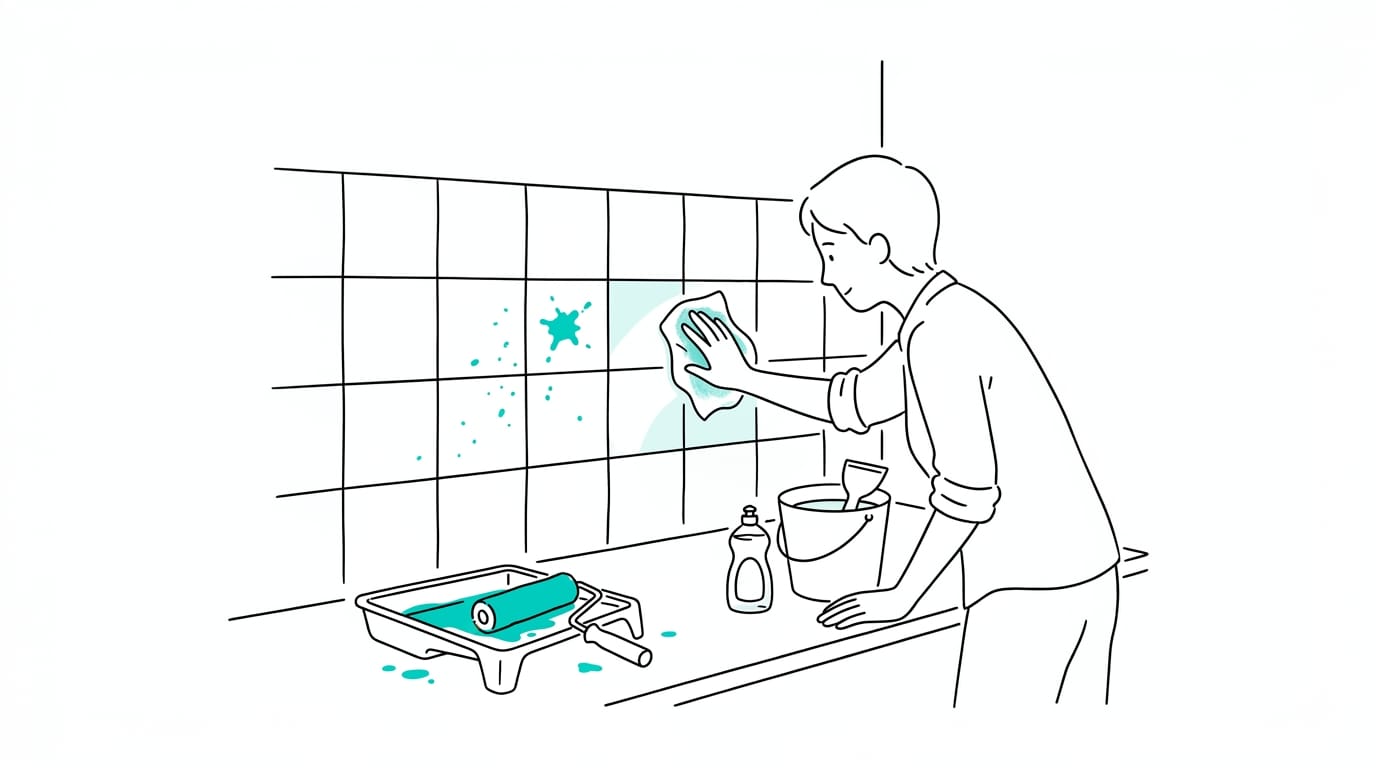
Fresh, wet paint is the easiest to fix, so act quickly. Think of a renter who splashes white paint across the bathroom floor during a quick touch-up. A rag and warm water, used within minutes, can clear it before it hardens into a real chore.
With dried paint, scrape with a gentle touch rather than force, because pressing hard can damage the tile surface:
- Scrape gently with a scraper, switching to a plastic scraper on glazed tile.
- Wash the area with warm water, adding a drop of Dawn dish soap if the paint is acrylic.
- Wipe up the residue with a clean rag.
Will Dawn dish soap remove acrylic paint? It’s a gentle first try, especially while the paint is still fresh, but dried acrylic may need more than soap and water.
Softening paint with heated vinegar
Vinegar softens stubborn dried paint so it lifts more easily. Here’s the method:
- Heat vinegar in a saucepan.
- Apply it with a soft-bristled brush.
- Wait 15-20 minutes.
- Scrape away the softened paint.
Patience does the heavy lifting here, so resist the urge to scrub early.
Try a lemon juice and alcohol blend
If the vinegar doesn’t shift the paint, try a lemon juice and alcohol blend. Mix equal amounts of lemon juice and alcohol, apply the mixture with a wet cotton ball, and wait 5-7 minutes. Then rinse off the residue.
Dab oil-based paint with acetone remover
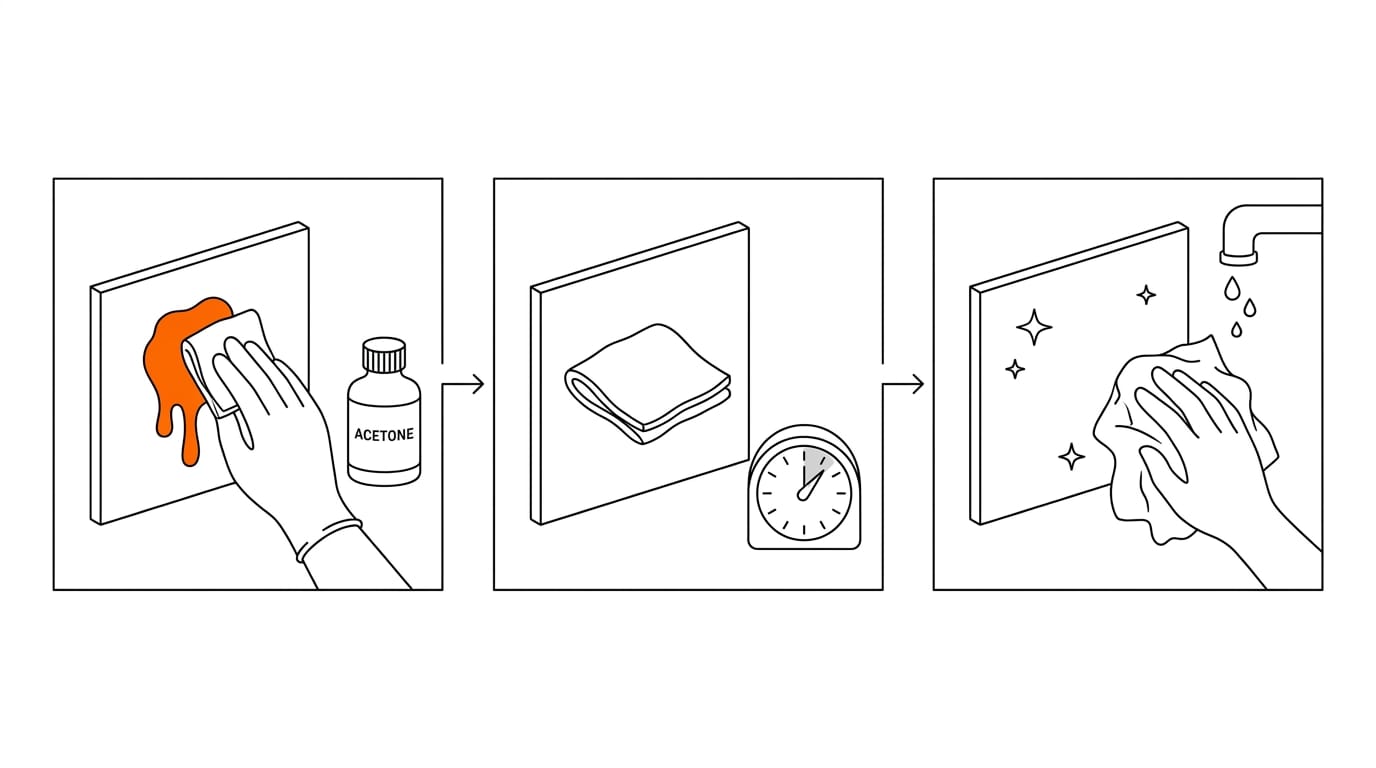
Acetone remover works on oil-based paint, so it’s the tool to reach for when that’s what’s on your tile.
- Dab gently, then wait 5-10 minutes.
- Rub any leftovers with a cloth soaked in the remover.
- Wash the tile with water.
If you don’t have acetone remover, white spirit is another option. Does white spirit get paint off tiles? It can help with oil-based paint, so test a hidden spot first, dab it on, and rinse the tile well afterward.
Store-bought paint remover for stubborn spots
When a stubborn spot survives the home methods, a store-bought paint remover is the next step. You’ll find them at hardware shops. Follow the box instructions closely, then wash the tile afterward.
How do you remove paint from a cement floor? Follow the same order: identify the paint type, start gently, and test a hidden corner first. Cement is more porous than glazed tile, so the rinse step matters even more.
Lifting Paint Out of Tile Grout
Paint in the grout lines is harder to deal with than a splash on the tile, but it lifts with patience and a few common household items. Work through these steps in order.
Clean grout lines step by step
Think of a tenant who flicked white emulsion across the bathroom wall while touching up a patch. The tiles look fine, but a stripe of paint runs through the grout. Here’s how they’d clear it:
- Clean dust and dirt first. Wipe the area so the mixture can reach the paint instead of grime.
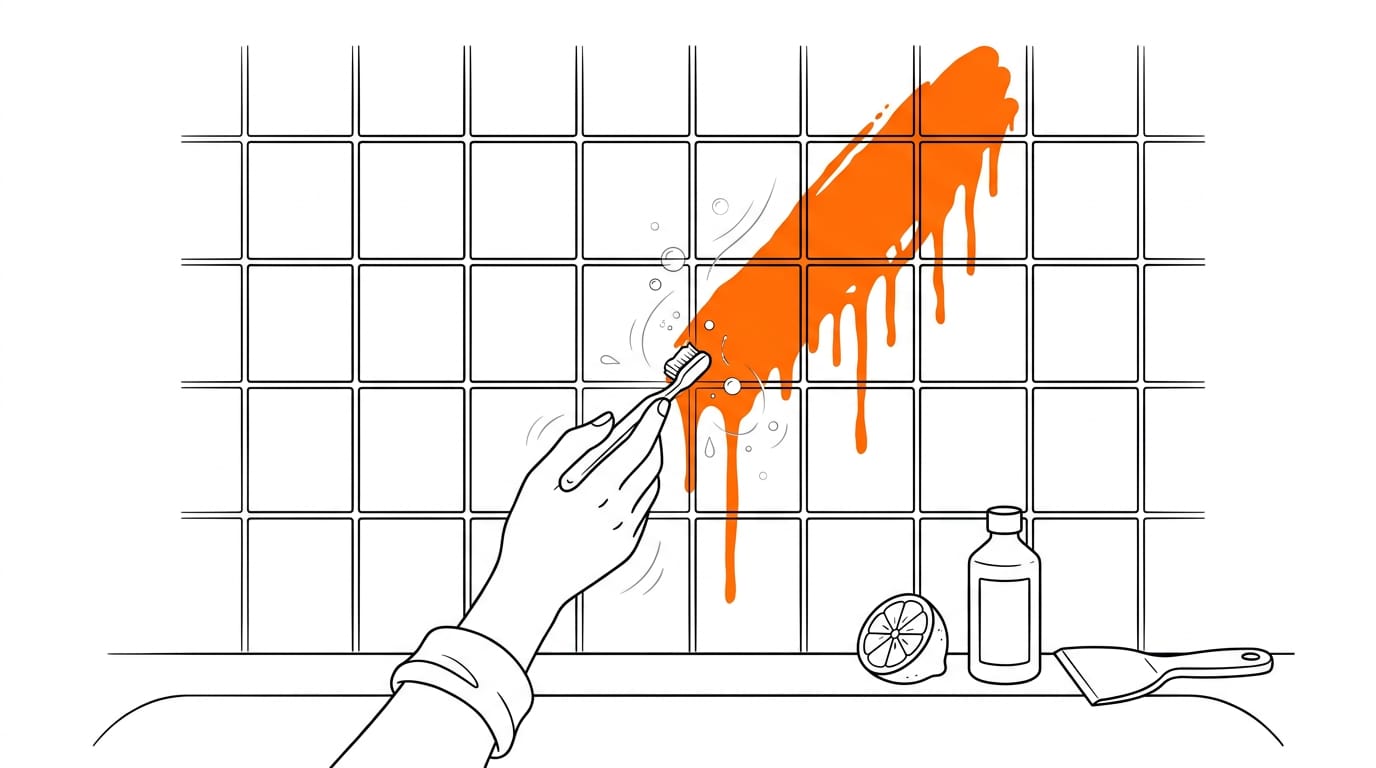
- Mix alcohol and lemon. Combine rubbing alcohol with lemon juice to make your cleaning mixture.
- Dab on the grout and wait. Dab the mixture onto the paint and let it sit until the paint starts to soften.
- Scrape carefully. Use a scraper or a knife, going gently so you don’t gouge the tile or the grout.
- Brush with the solution. Work the mixture into the lines with a small brush to lift what’s left.
- Rinse and dry. Rinse with clean water, then dry the area with a towel.
Let the mixture loosen the paint rather than forcing it out, and the grout will look like grout again instead of a stripe of paint. Rushing with a blade or a harsh scrub only works against you. Patience wins here.
Simple Precautions to Keep in Mind
A few simple habits before you start will protect your tiles, your floor, and your lungs. Paint removers and heat both need a little respect, so take a minute to set up properly.
Will acetone damage ceramic tile?
For ceramic, the honest answer is that it depends on the glaze, so don’t guess. Acetone is a strong remover, and harsh removers can damage the surface, so do a spot test first.
Dab a little on a hidden corner, wipe it off, and check the result before you go further. Then apply the remover only to the paint, not the whole tile.
Think of a tenant who splashed emulsion on a bathroom wall during a quick repaint. Testing one tile first, then working only on the paint, means one wrong guess doesn’t cost them the whole wall.
Tile type and finish matter here too. A glossy glaze and a matte or textured tile can react differently, so check what you have before you pick a product.
Tackling stubborn paint with heat and tools
When paint won’t budge, a heat gun can soften it so it lifts more easily. Work in small sections and keep the heat moving rather than holding it in one spot.
Once the paint is soft, scrape it away with a plastic scraper or a knife, holding the blade at a low angle so you lift the paint without gouging the glaze.
If you’d rather avoid harsh removers, a vinegar and essential oil mix is an option worth trying. Test it on a hidden spot first, just like any other remover.
Ventilate and protect yourself while working
Open windows before you start, not halfway through, so fresh air moves through the room the whole time. Then gear up before you touch the paint:
- Glasses
- Gloves
- A mask
Protect yourself first, then pick up the scraper.
Paint on tile looks intimidating, but it responds well to a steady approach. Act fast while it’s wet, match your method to the paint type, and respect your tile’s finish and grout, and you’ll avoid the scrubbing and the risk of damage.
Keep a few cupboard basics on hand and you’ll be ready the next time a roller slips. A splash of paint doesn’t have to mean a ruined tile. Work with the paint, not against it, and your tiles can look like new again.
Questions
How to remove paint from cement floor?
First identify whether the paint is wet or dry and whether it is water-based or oil-based. Start gently: wipe wet paint with warm water and a cloth, or carefully lift dried paint with a scraper, using a plastic scraper on glazed surfaces. Test any cleaner in a hidden spot, and rinse cement well because it is porous.
Will Dawn dish soap remove acrylic paint?
Dawn can help remove fresh acrylic paint, especially when mixed with warm water. For dried acrylic, soap and water may not be enough, so gently scrape first and try another suitable method if needed.
Will acetone damage ceramic tile?
Acetone does not necessarily damage ceramic tile, but the effect depends on the glaze and finish. Test a small amount on a hidden spot first, then apply it only to the paint and rinse the tile afterward.
Does white spirit get paint off tiles?
White spirit can help remove oil-based paint from tiles. Test it on a hidden spot first, dab it onto the paint, and rinse the tile well afterward.
More in Bathroom
- Black Spots in Shower Grout: Causes and FixesBlack spots in shower grout are usually mold or mildew. Check shower safety, clean the growth in the right order, and prevent spots from returning.
- Tile and Grout Cleaning Explained: Methods and CostsTile and grout cleaning tackles murky grout without dulling tile glaze. Compare DIY steps with professional options and typical UK costs before you start.
- How to remove limescale from taps, showers and toiletsHow to dissolve limescale on taps, showerheads, screens and toilets with the acid each can take, what acids damage, and why descaler never meets bleach.
Stain Finder: a free stain removal guide
Find your stain