Cleaning Granite Countertops: Care, Sealing, and Stains
Cleaning granite countertops: match cupboard-based stain treatments to each stain, disinfect safely, and learn when sealing matters most.

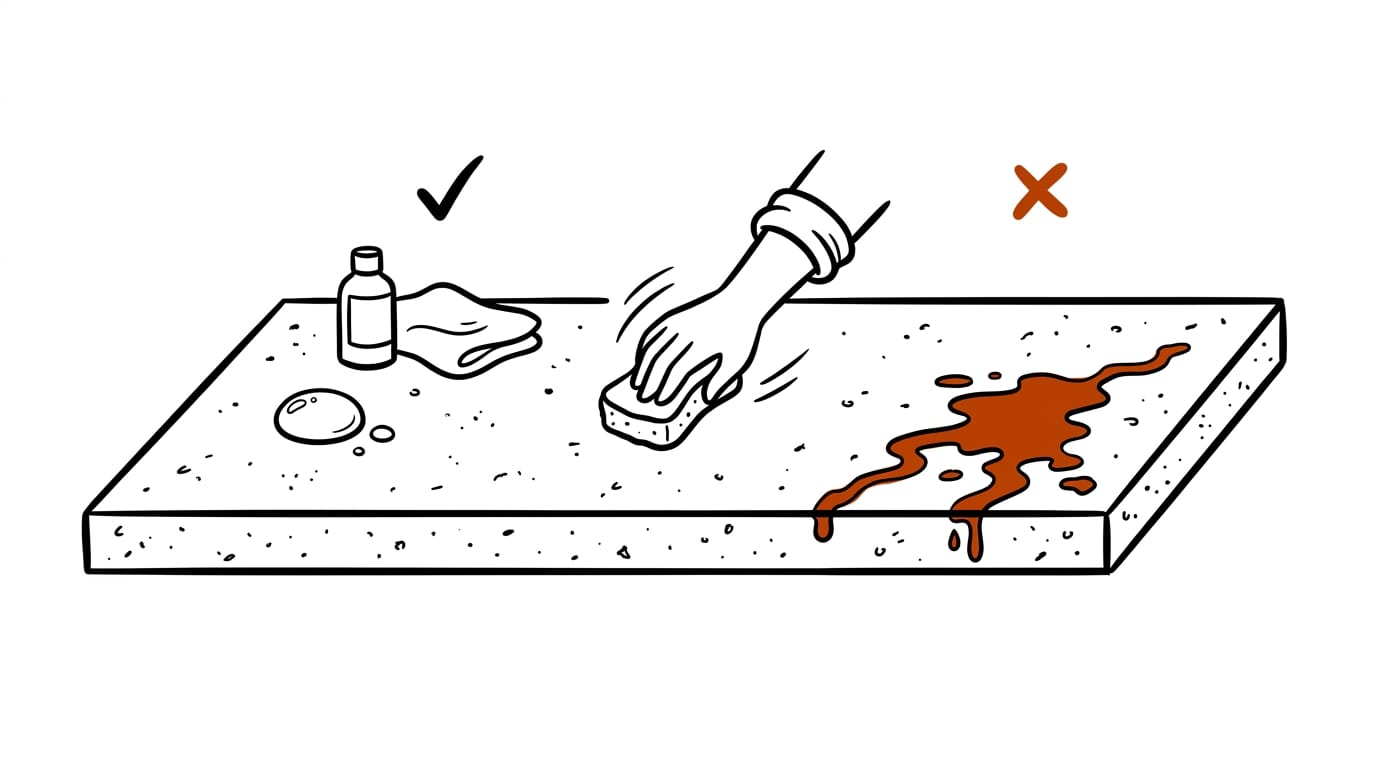
Cleaning granite countertops means removing everyday dirt and spills without scratching the stone or damaging its protective seal. Wipe daily with warm soapy water or a stone-safe, non-acidic cleaner and a soft cloth, dry the surface, clean spills promptly, and reseal when water stops beading; match stain treatments to the mark and test products in a hidden spot. Gentle, regular care helps prevent stains, scratches, and dull patches.
Picture this: you’ve wiped down the kitchen after dinner, and a splash of wine has left a faint ring on your granite island. Granite is tough, but how you clean it matters just as much.
This guide covers the clearest, most complete approach to granite care: a simple daily routine, sealing, safe disinfecting, stain removal, and which products are safe to use.
You’ll also get a stain-first method matched to each stain type, using cupboard basics.
Why Cleaning Granite Countertops Needs Sealing
Granite looks tough, but it still needs a little help to stay spotless. Here’s why sealing matters and when yours is due.
Granite soaks up spills and stains fast
Granite is a natural stone, and natural stone is porous, meaning it has tiny openings that liquid seeps into. Wine or coffee left on the surface can soak in and leave a mark that a quick wipe won’t shift. Granite is durable, but it isn’t maintenance-free.
Think of a home cook who splashes olive oil by the hob. Wipe it up straight away and the counter stays clean. Leave it, and you’ve got a dark patch that won’t budge.
How often should I seal granite?
Sealing is about prevention rather than removal. A good seal makes spills bead up on top instead of soaking in, giving you time to wipe them away.
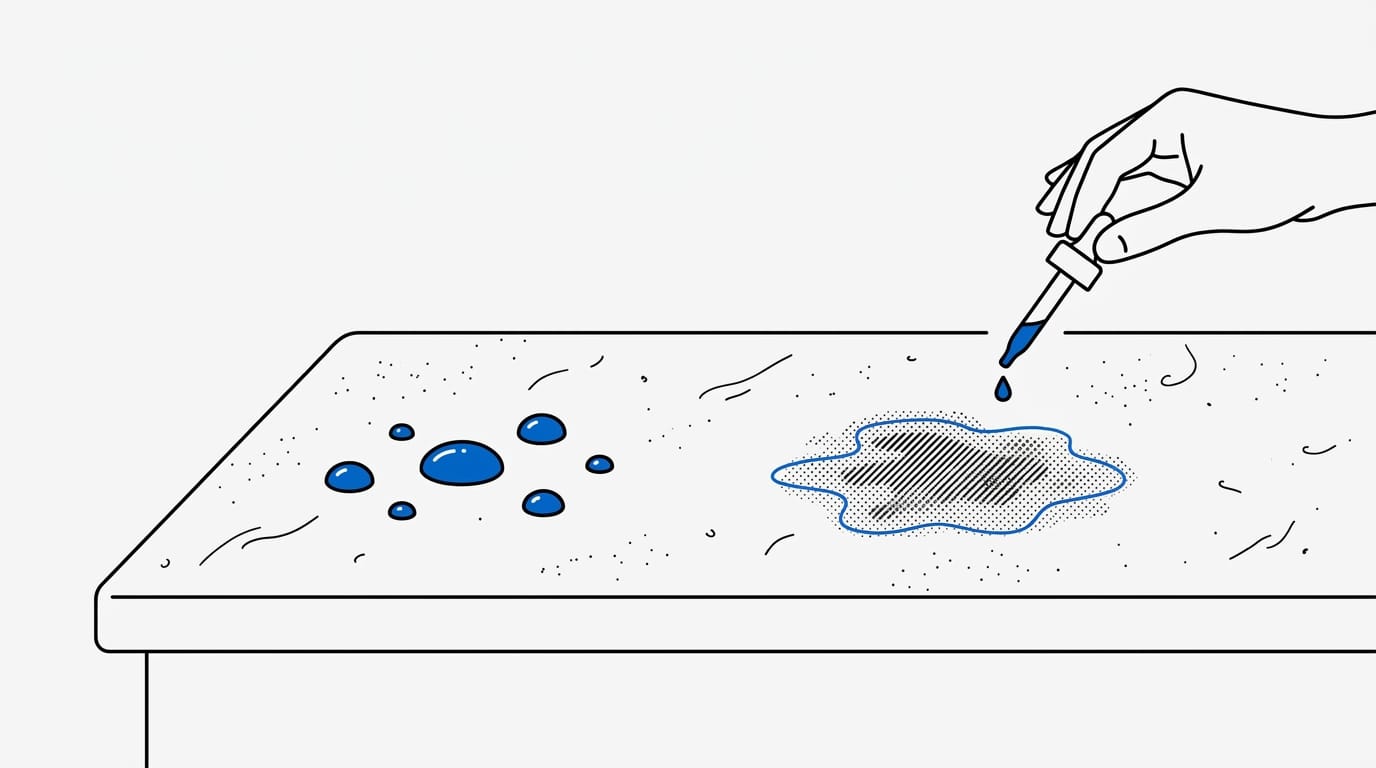
Try the water drop bead test: put a few drops on the counter and watch them. If they bead up, the seal is working. If they soak in and darken the stone, it’s time to reseal.
There’s no fixed date that suits every kitchen, so reseal periodically and let the water test guide you. Clean the surface before you reseal, because sealer won’t grip over grease or grime. Wipe it with a mild cleaner, rinse, and let it dry fully first.
Sealer application comes down to five steps:
- Clean the counter and let it dry completely.
- Apply the sealer in a thin, even layer with a clean cloth.
- Let it soak in for the time the product label gives.
- Buff off any excess with a dry cloth.
- Leave it to cure before you use the counter as normal.
Seal it well, and spills stay on top.
Your Simple Everyday Cleaning Routine
Want granite that looks good without a weekend scrub? Here’s how we keep it that way with a few simple habits.
Wipe counters daily and clean spills fast
Speed matters most, so wipe spills immediately before they have time to dry. Consider a parent who spills juice at breakfast: a damp cloth straight away takes seconds, but a sticky ring left until teatime takes far longer.
This is about prevention rather than repair.
Make a daily wipe-down part of your routine. Clear counters first so the cloth can reach every inch. Once the surface is bare, check it from an angle. Look across the stone in good light, and hidden smudges will show up.
Which cleaners work safely on granite
For everyday use, these options cover most jobs:
- Specialized granite cleaner spray: the simplest option, made for the stone.
- Warm soapy water: a gentle choice for routine wipe-downs.
- Non-abrasive, non-acidic formulas: check labels, as non-abrasive means grit-free.
- Washing-up liquid and a cloth: ideal for quick clean-ups.
Give stubborn marks a moment: let the cleaner sit before you wipe. Think of a tenant with a greasy splash by the hob after frying dinner. A drop of washing-up liquid lifts it fast, with nothing extra to buy.
Choose soft cloths that won’t scratch
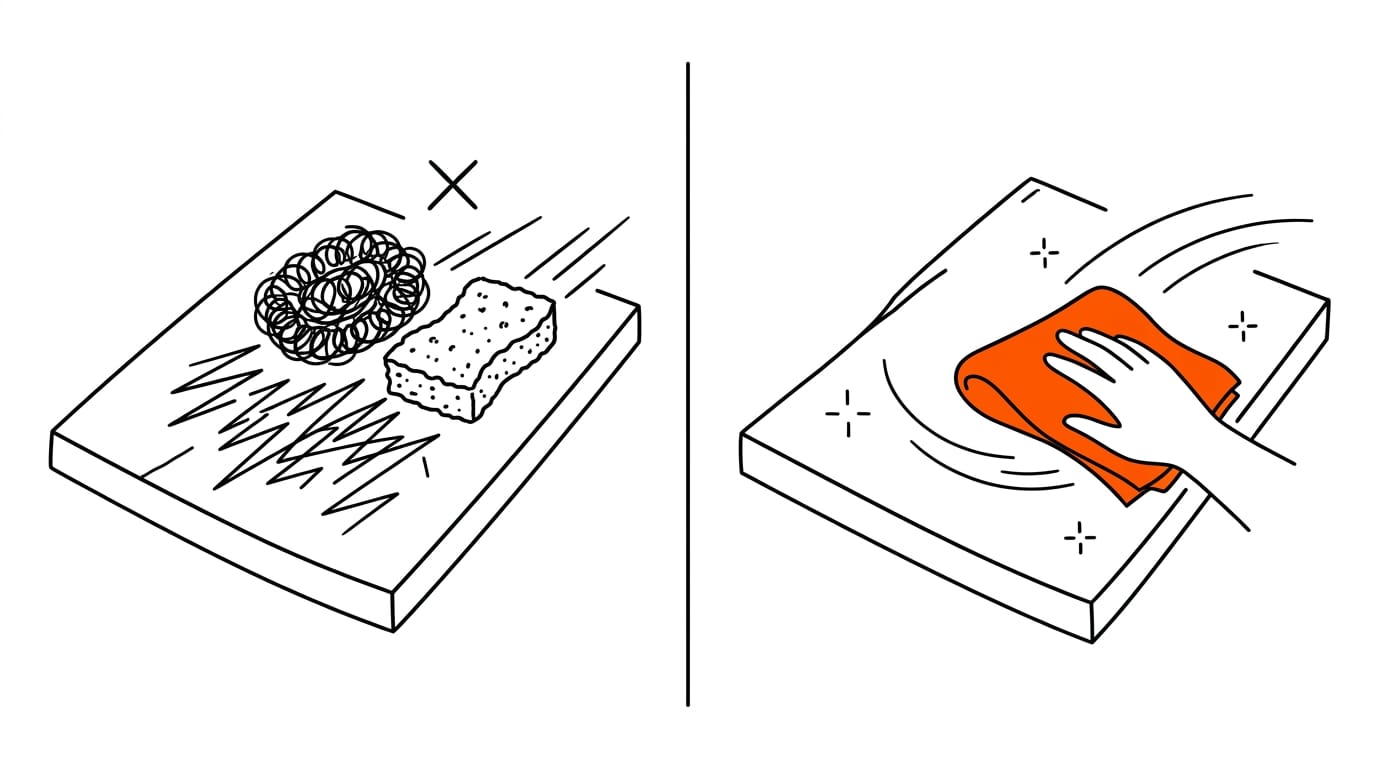
A microfiber cloth is the one to reach for first, as it’s soft and gentle. Soft dish cloths or towels work well too. Avoid steel wool and scrubbers, which can scratch the stone. Gentle wiping beats scrubbing.
Finish with a clean, dry cloth to prevent streaks. Dry it off, and you’re done.
Is CLR or Clorox Safe on Granite?
Plenty of everyday cleaners look harmless, but a few can quietly wear down granite. Here’s what to keep off the surface.
Bleach and acidic cleaners can etch granite
A study on staining agents and ornamental granite found that harsh and acidic cleaners can etch the stone and strip its sealant. Keep these off the counter:
- Bleach or ammonia. Both are harsh and shouldn’t go near granite.
- Window cleaner. Skip it, even for a quick wipe.
- Vinegar, lemon, or lime. These handy cupboard acids can etch the surface too.
Consider a home cook who wipes a tomato sauce splash with lemon juice and water. Days later, a dull patch shows where the acid sat. Etching and staining aren’t the same.
A stain sits in or on the stone, but etching is a change to the stone itself, so a wipe won’t lift it.
Disinfecting wipes like Clorox’s are a common question. Check the label: if it lists bleach or ammonia, skip them on granite. For everyday wipe-downs, a damp soft cloth is the safer bet.
CLR raises the same concern. Unless its label clearly says it’s safe for stone, keep it off granite and treat it like the acidic cleaners above.
Scrubbing hard can scratch and strip seal
Heavy scrubbing causes its own damage, even with a gentle cleaner:
- Steel wool. It’s a fast route to scratches on the surface.
- Scrubbing sponges. Avoid them on granite, and reach for a soft cloth instead.
- Hard scrubbing. It can scratch the surface or strip the sealant.
Scrubbing hard might feel like the faster fix, but a stripped sealant leaves the stone less protected. Gentle wins.
Disinfecting and Lifting Stains Safely
Start by identifying the stain type: is it oil, water, or organic (such as food or plant matter)? That answer shapes which method you reach for next.
Disinfect with 70% isopropyl alcohol spray
When you want a disinfectant, The Kitchn points you to a 70% isopropyl alcohol spray. Here’s the routine:
- Spray the surface with the 70% alcohol. Don’t dilute it.
- Let it sit for five minutes.
- Wipe, then dry.
A daily wipe is usually sufficient, so this becomes a quick habit rather than a deep-clean chore.
Lifting stubborn stains with paste or peroxide
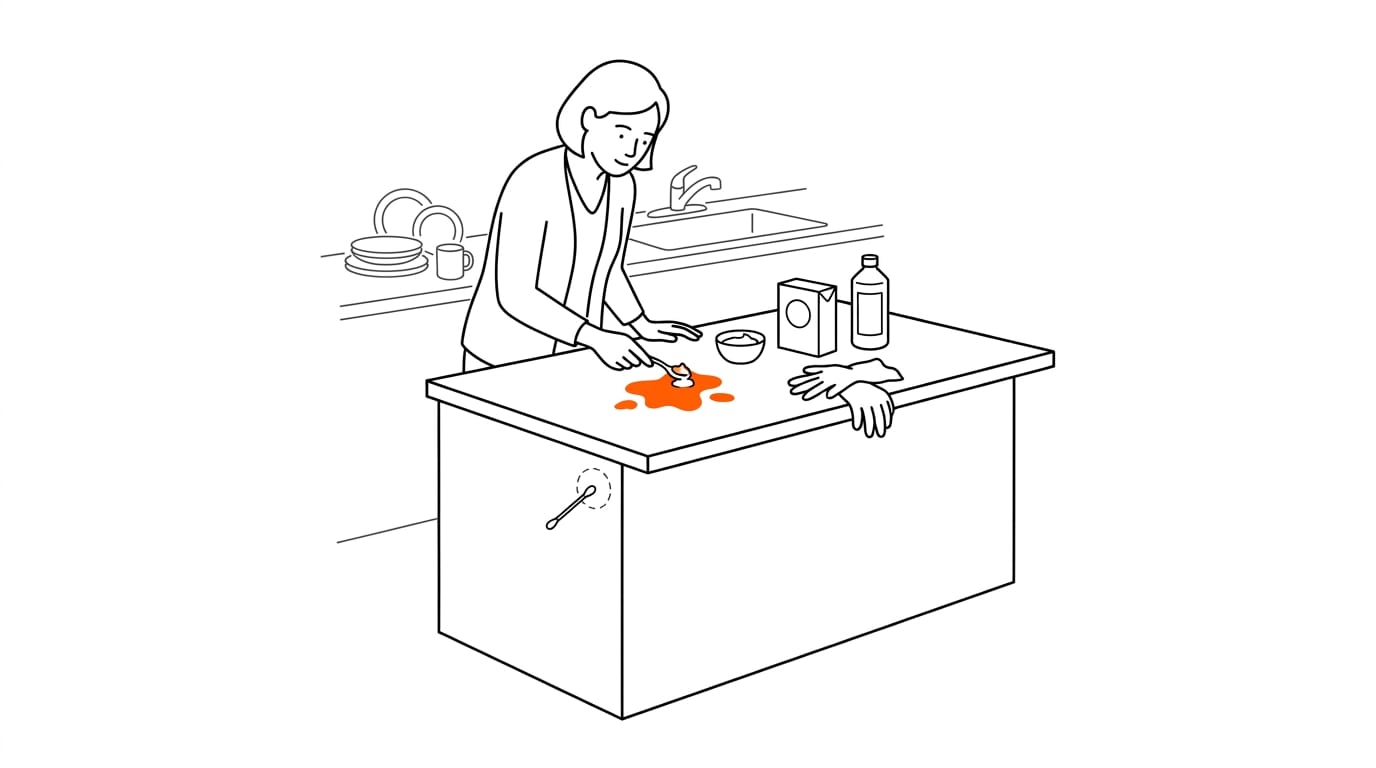
For a stubborn mark, make a baking soda paste by mixing baking soda with a little water until it’s spreadable. Picture a parent who finds a mark on the island after breakfast.
A small dab is all you need to start, so the mark gets treated before the breakfast dishes are cleared.
For thick buildup, a razor blade scraper can help lift it. Wear gloves and be careful with the blade.
Yes, you can use hydrogen peroxide on granite for stubborn stains, but the step that matters most happens before you spray. Test first, on a hidden spot rather than the visible mark, then re-spray the stain and let it soak.
Polishing and Picking Granite Care Products
Granite looks its best when it’s protected, and a little routine goes a long way. Here’s how to keep the surface in shape and which products to trust.
Polish weekly to prevent rings and etching
Polish your countertops about once a week. A quick buff leaves a water-resistant protective coating on the stone, so spills bead up instead of soaking in. That coating helps prevent rings and etching, the dull marks that can appear on the surface.
Polishing is about prevention rather than repair.
Consider a home cook who wipes the island down every Sunday evening. When a glass of wine tips over on Tuesday, it wipes clean instead of leaving a mark you have to chase later. Little and often wins.
Store-bought care products versus DIY remedies
Ready-made care products are the simplest route, and they’re easy to find. The Rock Doctor range includes:
- A cleaner
- A polish
- A sealer
All three are sold at home improvement stores, so you can grab the full set in one trip. DIY remedies might seem thrifty, but they can harm the finish. Think of a renter getting a kitchen ready to hand back.
A quick polish from the Rock Doctor set keeps the worktop looking its best without gambling on the finish. Choose products made for stone over improvised fixes, and your countertop will thank you.
Caring for granite comes down to a few smart habits: clean it daily with gentle methods, keep it sealed, disinfect with products that are safe for the stone, and act fast on stains by matching your treatment to the mark.
Each step protects the surface you rely on every day.
So the next time a spill hits the worktop, you’ll know exactly what to reach for. Steady, gentle care beats harsh shortcuts every time, and that’s how granite stays beautiful for years.
References
- Effects of staining agents on an ornamental granite — sciencedirect.com
- How to Clean and Disinfect Granite Countertops Using What You Have — thekitchn.com (2025)
Questions
What is the best thing to clean granite counters with?
Use a soft microfiber cloth with warm water and a little washing-up liquid for routine cleaning. A cleaner specifically made for granite is also a safe, convenient option.
How often should I seal granite?
There is no fixed schedule for sealing granite; use the water-drop test to decide. If drops soak in and darken the stone instead of beading up, clean, dry, and reseal the surface.
Are Clorox wipes okay to use on granite countertops?
Check the label before using Clorox wipes. If they contain bleach or ammonia, avoid them on granite; a damp soft cloth is safer for everyday cleaning.
Can CLR be used on granite?
Avoid using CLR on granite unless its label clearly states that it is safe for natural stone. Acidic cleaners can etch the surface and damage the sealer.
What not to clean granite with?
Avoid bleach, ammonia, vinegar, lemon or lime juice, window cleaner, and other acidic or harsh products. Also avoid steel wool, abrasive scrubbers, and hard scrubbing, which can scratch the stone or wear away its seal.
Can I use hydrogen peroxide to clean my granite countertops?
Yes, hydrogen peroxide can be used on granite for stubborn stains. Test it first on a hidden area, then apply it to the stain and let it soak.
Can you use rubbing alcohol to clean granite countertops?
Yes. A 70% isopropyl alcohol spray can be used to disinfect granite: spray it without diluting, leave it for five minutes, then wipe and dry the surface.
Can you use rubbing alcohol on marble?
Rubbing alcohol can generally be used to clean marble when applied briefly and wiped off, but test it on an inconspicuous spot first. Avoid acidic cleaners such as vinegar or lemon juice, which can etch marble.
Sources
- How to Clean and Disinfect Granite Countertops Using What You Have, thekitchn.com,
- Effects of staining agents on an ornamental granite, sciencedirect.com
Read next
- How to Clean Quartz Countertops, From Daily Wipes to StainsHow to clean quartz countertops: wipe away daily messes, tackle water spots and stubborn stains, and learn which everyday products can damage the finish.
- Cleaning Silver with Aluminum Foil: A Complete GuideCleaning silver with aluminum foil uses baking soda and hot water to lift tarnish; get the quick setup, safe-item checks, and aftercare for a bright finish.
- Gas Burner Cleaning: Heads, Caps, Grates and TestingGas burner cleaning can clear food-clogged ports and restore an even flame. See how to clean heads, caps, and grates, then test your flame safely at home.
Stain Finder: a free stain removal guide
Find your stain