How to Clean a Dutch Oven: Daily Care to Stain Removal
How to clean a Dutch oven: remove burnt-on food with cupboard fixes and protect the enamel, lid, and cast-iron rim. Get dishwasher care, too.

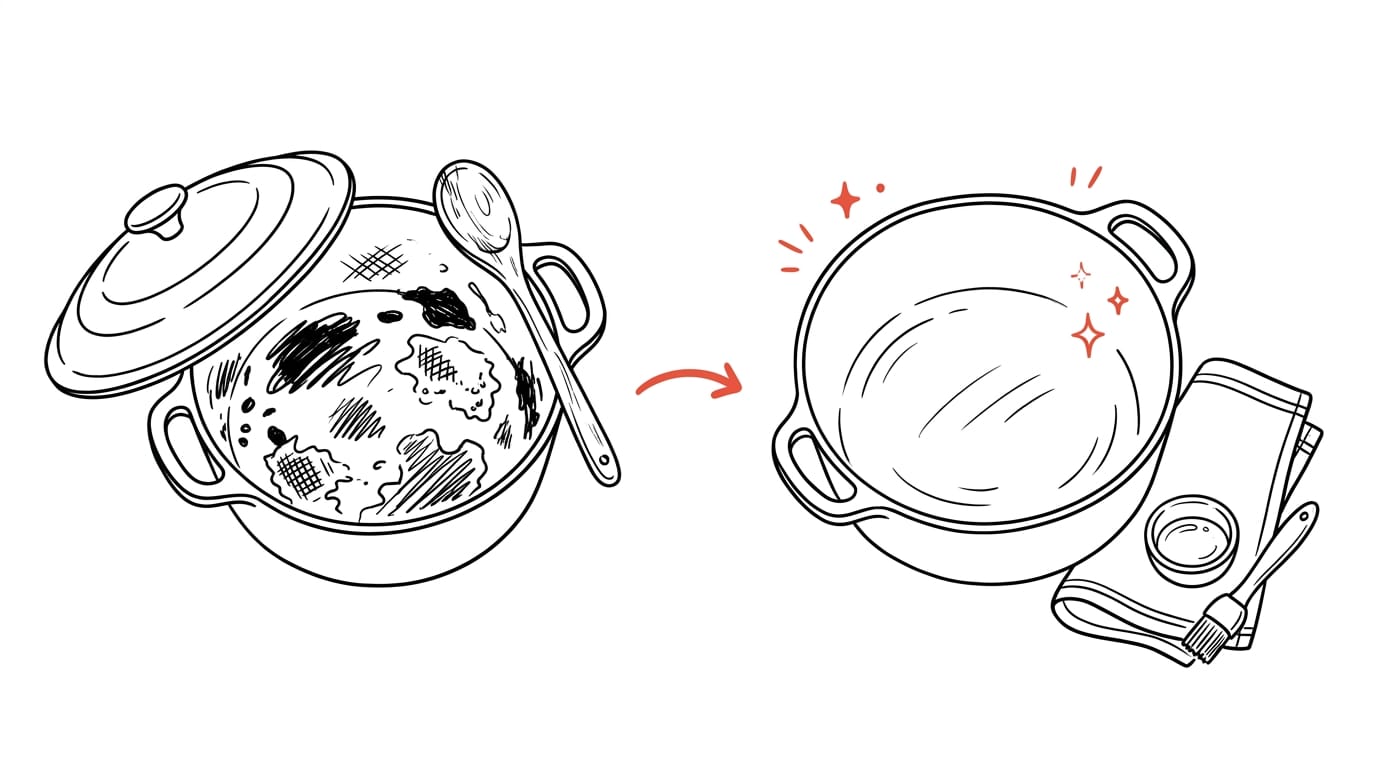
A Dutch oven is a heavy, lidded pot whose enamel, lid, and exposed cast iron rim need slightly different care. Let it cool before washing, use warm soapy water and soft tools, and loosen stuck food with a soak or boiling water before trying baking soda or diluted bleach for stains. Gentle cleaning, thorough drying, and avoiding harsh scrubbing or sudden temperature changes help protect the finish and keep the pot ready for years of cooking.
Your Dutch oven is the workhorse of the kitchen. It simmers the Sunday stew, then ends up with tomato sauce baked onto the base. Sound familiar?
Good news: cleaning one is simpler than it looks once you know the right order. A Dutch oven is a heavy, lidded pot, and its enamel, lid, and bare cast iron rim each need slightly different care.
This guide covers everyday cleaning, stubborn stains, enamel protection, and the lid and dishwasher, plus fast stain-first fixes from your cupboard.
How to Clean a Dutch Oven Daily
A daily clean keeps your Dutch oven ready for the next meal without a big scrub. Here’s how to handle the outside first, then the everyday messes inside.
How to clean the exterior?
Think of a busy parent who has just served a weeknight chili. Once the pot has cooled, the outside wipes clean in moments, and the pot is back in the cupboard before the rest of the dishes are done. Work through these steps:
- Let the pot cool before washing.
- Wash the outside with warm soapy water and a soft sponge.
- Rinse and dry completely.
- Store it with the lid slightly ajar.
Boil water to loosen everyday messes
Everyday messes like sauce or a few burnt bits can cling to the inside. Boiling water loosens them, so you can scrape gently rather than hard. Your spatula just finishes the job. Here’s how it works:
- Boil water in the pot.
- Scrape the residue with a wooden spatula.
- Wash with hot soapy water.
- Dry afterward.
Do this after a saucy dinner and the pot will be ready for the next time you need it.
Getting Rid of Stains and Burnt-on Food
Match the method to the mark: loosen stuck food first, try the gentlest lift next, and reach for bleach only if the stain stays.
Loosen food stuck to the bottom
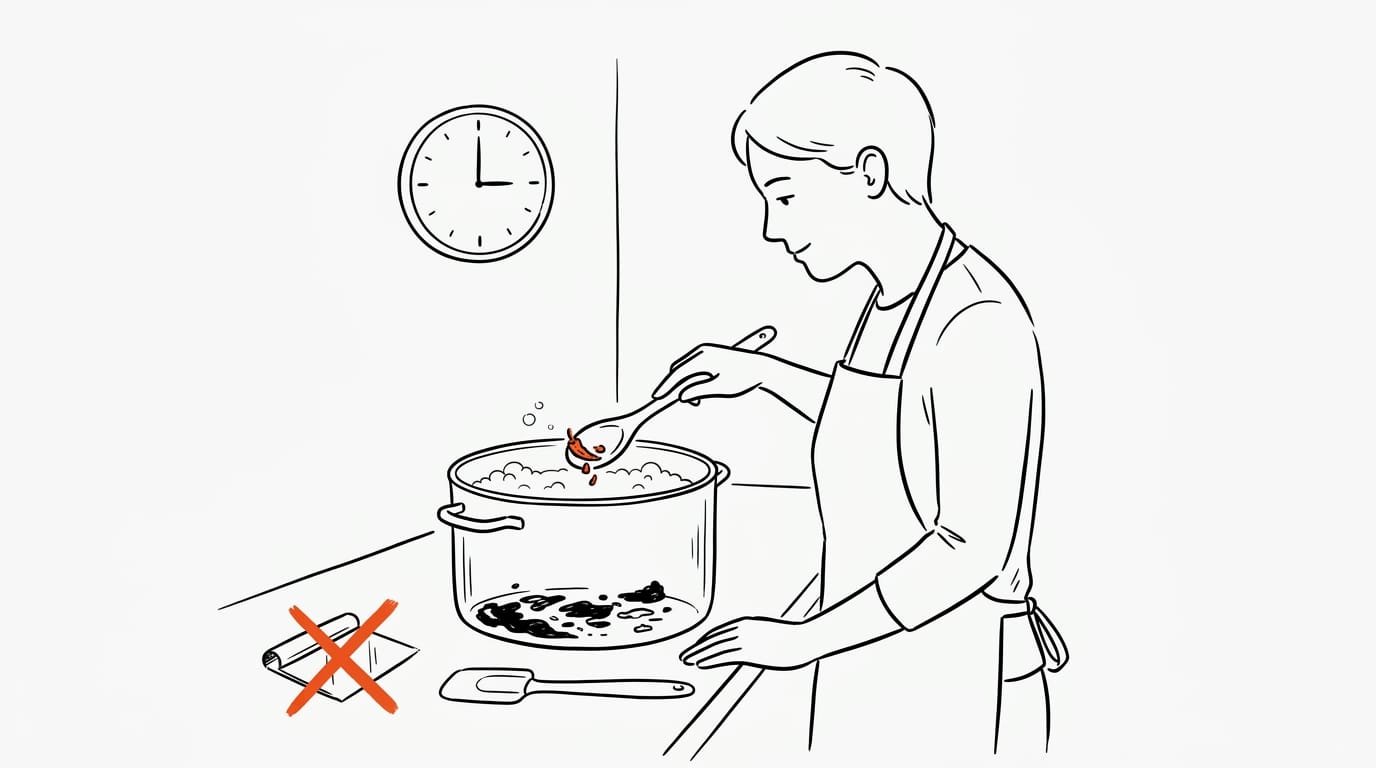
Think of a parent who scorched a pan of chili and finds the base crusted after dinner. Fill the pot with warm soapy water, let it soak, then leave it for about 15 minutes to loosen the debris.
Lift the bits with wooden or silicone tools, aiming to lift rather than scrape. Skip metal scrapers, since they’re too rough for the surface.
Gentle ways to lift stains
Patch-test on a hidden spot first. Then mix a baking soda paste with a little water and work it in with a soft sponge or nylon brush.
Consider a home cook with a brown ring from tomato sauce who reaches for the baking soda already by the hob, saving a trip to the shop. For tougher marks, simmer vinegar and water in the pot, then let it cool.
Avoid steel wool, which is far too harsh for this job.
Using a bleach soak on stains
For stubborn marks, a diluted bleach solution is the next step. Follow the manufacturer-recommended ratios and let the pot soak overnight. Heavy stains need an extra soak, and light interiors stain more, so you’ll want to check them closely.
Never mix bleach with vinegar, and rinse thoroughly before switching methods. Patience does the rest.
As for oven cleaner, the safest answer for a Le Creuset is to skip it. It’s a harsh chemical made for oven walls, not enamelled cast iron, so check your pot’s care guidance before trying anything stronger than these steps.
Protect the Enamel from Damage
Enamel holds up well day to day, but it needs gentle handling. Knocks, harsh tools, and sudden temperature changes are the main culprits.
Stop chips and scratches before they start
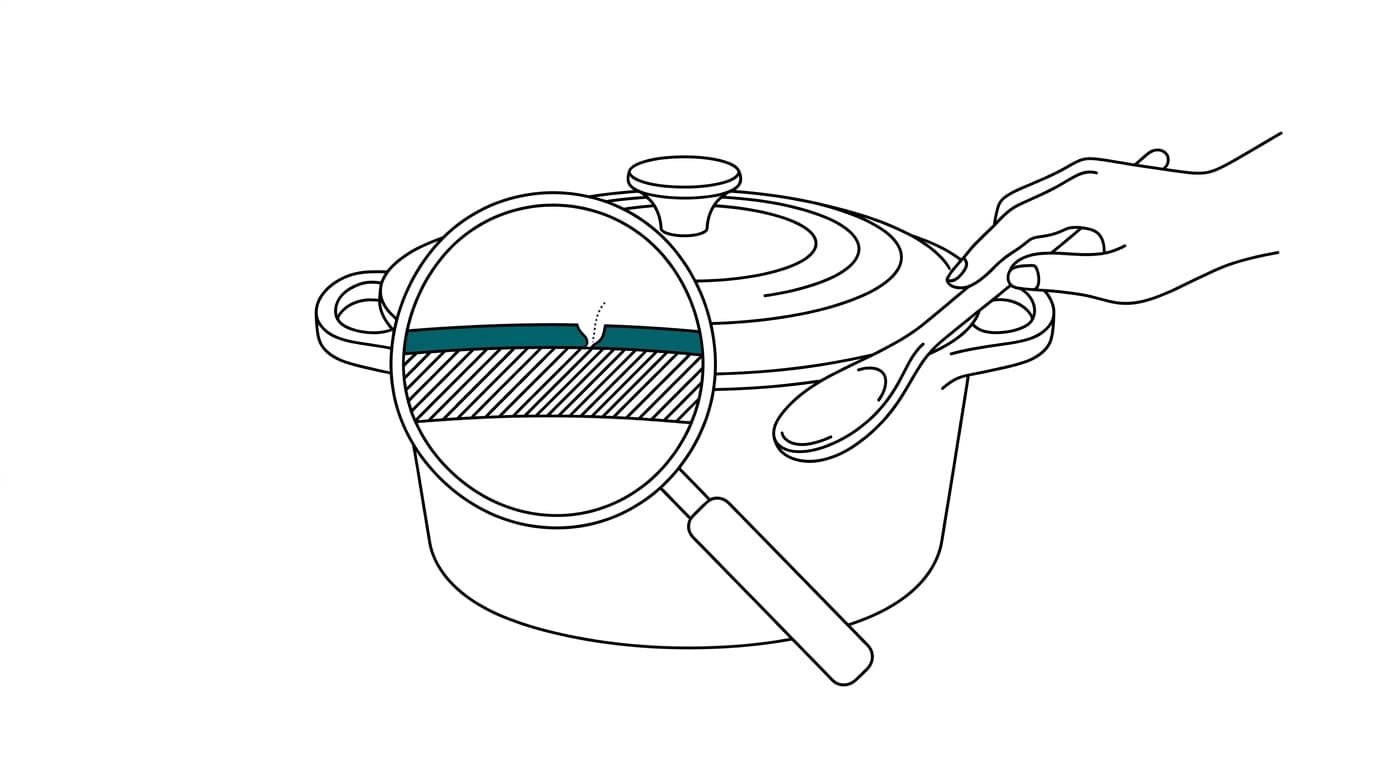
Your Dutch oven’s enamel is a fired glass coating bonded to the cast iron underneath. Glass is tough, but sharp strikes cause chipping, so avoid banging utensils on the rim.
So what’s the difference between enamel and cast iron? Bare cast iron is metal throughout, while enamel is a glass layer on top, so protecting the coating matters.
According to Better Homes & Gardens, a chipped pot can still be safe to cook in: “If it’s just a tiny chip on the surface, you should be A-OK to keep cooking and baking as usual.”
Choose utensils that won’t chip enamel
Stick with these choices: - Wooden or silicone utensils, which are gentle on the coating. - Metal tools, which can chip enamel, so save them for other pans. - Abrasive scrubbers, which can scratch the surface, so skip them.
Think of a parent who stirs chili with a wooden spoon, then cleans the pot with a soft sponge. The enamel stays smooth for the next meal.
Manage heat to avoid thermal shock
Thermal shock happens when a hot pot meets a sudden temperature change. It’s less about how hot the pot gets and more about how fast it changes.
Keep these habits in mind: - Never rinse a hot pot with cold water. - Don’t heat an empty pot. - Cook on low to medium heat.
Consider a home cook who’s just served a Sunday roast from the pot. They let it cool before rinsing, so the enamel stays intact. Patience protects enamel.
Caring for the Lid and Dishwasher
Your lid and pot need similar care, but the dishwasher is where most of the trouble starts. Here’s how to protect both so they last.
Dishwasher tips that protect your pot
The machine is convenient, but it’s less about speed and more about care. Think of a home cook who runs their Dutch oven through the dishwasher after every stew. Over time, the finish wears down faster than they expected.
- Check the label. Only use the dishwasher if the manufacturer says the pot is dishwasher safe.
- Hand washing extends lifespan. Wash by hand whenever you can, and your pot will stay in good shape for years.
- Skip the bottom shelf. Keep the pot off the bottom rack, where it can bang against other dishes.
- Avoid citrus-based detergents. Stick with a standard detergent instead.
Wash the lid just like the pot
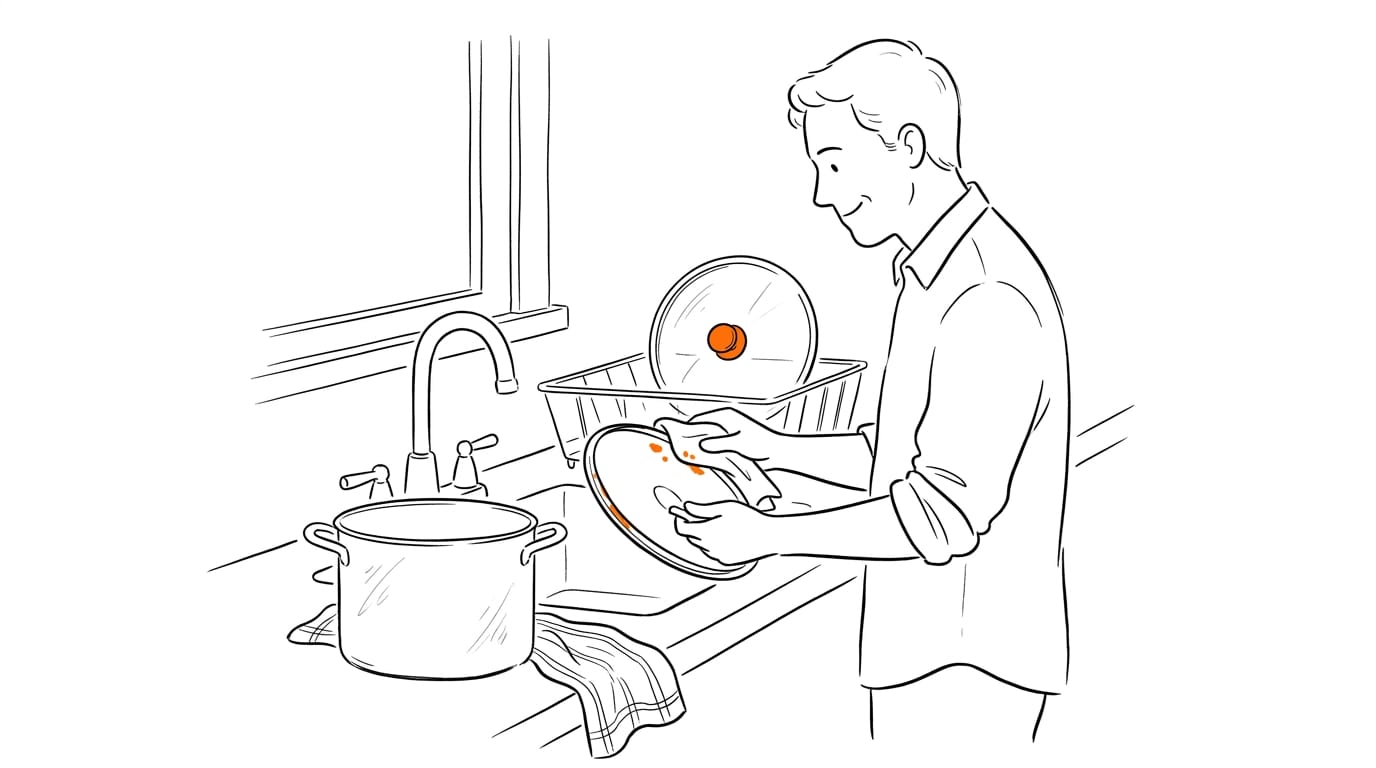
The lid deserves the same care as the pot, plus a little extra attention. Consider a busy parent who wipes the pot after dinner but leaves the lid greasy from last night’s chili. A two-minute wipe stops that grease from baking on the next time you cook.
- Wash like the pot. Use the same gentle approach you’d use on the body of the pot.
- Dry fully before storing. Moisture left behind can lead to rust, so towel it dry and let it air out before you stack it.
- Check the metal knob is oven-safe. Not every knob can handle a hot oven, so check the label before the lid goes in.
- Extra attention to edges. Those rims collect food and grease, so give them a thorough wipe every time.
Don’t skip the drying step.
Keep Your Cookware Looking New Longer
Keeping a Dutch oven in great shape is less about big rescues and more about small habits. Here’s what to focus on, and what you can safely ignore.
Small habits that help it last decades
The most common mistakes are small ones: careless storage and overreacting to harmless marks. Three points cover most of it:
- Minor wear doesn’t affect performance. A scuff or small mark on the surface won’t change how the pot cooks. Consider a home cook with a dinged pot at the back of the cupboard. It can stay in service for years instead of being replaced.
- Proper storage prevents musty smells. Take a little care when putting it away. Picture a weekend host who shuts a damp pot in a cupboard and finds a musty smell the next time they cook.
- Simple habits last decades. According to Eater’s comparison of Le Creuset, Staub, and Lodge, with simple care habits a Dutch oven can last for decades.
The same calm applies to the bare cast iron rim, the exposed top edge where the lid sits. A bit of wear there is minor wear too, so it doesn’t affect performance either. Simple habits, long life.
Cleaning a Dutch oven doesn’t have to be a chore. Follow the right order, act on stains while they’re fresh, and give the enamel and bare cast iron rim a little extra respect.
A quick clean after each use saves a lot of scrubbing later, so think of it as a habit rather than a big job. Do that, and your pot will be ready for the next stew, loaf, or braise without a fuss.
Look after it well, and it’ll keep looking after your cooking.
References
- Is it Safe to Use a Dutch Oven With Chipped Enamel? — bhg.com (2026)
- Le Creuset vs. Staub vs. Lodge: Which Dutch Oven Should You Get? — eater.com (2025)
Questions
What is the best way to clean an oven?
For an enamelled Dutch oven, let it cool, then wash it with warm soapy water and a soft sponge. Soak stuck-on food, lift it gently with a wooden or silicone utensil, and dry the pot fully before storing it.
What are common mistakes made when using a Dutch oven?
Common mistakes include using metal scrapers or abrasive scrubbers, heating the pot empty, and rinsing it while hot with cold water. These can scratch or chip the enamel, and careless storage of a damp pot can cause musty smells or rust on exposed metal.
How to clean the exterior of a Dutch oven?
Let the Dutch oven cool, then wash its exterior with warm soapy water and a soft sponge. Rinse and dry it completely before putting it away, ideally with the lid slightly ajar.
How to use enameled cast iron?
Use enameled cast iron for slow cooking, braising, simmering, and baking, and keep the heat low to medium. Avoid heating it empty or exposing it to sudden temperature changes; use wooden or silicone utensils and gentle cleaning tools to protect the enamel.
How to remove stains off oven glass?
Apply a paste of baking soda and water to the stain, then gently rub it with a soft cloth or non-scratch sponge and rinse. For stubborn residue, warm soapy water or a cleaner made for oven glass may help; follow the product directions and avoid abrasive pads.
What's the difference between enamel and cast iron?
Cast iron is a durable iron cookware material. Enamel is a fired glass coating bonded to cast iron, so enameled cast iron has a coated cooking surface while bare cast iron is metal throughout.
Can I use oven cleaner on Le Creuset?
It is safest to avoid oven cleaner on Le Creuset, since oven cleaner is harsh and intended for oven walls rather than enameled cast iron. Use gentle cleaning methods and check the manufacturer's care guidance before trying stronger products.
Is enameled cast iron safe?
Yes, enameled cast iron is generally safe to cook with when the enamel is intact and the cookware is used as directed. Avoid harsh impacts and sudden temperature changes that can chip or crack the coating; follow the manufacturer's instructions if it is damaged.
Sources
More in Kitchen
- How to Clean Quartz Countertops, From Daily Wipes to StainsHow to clean quartz countertops: wipe away daily messes, tackle water spots and stubborn stains, and learn which everyday products can damage the finish.
- How to Clean Stainless Steel Sink, Start to FinishHow to clean a stainless steel sink: remove water spots, limescale, and rust without damaging the finish, and keep the drain clear with simple supplies.
- How to clean oven door glass, including between the panesClean oven door glass with a bicarbonate of soda paste and a plastic scraper, use oven cleaner safely, and reach the grease trapped between the panes.

Stain Finder: a free stain removal guide
Find your stain