- Blot
- Scrape
- RinseWarm
How to Get Foundation Out of Clothes, Fabric by Fabric
How to get foundation out of clothes? Match liquid or powder stains to your fabric, use cupboard products, and know whether a wash will finish the job.

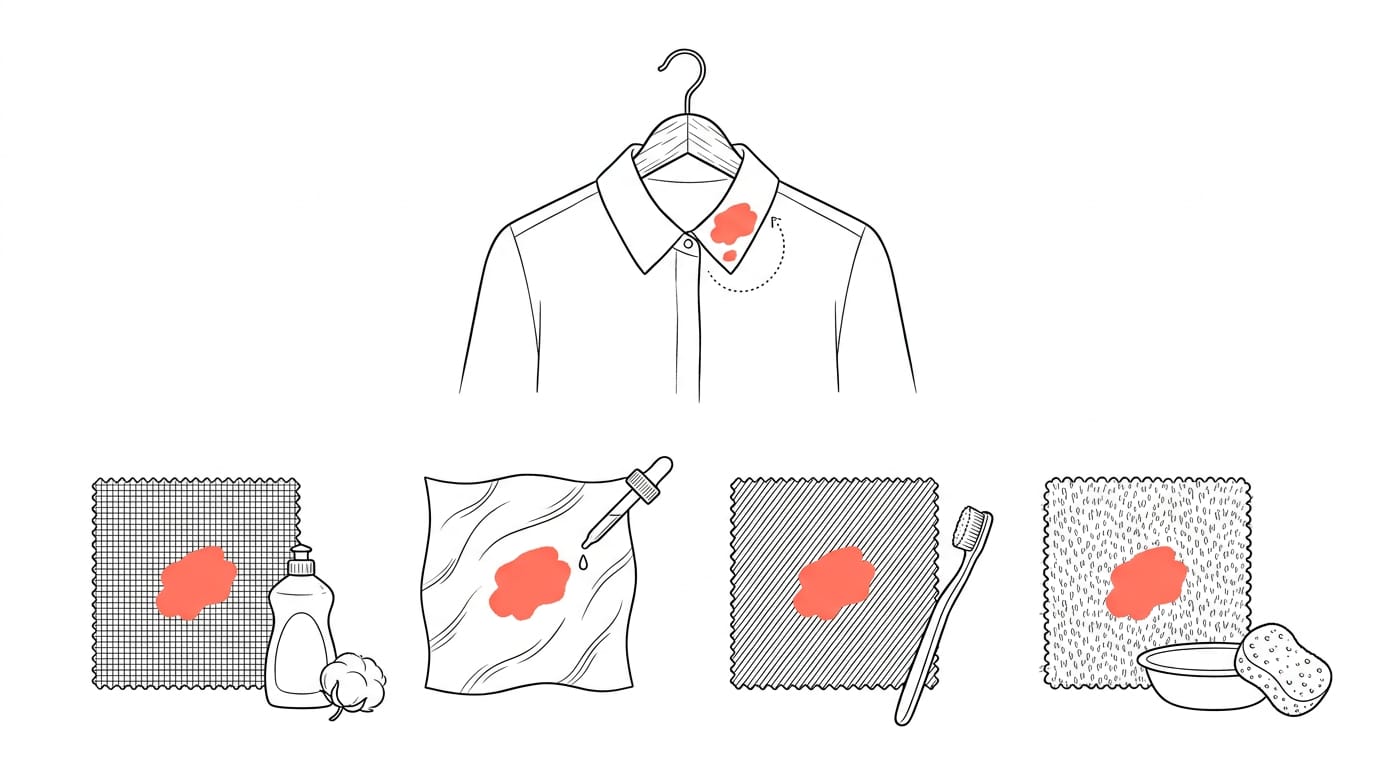
Getting foundation out of clothes means lifting makeup from fabric before it dries, using steps suited to the stain and garment. Blot rather than rub, remove loose liquid or powder, pre-treat with detergent or dish soap as appropriate, and follow the care label; silk and wool should go to a dry cleaner. Wash and check the stain before drying, since heat can set any remaining mark.
You’ve just hugged a friend in the hallway and spotted a smudge of foundation on your shoulder. Or maybe the mark is on your collar after a long day at work.
Either way, the stain looks bigger every minute you stare at it. The good news is that most foundation marks lift well when you tackle them in the right order.
In this guide, we’ll cover liquid and powder foundation, how to match the method to your fabric, and how to handle set-in marks using what’s already in your cupboard.
How to Get Foundation Out of Clothes
Foundation looks harmless until it dries on a white collar, but most of it lifts easily if you act in the right order.
Treat stains quickly before they set
Speed is your biggest ally here. Picture a parent who spots a smudge of foundation on a school shirt collar after a morning hug.
Dealing with it straight away takes a minute and saves the shirt, but leaving it until dinner means it has dried into the weave.
The reason is simple. The pigment in foundation sinks into fibres as it dries, so every hour it sits makes it harder to lift. Stains set if left, so treat them as soon as you notice, not later when it’s dry.
Check your fabric type and label first
First, check the garment care label. It tells you what the fabric can handle, and it’s the quickest way to avoid making things worse. Your fabric decides who handles it:
- Silk and wool: take these to a dry cleaner rather than trying them at home.
- Cotton and poly-blend: these can usually be treated at home.
Before you apply anything, colour-test it on a hidden spot, like the inside hem or a seam. Dab on a little treatment, let it dry, and check the colour. If the colour holds, carry on.
Lift off extra makeup without rubbing
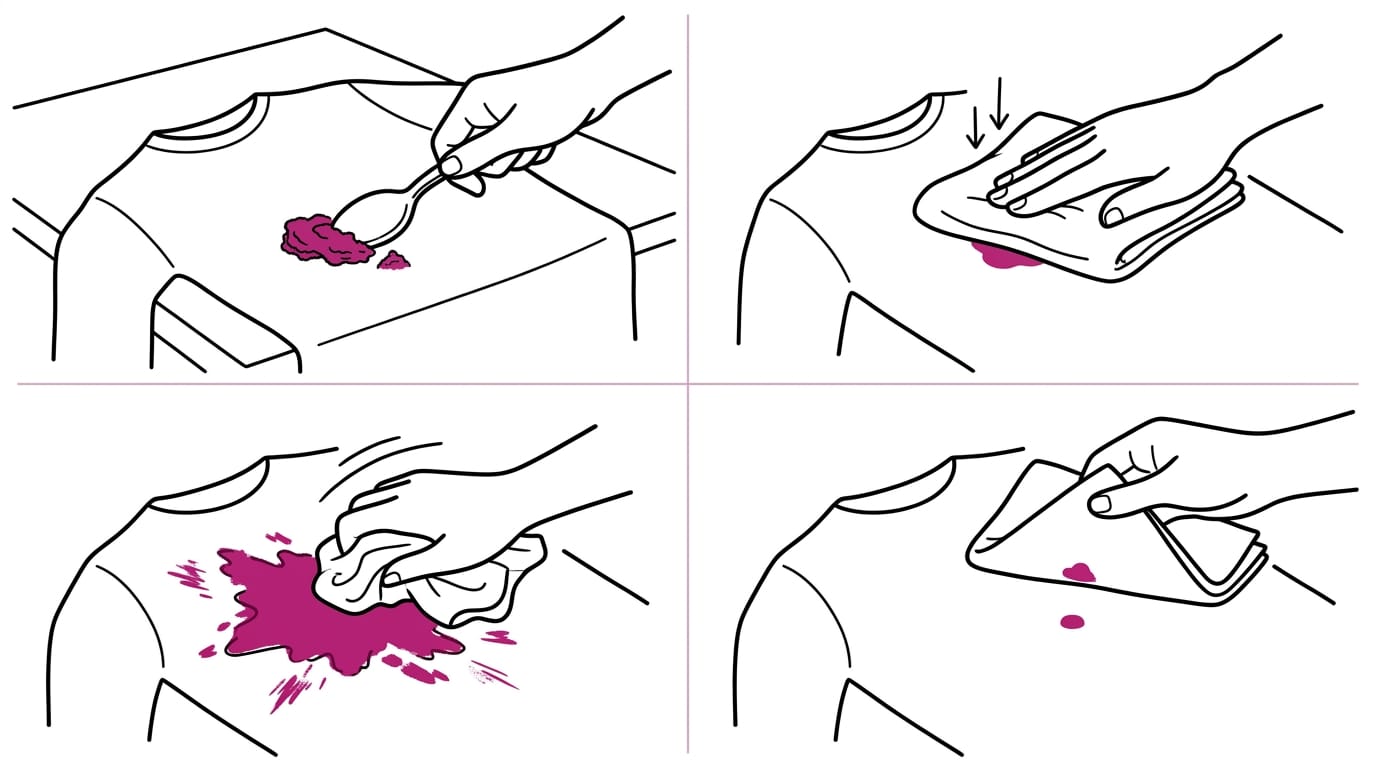
Start by lifting off any thick, excess makeup with a blunt edge, such as the back of a spoon. Scraping first means you’re not working more makeup into the fabric.
Then blot gently with a clean cloth. Blot, don’t rub. Rubbing pushes the pigment deeper and spreads the mark wider, so a small smudge quickly turns into a large patch. Gentle wins.
Taking Out Liquid Foundation Stains
Good news first: foundation stains don’t have to be permanent. Start with the gentlest step and build up from there.
Blot, scrape, then rinse with warm water
Always blot, never rub, so the foundation doesn’t spread deeper into the weave. Work through these steps in order:
- Blot the mark with a paper towel.
- Scrape off any excess.
- Rinse with warm water.
Picture a parent who spots foundation on a school shirt collar at pick-up. Blotting and rinsing it before the collar sets means the shirt goes in the wash, not the bin.
Pre-treat with detergent or dish soap
Liquid foundation comes in oil-based and water-based formulas, and the type decides whether dish soap joins the mix. Here’s how to pre-treat the mark:
- Apply laundry detergent or pre-wash to the mark.
- For oil-based foundation, add a drop of dish soap, which is made to cut grease.
- Work it in with a soft toothbrush, starting at the outside and moving in so the stain doesn’t spread.
- Let it sit for 10 to 20 minutes.
Patience beats scrubbing.
Soak large stains for up to an hour
For a bigger or dried-on mark, soak the garment in water with stain remover for up to 60 minutes. It works on new and set-in stains.
Think of a host who finds a foundation streak on a blouse the morning after a dinner party. Soaking it gives the mark time to loosen before the wash. Let the water do the heavy lifting.
Getting Powder Foundation off Clothes
Before any water touches the fabric, get as much of the powder off as you can. Brush first, then rinse and pre-treat what’s left.
Brush loose powder away gently
Hold the garment over the sink or bin and shake it gently so the loose powder falls away.
Then blow lightly across the fabric to lift what’s left, and brush the area with a clean toothbrush or a spoolie (the small bristle brush you’d use on eyelashes) using short, light strokes.
Your goal is to lift the powder off, not push it deeper. Skip the scrubbing and let light strokes do the work, since pressure can work the powder further into the weave.
For example, a bridesmaid who’s just peeled off a white satin top after a long day has powder on the bodice and sleeve. A few minutes of gentle brushing outside means the top heads for the sink rather than the bin.

Rinse from behind, then pre-treat
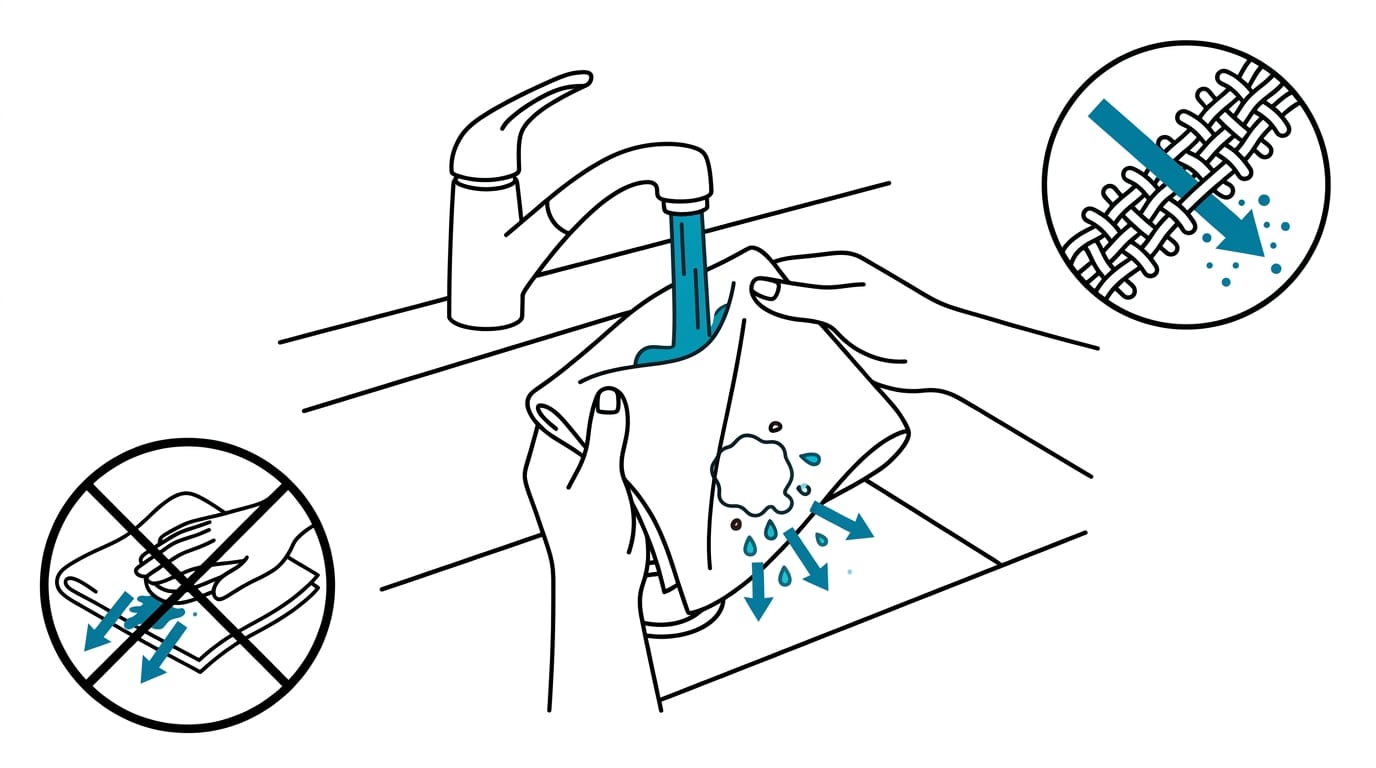
Hold the stained area under warm running water, stain side down, so the water flows through from the back. Rinsing from behind carries the powder out rather than driving it further in.
Next, dab a drop of liquid detergent straight onto the mark, or use a pre-wash if you have one. Work it in lightly, then leave it for 10 to 20 minutes. Patience does the rest.
Products That Lift Foundation Stains
Most foundation marks lift with what’s already under your sink, as long as you pick the right product. Here’s what to reach for, and what to leave on the shelf.
What’s the best makeup remover for clothes?
The best makeup remover for clothes is an oil-free eye makeup remover. It’s gentle on fabric and lifts pigment without leaving a greasy ring. Dab it on with a cotton pad, then blot. Skip oil-based removers, which can spread the mark instead of lifting it.
Out and about with nothing else? Makeup wipes are a handy backup, so keep a pack in your bag.
Household treatments like dish soap
Dish soap is built to cut grease, and most foundations contain oils, so it’s your first stop at home. Picture a parent with a smear on a white school blouse collar: a drop of washing-up liquid, worked in gently, can loosen it before the next wash.
Laundry detergent is a useful follow-up, and a branded stain remover booster is worth keeping for stubborn marks, though it’s optional.
Yes, Dawn can help with the oily part of a foundation mark, especially when it’s fresh, but it won’t always clear a set-in stain on its own.
Wipe the surface and rinse with water
Before you treat the stain, wipe away any loose product so you don’t push more into the fabric. Disinfecting wipes are handy for this, but test them on a hidden seam first.
Then rinse the back of the fabric with water, so the mark moves out rather than in. Act fast, while it’s still fresh.
Does Foundation Come Out in the Wash?
Usually, yes. Fresh foundation often washes out in a normal cycle, but it’s less about whether it comes out and more about how you wash it. Get the heat, the products, and the drying step right, and you’ll save the garment.
Use the hottest setting the label allows
Check the care label first, then choose the hottest temperature it permits. A warmer cycle works harder on the mark than a cool one.
For example, a parent who finds a foundation smear on a school blouse collar can rewash it that evening and skip a trip to the dry cleaner.
Add your usual detergent along with a stain remover, and work a little onto the mark before the cycle starts. If a faint shadow is still there afterwards, wash the garment again. Don’t write it off after one try.
Check the stain is gone before drying
Once the cycle ends, hold the garment under good light and look closely at the mark. If you can still see it, repeat the wash rather than moving on.
Old, set-in foundation may need a second or third round before it lifts completely, so one disappointing wash doesn’t mean the stain has won.
Here’s the catch: dryer heat can seal a stain into the fabric, turning a fixable mark into a permanent one. Check before you dry, not after. Don’t gamble with it.
If the mark is faint, let the garment air-dry and check again once it’s fully dry. Only move it to the dryer once the stain is fully gone.
Getting foundation out of clothes comes down to acting quickly, starting gently, and working in the right order for your fabric and product.
Stick with the method that suits your stain, check your progress as you go, and only reach for stronger options when you need them.
Most marks don’t need a trip to the dry cleaner, just a little patience and what’s already in your cupboard. Next time a smudge lands on your favourite top, you’ll know exactly where to start.
Questions
What is the best makeup remover for clothes?
An oil-free eye makeup remover is the best option for lifting foundation from clothes without leaving a greasy ring. Dab it onto the stain with a cotton pad and blot gently; avoid oil-based removers, which can spread the mark.
Are foundation stains permanent?
Foundation stains are usually not permanent, especially when treated promptly. Dried stains can be harder to remove, and dryer heat can set a remaining mark permanently, so check the stain before drying.
Does foundation come out of clothes in the wash?
Usually, yes. Pre-treat the stain and wash according to the garment’s care label; if a shadow remains, treat and wash it again before drying, since dryer heat can set the stain.
Will Dawn remove makeup from clothes?
Yes. Dawn can help loosen the oily part of a fresh foundation stain, but it may not remove a set-in stain by itself. Apply a drop gently, then wash the garment and check the mark before drying.
More in Stain Removal
- How to get blood out of clothes, sheets and carpetCold water first, because heat sets blood: how to get fresh and dried blood out of clothes, sheets, carpets, sofas and mattresses, and what never to do.
- How to Remove Static From Clothes: Causes and FixesHow to remove static from clothes: stop cling with quick fixes, identify charge-prone fabrics, and change laundry habits to keep it from returning.

- How to Get Rid of Hard Water Stains, Step by StepHow to get rid of hard water stains: match each mark to a surface-safe method with a quick-pick guide, using cleaners already in your cupboard.
Stain Finder: a free stain removal guide
Find your stain