How to Get Rid of Hard Water Stains, Step by Step
How to get rid of hard water stains: match each mark to a surface-safe method with a quick-pick guide, using cleaners already in your cupboard.

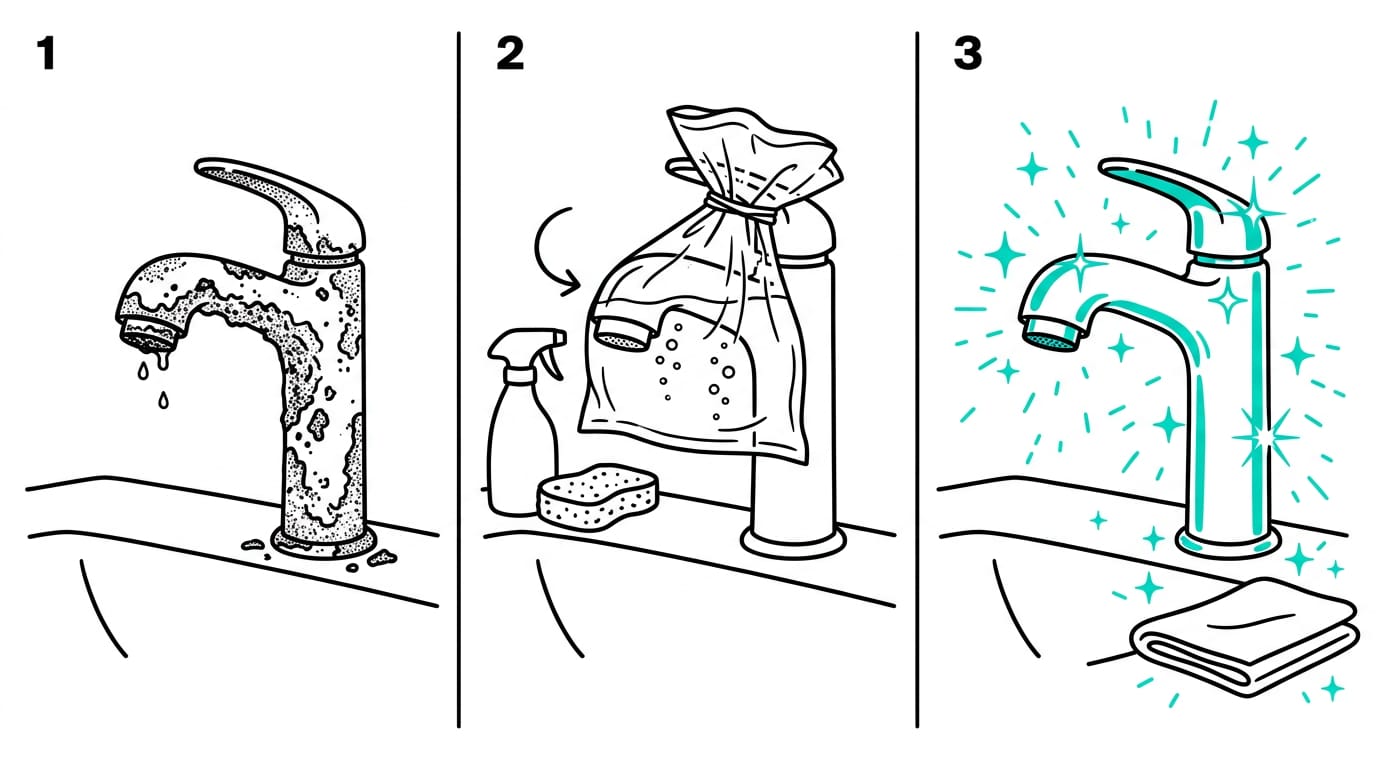
Hard water stains are white, cloudy or crusty marks left when water containing dissolved calcium and magnesium evaporates. Use vinegar to loosen mineral scale, washing-up liquid for soap scum, and stronger descalers only for stubborn deposits; match the method to the surface, testing finishes and keeping acids away from grout, marble and limestone. Drying taps and shower glass after use helps prevent buildup, while early cleaning can stop deposits hardening or etching surfaces.
Think of the kettle. After a few months, a chalky crust builds up inside, and the glass on the shower door starts looking frosted. That’s hard water at work.
Hard water carries dissolved minerals, and when it dries on a surface, those minerals are left behind as white or cloudy marks.
We’ll cover what these stains look like, which cleaners dissolve them, and which method suits each surface.
You’ll also find ways to stop them returning, plus a quick-pick guide that matches each mark to the right method, using things already in your cupboard.
How Hard Water Stains Form and Look
Reading the signs of a hard water mark tells you how fast you need to act.
What minerals cause the staining
Water picks up minerals on its way to your taps. The main culprits are dissolved calcium and magnesium, and water that carries them is called hard water.
Rain becomes hard underground, picking up minerals from rock and soil before it ever reaches your pipes.
When that water evaporates from a tap, a shower screen, or a kettle element, the minerals stay behind. You’re not really cleaning up water. You’re cleaning up what it leaves behind.
Can hard water stains become permanent?
They can, if you leave them. Most fresh marks lift with a little effort, but time changes the picture.
Early signs look like chalky white spots on glass or tiles, or crusty rings where water has dried around a tap or basin. On shower doors, the minerals often mix with soap residue to form a cloudy film.
This is soap scum, and it dulls the surface even after a scrub.
To tell them apart, run a fingertip over the mark:
- Rough: the mineral scale feels gritty or crusty.
- Waxy: soap scum feels slick, a bit like candle wax.
Think of a tenant who wipes the shower screen on Sunday but never checks the edges. Soon the cloudy film creeps into the corners, and a quick wipe becomes a long scrub.
Leave a mark untreated and the deposit hardens onto the surface. In the worst cases, the minerals begin to etch the glass or chrome. This is etching: the surface itself is damaged, and no cleaner can fully bring it back. Time is the real enemy here.
Which Cleaners Dissolve Mineral Buildup
The right cleaner depends on how thick the buildup is. Start with what’s in your cupboard and only move up if the mark won’t budge.
Gentle acids like vinegar at home
Limescale is a crust of calcium and magnesium deposits, and a weak acid breaks it down. Lab research and cleaning experts back vinegar for this job.
Eric Beckman, a professor emeritus of engineering at the University of Pittsburgh notes that vinegar lowers a deposit’s pH (a measure of acidity), so it dissolves more easily in water.
Contact time matters too. Vinegar needs time to sit on the deposit, so a quick spray and wipe won’t cut it. Give it time.
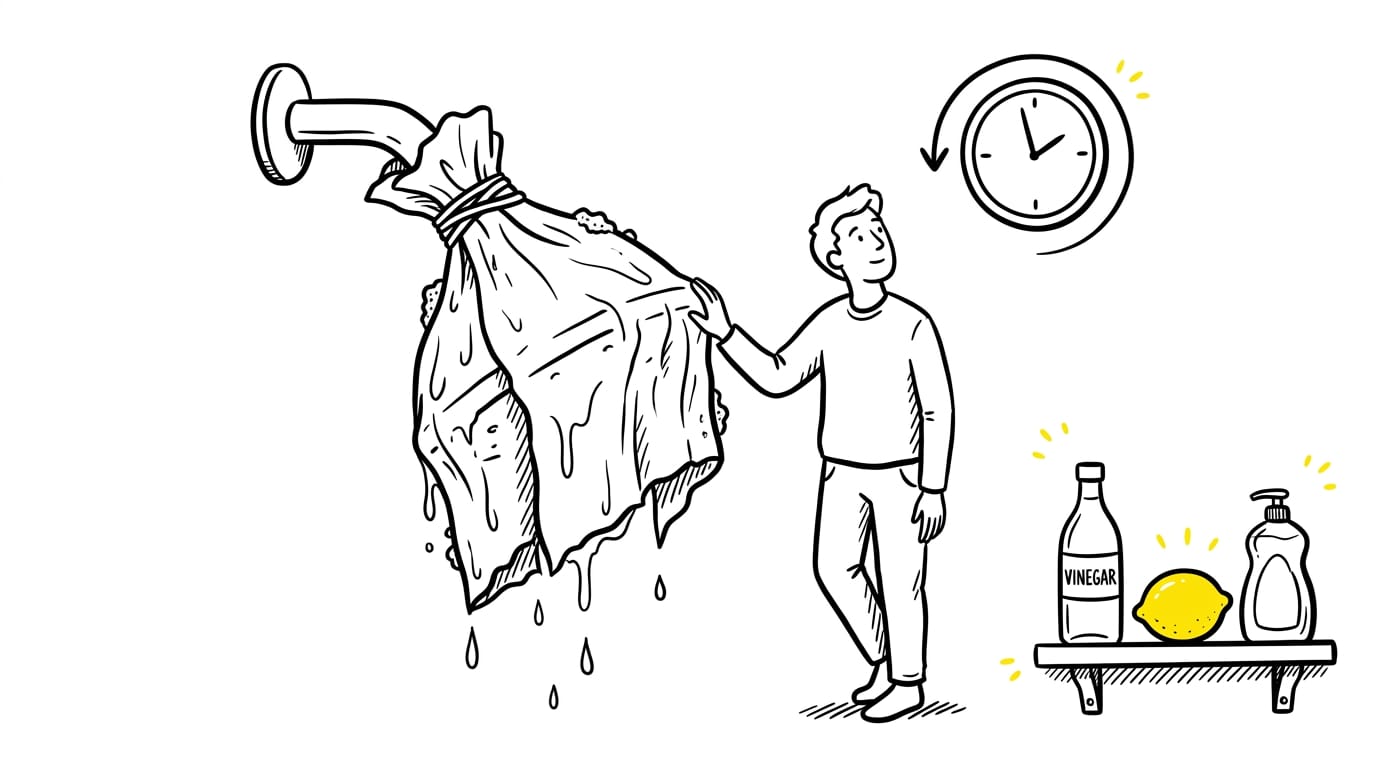
Consider a flatmate who wraps a scaly shower head in vinegar-soaked kitchen roll, then rinses it clean instead of buying a new one.
For soap scum, the greyish film on tiles and screens, washing-up liquid is the first thing to try.
Does mixing vinegar and baking soda remove calcium deposits? Not really. The fizz shows the two cancelling each other out, leaving less acid to dissolve the deposit.
Your cupboard already holds:
- vinegar
- a lemon
- washing-up liquid
Stronger acids and scrubbers for tough jobs
Thick, crusty deposits may need a stronger acid. Start gentle and escalate gradually, moving up only if the mark won’t lift.
For scrubbing, pair a product such as Soft Scrub with #0000 steel wool, the finest grade, to lift what’s left.
Stubborn deposits often need repeat applications rather than a harsher product. Picture a landlord restoring a chalky tap before a viewing: a second round can save buying a new fitting.
Specialty removers for heavy scale
For heavy scale, like a thick crust on a kettle element, try oxalic acid cleansers or products sold as calcium, lime, or rust removers.
They work fast, so keep contact times short and rinse when the label says. Wear gloves and open a window, since these are harsher than vinegar.
Why oil sprays won’t clear limescale
Oil-based sprays won’t clear limescale. Oil doesn’t dissolve mineral deposits; it just coats them and leaves a greasy film behind. On shower floors, that film can make the surface slippery. Skip the oil and reach for an acid.
Methods That Work for Each Surface
Match the method to the mark and the surface before you start. Here’s your quick-pick:
- Glass spots: vinegar, then a soft sponge, then baking soda paste for single spots.
- Faucets and showerheads: a vinegar-soaked cloth or bag, after a finish test.
- Tile and grout: vinegar on glazed tile, neutral cleaner on grout.
- Laundry marks: test a hidden seam first, since fabric reacts differently.
Clearing spots off glass shower doors
To remove calcium build-up from glass, spray on vinegar and wait 10 to 15 minutes. The trick is to wait rather than scrub.
Think of a parent who cleans the shower door on Sunday: spray, make a cup of tea, and come back to spots that wipe away with a soft sponge. Rinse, then squeegee the glass dry.
For what’s left, scrub from the bottom to the top with steel wool, or dab baking soda paste onto single spots. Patience does most of the work.
Freeing faucets and showerheads from scale
Test any plated finish on a hidden spot first, since strong acids corrode chrome. Then wrap a vinegar-soaked cloth around a tap. For a showerhead, fill a bag with vinegar, tie it over the head, and let it soak.
Kettles and other appliances with limescale can be tackled the same way.
Safe cleaning for tile, grout and stone
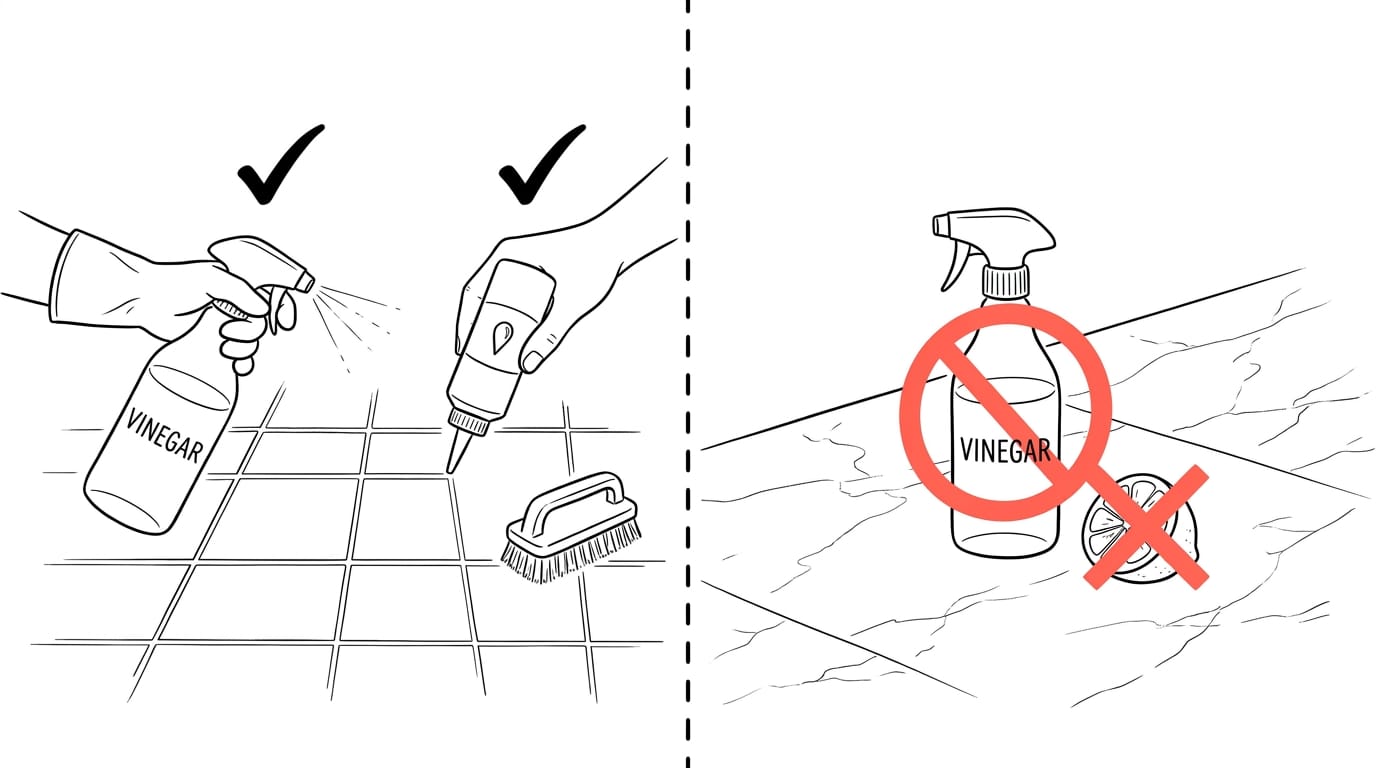
Vinegar is fine on glazed tile, but for grout, a neutral cleaner is the better pick, not vinegar. Stone is the exception, so keep acids away from marble and limestone.
A host with glazed tiles in the kitchen and marble in the hallway can use vinegar on the tiles, but the marble stays acid-free.
Getting rings out of toilet bowls
Start by pouring vinegar around the ring and letting it soak, so it softens before you touch it. Then work the ring with a bowl brush.
Consider a flatmate who wants the bowl spotless before guests arrive: a vinegar soak in the evening and a quick scrub the next morning. For heavy rings that won’t budge, an acid bowl cleaner is the next step. Vinegar first, acid last.
Keeping Yourself and Surfaces Safe
Cleaning up hard water stains can be quick, but a few safety habits matter more than any product on the shelf. Here’s how to protect yourself and your surfaces first.
Chemicals not to mix and staying protected
Some household chemicals are dangerous together, so check what’s under the sink before you start. Never mix these pairs:
- Bleach and acids, including acid-based descalers.
- Bleach and ammonia, even for a quick clean.
Ventilate the room and wear gloves every time you clean. Fresh air first. Always.
If a product touches your skin or eyes, or someone swallows or breathes it in, contact Poison Control straight away.
Consider a parent descaling the bathroom taps while the kids are home. With gloves on, bleach kept well away from the descaler and a window open, the whole household stays safe while the taps shine.
Protecting finishes while you clean
Harsh products can be tough on delicate finishes, so protect the surface before you scrub, not after. Run through these checks first:
- Check the label or test spot: read the instructions, then try the product somewhere hidden first.
- Steel wool only when wet: dampen the surface first, and never use it on a dry one.
- Right tool per surface: match the cloth, brush, or pad to the material, not the one you used last time.
- Strong acids need training: if a job calls for them, get proper training first.
- Check tenancy surfaces: if you rent, check what your tenancy allows before you descale anything.
Think of a tenant who wants a sparkling shower screen before handing back the keys. A test in a hidden corner first means the screen shines without leaving damage behind.
Stopping Stains Before They Start
The easiest hard water stain to clear is the one that never forms. Good habits and the right water fix keep glass and taps clear, so there’s less scrubbing later.
Drying off and cleaning on a schedule
Hard water leaves its dissolved minerals behind as it dries, so the goal is keeping water from sitting. These habits help:
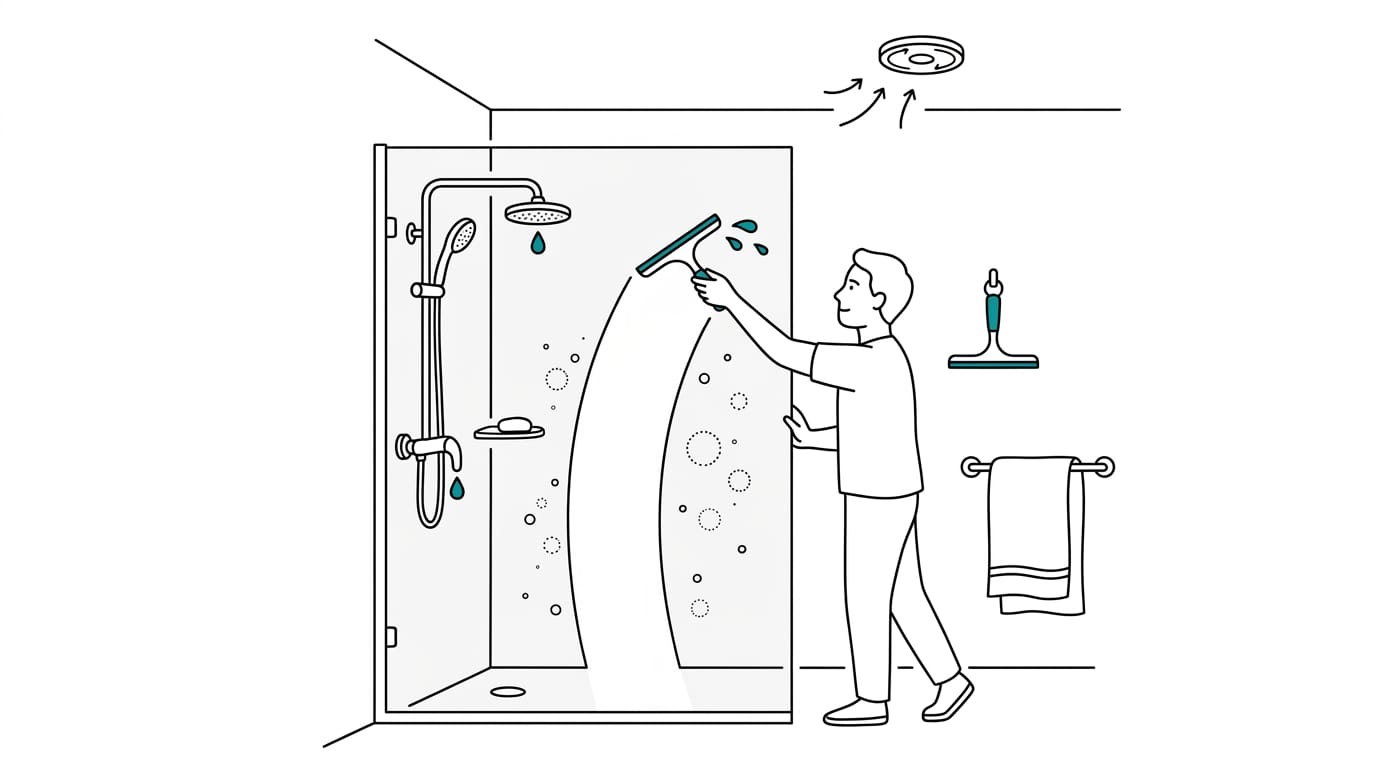
- Squeegee after every shower. One pass across wet glass and tiles removes most of the mineral before it dries.
- Wipe fixtures and run the fan. Dry the taps and showerhead, then run the extractor fan to clear the damp.
- Clean the glass weekly. A set routine stops a thin film hardening into cloudy patches.
- Schedule regular cleaning. Fixed days for taps and tiles stop build-up getting a head start.
Consider a parent of three who keeps a squeegee by the shower. One pass each morning takes seconds and saves a tough scrub later in the week. Prevention is about stopping the mark, not removing it. Less scrubbing, clearer glass.
Water softeners and conditioners compared
If habits alone aren’t keeping up, the water itself may need treating. An ion-exchange softener swaps the minerals causing hardness for sodium, so the water is truly softened.
The catch is salt: the unit recharges with it, and the salty brine it flushes out goes down the drain.
A salt-free conditioner doesn’t remove those minerals. It changes how they behave so they cling less to taps and glass. It uses no salt and sends no brine down the drain, but it conditions the water rather than softening it.
Get your water tested first. The result shows how hard your supply is, so you can match the system to it.
Options for Businesses and Professionals
Hard water stains are a daily problem for cleaning teams and facilities managers, so it pays to know where your supplies and support can come from.
Supply and service options for businesses
Commercial work is different from a single bathroom. You’re managing many sites, many staff, and many surfaces, so the goal is consistent results at a predictable cost. Three routes are worth a look:
- Industrial cleaning product ranges. Professional lines are built for repeated, heavier use. Check the label for which surfaces each product is approved for, and test it on a small hidden spot before you roll it out.
- Private-label and facility supply. Private-label products carry your own company’s name or a supplier’s branding, and a facility supplier can deliver the same product to every site.
- Janitorial membership resources. Membership groups for cleaning professionals can offer shared guidance, so your team isn’t working out every stubborn mark from scratch.
Think of a letting agent turning a flat around between tenants. The kitchen tap and shower screen both show limescale, and the same fix has to work on every property.
One approved product, bought in bulk and used the same way each time, means the flat is ready on schedule and nobody has to guess. It’s less about how strong a product is and more about how consistently your team uses it. Consistency is the real win.
Hard water stains look stubborn, but they follow a pattern. Once you know what the mineral buildup is, you can pick the cleaner that dissolves it, match the method to the surface, and act before the marks have a chance to set.
A little prevention goes a long way too.
So next time you spot that chalky film, don’t panic. Reach for the right tool, work in the right order, and your surfaces will look as clean as the day you bought them.
References
- 9 Things You Should Never Clean With Vinegar — consumerreports.org
Questions
How to remove calcium build up on glass?
Spray white vinegar on the glass and let it sit for 10 to 15 minutes, then wipe with a soft sponge and rinse. For stubborn spots, apply baking soda paste to individual marks or use wet, very fine steel wool if the glass can tolerate it. Squeegee the glass dry afterward to help prevent new deposits.
Can hard water stains become permanent?
Yes. If hard water stains are left untreated, deposits can harden, and minerals may eventually etch glass or chrome. Etching damages the surface itself, so cleaners cannot fully restore it.
Does vinegar and baking soda remove calcium deposits?
Not effectively. Vinegar is acidic and can dissolve calcium deposits, but baking soda neutralizes some of that acidity when mixed with it. Use vinegar on its own, giving it time to sit on the deposit.
Sources
- 9 Things You Should Never Clean With Vinegar - Consumer Reports, consumerreports.org
More in Stain Removal
- How to Get Sweat Stains Out of Hats, Step by StepHow to get sweat stains out of hats: match the cleaning method to your hat type and stain age, with quick checks to prevent damage before washing.
- Rubbing alcohol for permanent marker stains explainedRubbing alcohol for permanent marker stains can lift ink from clothes and household surfaces; see where it works, what else to try, and safety tips.
- How to Remove Coffee Stains from Fabric, Carpet and MoreHow to remove coffee stains from clothes, carpets, and furniture without damaging fabric. Tackle set-in marks and coffee smells with the right method.
Stain Finder: a free stain removal guide
Find your stain