How to Remove Static From Clothes: Causes and Fixes
How to remove static from clothes: stop cling with quick fixes, identify charge-prone fabrics, and change laundry habits to keep it from returning.

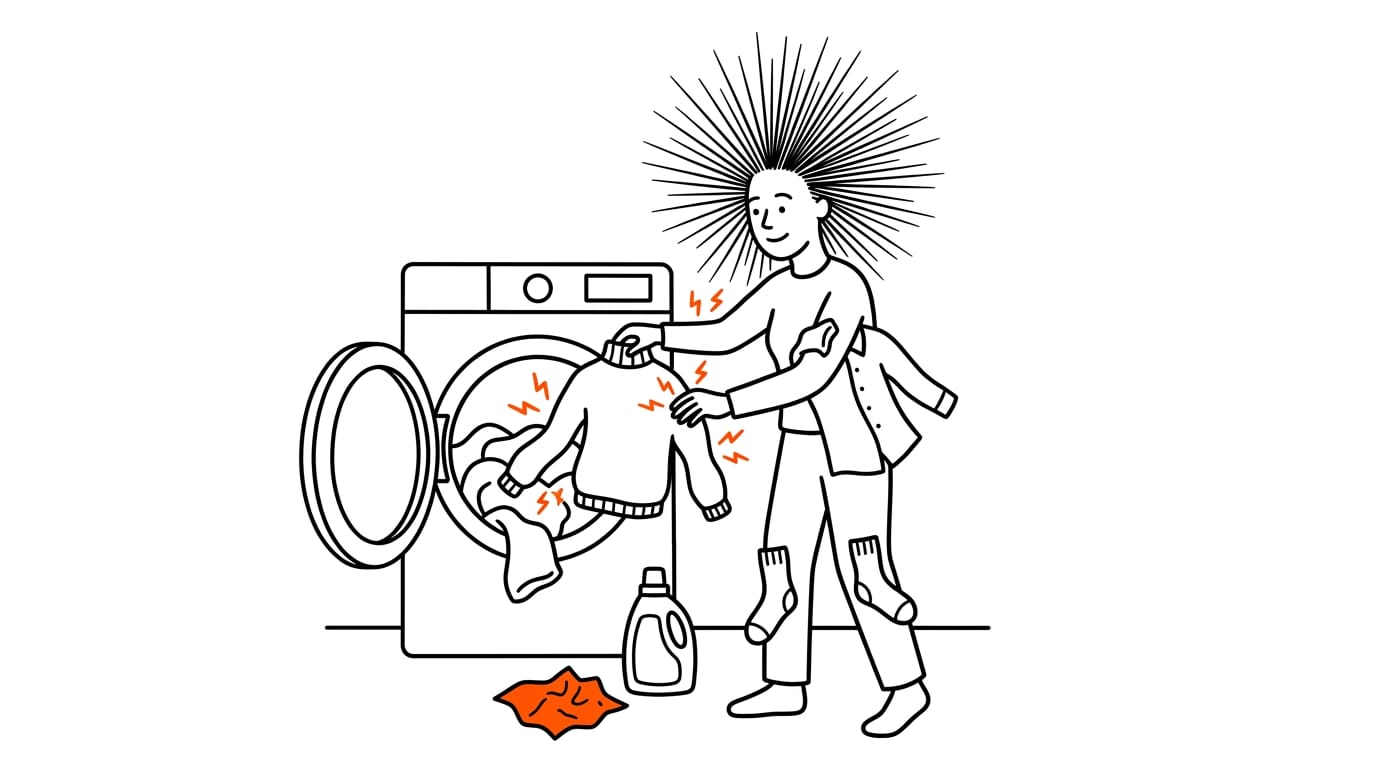
Static cling is the attraction between clothes that have built up opposite electrical charges, usually as fabrics rub together in dry air. Reduce friction and charge by separating synthetic fabrics, using a little moisture, choosing dryer sheets or wool balls, and avoiding high heat and over-drying. For clothes clinging now, lightly mist them or rub them with metal; small laundry and home habits help prevent static from returning.
Picture pulling a warm blouse from the dryer, only to have it cling to your leg the moment you step into the hallway.
That’s static, the little build-up of electrical charge that forms when fabrics rub together, and it shows up most in dry air and with synthetic fibers. Your clothes aren’t ruined, though, and most fixes use what’s already in your home.
This guide walks through what causes static, which fabrics are the worst offenders, and quick fixes for clothes that cling right now. You’ll also find laundry and dryer habits that prevent it, plus simple homemade options from your kitchen cupboard.
Static Causes and How to Remove It
Static comes down to an uneven electrical charge, and three everyday conditions make that imbalance far more likely:
Friction and opposite charges pull clothes together
Clothes are normally balanced, with no overall charge. When fabrics rub together, friction moves electrons (tiny charged particles) from one material to another, and the result is static electricity. It happens in three steps:
- Friction moves electrons from one fabric onto another.
- The fabric that gains electrons turns negative, and the one that loses them turns positive.
- Opposite charges attract, so a jumper clings to your trousers.
The clothes aren’t sticky. They’re charged.
Cold, dry air and static
Cold, dry winter air is a common trigger. When humidity (the water vapour in the air) drops, air acts as an insulator, so charges on your clothes have nowhere to drain away.
That’s why a jumper that behaves all summer can crackle once the heating comes on. Moisture does the opposite: it lets charges dissipate, leaking away before they build into a spark. Your clothes haven’t changed. The air has.
How dryer tumbling builds static
Tumbling is friction on repeat. As the drum turns, clothes rub against each other and the drum wall, moving electrons with every pass. High heat makes it worse: hot, dry air pulls moisture out of the load, leaving less humidity to help charges leak away.
Consider a parent pulling a school shirt and leggings from the dryer at 7am, only to find them stuck together before the school run has even started. Friction starts it. Heat keeps it going.
Which Fabrics Attract Static Most
Some fabrics seem to attract static, while others barely notice. Knowing which is which tells you where to start.
Why does polyester get static?
Polyester, nylon, and acrylic are the usual culprits. These synthetic fibers repel moisture, so the small electrical charge that builds up through friction in the wash and dryer has nowhere to drain away.
That’s why a polyester blouse can cling to your tights the moment it leaves the dryer.
Cotton, wool, and linen are less prone, because they don’t repel moisture the same way. It comes down to what a fabric is made of more than how it’s been washed.
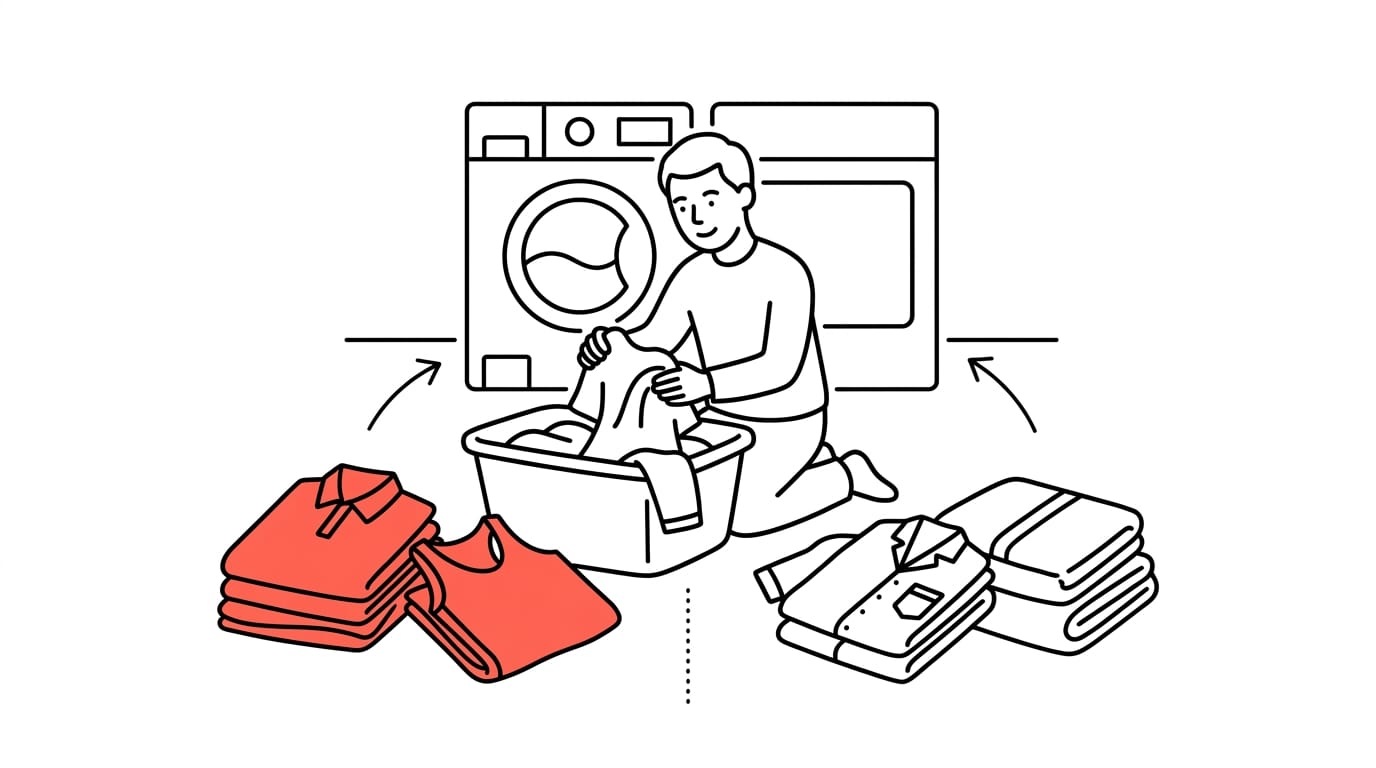
Keep synthetics apart in the wash
Separating your loads helps at every stage:
- Wash synthetics separately. Think of a parent with a school week’s laundry: polyester polo shirts in one load, cotton pyjamas and bath towels in another. Sorted this way, the polo stays put instead of clinging to the pyjamas when it’s time to get dressed.
- Dry natural and synthetic apart. Run them in separate dryer loads so the synthetics aren’t tumbling against the cotton and wool the whole cycle.
- Give workout clothes special care. Many are synthetic, so give them their own load rather than mixing them with towels and tees.
Sorting takes only a minute at the laundry basket, and it’s one of the simplest steps you can take. Keep them apart.
Ways to Prevent Static in Laundry
Static usually builds up in three places: while you’re wearing clothes, in the wash, and in the dryer. This section covers the wash and the dryer, where small habits prevent static instead of chasing it down later.
Use fabric softener to reduce friction
Static starts with friction, so the first fix is to cut it down. Adding fabric softener to the wash lubricates the fibers, so they slide past each other instead of rubbing and clinging.
If someone in your home has sensitive skin, choose a softener labeled for sensitive skin. Go easy on towels, though. Softener residue builds up on the fibers and lowers absorbency, so your towels feel soft but soak up less water.
Dryer sheets and wool dryer balls compared
Both tools tackle static in the dryer, but they do it differently:
- Dryer sheets neutralize the charge on your clothes.
- Wool dryer balls separate clothes so they don’t bunch together and cling.
Wool dryer balls are the reusable, eco-friendly option: you toss them in with each load and use them again, while dryer sheets get used up with every load. Do dryer sheets actually work? Yes, they do.
By neutralizing the charge, they reduce static, so if they’re working for you, there’s no need to give them up. If you’d rather go reusable, wool balls handle the job by keeping your clothes apart instead.
Dry clothes gently and shake them out
Here, when you take clothes out matters as much as how you dry them. Consider a flatmate who pulls work shirts out of the dryer while they’re still slightly damp, hangs them on a line to finish, and gives each one a firm shake first.
The shirts come off smooth, and nothing clings to their jumper in the hallway.
Avoid over-drying by taking clothes out while they’re still slightly damp. Air dry or line dry when you can. Shake clothes after drying, before you fold or wear them. It takes seconds.
Try vinegar in the rinse cycle
Add a splash of vinegar to the rinse cycle. It helps break down leftover detergent residue, and less residue on the fibers means less build-up on your clothes. Think of it as a quiet habit that supports the other fixes above, not a replacement for them.
Quick Fixes for Clothes That Cling
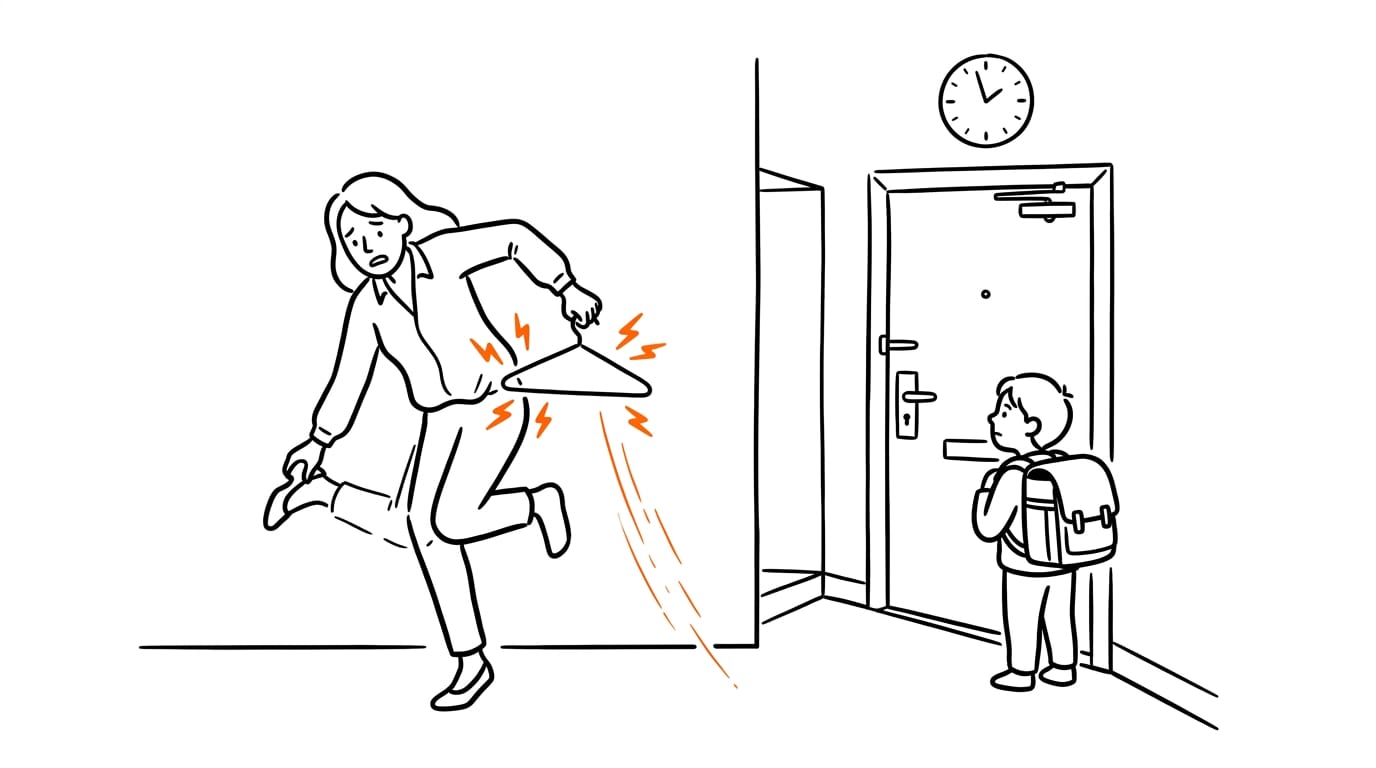
When a skirt clings to your tights just as you’re heading out the door, you need a fix in seconds. Most of these take almost no time, so you can still get out on schedule.
Use metal to ground static fast
Metal works through grounding, which lets the charge escape rather than build up on the fabric. It’s the fastest route to calm things down. Try one of these:
- Rub with a wire hanger or pin. Run the metal gently over the clingy fabric.
- Touch grounded metal. Touch a metal tap or radiator before you dress to drain the charge from your body.
- Use safety pins in dryer balls. Tuck a few safety pins into your dryer balls so the metal can help cut static while the clothes tumble.
Picture a parent running late for the school run, with a blouse clinging to their trousers. One quick pass with a wire hanger, and they’re out the door on time. Metal does the work.
Dampen clothes or hands to calm static
A little moisture is another quick way to calm things down. Lightly mist the clothes with water from a spray bottle, or dampen your hands and brush them over the fabric. Always test the mist on a hidden hem first to check how the fabric reacts.
To remove static from a blanket, toss a damp cloth into the dryer with it. The moisture helps calm the charge as the blanket tumbles.
Reach for a rub-on or spray
When you’re short on time, a product can do the job. Keep these handy:
- Dryer sheet. Rub one over the clothing to lift the cling.
- Static Guard spray. Give the garment a light spritz.
- Travel-size static spray. Tuck one into your handbag or gym bag, and you’ll be ready for the day you’re caught out.
- Talcum powder on skin. Dust a light layer onto your skin under the clothes that cling.
Moisturize skin before you get dressed
Lotion reduces friction on dry skin, so fabric glides over you instead of sticking. Apply it before you get dressed, and smooth skin means smooth fabric.
Homemade Ways to Fight Static
Static is more a nuisance than a danger to your clothes. The clinging and crackling, often called static cling, usually doesn’t damage the fabric itself, but it’s maddening when a skirt wraps around your legs.
The good news is that a few cheap fixes can stop it before it starts.
Simple homemade fixes that cost little
Here’s what to try:
- Water-vinegar spray. Fill a spray bottle with water and add a splash of white vinegar. Lightly mist the garment rather than soaking it, since a fine spray calms the cling without leaving clothes wet.
- Aluminum foil balls. Scrunch a few sheets of aluminum foil into loose balls and toss them into the dryer with the load. They tumble through the cycle and help curb static.
- Damp cloth in dryer. Wring out a clean cloth until it’s just damp, not dripping, and add it to the dryer with your clothes. A little moisture in the drum eases the cling.
- Chemical-free and low cost. None of these need a shop-bought product, so there are no extra products going into your laundry. They’re built for prevention rather than rescue. Cheap, simple, and easy to repeat.
Think of a parent pulling a school blouse from the dryer on a dry winter morning, its sleeves clinging to the tights underneath.
Next time, a damp cloth tossed in with the load means the blouse comes out hanging flat, and the school run starts without a tug-of-war.
Home and Wardrobe Habits That Help
Prevention starts before you reach for a spray. Focus on the air in your home and the way you wear and store your clothes.
Run a humidifier to add moisture
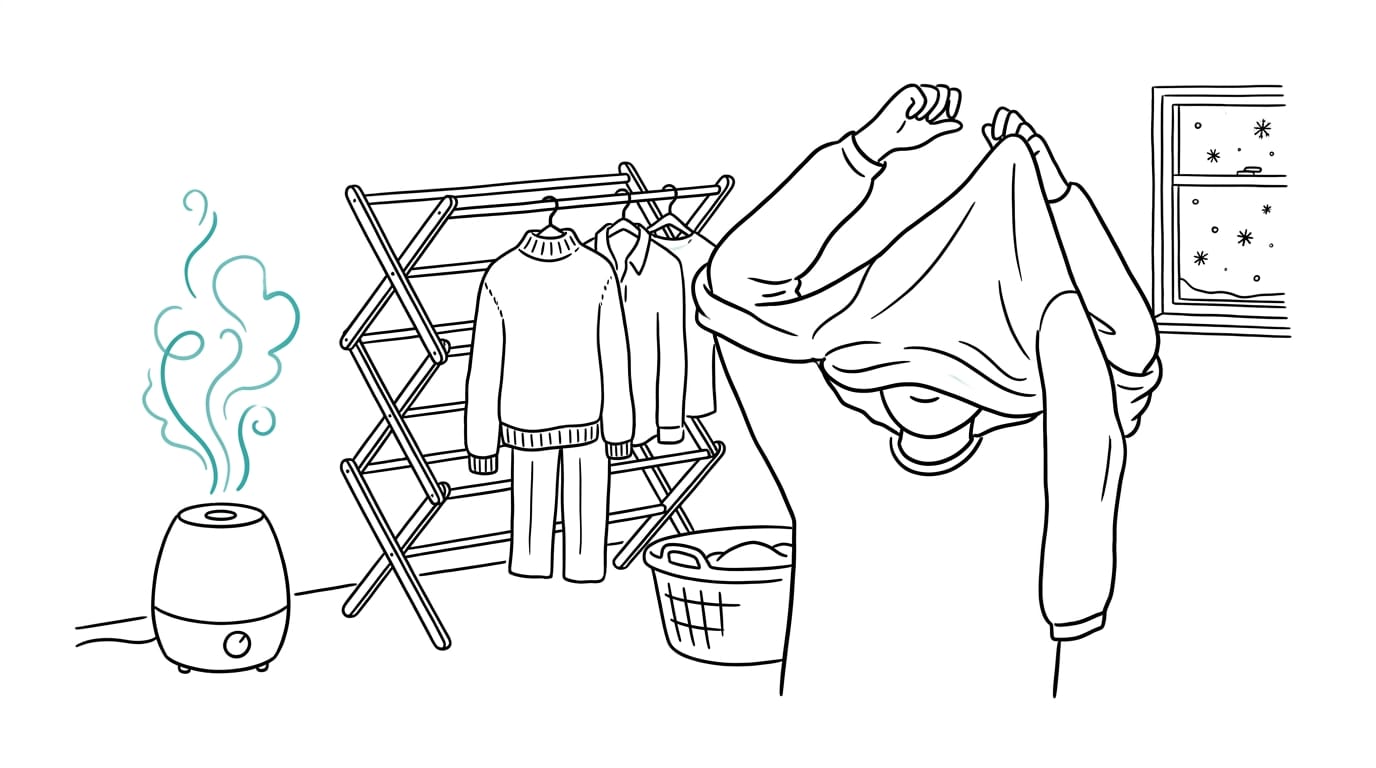
Winter heating often leaves indoor air dry, and that’s where a humidifier comes in. It’s a machine that adds moisture back into the air, which helps in the colder months. Use it as prevention rather than cure, so the cling never gets started.
Place it where clothes live. For example, a renter whose flat feels dry in January might run one in the laundry room, where jumpers dry on the airer, and another in the bedroom.
The payoff is less clingy socks and shirts when you get dressed. Winter is when you’ll notice it most.
Smarter ways to wear and store clothes
Small wardrobe changes add up. Keep these three in mind:
- Avoid layering synthetics. Stacking several synthetic pieces together gives static more to work with, so keep those layers to a minimum.
- Mix natural with synthetic. Pair a cotton or wool top with a synthetic piece rather than building the whole outfit from one fibre type.
- Use wood hangers, not velvet. Wooden hangers are the better choice for your wardrobe, so swap out velvet ones as you restock.
Consider a teacher who wears a synthetic blouse under a synthetic cardigan every school day, then wonders why it clings all afternoon. Swap the cardigan for a cotton one and the cling often goes with it.
The aim is balance, not an all-natural or all-synthetic wardrobe.
Mistakes That Make Static Worse
Most static comes from a few everyday habits that seem harmless in the laundry room. Drop them and you’ll cut the crackle before it starts.
Overdoing heat, softener, or mixing fabrics
Five habits cause most of the trouble:
- Over-drying on high heat. Blasting clothes until they’re bone dry strips out the moisture that keeps fabric from clinging. Use a lower setting and take items out while they’re still slightly damp.
- Too much fabric softener. Use less, not more. Heavy doses can leave a waxy residue that makes some fabrics cling harder.
- Mixing fabric types. Synthetics like polyester and nylon build charge quickly, so drying them with cotton or wool in the same load can make the whole batch crackle. Dry like with like.
- Metal or water on delicates. Metal clips, hooks, and zips rub against delicate fabric and can build charge, so fasten them or turn garments inside out first. Soaking or heavily misting delicates can leave water marks, so keep any dampening light.
- Ignoring care-label heat limits. The dryer symbol on the label shows the highest safe heat, so check it before you pick a setting, even when you’re in a rush.
Think of a parent who pulls a school jumper from a hot dryer because the morning’s running late. It comes out crackling and clings to every sleeve.
Dropping the heat and taking it out while it’s still a little damp would have saved the jumper and the parent’s patience. Low heat wins.
Static is annoying, but it’s rarely a sign that your clothes are damaged. Start with the quick fix that matches the moment, then tackle the cause in the wash and the dryer so it doesn’t keep coming back.
Small habits, like keeping dry rooms a little more humid and avoiding overdrying, add up over time.
With a few easy changes, you’ll spend less time peeling leggings off your legs and more time getting on with your day. Stay one step ahead of it, and clingy clothes become the exception rather than the rule.
Questions
How to naturally remove static from clothes?
Lightly mist the garment with water, or dampen your hands and brush them over the fabric. You can also rub the fabric with a dryer sheet or metal hanger, or use a homemade water-and-vinegar spray; test sprays on a hidden area first.
How can I make my own static spray?
Mix water with a splash of white vinegar in a spray bottle. Lightly mist the garment rather than soaking it, and test the spray on a hidden hem first to check how the fabric reacts.
How can I remove static electricity from my blanket?
Tumble the blanket with a clean, damp cloth. The moisture helps the static charge dissipate as the blanket dries.
How to prevent static cling in dryer?
Separate synthetic items from natural-fiber clothes, use a lower heat setting, and take items out while they are still slightly damp. Wool dryer balls can keep clothes separated, while dryer sheets help neutralize the charge; a clean, damp cloth in the drum can also add moisture.
Why does polyester get static?
Polyester fibers repel moisture, so electrical charges created when fabrics rub together have fewer opportunities to drain away. Friction during washing and drying can therefore make polyester cling, especially in dry air.
Do dryer sheets actually reduce static?
Yes. Dryer sheets help neutralize electrical charges on clothes and reduce static cling. Wool dryer balls are a reusable alternative that helps by separating clothes as they tumble.
Is static in clothes harmful?
Static in clothes is generally a nuisance rather than a danger, and the cling and crackling usually do not damage the fabric. It can cause small sparks or mild shocks, but it is not harmful in ordinary clothing situations.
More in Stain Removal
- How to Get Foundation Out of Clothes, Fabric by FabricHow to get foundation out of clothes? Match liquid or powder stains to your fabric, use cupboard products, and know whether a wash will finish the job.
- How to get oil and grease out of clothesSoak up the oil with a powder, break it up with washing-up liquid and wash as warm as the label allows. Fresh spills, washed-in spots, sportswear and bike oil.
- How to Wash White Clothes So They Stay BrightHow to wash white clothes without letting them turn grey. Sort loads, choose water temperature, treat stains first, and revive dingy whites safely.
Stain Finder: a free stain removal guide
Find your stain