- RinseCold
- Treat
- WashLabel
Bio vs non-bio detergent: which should you use?
Bio’s enzymes shift food, blood, sweat and grass even in a cool wash, but damage wool and silk. Which to use for which load, and what labels say about skin.

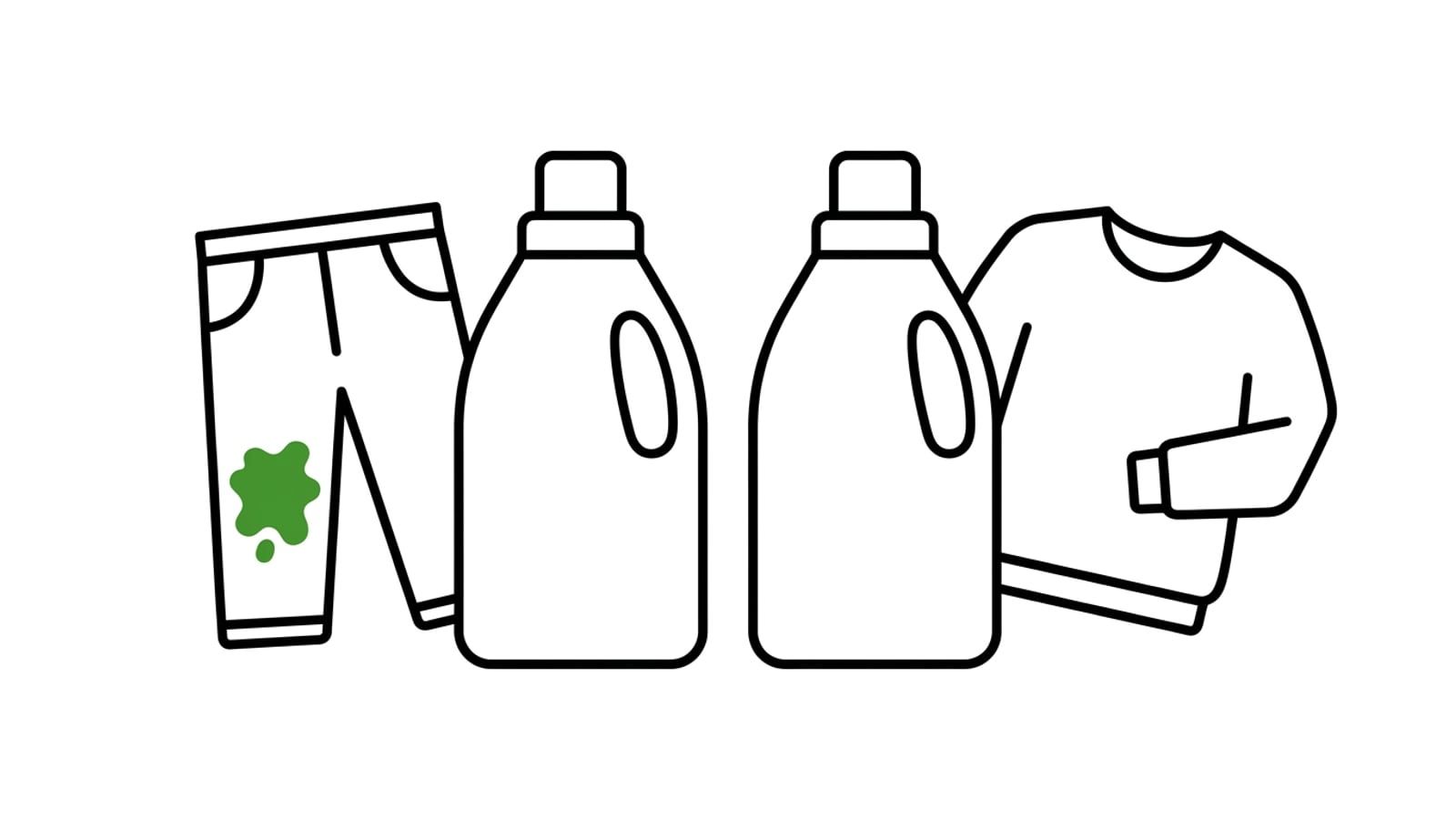
Biological detergent contains enzymes that break down food, blood, sweat and grass stains, even in a cool wash, so it suits most everyday loads. Non-bio has none, which makes it the safer of the two for wool and silk (though a wool detergent is better still); if you are choosing it for sensitive skin, go by the label and ask a GP or pharmacist about any rash.
Use biological detergent for most loads, and keep a wool detergent for the fibres that enzymes damage. Bio contains enzymes that break down protein, starch and fat, so it shifts food, blood, sweat and grass more readily than non-bio, even in a cool wash. Non-bio has no enzymes, which makes it the safer of the two for wool and silk, and if sensitive skin is why you are choosing, go by what the label says.
The difference is enzymes
Every laundry detergent cleans with surfactants, which loosen dirt and hold it in the water until it rinses away. Biological detergent adds enzymes: proteins that speed up a chemical reaction, in this case breaking the large molecules in a stain into smaller pieces the rest of the detergent can wash out. Detergents Europe, the detergent industry’s European association (formerly A.I.S.E.), sets out how in its guide to enzymes in detergents. Non-biological detergent leaves the enzymes out.
Each enzyme takes on one kind of stain, and most bio detergents combine several:
- Proteases break down protein: blood, egg, milk, sweat and grass.
- Amylases break down starch: gravy, sauces, porridge and other starchy food.
- Lipases break down fats and oils: butter, cooking oil and greasy food.
- Cellulases work on cotton itself, breaking down the tiny loose fibres that form on its surface with wear.
Enzymes don’t break down dye, so neither kind will rescue clothes that have come out of the machine pink. For that, see how to get colour run out of clothes.
| Bio | Non-bio | |
|---|---|---|
| Enzymes | Yes | No |
| Food, blood, sweat and grass | Breaks them down, even in a cool wash | Needs pre-treating, and sometimes a second wash |
| Wool, silk and blends that contain them | Never | Safer, but a wool detergent is best |
| Cool and quick washes | Made for them | Fine for everyday dirt |
| Sensitive skin | Check the label | Many packs say they suit it |
What bio does better: food, blood, sweat and grass
These are the stains enzymes were made for, and the reason the Stain Finder reaches for biological detergent so often. On washable cotton, linen and synthetics:
- Rinse a fresh stain from the back under the cold tap: heat sets protein stains such as blood, egg and sweat.
- Work a little liquid bio detergent into the mark with your fingertips or a soft brush.
- Leave it for 15 to 30 minutes, so the enzymes have time to work.
- Wash as the care label says, and check the stain has gone before anything goes in the tumble dryer.
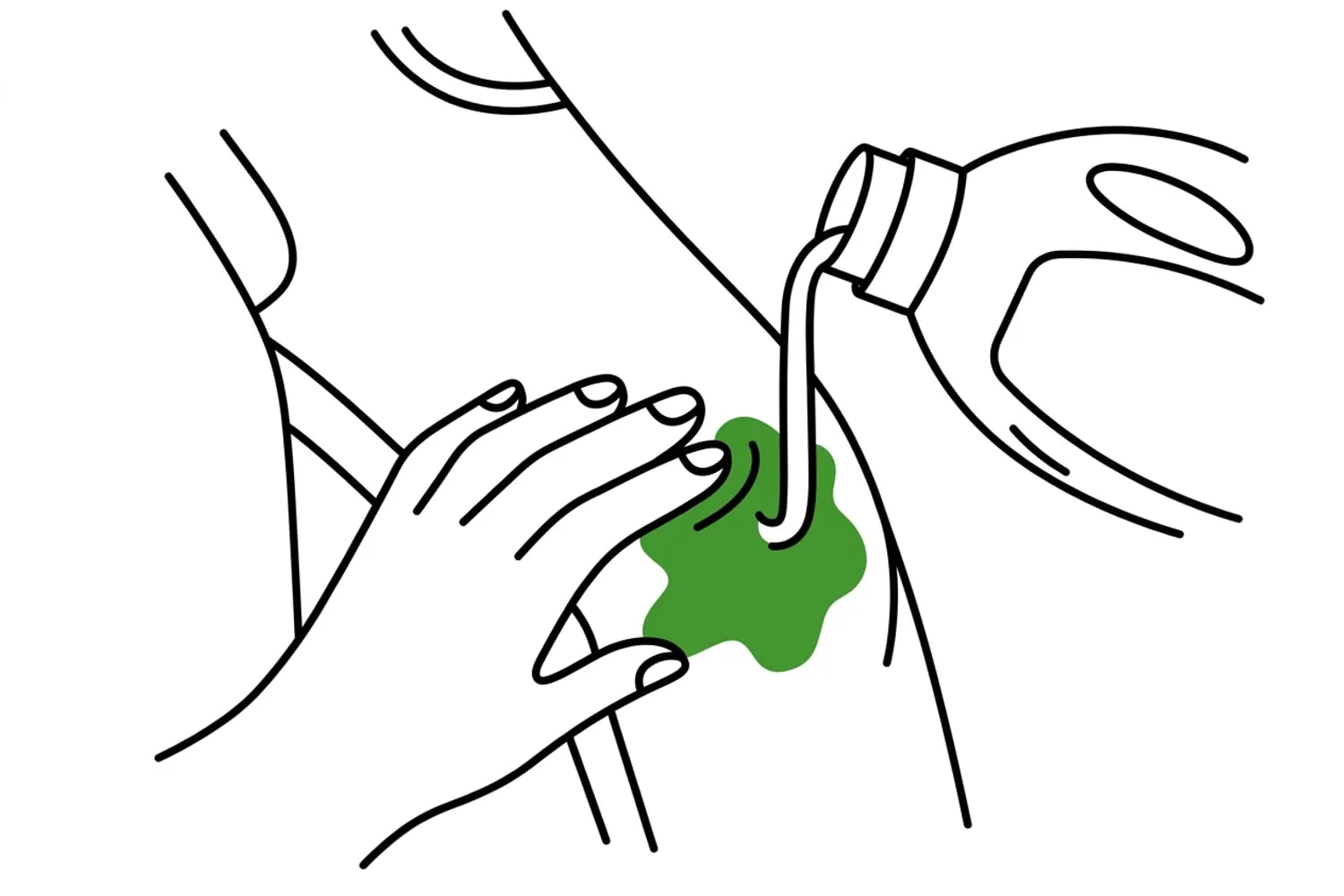
Grass on school trousers or football kit is the classic case, and the Stain Finder’s method for grass stains adds a dab of isopropyl alcohol, after a patch test, for any green the detergent leaves. Blood needs cold water before anything else, then bio and time: how to get blood out of clothes, sheets and carpet has the long cool soak for dried stains. Lipases help with greasy food, but an oil mark still needs breaking up with washing-up liquid first, as how to get oil and grease out of clothes explains.
Where non-bio is the better choice
Non-bio is the better pick in a few places:
- Anything whose care label says not to use biological detergent.
- A household that prefers it. Plenty of people simply do, and many non-bio packs say they suit sensitive skin (more on what labels say below).
- Lightly worn clothes with no food, sweat or grass on them, where enzymes have little to do, so either kind works.
Non-bio still shifts stains if you treat them first. Without enzymes, though, food and sweat marks may need a soak or a second wash.
Wool, silk and the fibres enzymes attack
Wool and silk are made of protein, just as an egg or a blood stain is, and the proteases in bio can’t tell the stain from the fibre: they can damage both. The Woolmark Company’s advice on detergents for wool is to use a neutral, mild wool detergent and to avoid heavy-duty detergents, “bio” detergents containing enzymes, and bleach of any kind, chlorine or oxygen. The same goes for cashmere, mohair, alpaca and angora, which are animal fibres too.
For anything in these fibres:
- Wash it in a wool detergent, by hand or on the machine’s wool cycle if the care label allows.
- Treat a stain with cold water and a little wool detergent, never bio, and blot rather than rub: wet wool felts when it is worked.
- Take anything labelled dry clean only to a dry cleaner, and tell them what the stain is.
Tip: read the fibre list on the label, not the feel of the fabric. A jumper that is mostly cotton or acrylic but lists wool, silk or cashmere at all goes in the wool detergent.
Why bio works in a cool wash
Heating the water takes more energy than any other part of a wash, and enzymes are what let a detergent remove stains without it. That is why bio cleans well at 30°C and on quick cycles, and why it suits protein stains, which hot water would set.
A hotter wash doesn’t make bio work harder: some enzymes are denatured at high temperatures and stop working. Go by the care label instead. The number in the tub is the hottest the garment can take, not a target. Non-bio has no enzymes to help in cool water, so for food and sweat it leans on pre-treating, and turning the heat up to make up for it risks setting a protein stain.
Sensitive skin and allergy labels
No detergent can promise more about skin than its label states, so start with the label. Many non-bio packs say they are suitable for sensitive skin, and some laundry products also carry an endorsement from Allergy UK, the allergy charity, which runs two product endorsement schemes:
- the Seal of Approval, for products independently and scientifically proven to reduce or remove allergens;
- the Allergy Friendly Product Award, for products judged “unlikely to cause a reaction” and that “may be of benefit” to someone affected by allergy, after review by independent scientific or clinical consultants.
An endorsement describes the product; it is not a promise about anyone’s skin. If you are washing for a baby, or for someone with eczema or a rash, ask a GP, pharmacist or health visitor, and take the detergent’s details with you. Fragrance-free versions are worth knowing about too, if you would rather not have scent in the wash.
Powder, liquid or capsules
Both kinds come as powder, liquid and capsules, and some as sheets, so choose the form by how you wash:
- Liquid can be worked straight into a stain before the wash, which is how the Stain Finder uses biological detergent.
- Powder is measured by the scoop, so you can dose it for the size of the load and how dirty it is, as the pack shows.
- Capsules are measured for you, but you can’t pre-treat a stain with one. Keep them in their closed box, out of children’s reach, as the pack says.
Whatever the form, the ingredients panel tells you what is inside. UK law requires detergent labels to list enzymes if any have been added, whatever the amount, so “enzymes” on the panel means bio, whatever the front of the pack says. Oxygen-based bleaching agents must be listed too once they make up more than 0.2%, which matters for wool, since Woolmark’s advice is to avoid any detergent containing bleach.
Which to keep in the cupboard
Two detergents cover most homes:
- A biological liquid, or capsules, for everyday loads of cotton, linen and synthetics: work clothes, school uniform, sportswear, bedding and towels. Keep the liquid by the machine for working into stains.
- A wool detergent for wool, silk, cashmere and any blend that contains them. Woolmark suggests choosing one it recommends.
Swap the bio for non-bio, or keep both, if your household prefers it or a GP or pharmacist suggests it. For the soaks the Stain Finder asks for on whites and colourfast cotton, add an oxygen-based stain remover, and keep it off wool and silk. The Cupboard lists capsules that come in bio or non-bio, a fragrance-free non-bio liquid with refills, and an oxygen-based stain remover, all from UK shops. Washing, drying and caring for everything else is in the Laundry section.
Questions
Is non-bio better for sensitive skin?
Many non-bio packs say they are suitable for sensitive skin, and that is the claim to go by, since no detergent can promise more than its label states. If skin is your reason for choosing, read the whole label rather than just the word non-bio: some detergents are fragrance free, and some carry an Allergy UK endorsement. For eczema, a rash or a baby’s skin, ask a GP, pharmacist or health visitor.
Can you use bio detergent on wool?
No. Wool and silk are protein fibres, and the proteases in bio that break down protein stains can damage them too. The Woolmark Company advises a neutral, mild wool detergent, with no bio detergents and no bleach of any kind. Treat cashmere, other animal fibres and any blend that contains wool or silk the same way.
Does non-bio get stains out?
Yes, plenty, especially if you treat them before the wash: washing-up liquid for grease, cold water first for fresh protein stains, and an oxygen-based stain remover where the care label allows. What non-bio lacks is anything that breaks down protein and starch, so food, blood, sweat and grass may need a soak or a second wash.
Does bio detergent work at 30 degrees?
Yes. Enzymes are what let a biological detergent clean well in cool and quick washes, so 30°C suits it, and cool water is kinder to protein stains, which heat sets. Go by the care label for the temperature: the number in the tub is the hottest the garment can take, not a target.
Sources
- Which laundry enzymes work best?, Science in School,
- Enzymes, Detergents Europe (formerly A.I.S.E.)
- Best detergent to use when washing wool, The Woolmark Company
- Allergy UK Approved Products, Allergy UK
More in Laundry
All of Laundry
Stain Finder: a free stain removal guide
Find your stain