Remove Stains from Marble: A Practical Guide
Remove stains from marble by matching the mark to a gentle method, and find out whether vinegar, magic erasers, wipes, or oil soap are safe.

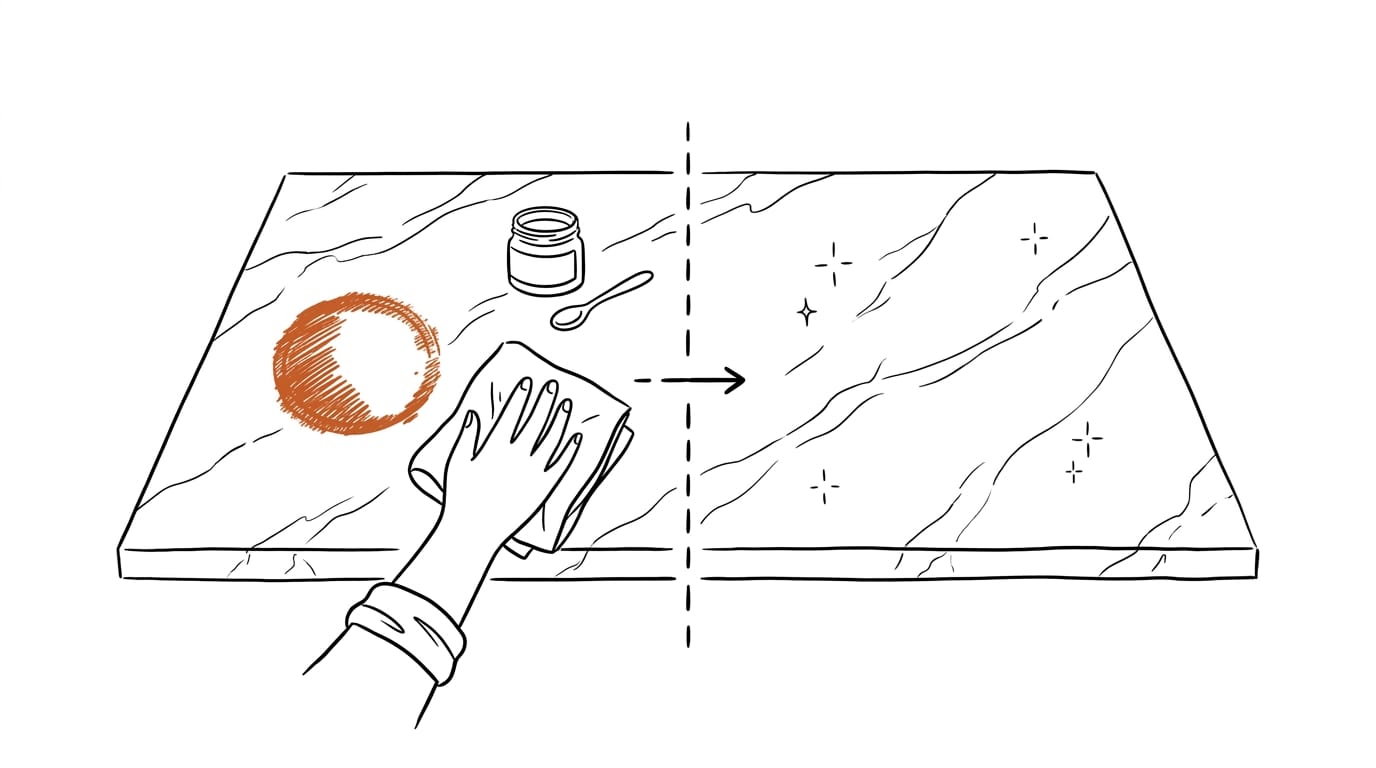
Removing stains from marble means lifting marks from a soft, porous stone without damaging its polished surface. Blot spills quickly, identify the stain, and start with gentle methods such as a soft cloth, pH-neutral cleaner, or a covered poultice; avoid abrasive tools and acidic products that can etch marble. For stubborn or rust stains, use a natural-stone-safe remover as directed or call a professional, and prevent future marks with coasters, prompt cleanup, and appropriate sealing.
Spotting a dark ring on your bathroom vanity or a brownish drip in the shower can make your stomach drop. Marble is a bit like a good wool jumper: it rewards gentle, thoughtful care, while a harsh scrub can make things worse.
The good news is that many marble stains can be lifted at home if you match the method to the mark. This guide covers which products are worth reaching for, whether vinegar, a magic eraser, a wipe, or oil soap, plus quick fixes for vanities and showers.
Know Marble Basics Before You Remove Stains
Marble looks tough, but it needs careful handling. Knowing how it behaves will help you pick the right method the first time.
Why marble stains and etches so easily
Marble is a soft, porous stone, so liquids can soak in before you can wipe them up. It also stains and etches easily. It’s not the same as granite, either: granite is much harder, so a routine that suits a granite countertop can harm marble.
Think of a homeowner who wipes down a marble vanity with a quick spray of something acidic and finds a dull patch the next morning. That’s an etch, a dull mark left by acid.
Unlike a true stain, which has soaked into the stone, an etch is damage to the surface itself. Knowing the difference up front keeps you from making the mark worse.
Skip acidic cleaners and harsh scrubbing tools
Most damage comes from things that seem harmless. Keep these off marble:
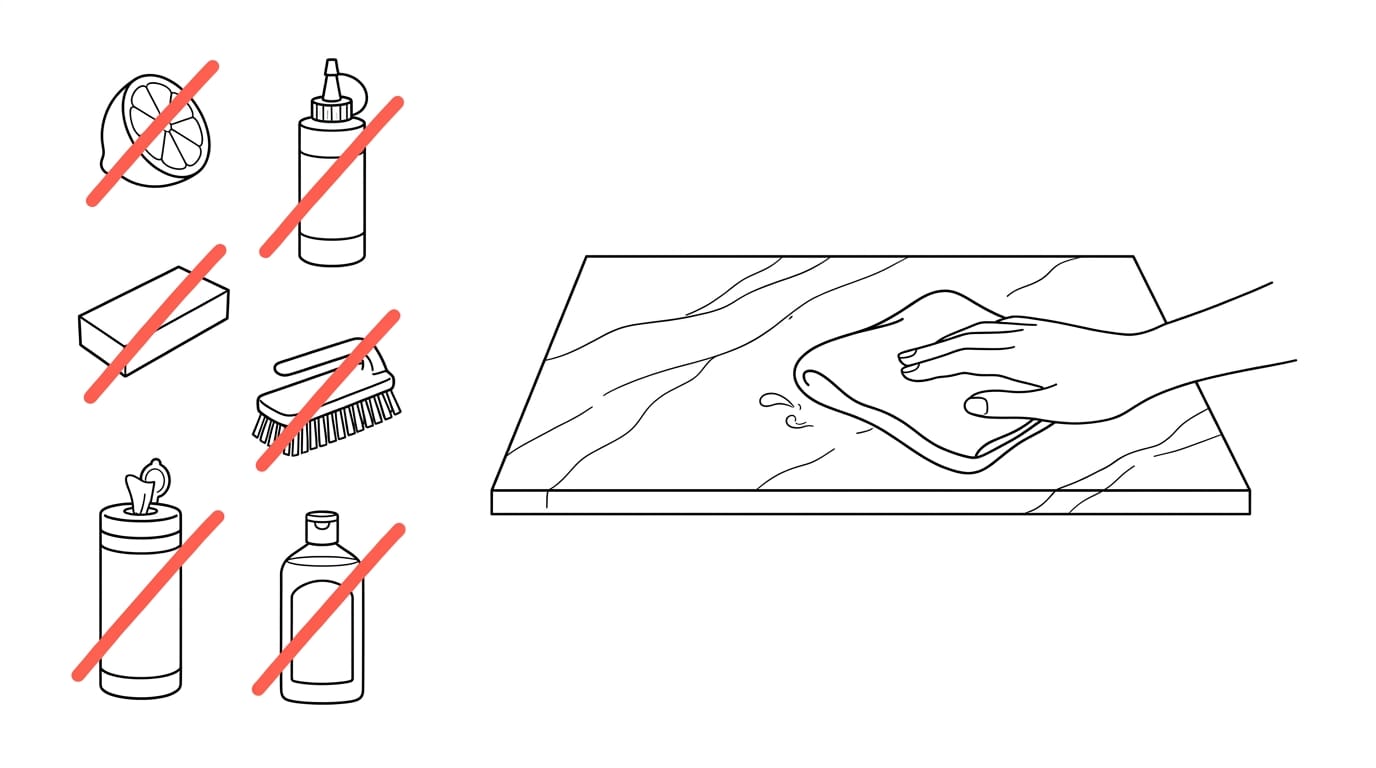
- Acidic cleaners. Vinegar, lemon, and other citrus are acidic, so they etch marble.
- Abrasive scrubbing. Gritty powders and stiff brushes leave tiny scratches that dull the shine.
Use soft cloths, like microfiber or cotton, with plain water or a stone-safe cleaner. Gentle wins here.
Can I use a magic eraser on marble? Keep it in the drawer. These sponges act like fine sandpaper and can wear away the polish.
Can you clean marble tiles with vinegar? No. Even diluted, it’s acidic enough to etch the stone.
Is it okay to use Clorox wipes on marble? Avoid them, since leftover residue can dull the finish.
Can I use Murphy’s oil soap on marble? Give it a miss. Oily soaps leave a film that dulls the stone.
Keep Marble Clean with Routine Care
A few minutes of regular care keeps marble looking its best and stops everyday grime from turning into a stubborn stain. Here’s how we keep countertops, floors, and the occasional deep clean in good shape.
Wipe countertops with warm water and soap
Think of a parent wiping down a bathroom vanity after the morning toothpaste rush. A quick pass stops splatters from drying onto the stone. That’s maintenance, not rescue.
Grab a soft cloth dampened with warm water and a little dish soap solution, then wipe in circular motions. Dry the surface afterward so water doesn’t leave spots. Don’t skip that last step.
Dust-mop floors and spot-clean with hot water
Dust-mop floors with a microfiber mop to lift grit that could scratch the stone. For marks, plain hot water is usually all you need.
Consider a homeowner who spots a muddy footprint by the front door: a cloth wrung out in hot water lifts it before it sets, with no product needed.
Deep cleaning without damaging the surface
For a deeper clean, look for a pH-neutral product, meaning one that’s neither acidic nor alkaline. Two gentle choices are:
- pH-neutral dish soap
- Non-abrasive marble cleaner
Gentle options handle everyday grime. Hydrogen peroxide or acetone can lift tough residue, but treat them as a last resort and test a hidden corner first. Rinse and dry thoroughly afterward.
Eco-friendly store-bought cleaner options
If you’d rather buy ready-made, choose a biodegradable, nontoxic option. Two to look at:
- Method granite cleaner
- Earth Friendly cream cleanser
Eco-friendly doesn’t automatically mean marble-safe, so read the label and test a hidden spot before you treat the whole counter.
Ways to Remove Stains from Marble
Getting a mark off marble comes down to acting fast and matching the method to the stain. The usual vanity culprits are toothpaste, cosmetics, and soap scum, so check which one you’re dealing with before you pick a method.
Blot spills right away instead of wiping
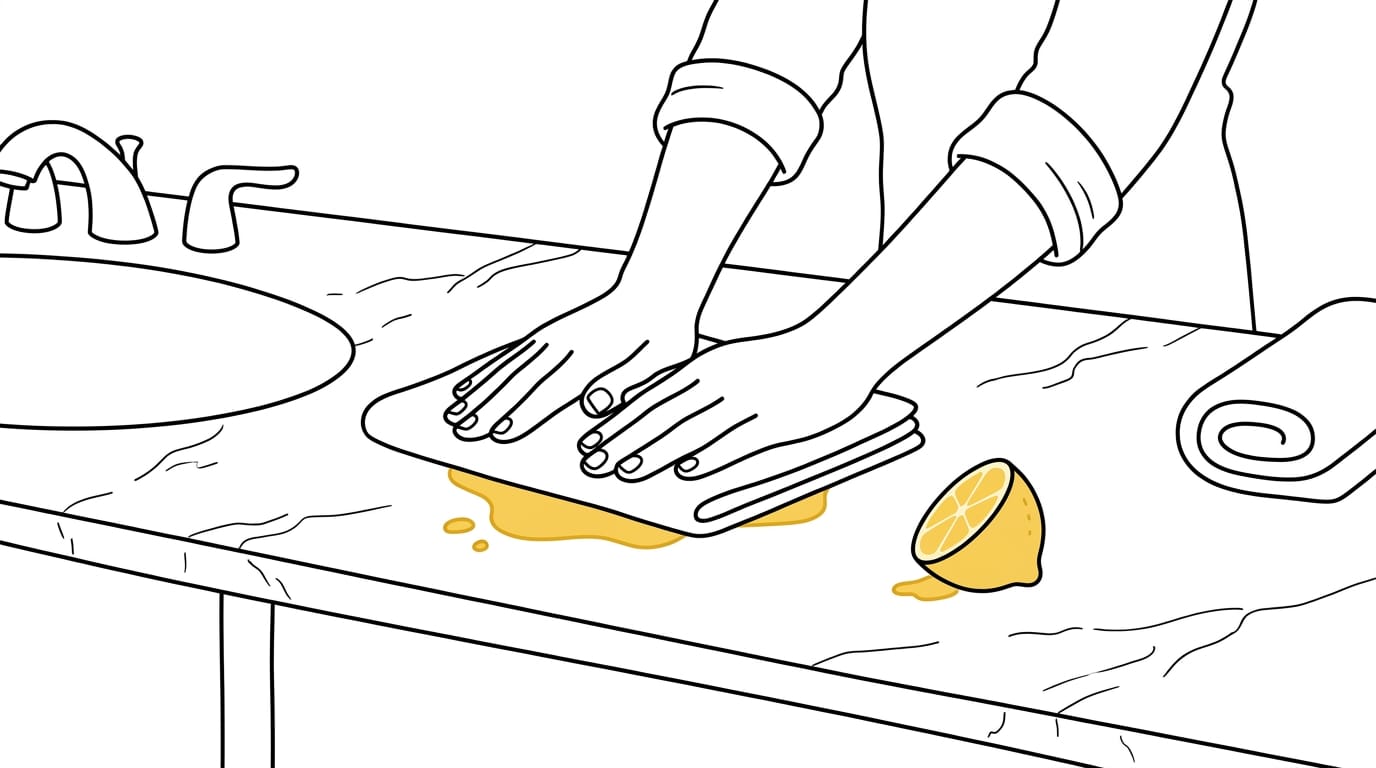
Your first move is to blot a spill, not wipe it, since wiping drags liquid across more of the stone. Picture a parent who knocks lemon juice onto the bathroom vanity: a quick press with a clean cloth stops it spreading before it sets.
Acidic spills like wine and citrus need the quickest response, so act on those first. Marble can be permanently stained if a mark is left to set, so move fast.
Cover a paste poultice for 24 hours
When a mark won’t lift by blotting, a poultice can draw it out:
- Mix baking soda or another powder with a liquid to a peanut-butter consistency, matching the liquid to the stain type.
- Spread it over the mark, cover it with plastic wrap, and leave it for 24 hours.
- Wipe away the paste and rinse the area.
A homeowner with a dark mark on the shower ledge mixes up the paste, covers it, and gets on with the week while it works.
Try simple household soaks on stains
Some marks respond to soaks made from things already under the sink:
- Baking soda and water: Leave the mix on the spot overnight.
- Vinegar and salt: Combine them into a mix and apply it to the mark.
- Vinegar-water soak: Dilute vinegar in water and soak the spot briefly.
- Wash with soap afterward: A gentle soap wash clears away any residue.
Vinegar is acidic, so keep the contact brief and rinse well, since acid can dull marble’s polish.
Tackle water spots and store-bought removers
For stubborn marks, try hydrogen peroxide first, then ammonia, using them one after the other and never mixed together. Commercial stain removers are the next step. Choose one labelled safe for natural stone, and test it on a hidden spot first.
For rust, use a commercial remover made for stone and follow the label closely. If any mark, rust included, still won’t budge, a professional stone cleaner is your best bet. Scrubbing harder isn’t the fix.
Protect Marble from Stains Before They Happen
The easiest marble stain to fix is the one that never lands. Protection is about prevention rather than cleanup, and a sealer plus a few everyday habits means you’ll spend far less time scrubbing.
Simple habits that protect marble surfaces
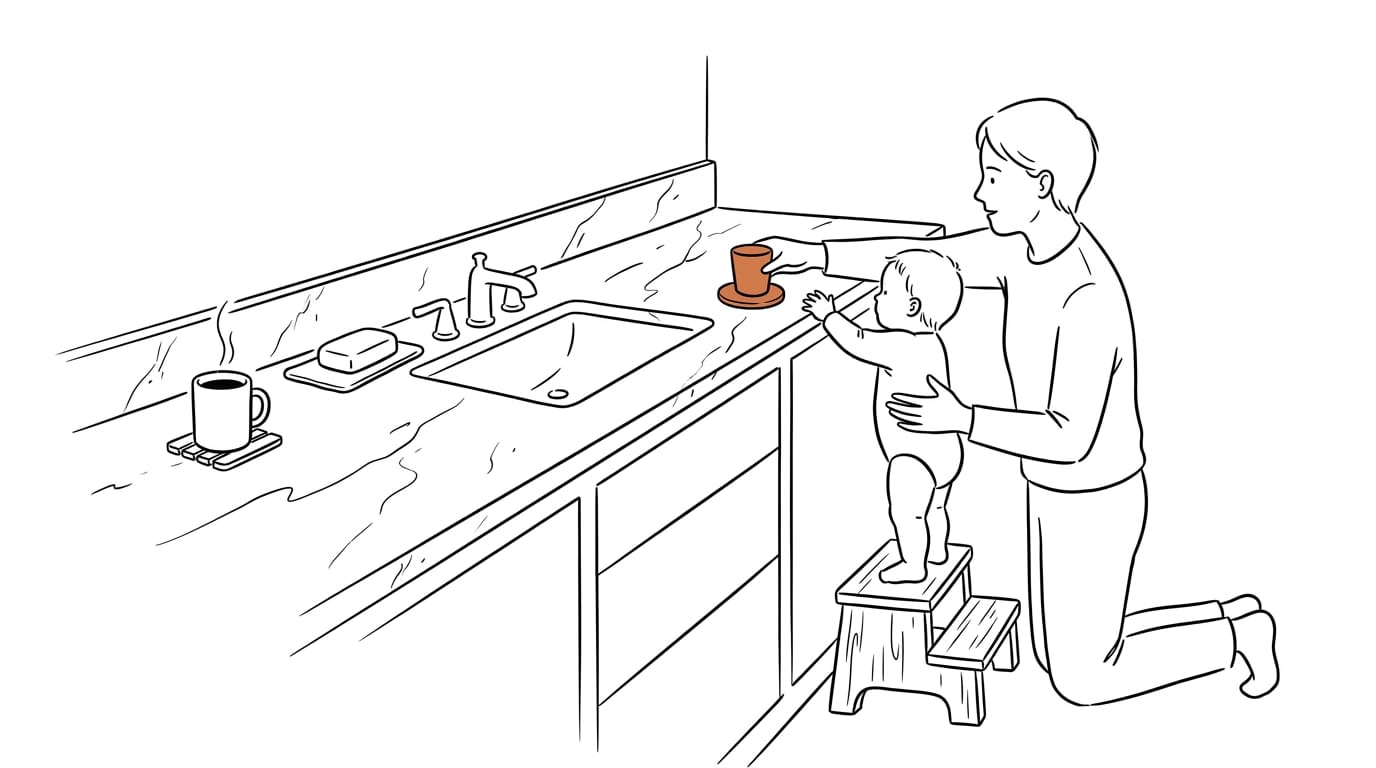
Think of a parent who slides a juice cup onto a coaster before the toddler grabs it. That one move keeps rings off the vanity. It takes seconds.
- Use coasters and placemats. Set drinks and dishes on them so liquids never sit directly on the stone.
- Keep hot objects off the stone. Put pans, mugs, and anything fresh from the oven on a trivet, not the bare marble.
- Skip metal containers. Metal can rust and leave orange marks, so keep tins and cans off the surface.
- Add rugs and furniture pads. Place them under rugs and furniture legs so nothing drags or rubs across the marble.
- Felt under bathroom trays. Slide felt pads under soap dishes and trays so the stone underneath stays clear.
Seal marble to resist moisture
Four things matter here:
- Protection from water. A sealer helps marble resist moisture, so spills have less chance to soak in.
- Reseal on your own schedule. Reapplication intervals vary, so check the sealer’s directions rather than following a fixed calendar.
- Go food-safe. Choose a nontoxic, food-safe sealer, especially on kitchen counters where food is prepared.
- Check what’s already there. Sprinkle a few drops of water on the stone. If it soaks in and darkens the marble, the old sealer may have worn thin, so it’s time to reseal.
Restore Shine and Fix Surface Damage
Marble can look tired even when it’s clean. Here’s how to bring back its glow and deal with the scratches and dull patches that show up over time.
Polish marble every few months for shine
Set a reminder to polish every few months, and the stone stays glossy instead of dull. A polish keeps marble looking shiny rather than merely clean. Wipe the surface with a chamois while it’s damp, then apply a commercial marble polish and buff it up.
Think of a homeowner whose entryway marble has gone chalky under the doormat. A quick pass with a damp chamois and a dab of polish brings the gloss back without a call to a specialist.
If you’d rather skip the shop, the baking soda and chalk method is a homemade option for dull spots. Shine is a habit, not a one-off.
Smooth out scratches and watch for wax
For light scuffs, try fine sandpaper or fine steel wool, used gently. Deep scratches are a different story, so call a professional rather than sanding harder.
Be careful with wax too: it may discolor white marble, so think twice before using it on a light surface.
Caring for showers, tubs and fireplaces
Showers, tubs, and fireplaces follow the same mild-first guidelines as your vanity. Start with the gentlest option and only move up if you need to.
For example, a parent wiping down the family tub each weekend can use the same light touch as on the sink, keeping the stone shiny without a heavy scrub. Fireplace surrounds deserve the same gentle care.
Marble looks its best when you match the method to the mark, start gentle, and act fast when a spill lands. Routine care keeps everyday grime from building up, and a little protection goes a long way toward stopping stains before they start.
You don’t need a cupboard full of products to get there, just the right approach for each job.
So the next time a mark appears on your vanity or shower wall, you’ll know exactly what to reach for. Your marble can stay bright and polished, one careful clean at a time.
Questions
How to get rust out of marble?
Use a commercial rust remover specifically labeled safe for natural stone, and follow its directions closely. Test it on a hidden spot first; avoid scrubbing harder, which can scratch or dull marble. If the rust remains, contact a professional stone cleaner.
Can I use a magic eraser on marble?
No. A magic eraser is abrasive, much like fine sandpaper, and can wear away marble’s polish. Use a soft cloth and plain water or a pH-neutral stone-safe cleaner instead.
What do professionals use to clean marble?
Professionals typically use pH-neutral, non-abrasive cleaners made for natural stone and soft cloths or pads. For stubborn stains such as rust, they may use a stone-safe commercial remover; a professional stone cleaner can assess marks that do not lift with gentle treatment.
What should you not clean marble with?
Avoid acidic products such as vinegar and lemon, abrasive powders, stiff brushes, and abrasive sponges. Clorox wipes can leave residue that dulls the finish, while oily soaps can leave a film; use a soft cloth with water or a pH-neutral marble cleaner.
Can marble be permanently stained?
Yes. Marble can be permanently stained if a spill soaks in and is left to set, so blot spills promptly rather than wiping them across the surface. Acidic liquids can also etch the surface, leaving dull damage rather than a stain.
Can you clean marble tiles with vinegar?
No. Vinegar is acidic and can etch marble, even when diluted, so use warm water with a little dish soap or a pH-neutral cleaner instead.
Is it okay to use Clorox wipes on marble?
It is best to avoid Clorox wipes on marble because residue left behind can dull the finish. Use a soft, damp cloth and a marble-safe cleaner instead.
Can I use Murphy's oil soap on marble?
No. Murphy’s oil soap can leave an oily film that dulls marble. Choose warm water with a little dish soap or a pH-neutral marble cleaner instead.
More in Bathroom
- How to remove limescale from taps, showers and toiletsHow to dissolve limescale on taps, showerheads, screens and toilets with the acid each can take, what acids damage, and why descaler never meets bleach.
- How to Remove Paint from Tile: A Complete GuideHow to remove paint from tile depends on whether it’s wet, dry, water-based, or oil-based. Use cupboard staples to lift paint from tile and grout safely.
- Cleaning Tile After Grouting: A Complete GuideCleaning tile after grouting takes the right timing. Learn when to wipe, remove grout haze, and choose tile-safe cleaners for a smooth finish.
Stain Finder: a free stain removal guide
Find your stain