Mild Dish Soap for Cleaning Jewelry: A Complete Guide
Mild dish soap for cleaning jewelry removes lotion and grime without harsh ingredients. See the safe steps for gold, silver, and gemstones.

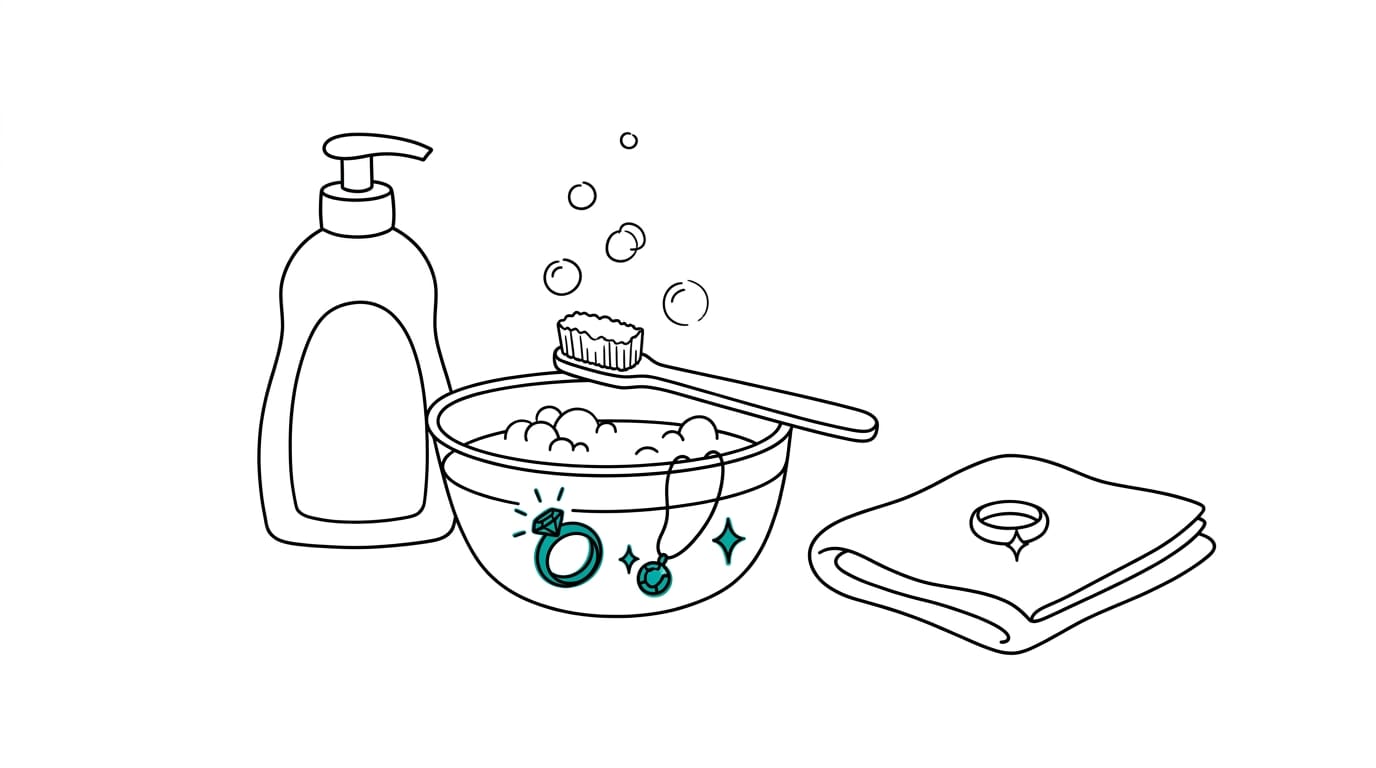
Mild dish soap is a gentle way to remove everyday oils, lotion, and grime that leave jewelry looking dull. Mix a few drops with warm water, clean suitable pieces with a soft toothbrush, then rinse and dry thoroughly; check stones and settings first, and wipe pearls, opals, plated, or glued pieces instead of soaking them. This simple routine can restore shine without harsh cleaners, while careful handling helps prevent scratches, loosened stones, or lost jewelry.
Picture your favorite ring after a week of hand cream and kitchen duty. The shine has faded, and a faint film sits in the setting. A gentle dish soap, used the right way, is often all it takes to bring back the sparkle.
Here’s the short answer: mild dish soap lifts oils, lotion, and grime without the harsher ingredients that can dull metal.
This guide covers what mild means on a label, a step-by-step method, which metals and stones it suits, and how to choose a dish soap you already own or can refill.
Why Mild Dish Soap Cleans Jewelry Best
Mild dish soap lifts the everyday grime that dulls your jewelry, and the water you use matters just as much. Here’s why it works and what we’d look for on the label.
Dawn is a safe, gentle pick
Dawn is a go-to soap for jewelry. It’s gentle yet effective on grime, and it lifts oil without harming metal.
It’s also safe for diamond rings: as Galgano puts it in Forbes Vetted, the safest approach is “a simple solution of warm water and a gentle, ammonia-free dish soap.”
If you have sensitive skin, look for fragrance-free or dye-free options. A refill or concentrate of washing-up liquid works too, so the bottle under your sink may be all you need.
On a label, “mild” signals a gentler formula, and “gentle” and “ammonia-free” back that up.
How everyday buildup dulls jewelry
Three everyday sources leave a film on your rings and chains:
- Lotion
- Soap
- Skin oil
Think of a parent who slips a wedding band on each morning, then reaches for hand cream after the school run. Over time, the diamond looks flat. It’s less about the stone itself and more about the film blocking its light.
Regular cleaning brings the sparkle back. A quick wash in mild soap and warm water does the job.
Keep the water warm, not hot
Aim for warm water, not hot, since heat can loosen stones. Avoid drastic temperature changes too, so don’t move a cold ring straight into hot water. Keep the temperature steady.
Clean Jewelry at Home Step by Step
Cleaning jewelry at home is simpler than it looks when you work in order. Here’s the whole method, from a quick check to a final polish.
What you’ll need on hand
Most of this is probably already in your home:
- A soft toothbrush
- A small bowl of warm water
- Dish soap, a mild, everyday washing-up liquid already in your cupboard
- A soft or lint-free cloth
- Optional: a loupe (a small magnifying lens) and a metal-specific polishing cloth
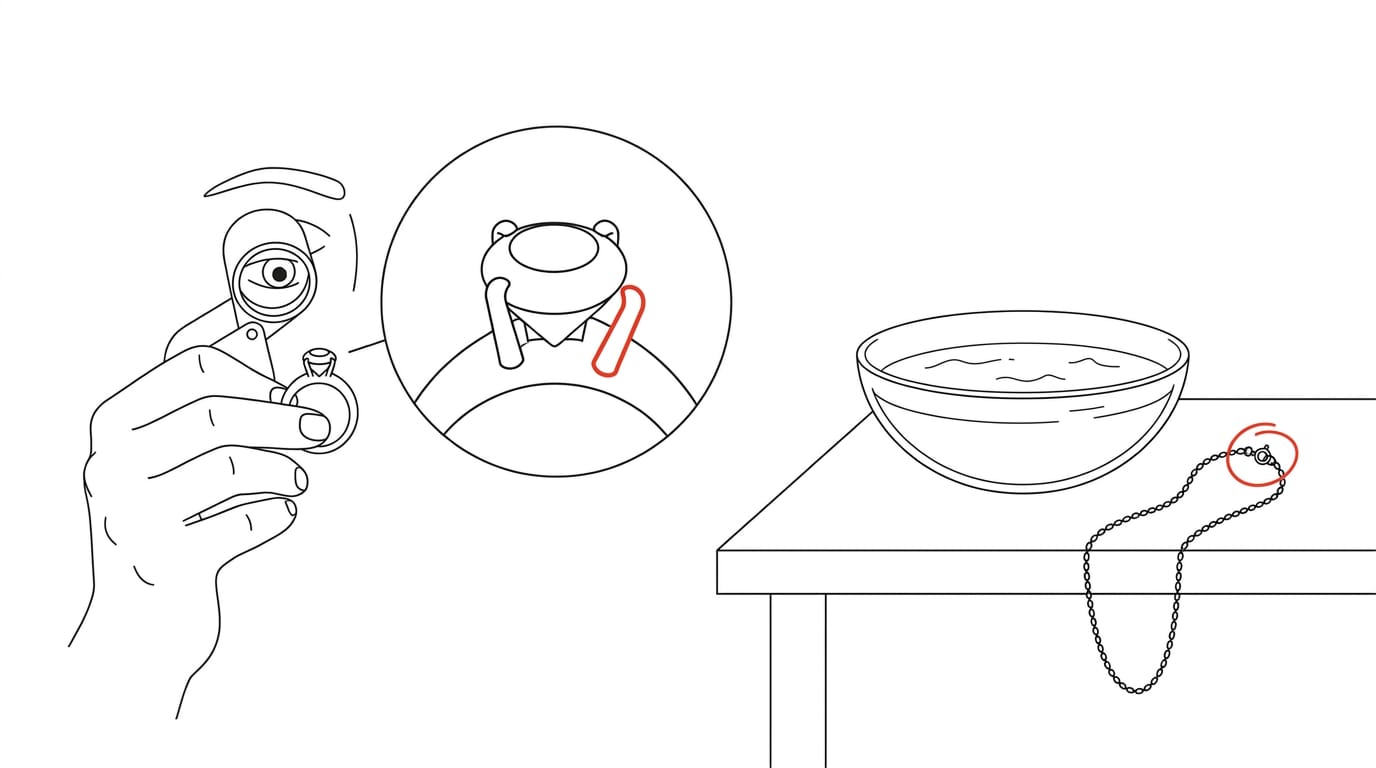
Check each piece before you start
Give each piece a close look before it touches the water. Feel for loose stones, and make sure the prongs (the small metal claws that hold a stone in place) are still firm. Then look for a broken clasp, since it’s easy to miss until the piece slips off.
A loupe or magnifier shows these details far more clearly than the naked eye.
Soak one piece at a time
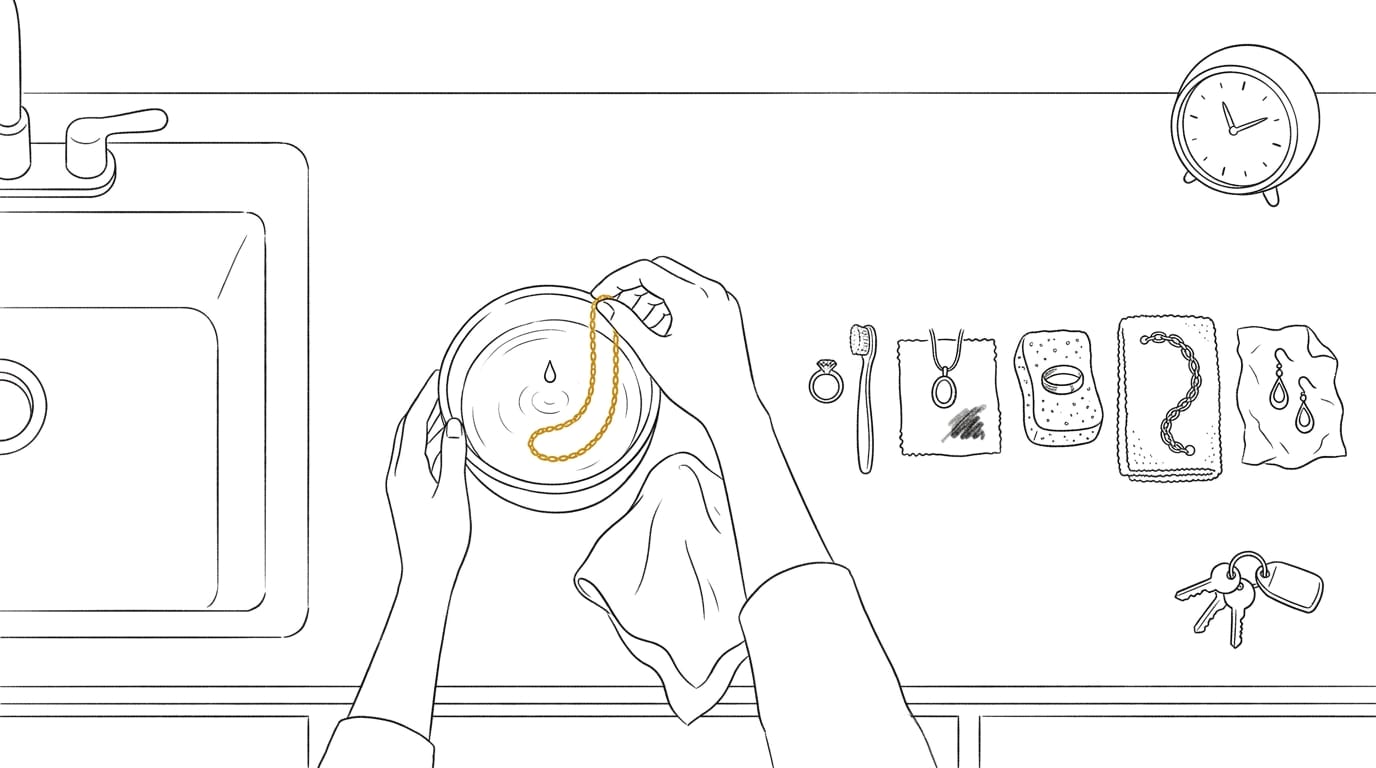
Add a few drops of dish soap to your bowl of warm water and swirl it into a light, sudsy mix. Lower in just one piece. Don’t crowd several in together, or they’ll knock against each other and you won’t know which is which.
Soak times vary by article, so there’s no single timer for everything. A lightly dusty chain needs far less time than a ring with grime packed around the setting.
Give dirtier pieces a longer soak, because the goal is to loosen grime, not scrub it off. Let the soak do the work.
Brush gently into crevices and settings
Lift the piece out and brush it with a soft or baby-size toothbrush. Use a brand-new one, kept just for jewelry, so nothing old transfers onto your good pieces. Focus on the crevices and the spots behind the stones, where grime tends to collect.
Use light strokes, not hard ones, to protect the prongs. A stiff push can bend a setting that’s already loose, so let the brush do the lifting. Gentle always wins.
Rinse over a strainer in lukewarm water
Rinse each piece in fresh, lukewarm water, never in the soapy water it just soaked in. Before you start, plug the sink or lay a strainer over the drain.
Think of a parent rinsing a child’s birthday ring at the kitchen sink: with the drain covered, a slippery moment means a quick fish-out from the strainer, not a lost ring. If you’re rinsing under the faucet, keep the flow gentle and your grip firm.
Dry and polish with a lint-free cloth
Pat each piece dry with a soft, lint-free cloth. Ordinary towels can shed fibers, and those threads can snag on the prongs. For a final shine, buff with a metal-specific polishing cloth.
Match the cloth to the metal so you’re using the right tool for the job.
Now it’s ready to wear.
How to Clean Gold, Silver, and Gemstones?
Match the method to the metal and stone you’re holding.
Each metal needs its own care
White gold is finished with rhodium plating, a thin bright coating that wears over time. To clean a white gold ring:
- Dip it in warm water with one drop of mild dish soap and brush the setting with a soft toothbrush.
- Rinse over a plugged sink, then pat dry with a lint-free cloth.
At home, gold and silver follow the same gentle routine: warm water, one drop of mild dish soap, and a soft cloth. Adjust by metal:
- Yellow gold is soft, so skip scouring pads and use a soft cloth.
- Platinum develops a patina, a soft surface change, so gentle washing is best.
- Rose gold gets its pink tone from copper in the alloy, so dry it thoroughly.
- Silver develops tarnish, a dark film from air exposure. Warm soapy water and a soft cloth lift light tarnish.
- Plated, costume, and glued pieces need a quick wipe, since plating wears and glue can loosen in water.
Take a parent freshening up a yellow gold chain before a school concert. A quick dip and a soft cloth have it ready before the car leaves the drive.
Delicate and porous gems need gentle care
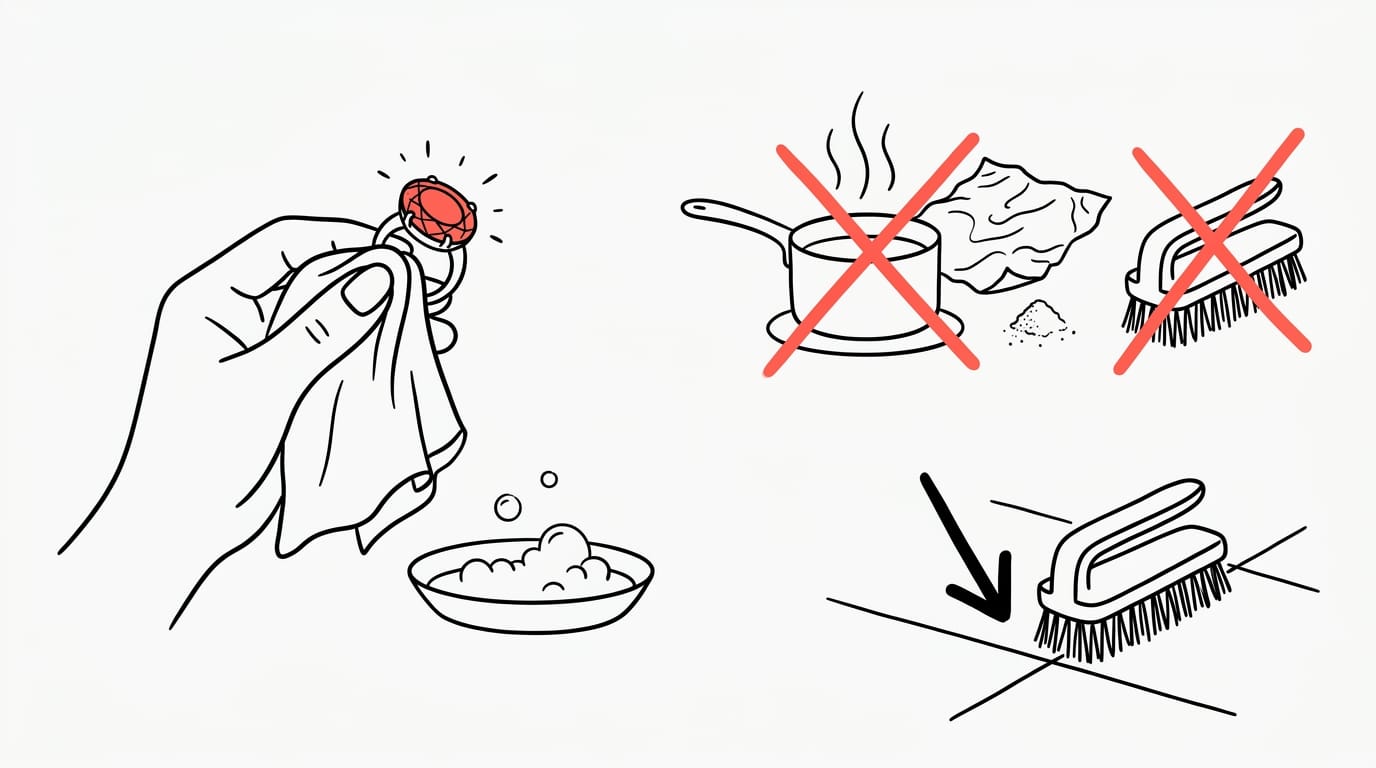
Porous stones such as pearls and opals need special care, so wipe them with a damp cloth, never dunk them. Emeralds are sensitive, so keep them away from hot water and harsh cleaners.
Long soaks can seep into cracks and loosen settings. Skip the soak.
If you’re unsure what a stone is, ask a jeweler and check a gem care guide before you start.
Which stones handle home cleaning well
Diamonds, rubies, and sapphires are fine for a gentle home wash. Other gems need specific care.
Cleaners and Tools to Skip at Home
Before you grab something from the cleaning cupboard, it’s worth knowing which everyday items can scratch, dull, or strip your jewelry. Here’s what to leave on the shelf, and why.
Rough ingredients that scratch jewelry
Many kitchen staples are abrasive, meaning they contain tiny particles that wear away at a surface. Baking soda is gritty enough to scuff soft metals and polished stones. Toothpaste is abrasive too, since it’s designed to scrub teeth, not precious metal.
Powdered cleaners and rough sponges are harsher still, and their grit can leave fine scratches that dull a shine you’ve worked to keep. Reach for a soft cloth, not a scrub pad.
Why vinegar and lemon juice are risky
Vinegar and lemon juice are acidic, and that’s the trap: a natural, kitchen-cupboard ingredient still acts on your jewelry. Think of a host who wipes a gold-plated necklace with lemon juice after a dinner party.
Over time, that thin gold can look worn and patchy, since acid can damage plated jewelry, which is a base metal with a thin coating of gold or silver.
Witch hazel is another common splash-and-wipe choice that can harm soft stones, so keep it away from those pieces.
Strong chemicals like bleach and ammonia
Bleach, chlorine, and ammonia are far too aggressive for jewelry, and they can discolor metal and damage stones. Acetone and nail polish remover can dissolve finishes and soften the glue holding stones in place, so keep them away from your rings.
Degreasers and harsh detergents are built to strip grease off a hob, not to care for a gold band.
Tools that scratch or leave residue
- Old toothbrush residue: An old toothbrush can hold grime and leftover toothpaste, which then gets pushed into the gaps of a setting.
- Paper towels scratch: They’re rough enough to mark soft metal and can leave fibers caught in small crevices.
- Ultrasonic cleaners: These machines use vibration to lift dirt, but that same vibration can loosen glued stones and worn settings, so skip them for delicate or antique pieces.
Popular homemade recipes worth skipping
Do-it-yourself (DIY) jewelry-cleaning recipes may call for:
- vinegar
- tea tree oil
- baking soda
A study on home cleaning products tested homemade mixes built on:
- distilled white vinegar
- club soda
- tea tree oil
Those tests were about surfaces in the home, not gemstones, so the study doesn’t tell you whether a mix is safe for your rings.
- Foil, salt, and baking soda: This method is built for heavy tarnish, and it’s too harsh for everyday pieces, gemstones, or plating.
- Hot water and baking soda: Heat and grit work against delicate settings, so skip this combo even when a piece looks grubby.
Stick to gentle, and save the scrubbing for the grout.
Schedules for Home and Pro Cleaning
A simple schedule keeps everyday grime from building up between deeper cleans. Here’s how to space out home care and pro visits:
Weekly rinses and a monthly soak
Consider a home cook who wears a silver bangle while washing up each evening. A weekly light rinse with a drop of mild dish soap and a soft cloth lifts everyday film before it builds up.
The monthly full soak is a longer reset. The weekly rinse is about upkeep rather than restoration, so save the soak for once a month.
Regular maintenance prevents damage, and a few minutes a week beats one big clean-up later.
Have a jeweler clean and check it
Professional care covers what a sink can’t. Here’s what to plan for:
- Regular jeweler visits. According to Forbes Vetted, jewelry owners should have their pieces professionally cleaned and checked every six months.
- Ultrasonic and steam cleaning. Ask whether your jeweler offers these methods when you book.
- Prong and stone checks. Ask them to check the prongs and stones holding each gem.
- Annual checkups for repairs. Use the yearly visit to catch small problems and book repairs early.
- Insurance and warranty requirements. Check whether your insurer or warranty asks for professional service records, and keep your receipts.
Check for chips, then get repairs
Inspect for chips and cracks each time you dry a piece. Check stone edges, prongs, and the band for nicks or hairline cracks. Catch damage before you wear a piece again, not after a stone has gone missing.
Bring damaged pieces to your jeweler rather than trying a home fix. Don’t wait.
Daily Habits That Keep Jewelry Safe
A few small routines do more to protect your jewelry than any deep clean.
Simple habits when wearing jewelry
- Put jewelry on last. Apply lotion, perfume, and hairspray first, then add your rings and necklaces, so the film from those products stays off the metal and stones.
- Remove it for rough activities. Gardening, lifting, and DIY can loosen stones or scratch metal.
- Avoid chlorine and swimming. Pool water is hard on many metals and can dull some stones.
- Hold rings by the band. Pulling on the stone can strain the setting, so slide rings on and off by the band.
Consider a parent who gardens every weekend. Dropping rings and bracelets into a dish by the back door before kneeling in the flower beds means no lost stones and no searching the soil later.
Keep pieces dry, separate, and boxed
Damp air speeds up tarnish, the dull film that builds on silver and other metals, so keep jewelry away from humidity.
- Keep away from humidity. Skip the shower shelf and the windowsill by the sink, and choose a dry drawer instead.
- Store pieces separately. Give each one its own spot so chains don’t tangle and harder stones don’t scratch softer ones.
- Use a lined box or soft pouch. Padding cushions each piece and keeps it from knocking against the rest.
- Prevent tarnish. Wipe metal pieces with a soft, dry cloth after you take them off, before you box them.
Think of a renter who keeps a necklace tangled in the bathroom cabinet. Moving it to a bedroom drawer, in its own pouch, means it slides out in one piece on the morning they need it. Small habits, lasting shine.
Jewelry doesn’t need a shelf full of specialist products to stay bright. A little mild dish soap, some water, and a soft brush can handle most everyday grime. Check the metal and stone first, then rinse and dry thoroughly so the shine lasts.
Treat your pieces gently, check what they’re made of, and a few minutes with mild soap will do more than you’d expect. Keep it gentle, keep it simple, and let your jewelry do the shining.
References
- The effectiveness of three home products in cleaning and disinfection of Staphylococcus aureus and Escherichia coli on home environmental surfaces — pubmed.ncbi.nlm.nih.gov (2015)
- How To Clean A Diamond Ring 2025 — forbes.com (2025)
- How To Care For Your Engagement Ring 2026 — forbes.com (2026)
Questions
How to clean a white gold ring?
Mix one drop of mild dish soap into warm water, then gently brush the ring with a clean, soft toothbrush, especially around the setting. Rinse it in lukewarm water over a plugged sink or strainer, and pat it dry with a lint-free cloth. Avoid hot water and harsh cleaners, and have loose stones or prongs checked by a jeweler.
How to clean gold and silver jewlery at home?
For solid gold and silver jewelry, use warm water with a drop of mild dish soap and clean gently with a soft cloth or soft toothbrush. Rinse each piece in fresh lukewarm water over a covered drain, then dry with a lint-free cloth. Wipe plated, costume, or glued jewelry quickly rather than soaking it, and avoid soaking pearls and opals.
How can I make my own jewelry cleaner?
You can make a simple jewelry-cleaning solution by adding a few drops of mild, ammonia-free dish soap to a bowl of warm water. Use it to clean suitable pieces gently with a soft toothbrush or cloth, then rinse and dry thoroughly. Avoid homemade mixes with vinegar, lemon juice, baking soda, or other abrasive or harsh ingredients.
Can I clean my rings with Dawn soap?
Yes. Dawn is a mild dish soap that can lift oil and everyday grime from suitable jewelry, including gold and diamond rings. Use a small amount in warm, not hot, water, brush gently, rinse over a plugged sink or strainer, and dry with a lint-free cloth. Skip soaking porous stones such as pearls and opals, and wipe plated or glued pieces briefly instead.
Sources
- How To Clean A Diamond Ring 2025 - Forbes Vetted, forbes.com,
- The effectiveness of three home products in cleaning and disinfection of Staphylococcus aureus and Escherichia coli on home environmental surfaces, pubmed.ncbi.nlm.nih.gov,
- How To Care For Your Engagement Ring 2026 - Forbes Vetted, forbes.com,
More in Cleaning Products
- Baking Soda Smell Removal: How It Works and Where It StopsBaking soda smell removal can freshen bins and gym bags, but it won’t fix the source. Find where odors start and choose cupboard-first fixes that work.
- Hydrogen Peroxide and Baking Soda: A Complete GuideHydrogen peroxide and baking soda can tackle coffee on sofa cushions. Get the simple mix, safe application steps, and when a store-bought remover is smarter.
- Washing Soda Explained: Uses, Making It and SafetyWashing soda tackles laundry stains, household grime and workshop rust; see how it differs from baking soda and how to make it yourself safely.
Stain Finder: a free stain removal guide
Find your stain