Washing Soda Explained: Uses, Making It and Safety
Washing soda tackles laundry stains, household grime and workshop rust; see how it differs from baking soda and how to make it yourself safely.

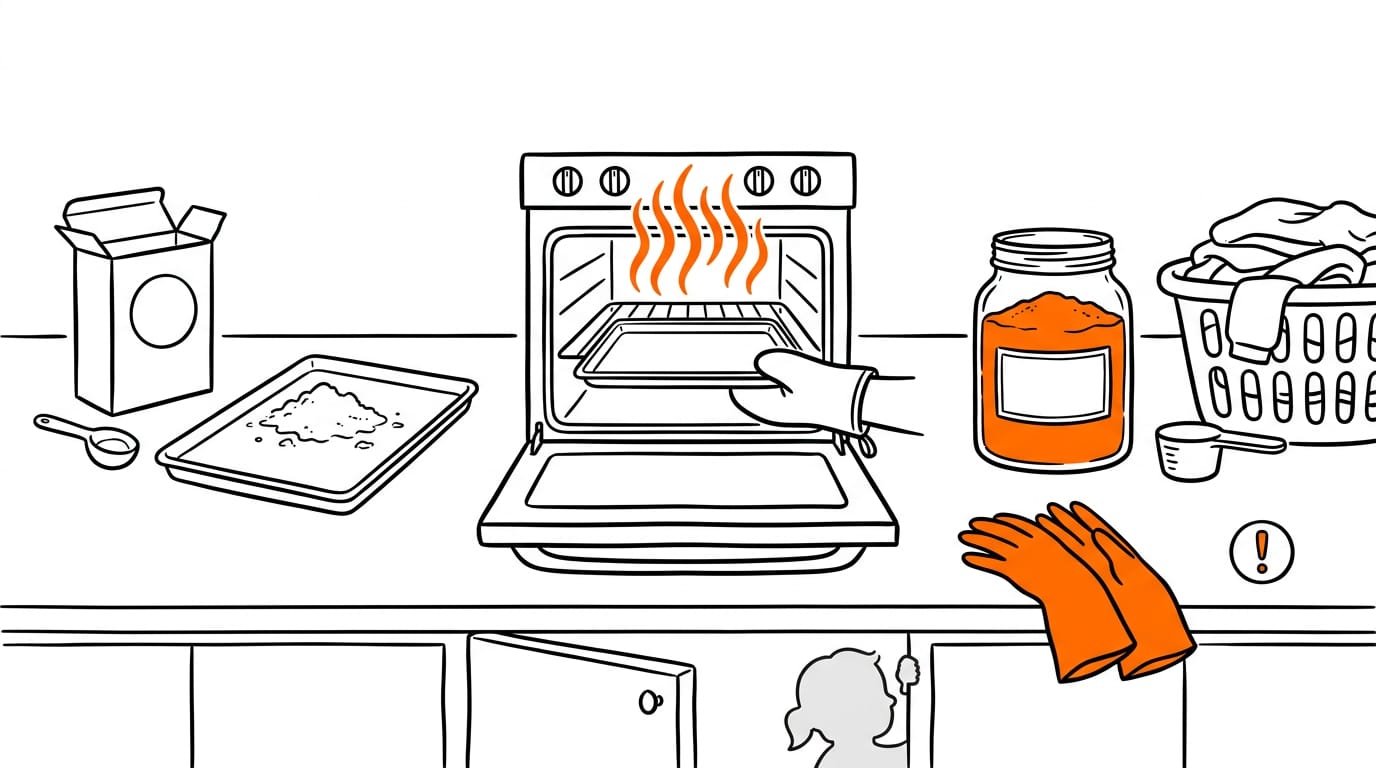
Washing soda is sodium carbonate, a strongly alkaline powder used for cleaning, laundry, and some workshop tasks; it is different from baking soda and borax. It softens hard water and helps detergent remove grime, while also cutting grease and loosening stains, but it can harm skin, eyes, and delicate fabrics, so handle it carefully and check surfaces first. It can be made by heating baking soda, and its many uses make it a practical household staple when used for the right job.
Picture the box of baking soda at the back of your cupboard, the one you bought for a cake and forgot about. Its heavier-duty cousin, washing soda, does a lot more around the house than most people realise.
In this guide, we’ll cover what washing soda actually is, how it differs from baking soda and borax, and how to make it yourself from baking soda.
We’ll also walk through laundry, stains, everyday cleaning, and workshop jobs, with a plain steer on what to buy and what to skip.
What Washing Soda Actually Is
Washing soda is a cheap, powerful powder that’s easy to mix up with its look-alikes. Here’s what it is, what it’s called, and how to handle it before you reach for the box.
What is washing soda called in the USA?
In the USA, the box says washing soda, but the chemical behind it is sodium carbonate, written Na2CO3. You’ll also see it called soda ash or natron.
It’s made from limestone and salt, and it’s not the same as baking soda, even though the two look alike on the shelf.
Many people also wonder if washing soda is just borax. It isn’t. The two are different substances, so check the label before you swap one for the other.
Why it’s strong enough to need care
Washing soda is strong, not gentle. It’s strongly alkaline, sitting at a high pH (the scale that measures how alkaline or acidic something is), while baking soda sits much lower.
Think of a parent who keeps the box on a high shelf and only brings it down once the grass-stained school trousers are already in the basket. That simple habit keeps the treatment on track and little hands away from the powder.
Keep these habits in mind:
- Skin and eyes: avoid contact with both.
- Breathing and swallowing: don’t breathe it in or swallow it.
- Delicate fabrics: keep it away from wool and other delicates.
That’s a lot of power in one scoop. Respect it.
Finding it, and making your own
Plastic-free washing soda is hard to find, since it’s sold in plastic bags. If that bothers you, making your own is a cheap, effective option.
For a plain what-to-buy steer, grab a simple bag of washing soda from wherever you normally shop, and skip any pricey packaged product that promises extra power.
Turning Baking Soda into Washing Soda
Making your own is a simple job if you already have baking soda in the cupboard. Here’s how the oven does the work.
How heat changes baking soda
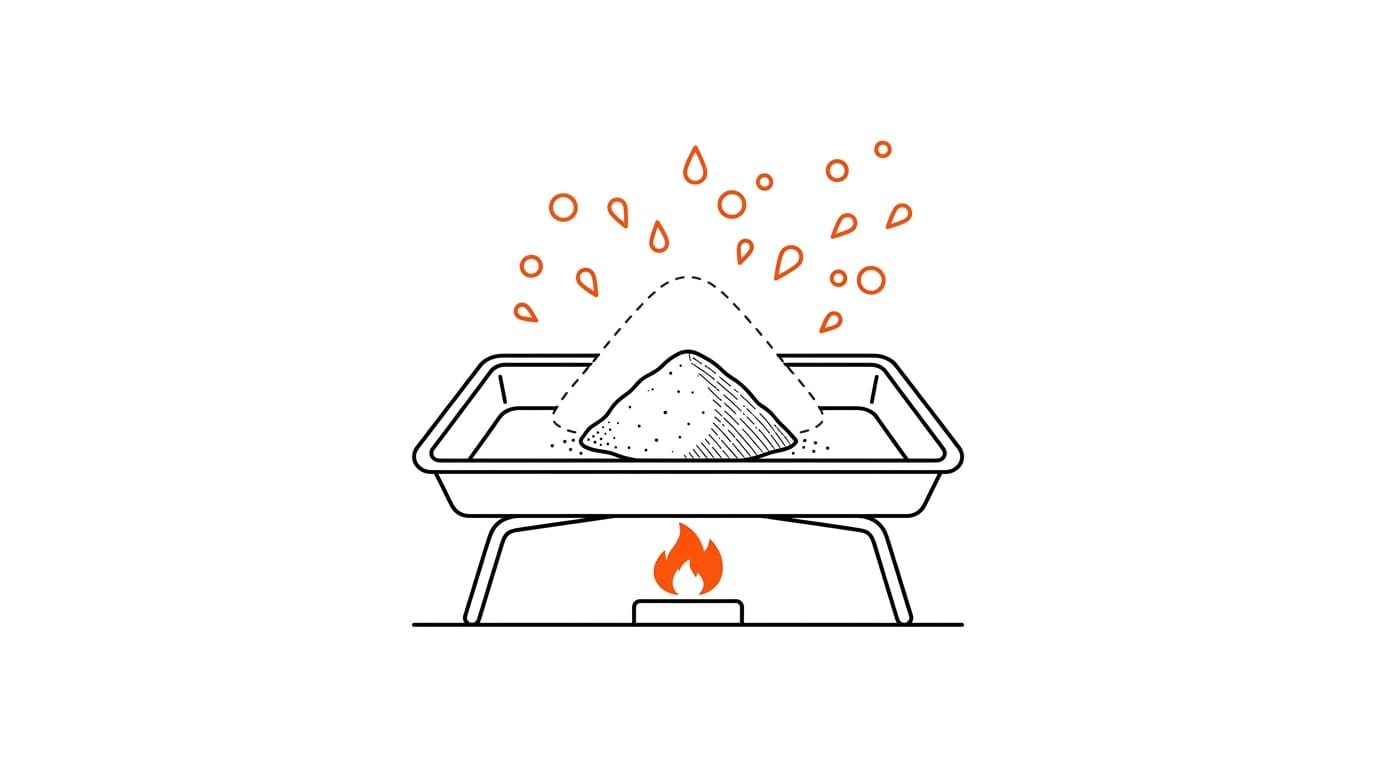
Baking soda is sodium bicarbonate. When you heat it, it drives off water and carbon dioxide (CO2), and what remains is sodium carbonate, the same formula as store-bought washing soda. Nothing is added; the heat simply takes things away.
Oven steps from start to finish
Getting it right comes down to five steps:
- Spread it out on a large tray.
- Bake at about 200-210°C.
- Leave it in for 30 minutes to 1 hour.
- Stir if the layer is thick.
- Cool before storing.
Knowing when it’s ready and storing it
Once it’s cool, the powder looks duller and powdery rather than glittery. Baking soda clumps, but washing soda doesn’t, so that’s a handy check.
Keep it in an airtight container somewhere cool, so it stays ready for your next wash. Think of a parent who bakes flapjacks on a Sunday and slides a tray of baking soda in beside them.
By the time the flapjacks are out, the washing soda is ready for the week’s wash. Baking it alongside other oven use means it’s almost no extra effort.
Using It on Laundry and Stubborn Stains
Washing soda earns its place in three ways: softening water, backing up your detergent, and tackling stubborn stains. Here’s how we’ll put each to work.
How it softens water and boosts detergent
Hard water, packed with minerals like calcium and magnesium, is often why detergent underperforms. Washing soda softens it, so your detergent spends its effort on the mud, not the minerals.
Consider a parent running three school loads a week: a measured dose in each wash helps the grime lift first time. It works with your detergent, not instead of it.
Many laundry powders already include it, so check the label first. If yours doesn’t, add it to each load, scaled to your water’s hardness.
For cotton, scouring with detergent and washing soda gives a deeper clean.
Baking soda is the milder of the two. You can add it alongside detergent for freshness, but only washing soda softens water.
Soaking tough stains before washing
For stains that won’t lift in the wash, a pre-soak gives washing soda time to work. Think of a mechanic whose work shirt comes home with oil on the cuff: a soak loosens the grease before the detergent finishes the job.
Washing soda can damage silk, wool, and other soft fabrics, so skip the soak on anything delicate. Here’s a quick guide:
- Grease: soak in washing soda solution until it loosens, then wash as normal.
- Blood: soak in cool water, never hot, since heat sets it, then wash.
- Delicate fabrics: skip the soak altogether.
Pairing it with peroxide as oxygen bleach
Mix washing soda with hydrogen peroxide in equal parts (1:1) to create an oxygen bleach. The two react to form sodium percarbonate, which releases oxygen.
The mix has been tested on bathroom mold and may work as a laundry presoak, so test a hidden spot first. Dilute it on coloured fabric: the aim is to lift the stain, not bleach the colour out.
Removing propolis and wax from beekeeping gear
Beekeepers know propolis, the sticky resin bees use to seal gaps in the hive, plus the beeswax that clings to gloves and veils. Washing soda saponifies fats (it reacts with greasy residue to form a soap that rinses away).
It helps with cleaning bee clothing, and soaking hive boxes in a washing soda solution loosens the build-up for easier scrubbing.
Everyday Cleaning Jobs Around the House
Washing soda isn’t just for laundry day. Its real value shows up in the rooms you use every day, so here’s where it earns its place.
Cutting grease and burnt-on messes
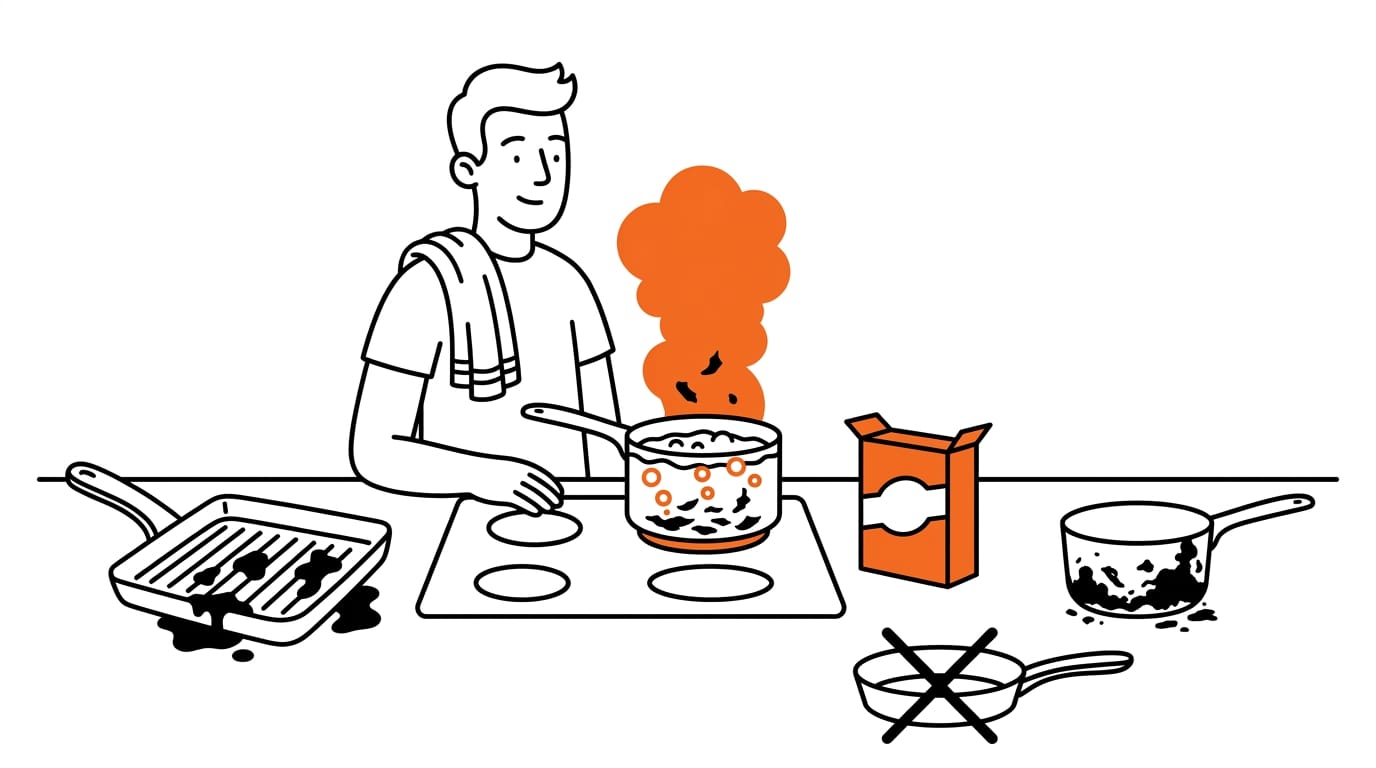
Picture a host clearing up after a barbecue, with a greasy grill pan on one side and a scorched saucepan on the other. Washing soda cuts through grease on grill pans and stovetops, and it works on ovens, hood extractors and hobs too.
For the saucepan, boil a solution in it to lift the burnt-on residue, so you’re lifting the mess rather than scrubbing it raw. Keep it off aluminium, which is one of the surfaces it should never touch.
Scrubbing bathrooms, kitchens and floors
Consider a renter with a limescale-crusted kettle and a tired bathroom, who can tackle both with one box from the cupboard.
Limescale is the chalky build-up left by hard water, and washing soda handles it on toilets and kettles. It also does the following:
- Cutting soap scum in bathrooms
- Cleaning grout between tiles
- Removing coffee ring stains
- Cleaning garage floors
- Working as a dishwasher powder
It’s a cupboard staple, not a specialist spray. One box, many jobs.
Freshening carpets, drains and washing machines
For carpets, sprinkle washing soda on the stain, then vacuum up after. Imagine a parent whose toddler’s juice has soaked into the living room rug: a sprinkle, a quick vacuum, and the mess is gone before bedtime.
Washing soda also unblocks sinks, and it cleans washing machines, so the appliance that does your laundry gets a turn too.
Cooking with It and Staying Safe
Washing soda has a real, if surprising, role in the kitchen. Here’s where it fits, and the rules to follow before it touches your food.
Chewy noodles and why rinsing matters
In some Asian noodles, washing soda gives the dough a chewy, smooth texture. Noodles made with baking soda also need rinsing, and skipping that step can leave them tasting soapy.
Picture a parent serving noodles for dinner: a quick rinse before the bowls go out means no soapy aftertaste and no kids pushing their plates away.
Choosing food-grade and keeping amounts small
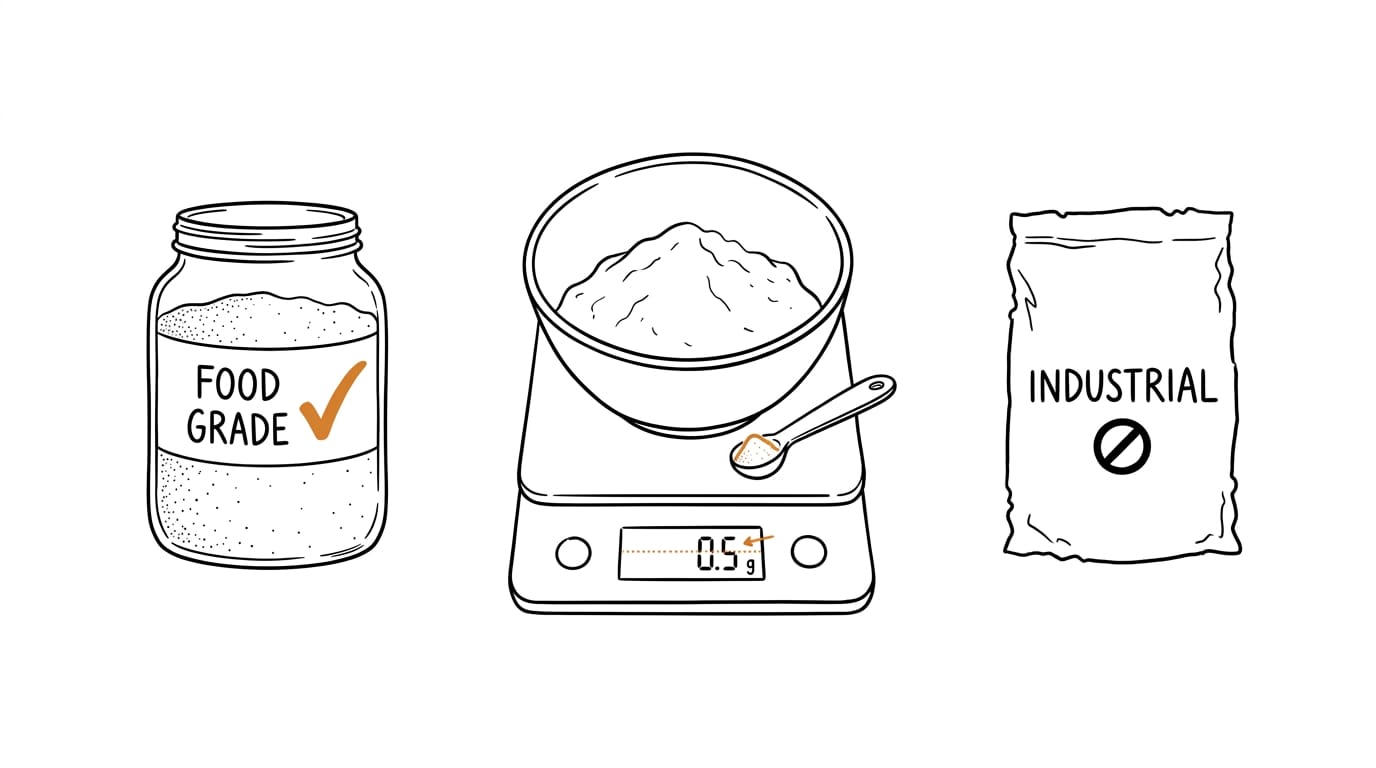
Your first decision is which washing soda you buy, and only then how much goes in. An investigation into harmful trace elements in some food additives found cadmium and lead in sodium carbonate, so non-food-grade products may contain impurities.
Always choose food-grade sodium carbonate for anything you eat.
Then keep these three points in mind:
- Keep it under 0.6% of flour weight. Treat that as a ceiling, not a target.
- Compare the strength. Washing soda sits between baking soda and lye (sodium hydroxide), so it’s stronger than the first and gentler than the second.
- No carbon dioxide release. Unlike baking soda, it doesn’t give off carbon dioxide gas as it cooks, so don’t expect it to lift a cake.
Food-grade, and kept small. That’s the rule.
Removing Rust and Other Workshop Jobs
Washing soda earns its keep in the garage too. Here’s how it tackles rust, plus a few side projects to approach with care.
Lifting rust off metal parts
Rusty bolts, brackets, and old tools can often be rescued without harsh acids. In electrolysis, washing soda acts as the electrolyte (the conductive liquid that carries the current).
Hang the rusty part in the solution, clip it to the negative terminal of a battery charger, and attach a scrap steel piece to the positive terminal. Think of a weekend tinkerer with a seized socket set sitting in a damp shed.
Let the charger do the work, and the rust loosens with little damage to the part itself.
If you’d rather skip the charger, try a chelating remover (a product that binds to rust so it can be wiped away). Mixing washing soda, citric acid, and water gives you one that’s non-toxic and gentle on parts.
Either way, you’re aiming to loosen rust rather than grind it off.
Metalworking and chemistry side projects
Some hobbyists push washing soda further, and that’s where you need to slow down.
A saturated solution (water holding as much dissolved washing soda as it can) can serve as a coolant for light metalworking. Mixing washing soda with quicklime (calcium oxide, a harsh white powder) produces lye, a strongly alkaline liquid.
That lye also goes into geopolymer cements, binders that set without ordinary cement.
Lye is caustic. Treat it with respect, and wear gloves and eye protection every time.
Other Handy Jobs It Can Do
Washing soda’s alkalinity makes it useful well beyond the laundry room. Four jobs come up often, from the dye pot to the pool.
Dyeing, pool care and animal mounts
Start with pH, a simple scale that shows how acidic or alkaline (basic) a liquid is. Washing soda is alkaline, so it pushes pH up, which makes it the wrong pick when you need to bring it down.
- Adjusting natural dyebath pH. The dyebath is the pot of dye liquid your fabric soaks in. Some plant dyes shift shade as the bath turns more alkaline, so a pinch of washing soda can change the colour you get. For example, a home dyer chasing a slightly different shade can test a small wet swatch first, so one heavy-handed scoop doesn’t spoil the whole batch.
- Adjusting pool water pH. Test first. Always. Then add washing soda a little at a time and test again, never pouring it in alongside other pool chemicals.
- Boiling deer and elk skulls. Washing soda helps lift grease and tissue from bone during a long simmer. Use a dedicated pot outdoors, because the smell is strong and that pot should never be used for food again.
- Whitening European mounts. Grease is one reason bone turns yellow and blotchy, so washing soda in the soak gives the whitening step a cleaner surface to work on.
Washing soda isn’t a miracle product, but it’s a practical one. Once you know where it shines and where a simpler option will do, your cleaning shelf gets smaller and your results get better.
Start with one job from this guide, whether that’s a stubborn mark or a load of grubby work trousers, and see how it goes. Keep the box within reach, and the next stain won’t catch you by surprise.
References
- Investigation on Harmful Trace Elements in Some Food Additives — koreascience.or.kr (1979)
Questions
What is washing soda called in the USA?
In the USA, washing soda is sold as washing soda and is also called sodium carbonate or soda ash. It is sometimes called natron.
What is the difference between baking soda and washing soda for laundry?
Baking soda is sodium bicarbonate and is milder; washing soda is sodium carbonate and is much more alkaline. Washing soda softens hard water and boosts detergent, while baking soda can help freshen laundry but does not soften water.
What is baking soda good for?
Baking soda is useful for baking and for mild household cleaning or freshening. In laundry, it can be added with detergent to help freshen clothes.
How do I make washing soda?
Spread baking soda on a tray and bake it at about 200–210°C for 30 minutes to 1 hour, stirring if the layer is thick. Let it cool; the finished washing soda looks dull and powdery rather than glittery and does not clump like baking soda. Store it in an airtight container.
How to use soda for laundry?
Add washing soda to laundry alongside detergent to soften hard water and help detergent work better. Check whether your detergent already contains it, adjust the amount to your water’s hardness, and keep it away from wool and delicate fabrics.
Is washing soda just borax?
No. Washing soda is sodium carbonate, while borax is a different substance, so check product labels rather than substituting one for the other.
Is baking soda and washing soda the same thing?
No. Baking soda is sodium bicarbonate, while washing soda is sodium carbonate; washing soda is more strongly alkaline and better suited to softening laundry water.
Can I use baking soda and detergent at the same time?
Yes. Baking soda can be added alongside laundry detergent to help freshen clothes. It is milder than washing soda and does not soften hard water.
Sources
- Investigation on Harmful Trace Elements in Some Food Additives, koreascience.or.kr,
More in Cleaning Products
- Baking Soda Smell Removal: How It Works and Where It StopsBaking soda smell removal can freshen bins and gym bags, but it won’t fix the source. Find where odors start and choose cupboard-first fixes that work.
- Hydrogen Peroxide and Baking Soda: A Complete GuideHydrogen peroxide and baking soda can tackle coffee on sofa cushions. Get the simple mix, safe application steps, and when a store-bought remover is smarter.
- Mild Dish Soap for Cleaning Jewelry: A Complete GuideMild dish soap for cleaning jewelry removes lotion and grime without harsh ingredients. See the safe steps for gold, silver, and gemstones.
Stain Finder: a free stain removal guide
Find your stain