- SoakCool
- Test
- Scrub
How to Get Sweat Stains Out of Hats, Step by Step
How to get sweat stains out of hats: match the cleaning method to your hat type and stain age, with quick checks to prevent damage before washing.

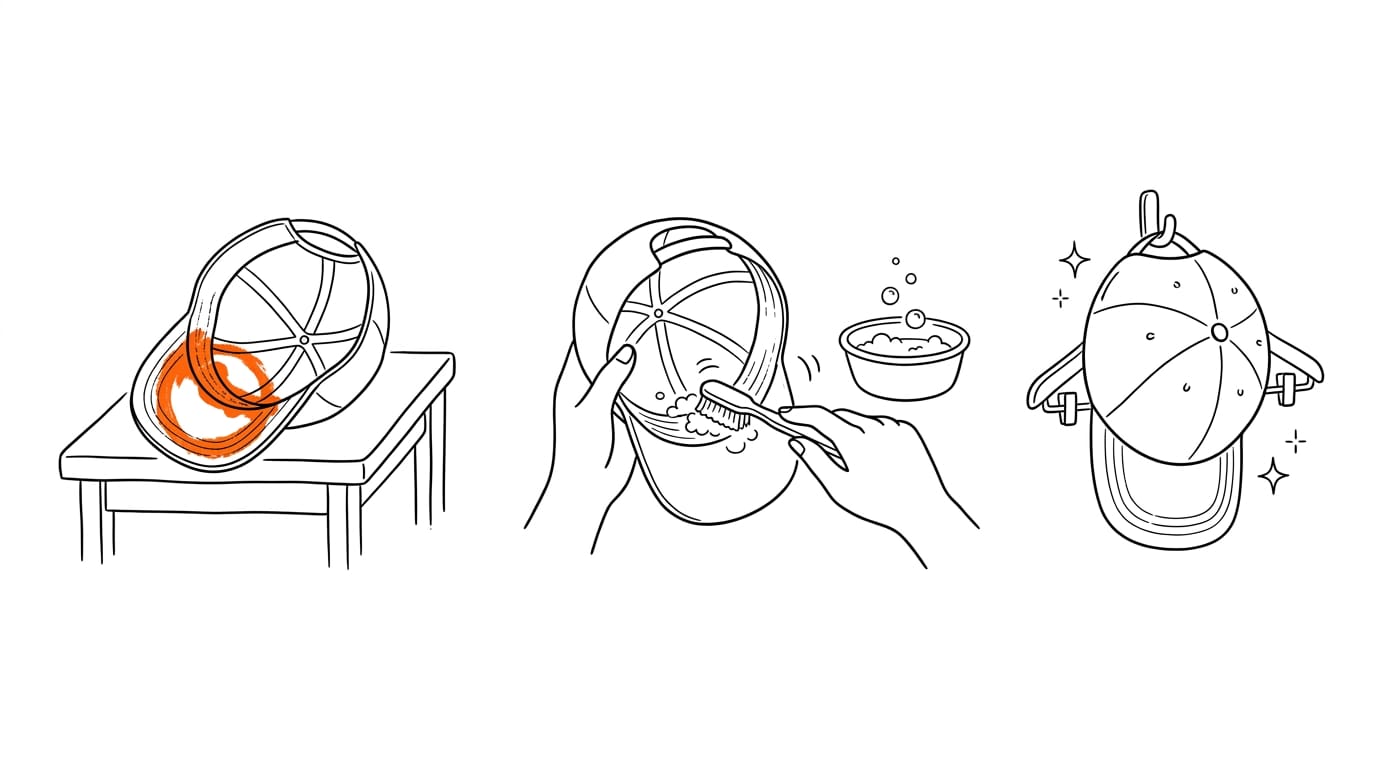
Sweat stains on hats are marks and buildup from perspiration that can often be removed with a method suited to the hat’s fabric, structure, and stain age. Test for colourfastness, use cool-water soaks for washable cotton or performance caps, spot-clean delicate materials, and try sprays, pastes, or longer soaks for fresh or set-in stains; air-dry fully and avoid heat. Gentle, targeted cleaning helps preserve a hat’s shape and colour, while valuable or delicate hats are safer with a professional cleaner.
You pull your cap off after a long, hot day and there it is: a dark, crusty ring across the band. It looks like a lost cause, but most sweat stains are more fixable than you’d think.
The key is matching the method to your hat type and how long the mark has been setting in.
This guide walks you through the right approach for each hat type and stain age, in order. You’ll also find quick checks to run before you start and the mistakes that tend to make stains worse. Let’s get your cap looking like new again.
How to Get Sweat Stains Out of Hats
The right method depends on what your cap is made of and how it’s built. Sort that out first, and you’ll find the cleaning much simpler.
Know your hat’s fabric and shape
Cotton and performance fabrics tolerate soaking, while wool, felt, and leather need a gentler hand. Structured brims dislike moisture, so keep them out of the soak. A fused sweatband can separate if it gets too wet.
Check the dye and care label
Look inside before you start. Dark dyes can fade in hot water, so keep the water cool. If the care label says otherwise, follow it. The care tag outranks blog advice, including this one.
Pick a cleaning method for your hat
Think of a roofer with a navy cotton cap he wears every shift. A quick soak in the utility sink after work lifts the sweat line, so the cap is ready for the next morning.
- Colourfast patch test first. Dab a hidden spot, such as the inside of the brim, with a damp cloth and check whether any colour comes off. Test first, every time.
- Soak cotton and performance caps. Submerge the cap in cool water, then rinse.
- Spot clean wool and felt. Dab gently, lifting the stain rather than rubbing it in, and don’t soak the whole hat.
- Barely damp cloth on leather. Wipe with a cloth that’s barely damp, never wet.
- Treat designer caps as delicate. Stick to spot treatment and go gently.
Home Remedies That Lift Sweat Stains
Most sweat stains respond to basics you probably already have, and the first question is stain age. Ask yourself how old the mark is, because that tells you where to start below.
Does baking soda remove sweat stains?
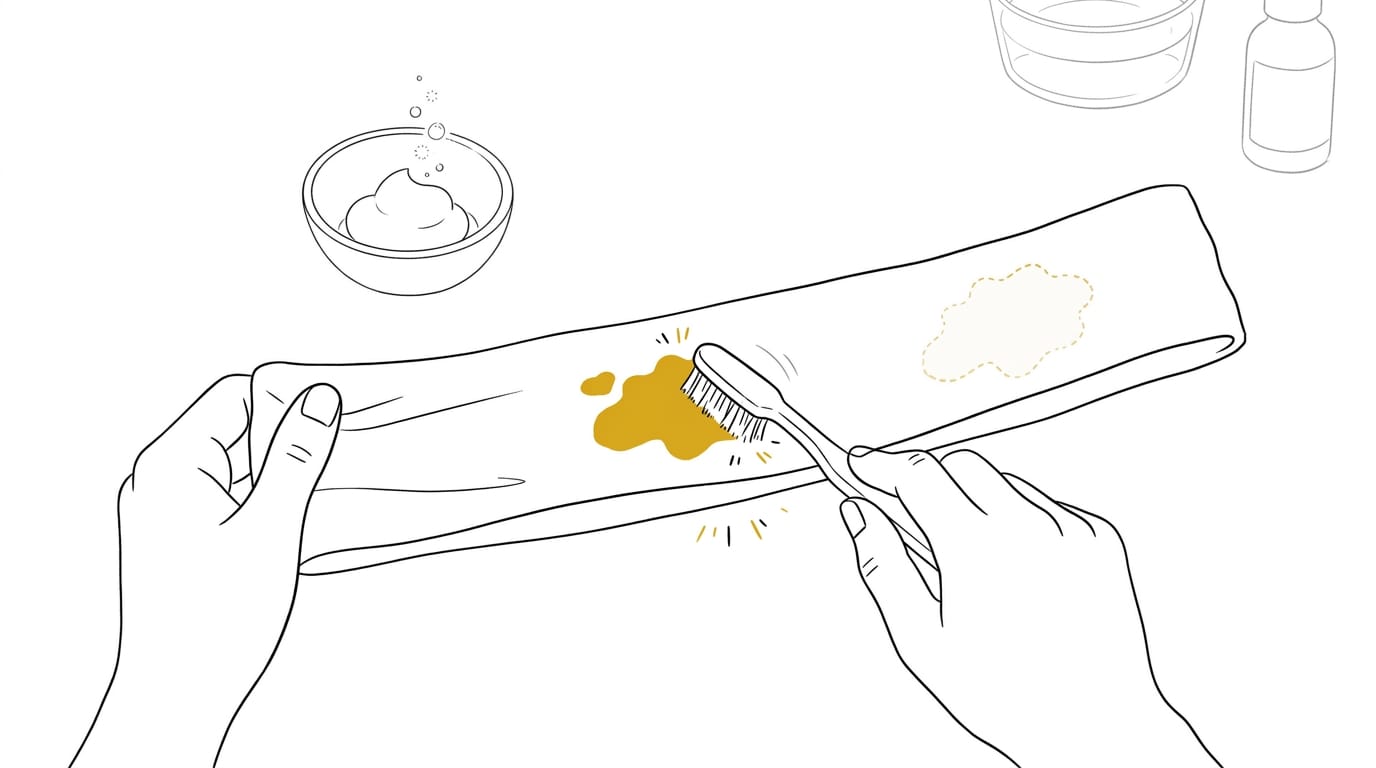
Yes, as part of this method, baking soda forms the base of a paste. Hand wash the band in this order:
- Soak it in cool water with white vinegar.
- Mix baking soda and hydrogen peroxide into a paste and spread it over the stain.
- Scrub the band with an old toothbrush.
- For set-in yellowing, repeat the paste and scrub.
Hydrogen peroxide is the liquid half of that paste, so it’s used alongside baking soda rather than on its own. For a cupboard-only route, the cool water and white vinegar soak is the place to start.
We don’t have a verified borax method for baseball caps, so rather than guess at amounts, stick with the steps above.
Spray fresh stains and let them dry
Think of a parent who spots a fresh sweat mark on a school cap at the touchline. Spray the stain eliminator from 6 to 8 inches away, then let it sit until dry. If the mark is still there, repeat as necessary.
This quick spray is built for fresh marks, so an older stain needs the soak or paste below. The cap is back on before the final whistle.
Soak old stains in an oxygen booster
Old stains that have set need a longer soak. Picture a tradesperson whose work cap has a band from months of wear. Before bed, they follow these steps:
- Fill a bowl with hot water and add an OxyBoost scoop.
- Soak the cap for up to 24 hours.
- Rinse with cool water.
Hot water is for the soak, but the rinse should be cool.
Enzyme paste for stubborn old stains
When an old stain still won’t budge, mix enzyme powder with warm water into a paste. Rub the paste into the stain, let it dry, then rinse. Repeat until the stain is gone.
Think of a gardener whose favourite cap has carried a yellow band through several seasons. Rather than binning it, they keep working the paste in. Patience is the real tool here.
How Do I Wash My Cap?
Quick answer: you can machine-wash a cap only if it’s soft, unstructured cotton. Check the build first, since the wrong cycle or dryer can ruin the shape.
When a washer is safe for hats
The soft, floppy kind with no stiff brim lining is the only type that belongs in the machine. Think of a gardener who wears one cotton cap every weekend. A cold, gentle wash keeps the sweat band clean and the cap wearable for years. Here’s how:
- Cold, gentle cycle. Cold water is kinder to cotton, and a gentle spin is easier on the fabric.
- Wrap it in a towel. The towel cushions the cap so the brim doesn’t bang against the drum.
- Skip formed brims. A curved or stiff brim can lose its shape in one cycle, so keep it out of the machine.
Dry hats slowly to keep their shape
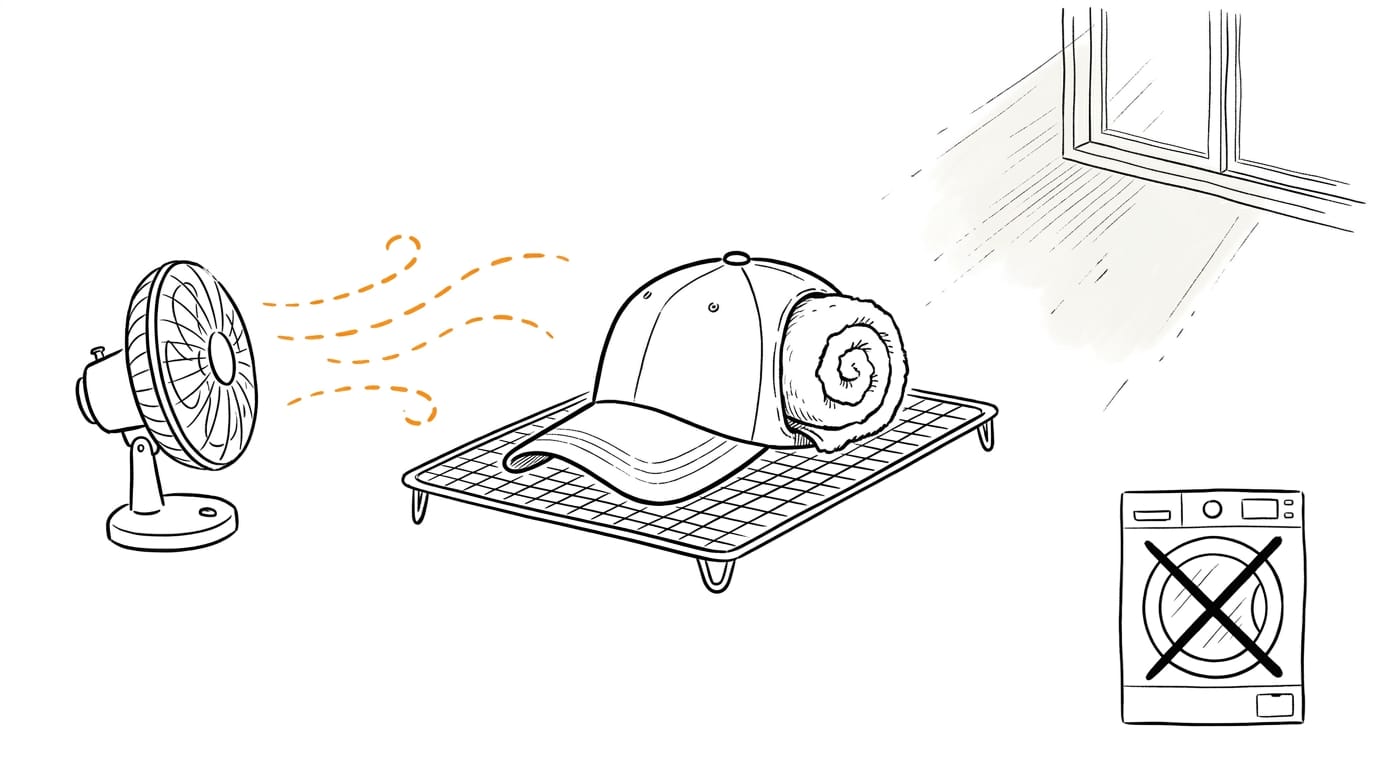
Aim for slow drying rather than quick. Air-dry the cap completely before you wear it again, since a hat can feel dry outside and still be damp in the band. Patience wins.
- Stuff the crown. Push a rolled dry towel inside so the hat holds its shape while it dries.
- Never use a dryer. Heat can shrink cotton and warp the brim.
- Use a fan, not heat. A low fan speed moves air around the cap and speeds drying without heat damage.
- Sun-dry after a soak. A spot in gentle sun can help, as long as the cap isn’t left to bake.
Getting Rid of Hat Odor
Sometimes a hat looks clean but still smells like sweat. Here’s how to freshen it and why the smell can return.
Freshen up without a full wash
Start with the sweatband, the strip inside the brow that soaks up sweat. Sprinkle a little baking soda inside it, let it sit, then tap out the powder and shake the hat well.
For a faster option, mist the band with an enzyme spray. Enzymes are natural proteins that break down the oils behind the smell, so you’re tackling the cause.
Think of a gardener who wears the same cap through a long day of weeding. A quick sprinkle of baking soda and a mist of spray each evening means it smells fresh the next morning.
Finally, store hats in open air. Hang them on a hook or shelf rather than in a gym bag, since a damp hat shut away just traps the smell. Airing is about prevention rather than cure.
Why the smell comes back after washing
Oils from sweat soak into the inner liner, the fabric lining behind the band. A wash can clean the surface while leaving residue in that fabric, so the smell creeps back.
Enzymes break down those oils, which is why an enzyme spray can reach what a rinse leaves behind.
If the smell still lingers after repeated spraying and airing, the liner may need a professional clean. The smell lives in the lining. Surface tricks only go so far.
When a Cleaner Should Handle Your Hat
Is that cap worth a trip to the cleaner, or can you tackle it at home? Some hats are best left to a professional, and knowing which ones saves you from a ruined favorite.
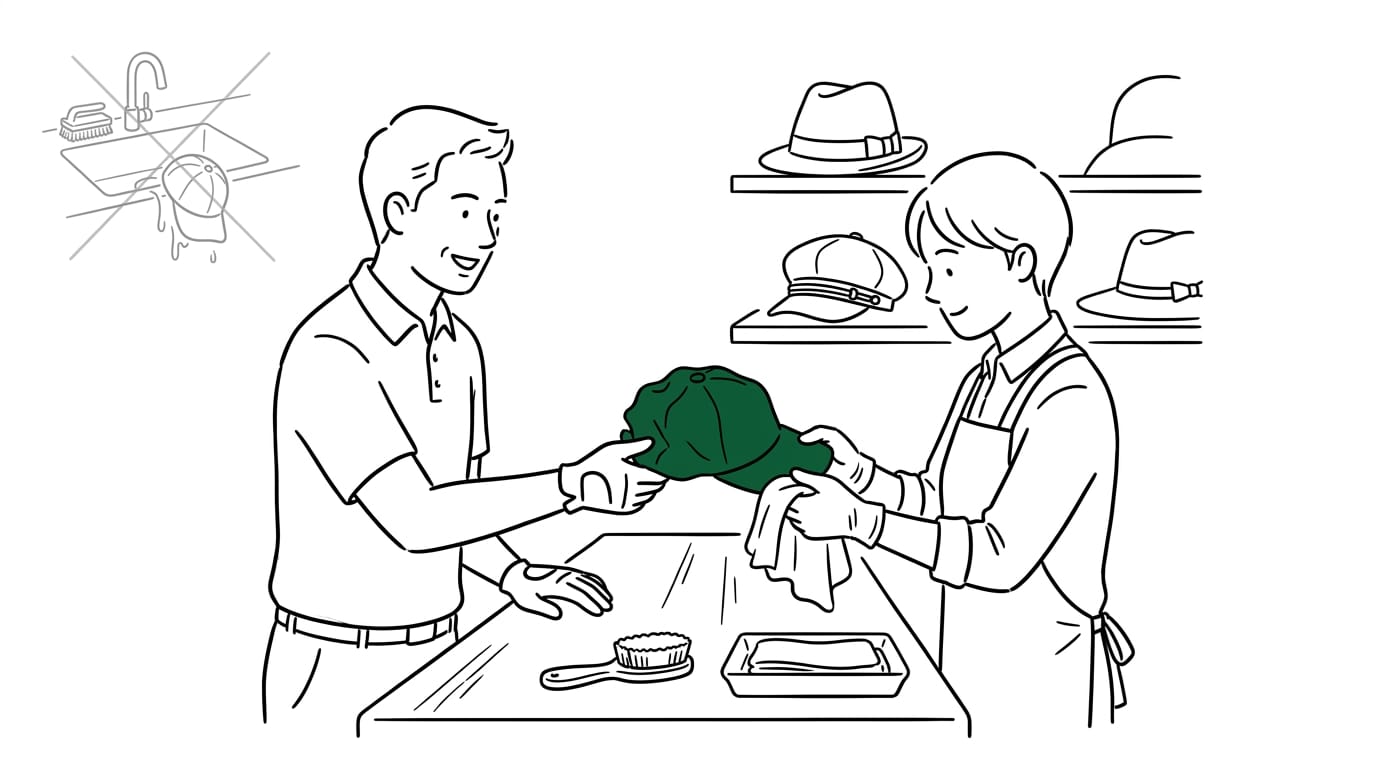
Hats better left to pros
- Wool felt and vintage caps. These are delicate, so a rushed scrub at the kitchen sink is a risky gamble.
- Leather trim. Leather needs different handling than fabric, so a stain on the brim or band is better left to someone who works with it every day.
- Collector and designer hats. If a cap has sentimental or resale value, you want careful, specialist attention rather than trial and error.
- Hats costing more than a wash. If the hat is worth more than a professional clean costs, handing it over is the sensible call.
Think of a golf club member whose signature cap picks up a sweat ring after a hot summer round. Rather than risk a home scrub, they send it to a specialist, who lifts the mark and returns the cap in good shape.
The favorite stays in rotation, and the bin stays empty.
Why pros protect shape and color
Professional cleaning is less about scrubbing harder and more about protecting what the hat is made of. A specialist works to lift the mark without warping the crown or fading the dye, so the hat keeps the look you bought. That’s worth a call.
- Preserves structure and color. Careful cleaning keeps the crown’s shape and the original shade intact.
- Protects the sweatband. The band is where sweat soaks in most, so it needs gentle handling to stay comfortable and intact.
- Quality guarantee and courier service. Look for a quality guarantee and a courier service, so you can post the hat off and get it back without leaving the house.
Keeping Hats Clean Between Washes
A few simple habits between cleans keep sweat from building up, so your cap doesn’t turn into a bigger job later.
Clean often and store hats dry
Your routine comes down to three habits:
- Monthly for daily wear: if you wear your cap every day, clean it about once a month.
- Clean sooner after heavy sweating: a long run or a hot shift is your cue, not the calendar.
- Dry fully before storage: let it dry all the way through before it goes in a drawer or hat box.
Trapped moisture is the real problem, since it’s what lets mildew take hold. It’s storing a damp hat that causes trouble, not wearing one. Consider a landscaper who tosses a sweaty cap straight into a kit bag at the end of a long job.
Giving it a few minutes on the windowsill first means less chance of mildew and a fresher cap for the next shift. Dry it first, every time.
Why white hats turn yellow
White caps don’t stay white forever. UV light, sunblock, skin oils, and sweat all oxidize (slowly react with air and light) in the fabric, and the white gradually turns yellow.
The good news is that the fix is the same treatment you’d use for a sweat stain, so you don’t need a separate routine.
Act early rather than later: the sooner you treat the yellow, the less likely it is to set. Don’t let it sit.
Sweat stains don’t have to mean the end of your favorite cap. Once you know your hat type and how old the mark is, picking the right method gets a lot simpler.
Work gently, check a hidden spot first, and steer clear of the mistakes that set stains deeper. If a stain still won’t budge, a professional cleaner can take the guesswork out of it.
A little patience now means your cap goes back on your head instead of into the bin.
Questions
How to hand wash sweat stains out of a hat?
Hand-wash the sweatband by soaking it in cool water with white vinegar, then apply a paste of baking soda and hydrogen peroxide to the stain. Gently scrub with an old toothbrush and rinse; repeat the paste treatment for set-in yellowing. Test the dye on a hidden spot first, and avoid soaking structured brims or delicate materials.
How do I wash my cap?
Check the care label and identify the cap’s material and construction first. For a soft, unstructured cotton cap, use a cold, gentle machine cycle with the cap wrapped in a towel; otherwise, hand-wash or spot-clean as appropriate. Air-dry it with a towel stuffed inside the crown, and never put it in the dryer.
Does baking soda remove sweat stains?
Yes. Baking soda can help remove sweat stains when mixed with hydrogen peroxide into a paste, applied to the stain, and gently scrubbed with an old toothbrush. For set-in yellowing, repeat the treatment, after testing a hidden area for colorfastness.
Can I use borax to clean baseball caps?
Borax is not a recommended method here. For a baseball cap, use a method suited to its material and shape, such as a cool water and white vinegar soak or a baking soda and hydrogen peroxide paste on the sweatband; test for colorfastness first.
Does hydrogen peroxide remove stains?
Hydrogen peroxide is used with baking soda to make a stain-lifting paste for a hat’s sweatband, rather than as a standalone treatment. Test the mixture on a hidden spot first, since dyes may fade or bleed.
More in Stain Removal
- Baking Soda to Remove Stains: What Works and What Doesn'tBaking soda to remove stains can lift some marks from fabric and surfaces. Find out what it works on, when to use peroxide, and what not to mix.
- White vinegar for rust removal: a complete guideWhite vinegar for rust removal can loosen flaky rust, but soak times and aftercare matter. Compare its risks, costs, and alternatives before treating metal.
- Distilled White Vinegar for Laundry: The Complete GuideDistilled white vinegar for laundry can soften clothes, clear soap residue, and tackle odors. Learn how much to use and which safety cautions matter.
Stain Finder: a free stain removal guide
Find your stain