Rubbing alcohol for permanent marker stains explained
Rubbing alcohol for permanent marker stains can lift ink from clothes and household surfaces; see where it works, what else to try, and safety tips.

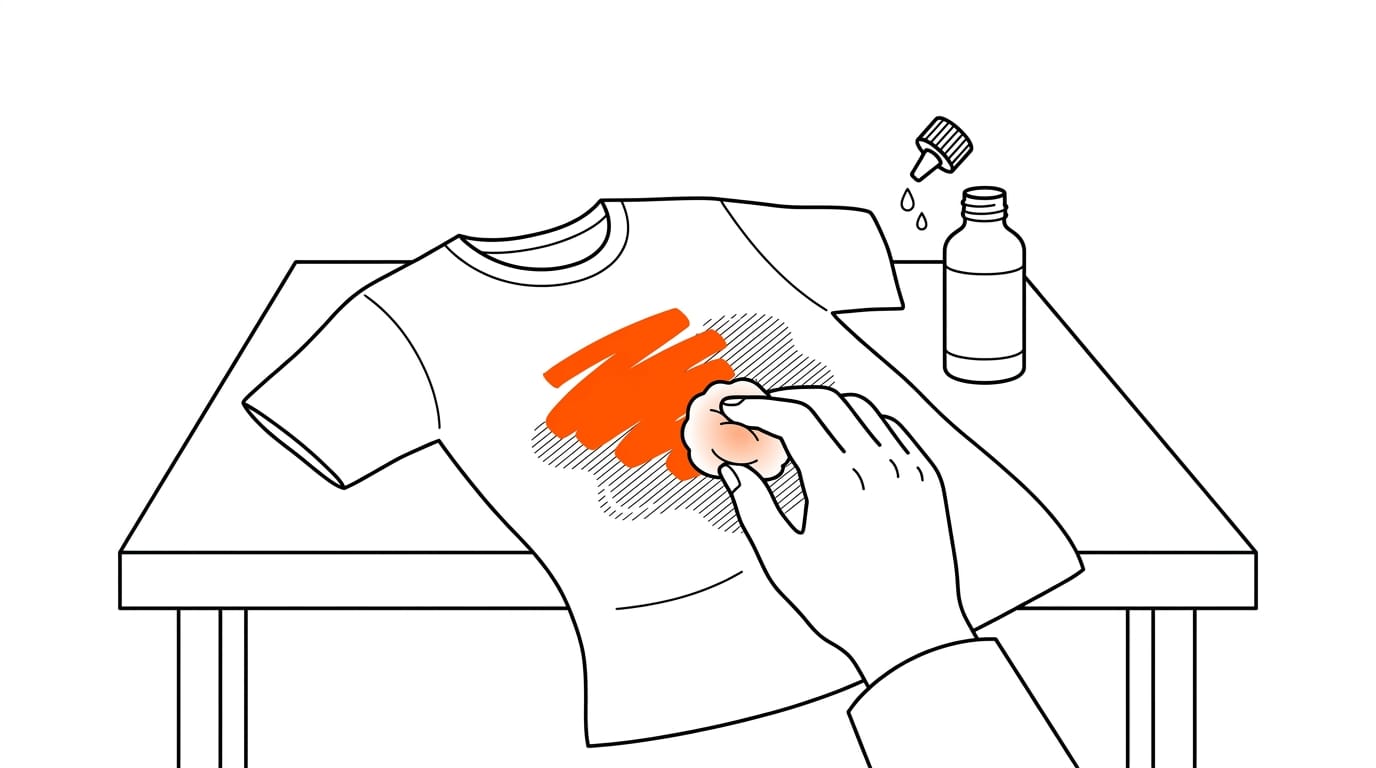
Rubbing alcohol, also called isopropyl alcohol, can break down permanent marker ink so it can be lifted from fabric and some hard surfaces. Apply it carefully, blot rather than rub, test an inconspicuous spot first, and choose a method suited to the material; delicate fabrics, upholstery, wood, and leather need extra caution. Treat stains promptly, repeat if needed, and keep clothing out of the dryer until the ink is gone.
Spotted a permanent marker line across the kitchen table, or a child’s signature on the hallway wall? Don’t panic, because the fix might already be in your bathroom cabinet.
Rubbing alcohol, also called isopropyl alcohol, can break down marker ink so it lifts away.
Knowing the right order and the limits for each surface makes all the difference. In this post, we’ll walk through lifting marker from clothes, other home remedies, and surfaces beyond fabric, plus how to prevent future stains.
Rubbing Alcohol for Permanent Marker Stains Explained
Rubbing alcohol is a strong tool for permanent marker, but it works differently on each surface. Here’s what it does to the ink, and where we’d take extra care.
Why marker ink refuses to wash out
Permanent marker is designed to stick. Its ink soaks into cellulose fibres, the plant-based strands in cotton and paper, so it dyes the material rather than sitting on top. Rubbing alcohol breaks up the ink, so a clean cloth can lift it away.
For example, a parent who spots a doodle on a cotton school shirt acts fast, dabs the mark with alcohol, and slides a clean cloth underneath to catch the ink. Dabbing, not rubbing, keeps the ink from spreading, and the shirt stays out of the bin.
Do alcohol markers come out of fabric?
Often, yes. Alcohol-based markers are the easiest case, since rubbing alcohol breaks up their ink directly. Different surfaces and marker types need different methods:
- Alcohol-based markers: usually lift well with rubbing alcohol.
- Lacquer and paint markers: their thicker finish may need a different approach, so test first.
- Waterproof markers: the hardest to remove, so plan on repeat treatments.
Are fabric markers permanent? Yes, they’re built to stay put, so treat them that way. Rubbing alcohol is still worth a try, but test a hidden seam first, since fabrics react differently.
Why felt tip ink is so stubborn
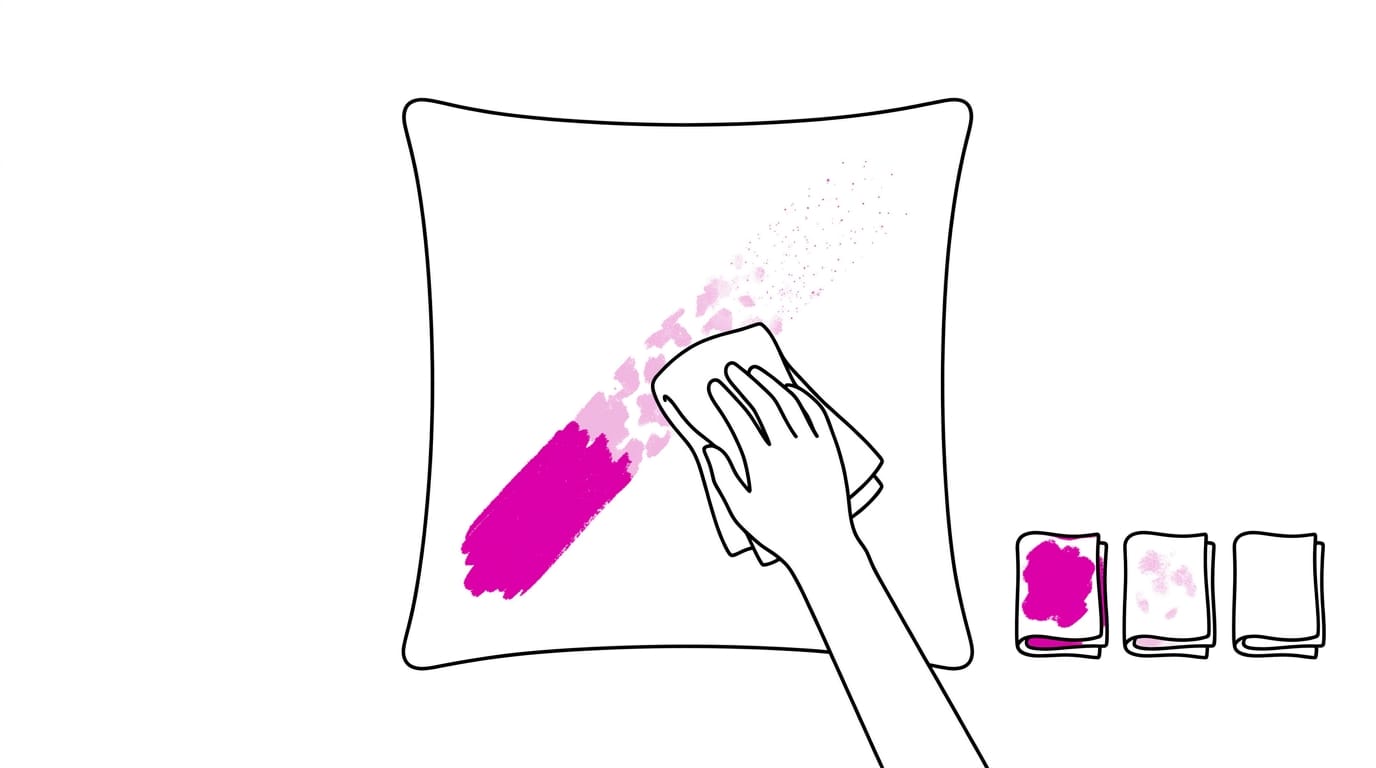
Felt tip ink is very concentrated, packing a lot of pigment into each stroke, so one pass rarely clears it. Work in small rounds: treat the mark, blot with a fresh cloth, then check. You may need to repeat this several times. Patience wins.
Consider a home cleaner tackling a felt tip stripe on a cushion cover, swapping to a clean cloth on every pass. The aim is to lift the ink rather than spread it, and the cover stays intact as the stripe fades.
Lifting Marker from Clothes with Rubbing Alcohol
Permanent marker can look like a lost cause, but rubbing alcohol gives you a strong first move. The order you use matters as much as the product.
Pretreat the stain with alcohol or sanitizer
Your first job is to pretreat the mark and loosen the ink. The goal is to lift it out of the fabric, not push it deeper. Rubbing alcohol does this well, and an alcohol-based hand sanitizer works too. Follow these steps:
- Saturate the stain with rubbing alcohol or sanitizer, applied directly to the mark.
- Let it sit for a few minutes.
- Blot with a clean cloth.
- Slide a card underneath the fabric and blot from behind the stain, which protects the layer beneath.
- Dab outward so the stain doesn’t spread.
Following up with bleach or stain remover
If a shadow of the mark is still there, follow up with one of these, chosen by fabric:
- Diluted bleach solution soak: Soak white fabrics in a diluted bleach solution, and never use bleach at full strength.
- Clorox 2 for colors: Colored fabrics get Clorox 2 instead of bleach.
- Skip bleach on delicates: Avoid bleach on wool, silk, and spandex.
Wash quickly and check before drying
Wash the item right away with detergent, using the hottest water the care label allows.
For example, a parent who spots a marker streak on a school shirt in the evening can pretreat and wash it before bed, so the shirt is ready for the morning instead of the bin. Air dry the garment, then check the spot in good light.
Keep it out of the dryer until the stain is completely gone. The dryer comes last. Repeat the steps if any ink remains.
Tips for white fabric and delicate materials
- White fabrics versus colors: Whites and colors don’t get the same follow-up. Whites can take the diluted bleach soak, while colors get Clorox 2.
- Delicate fabrics need care: Work gently on wool, silk, and spandex, and keep bleach away from them entirely.
- Dabbing with alcohol-soaked cotton pad: On delicate materials, a cotton pad soaked in rubbing alcohol lets you dab the mark with control instead of soaking the whole garment.
Other Methods and Common Home Remedies
Rubbing alcohol isn’t the only thing in the cupboard that can help. Here, we’ll look at household items, solvents, gentle erasing, and where milk fits in.
Everyday household items that can help
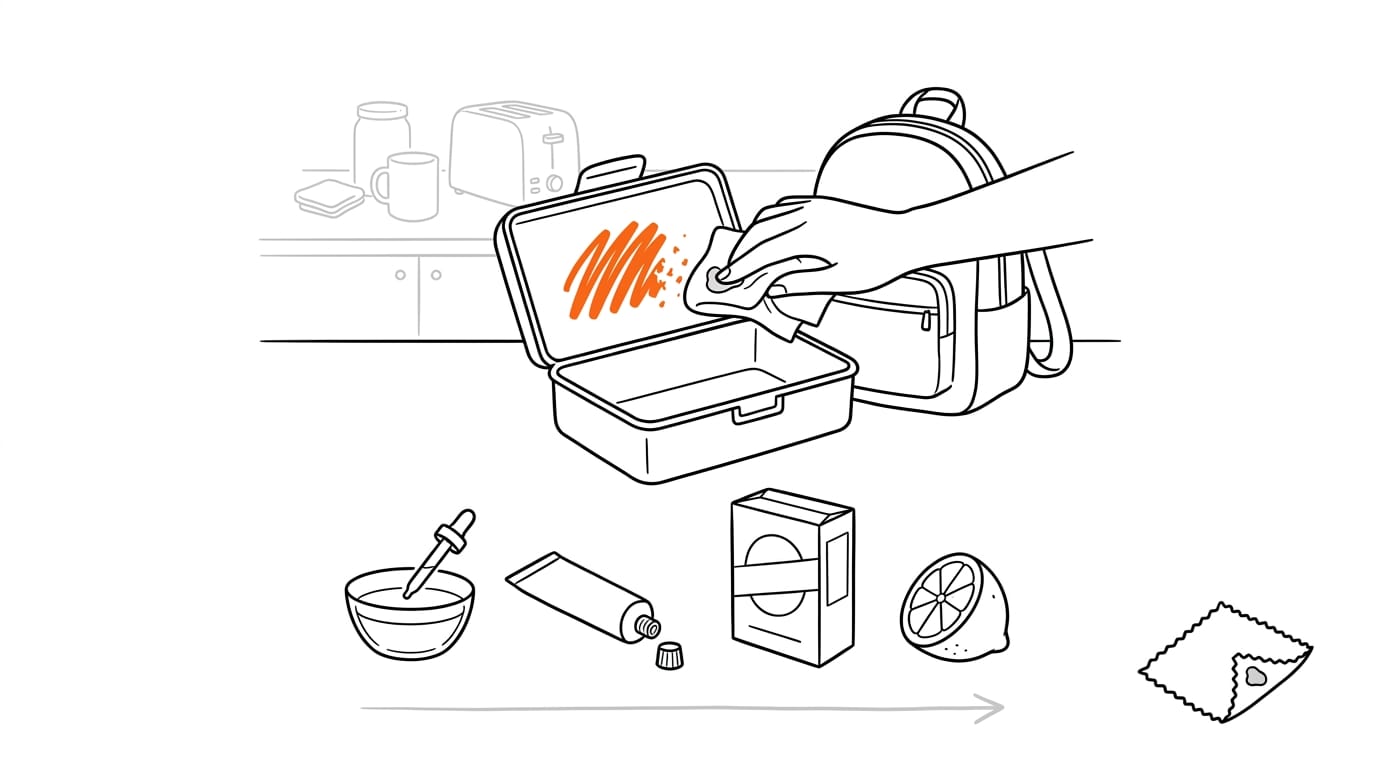
Start gentle and only move up if the mark stays. A vinegar and water mix is a sensible first try on many marks. For plastic or leather, rub a dab of toothpaste in gently, then wipe clean. For a stubborn mark, try a baking soda paste.
You can also combine baking soda and lemon juice.
Consider a parent who finds a felt-tip line on a plastic lunchbox at breakfast time. A dab of toothpaste and a damp cloth often clears it quickly, so the lunchbox goes back in the bag with no fuss.
If you’re asking how to get dry erase marker out of fabric without rubbing alcohol, start with the vinegar and water mix or the baking soda paste above. Test a hidden spot first.
Solvents like acetone and methylated spirits
A solvent is a liquid that dissolves another substance, which is why these options can lift ink that water alone won’t touch. Here are the main choices:
- Nail polish remover with acetone: dab it on with a cotton pad, and check a hidden spot first.
- Methylated spirits: a household solvent that suits many ink marks, so test a small patch first.
- WD-40 or isopropyl alcohol: best kept to hard surfaces.
To get Sharpie off concrete, treat it as a hard-surface job and start with WD-40 or isopropyl alcohol.
Erase or sand the ink off carefully
An eraser is the gentlest tool here and works on paper and walls, so try it before anything stronger. On metal, fine sandpaper can take ink off, but use gentle strokes so you don’t scratch the finish.
Avoid sharp blades, which can gouge the surface. Light touch wins.
Whether milk helps fresh marker stains
A milk rinse may reduce a fresh stain, but don’t count on it. Milk contains lactic acid, which isn’t strong enough to lift permanent marker. Treat milk as a possible help, not a fix.
Getting Marker off Surfaces Other Than Fabric
Marker doesn’t behave the same on every item in the house, so the surface decides your method. For a Sharpie on a basketball, dampen a cloth with rubbing alcohol, dab the ink, and wipe gently until it lifts.
Upholstery and carpet stains take extra care
Marker on upholstery and carpet is very difficult to remove, so expect to work slowly. Skip laundry products, which aren’t made for furniture or flooring.
Go light on water too: flooding the fabric can soak into the padding or carpet backing, so use a barely damp cloth.
Consider a parent who finds a felt-tip doodle on a sofa cushion after school. Blotting it with rubbing alcohol on a cotton swab, instead of soaking it with a wet cloth, keeps the cushion from turning into a soggy patch.
Cleaning marker from counters and glass
Bleach cleaner works on nonporous surfaces, meaning surfaces that don’t soak up liquid. For glass and metal, wipe with a cloth soaked in rubbing alcohol, working by dabbing rather than scrubbing so the ink lifts instead of spreading.
Finish with a detergent solution, then dry the surface thoroughly.
Gentler steps for walls, wood, and leather
Alcohol is the wrong first choice for wood and leather, since it can damage their finish. Test first. Start with a clean eraser over the mark, then wipe with a vinegar solution if the line stays.
Antique or expensive pieces are tricky, so ask a professional before you touch anything valuable.
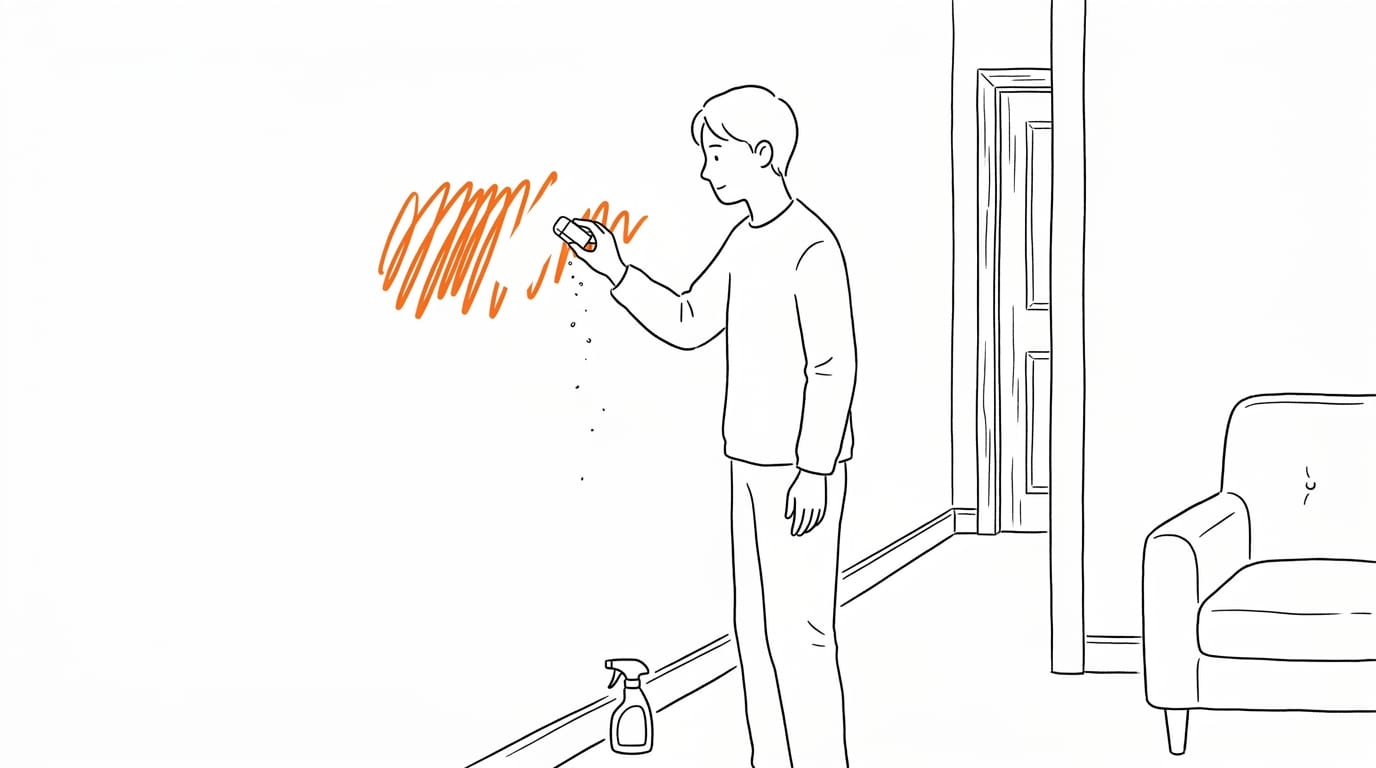
Think of a tenant with a marker line on a painted hallway wall. The eraser may lift it, saving a full repaint, and the vinegar solution is the backup.
Stay Safe and Prevent Future Marker Stains
A little preparation keeps a marker mark from becoming a bigger job.
Protect yourself and patch test first
Rubbing alcohol is strong stuff, so get set up first:
- Wear gloves to keep the alcohol off your skin.
- Ventilate the work area by opening a window or switching on a fan.
- Patch test first on a hidden spot, such as the back of a cushion or the inside edge of a rug.
Consider a home cleaner tackling a marker line on a painted hallway wall. Testing behind the skirting board first shows whether the paint holds up before the whole wall gets treated. That one minute can save the wall from damage.
Stop marker stains before they happen
Prevention is easier than removal, so aim to prevent the mark rather than remove it:
- Store markers upright so they’re less likely to leak.
- Use the correct marker type for the task, saving permanent ink for marks you actually intend to make.
- Wear an apron or old clothes when colouring or labelling.
- Use washable markers for children’s craft time, when stray marks are common.
Acting fast on fresh or dried stains
Markers dry fast, so treat a fresh mark sooner rather than later. Dried stains follow the same steps as fresh ones, though you may need a few more passes, so stay patient rather than reaching for something harsher.
Act quickly whenever you spot a mark, because every minute gives the ink more time to set. Speed is your best tool.
When to call a professional cleaner
Some marks are better handed to someone else. Hire a professional cleaner if the marker has landed on something valuable, like a silk rug or leather sofa, or if your patch test looks worrying.
A pro can pick a safe method, so you won’t be gambling with the item.
Gel pen ink behaves differently, so we cover it in a separate guide. Check that one first if that’s what’s on your fabric.
Rubbing alcohol is a handy tool for permanent marker, but it only shines when you match the method to the surface and respect its limits. Work carefully, and you can turn a mishap into a quick fix rather than a ruined shirt, rug, or wall.
A few simple habits, like keeping the bottle handy and the steps in mind, can also stop the next line of ink from landing somewhere it shouldn’t. A permanent marker stain is only permanent until you know what to do, and now you do.
Questions
How to get dry erase marker out of fabric without rubbing alcohol?
Try a vinegar-and-water mixture or a baking soda paste, and dab rather than rub so the ink does not spread. Test the method on a hidden area first, since fabrics can react differently.
How to remove paint from clothes?
For wet paint, scrape off excess gently and treat the stain according to the paint type: water and detergent may help with water-based paint, while oil-based paint generally needs the solvent listed on its label. For dried paint, removal is harder; check the garment care label and test any solvent on a hidden spot before using it. Keep the garment out of the dryer until the stain is gone.
How to get Sharpie off a basketball?
Dampen a cloth with rubbing alcohol and dab the Sharpie mark, wiping gently as the ink lifts. Test a small, inconspicuous area first, then clean the spot with a damp cloth.
How to remove permanent marker ink?
For permanent marker on fabric, apply rubbing alcohol or alcohol-based hand sanitizer, let it sit for a few minutes, then blot with a clean cloth. Wash promptly according to the care label, air dry, and repeat if needed; do not use a dryer until the mark is gone. For other surfaces, choose a method suited to the material and test it first.
What takes out Sharpie from clothes?
Rubbing alcohol or alcohol-based hand sanitizer can loosen Sharpie ink on clothes. Apply it to the stain, let it sit briefly, and blot rather than rub; wash promptly and air dry until you confirm the stain is gone.
Can rubbing alcohol be used to remove ink stains from clothes?
Yes. Rubbing alcohol can break down marker ink so it can be blotted out of fabric. Patch test first, dab rather than rub, and follow with a wash that suits the garment’s care label.
Do alcohol markers come out of fabric?
Often, yes. Alcohol-based marker ink usually lifts well with rubbing alcohol, though you may need to repeat the treatment; test a hidden area first and blot rather than rub.
Are fabric markers permanent on fabric?
Yes. Fabric markers are made to stay on fabric, so treat their marks as permanent. Rubbing alcohol may be worth trying, but test it on a hidden seam first because fabrics react differently.
More in Stain Removal
- How to Get Sweat Stains Out of Hats, Step by StepHow to get sweat stains out of hats: match the cleaning method to your hat type and stain age, with quick checks to prevent damage before washing.
- How to Get Rid of Hard Water Stains, Step by StepHow to get rid of hard water stains: match each mark to a surface-safe method with a quick-pick guide, using cleaners already in your cupboard.
- How to Remove Static From Clothes: Causes and FixesHow to remove static from clothes: stop cling with quick fixes, identify charge-prone fabrics, and change laundry habits to keep it from returning.
Stain Finder: a free stain removal guide
Find your stain