How to Remove Coffee Stains from Fabric, Carpet and More
How to remove coffee stains from clothes, carpets, and furniture without damaging fabric. Tackle set-in marks and coffee smells with the right method.

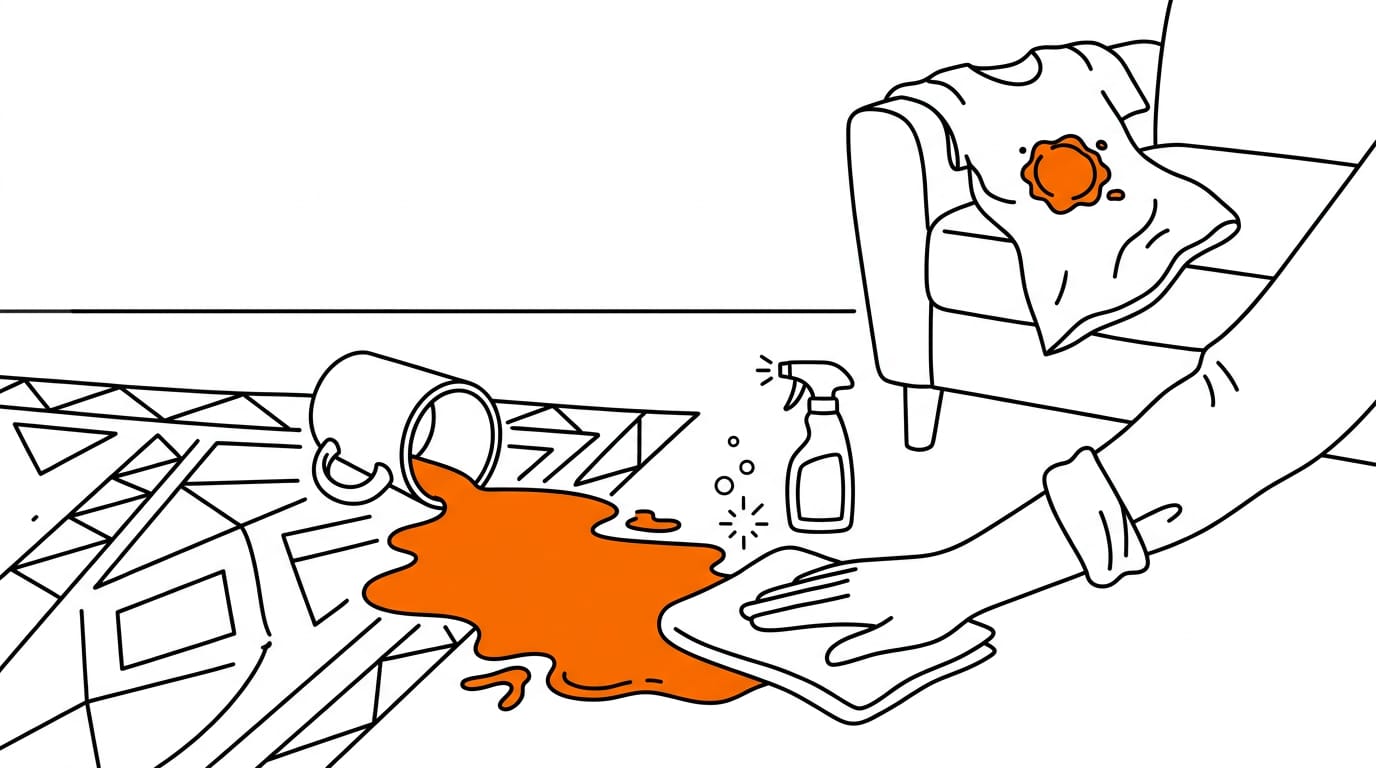
Removing coffee stains means blotting up the spill, rinsing with cold water, and treating the mark with a method suited to the fabric or surface. Work gently, start with mild options such as soap, and repeat treatment for dried stains; check care labels and test hidden areas before using products. Act quickly and keep heat away until the stain is fully gone, since rubbing can spread it and heat can set it permanently.
Picture this: your coffee is still steaming on the counter when the mug tips and a dark splash lands on the cream sofa cushion. It’s a sinking feeling, but you’re not out of luck.
Acting quickly gives you the best chance of a clean result, and that’s where this guide comes in.
In this guide, we’ll cover fresh and set-in marks, milk-based coffee, and every fabric and surface you’re likely to face, from work shirts to carpets and beds. You’ll also get a quick decision path to find the right method for your exact mess.
Why Coffee Stains Are Hard to Remove
Coffee looks harmless in a mug, but it’s one of the more stubborn drinks to lift from fabric and surfaces. Knowing why helps you pick the right approach.
Why tannins in coffee leave marks
Coffee contains tannins, natural compounds plants produce to protect themselves. These plant-protective compounds are durable, so a quick rinse rarely lifts them. Picture a parent mopping up a spilled cup with a dry tea towel.
The floor looks clean, but the brown tint is still there, and now the towel carries it too.
What makes some stains harder to shift
Not every coffee mark behaves the same way. Milk can set a stain, which makes a latte or flat white trickier than a black coffee. Timing matters just as much: when you act counts for more than what you grab.
A dried-on mark is harder than a fresh one because it has had time to settle in. The type and age of the fabric change the result too. An old stain may need several rounds of treatment, so don’t give up after one try. Patience wins.
Will coffee stains come out easily?
Yes, if you treat them promptly. A fresh stain gives you the best chance, while an old one takes more work and may not lift completely. How easily it comes out depends on the material, so check the care label before you start.
Consider a flatmate who sorts a coffee mark on a rented sofa within minutes, while another leaves it until the weekend and ends up scrubbing a set-in ring. The earlier you act, the easier it gets.
What to Do Right Away
Acting quickly makes the job easier, so start straight away. Two simple steps, blotting and rinsing, do the heavy lifting before you reach for any product.
Act fast and blot gently
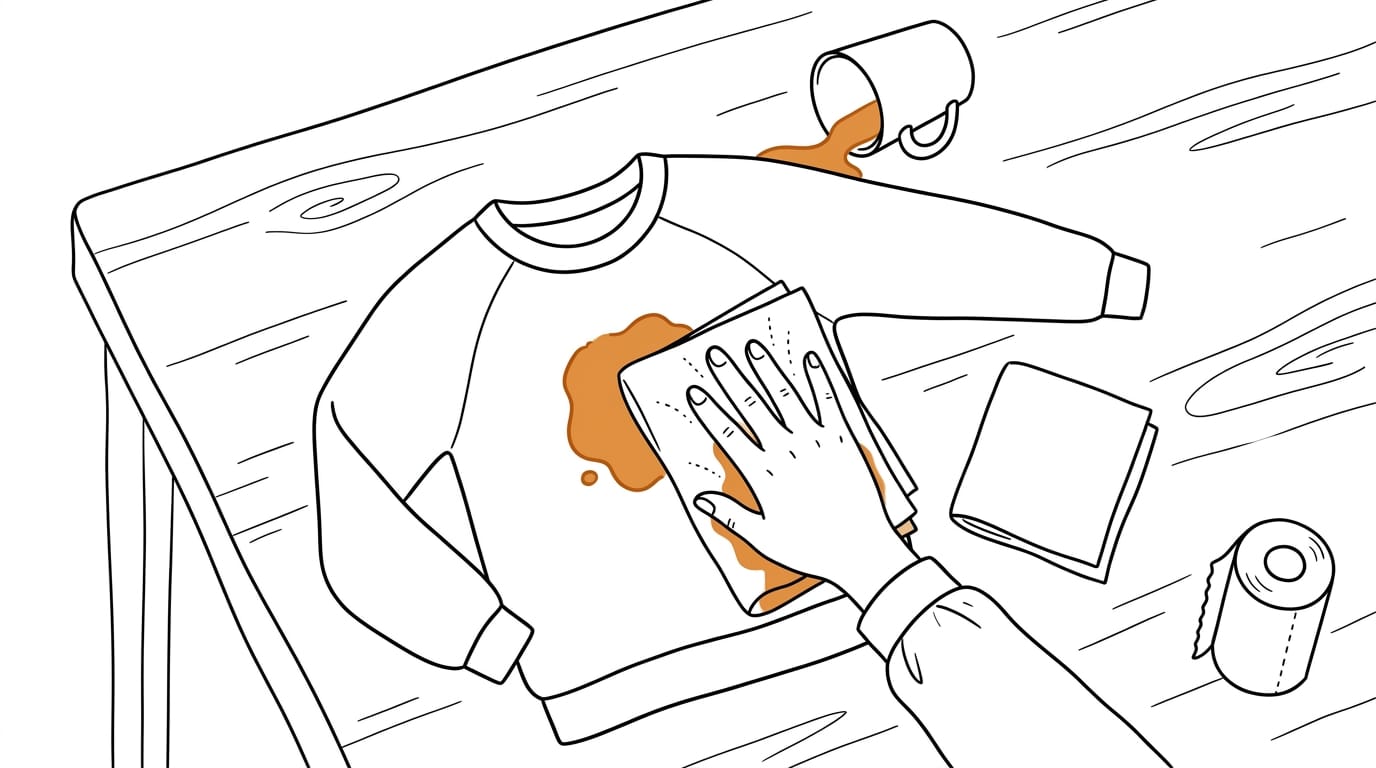
Consider a parent who’s just knocked a mug of milky coffee across the kitchen table and onto a school jumper. Grab a dry paper towel straight away, because it soaks up the liquid before the stain has time to sink in.
Work through it like this:
- Wipe off excess: Lift off any splashes or drips first so there’s less to deal with.
- Blot with paper towel: Press the towel onto the mark, switching to a clean section as it fills.
- Blot both sides: If the fabric allows, blot the back as well as the front.
Gently press the stain rather than rub it. Resist the urge to scrub, because hard rubbing can spread the mark and push it deeper into the fibres. Patience pays off.
Rinse with cold running water
Take the item to the sink and hold the stained area under running water. Cold water is the better choice, because hot water can set the stain. Keep the hot tap off: cold beats hot every time.
When you’re out and about, it’s trickier. Say you’ve spilled a flat white on your work shirt during a café meeting. Find the nearest basin, rinse with cold water, and dab a little hand soap onto the spot.
That gives you a head start, so the stain is far easier to deal with once you’re home.
Getting Coffee Stains Out of Clothes
A splash on a shirt or a jumper calls for a steady approach, and fabric colour shapes a few of the steps. Start with the gentlest option, then move up only if the mark is still there. A foundation mark on clothing needs its own method, and our guide on how to get foundation out of clothes covers each fabric.
If your coffee had milk and sugar, follow the same order and don’t skip the rinses.
Will washing up liquid lift the stain?
Start with what’s already in the laundry room. Work a little laundry powder into the mark, then try a small amount of washing up liquid dabbed onto the stain.
For a spray, an oxygen stain removal spray is another option. It’s best on whites, so for coloured items, check the care label first.
Wondering whether Dawn will take out coffee stains? Dawn is a washing up liquid, so treat it like the one above: work a little into the fresh mark, then rinse. The brand name alone won’t tell you the result, so test a hidden patch first.
Can hydrogen peroxide remove coffee stains? It isn’t part of the method we recommend here, so stick with the options covered in this section.
Soak the stain in oxi powder
For a bigger mark, soak it in oxi powder. Picture a parent with a white school shirt and a mug-sized splash from breakfast. Leaving it to soak while the school run happens means the shirt goes into the wash ready, not into the bin.
Soak times depend on colour: whites can soak for up to 6 hours, but colours should only go in for up to 1 hour. Here’s how to do it:
- Use one scoop of powder per litre of water.
- Soak the item for the time that suits its colour.
- Rub the stain, then rinse.
- Wash the item after soaking.
Pre-treat stains that have dried
A dried mark needs a little extra prep. Brush off the dried particles first, then apply a liquid and leave it for 10 minutes. If the mark is still there, repeat the step. Finish with a cold water wash.
Quick fix with a stain pen
When you can’t wait for a wash, a stain pen is the quick answer. Press the pen onto the stain, then rub the tip side to side across the mark. Blot the area with a damp cloth. No washing machine needed.
A few more fabric care tricks
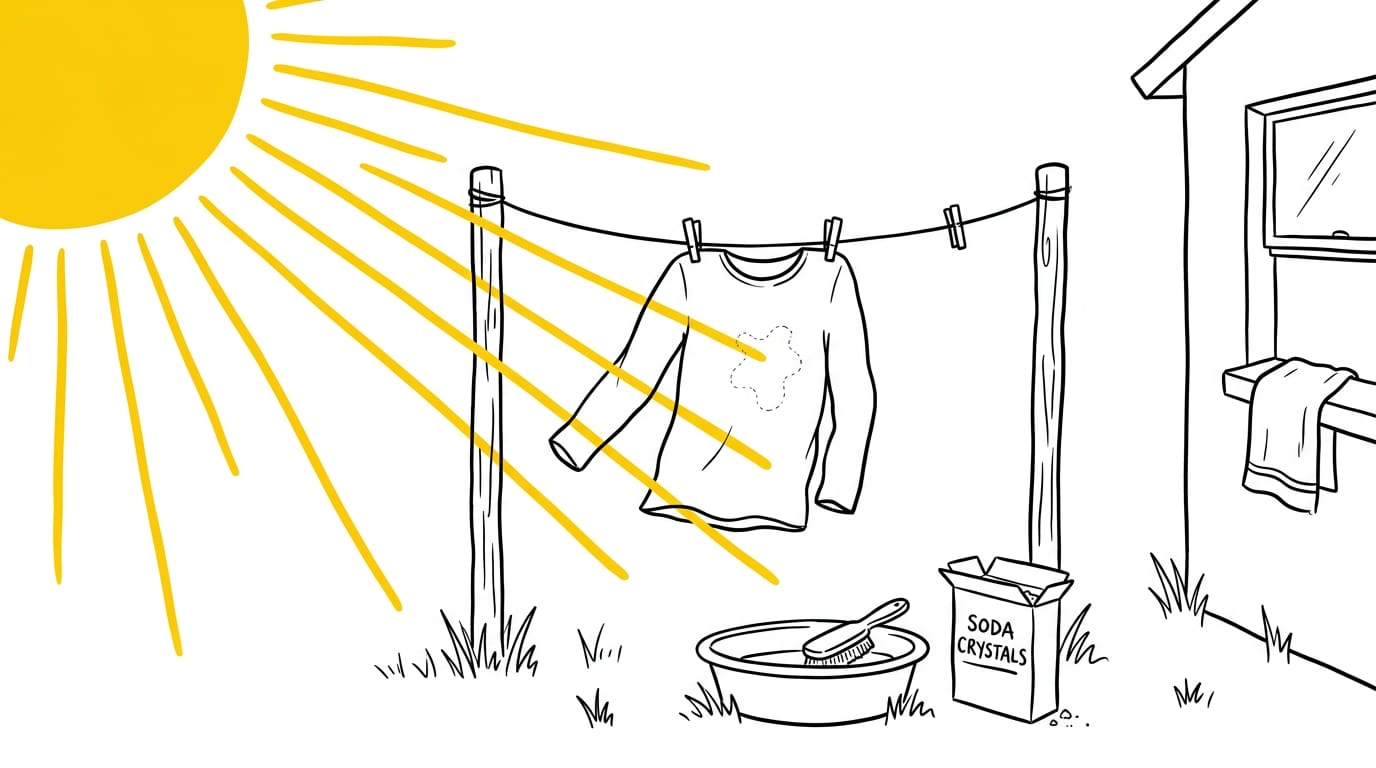
You can scrub the mark with soda crystals or soak the item in them. For a faint trace left behind, try sunlight bleaching: hang the item in direct sun to lighten it. Once it’s clean, dry it by a window.
Simple Home Remedies to Try
Before you reach for a special product, give one of these home remedies a go. You’ll find each one suits a different size of mess. Baking soda for coffee stains is another home remedy you can try.
Using vinegar to loosen stains
Vinegar is a useful pre-treatment. The aim is to loosen the stain, not remove it in one go, so dab it on before washing and blot rather than rub. Mix it with a drop of dish soap for a gentle, everyday solution.
Consider a flatmate who spills a flat white across the sofa cushion. A quick blot with vinegar and dish soap gives the sofa a fighting chance and saves a trip to the cleaner.
Toothpaste or sanitiser for small spots
Toothpaste is handy for small stains. Rub a dab in gently, then rinse. Think of a parent who spots a coffee dot on a school shirt cuff at breakfast. A little toothpaste and a rinse give them a head start before the school run.
Hand sanitiser is a different story. It can lighten a small mark, but only temporarily, so it’s a quick fix rather than a cure.
Soda crystals as a budget option
Soda crystals, the washing soda used for laundry, are a cheap DIY option for stains that need more help. There are three ways to use them:
- Scrub the stain with them
- Soak the item
- Add them straight to the wash
Cheap and simple, and easy to try.
Stains on Beds, Carpets and Furniture
Coffee on bedding, carpets and sofas each needs a slightly different approach, so match the method to the surface. Worktops, mugs and wood work differently from fabric, so keep those separate from the steps below. A chalky mark on a worktop or mug may be a hard water stain, which needs its own method.
Speed helps on every surface, since a coffee mark gets harder to shift the longer it sits.
Dealing with sheets and mattresses
Strip the bed and wash the sheets. Rinse the stained patch under the cold tap before they go in. For the mattress, sprinkle soda crystals over the damp patch, leave them for an hour, then vacuum thoroughly.
Cleaning a carpet, step by step
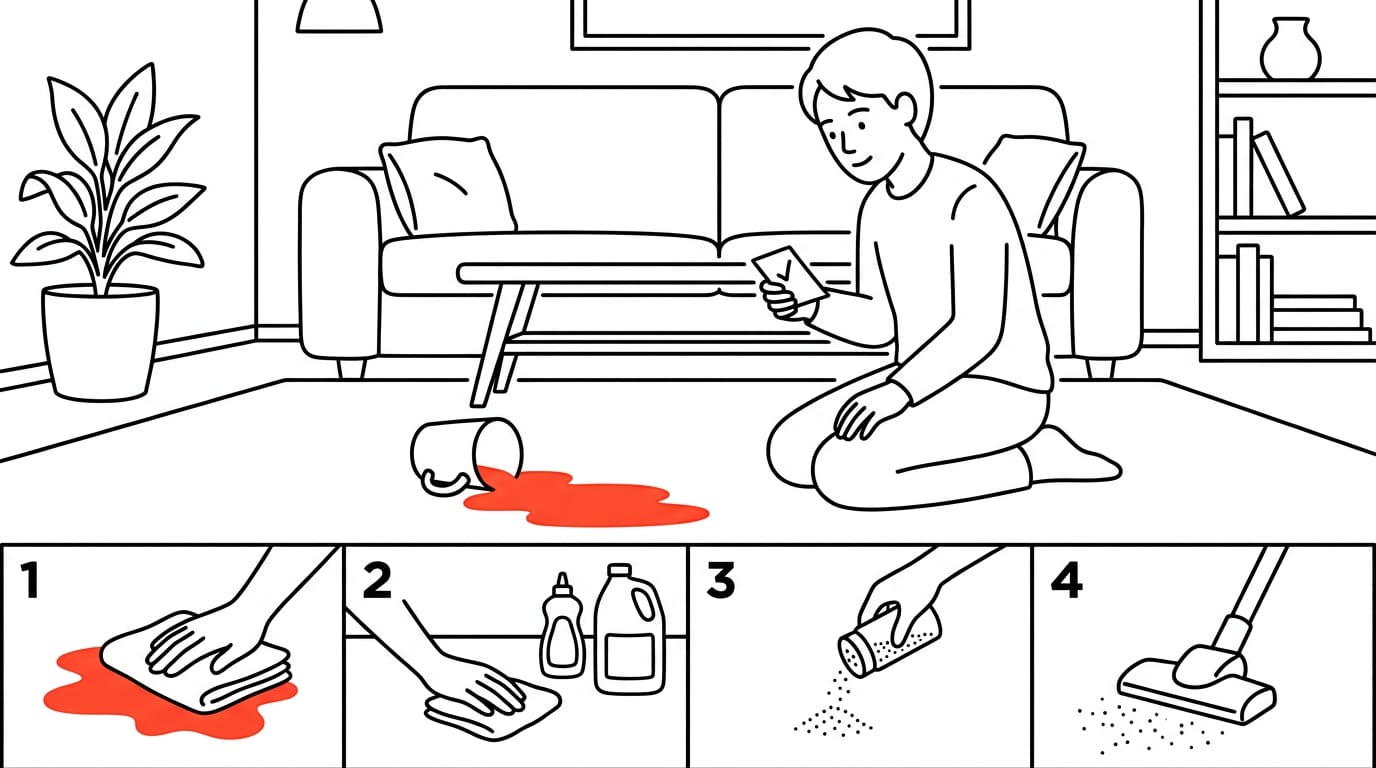
Picture a renter who’s just tipped a mug onto the living room carpet. Sticking to these steps in order means no panicked call to the landlord. Only use this method on carpets that are bleach-clean, so check the label first, then follow this order:
- Blot the spill first with a clean cloth, pressing gently.
- Dab on a mix of dish soap and white vinegar.
- Sprinkle soda crystals over the area and leave them to work.
- Vacuum everything up once the crystals have done their job.
Gentle care for upholstered furniture
Sofas and armchairs need a lighter touch. Scrubbing tends to spread the mark and can roughen the fabric, so avoid it. Gentle wins here.
Dab a cloth in soapy warm water onto the stain. Dab, don’t scrub. For tougher marks, add a splash of white vinegar to the soapy water and dab again.
Think of a host who spills coffee on the sofa just before guests arrive. A few gentle dabs later, the sofa looks fine when the doorbell rings.
Protect Your Fabric as You Clean
A few quick checks before you start will keep your fabric safe while you work on the mark. Getting these right first saves the item from a second round of damage.
Check the label and test first
Run through these checks before you apply anything:
- Follow the care label. It tells you what the fabric can handle, so treat it as your first guide.
- Test a hidden area first. Dab a small patch inside a seam or the hem before you touch the visible stain.
- Be gentle with delicates. Delicate fabrics need a light touch: dab, don’t rub.
- Dry clean only means a professional. If the label says so, leave the treatment to the cleaner rather than experimenting at home.
- Use cupboard items you already own. Think of a parent with a coffee splash on a school jumper who reaches for something from the kitchen instead of buying a new bottle. No trip to the shop, and the jumper is saved before the school run.
Keep heat away until it’s gone
Heat sets stains, a process known as heat-setting, so the tumble dryer is the last place a coffee mark should go. Consider a tenant who tosses a coffee-soaked cushion cover into the dryer after work.
A gentle second treatment might have lifted it. Now it’s permanent.
Hold off on machine drying until the mark has fully gone. If a faint shadow remains, repeat the treatment instead of reaching for the dryer, and keep going until the mark is gone, not just faded.
Getting Rid of Coffee Smells
A coffee mark can leave a smell behind even after it’s gone, so the odour needs its own plan. Here’s where to start, and what to reach for when the room still smells like the café.
Neutralise smells that linger
Removing the stain removes odour, so get the mark out before you worry about the smell. It’s less about covering the odour and more about removing what’s causing it.
Soda crystals deodorise, which makes them a handy next step once the mark has gone. Think of a parent whose car seat still smells of a spilt latte the morning after.
Keeping a packet on hand means a cheap fix, not another trip to the shop for a new air freshener.
Oxi powder neutralises odours rather than simply covering them up. Consider a tenant whose sofa cushion still smells the day after a coffee spill: that’s a job for oxi powder, not another round of spray.
Used coffee grounds absorb smells, so a small dish of them can help in a stuffy hallway or a kitchen corner. Simple, and it’s probably already in your bin.
A coffee stain doesn’t have to mean a ruined shirt or a ruined sofa. Acting fast, matching the method to your fabric, and taking care as you clean give you the best chance of a clean result.
Whether it’s a fresh splash or a mark that’s been sitting for days, you’ve got the steps to tackle it with confidence.
Keep this guide handy for the next spill. When the mug tips, you’ll know exactly what to reach for, and you can enjoy your coffee without the cleanup worry.
Questions
How do you remove coffee stains from carpet?
Blot the spill gently with a clean cloth, pressing rather than rubbing. Once you’ve checked that the carpet is bleach-clean and tested a hidden spot, dab on a mixture of dish soap and white vinegar. Sprinkle soda crystals over the area, leave them to work, then vacuum them up.
Will coffee stains come out easily?
Coffee stains come out more easily when treated promptly, but results depend on the material and how long the stain has set. Fresh stains have the best chance of coming out; older ones may need several treatments and may not lift completely.
Can hydrogen peroxide remove coffee stains?
Hydrogen peroxide is not a recommended first choice for coffee stains, as it can damage or discolour some materials. Try a gentler method, such as blotting and rinsing with cold water, and always check the care label and test products on a hidden area first.
Will Dawn take out coffee stains?
Dawn is a washing-up liquid, so you can work a little into a fresh coffee stain and then rinse it out. Test it on a hidden area first, since the result depends on the material.
More in Stain Removal
- Baking Soda to Remove Stains: What Works and What Doesn'tBaking soda to remove stains can lift some marks from fabric and surfaces. Find out what it works on, when to use peroxide, and what not to mix.
- How to Get Rid of Hard Water Stains, Step by StepHow to get rid of hard water stains: match each mark to a surface-safe method with a quick-pick guide, using cleaners already in your cupboard.
- Rubbing alcohol for permanent marker stains explainedRubbing alcohol for permanent marker stains can lift ink from clothes and household surfaces; see where it works, what else to try, and safety tips.
Stain Finder: a free stain removal guide
Find your stain