Unclog Drain with Vinegar and Baking Soda: What Works
Unclog a drain with vinegar and baking soda for minor clogs. Find out what this fix can't clear and which stronger options can get water moving again.

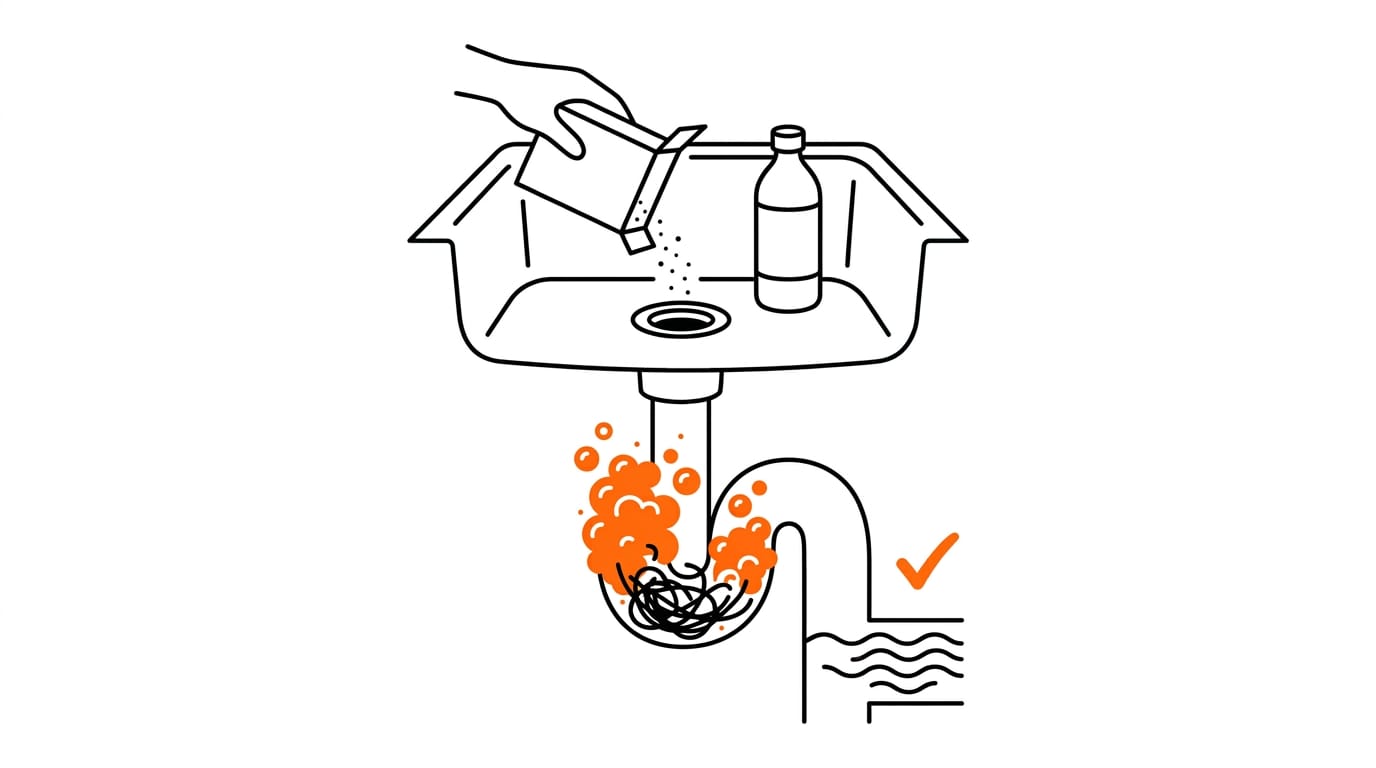
Unclogging a drain with vinegar and baking soda means using their fizz as a gentle first attempt to loosen light buildup in a slow drain. Pour in baking soda, add vinegar, wait five to ten minutes or longer for a larger clog, then flush with hot water, but don’t expect the mixture to dissolve hair or grease or shift a stubborn blockage. If one try fails, use a plunger or drain snake, and call a plumber for repeated clogs or several backed-up drains.
Picture the scene: dinner’s done, you run the tap, and the water just sits there, slowly circling the plughole. Your first instinct might be a harsh chemical cleaner, but a cheaper fix is probably already under your sink.
For minor clogs, baking soda and vinegar can help, though they aren’t a cure-all.
This guide shows when that kitchen-cupboard method works, what it simply can’t clear, and what to try next. You’ll also find quick fixes for kitchen sinks and bathroom drains, so you can get things moving today.
What Usually Causes Drain Clogs
Most clogs build up gradually. Knowing what usually sits in the pipe shows you where to look first.
Common culprits in bathroom drains
Bathroom clogs are less about one big blockage and more about small things stacking up:
- Hair: The top culprit. Strands snag on the stopper and tangle with soap, forming a mat that traps everything else.
- Soap scum and minerals: Soap residue mixes with hard-water minerals and clings to pipe walls, narrowing the opening.
- Toothpaste, floss, and small objects: Thick paste, stringy floss, and small items slip past the stopper and snag at bends.
Kitchen sink clogs from grease and food
Kitchen sinks clog from what goes down them:
- Grease and oil: Liquid when hot, but it hardens as it cools and coats the pipe walls.
- Starchy food particles: Rice, pasta, and potato bits swell and clump in the trap, the curved section under the sink.
- Coffee grounds: Fine grounds settle and pack into a sludge.
- Food debris: Scraps that slip past the strainer add bulk.
Grease itself isn’t the problem. It’s the cooling that turns it into a sticky barrier. A flatmate who tips bacon fat down the sink after Sunday dinner is setting up a clog. Scraping the pan into the bin takes seconds.
Clogs deep in the main sewer line
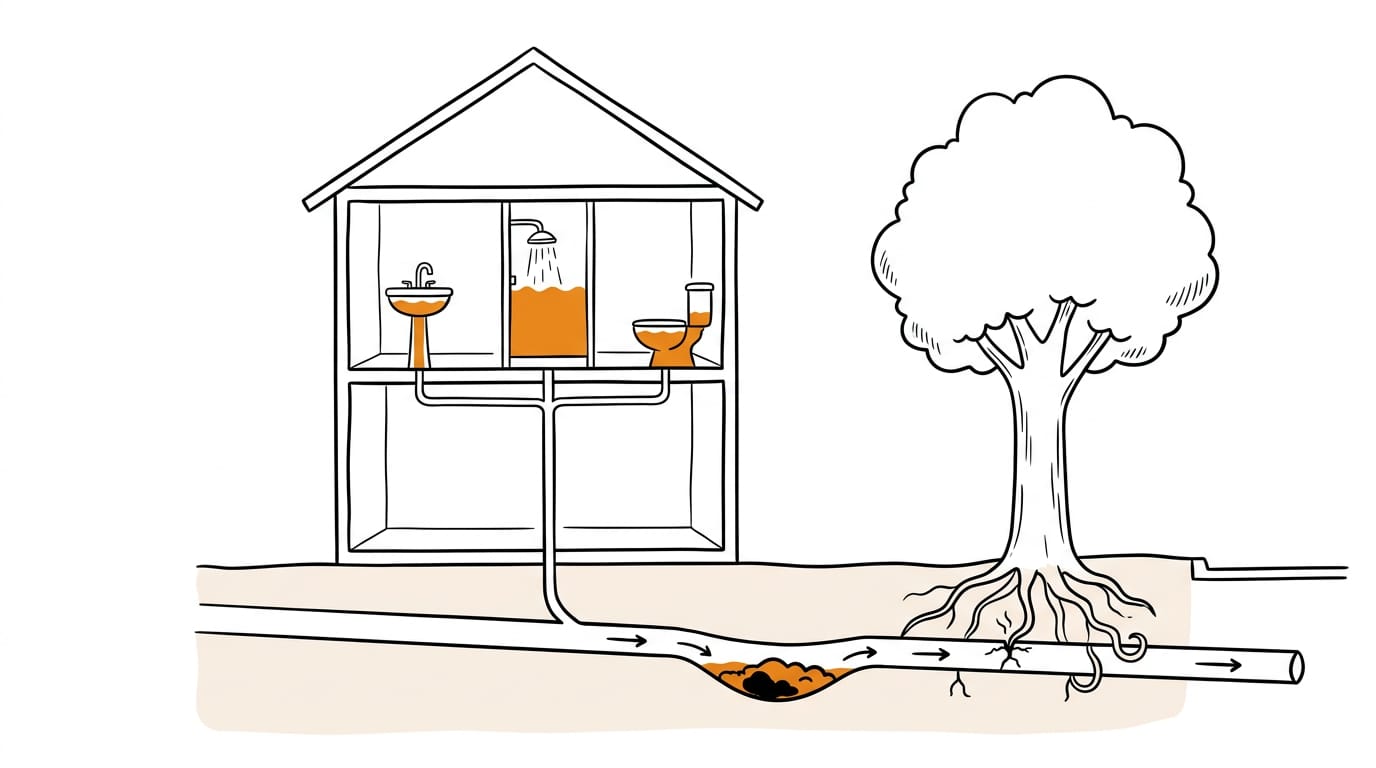
Some clogs sit deep in the main line, the shared pipe that carries waste out of the house. Household fixes rarely reach that far.
- Tree roots: Roots seek moisture and can work into small cracks, catching waste and growing into a dense mass.
- Aging, corroded pipes: Old pipes can rust, crack, or sag, creating low spots where waste stalls.
- Multiple drains backing up: When the sink, shower, and toilet all slow at once, the problem sits further down the line.
The clue is how many drains are affected. One slow drain is usually a local clog. Several at once points deeper.
Warning signs your drain is blocked
Watch for these signals:
- Lingering standing water: Water that hangs around long after the tap is off.
- Foul smells: A sour or musty odor from the plughole often means food is trapped and rotting.
- Drain flies: Tiny flies hovering over a drain usually mean gunk inside the pipe is feeding them.
- Gurgling or sewage smell: Bubbling when another fixture drains, or a sewage smell that won’t clear, suggests a blockage is slowing the flow.
Spot them early and you’re dealing with a slow drain, not a flooded floor.
Unclogging Drains with Vinegar and Baking Soda
Baking soda and vinegar are a gentle first move for a slow drain clogged with light build-up, like soap scum, hair, grease, and food bits. Here’s how to use them and what happens once they meet.
What you need and how much
- Half a cup of baking soda
- Half a cup or one cup of vinegar
- Hot or boiling water, for the pre-flush and the final rinse
- Lemon juice as an alternative to the vinegar
A half cup of vinegar is enough for a mild slowdown. Use the full cup if the water has been pooling for a while.
Applying the mix and timing each step
Consider a renter whose bathroom basin has slowed to a crawl. Rather than booking a plumber, they work through these steps with what’s already under the sink:
- Pour boiling water down the drain to flush it through first.
- Tip in the baking soda and let it sit briefly.
- Pour in the vinegar, then cover the drain with the plug.
- Wait five to ten minutes, or up to an hour for a large clog.
- Finish with a final flush of hot water.
Covering the drain keeps the reaction working down the pipe instead of escaping upward, so don’t rush the wait. Give it time.
What the fizz does inside your pipes
Once the vinegar meets the baking soda, the two react and release carbon dioxide, the gas behind that foamy fizz.
The bubbles loosen grime clinging to the pipe walls, and they push past the first bend into the hard-to-reach areas a splash of water can miss. Think of the fizz as a progress report rather than a finish line.
It’s proof the mix is working, so keep waiting.
Tips and variations worth trying
- Lemon for kitchen drains. Lemon juice is a good swap for vinegar in kitchen sinks.
- Use fresh lemon. Squeeze it just before you pour.
- Longer wait for large clogs. For a big blockage, leave the mix for the full hour.
- Hot water removes the vinegar smell. A last rush of hot water clears that sharp scent from the drain.
- Washing-up liquid in the mix. Yes, you can mix Dawn, or any washing-up liquid, in with the baking soda and vinegar. It’s optional, so leave it out if you’d rather keep things simple.
- Stainless sink: rinse, avoid residue. After treating a stainless steel sink, rinse it thoroughly so no residue is left on the surface.
How Well Baking Soda and Vinegar Works
Baking soda and vinegar can help a slow drain, but the fizz has real limits. Here’s where it works, where it falls short, and what overdoing it can cost you.
Why the reaction falls short
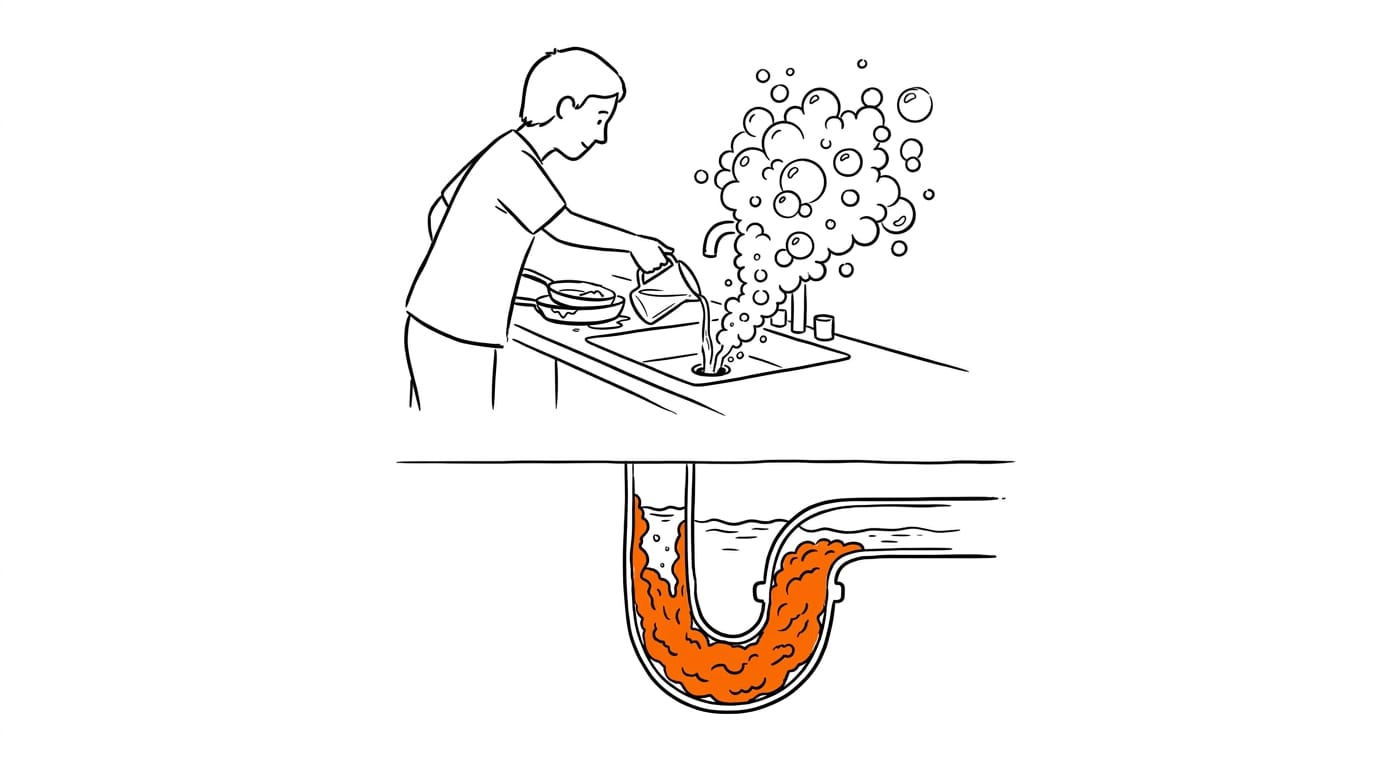
The reaction produces carbon dioxide (CO2), water, and salt. The bubbling looks dramatic, but it’s fizz, not force, so it can’t push a clog through. It also can’t dissolve hair or grease.
Picture a parent whose sink has drained slowly all week after greasy pans. According to Express.co.uk, vinegar can’t dissolve grease the way soda crystals can, so a fizzing pour leaves that film right where it is. The mix really only suits minor clogs.
Popular claims about what it does
Here’s how the common claims hold up:
- Dissolves hard deposits. The fizz lacks the force to break up hard build-up in a pipe.
- Kills bacteria, cuts grime. A study of home disinfectants and natural products found that neither vinegar nor baking soda reached a three-log reduction, a measure of how many germs are removed. Claims about germs and grime are uncertain.
- Loosens slime from pipe walls. Bubbles don’t scrub, so slime on the pipe wall usually stays put.
- Fast blockage removal. Don’t expect a quick fix. If a stubborn clog doesn’t shift after one try, you’ll need a different approach.
What happens if you use too much baking soda?
Too much baking soda down the drain doesn’t speed things up. It can cause these problems:
- Salt residue buildup. Leftover salt can build up in the pipe over time.
- Corrosion in older pipes. Heavy doses can corrode older pipes. A critical review in npj Clean Water notes that corrosion susceptibility tends to rise with age, though it varies by pipe type.
- Damaged rubber seals. Excess can wear on the rubber seals in the drain.
- A boiling water mess. Pouring boiling water after a big fizz can make the mixture bubble over and splash out of the sink.
- Dangerous mixing. Mixing it with chemical cleaners is dangerous, so never combine the two.
How it stacks up against chemical cleaners
Chemical cleaners are harsh on pipes. According to Sweden’s chemicals agency, Kemikalieinspektionen, they can corrode the material pipes are made of.
A study of thermoplastic piping in residential plumbing notes that damage can occur when high concentrations of certain drain cleaners stay in plastic piping for unusually long periods without flushing.
That’s why mechanical methods, such as a plunger or drain snake, are often preferred. Baking soda and vinegar are the gentler choice, so you can try them first. Gentle, but not magic.
Stronger Alternatives and Professional Help
When vinegar and baking soda stall, your next move depends on how stubborn the clog is. Ranked by risk, plungers and strainers are gentlest, snakes sit in the middle, and hydro-jetting is strongest but needs a pro.
Tools you can use yourself
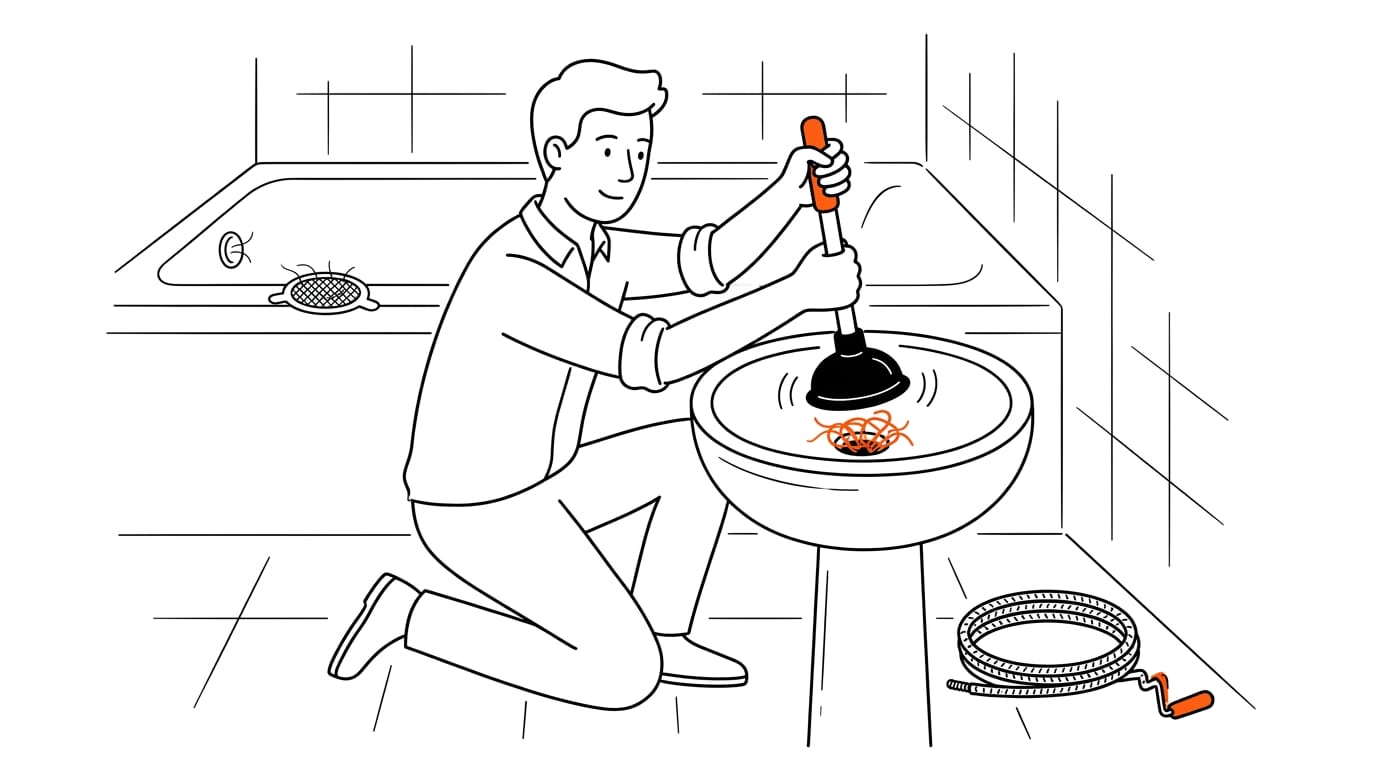
Start with a plunger, which pushes water to shift a clog in a sink, basin, or bath. Keep a hair strainer (a small mesh cover over the plughole) in the shower to catch hair early.
For a clog deep in the pipe, a drain snake (or auger) is your best option: a flexible cable you feed in slowly and twist to break up or hook the blockage.
For example, a tenant with a slow bathroom basin can lift out the trapped hair and skip the call-out.
What do plumbers use to unclog drains?
Plumbers have more power. A camera inspection threads a small camera into the line so they can see where the blockage sits rather than guessing.
Then they clear it with mechanical snaking (a powered cable for clogs too stubborn for a hand tool) or hydro-jetting, which scours grease from the pipe walls with high-pressure water. In practice, they often check the result on camera before they leave.
Signs it’s time to call a plumber
Call in a pro when the problem outgrows one drain. Watch for:
- Multiple slow drains at once, which points to a shared line.
- Repeated clogs that return soon after clearing.
- Sewage smell, which can mean a blockage further down the line.
- Unusual backups, such as water rising in another fixture.
- Mechanical methods failed: if the plunger and snake haven’t shifted it, stop forcing it.
When you’re stuck, escalate in this order: plunger, then snake, then a plumber. If the drain stays sluggish, make the call.
Keeping Drains Clear Day to Day
The easiest clog to fix is the one that never forms. Daily habits and a short routine help you prevent blockages instead of chasing them.
Everyday habits that prevent clogs
- Use drain strainers. Fit one in the kitchen sink and shower to catch food and hair.
- Don’t pour fats down. Grease cools and hardens inside pipes, so pour cooking fat into a tin and bin it once it sets.
- Scrape plates first. Scrape leftovers into the bin before rinsing, so less debris reaches the pipe.
- Switch to liquid soap. It dissolves more readily than bar soap, so it’s less likely to leave residue that builds up in the pipe.
For example, a parent who scrapes dinner plates and pours bacon fat into an old tin keeps the sink flowing without a plunger.
Routine drain cleaning you can schedule
- Weekly boiling water. Once a week, pour a kettle of boiling water slowly down the drain to loosen light grease.
- Enzyme-based cleaners. These use natural enzymes to break down hair and food residue, so follow the label.
- Regular baking soda cleaning. Every so often, repeat the baking soda and vinegar method covered earlier in this article as a gentle reset.
- Annual professional cleaning. Once a year, book a plumber to clear the lines and reach buildup that home methods can’t.
Consider a shared-house tenant who adds the weekly kettle flush to the Sunday chores list. Routine beats rescue.
Watch for tree roots and pipe damage
- Plant trees away from lines. Tree roots can crack and invade pipes, so plant trees and large shrubs well clear of drain and sewer lines.
- Camera inspection if suspected. If drains keep backing up or you suspect root damage, ask a plumber to run a camera through the pipe to see the problem instead of guessing.
Baking soda and vinegar are a handy first step, especially for slow drains caused by hair, soap scum, or a little grease.
When the water still won’t budge, that’s your cue to move on to a stronger option or call in a professional, and there’s no shame in that.
Keep up small habits like using a hair catcher and running hot water through the drain now and then, and you’ll spend far less time wrestling with clogs. Catch the buildup early, and your drains will keep flowing freely.
References
- Questions and answers about drain cleaners — kemi.se (2026)
- Analysis and ranking of corrosion causes for water pipelines: a critical review — nature.com (2023)
- Antimicrobial activity of home disinfectants and natural products against potential human pathogens — pubmed.ncbi.nlm.nih.gov
- Investigation of standards, performance characteristics and evaluation criteria for thermoplastic piping in residential plumbing systems — doi.org (1978)
- Stop using vinegar or baking soda to unblock drain as 1 natural item is much more powerful — express.co.uk
Questions
What is the best homemade drain cleaner?
For a minor, slow drain, baking soda and vinegar are a gentle homemade option. Pour half a cup of baking soda down the drain, add half a cup to one cup of vinegar, wait five to ten minutes (up to an hour for a larger clog), then flush with hot water.
What is the strongest thing to unclog a drain?
Hydro-jetting, which uses high-pressure water to scour pipe walls, is the strongest drain-clearing method described here, but it should be done by a professional. For home use, a drain snake is a stronger choice than baking soda and vinegar for a stubborn clog.
How do you unblock a badly blocked sink?
Start by removing visible debris or hair, then try a plunger. If that fails, feed a drain snake into the pipe and twist it slowly; stop if the blockage will not shift. If several drains are affected, the clog keeps returning, or you notice sewage smells or backups, call a plumber.
What do plumbers use to unclog drains?
Plumbers commonly use a camera inspection to locate the blockage, then clear it with a powered drain snake or hydro-jetting. They may use the camera again afterward to check the result.
Can I mix Dawn and vinegar and baking soda together?
Yes. Dawn or another washing-up liquid can be mixed with baking soda and vinegar, but it is optional. Never combine the mixture with chemical drain cleaners.
Can baking soda and vinegar unclog a sink drain?
It can help with a slow drain and light buildup, but it is not a reliable fix for a serious blockage. The fizz loosens some grime but does not have enough force to push a clog through or dissolve hair and grease.
What can I do to unclog a drain that is deep in the pipe?
Use a drain snake, also called an auger, feeding the flexible cable into the pipe slowly and twisting it to break up or hook the blockage. If the clog is deep in a shared main line, or several drains are backing up, call a plumber for inspection and professional clearing.
What happens if you put too much baking soda down the drain?
Too much baking soda will not clear a drain faster and can leave residue that builds up over time. Heavy use may also harm older pipes or rubber seals, and pouring boiling water onto a large fizzing mixture can cause it to bubble over. Avoid mixing baking soda with chemical cleaners.
Sources
- Stop using vinegar or baking soda to unblock drain as 1 natural item is much more powerful | Express.co.uk, express.co.uk
- Antimicrobial activity of home disinfectants and natural products against potential human pathogens - PubMed, pubmed.ncbi.nlm.nih.gov
- Analysis and ranking of corrosion causes for water pipelines: a critical review | npj Clean Water, nature.com,
- Investigation of standards, performance characteristics and evaluation criteria for thermoplastic piping in residential plumbing systems, doi.org,
- Questions and answers about drain cleaners - Kemikalieinspektionen, kemi.se,
Read next
- Baking Soda for Coffee Stains: What Works and What Doesn'tBaking soda for coffee stains can help, but the right order matters. See how to treat fresh spills on clothes, sofas, carpet, wood, and mugs safely.
- Baking Soda Smell Removal: How It Works and Where It StopsBaking soda smell removal can freshen bins and gym bags, but it won’t fix the source. Find where odors start and choose cupboard-first fixes that work.
- How to Unclog a Sink: Simple Fixes That WorkHow to unclog a sink: start with simple natural fixes, then use tools or take apart pipes if needed. Avoid chemical cleaners that can backfire.
Stain Finder: a free stain removal guide
Find your stain