How to Unclog a Sink: Simple Fixes That Work
How to unclog a sink: start with simple natural fixes, then use tools or take apart pipes if needed. Avoid chemical cleaners that can backfire.

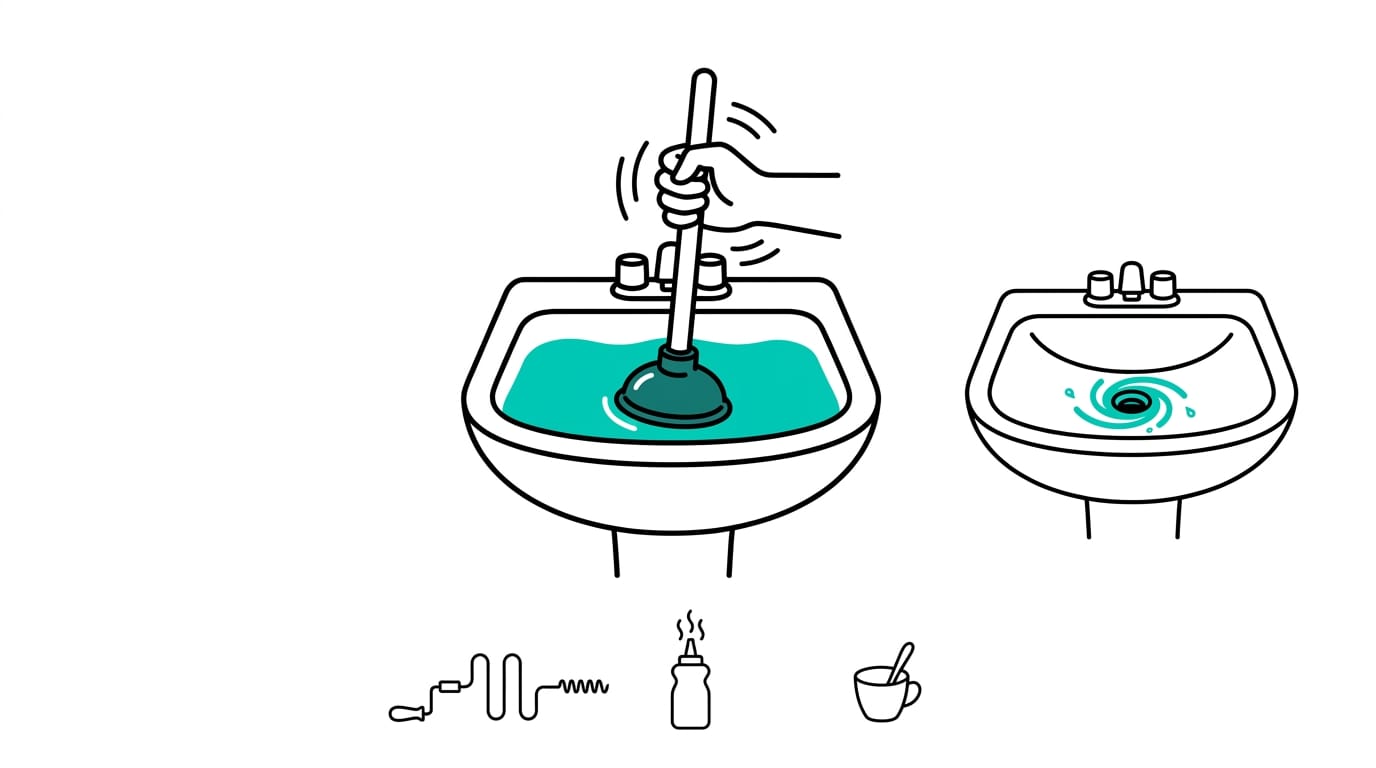
Unclogging a sink means removing the buildup or object stopping water from flowing through the drain. Start with gentle methods, then match the fix to the clog: use a plunger for many blockages, a snake for hair, or clean the stopper or P-trap; use chemical cleaners cautiously and never force a deep clog. Prevent future backups by keeping grease and scraps out, using a hair catcher, and calling a plumber when DIY fixes fail.
Picture your kitchen sink after a big pan of pasta: the water just sits there, creeping toward the rim while you wonder what to do next.
A slow drain feels like a crisis, but most clogs can be cleared without calling anyone, using things you probably already have.
In this guide, we’ll move from the simplest fixes to the more involved ones, so you can start small and reach for heavier tools only when needed. Along the way, you’ll find advice matched to what’s actually blocking the pipe.
Natural Ways to Unclog a Sink
You likely have everything for these methods already in the cupboard, and they run from the gentlest to the most involved. Let’s start with the one that fits how slow your drain is.
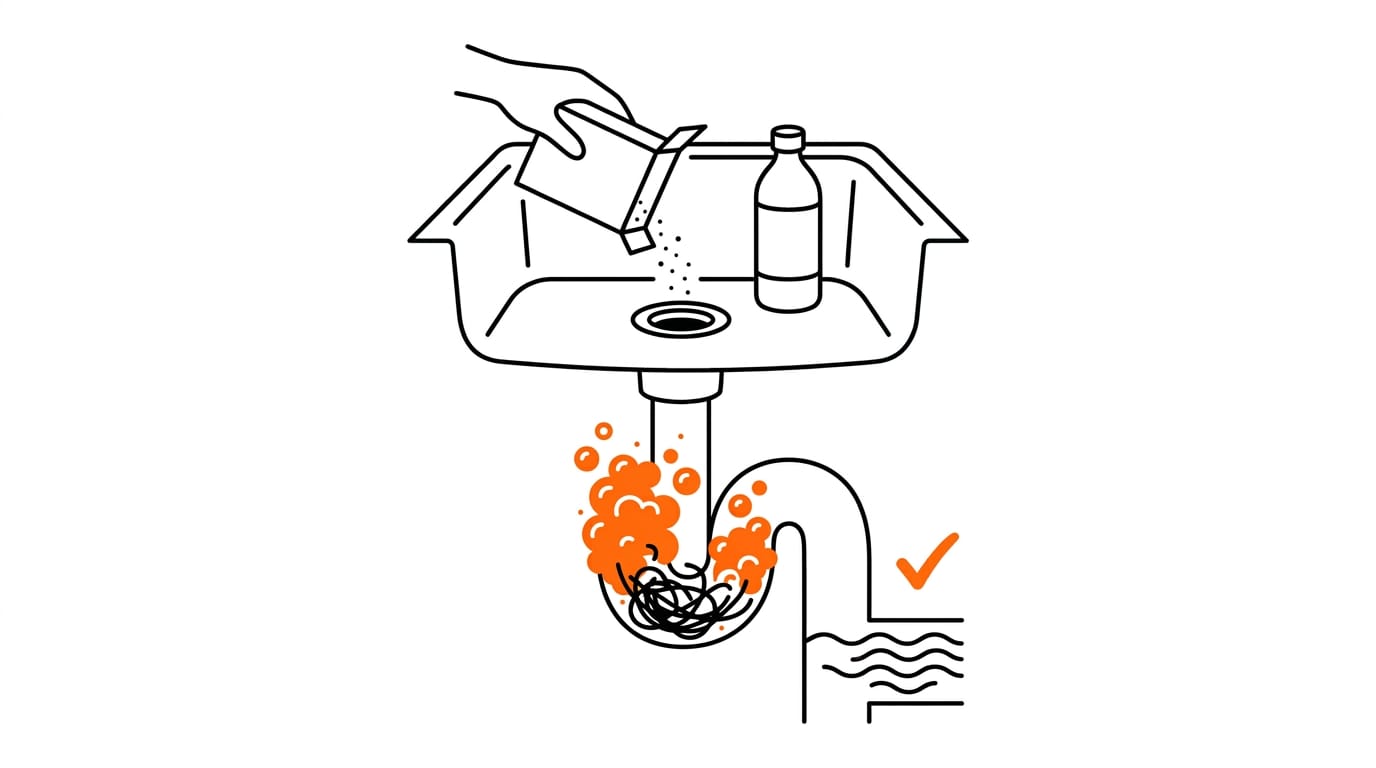
Mixing baking soda and vinegar
Picture a home cleaner whose kitchen sink has started draining slowly after a busy week of washing up. Mix equal amounts of baking soda and vinegar, pour the mixture down the drain, and let the fizzing loosen the grime. Let it sit, then flush with water.
It’s best for routine maintenance, not a stubborn blockage.
So do baking soda and vinegar work better than Drano? That depends on the clog. CNN Underscored explains that “For minor, slow drains, natural methods like baking soda and vinegar can help.”
Drano is a chemical drain cleaner, so it’s a different kind of product, and the kitchen mix is best for a drain that’s only starting to slow.
Baking soda and salt as a scrub
Pairing baking soda with salt creates an abrasive scrub, so it scrubs buildup away rather than just loosening it. Pour the mix into the drain, let it sit, then flush with hot water.
Amounts vary depending on the drain, so treat any measurements as a starting point and adjust as you go.
How to dissolve grease in pipes naturally?
A parent frying bacon for school breakfasts may find a greasy film building up in the sink. Clearing it keeps the morning moving. Start by removing any standing water, scooping out what’s sitting in the basin so the mixture can reach the clog.
Pour the ingredients in stages rather than all at once, letting each one work before you add the next. This approach is best for soap scum or grease. For grease, add a squirt of dish soap.
If your sink is stainless steel, keep scrubbing gentle so the abrasive mix doesn’t scour the finish.
Salt and hot water to scour pipes
Coarse salt scours pipes, so it’s a useful option when you want something gritty to work through buildup. Pour in half a cup of salt, then flush with hot water. Work through the methods in order, and stop as soon as the water runs freely.
Tools That Clear a Clogged Drain
Match the tool to the blockage, and start with the simplest one you’ve got. Here’s the lineup, from easiest to most involved:
Using a plunger the right way
A sink plunger is your first stop. For example, a parent with a slow bathroom sink after bath time can often clear it before morning.
First, check that the pipes under the sink are firm, and tighten anything loose, since a wobbling pipe can shift under pressure.
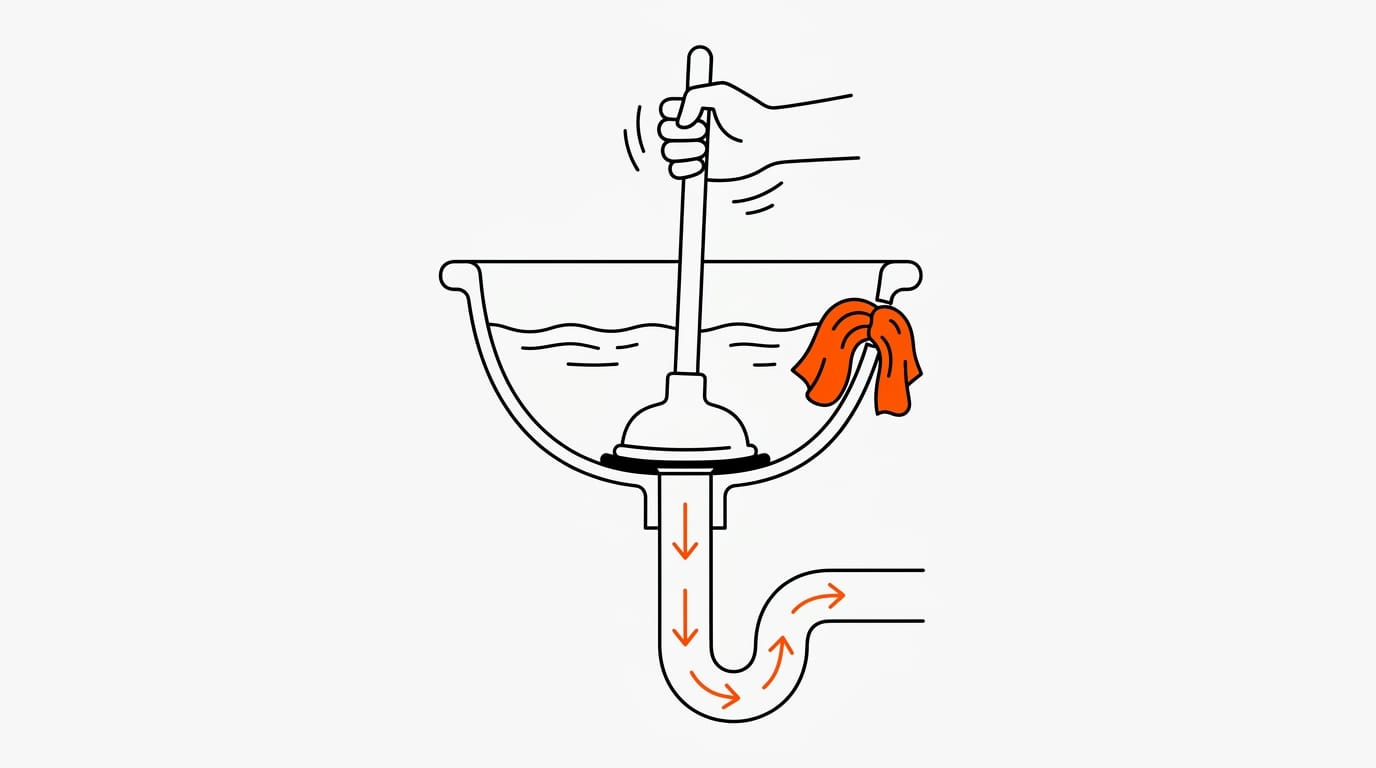
Then work through these steps:
- Grab a sink plunger, not the one you use on the toilet.
- Fill the basin until the plunger head is fully submerged.
- Seal the drain, and block the overflow and second basin (if you have one) so the pressure goes down the drain.
- Push with rapid, strong thrusts.
It’s the seal that does the work, not sheer muscle, so keep the cup firmly in place. Seal tight, push hard.
Drain snakes for stringy hair clogs
If the clog is stringy hair, a cheap drain snake is the best tool for the job, and inexpensive hair snakes are worth keeping in the bathroom cupboard.
Consider a flatmate with a slow bathroom sink full of hair: a snake can clear it without anyone calling the landlord. Feed it down the drain, wiggle it gently until it catches, then pull it out slowly so the hair comes with it.
For deeper clogs, reach for a plumber’s auger, a longer tool built to reach further down the pipe.
Bending a coat hanger into a hook
No snake? Straighten a wire coat hanger and bend one end into a small hook. It reaches hair and gunk near the top of the drain, but it has less reach than a snake, so save it for clogs close to the opening, not the ones deep in the pipe.
An old toothbrush helps scrub off whatever the hook brings up. Think of a tenant with a slow sink and only a wardrobe full of hangers: a bent one can save a trip to the shop.
Using a shop vacuum on stubborn clogs
When a clog won’t budge, a shop vacuum adds suction. Set it to its highest liquid setting, then create a tight seal around the hose where it meets the drain. That seal lets the suction pull at stubborn clogs.
Picture a host with a backed-up kitchen sink before a dinner party: a shop vac can clear it in time for the first guest. No seal, no suction.
Pricey air guns and hose bladders
Air guns and hose bladders clear by pressure instead of hooks or suction, but they’re expensive, hard to set up, and not always effective. Treat them as a last resort, not a first choice.
For most home cleaners, the cheaper tools above are the smarter place to start.
Taking Apart the Pipes Under the Sink
When water won’t drain and a plunger hasn’t helped, start with what’s easiest to reach under the sink.
Cleaning out the P-trap under the sink
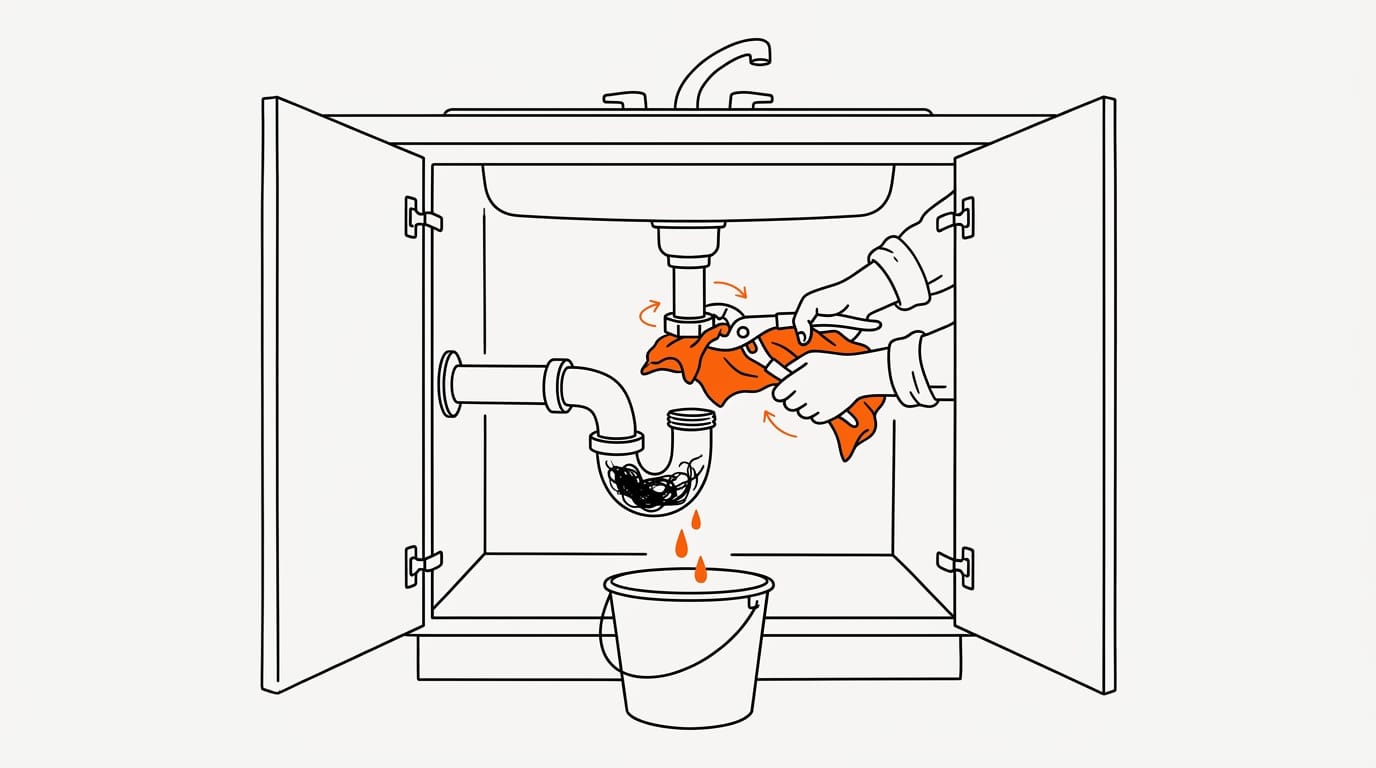
The P-trap is the U-shaped pipe under the sink, and it’s where hair and grease tend to collect first. Set a bucket beneath it, since the water inside will spill the moment you loosen anything.
Loosen the slip nuts, the collars holding each joint, by hand, or use pliers wrapped in a rag if they’re stiff. Pull the trap free and empty out the debris.
Think of a home cleaner facing a client’s backed-up kitchen sink. A quick clean-out saves the visit from starting with standing water.
Reassemble the trap, hand-tighten the nuts, and run the tap. Watch each joint for drips. If one leaks, give that nut a small extra turn and test again. Dry joints mean you’re done.
Pulling out and cleaning the stopper
Hair usually wraps around the stopper and the pivot rod, which raises and lowers it. Unhook the rod from the clevis strap, the small bracket holding it, then lift the stopper out.
Wear gloves, pull away the hair, and scrub off the grime before rinsing. Reinsert the stopper and reconnect the rod. Then consider a better hair catcher, since the real fix is less about clearing and more about catching.
Reaching clogs deeper in the pipes
If the clog sits past the trap, unscrew the stub pipe or P-bend, the short section leading toward the wall. Then feed in a drum snake (a long coiled cable on a reel) or a wand snake (a thin, flexible rod), turning it slowly until it clears.
If it’s still blocked past the trap, call a professional rather than forcing it. Know when to stop.
Problems Unique to Kitchen Sinks
Kitchen sinks have their own troublemakers. Grease, food scraps, and hair each cause different problems, so identify yours before you reach for a tool.
Grease slows the water and leaves a sticky film, food scraps tend to jam the disposal, and hair can build up in kitchen drains too. Once the drain runs freely, that sticky film may still need its own clean on a stainless steel sink.
Fixing a jammed garbage disposal
When the sink backs up and the disposal hums without spinning, you’re likely dealing with a jammed flywheel, the spinning disc inside the unit that has stuck.
Picture a parent who flips the switch after dinner and hears only a low hum. Work through these steps in order:
- Unplug before inspecting. Switch the unit off at the wall or unplug it before you look inside.
- Check for a jammed flywheel. Shine a flashlight into the opening and look for anything caught against the blades.
- Use the manufacturer’s wrench. Fit it into the small socket on the underside and turn it back and forth until the flywheel moves freely. Work gently, freeing the flywheel rather than forcing it.
- Remove items with pliers or tongs. Once the flywheel moves, lift out whatever is caught. Use pliers or tongs, never your fingers.
Double sinks and dishwashers need a quick check too. If only one bowl drains slowly, the blockage is likely in that bowl’s drain; if both back up, the problem may be shared.
A dishwasher that drains through the disposal can be held up by the same jam, so clear the disposal first. Consider a home cleaner whose dishwasher stops after a greasy roasting tray.
Clearing the disposal is quicker than taking apart pipes. Then the dishwasher drains.
Why Chemical Drain Cleaners Can Backfire
Chemical bottles look like the fastest fix, but they aren’t always the smartest. Here’s when a drain unblocker helps, when it hurts, and how to use one.
Using chemical cleaners with caution
Treat chemical cleaners as a last resort, since they’re riskiest on a fully blocked drain. Picture a home cleaner facing a kitchen sink still full of water after a long shift.
Rushing for the strongest bottle feels productive, but slowing down and trying gentler methods first is the safer win.
Enzyme formulas are often presented as gentler, but they’re weaker and may act more slowly. A study on eco-enzyme cleaning at a Manado church found that stubborn oil build-up needed longer soaking or repeated application than stronger chemical cleaners.
Some manufacturers state their formulas are safe for pipes, so don’t take that at face value. Researchers who read numerous drain-cleaner labels chose a product with strong concentrations of sodium hypochlorite and sodium hydroxide.
If you’re asking how to use a drain unblocker, follow the label: measure the amount it specifies, leave it for the stated time, then rinse as directed.
When boiling water does more harm
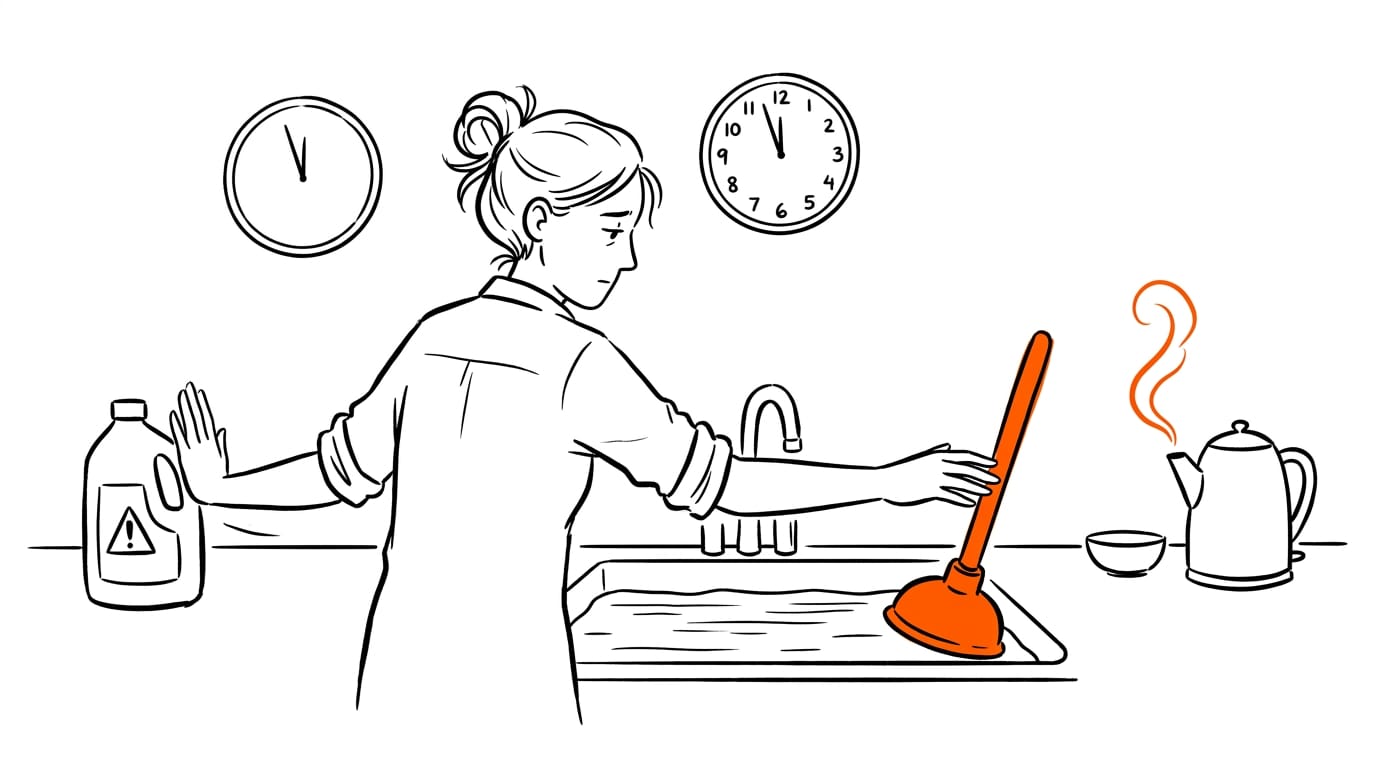
Pouring boiling water down a drain feels harmless, but it can cause trouble in three places:
- Acrylic and stone. Boiling water can damage these surfaces, so check your sink material first.
- Plastic pipes and seals. A review of thermoplastic piping in residential plumbing notes that these plastics’ critical temperatures sit near boiling, so boiling water may harm pipes and seals.
- Grease farther down. Hot water can move grease down the line rather than clear it. Protect your pipes, a City of Calgary guide, notes that underground sewer pipes are cold, so grease hardens on pipe walls even when hot water and soap are used.
Save the kettle for your tea.
Preventing Clogs and Calling a Plumber
The goal is less about clearing clogs and more about preventing them. Knowing when to call a pro matters too.
How often should I clean my sink drain?
A weekly hot-water-and-soap flush is the simplest answer: run hot water and a squirt of washing-up liquid down the drain. Add regular vinegar and baking soda maintenance to keep residue in check. A few everyday habits help too:
- Keep grease and coffee grounds out. Scrape pans into the bin, since both can trap debris in the pipes.
- Use a hair catcher. It catches hair before it reaches the drain.
- Don’t overload your garburator. It’s the kitchen waste disposal unit under the sink, so feed it small amounts at a time.
Consider a home cleaner who ends every weekly clean with a hot-water flush and a hair catcher in place. That habit means no weekend lost to a backed-up sink. Prevention beats plunging.
When DIY fixes fail, call a pro
Some clogs won’t budge with home methods, and that’s your cue to call for help. A plumber can run a camera scope through the lines to find the blockage, especially in deep, stubborn clogs. Think of a tenant whose sink backs up again a week after each fix.
A scope finds the real cause, so they stop the cycle of guesswork. Treat a plumber’s service as your fallback, not your first step.
Staying safe before you start
Set yourself up for a safe job before you reach under the sink:
- Wear rubber gloves. They protect your hands from grime.
- Use a bucket for water. Place it under the pipes to catch what drains out.
- Take a photo before you take anything apart. It shows exactly how everything goes back together.
- Avoid abrasive or poisonous chemicals. They can harm you and your pipes, so choose gentler options.
As we’ve seen, a clogged sink rarely needs brute force. Start with the gentlest method, match the fix to what’s actually blocking the pipe, and save heavier tools and chemicals for when they’re truly needed.
Knowing when to stop and call a professional is part of the job too.
With a little patience and the right order of attack, most slow drains can be cleared at home. Start simple, stay patient, and that stubborn sink will be draining freely again.
References
- Study on the Use of Eco-Enzyme in the Cleaning Process of Houses of Worship at Isa Al-Masih Church Tikala Manado — doi.org (2025)
- Protect your pipes — calgary.ca
- Use of drain cleaner in processing shale samples — doi.org (1990)
- Review of performance characteristics, standards and regulatory restrictions relating to the use of thermoplastic piping in residential plumbing — doi.org (1975)
- Best drain cleaners to fight clogs and drain flies — cnn.com (2026)
Questions
How do you unblock a badly blocked kitchen sink?
For a badly blocked kitchen sink, start by removing standing water, then use a sink plunger with a tight seal over the drain and block any overflow or second basin. If that fails, clean the P-trap with a bucket underneath; for a clog deeper in the pipe, try a drain snake. Avoid chemical cleaner on a fully blocked drain, and call a plumber if the blockage remains.
How often should I clean my sink drain?
Clean your sink drain weekly by flushing it with hot water and a squirt of dish soap. You can also use baking soda and vinegar periodically to help keep residue in check, and prevent clogs by keeping grease and coffee grounds out.
How do I use unblock drain cleaner?
Follow the drain cleaner’s label exactly: measure the stated amount, leave it in the drain for the specified time, then rinse as directed. Use chemical cleaners cautiously, especially if the drain is fully blocked, and never mix them with other cleaners.
What can I pour down the sink to unblock it?
For a slow drain, equal amounts of baking soda and vinegar can help loosen grime; let the mixture sit, then flush with water. Dish soap can help with grease, while salt followed by hot water can scour buildup. These methods are best for minor buildup, not a stubborn blockage.
What liquid can you pour down a drain to unclog it?
For a minor, slow drain, try equal amounts of baking soda and vinegar, let the mixture sit, then flush with water. For greasy buildup, add a squirt of dish soap. These approaches may not clear a severe clog.
Does boiling water help unclog a sink?
Hot water may help flush loose residue, but boiling water can damage some sink surfaces, plastic pipes, and seals. It can also push grease farther down the line, where it may harden, so avoid pouring boiling water into the drain.
What can I pour down the kitchen sink to unclog it?
For a slow kitchen drain, pour equal amounts of baking soda and vinegar down it, let the mixture sit, then flush with water. A squirt of dish soap can help with grease. Keep food scraps, grease, and coffee grounds out of the drain to prevent further clogs.
Do baking soda and vinegar work better than drano?
Neither works best for every clog. Baking soda and vinegar can help with a minor, slow drain and routine maintenance, while a chemical cleaner may be more effective for some clogs but should be used cautiously and according to its label. For a fully blocked drain, try a plunger or clean the P-trap rather than relying on chemical cleaner.
Sources
- Study on the Use of Eco-Enzyme in the Cleaning Process of Houses of Worship at Isa Al-Masih Church Tikala Manado, doi.org,
- Use of drain cleaner in processing shale samples, doi.org,
- Review of performance characteristics, standards and regulatory restrictions relating to the use of thermoplastic piping in residential plumbing, doi.org,
- Protect your pipes, calgary.ca
- Best drain cleaners to fight clogs and drain flies | CNN Underscored, cnn.com,
More in Kitchen
- Unclog Drain with Vinegar and Baking Soda: What WorksUnclog a drain with vinegar and baking soda for minor clogs. Find out what this fix can't clear and which stronger options can get water moving again.
- What Is an Enzyme Cleaner and How Does It WorkWhat is an enzyme cleaner? See how its proteins break down stains, where it works best, and how to match the cleaner to your stain and surface.
- Remove Water Stains from Wood, Gentlest Fixes FirstRemove water stains from wood by first telling white rings from black marks and finish-level stains from damage in the wood, then choosing the right fix.
Stain Finder: a free stain removal guide
Find your stain