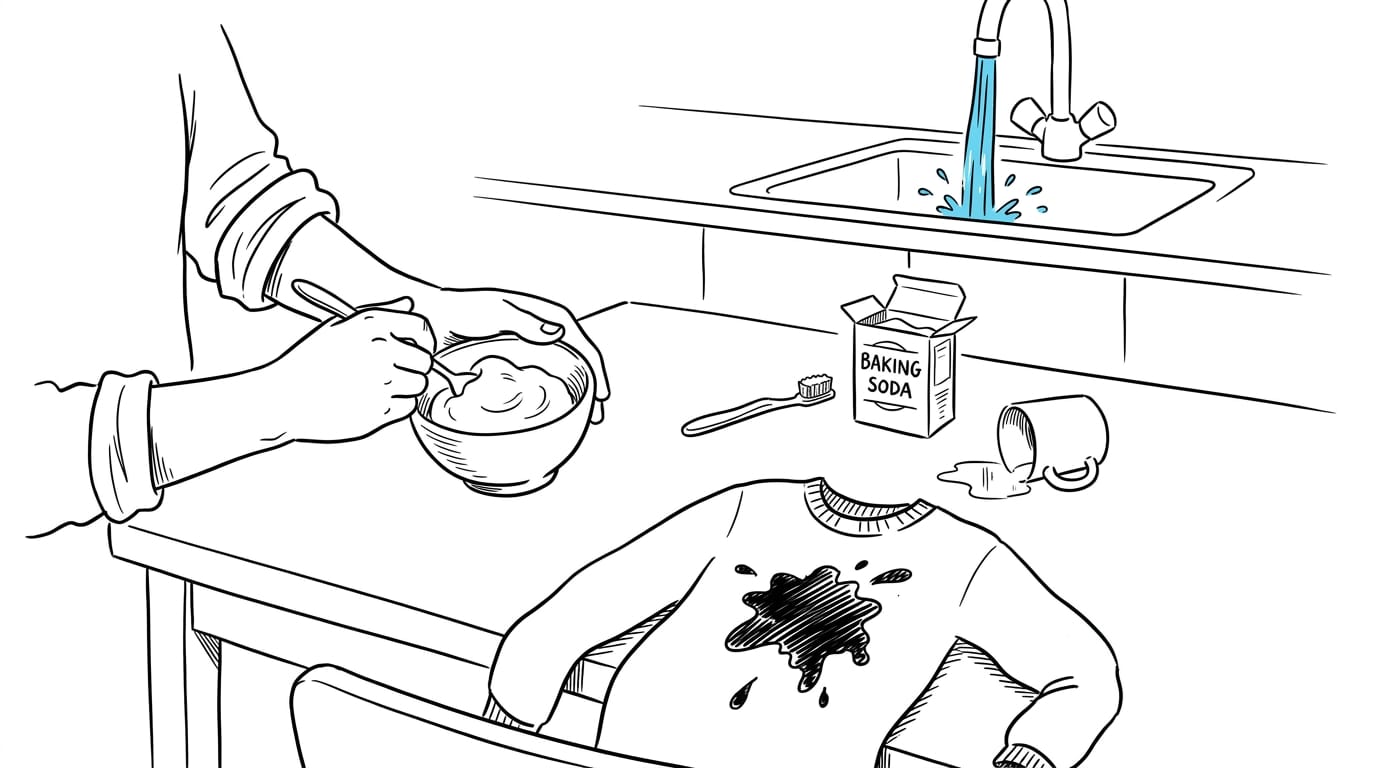
- Mix
- Scrub
- RinseCold
Baking Soda for Coffee Stains: What Works and What Doesn't
Baking soda for coffee stains can help, but the right order matters. See how to treat fresh spills on clothes, sofas, carpet, wood, and mugs safely.

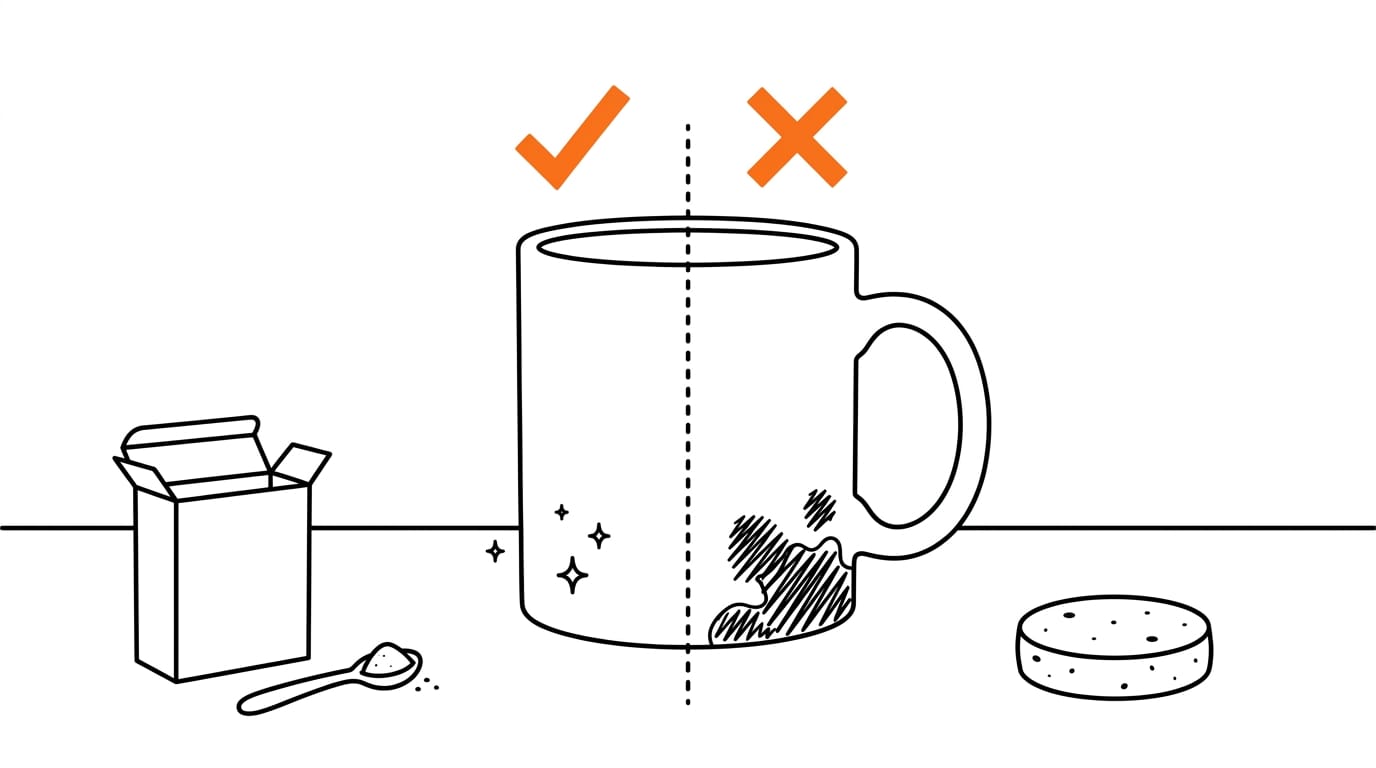
Baking soda is a mild, inexpensive household cleaner that can help loosen coffee stains from fabrics and remove coffee films from mugs when mixed with water into a paste. Blot fresh spills first, treat gently, rinse fabrics with cold water, and test an inconspicuous spot before using stronger mixtures or treating delicate surfaces. Acting quickly and matching the method to the material helps prevent stains from setting or cleaning from causing damage.
Picture this: your coffee is still steaming when your elbow catches the mug, and a brown splash lands across the sofa cushion. Your first instinct is to panic, but a fresh stain gives you a head start.
Baking soda, already sitting in your kitchen cupboard, can be a handy first tool, if you use it in the right order.
In this guide, we’ll cover which method to try first, how to tackle coffee on clothes, carpet, couches, wood, and mugs, and the limits and surface cautions that tell you what to avoid.
Why Baking Soda for Coffee Stains Works
Coffee stains are tougher than they look, so here’s what we’re up against. Knowing why they cling makes baking soda’s role much easier to see.
Why coffee stains set so deeply
A coffee spill doesn’t just sit on the fabric. It settles into it, for a few clear reasons:
- Tannins are natural compounds that bond with fibers, so the color grips the material.
- Melanoidins are dark pigments formed during roasting that add to the stubborn tint.
- Time works against you: the longer the stain sits, the deeper it sets.
- Cold water works best on fresh coffee, so reach for it right away.
Think of a tenant who spills a latte on a rental carpet. Blotting it with cold water within minutes gives the stain little chance to settle. Wait until the next day, and the same mark takes far more scrubbing. Speed is the difference.
How baking soda lifts coffee stains
Baking soda, which chemists call sodium bicarbonate, helps with coffee in a few practical ways:
- It’s alkaline, the opposite of acidic, so it reacts with the acidic coffee rather than just sitting on top.
- Its fine grit is a mild abrasive, gently loosening residue from fibers without harsh scrubbing.
- It has no oils or fats, so it won’t leave a greasy film behind.
- It’s non-toxic and inexpensive, an easy pick for a busy household.
Picture a parent who finds a coffee ring on the kitchen table just before school drop-off. A box already in the cupboard handles it, no special cleaner needed. One cheap box, one quick fix.
How to Get Rid of Stubborn Coffee Stains?
To get rid of a stubborn coffee stain, work from gentlest to strongest. Start with a plain paste, and only add soap, peroxide or toothpaste if the mark holds on. Old, set-in stains may need the stronger mixes and a longer wait. When a mark still holds on, hydrogen peroxide and baking soda is the stronger mix worth a look.
Mix a simple baking soda paste
Think of a parent who has just knocked a flat white across a cream school jumper at breakfast. A quick baking soda paste can save the jumper from the bin. Start with the paste.
Before you start, test colourfastness (whether the colour holds when wet) on a hidden spot. Then:
- Mix baking soda with water until it forms a paste.
- Scrub the stain gently with a toothbrush.
- Rinse with cold water, not warm.
If you’re rushed, sprinkle the powder directly onto the stain instead.
Stronger mixes with soap, peroxide or toothpaste
If the plain paste doesn’t shift the mark, you can strengthen it. Match the mix to the fabric.
- Dish soap: Add a drop to the paste.
- Hydrogen peroxide: Use it on light fabrics only.
- Toothpaste with baking soda: Use a toothpaste that contains baking soda.
- Paste left 30 minutes: Leave the paste on for 30 minutes before you rinse.
When not to use baking soda: Skip it if the colourfastness test shows the colour running. Don’t use peroxide on dark or coloured fabric, and stop to check any surface you haven’t tested first.
Getting Coffee Stains Out of Clothes
To remove coffee stains from clothes with baking soda, blot first, work a paste into the mark, and rinse cold before the stain sets.
What to do right after the spill
Picture a parent who spills coffee on a white school blouse and blots it with a clean cloth straight away. That quick move saves the blouse.
- Blot, never rub. Blotting lifts the coffee out, while rubbing spreads it.
- Rinse cold from the back. Cold water pushed through the reverse side flushes the coffee out.
- Avoid hot water and the dryer. Heat sets the stain for good.
- Air-dry until the stain is gone. Repeat if you still see a shadow.
Pre-treat with soap, vinegar or enzymes
For baking soda, follow these steps:
- Dampen the stain with cold water.
- Mix baking soda with a little water into a thick paste.
- Spread it over the mark and let it sit.
- Rinse cold, then air-dry and check.
You can also pre-treat with:
- Dish soap or detergent. A drop worked into the stain loosens it before the wash.
- Diluted white vinegar. Dab a diluted solution on, then rinse cold.
- Enzyme cleaners. Follow the product’s own instructions.
- Rubbing alcohol on synthetics. Dab a little on a cotton swab and test a hidden spot first.
- Check care labels. Some fabrics don’t tolerate every treatment, so read the label before you apply anything.
Tailor the method to your fabric
- Cotton and linen soak. These fibres can take a longer cold-water soak.
- Synthetics need a gentle approach. Keep pressure light and test first.
- Delicates need pH-neutral detergent. Choose one that’s neither acidic nor alkaline.
- Dry-clean-only items. Take these to a dry cleaner rather than risking the fabric at home.
Lifting Stains from Carpet, Couches and Wood
Coffee on carpet, a couch cushion or a wooden side table each needs a different touch. The order you work in matters just as much as the product you grab.
Blot first, then treat carpet and couches
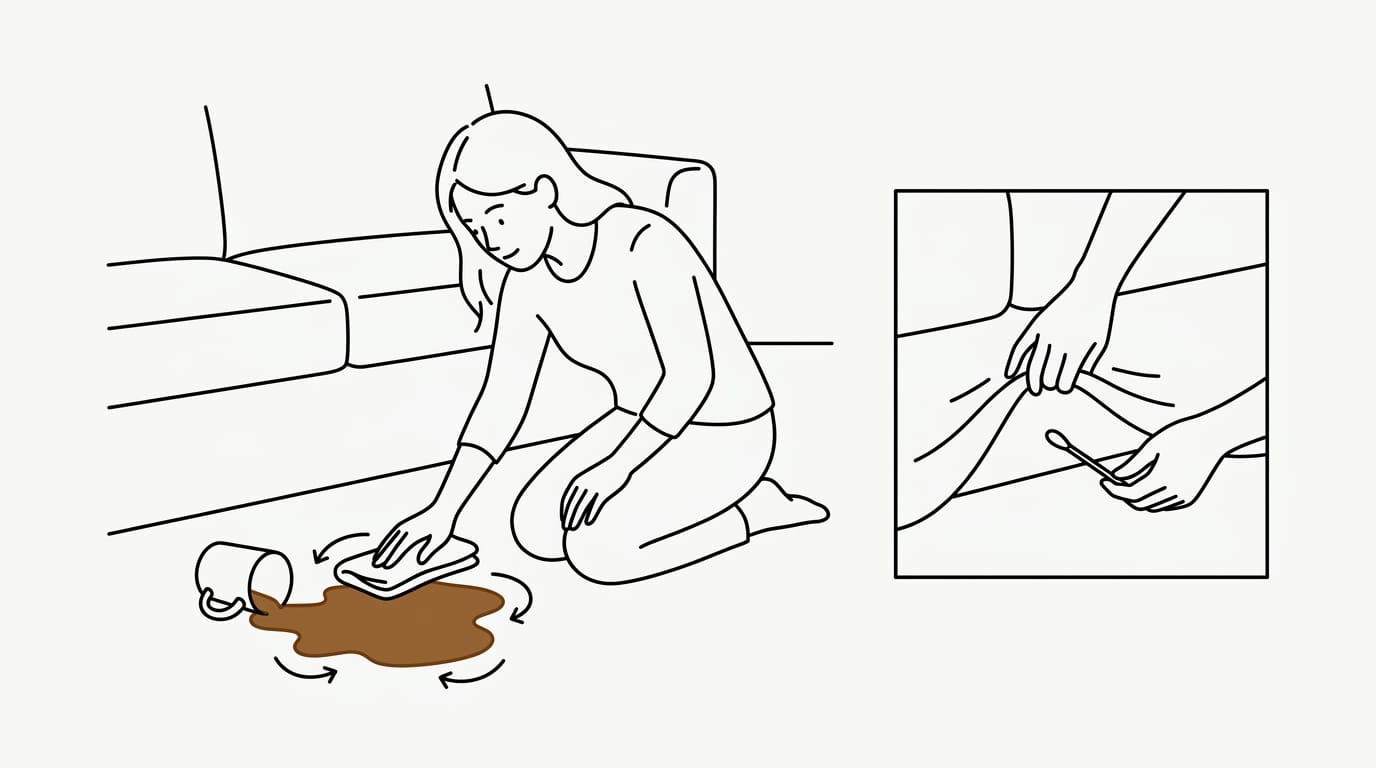
Start by blotting with a clean, dry cloth, working from the edges inward so the stain doesn’t spread. Blot, don’t rub, since rubbing can push coffee deeper into the fibres. Then work through these steps:
- Test a hidden spot, like the inside of a cushion or the corner under the sofa, before you use anything else.
- If the fabric holds up, dab on a dish soap and vinegar solution, then blot again.
- For light carpet, hydrogen peroxide is an option, but keep it for pale colours, since it can lighten darker fibres.
- For stubborn marks, an oxygen bleach carpet cleaner is another choice; follow the label closely.
- Let the area fan or air dry.
Consider a renter who knocks a mug over onto a cream carpet. They blot straight away, test under the sofa, then treat the mark, saving a trip to the carpet cleaner. Test first. It’s a minute well spent.
Gentle fixes for stained wood
Wood needs a lighter hand. Dab a few drops of white vinegar onto the mark with a soft cloth, checking the finish as you go.
For a fainter mark, a dab of lemon juice is another gentle option, but acids can dull some finishes, so test it somewhere hidden first. Finish with wood polish to blend the spot back into the surface.
Worktops, stainless steel and sinks are a different surface again, so don’t assume a carpet or wood method will work there. Test a spot you won’t see first, just as you would on fabric.
Caring for Mugs and Coffee Equipment
Mugs, carafes, and travel gear quietly collect tea and coffee films. A baking soda paste handles most of it, and a few soaks cover the tougher jobs.
How to clean tea stains from mugs?
To clean tea stains from a ceramic mug, mix baking soda with just enough water for a thick paste, then scrub the inside of the cup, not just the rim. Work the base too, then rinse well before the next brew.
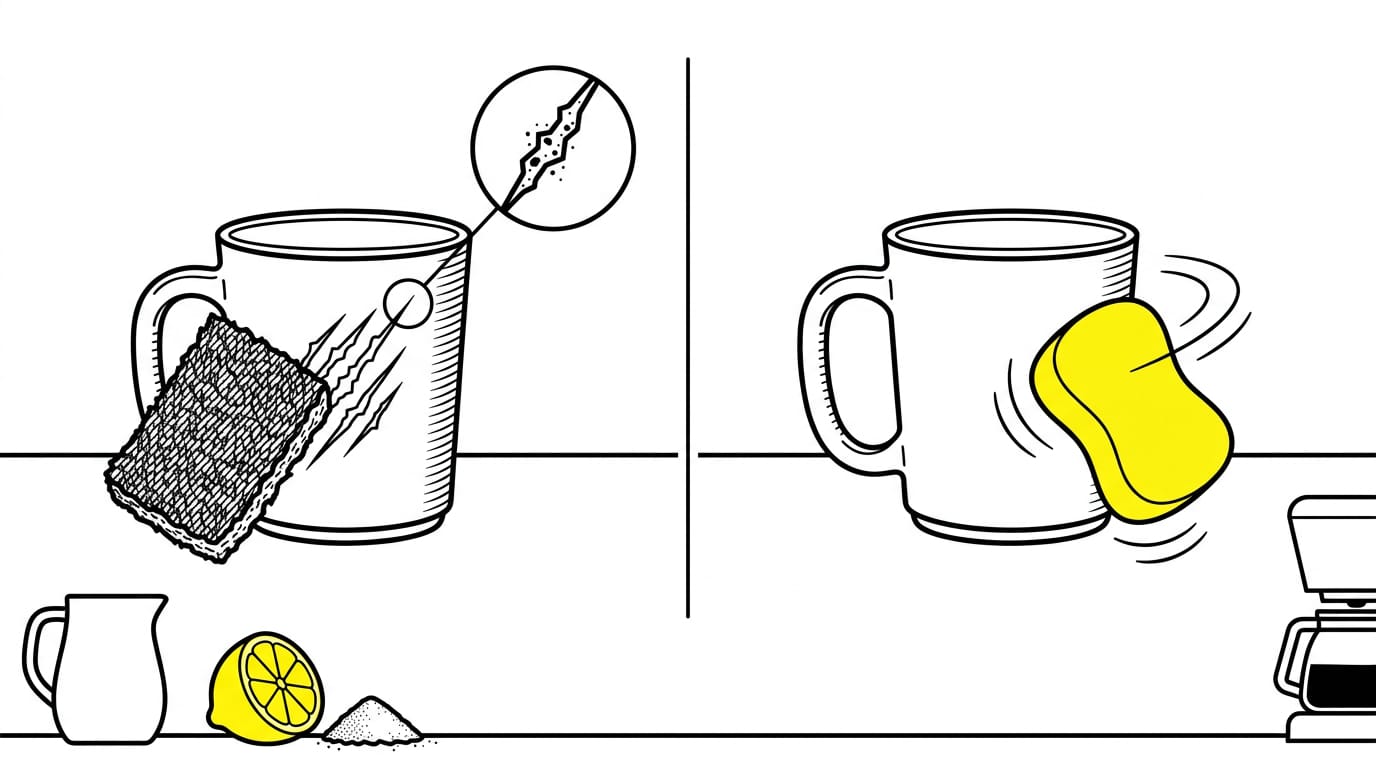
The paste also works on glass carafes. Keep the pressure light so you don’t leave scratches.
Travel mugs and Yeti cups need a brush that reaches the lid seal and neck, and thermoses are easiest with a bottle brush that gets into the body.
For example, a parent packing a thermos for the school run can scrub it each Friday, so Monday’s coffee tastes fresh.
For amounts, use a dab of paste per cup and scale up for a pot, keeping the mix thick enough to cling rather than run.
Other ways to clean mugs and machines
When paste isn’t enough, try these:
- Vinegar and hot water soak. Fill the vessel with vinegar and hot water, let it soak, then rinse.
- Lemon juice and salt scrub. Rub lemon juice and a little salt over the stain, then rinse.
- Descale your Keurig every three months to keep it brewing cleanly.
Plastic mugs respond to the same paste, but reach for a soft sponge rather than a hard scourer. Scratches give coffee more places to hide, so gentle wins here.
Can you clean cups with bleach? We’d steer clear of it for anything you drink from. The paste and soaks above do the job without the worry, and a quick look at the care label settles any doubt.
Stop Coffee Stains Before They Start
The easiest coffee stain to clean is the one that never lands, so a few small habits are worth building into your day.
Small habits that keep stains away
Consider a home cleaner who keeps a lidded mug on the desk and a coaster beside the sofa. Nothing soaks into the cushion, and nothing needs scrubbing on a Sunday night.
Here’s what to put in place:
- Treat spills immediately. Dab up the liquid with a clean cloth as soon as it lands. Coffee has less time to soak in and set, so speed matters more than force.
- Travel mugs with lids. A tight-fitting lid keeps your drink in the mug on the way to work, the car, or the school run.
- Coasters and covers. Put a coaster under every mug, and throw a washable cover over the arm of the sofa where drinks tend to end up.
- Carry a stain pen. Keep one in your bag or the car so you can treat a fresh mark while you’re still out, not after it’s dried.
- Glazed mug interiors. A glazed interior is smooth, so a quick rinse after your last sip usually clears the day’s coffee before it builds into a ring.
Act fast, and the stain never gets its chance.
Other Stains and Kitchen Uses
Baking soda isn’t only for coffee. The same gentle approach helps with a few other marks and kitchen jobs, as long as you know where it stops being useful. Odours are another of those jobs, and baking soda smell removal explains how it works and where it stops.
Beyond coffee and when to get help
Tupperware stains are a good place to start. Make a baking soda paste with a little water, spread it over the mark, and leave it for a few minutes before rinsing. Keep the scrubbing light, because scratches give stains more places to hide.
Baking soda can also take the sharp edge off a tomato sauce that tastes too acidic. Add a pinch, not a spoonful, then stir and taste. Too much leaves a soapy flavour that’s hard to undo.
Coffee stains on teeth are a different job. Use a soft brush and a light touch, and check with your dentist before making a paste a daily habit. Enamel is delicate, so a light hand is the safe choice.
Some marks need more than a kitchen cupboard. Consider a renter with a week-old coffee ring on the carpet, a few gentle baking soda tries that barely shift it, and a deposit at stake.
Booking a professional cleaner before the inspection can save the carpet and the deposit. Call one when the stain is old, the fabric is delicate, or your own attempts have stopped making progress. Knowing when to stop is part of the method.
A coffee stain doesn’t have to mean a ruined shirt, a patchy rug, or a stained mug. Start with the right method, respect the limits for each surface, and keep the cautions in mind so you don’t make the mark worse.
The next time a cup tips over, you’ll know exactly what to reach for and what to leave alone.
Questions
How to get rid of stubborn coffee stains?
Blot the stain promptly with a clean cloth, then test a baking soda and water paste on a hidden spot. Gently work the paste into the stain, rinse with cold water, and repeat if needed. For a stain that remains, add a drop of dish soap or use hydrogen peroxide only on light-coloured, colourfast fabric.
How to clean tea stains from mugs?
Mix baking soda with a little water to make a thick paste, then gently scrub the inside and base of the mug with it. Rinse the mug well. For stubborn stains, soak it in a mixture of vinegar and hot water, then rinse thoroughly.
How to get coffee out of carpet with hydrogen peroxide?
Blot the coffee with a clean cloth, then test hydrogen peroxide on a hidden area of the carpet first. If the carpet is light-coloured and the test shows no damage, dab peroxide onto the stain and blot; avoid rubbing and let the area air-dry. Hydrogen peroxide can lighten darker carpet fibres.
How to remove coffee stains from plastic mugs?
Mix baking soda with a little water to make a paste and gently rub it onto the stain with a soft sponge. Rinse well, and avoid hard scourers, which can scratch the plastic and create places for stains to collect.
Can bicarbonate of soda be used to remove stains?
Yes. Bicarbonate of soda, also called baking soda or sodium bicarbonate, can help remove stains as a gentle abrasive. Mix it with water to make a paste, test it on a hidden spot first, and use light pressure to avoid scratching surfaces.
Can baking soda help with coffee stains?
Yes. Baking soda can help lift coffee stains when mixed with water into a paste and gently worked into the mark. Rinse with cold water, and test the treatment on a hidden area first, especially on coloured materials.
Do coffee stains come off?
Usually, especially if you treat the stain quickly. Blot rather than rub, use cold water on fabrics, and try a baking soda paste; old or set-in stains may need repeated or stronger treatment. Test products on a hidden spot and follow the care instructions for the surface.
Can you clean cups with bleach?
It is best to avoid bleach on cups used for drinking. Baking soda paste or a vinegar-and-hot-water soak can remove many tea and coffee stains without using bleach; rinse the cup thoroughly after cleaning.
More in Kitchen
- Unclog Drain with Vinegar and Baking Soda: What WorksUnclog a drain with vinegar and baking soda for minor clogs. Find out what this fix can't clear and which stronger options can get water moving again.
- What Is an Enzyme Cleaner and How Does It WorkWhat is an enzyme cleaner? See how its proteins break down stains, where it works best, and how to match the cleaner to your stain and surface.

- How to Remove Urine Smell from Mattress, Fresh or OldHow to remove urine smell from a mattress: use a stain-first method with cupboard ingredients for fresh, dried, or pet accidents, then dry it fully.
Stain Finder: a free stain removal guide
Find your stain