How to Wash a Silk Pillowcase Without Ruining It
How to wash a silk pillowcase without risking damage: check the label, choose hand or machine washing, remove makeup stains, and dry and iron it safely.

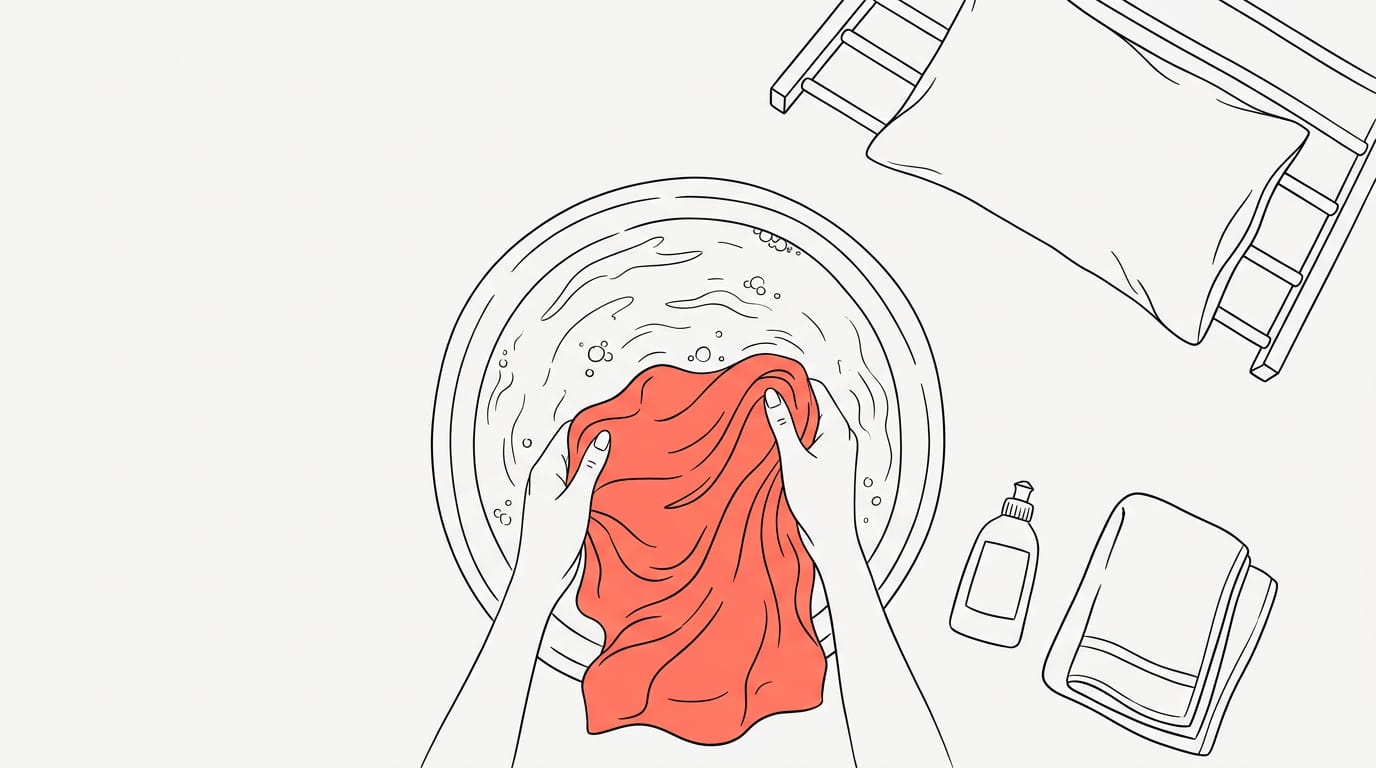
Washing a silk pillowcase means cleaning delicate silk without damaging its fibres, colour, or smooth finish. Check the care label first, use cool water and a silk-safe gentle detergent, handle stains by blotting, and avoid rubbing, wringing, bleach, harsh products, and direct heat; hand-wash or use a delicate machine cycle only when the label allows. Air-dry it flat in the shade, and wash it regularly or sooner after makeup, oil, or sweat gets on it to keep it fresh and in good condition.
You’ve just climbed into bed, and there it is: a foundation smudge on the pillowcase you thought was spotless. Silk feels delicate, so it’s natural to worry that one wrong move will ruin it.
The good news is that silk responds well to gentle care, and you don’t need special skills to keep it soft and smooth.
Here, we’ll cover checking the care label, choosing hand or machine washing, lifting makeup, oil, and sweat marks, then drying and ironing.
How to Wash Silk Pillowcase, Labels First
Silk is delicate, so the care label comes first. Here’s what to check and what to leave out.
Check the care label first
Find the care label and follow it over any general tip you’ve read. If it says hand wash, do exactly that. If it says machine wash, you can use the machine, but still follow the gentle steps below.
If the label is faded, missing, or unclear, don’t guess. Use the momme weight (covered next) to decide.
When momme weight allows machine washing
Momme (written as mm) is the unit that measures how heavy and tightly woven silk is. Use this simple rule:
- Above 20 momme: machine-safe.
- Below 20 momme: hand wash.
A host with two silk sets for guest rooms can machine wash the heavier one and hand wash the lighter one in the sink.
Check first. It takes seconds.
Gather supplies and a gentle detergent
Keep these on hand before you start:
- Mesh laundry bag: Use one for any machine wash to keep the pillowcase contained.
- Silk-suitable or gentle detergent: Choose a product made for silk or a mild formula.
- Clean white towel: Keep one nearby to lay the pillowcase on and blot away excess water.
- Low pH basic soap: pH measures how acidic or alkaline a product is, so a low pH soap is the gentler choice.
A renter who keeps all of this in the laundry cupboard can wash silk in minutes, not after a trip to the shop.
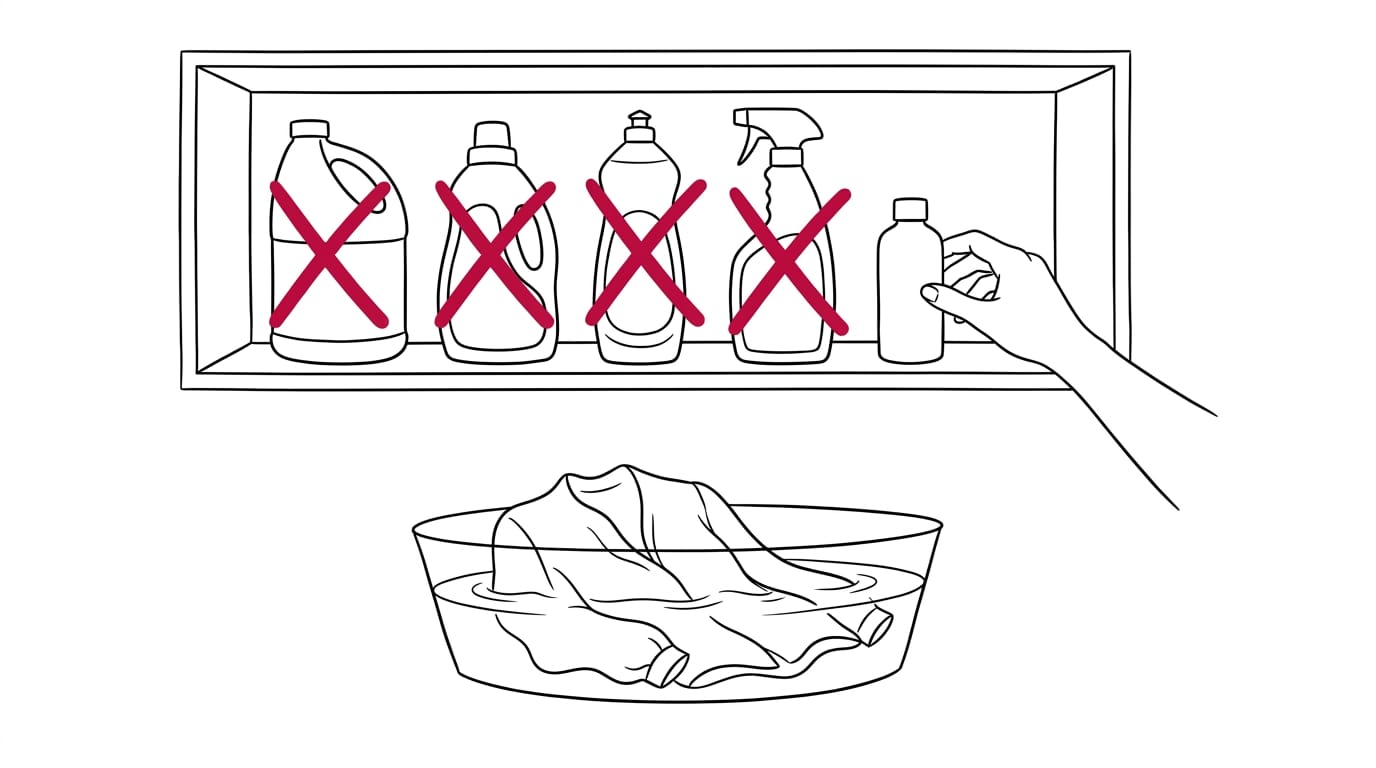
Skip bleach, softener, and harsh soaps
Some everyday products look like helpers but can damage silk. Leave these out:
- Bleach: Keep it away from silk, even for a stubborn mark.
- Fabric softener: Leave it out of the wash altogether.
- Alkaline or harsh chemicals: High pH products are the opposite of the low pH soap, so they’re too strong for silk.
- Protease enzymes: These break down proteins, and silk is a protein fibre, so enzyme detergents are a poor match.
- Baby shampoo or dish soap: Tempting shortcuts, but they’re too harsh for silk.
A cleaner that’s strong on grease isn’t always safe for silk. When in doubt, leave it on the shelf.
Choose Hand or Machine Washing
Silk rewards a gentle touch, so your method matters almost as much as your detergent.
Wash silk gently by hand
With silk, the goal is gentle rather than quick. Hand washing gives you the most control, which suits a pillowcase with a stubborn makeup mark.
For example, a parent who finds foundation on a silk pillowcase can treat it in the bathroom sink and save a trip to the dry cleaner. Work through these steps:
- Cool water basin. Fill a basin with cool water, not warm.
- Measured gentle detergent. Add a measured amount of gentle detergent, following the label.
- Swish gently. Move the pillowcase through the water with no rubbing.
- Rinse until residue is gone. Keep rinsing until no detergent remains.
- No twisting or wringing. Press out excess water gently instead.
- Soak time limits. Keep soaks brief, and don’t leave silk sitting in the water.
Using the washing machine safely
A machine saves time, but it’s less forgiving, so the setup matters more. Place the pillowcase inside out in a mesh laundry bag first, then:
- Delicate cycle, cool water. Choose the delicate setting and cool water.
- Low or short spin. Choose a low or short spin rather than a full one.
- Wash with delicates only. Keep the load to other delicates, not towels or heavy fabrics.
- Avoid zippers and hooks. Keep them away from the silk, since they can snag it.
Can hot water shrink silk pillowcases?
Yes, you can shrink a silk shirt, and a silk pillowcase carries the same risk. The rule for both is the same: keep the water below 30°C / 86°F and avoid high temperatures.
According to research on laundering temperatures for dyed Thai silk, which cites Hess, high temperatures can adversely affect silk and some dyes, so cool or cold water is the safer default. Gentle wins.
Lifting Stains and Leftover Residue
Makeup, oil, and hair product marks are the usual culprits on a silk pillowcase, and they lift most easily when you act quickly. Here’s how to treat them before and after the wash.
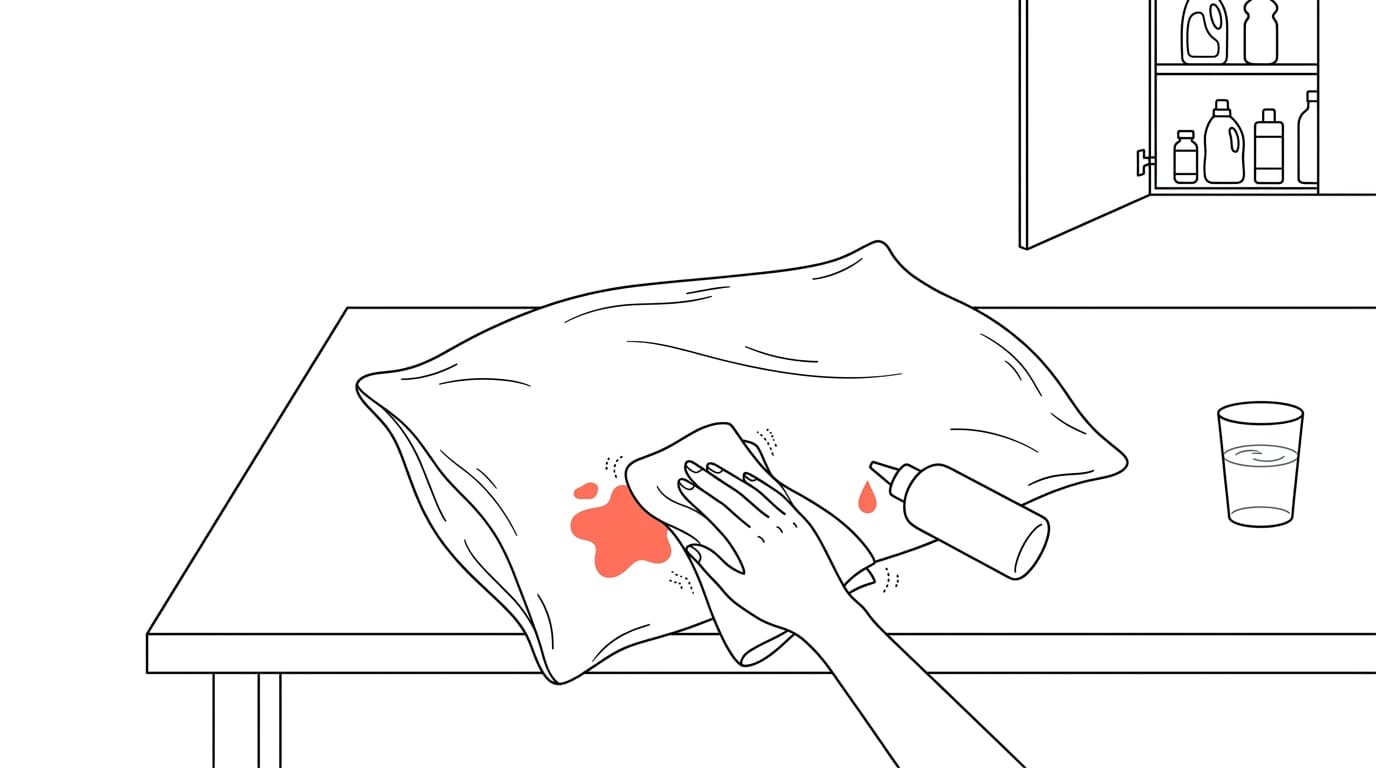
Dab stains before washing them
Always start with a spot test. Dab a little of your treatment on a hidden seam, wait briefly, and check for any change in shade or texture.
Work gently. Blot, don’t rub, because scrubbing roughens silk fibres and can spread the stain. Act fast: speed matters.
Next, put a drop of mild detergent directly on the stain, let it sit briefly, then blot with cool water. Avoid bleach-based treatments, which are too harsh for silk.
You rarely need specialist products. A parent who finds hair serum on a silk pillowcase before the morning wash can use a drop of mild detergent from the cupboard and save it from the bin.
If you’re wondering whether you can use vinegar on silk, the answer is yes, with care: dilute it, test the hidden seam first, dab rather than soak, and rinse afterward.
Fixing problems after washing
- Stiffness or residue. Rinse it again in cool water to clear away leftover detergent.
- Lingering smell or mark. Repeat the spot treatment, then wash it again.
- Shade or fabric changing. Stop treating it right away, since more product can make things worse.
- Consult a silk-experienced cleaner. If the mark won’t lift or the fabric keeps changing, take it to a cleaner who knows silk.
- Re-treat before drying. Check the mark before it dries, not after. Never let it dry with the stain still there, because heat can set it in.
Drying Silk Without Damaging It
Drying is where silk is most easily harmed, so take your time here. Here’s how we get the water out and finish the job safely.
Blot out water without wringing
Start by blotting the pillowcase: lay it on a clean, dry towel, roll it up, and press gently so the towel soaks up the excess water.
Think of a host who has just hand-washed a pillowcase with guests due any minute: a quick roll in a dry towel gets it ready without any twisting. Use pressing rather than wringing, and never twist the fabric. Gentle wins.
Does silk dry quickly?
Not especially. A flatmate who drapes a damp pillowcase over the radiator to hurry it along might save a little time, but risks the very damage you’re trying to avoid.
Silk rewards patience rather than speed, so plan for silk drying time from the start. These basics help:
- Lay flat to dry: spread the pillowcase on a clean towel or rack rather than hanging it up.
- Keep out of direct sunlight: choose a shaded spot in the room.
- No radiator or hair dryer: skip direct heat, even when you’re in a rush.
- Dry completely before use: a damp pillowcase isn’t ready for the bed.
- Silk drying time: set it out well ahead of when you need it.
Keep silk out of the tumble dryer
The tumble dryer is a tempting shortcut, but a risky one for silk:
- Brand-dependent settings: some machines offer an air or low-heat option, but whether it suits silk depends on the brand.
- When in doubt, avoid it: if you can’t confirm your dryer’s setting is safe, air-dry the pillowcase instead.
- Not recommended for silk: stick with air-drying wherever you can.
Smoothing Wrinkles Without Damage
Silk creases easily, but it only needs a gentle touch. Here’s how we’d smooth it out, whether you prefer an iron or a steamer.
Iron the back side on low heat
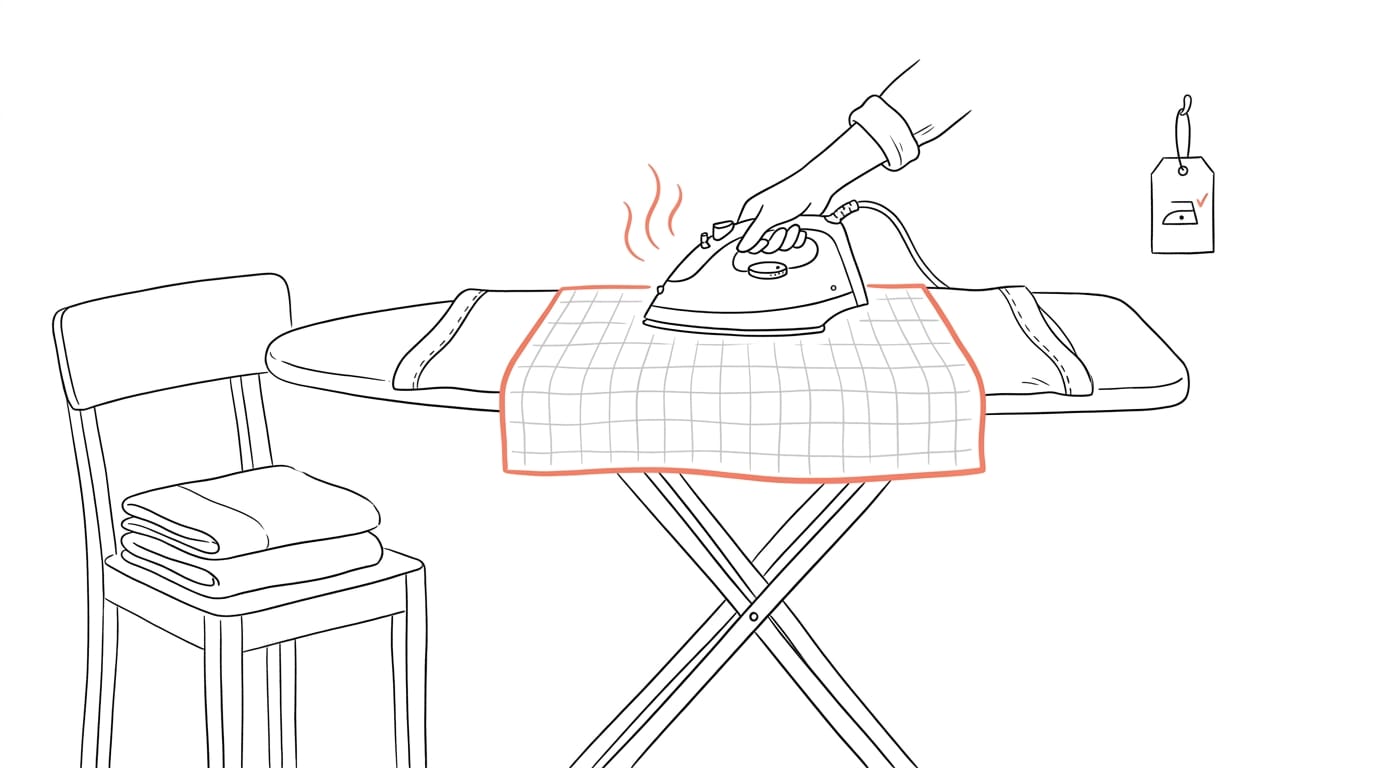
First, check the care label. If it allows ironing, set your iron to the silk setting or the lowest heat it offers, then work on the reverse side of the pillowcase.
Pressing the back rather than the front helps protect the sheen that makes silk so appealing.
Add a pressing cloth, a thin cotton cloth placed between the iron and the fabric, for an extra buffer. Consider a host getting three guest pillowcases ready before the weekend.
Turning each one inside out, laying a cotton cloth over it, and ironing on low heat takes a few minutes per case and leaves them smooth and ready for the spare room. If the label says no ironing, skip this step entirely.
Steam instead of ironing
If you’d rather not risk the iron at all, a gentle steamer is the safer choice. Hold it a short distance above the fabric and let the steam relax the creases. The goal is to let steam do the work rather than pressure.
Keep the steamer on a gentle setting and avoid high heat, which can damage delicate silk. Slow and gentle wins every time.
Setting a Regular Washing Schedule
Silk is easiest to keep fresh with a routine rather than a big clean now and then. Here’s how to set one up that fits your week.
Wash every 7 to 10 nights
Aim to wash your silk pillowcase every 7 to 10 nights, or roughly once per week. That’s a steady rhythm most people can stick to without thinking about it.
The simplest approach is to treat it the same as other bedding: when you strip the sheets, the pillowcase goes in the wash too.
Think of a busy parent who changes the bed every Sunday evening. Adding the pillowcase to that same load means nothing gets forgotten, and the bed is fresh for Monday night without an extra trip to the laundry basket.
Some nights call for a sooner wash, and that’s fine. If you’ve slept in makeup or your skin has left oil or sweat on the fabric, don’t hold out for the weekly cycle.
It’s less about how long the case has been on the bed and more about what has ended up on it.
Rotate spares to reduce wear
Keeping a couple of spare pillowcases makes any schedule easier. While one is in the wash, the other is on your pillow, so you never have to skip a night.
Consider a student in exam season who keeps two cases in rotation, so the one on the bed is always fresh and there’s no late-night laundry panic.
Rotating also reduces wear and tear, because no single case carries all the use. Two cases, less wear on each.
Washing a silk pillowcase doesn’t have to be stressful. Start with the care label, choose hand or machine washing based on what it allows, and tackle stains while they’re still fresh.
Dry it away from direct heat, iron it gently, and keep a regular routine so it stays soft.
A little attention each week keeps makeup, oil, and sweat marks from settling in. Treat your silk gently, and it will reward you with a smoother, fresher night’s sleep every time.
References
- Effects of Laundering and Washing Temperatures on Commercially Dyed Thai Silk Fabrics — hdl.handle.net (1972)
Questions
What are the benefits of a silk pillowcase?
Silk pillowcases feel smooth and can reduce friction on hair and skin compared with rougher fabrics, which may help limit hair tangling and sleep creases. They also feel lightweight and comfortable, though they do not guarantee skin or hair benefits for everyone.
Can silk pillowcases be washed in the washing machine?
Yes, if the care label allows machine washing. Turn the pillowcase inside out, place it in a mesh laundry bag, and use a delicate cycle with cool water and a low or short spin.
Can you wash 100% silk in the washer?
Yes, some 100% silk items can be machine-washed, but the care label should determine the method. Use a mesh bag, delicate cycle, cool water, and gentle detergent only when machine washing is permitted; otherwise hand-wash in cool water.
Can I wash silk in warm water?
Cool water is the safer choice for silk. Warm or hot water can damage the fibres or dyes and may cause shrinkage, so keep the water below 30°C (86°F).
Can you shrink a silk shirt?
Yes, silk can shrink, especially when exposed to hot water or high heat. Shrinking it intentionally is unpredictable and can damage the fabric, so follow the care label and use cool water instead.
Can you steam silk?
Yes. Use a gentle steamer held a short distance from the fabric, and avoid high heat or pressing the steamer against the silk. Check the care label first.
Does silk dry quickly?
No, silk does not dry especially quickly. Blot out excess water with a towel, then lay it flat in a shaded, well-ventilated place and keep it away from radiators, hair dryers, and direct sunlight.
Can I use vinegar on silk?
Yes, but dilute the vinegar, test it on a hidden seam first, and dab it onto the fabric rather than soaking it. Rinse the area afterward with cool water.
Sources
More in Laundry
- How to Wash Microfiber Cloths Without Ruining ThemHow to wash microfiber cloths without losing their grip: sort them, skip fabric softener, choose a gentle wash, and revive stiff cloths again.
- How to Wash Cashmere Without Shrinking or PillingHow to wash cashmere without shrinking or stretching it: get gentle hand and machine steps, flat-drying advice, and quick stain fixes for your sweater.
- How to Wash a Backpack by Fabric TypeHow to wash a backpack safely: choose machine or hand cleaning by material, remove stains and smells, then dry it without damaging the fabric.

Stain Finder: a free stain removal guide
Find your stain