How to Wash a Backpack by Fabric Type
How to wash a backpack safely: choose machine or hand cleaning by material, remove stains and smells, then dry it without damaging the fabric.

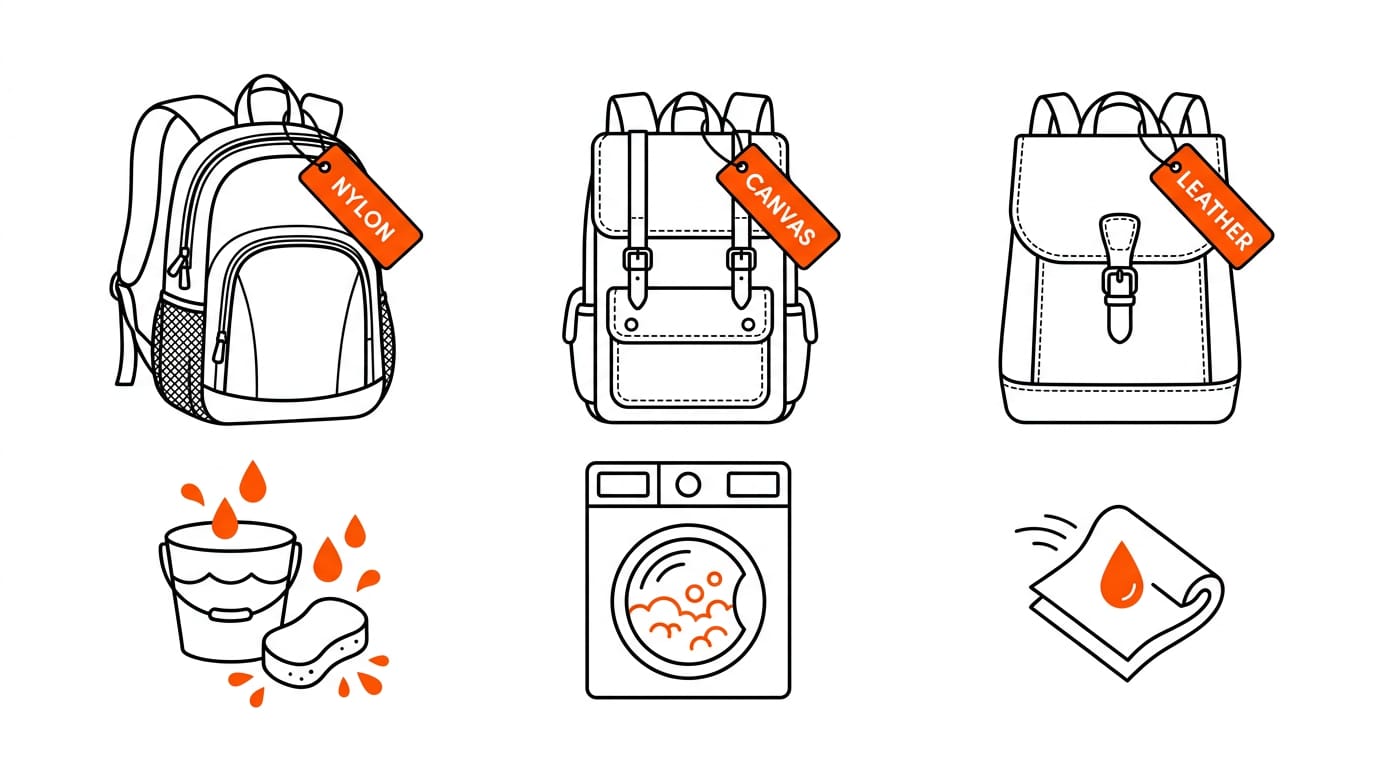
Washing a backpack means cleaning it according to its care label and material, using a machine only when the maker permits it. Empty the pockets, treat marks with mild soap, and use cool water and a gentle cycle or hand wash; keep leather, framed, coated, and delicate packs out of the machine. Air-dry it fully away from direct heat and sun to protect its shape and prevent mildew.
Think of the backpack that’s been dragged through every puddle of the school term, with a juice spill in the front pocket and a funny smell creeping out of the zip. It’s easy to assume it’s past saving. It usually isn’t.
Many packs can be washed at home with things already in your cupboard, as long as you check the label and match the method to the material.
In this post, we’ll cover how to choose between machine and hand washing, how to dry your pack properly, and how to tackle common marks like ink, grease, mud, mildew, and spills before they set.
How to Wash a Backpack by Material
Every pack is built a little differently, so the right method depends on what it’s made of. Sort that out first, then choose between the machine and the sink.
Check the care label and brand rules
Find the care label before you add any water, because it’s the maker’s own advice. If the brand says hand wash only, follow that, even if the pack looks tough. If the label says spot clean only, skip the soak and work on the mark alone with a damp cloth.
Then test a hidden spot, such as the inside of a strap, with a damp white cloth. If colour bleeds onto it, go gently. Test before you wash, not after the damage is done.
Which fabrics survive a machine wash
Machine washing suits some fabrics better than others:
- Nylon and polyester: usually fine on a gentle machine cycle.
- Canvas: can shrink and bleed dye, so treat it with care.
- Embellishments: patches or charms may tear off, so remove them or hand wash.
- Gregory packs: the brand discourages machine washing entirely, so skip the washer.
Picture a parent with a grey canvas school bag after a muddy week. A quick test on a strap shows blue dye lifting onto the cloth, so they hand wash it and keep the bag from shrinking or fading in the drum.
When hand washing is the safer choice
Hand washing isn’t the weaker option. It’s the gentler one. Reach for a sink or bucket if your pack has:
- Leather or leather trims: these need a softer touch than a tumbling drum gives.
- Frames and coated packs: a tumbling drum can damage the frame or coating.
- Delicate prints or glued parts: prints and glue don’t hold up well to agitation.
- Foam padding: foam can lose its shape in a machine, so hand washing keeps it intact.
Packs with frames need gentler handling
Start by checking the frame. If it slides out, remove it before you begin. If it’s fixed, the whole pack is a hand-wash job.
Avoid full immersion, so the frame and its joins never sit in soapy water. You’ll work with a damp sponge in short passes instead. Gentle wins here.
Washing Your Pack in the Machine
Once you’ve checked the label and know your pack is machine-safe, the wash itself is the easy part. Good prep and the right settings do most of the work.
Prep the pack before it goes in
Think of a parent who finds a grimy school backpack on the hallway floor on a Sunday night. A few minutes of prep means it’s clean and ready for Monday.
- Empty all pockets. Check the small zipped ones too, where pens, crumbs, and bus passes like to hide.
- Remove straps and detachable parts. Anything that unclips comes off, so nothing dangles or tangles in the drum.
- Close zippers and buckles. Closed fasteners are less likely to snag the lining or each other.
- Use a pillowcase or laundry bag. Slip the pack inside to keep loose bits contained.
- Pre-treat stains. Dab a little mild detergent onto any marks and let it sit before the cycle starts.
Choose a gentle cycle and mild detergent
Pick the gentle cycle (or delicate, if your machine has one) and set the water to cold or lukewarm, not hot, since the gentler the wash, the kinder it is to fabric and stitching. Gentle beats fast.
- Mild detergent only. Use a stain-safe detergent you already have in the cupboard, and only a small amount.
- No bleach or softener. Leave both out of the drum, since neither is needed for this job.
- Low or no spin. A gentler spin helps the bag keep its shape.
Wash alone or balance the load
A heavy pack tumbling with other items is more likely to bang its zips and seams, so give it some room.
- Wash the pack alone. If you can, let it have the drum to itself.
- Add old towels. For a lighter load, a couple of old towels help balance the drum and cushion the bag.
- Redistribute if unbalanced. If the machine thumps, pause it and spread the load out before it carries on.
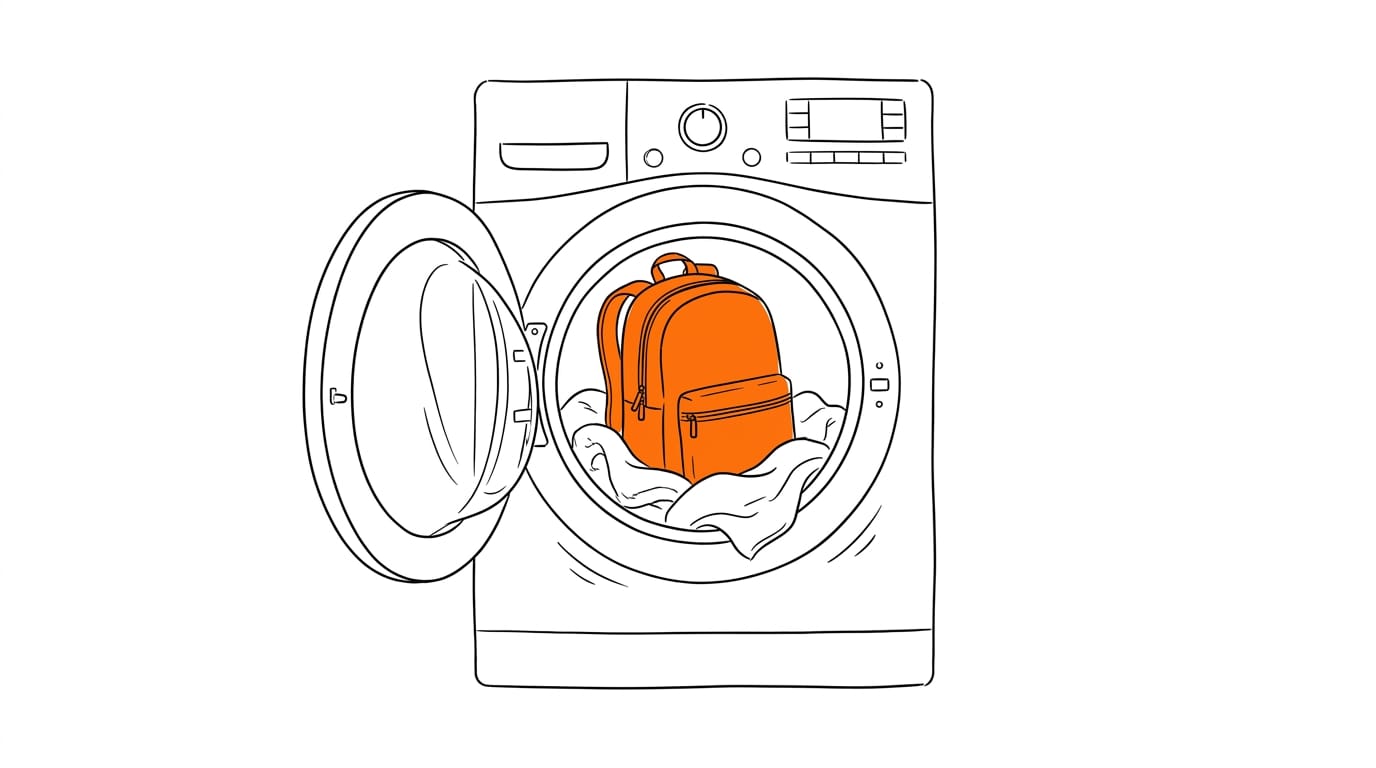
Check seams and reshape after washing
When the cycle ends, take the pack out and look closely at the seams, where grime and soap residue can hide.
- Check seams for residue. Run your fingers along the stitching for any soapy film or leftover grime.
- Hand rinse if needed. For a stubborn patch, rinse just that spot by hand under cold water, then blot it dry.
- Reshape the bag. Push the sides, base, and pockets back into shape while it’s still damp. Shape it now, and it’ll dry looking like itself.
Cleaning by Hand and Spot Treating
Hand washing lets you treat the dirty spots without soaking the whole pack. Work dry prep first, then spot cleaning, then a full scrub.
Empty, shake, and brush before washing
Before any water touches the pack, clear out what’s loose:
- Empty every pocket and compartment completely.
- Shake out crumbs, grit, and leaves.
- Use a soft brush on any dried mud so it flakes off instead of smearing.
- Remove the hydration reservoir (the water bladder) and set it aside.
Think of a parent whose child’s rucksack came home caked in mud. A few minutes with a soft brush takes off the loose layer before it reaches the tub.
Spot clean the straps, base, and spills
Dip a cloth in lukewarm water with a little mild soap and work it over the straps, the bottom panel, and any spills. Wipe the foam padding lightly and avoid soaking it, since foam is slow to dry out.
For stubborn marks, mix a baking soda paste by stirring baking soda with a little water until it’s spreadable. Dab it onto ink, grease, or mud marks, leave it briefly, then wipe. Keep it gentle here: the real scrubbing happens later, in the tub. Hot glue is a different problem entirely, so it needs its own method, as in how to get hot glue off clothes.
A student with a leaking biro on a shoulder strap can dab on the paste and wipe it away before the ink sets, leaving a clean strap.
Scrub the whole pack in a tub
Fill a tub or large sink with lukewarm water and a little mild soap. Work a soft brush or toothbrush over the whole pack, using the toothbrush for tight spots.
Rinse until the water runs clear, not just until the suds are gone. Clear water is your finish line.
Squeeze the water out gently, and never wring it.
Cleaning and Stain Removal by Fabric
Check the label first, since the material decides the method. Here’s how we’d handle the three materials you’re most likely to meet.
Cleaning nylon and polyester packs
A parent with a greasy smear on a nylon school pack can skip the shop run, because the kitchen already has the fix.
- Gentle cycle or hand wash: Pick a gentle cycle, or hand wash, to go easy on the fabric.
- Dish soap for grease: Work a little into the mark before washing.
- Rubbing alcohol for ink: Dab rubbing alcohol onto the ink, don’t rub, so the mark doesn’t spread.
- Protect water-repellent coatings: Keep rough scrubbing off the finish that sheds rain.
- Test stain remover on hidden patch: Try it inside a pocket first.
Keeping canvas clean and mildew free
Damp storage invites mildew, so act fast. A student with spots on a canvas pack can save it with a vinegar wipe and a dry afternoon.
- Prefer hand wash: Use a basin and mild soap where you can.
- Test colorfastness: Dab a damp white cloth on a hidden seam to check whether the dye stays put.
- Vinegar for mildew: Wipe with a vinegar-dampened cloth, then air dry fully.
- Reproof or wax afterwards: Once dry, reapply a water-repellent treatment or rub in wax.
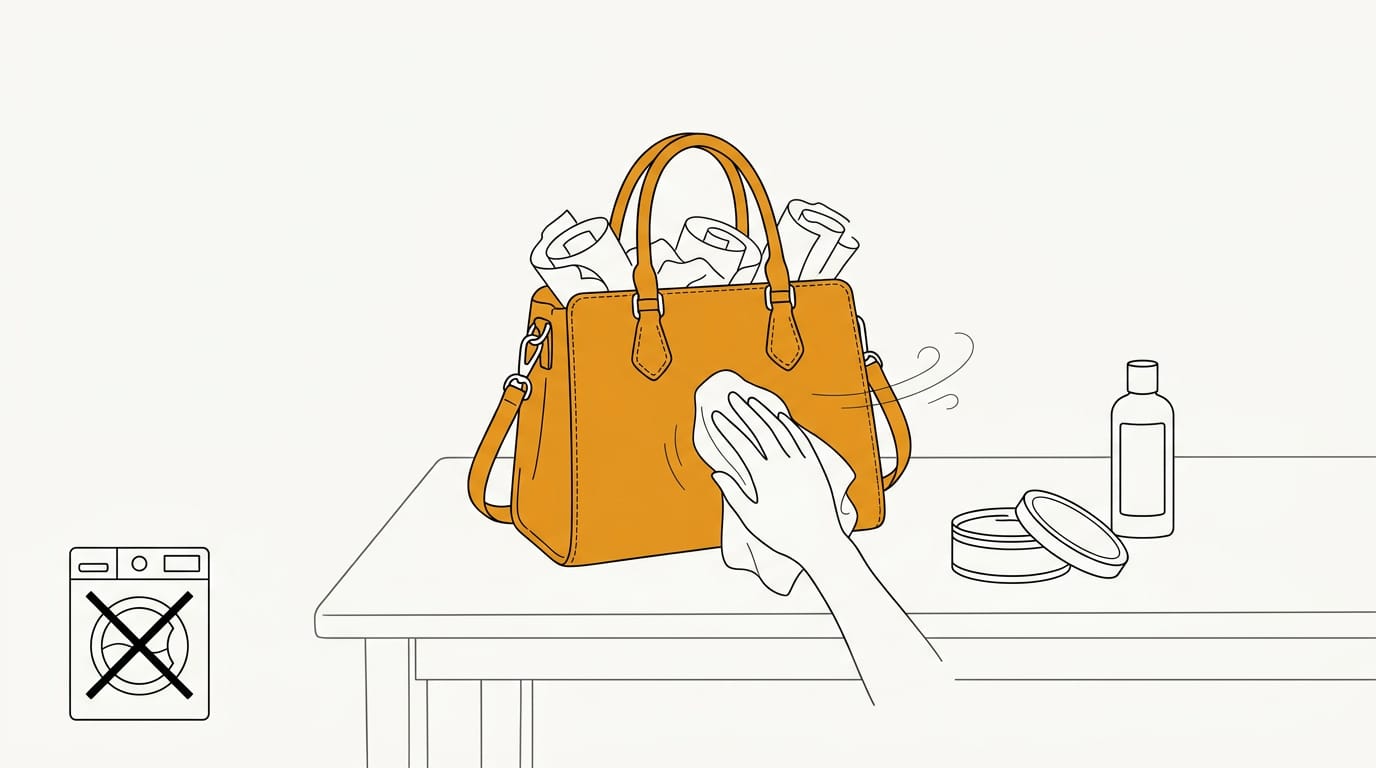
Leather and faux leather need special care
Leather and faux leather (a synthetic look-alike) need a gentler hand than fabric. Patience beats power here.
- Never machine wash: Keep it out of the machine entirely.
- Damp cloth, saddle soap: Wipe with a damp cloth, then use saddle soap for tougher marks.
- Apply leather conditioner: Once dry, work it in to keep the leather supple.
- Stuff and air dry if wet: Stuff it to hold its shape, then let it air dry.
- Specialist for deep stains: Take it to a leather specialist rather than pushing harder at home.
Drying Your Backpack the Right Way
Drying decides whether a clean backpack keeps its shape. Get the airflow right and you’ll avoid warped padding and faded fabric.
Hang it upside down to air dry
Once it’s rinsed, blot out the extra water with a clean towel. Then hang the bag upside down by its loop or a sturdy hook, rather than laying it flat, so water drains out instead of pooling in the base. Open every zip and pocket so air reaches inside.
Pick a shaded, ventilated spot like a hallway or utility room, away from direct sun.
Tricks to speed up drying
Say your child’s school bag needs to be ready by morning. These tricks help it dry without any heat.
- Stuff it with towels or paper. Fill it loosely with dry towels or scrunched kitchen paper to soak up moisture, swapping them out once they feel damp.
- Use a fan. Point one at the open bag to keep air moving.
- Avoid radiators and hairdryers. Direct heat can warp padding and stiffen fabric.
- Use an airer or towel-lined rack. Lay it on a clothes airer or towel-lined rack so air reaches every side.
Keep it out of dryers and sun
Never put a backpack in a tumble dryer. The heat can melt buckles and warp the padding, so it may never sit right on your back again. Skip it.
Sun fades fabric, so keep the bag out of direct light. Before storing, check the straps, base, and inside pockets by hand. Any dampness means more drying time.
Mildew loves dark, damp corners, so packing up too soon invites it. Take a parent who washes the school bag on Sunday night and stores it under the stairs straight away.
Give it one more day of airflow first, and the musty smell has far less chance to take hold.
Banish Smells and Fix Common Problems
A musty backpack or a stiff zipper can make a good bag feel ruined, but both usually have quick fixes. Here’s how to clear the smells, then free up the zippers.
Ways to make it smell fresh
Smells usually come from damp and trapped grime, so aim to clear the odour, not just mask it.
- Baking soda overnight. Sprinkle baking soda inside, close the bag, and leave it overnight. Shake it out and vacuum any powder the next day.
- Diluted vinegar rinse. Dampen a cloth with white vinegar mixed into plenty of water and wipe the inside lining. Dab, don’t soak, then let it dry.
- Air thoroughly. Hang the bag open somewhere dry and airy until the inside feels fully dry, not just dry on top.
Mildew and mould need one extra step. A musty, earthy whiff usually means damp got trapped deep in the bag, so wipe the affected patch with diluted vinegar and air it until every corner is fully dry.
Consider a parent whose child’s school bag smells like a damp gym locker on Monday morning. A night under baking soda and a day hanging by the back door sorts it before the next school run, with no new bag to buy.
Freeing up stiff or dirty zippers
Grit is usually the culprit, so it’s better to clean a zipper than just grease it.
- Brush dirt from zippers. Work an old toothbrush along both sides of the teeth to flick out grit and fluff, then run the slider up and down to check it moves.
- Lubricate dry zippers. Rub a bar of soap or a candle stub along the teeth, then run the slider until it glides. Wipe away any residue with a dry cloth.
Then zip away.
Keeping Your Pack Clean over the Years
A few simple habits between washes keep your pack fresh, so the full wash doesn’t have to do all the work. Here’s the rhythm to aim for.
Setting a realistic washing schedule
Your routine depends on how often the pack goes out:
- Full wash: once or twice yearly for most packs
- Daily-use packs: every 3 to 6 months
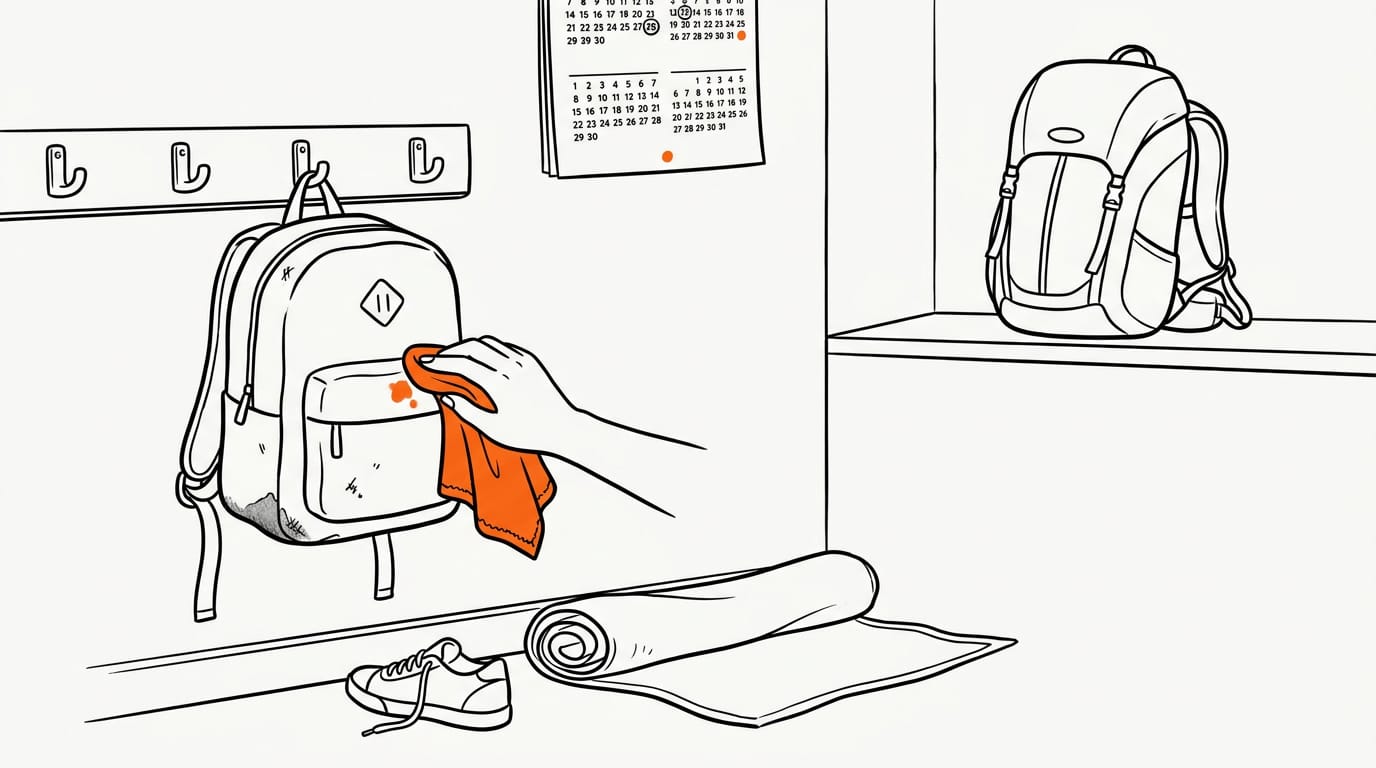
- Spot cleaning: between full washes, wipe marks as they appear
- Spills: wash sooner than planned, not at the next scheduled wash
Consider a school parent whose child’s pack goes to class and back every single day. That bag needs the shorter gap, while a pack that only comes out for the occasional trip can happily stick to once or twice a year.
Spot cleaning is less about a deep clean and more about keeping the pack fresh, so you’re rarely facing a stubborn mark on wash day.
Storing it so it stays fresh
Air it out after sweaty trips. Once you’re home from a sweaty PE lesson or a long walk, unzip the pack and leave it open so it can air out before it goes back into the cupboard.
Store it somewhere cool and dry indoors, such as a bedroom wardrobe or hall cupboard. Avoid damp garages and hot attics, which look out of the way but work against a bag you want to stay fresh.
Think of a student who leaves their pack in the garage over the holidays. By spring it smells musty and needs an extra wash they hadn’t planned for. Fresh beats fixing.
Mistakes That Can Ruin Your Pack
A backpack can handle a wash, but a few common slip-ups leave it stiff, faded, or misshapen. Here’s what we’d avoid, and why the care label comes first.
Washing mistakes that cause damage
- Hot water or harsh detergent: Heat and strong soap fade colour and weaken fabric. Stick to cool water and a mild cleaner.
- Bleach use: It strips colour, so skip it, even on stubborn marks.
- Machine washing leather: Leather can crack or warp in a drum, so hand-clean it.
- Overloading with laundry: A packed drum stops the pack rinsing properly and can knock its shape out.
- Wringing or twisting: Squeezing stretches seams and crushes padding. Press out water gently instead.
Take a parent who wants the school bag fresh for Monday. They choose cool water and a mild liquid, then let it air-dry, so the colour stays bright and the straps keep their shape. With a backpack, gentle beats strong every time.
Drying and storing it wrong
Heat from a dryer can shrink fabric and warp buckles, so air-dry it instead. Storing it damp is just as risky, since trapped moisture invites mildew, the musty smell and dark spotting that’s tough to shake off. Dry first. Store second.
Why you should follow the care label
The care label is the maker’s own guide to your pack, so it’s your best starting point. Ignoring it may void the warranty, so a fault that would otherwise be covered becomes your bill. When a generic tip online disagrees, follow the manufacturer’s advice.
Extra Gear and Common Questions
Rain covers and the washing machine question cause the most confusion, so here’s the short answer to each.
How to care for rain covers
Rain covers are a separate job from the pack itself, so treat them on their own:
- Hand wash rain covers in a sink or bucket of cool water with a little washing-up liquid.
- Never machine or dry them. Keep them away from the washing machine and the dryer.
- Remove the hydration reservoir (the water bladder) before you start, so it stays out of the way.
Can I machine wash my backpack?
Check the care label first, since it tells you whether the washing machine is an option. If it’s hand wash only, stick to the sink. If it’s machine safe, pick a gentle cycle, not a fast one.
Use cool or lukewarm water, never hot.
Skip the dryer and let it air dry away from direct heat. Patience is the easy win here.
For a lingering smell, consider a parent who keeps a bottle of diluted white vinegar under the sink for the school bag that’s sat in the car all week. One wipe with the solution and a good airing-out, and you’re set for Monday without a trip to the shop.
Washing a backpack comes down to a few simple habits: check the label, match the method to the material, and deal with stains while they’re still fresh.
Take your time drying it, too, because a pack that’s dry all the way through is one you can use again without a second thought.
With those steps in hand, your pack can go from grubby to good as new, ready for the daily commute, the gym, or a weekend hike. A little care goes a long way, and your pack will thank you for it.
Questions
What is down fill?
Down fill is the soft, fluffy layer of fine feathers from ducks or geese that insulates clothing and bedding. It traps air to provide warmth while remaining lightweight.
What are the different types of backpacks?
Backpacks include daypacks, school bags, hiking and trekking packs, travel backpacks, commuter packs, hydration packs, and specialty designs such as framed or technical packs. They vary in size, support, compartments, and intended use.
How to clean under Lovesac?
To clean beneath a Lovesac, remove the seats or cushions as directed and vacuum crumbs and dust from the floor and the furniture’s underside. Wipe the area with a suitable floor cleaner, and check the manufacturer’s care instructions before moving or cleaning the furniture.
Can you put a backpack in your washing machine?
Some backpacks can go in a washing machine, but check the care label first. Machine-safe packs should be washed on a gentle cycle with cool or lukewarm water and mild detergent; never put a backpack in the dryer.
Can I put my down jacket in the dryer?
Usually, no. Down jackets should generally be air-dried unless the care label permits tumble drying; when permitted, use low heat and dryer balls to help restore loft, and make sure the jacket dries completely.
Can you hand wash puffer jackets?
Yes, many puffer jackets can be hand washed in cool or lukewarm water with a small amount of mild detergent, but check the care label first. Rinse thoroughly, press out water without wringing, and follow the label’s drying directions so the insulation dries fully.
Will my couch cushion covers shrink if I wash them?
They can shrink if the fabric or care instructions make them vulnerable to hot water, high heat, or unsuitable washing. Check the cushion-cover label, use the recommended cycle and temperature, and air-dry if the instructions allow.
Can I put a couch cover in the washing machine?
Many couch covers can be machine washed, but the care label determines whether that is safe. Wash removable covers using the specified temperature and cycle, and avoid tumble drying unless the label expressly permits it, since heat can cause shrinkage.
More in Laundry
- How to Wash a Silk Pillowcase Without Ruining ItHow to wash a silk pillowcase without risking damage: check the label, choose hand or machine washing, remove makeup stains, and dry and iron it safely.

- What Does Fabric Softener Do to Your Clothes?What does fabric softener do? It smooths fabrics for softer towels, but knowing when to skip it helps avoid downsides and choose other ways to soften clothes.
- How to Wash Microfiber Cloths Without Ruining ThemHow to wash microfiber cloths without losing their grip: sort them, skip fabric softener, choose a gentle wash, and revive stiff cloths again.
Stain Finder: a free stain removal guide
Find your stain