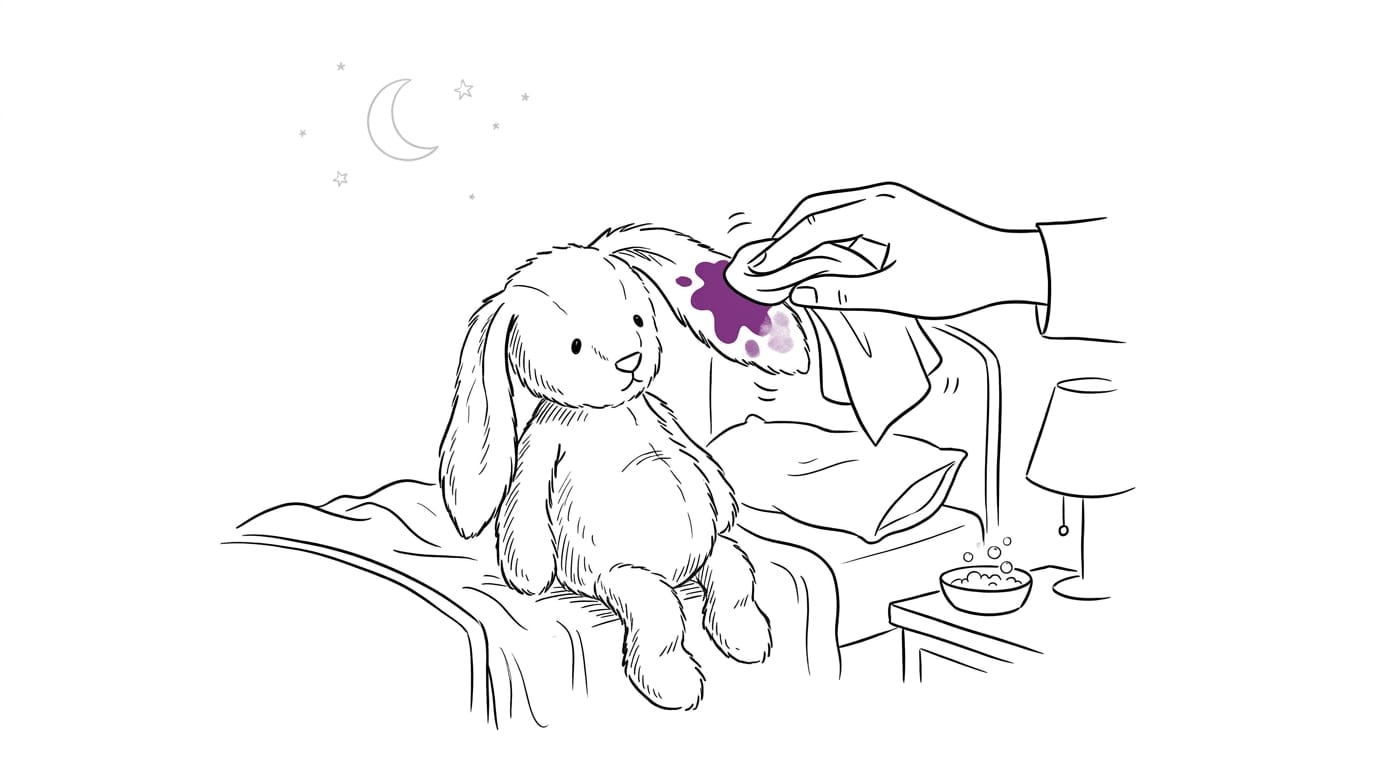
- Brush
- Treat
- Dab
- Rinse
How to Wash Stuffed Animals at Home, Step by Step
How to wash stuffed animals safely: check labels, treat stains, choose hand or machine washing, then dry and fluff toys without losing their shape.

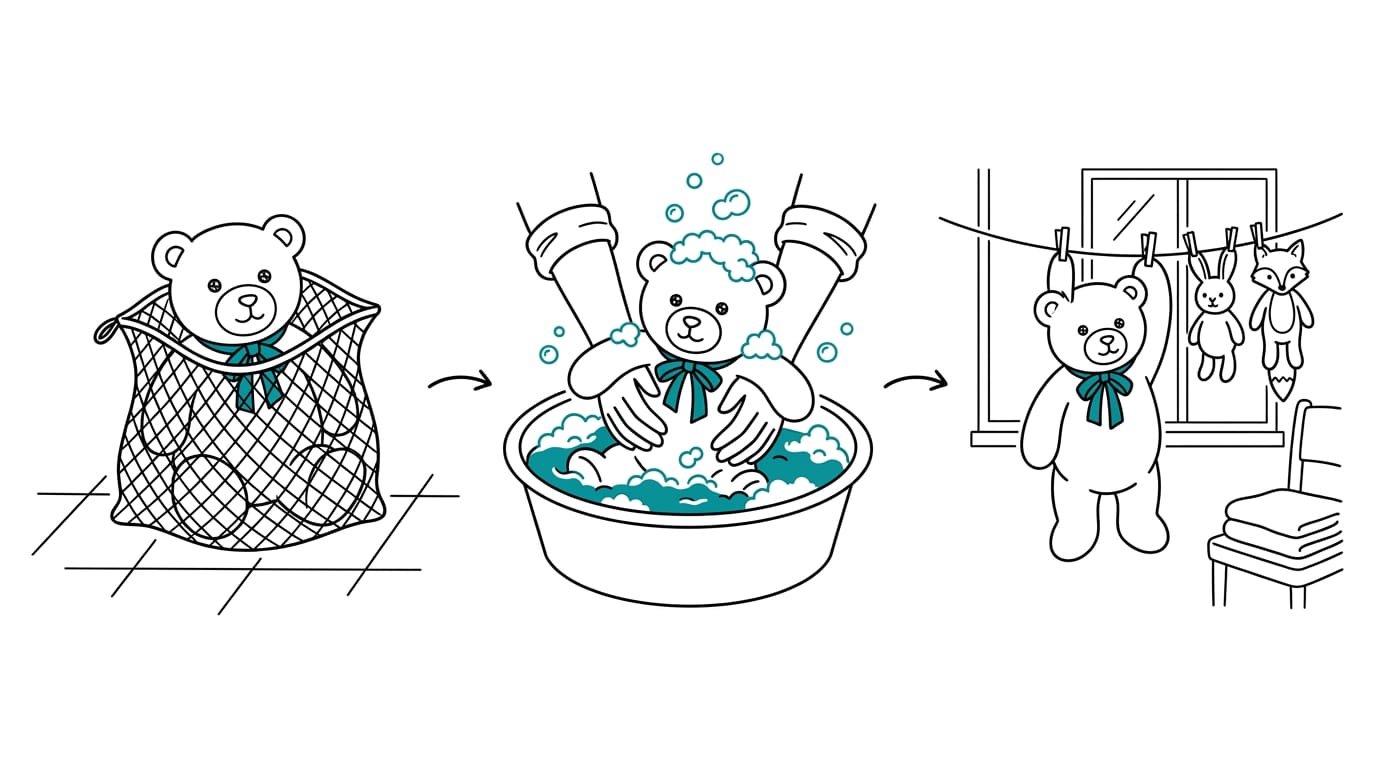
Washing a stuffed animal means cleaning its fabric and filling without damaging its shape, seams, or special features. Check the care label first, treat stains with mild detergent and a damp cloth, and choose hand washing or a gentle machine cycle only when the toy allows it; electronic, beaded, antique, and delicate toys often need spot cleaning. Dry it gently, reshape and fluff it, and get professional help when it is fragile or badly damaged.
Picture your child’s favourite bear after a week at the park, with jam on one paw and mud on its tummy. Most stuffed animals can be cleaned at home, but the right method depends on the toy’s fabric and what’s inside it.
In this guide, we’ll show you how to check labels, lift stains fast, and choose between hand washing and the machine.
You’ll also learn how to dry and fluff toys back into shape, plus how to handle the tricky ones, like weighted, beaded, electronic, and oversized toys.
Check Labels Before You Wash Stuffed Animals
Before any water touches the fluff, check the label. It’s the fastest way to learn whether a toy can take a wash at all.
Where to find care instructions
Start with the care label, usually sewn into a seam:
- Check the label before washing. Look on the back or under a limb.
- Follow manufacturer instructions. The maker’s advice always comes first.
- Look up product info online. If the tag is faded, check the brand’s website.
- Contact customer service. If you’re still stuck, ask the maker directly.
What the care symbols mean
The symbols tell you whether a step is allowed, not just how to do it:
- Do not wash. A washtub with a cross through it means skip the water altogether.
- Hand wash and gentle cycle. A hand in a tub means hand wash only, while lines under a tub mean a gentle cycle.
- Bleaching and ironing limits. A crossed-out triangle means no bleach, and an iron with dots sets the heat, with fewer dots meaning cooler.
- Tumble dry and dry clean symbols. A square with a circle inside is tumble-safe, a crossed-out one isn’t, and a plain circle means dry clean.
Can I wash a stuffed animal with beads?
Sometimes, but bead-filled toys need more caution than standard plush. Beads and fluff react differently to water, so when in doubt, go gentle.
- Washing toys with bead filling. Spot clean with a damp cloth. Think of a parent whose toddler’s bunny took a puddle dive: lifting the mud from the ear this way keeps water away from the beads.
- Mohair and alpaca. These fibres aren’t machine washable, so stick to hand washing or spot cleaning.
- Older items need gentler care. Worn toys with loose seams call for a cool hand wash, never the spin cycle.
- Delicate or sentimental toys. Spot clean first. You can always do more, but you can’t undo damage.
Treat Stains and Clean Surfaces
Most spots respond to gentle work, so you rarely need to soak the whole toy. Here’s how to handle marks first, then how to care for delicate pieces.
Lifting stains one spot at a time
Think of a parent who spots grape juice on a plush bunny’s ear at bedtime. A few careful dabs get it back to bed clean, not into the wash.
Food and ink stains need pre-treating first. Then work through these steps:
- Brush off loose dirt so it doesn’t get rubbed into the fur.
- Use mild detergent and water. According to EC87-419 Home Furnishings Care, spots should be treated with a cloth barely dampened with a mild detergent and water solution.
- Dab, don’t rub. Dabbing lifts the mark, while rubbing tends to spread it. Patience gets the stain out.
- Rinse with a damp cloth to clear away the soap.
- Air dry afterward before the toy goes back on the shelf.
Gentle cleaning for delicate or antique toys
Consider a grandparent with a vintage teddy whose fur has worn thin in places. A light touch keeps it looking loved without risking its old seams.
For a freshen-up:
- Carpet foam or mild shampoo: apply a little to the fur, never a lot.
- Toothbrush and cloth: brush gently, then wipe the suds away.
- Keep it barely damp: never soaked, so the stuffing stays dry.
- Steam cleaner: helpful on thick pile, but test a hidden spot first.
- Professional surface cleaning service: the safer choice for antiques or irreplaceable pieces.
After a cold or stomach bug has been through the house, wipe the toy’s surface to sanitise it. Dust mites are another reason to keep bedtime favourites fresh.
For odours, go dry rather than wet. Sprinkle baking soda over the toy, leave it for a while, then brush or shake it off.
Washing by Hand, Step by Step
Hand washing is the gentlest route for most plush, and it’s simpler than it looks. Here’s the method:
- Fill a basin with cool to lukewarm water.
- Add a small amount of mild detergent to the basin and swirl it in.
- Submerge the toy and agitate it gently, pressing rather than scrubbing.
- Soak it in warm soapy water to loosen stubborn grime.
- Rinse away all the soap residue under clean water.
Wondering about Dawn dish soap? It can work in a pinch, but use only a small amount and rinse thoroughly, since leftover soap is exactly what you’re trying to avoid.
Getting water out without damage
- Squeeze, don’t wring. Gently squeeze the water out rather than wringing it, since twisting strains the fabric and seams.
- Press between towels. Lay the toy between two dry towels and press gently to draw out more moisture.
Consider a parent rinsing a muddy bunny after a park trip. A gentle squeeze and a couple of pressed towels leave it soft and damp instead of dripping across the kitchen floor.
To wash weighted stuffed animals, follow the steps above with one extra precaution. The weight inside makes the toy heavy when wet, so support the whole body as you lift it out and never let it hang by a limb. Gentle wins.
Washing in the Machine
Most stuffed animals can handle a spin in the machine, but setup matters as much as the machine itself. Here’s how we’d approach it, and when you should skip the drum altogether.
Setting up a gentle machine wash
- Use a pillowcase or laundry bag. Close it around the toy so it can’t tangle or snag on the drum.
- Choose a gentle cycle. Pick cold or 30°C, never hot.
- Add mild detergent. Gentle formulas are kinder to fabric and colour.
- Wash toys separately. Keep them away from jeans and zips, which can snag fur and seams.
For a big stuffed animal, use the same setup in a larger laundry bag. Give it room to tumble, and don’t overload the machine. Gentle wins.
When machine washing can cause harm
Machine washing isn’t always the right call. Stuffing can clump, leaving a lumpy toy. Removing the stuffing first is an option, but it means unpicking seams, so only try it if you’re ready to sew the toy closed again.
Picture a parent with a toddler’s favourite rabbit, smeared with yoghurt. A damp cloth and a drop of mild detergent can lift the mark, so the rabbit is back in bed without a trip through the drum.
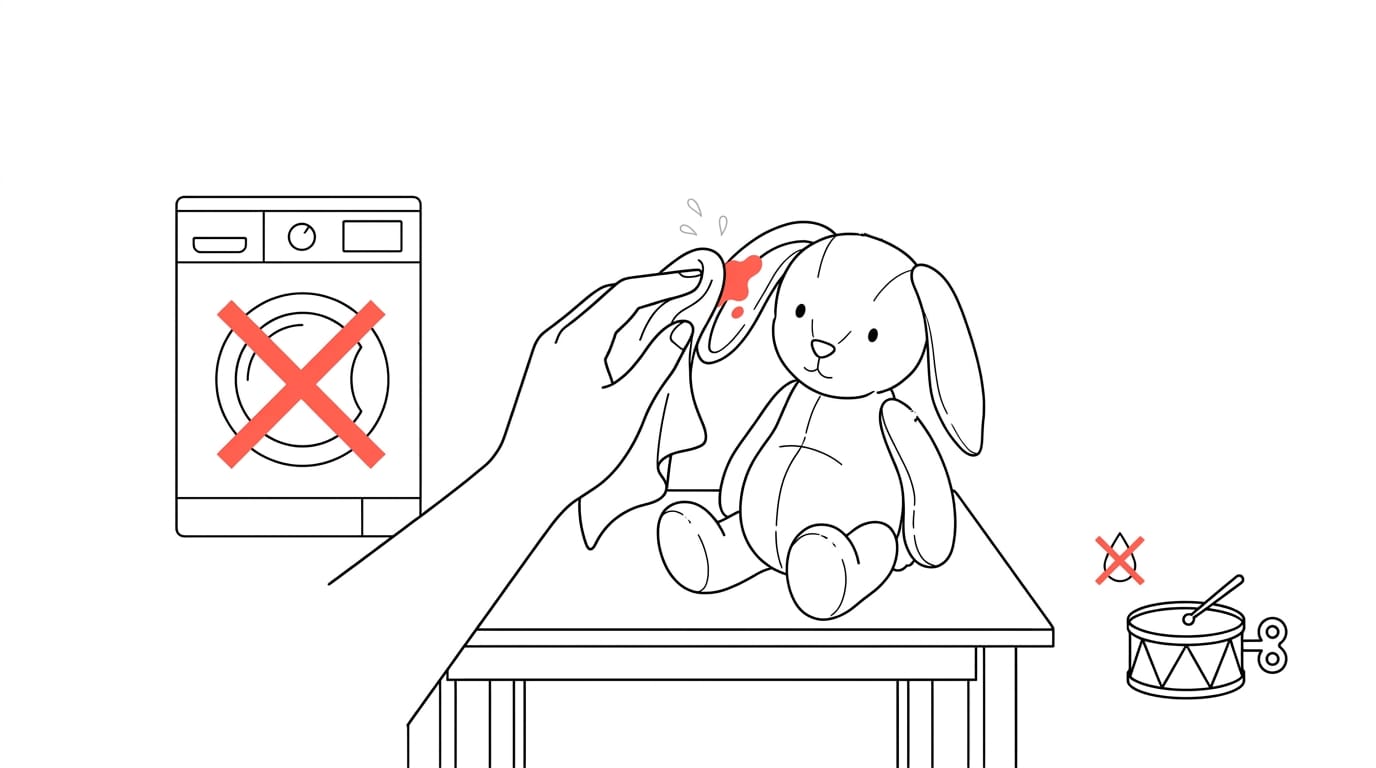
Electronic and musical toys are the exception. Their sound boxes and switches aren’t built for a soak, so spot clean around the working parts instead.
Check the care label first. Some manufacturers disclaim liability for damage from washing against their instructions, so follow the tag where one exists.
Think of the machine as a last resort, not a default. Save it for toys that are truly grubby.
Drying Your Stuffed Animals
Drying is where a freshly washed toy can still go wrong, so take your time with it. Choose between air drying and a tumble dryer based on the label and the toy’s build.
Air drying flat in a ventilated spot
Air drying is the safest default for most soft toys. Lay the toy flat on a clean towel in a well-ventilated spot, such as a spare room with the window open. While it’s damp, gently reshape the head, ears, and limbs so they dry plump rather than squashed.
Consider a parent drying a toddler’s favourite bear: turned now and then on the airer, it’s plump again by bedtime.
Larger toys won’t lie flat, so hang them over a clothes horse or line, clipping pegs to a seam rather than the fur.
Sunlight can help things dry but also fade bright colours, so think shade rather than sunshine.
Using a tumble dryer on low
Always check the care label first. If it says no dryer, air dry instead. If it’s allowed, use only a low heat setting, never a hotter cycle. Low and slow wins.
Place the toy inside a pillowcase or mesh laundry bag so it doesn’t tumble loose or snag. Add a couple of clean, dry towels to cushion it as it turns.
Stop the cycle while the toy is still slightly damp, then finish by air drying it flat or on a line, reshaping as you go. Keep it well away from radiators, and never dry it on one as a shortcut.
Think of a parent with a grubby toy dog and one evening to spare: a pillowcase, two towels, and a low cycle, finished on the airer, returns it with no lumpy ears.
Bringing Back Fluff and Shape
Washed toys often come out flat and clumped, but a little patience brings them back. Here’s how to restore their softness and shape.
Brush the fur back to softness
Follow these steps in order:
- Fluff by hand. Run your fingers through the fur, in the direction it naturally lies, to loosen matted strands.
- Soft brush or pet brush. Sweep it over the pile (the fur’s surface) in gentle strokes. You’ll notice the fur lifting as you go.
- Comb during drying. Comb while the toy is still drying so the fur sets in a lifted, separated state.
- Gradual finer brushes. Start coarse, then move to finer brushes as the fur softens. Jumping straight to a fine brush can snag the fur and undo your progress.
Picture a parent whose toddler’s favorite rabbit came out of the wash flat and stiff. A few minutes of hand fluffing and combing had it looking like new before bedtime.
Evening out the stuffing
- Open the seam and adjust the stuffing. If the body looks lumpy, open the seam and spread the filling evenly by hand.
- Chopstick to loosen filling. Use a chopstick to ease clumps from the corners, working gently rather than forcefully.
- Cool hairdryer for puffing. Hold it on the cool setting a short distance away and keep it moving, so the airflow lifts the fur and puffs the body.
- Restuff after washing. Add filling a little at a time until the toy holds its shape, then close the seam. Patience wins.
Storing and Protecting Them Long Term
Once a toy is clean and dry, where you keep it matters as much as how you washed it.
Where to display and store them
- Avoid sunlight and heat. Sun can fade colours, and heat can dry out the fabric.
- Control humidity. Damp spots invite mildew, so choose a dry shelf.
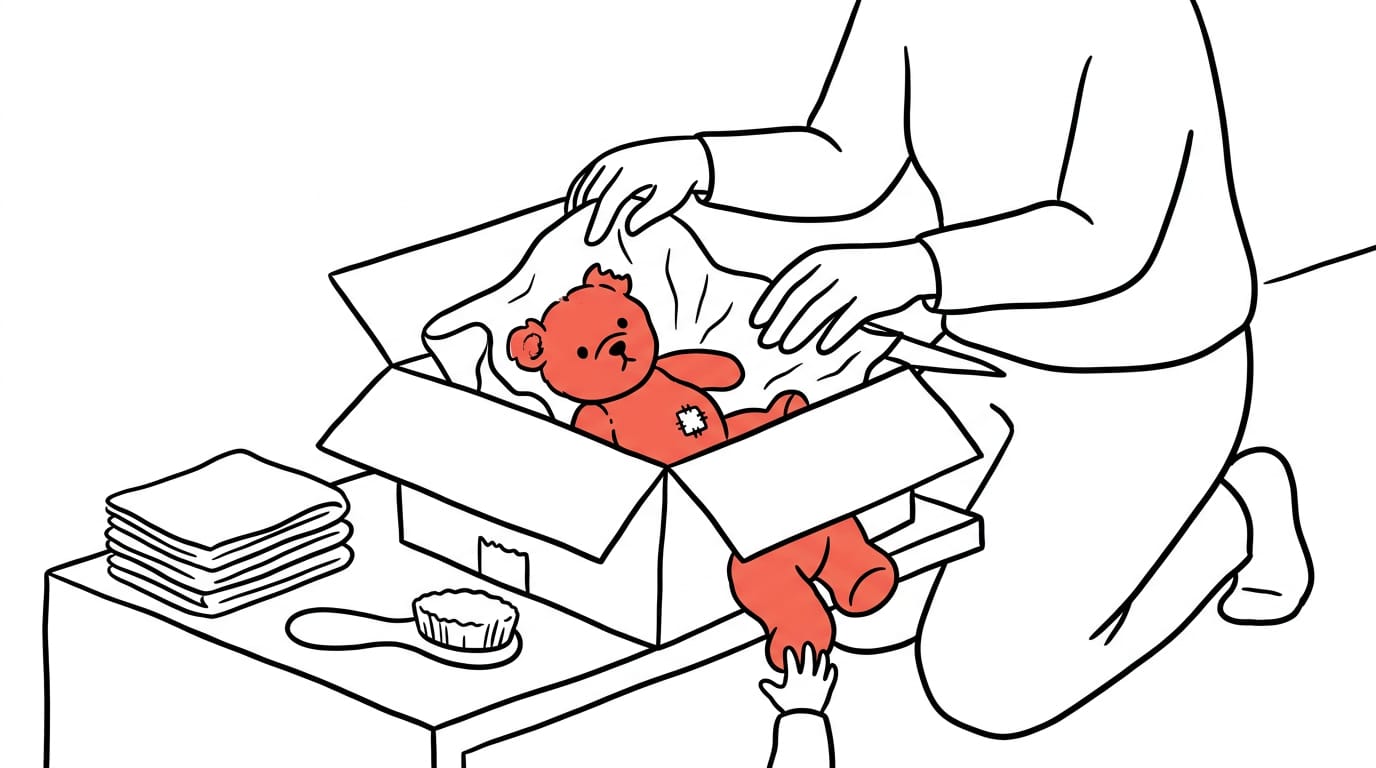
- Use a cardboard box with acid-free tissue. Wrap the toy in acid-free tissue before it goes in.
- Avoid long-term plastic storage. Cardboard lets the toy breathe, while plastic can trap moisture.
- Dust and vacuum regularly. A soft brush or low-suction vacuum keeps dust out of the fur.
Think of a parent who stores a child’s first bear in a cardboard box, so it’s still soft when the next baby arrives.
Keeping moths and pests away
- Spot moth eggs and damage. Check seams and fur for tiny eggs, holes, or bald patches.
- Isolate infested toys. Bag any affected toy and keep it away from the rest.
- Use cedar wood as a repellent. Tuck cedar blocks into the storage box.
- Keep away from pets. Pets can chew, shed on, or drag toys around, so store them out of reach.
Spotting damage early saves more toys than rescuing them late. A parent who finds bald patches on a teddy’s tummy and bags it that day keeps moths off the rest of the collection. Act fast.
Caring for old foam-stuffed toys
Old chopped foam breaks down over time.
In vintage foam-stuffed toys, it can leave sticky dust that turns to tar, and a preliminary study of 1960s foam-laminated dresses describes foam breaking into particles that escape through the knitted fabric as dust.
Rather than restore the old stuffing, replace it with polyfill, a soft synthetic filling. Consider a grandparent whose old rabbit has crumbly, tacky stuffing: re-stuffing it keeps the sticky dust off the nursery carpet.
When to Get Professional Help
Some toys need a wash, others need a repair. Knowing which is which tells you when to hand one over.
Services that clean and repair toys
If a toy is badly soiled or falling apart, a toy hospital cleaning service can take it on.
Think of a parent whose worn bear has lost most of its stuffing: rather than risk a home wash, they can send it for restuffing and moth repair, so it comes back soft and whole.
When you’re comparing providers, look at these four points:
- Toy hospital cleaning service: a professional clean for toys that need more than a wash.
- Restuffing and moth repair: rebuilding a toy’s filling and fixing moth damage.
- Pricing from £30: a starting point to weigh against the toy’s value to you.
- Customer service support: someone to ask before you post anything.
Caring for dolls and other toys
For a grubby doll face or tiny fingers, dip a cotton bud in a drop of dish soap, work it into creases a cloth can’t reach, then rinse with a barely damp bud.
Think of a parent tidying a doll before a party: one bud, a little soap, and it’s ready in minutes. That’s a targeted clean, not a full bath.
For hard-bodied dolls (firm, non-plush bodies), dry the doll fully before putting it away, then keep it somewhere stable, not squashed into a packed toy box.
Sad Doll Disease is a term associated with dolls and other toys. The deterioration of cellulose acetate polymer dolls, a plastic-like material, is known as Pedigree Doll Disease (PDD).
A study using FT-Raman spectroscopy, a lab method for analysing materials, looked at it in Pedigree doll disease: an application of FT-Raman spectroscopy to polymer degradation.
If an older plastic doll already looks or feels different, a specialist is the safer call. Don’t guess.
Washing a stuffed animal well comes down to three habits: check the label first, match the method to the toy, and act quickly on stains. Get those right and most favourites come out clean and soft without losing their shape.
Don’t rush the trickier toys, and stop if anything feels wrong. Your child’s old friend deserves that care, and now you’ll know exactly how to give it.
References
- THE DEGRADATION OF POLYESTER POLYURETHANE: PRELIMINARY STUDY OF 1960s FOAM-LAMINATED DRESSES — doi.org (2004)
- Pedigree doll disease: an application of FT-Raman spectroscopy to polymer degradation — doi.org (1994)
- EC87-419 Home Furnishings Care — digitalcommons.unl.edu (1987)
Questions
How to make a stuffed animal soft again after washing?
After washing, let the stuffed animal dry until slightly damp, then gently work through the fur with your fingers and a soft brush or comb. Brush in the direction the fur naturally lies, and reshape the body as it finishes air drying. If the stuffing is lumpy, gently redistribute it; a cool hairdryer held at a distance can help lift the fur.
How to clean a plush that can't be washed?
Spot-clean it with a cloth barely dampened with water and a little mild detergent. Dab rather than rub, then wipe away soap with a clean damp cloth and let the toy air dry. For delicate or antique plush, keep it barely damp and consider professional surface cleaning.
How do you wash a weighted stuffed animal?
Check the care label first, then hand wash gently in cool to lukewarm water with a small amount of mild detergent, unless the label says otherwise. Support the toy's whole body when lifting it because it becomes heavy when wet, and never lift it by a limb. Squeeze out water without wringing, press it between towels, and air dry it flat.
How do you wash a teddy bear without ruining it?
Check the care label and use the gentlest method suitable for the toy. For machine washing, place it in a pillowcase or laundry bag, use a cold or 30°C gentle cycle with mild detergent, and wash it separately from items with zips. Air dry flat unless the label permits low-heat tumble drying.
How can I safely clean an old teddy bear?
Use spot cleaning with a barely damp cloth and mild detergent, dabbing gently rather than rubbing or soaking the toy. Keep water away from worn seams and delicate materials, and let it air dry. For an irreplaceable or fragile antique, consult a professional toy-cleaning or conservation service.
Can stuffed animals be put in the dryer?
Some stuffed animals can go in a dryer, but only if the care label allows it. Use low heat and a pillowcase or mesh bag, and stop while the toy is still slightly damp so it can finish air drying. If the label prohibits tumble drying or you're unsure, air dry it instead.
Can you wash a teddy bear in a washing machine?
Yes, if the care label permits machine washing and the toy has no electronic parts or other features that could be damaged by water. Put it in a pillowcase or laundry bag and use a cold or 30°C gentle cycle with mild detergent. Air drying is the safest default.
Can you use Dawn dish soap to wash stuffed animals?
Yes, a small amount of Dawn dish soap can be used in a pinch to wash a stuffed animal. Rinse thoroughly to remove all soap residue, then gently squeeze out the water and air dry the toy.
Sources
More in Laundry
- How to Wash Microfiber Cloths Without Ruining ThemHow to wash microfiber cloths without losing their grip: sort them, skip fabric softener, choose a gentle wash, and revive stiff cloths again.
- How to Wash Cashmere Without Shrinking or PillingHow to wash cashmere without shrinking or stretching it: get gentle hand and machine steps, flat-drying advice, and quick stain fixes for your sweater.
- How to Clean Dryer Vent Safely, Step by StepHow to clean a dryer vent safely, spot clog signs, and prevent lint from returning. Know when DIY cleaning ends and a pro should take over.
Stain Finder: a free stain removal guide
Find your stain