Bleach on Tiles: Where It Helps and Where It Harms
Bleach on tiles can lift stains and grey grout, but check which surfaces tolerate it first and avoid unsafe mixes to protect delicate finishes.

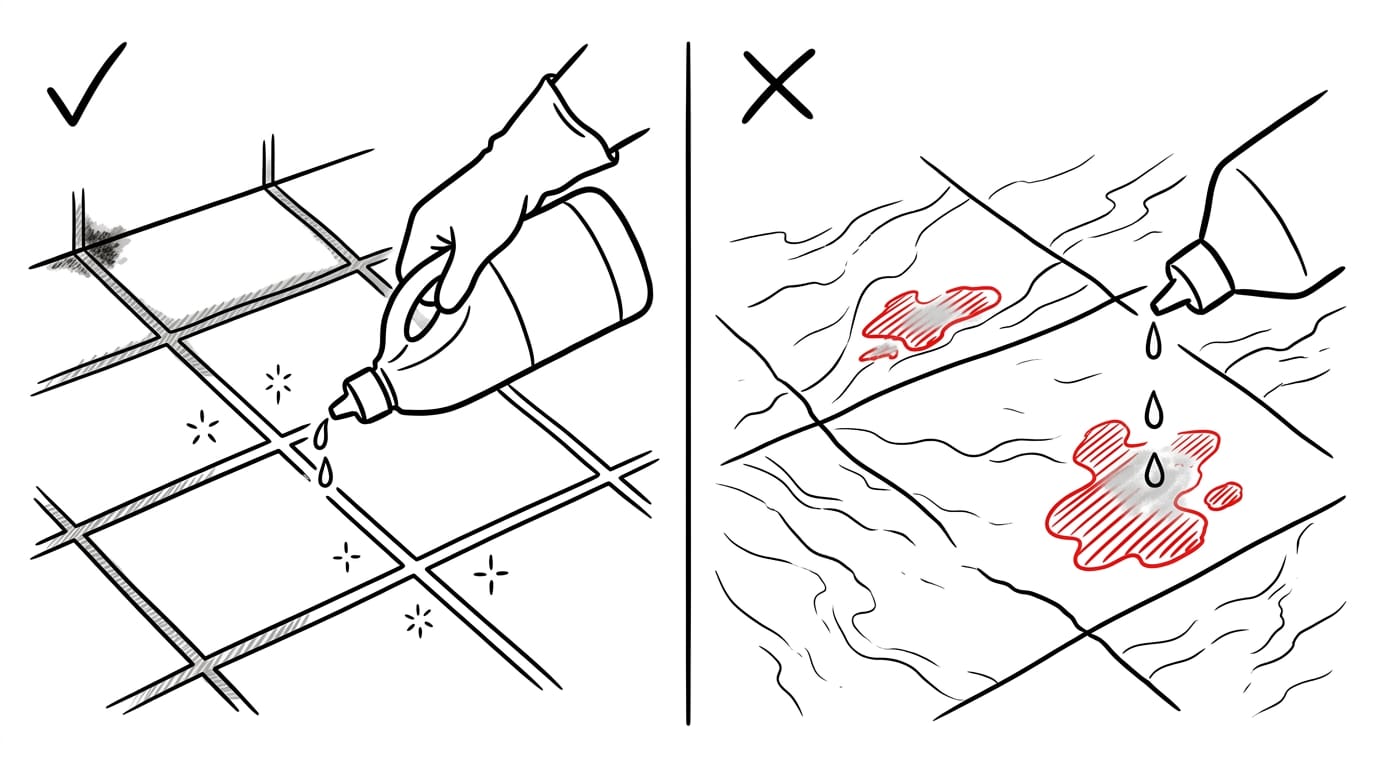
Bleach is a strong cleaner and disinfectant that can kill germs and mold on suitable tiles and grout, and lift stubborn stains or brighten dingy grout. Use it only after checking the surface care guidance and testing a hidden spot; ventilate, wear protective gear, dilute as directed, never mix it with other cleaners, and rinse thoroughly. Avoid bleach on marble and other sensitive stone, and choose a gentler method for everyday grime.
Picture a grey grout line by the bath, or a stubborn mark on the kitchen floor, with a bottle of bleach already under the sink. It’s tempting to reach for it straight away.
Bleach can help on tiles and grout, but only when you know which surfaces tolerate it.
The short answer is yes for some tiles and some stains, when you use it with care. The wrong surface or a careless mix can leave you with dullness or damage.
We’ll cover where bleach really helps, what to avoid, and a quick stain-first method you can follow today.
Where Bleach on Tiles Really Helps
Bleach earns its spot in the cleaning cupboard for a few specific jobs, so here’s where it pulls its weight.
Killing germs and mold in wet rooms
Bleach is a disinfectant, meaning it kills germs, so it does more than tidy a surface. A ScienceInsights guide to bleach as a disinfectant notes that chlorine bleach, when used as directed, kills bacteria, viruses, and fungi on tile and grout.
Mold and mildew are fungi, so the same action reaches the dark specks along damp grout lines.
Think of a parent who wipes the shower grout with a bleach solution, diluted as the label directs, each Sunday to keep the corners clear and cut down on scrubbing later.
It suits bathrooms and kitchens, where steam and splashes keep grout damp. It’s less about making the tile look clean and more about killing what’s living in the grout. Nothing fancy required.
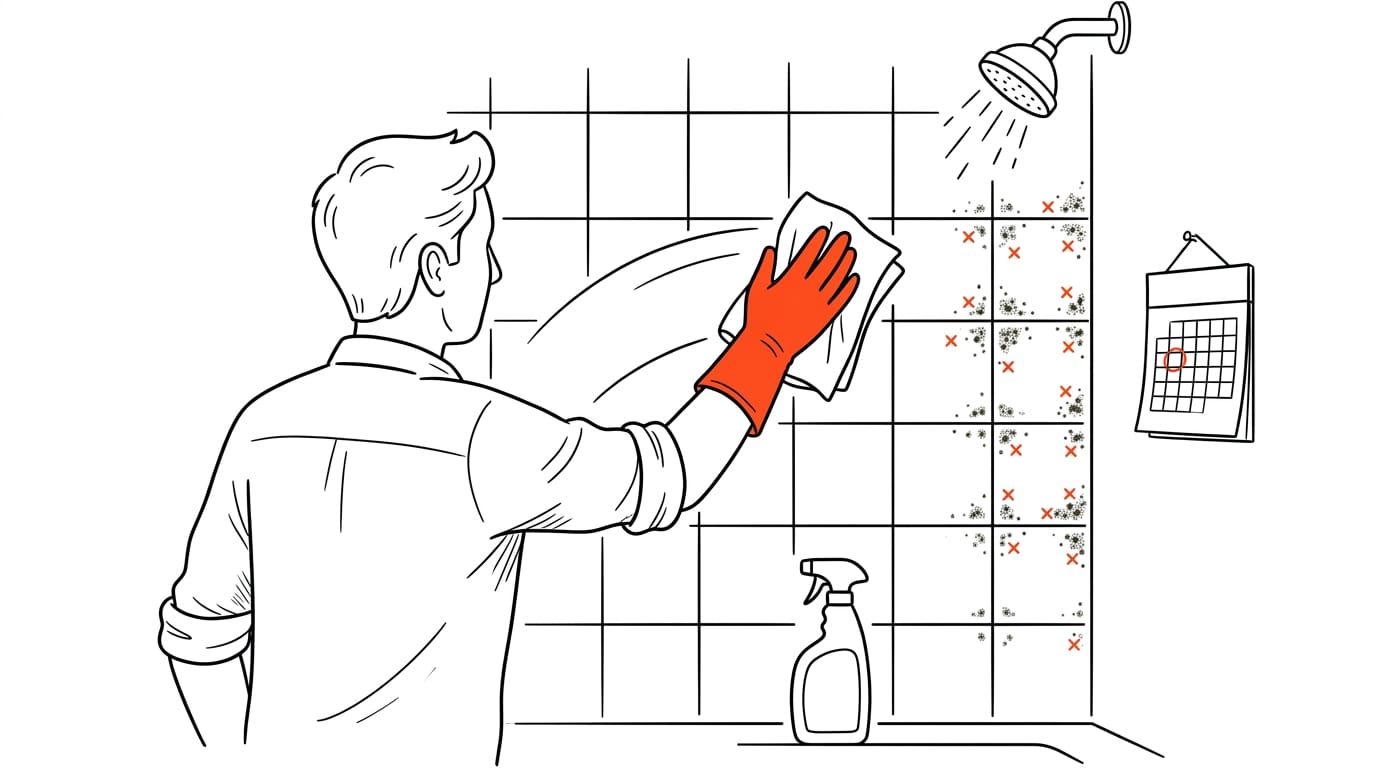
Lifting tough stains and brightening grout
Bleach can lift stubborn stains that a quick wipe with everyday cleaner leaves behind. The usual suspects are:
- Wine splashed near the sink
- Coffee rings on a tiled worktop
- Ink leaked onto a tiled floor
It can also restore brightness to dingy grout. Think of a tenant tidying a rented bathroom before handover. A bleach clean can freshen tired grout without a specialist product on the shopping list.
Affordable and easy to find
Bleach is readily available and relatively inexpensive, so you can grab a bottle on your next shop and keep it under the sink. Consider a student sharing a flat who wants bathroom grout kept in check without buying a shelf of products.
One bottle covers the sink, the tiles, and the odd wine mark. Cheap, common, and close at hand.
The Main Downsides to Watch For
With bleach, the real question isn’t whether it works but where it’s safe to use.
Harm to your skin, lungs, and pets
Bleach is corrosive and can burn skin and eyes, and pets are just as vulnerable. Its fumes can be toxic to your lungs and throat.
Think of a parent scrubbing the shower with the door shut and the family cat nearby. Within minutes the fumes sting their eyes. Opening a window takes seconds and spares everyone a bad cough.
How bleach weakens grout and tile
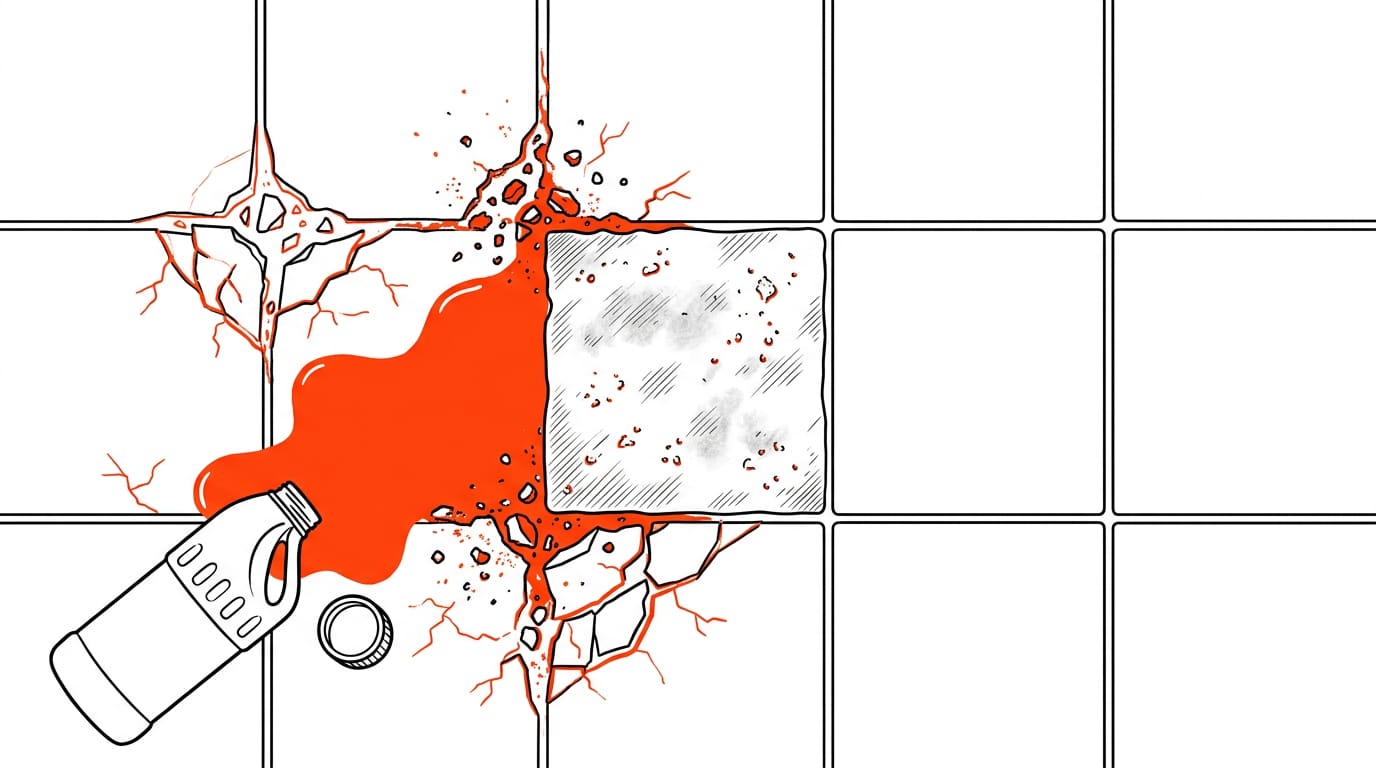
Bleach is alkaline, the opposite of acidic, and that alkalinity can weaken grout’s structure, letting tiles crack or loosen.
Bleach can also fade and discolour tile and grout. A study of cleaning chemicals on marble found the stone lost its gloss, changed colour, and lost more than 1% of its mass.
Many natural stones are porous, meaning they soak up liquid like a sponge, so bleach can sink in and dull them. Marble is one to keep bleach away from. For other tiles, read the maker’s care guidance first.
Can you use bleach on epoxy grout? That depends on the product, so check the grout maker’s cleaning advice. If you can’t find it, test a small hidden spot first.
Effects on drains and waterways
What goes down the drain can change water quality in local streams. Even low levels of chlorine are toxic to fish and aquatic life.
In one case, Yorkshire Water was fined for polluting a watercourse after about 1 million litres of chlorinated water a day was discharged, and over 430 dead fish were found in a single day.
Picture a flatmate pouring leftover bleach down the sink. Mix only what you need, and less bleach ends up in the water.
Staying Safe While Using Bleach
Bleach works fast on tiles and grout, but it’s strong, so the safety steps come first. Work through them in this order every time: ventilate, gear up, dilute, spot test, then rinse thoroughly when you’re finished.
Ventilate, dilute, and test first
Open a window or switch on the extractor fan before you pour anything. Then mix one part bleach to four parts water (1:4). More bleach doesn’t mean cleaner tiles.
Next, run a spot test on an inconspicuous area, like a hidden corner behind the toilet. Check how the tile and grout react before you treat the visible stain. Don’t guess.
Consider a home cleaner getting a bathroom ready for guests. They open the window, mix the 1:4 solution, and test behind the bin first.
When the test looks fine, they scrub the grout by the sink with confidence, so the room looks spotless and no bleached patch appears where guests might notice.
Wear gear, rinse well, never mix chemicals
Keep these habits in place:
- Wear gloves, eye protection, and a mask.
- Never mix bleach with other cleaners, and that includes vinegar.
- Rinse thoroughly with water once the job is done.
Don’t skip the gear.
Gentler Options to Try Instead
Plenty of grime lifts without bleach, so start with gentler options.
How can I make a homemade grout cleaner?
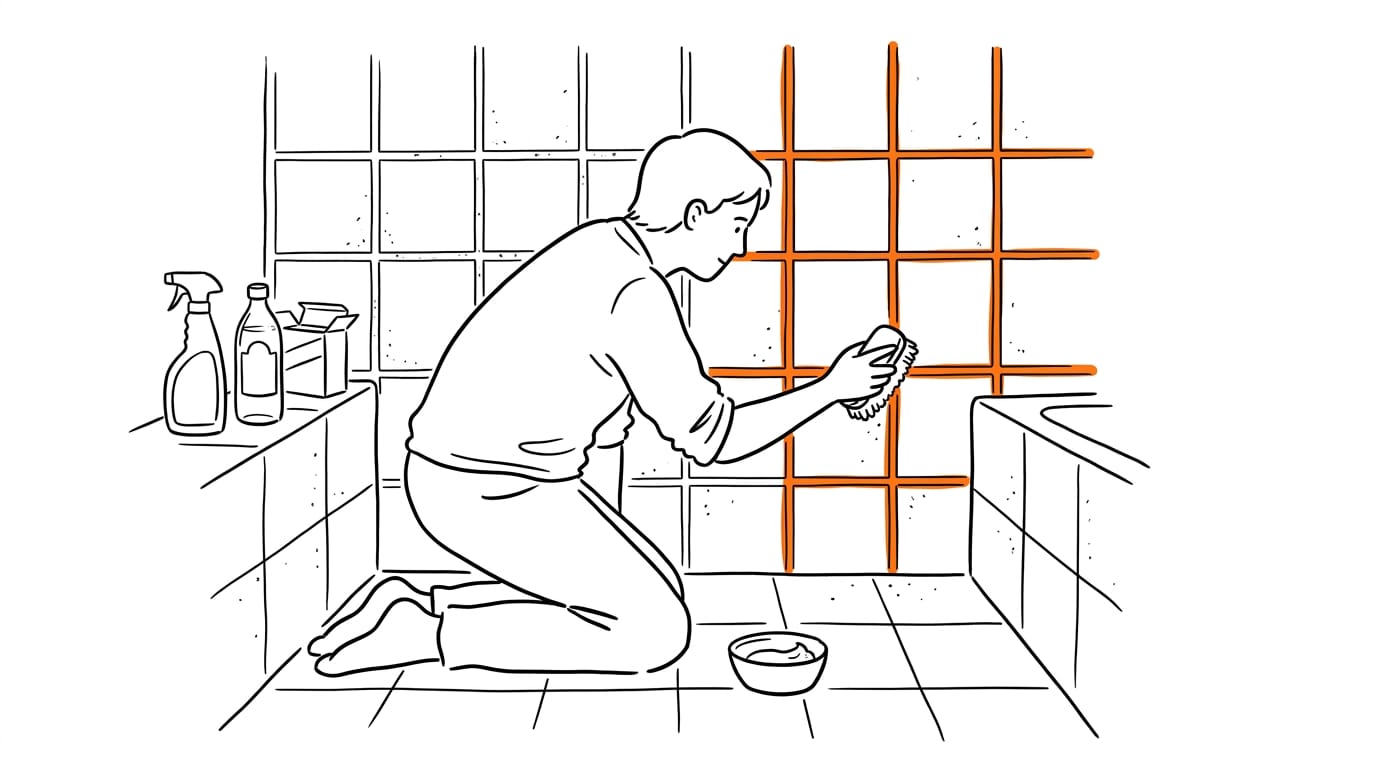
A homemade grout cleaner handles everyday dirt. Try one of these:
- Vinegar and water solution: Mix in a spray bottle, mist the grout, and leave it briefly before wiping.
- Baking soda paste: Stir in a little water until it’s spreadable, then work it into the lines.
- Diluted hydrogen peroxide: Mix with water, dab it onto the grout, and let it sit before rinsing.
- Scrub with brush: Use a soft-bristled brush in small circles, then rinse clean.
For citric acid, dissolve a little in warm water, apply it, let it sit, and rinse well. Think of a tenant scrubbing shower grout before a move-out inspection. A baking soda paste from the cupboard gets the lines clean with no trip to the shop.
Store-bought cleaners and steam cleaning
Commercial grout cleaners save time on stubborn lines, so check the label first. Some people reach for muriatic acid, a strong acid, but it’s a poor choice for bathroom tiles.
It can damage glaze and grout, and it needs gloves, eye protection, and good ventilation. Skip it.
Steam cleaning works through heat rather than chemicals, making it the eco-friendly choice.
Picking the right method for you
Weigh the pros and cons:
- Homemade: cheap and low-risk, but may need more scrubbing on heavy buildup.
- Store-bought: targeted, but costs more and needs careful label reading.
- Steam: chemical-free, but needs a machine and patience.
Balance effectiveness, safety, and the environment. Aim for the right clean, not the strongest one.
Avoid steel wool, wire brushes, and harsh scourers, which scratch ceramic glaze. Never mix bleach with vinegar or citric acid, since the mix can release chlorine gas.
Bleach works best when you match it to the job: a stubborn mark, a surface that can handle it, and a quick, careful rinse afterwards. Test an inconspicuous spot first, keep the room ventilated, and never mix it with other cleaners.
Those simple habits protect both your tiles and your grout.
A little checking first turns bleach from a gamble into a dependable tool. Know your surfaces, respect the bottle, and your grout can look its best again.
References
- Yorkshire Water fined for polluting watercourse — gov.uk (2025)
- Effects of Various Cleaning Chemicals on the Surface Properties of Marbles — dergipark.org.tr (2019)
- Is Bleach a Disinfectant? Uses, Dilution, and Risks — scienceinsights.org (2026)
Questions
How to clean tile with citric acid?
Dissolve a small amount of citric acid in warm water, apply it to the tile or grout, let it sit briefly, then scrub gently and rinse well. Test a hidden spot first, and never mix citric acid with bleach because the combination can release chlorine gas.
Can I clean tiles with bleach?
You can use diluted bleach on some tiles and grout to disinfect or lift stubborn stains, but check the surface maker’s care instructions first. Ventilate the room, wear protective gear, test a hidden spot, rinse thoroughly, and never mix bleach with other cleaners.
Can I use vinegar to clean tile floors?
Vinegar diluted with water can clean many ceramic and porcelain tile floors, but avoid it on marble and other natural stone, which acids can damage. Test a small area, use it sparingly, and rinse the floor afterward.
Can I use Dawn to clean porcelain tile?
Yes. Mix a small amount of Dawn with warm water, mop or wipe the porcelain tile, then rinse with clean water to prevent residue or a slippery film.
What should you not use to clean ceramic tile?
Avoid steel wool, wire brushes, and harsh scourers because they can scratch ceramic glaze. Also avoid mixing cleaning products, and check the manufacturer’s guidance before using strong chemicals or acidic cleaners.
What chemical to clean floor tiles?
A pH-neutral tile cleaner is a good general choice for routine cleaning, especially when you are unsure what material the tile is. Use a product labeled safe for your specific tile, and follow its directions; diluted bleach may be suitable for some stains and grout but not every surface.
Can I use muriatic acid to clean bathroom tiles?
No. Muriatic acid is highly corrosive and can damage tile glaze and grout, as well as harm skin and lungs. Choose a tile-safe cleaner instead, and never mix muriatic acid with bleach or other cleaners.
Is bleach safe for tiles?
Bleach is safe for some tile and grout when diluted and used as directed, but it can discolor surfaces or weaken grout. Avoid it on marble and other natural stone unless the manufacturer specifically approves it; ventilate, spot-test, wear protective gear, and rinse well. Never mix bleach with other cleaners.
Sources
- Is Bleach a Disinfectant? Uses, Dilution, and Risks - ScienceInsights, scienceinsights.org,
- Effects of Various Cleaning Chemicals on the Surface Properties of Marbles, dergipark.org.tr,
- Yorkshire Water fined for polluting watercourse - GOV.UK, gov.uk,
More in Bathroom
- How to Whiten Grout: Bleach, Peroxide, Soda or VinegarHow to whiten grout: Compare bleach, bicarbonate, peroxide, and vinegar by grout type and surface, then use a stain-first fix order to brighten it safely.
- Tile Cleaning with Baking Soda: A Complete GuideTile cleaning with baking soda can lift grimy grout with a simple paste. Find recipes, wait times, tile-safe tips, and a stain-first method for shower grout.
- How to Clean Ceramic Tile Floors Without Harsh ChemicalsHow to clean ceramic tile floors: start dry, then mop; use cupboard staples to tackle stains, scuffs, and grout with a stain-first method.
Stain Finder: a free stain removal guide
Find your stain