Cleaning AC Condensate Drain Line: Complete Guide
Cleaning an AC condensate drain line can stop a clog from turning into ceiling or floor leaks. Spot warning signs and choose a safe clearing method.

An AC condensate drain line is the small pipe that carries away moisture collected as your air conditioner cools. Clean it by switching off power, checking for standing water or leaks, then using gentle suction, brushing, or a suitable PVC-safe cleaner; avoid bleach and excessive air pressure. Clear the line promptly, test that water drains freely, and clean it every three to six months to help prevent leaks, water damage, and mold.
Think of a bathroom sink that drains a little slower each week until one day it’s standing full. Your air conditioner can run into the same trouble with its condensate line, the small pipe that carries away water pulled from the air as the unit cools.
When that line clogs, water backs up and can leak into your ceiling, walls, or floor. Clearing it is a job most home cleaners can handle. Here’s how to spot the warning signs, get set up safely, and pick the right method for your unit.
Why Cleaning AC Condensate Drain Lines Matters
Your air conditioner (AC) pulls humidity out of the room, and that water has to go somewhere. Here’s what we’ll cover: how the drain line works, what blocks it, and what happens when it backs up.
What the drain line actually does
As your AC cools, it pulls moisture from the air. That moisture collects as condensate, water that drips into a drain pan under the indoor unit. The drain line is the narrow pipe that carries it out of the pan and away from the unit.
It’s less about cooling the air and more about removing the water that cooling creates.
Think of a homeowner who checks the line each spring before the first hot week. A quick look keeps the pan dry and the system running all summer.
What usually blocks the drain line
Clogs build up slowly, usually from a few common sources:
- Dirt, dust, and debris that wash off the coil and settle in the pipe.
- Algae and bio-growth, the slimy film that forms wherever moisture sits.
- Humid climates and heavy run time, which produce more condensate and give buildup more chances to form.
The causes are predictable, so you know what to look for.
What happens when the line backs up
When water can’t leave the pan, it has nowhere to go but over the edge. Here’s what that looks like:
- Water backs up and overflows the drain pan.
- Water damage soaks into the surrounding building.
- Mold growth takes hold in the damp areas.
- A safety switch shuts the system off to protect the unit.
The clog itself is small. The cleanup can be large.
Signs Your Drain Line Is Clogged
Your AC’s condensate drain line is the small pipe that carries away the water your unit pulls out of the air. When it clogs, warning signs usually appear before any real damage, so catching them early keeps the fix quick. Here’s what to look for:
Warning signs to watch for
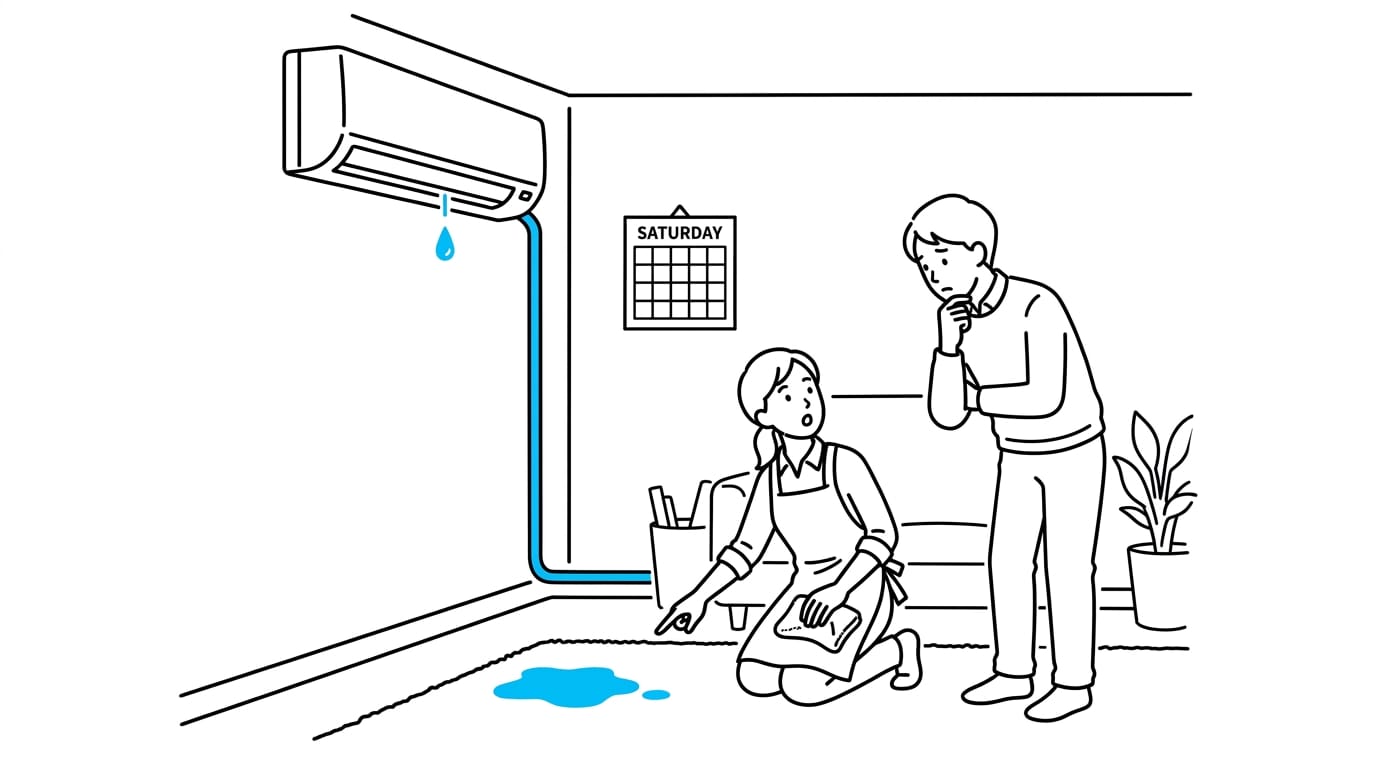
- Water leaking from the AC. Watch for drips or damp patches around the indoor unit or on nearby floors and ceilings. It’s where the water appears that tells you the most, since it should leave through the drain line, not around the unit.
- Poor cooling or unexpected shutoff. Weak cooling or a sudden shutoff can point to a blocked drain, so check the pan before you assume the unit is broken.
- Musty smells near the unit. Standing water can grow mold and mildew, and that odor often drifts out through the vents and into nearby rooms.
- Standing water in the drain pan. Check the pan under the indoor unit. Water sitting there instead of draining away is one of the clearest signs of a clog.
Consider a home cleaner who spots a damp patch on the carpet beside the indoor unit during a Saturday clean. Flagging it to the homeowner that day means a quick flush instead of a stained ceiling and a bigger repair bill weeks later.
Can you run your AC with a clogged drain line? Not for long. Running the unit while the line is blocked can cause overflow, and water can soak into ceilings, floors, or stored boxes, turning a simple clog into a costly cleanup.
Shut it down and clear the line first. Act early.
Get Set up Safely Before You Start
Before you touch a single fitting, make sure the power’s off and your supplies are within reach. A few minutes of prep makes the rest of the job faster and safer.
Turn the power off first
Start at the thermostat, then switch off the breaker that feeds the air conditioner. Use both the thermostat and the breaker, not just one.
Shutting the system down stops air moving through the line while you work, and it keeps you clear of shock risk around the unit’s wiring. Power off first, then pick up the tools.
Gear and supplies to gather
Most of what you’ll need is probably already at home. Think of a homeowner with a turkey baster in the kitchen drawer and vinegar in the pantry: they can clear the line in one afternoon without a trip to the shop.
Use what you already own before buying anything new. The core kit includes:
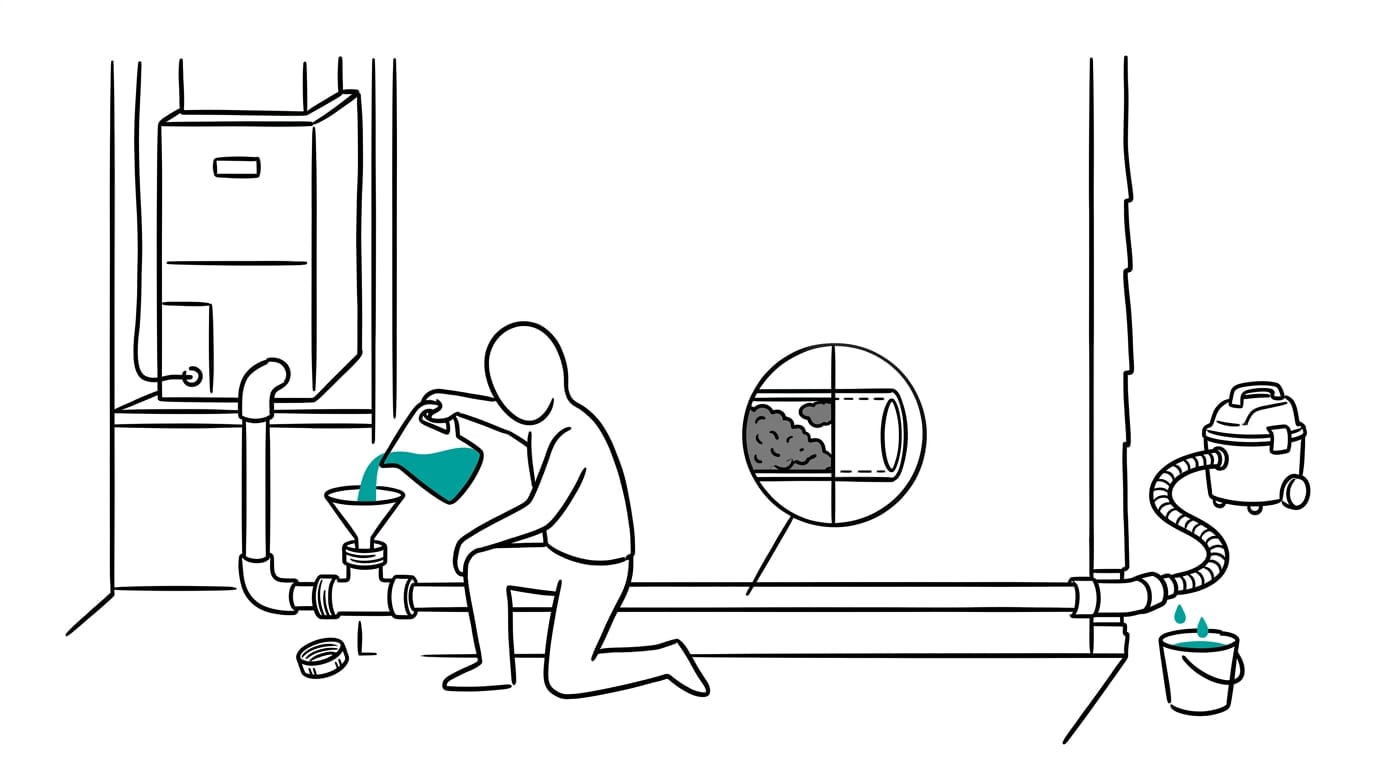
- A wet/dry shop vacuum for suction
- Vinegar or a commercial cleaner
- A funnel or turkey baster for pouring
- A brush or pipe cleaner for reaching into the line
- Electrical tape and CPVC fittings for any repairs
Finding the line and its access points
Your condensate drain line is usually a white or clear PVC pipe that carries water away from the indoor unit. Look for these access points:
- A T-shaped clean-out cap
- An outdoor exit near the condenser
- The trap, the curved low point in the line, plus any service access caps
Which cleaners are safe to use
Your goal is a safe cleaner for the pipe, not the strongest one on the shelf.
- Never mix vinegar and bleach. Keep them apart at all times.
- Avoid bleach on PVC. Keep it off your condensate line entirely.
- Use PVC-safe cleaners. Check the label before you pour anything in.
Read the label first. It’s the fastest safety check you’ll do all day.
Clearing It with a Vacuum or by Hand
Choosing the right method comes down to clog severity. A partial clog often responds to a gentle option, while a fully backed-up line may need stronger suction or a hands-on approach. Here are the four options we’ll walk through:
Vacuum from the outdoor drain exit
Start outside, at the drain exit. Connect your vacuum hose to the outside pipe end, then seal the gap with duct tape so the suction pulls through the line.
Run it for about one minute, then head back indoors and add water to flush out whatever has loosened.
Picture a homeowner who wants the least disruption possible. This method needs only a hose and some tape, and nothing gets taken apart.
Vacuuming through the trap or access tee
If the outdoor exit doesn’t clear it, work from the horizontal tee, the sideways, T-shaped fitting that gives you access to the line.
Fit a CPVC pipe adapter onto the hose (CPVC is chlorinated polyvinyl chloride, a rigid plastic pipe), then wrap electrical tape around the connection so it seals tight. Every joint needs to be airtight, not just close.
Blow out the clog through the vacuum outlet once everything is sealed.
No seal, no suction.
Brushing out the trap by hand
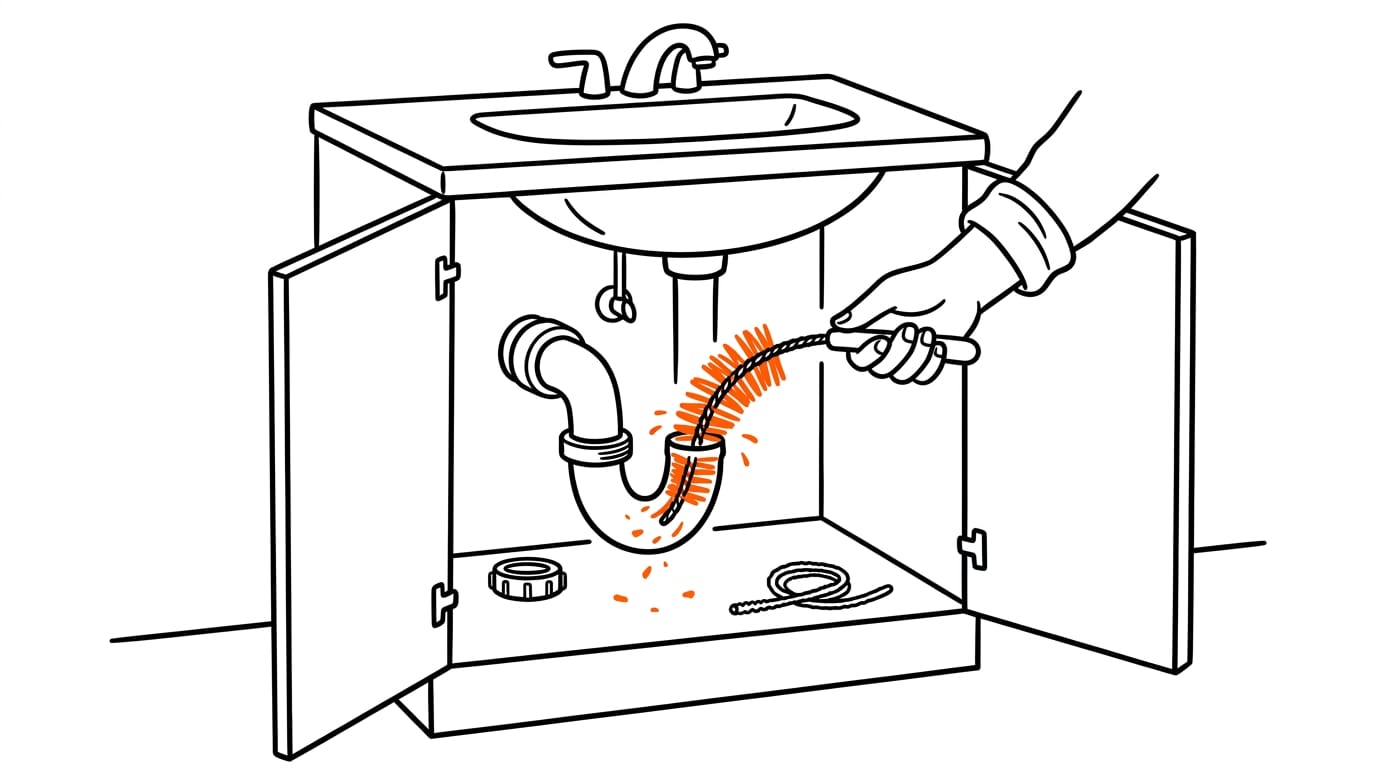
Use this method when the clog sits inside the trap itself. Remove the caps on both ends so you can reach in.
Pull a brush through the trap to scrape out buildup, and keep a pipe cleaner near the opening for anything sitting close to the entrance. Slow and steady wins here.
Blow it clear with a simple tube
Consider a home cleaner who doesn’t want to haul a vacuum to a rental unit. A clear vinyl tube, a strip of tape, and a few breaths may be all it takes to test a light clog. Tape the tube securely over the drain opening, then blow through it by mouth.
No electricity or equipment needed. Start with the easiest option, not the strongest one, and step up only if the water still won’t move.
Flushing It Out with Cleaning Solutions
When the drain line on your air conditioner (AC) needs more than a simple clear, a cleaning solution can help loosen what’s blocking it. Here are the most common options, starting with the one you probably already have.
Can I pour vinegar down an AC drain?
Yes, and it’s a common first step. Pour about one cup of distilled vinegar into the drain line, using a funnel or a baster so it goes straight in instead of splashing across the floor. Then let it sit for 30 minutes.
During that wait, it kills mold and loosens buildup, so it’s softening the clog rather than blasting it out.
Is it safe for the pipe? Vinegar is a mild acid, which makes it a gentle first choice. Just stick to about one cup rather than pouring in more.
Consider a tenant who spots a damp patch below the AC unit. They pour in a cup of vinegar with a funnel, set a timer for 30 minutes, and check the drip before anyone picks up the phone. It’s a quick try that costs next to nothing.
Other cleaners that work too
Out of vinegar? A mix of hot water and a squirt of dish soap is a simple alternative you likely have at home. Pour it in the same way, through a funnel or baster. If vinegar isn’t on hand, citric acid for cleaning is another mild acid to consider.
A commercial AC coil cleaner is another option, but it must be safe for polyvinyl chloride (PVC) pipe. Look for a PVC-safe label before you pour, not after. It takes seconds.
Blowing It Out with Air or Nitrogen
Both compressed air and nitrogen can push a clog out of the condensate drain line under pressure, so you don’t have to dig into the line by hand.
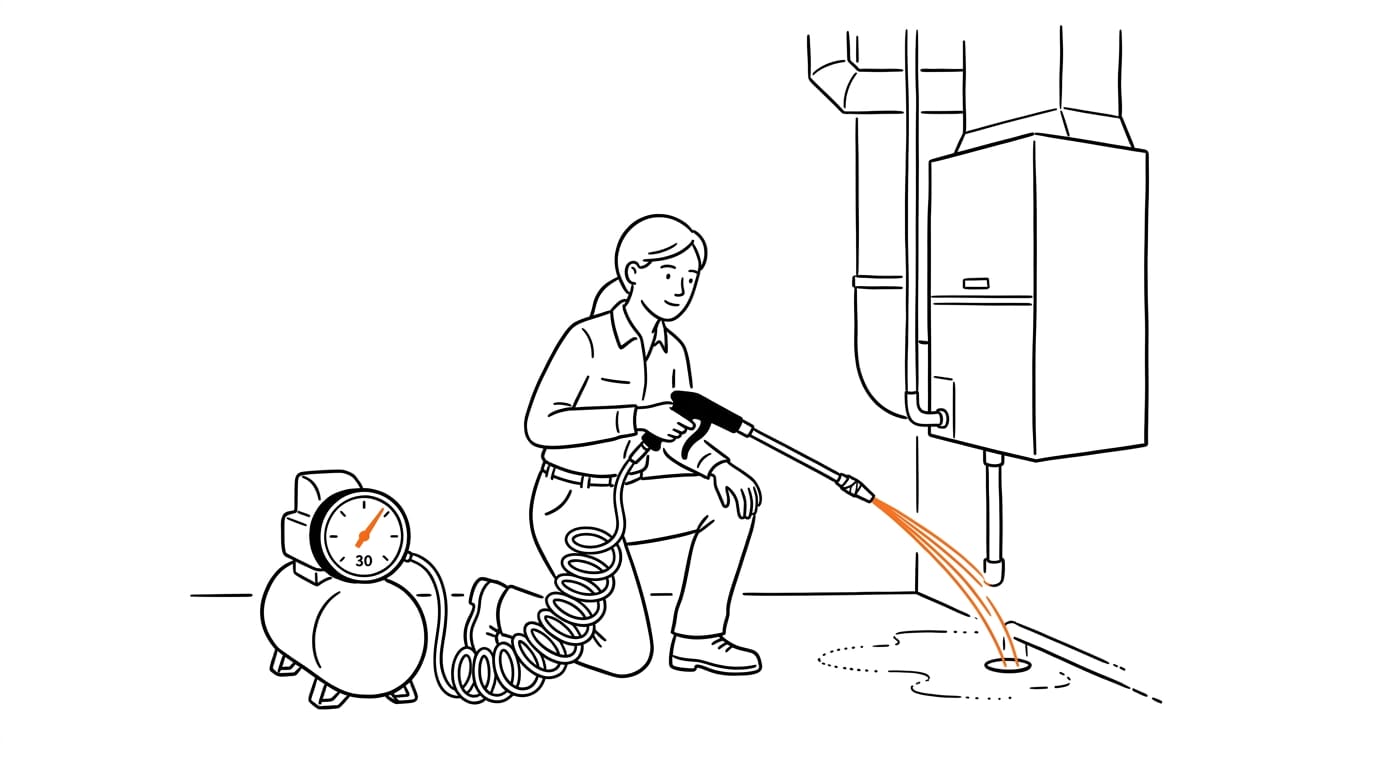
The number to remember is 30 PSI (pounds per square inch), and it’s the setting we’ll come back to in each method below.
Clearing with compressed air at 30 PSI
Set your compressor to about 30 PSI and keep it there. Picture a home cleaner who’s found a damp patch beside the air handler. Her aim is to clear the blockage, not to blast the line.
Before you start, tape the extended tip to the air gun so the seal holds, because a loose tip lets air escape instead of entering the line.
Avoid excess pressure. Pushing harder can cause joint leaks, and a leaking joint wastes the very force you’re trying to use. Aim for steady pressure rather than force. Steady wins.
Using a nitrogen tank instead
No compressor? A nitrogen tank works as an alternative. Think of a landlord who already keeps one in the garage and would rather not buy another piece of equipment.
Attach a regulator (the valve that controls output pressure) and set it to 30 PSI, the same target as before. Finish with a cone end or an extension tube so the nitrogen seals at the outlet and goes where it’s needed.
Reaching tight spots with a flexible hose
Some lines bend somewhere a rigid nozzle can’t follow. That’s where a poly tube (a flexible plastic hose) earns its place: fit it to the air gun and feed it in.
Use it without a service cap, and remember that the pan outlet is your only access point, so don’t force the tube through any other opening. Here, it’s about reach rather than power.
Consider a home cleaner kneeling by the furnace closet, guiding the tube around a bend the nozzle couldn’t reach. Once the air finds the gap, the water starts moving again, and she’s saved herself a call-out.
How pros clear stubborn clogs
Pros use pressurized air too, and it’s their go-to for stubborn clogs. Their method is the same controlled approach covered above, so the same rules apply: steady pressure, a sealed connection, and no force for its own sake. Same method, same rules.
Finishing up and Keeping the Line Clear
Once the clog is out, a few quick steps confirm the line is working and keep it that way.
Refill the trap and test the flow
Start by refilling the trap with water. It’s the curved section of the line that holds a small pool, and that water seal keeps air from being pulled through the line.
Screw the caps back on tightly, then test the flow by pouring a cup of water into the access point and watching it drain away.
Consider a home cleaner who finishes on a Saturday morning. She refills the trap, replaces the caps, and tests with one cup of water. It runs straight through, so she can pack up knowing the job is done.
Testing is less about hoping it worked and more about knowing it did.
Why the outdoor shop vac works best
The outdoor shop vac is the favored choice for this job. It doesn’t stop at clearing the clog. It also flushes the line. One tool, two jobs.
How often to clean the line
Plan to clean the line every three to six months. If the unit runs nearly nonstop, clean it more often. Add the task to your seasonal cleaning routine so it happens on schedule instead of after a leak.
Preventing regrowth between cleanings is mostly about sticking to that schedule, since a line cleared on time gives buildup less room to take hold. Consider a renter who sets a phone reminder every three months.
The line gets cleaned well before water starts pooling by the unit.
When it’s time to call a pro
If water still isn’t draining after you’ve cleared the line, it’s time to call a pro. A deep blockage or pipe damage is more than a shop vac can handle. A technician can also inspect the line for hidden issues you can’t spot from the outside.
Many heating, ventilation, and air conditioning (HVAC) companies offer drain line cleaning and inspection, and some take emergency calls when water is backing up.
The cost to unclog the line isn’t one fixed number, because it depends on how deep the blockage sits and whether the pipe needs repair. Ask for a written quote before any work begins.
A clogged condensate line rarely fails without warning. When you catch the early signs, set up safely, and work through the methods in order, you’ll clear the blockage faster and with far less mess.
Simple upkeep afterward means you won’t be back to the same damp patch next month.
Keep the line flowing and you protect your ceiling, your floors, and the unit itself. A few minutes of care now keeps the water going where it belongs, and out of your home.
Questions
How much does it cost to unclog a HVAC drain line?
There is no single fixed cost to unclog an HVAC drain line. The price depends on how deep the blockage is and whether the pipe needs repair, so ask for a written quote before work begins.
How often should an AC drain line be cleaned?
Clean the AC drain line every three to six months. Clean it more often if the unit runs nearly nonstop.
Can I pour vinegar down an AC drain pipe?
Yes. Pour about one cup of distilled vinegar into the drain line and let it sit for 30 minutes. Avoid using more than a cup, and never mix vinegar with bleach.
Can I run my AC with a clogged drain line?
Not for long. A clogged line can overflow and damage ceilings, floors, or walls, and a safety switch may shut the system off. Turn off the AC and clear the line before running it again.
More in Home Routines
- Cleaning Codes for Upholstery: A Complete GuideCleaning code S tells you which upholstery cleaners are safe. Find the tag, understand solvent-only care, and choose a method when the code is missing.
- Toilet Siphon Jet Cleaning: A Complete GuideToilet siphon jet cleaning restores a weak flush by clearing deposits with basic tools, plus steps for stubborn blockages and habits that keep jets clear.
- How to Clean Hardwood Floors Without Damaging the FinishHow to clean hardwood floors: choose the right tools, tackle heavy grime, and avoid moisture mistakes that can damage the wood and fix spills fast.
Stain Finder: a free stain removal guide
Find your stain