Toilet Siphon Jet Cleaning: A Complete Guide
Toilet siphon jet cleaning restores a weak flush by clearing deposits with basic tools, plus steps for stubborn blockages and habits that keep jets clear.
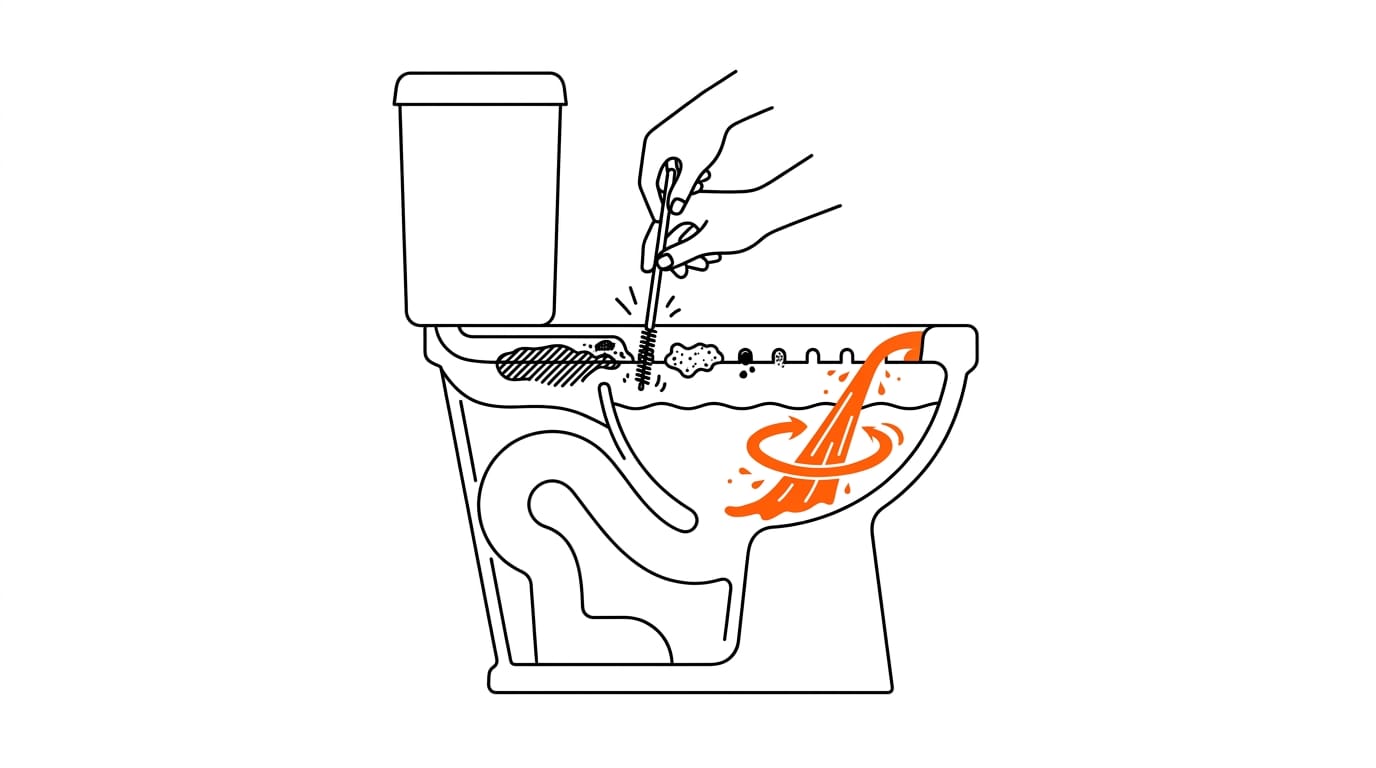
Toilet siphon jet cleaning means removing mineral scale, grime, and other buildup from the main flush opening and the smaller holes under the rim. Shut off the water, empty the bowl, soak deposits with a suitable cleaner, then gently loosen them with non-abrasive tools and rinse thoroughly; never mix cleaners such as bleach and vinegar. Regular gentle cleaning helps restore an even, strong flush, but persistent blockages, cracks, or a weak flush after cleaning call for a plumber.
Think of a shower head that’s gone patchy, spraying in weak, uneven streams because its tiny holes are clogged. Your toilet can suffer the same way.
The siphon jets and rim jets are the small openings under the rim that swirl water around the bowl, and when they fill with deposits and grime, the flush weakens and stains start to cling.
You can clear them yourself with basic tools and a method matched to the mark you’re tackling. We’ll cover what you need, a step-by-step clean, stubborn blockages, habits that keep jets clear, and mistakes to skip.
Toilet Siphon Jet Cleaning and What Clogs
Before you grab a brush, it’s worth knowing which openings do the work and what clogs them. This section covers the jet layout, how the flush works, the black rim stains, and the warning signs.
Where siphon jets sit in the bowl
Most toilets have a few key parts:
- Siphon jet: the main hole at the bowl base, which sends the flush toward the drain.
- Rim jets: the smaller holes under the rim that spray water around the bowl’s sides.
- Passage toward bowl front: the channel that carries water from under the rim toward the front of the bowl.
How jets power the flush
A strong flush depends less on how much water is in the bowl and more on how that water is pushed through the jets.
- Water is forced through the jets at pressure when you press the handle.
- That rush creates a siphon effect, a suction-like pull that starts the emptying.
- The siphon effect pulls waste down the drain and carries it away.
What causes black stains under the rim?
The black stains under the toilet rim are usually several deposits building up together, not one single cause.
- Hard water minerals: the minerals in hard water that cling to the surface.
- Waste and grime deposits: bits of waste and everyday grime that stick around the openings.
- Bacteria and stains: bacteria that settle into those deposits and darken them over time.
- Waste settling at bowl bottom: waste that doesn’t fully clear can settle and leave its own marks.
Signs your jets are getting clogged
- Slow or weak flush: the bowl empties sluggishly or the water lacks force.
- Slow tank refill: the tank takes longer than usual to refill after a flush.
- Water spots and odours: you notice marks on the bowl or a smell that lingers.
- Repeated flushing needed: one flush no longer clears the bowl.
Think of a tenant in a shared flat who has started flushing twice every morning. A quick look under the rim shows grime partly blocking the jets, and a proper clean brings the flow back so the double flushing stops.
Spot the signs early, and the fix stays small.
What You Need Before You Start
Gather everything first, so you’re not hunting for a tool mid-clean. Here’s what to have for your siphon jets.
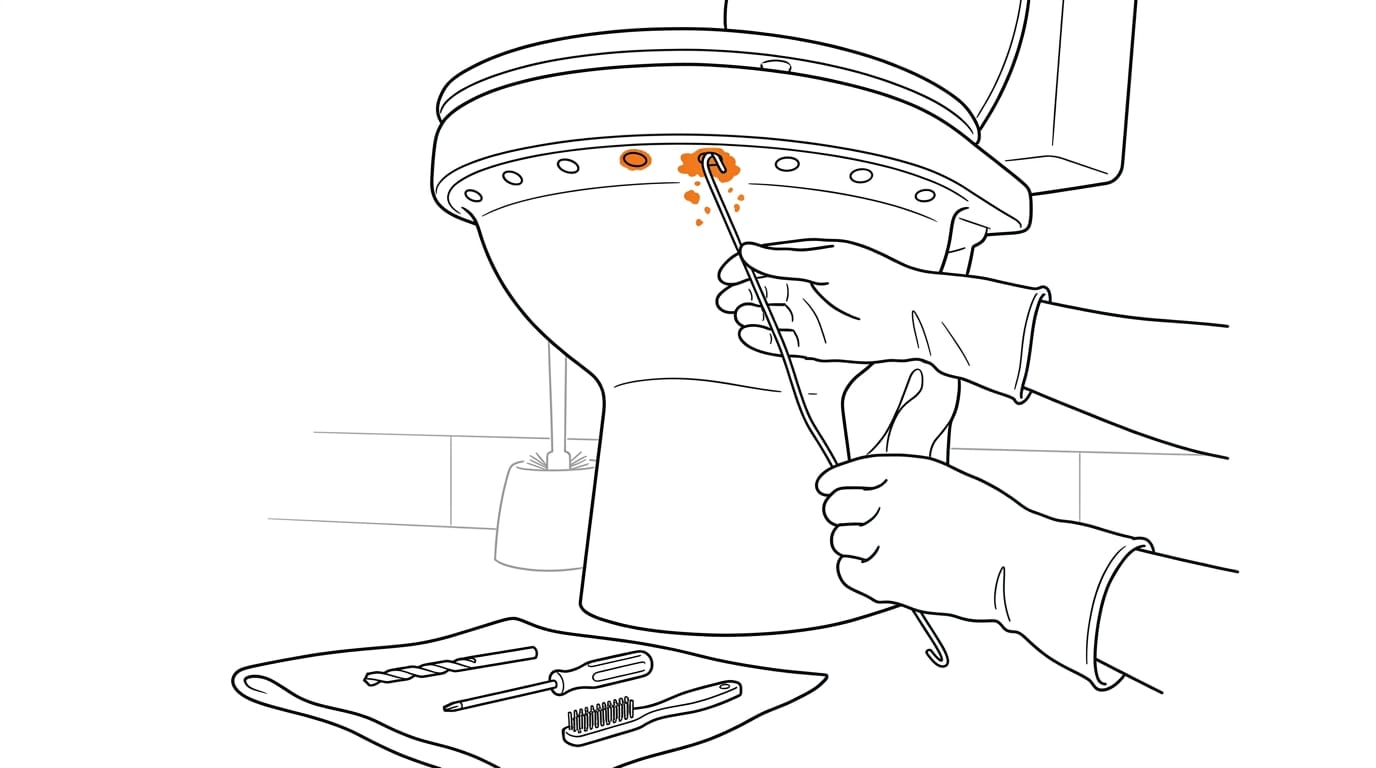
Tools for scraping and brushing jets
- Drill bit: reaches the small jet openings where buildup collects.
- Screwdriver: eases deposits out of the openings.
- Coat hanger wire: straighten it and bend a tiny hook on one end.
- Small wire brush: scrubs the rim and jet surfaces.
- Toilet brush: cleans the bowl once the jets are clear.
Work gently rather than forcing anything, so the bowl’s surface stays intact. Consider a landlord turning a rental around between tenants. With a coat hanger and toilet brush already in the cupboard, the jets get cleared in one visit. Patience pays.
Cleaners that work on jet buildup
Match the cleaner to the deposit, and check the bowl’s surface first.
- White vinegar: a common household option for everyday buildup.
- Baking soda: a mild powder to scrub with.
- Non-abrasive bowl cleaner: a routine option labelled non-abrasive.
- Warm water: rinses away loosened residue.
- Citric acid as descaler: removes hard, chalky mineral crust.
- CLR on toilet jets: CLR is a branded cleaner you can use for jet buildup.
Citric acid is a good choice when scale is the problem, since as a descaler it targets the chalky crust inside bowls and jets. CLR is on the list too, so yes, you can use it on toilet jets.
Follow the label, never mix it with another cleaner, and rinse well with warm water.
Safety gear and ways to remove water
Protect your hands and clear the standing water first:
- Rubber gloves: keep cleaners off your skin.
- Cup or sponge: scoops or soaks up standing water so you can see the jets.
- Water bottle suction: a squeezed bottle pulls out the water left behind.
Gloves on first, every time.
Toilet Siphon Jet Cleaning Step by Step
Cleaning the siphon jet and smaller rim jets follows a clear order that we’ll walk through: prep, soak, scrape, then finish. Match the method to the deposit, since powdery build-up flushes away while harder deposits need the soak first.
Prep the bowl and find the jet
- Pull on gloves before you start.
- Shut off the water at the valve behind the toilet, then flush to empty the bowl.
- Scoop out what’s left with a cup, then run a gloved finger around the inside to locate the jet by feel.
Think of a parent with guests due within the hour who spots a brown ring under the rim. Clearing the water first lets you see the jets and finish before the doorbell rings.
Soak jets in vinegar or baking soda
Pour vinegar into the bowl, then mix baking soda with a little water into a paste and spread it on the rim. Expect fizzing when the two meet. That’s the reaction you want, so don’t be alarmed.
Let it sit for 20 to 30 minutes and let the mix do the work, not your elbow grease. If you’d rather use a commercial cleaner, follow the dwell time on its label.
Consider a renter with only vinegar and baking soda in the cupboard. Those kitchen basics are enough to get started, with no trip to the shop.
Scrape and brush the deposits loose
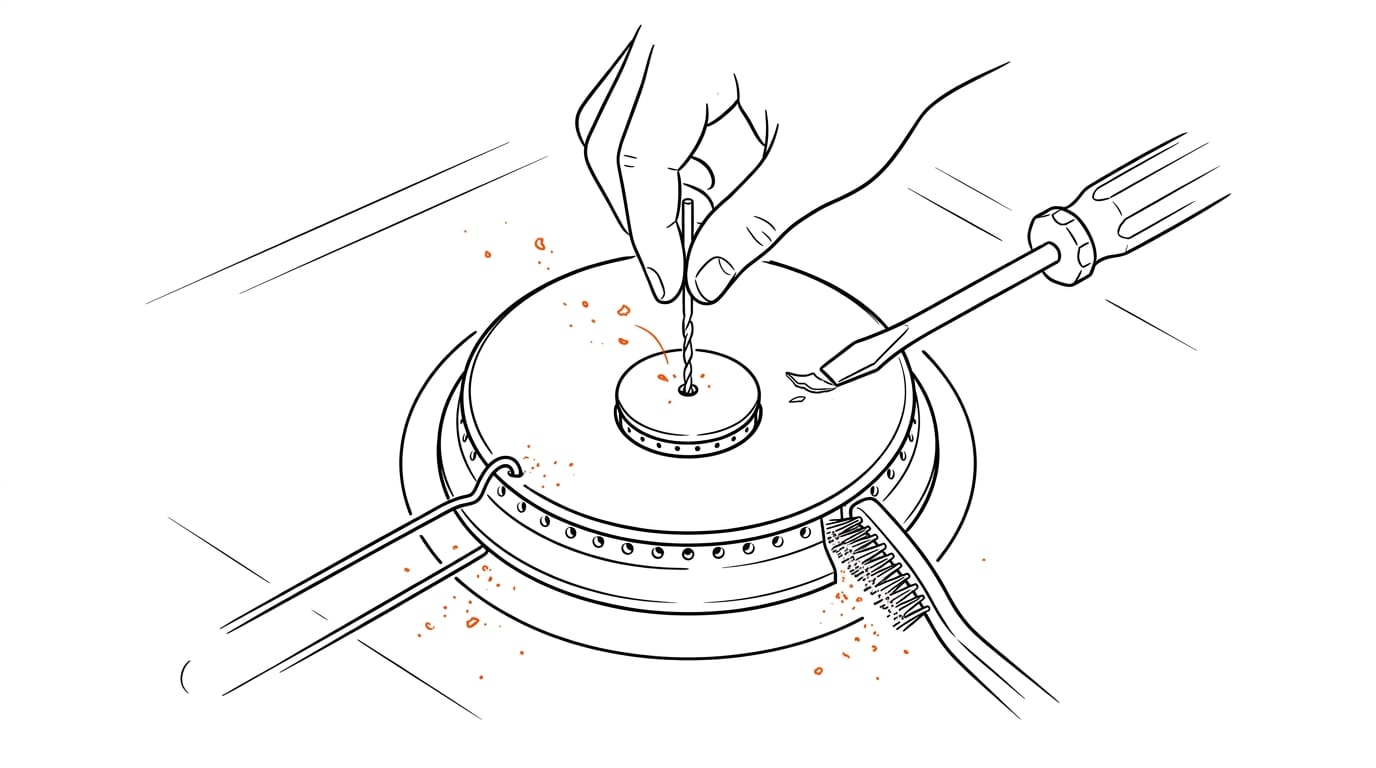
- Turn a drill bit by hand to ease deposits out of the jet, and use a flathead screwdriver to scrape the surface.
- Straighten a coat hanger to clear the rim holes, then use a small wire brush inside them for tight spots.
- Powdery deposits flush away, so don’t worry about picking out every speck.
Ease the deposit loose rather than forcing the tool.
Look inside the smaller rim jets
The rim jets are smaller than the siphon jet, so check them carefully. Check inside each hole with a small mirror or camera, using a torch for light. Rotate the screwdriver tip gently inside each one, and look before you poke.
Final scrub, rinse, and bleach touch-up
To clean the bowl underneath the rim, reach the brush up under the lip and work all the way round, where the curve hides the mess. Flush to rinse.
For stubborn rim stains, use a bleach clean, but flush fully first so the vinegar and bleach never mix in the bowl. If a stain won’t shift, repeat the soak and scrape rather than scrubbing harder. Patience wins.
Clearing Jets That Stay Blocked
If a jet still won’t clear after a basic clean, work through the gentler tools first and only step up to stronger fixes if the water still won’t flow.
Plunging and using thin probes
Start with a plunger and work it up and down 10 to 15 times. That’s often enough to shift loose debris before anything else is needed. If water still struggles to flow, feed a thin pipe cleaner into the rim jets and work it gently.
For finer debris a pipe cleaner can’t grip, slide a length of dental floss through the openings and ease it back out.
Think of a parent whose toilet has been draining slowly all week. A few minutes of plunging and one pass with a pipe cleaner can clear things before the weekend guests arrive.
Work with a light touch and guide the debris out, rather than forcing it deeper into the jets. Patience beats force.
Stronger fixes like hot vinegar and suction
Heated vinegar is the liquid to reach for when you’re wondering what you can pour down a toilet to unclog it. Pour it through a funnel so it heads straight for the jets, then let it sit before you flush.
Next, a wet/dry vacuum can pull out what the vinegar has loosened. Hold the nozzle close to the jet openings and watch for debris coming up. The goal is to remove what’s loosened, not just move it.
Last, check the tank flapper valve, the rubber flap at the bottom of the cistern that lets water into the bowl. A flapper that isn’t sealing properly can weaken the flush, leaving the jets short of the force they need.
Keeping Jets Clean over Time
A few small habits stop the buildup that turns a quick jet clean into a long, hard scrub.
Keep up a simple cleaning routine
Your routine has three parts:
- Vinegar every one to two months, to loosen light deposits before they harden.
- A weekly rim wipe-down, added to the weekly routine you already have so it takes seconds, not a separate job.
- A regular bleach clean to keep the bowl and jets bright.
Consider a parent of three who folds the rim wipe into Sunday’s bathroom tidy. Those few seconds mean the jets rarely need a weekend-long scrub.
Check for hard water and soften it
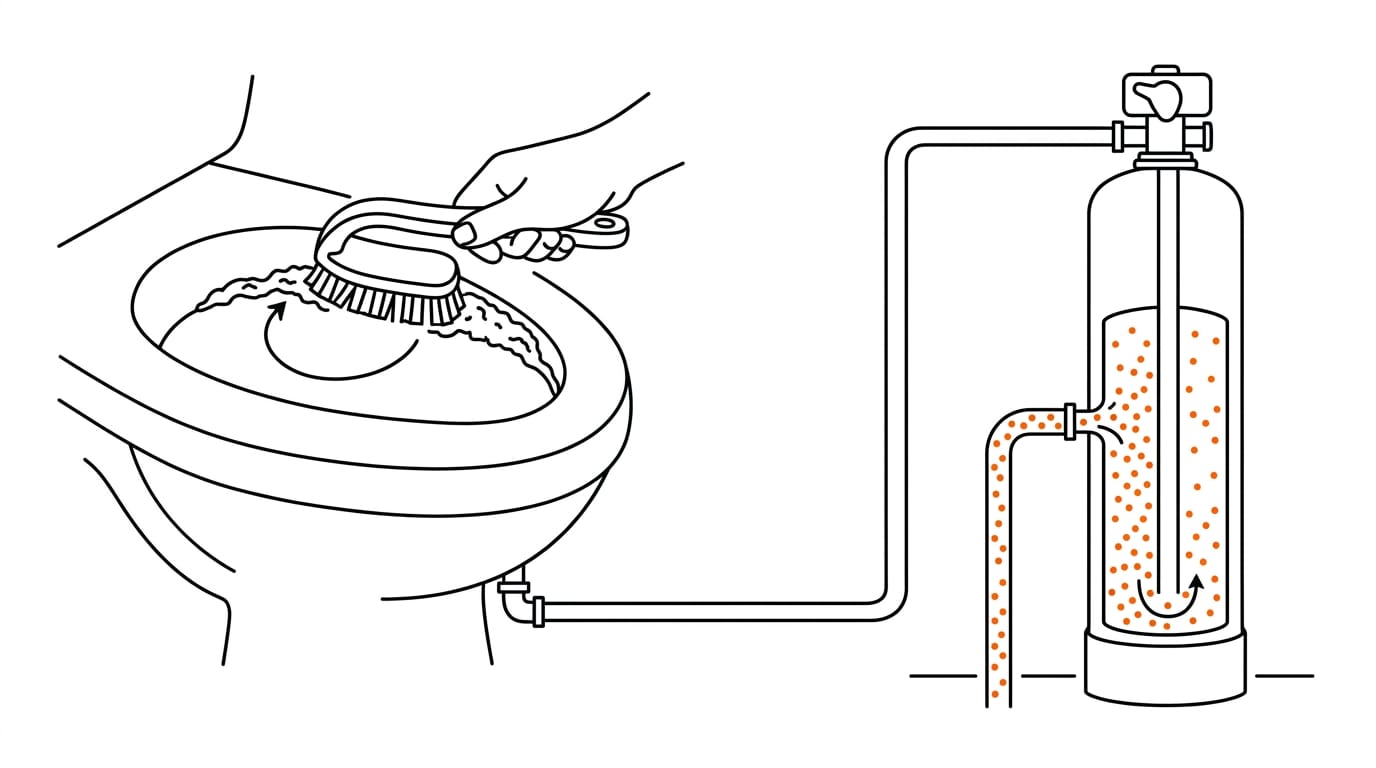
Look for white, chalky crust that keeps returning under the rim soon after you clean, because that’s often limescale, the mineral buildup left by hard water. Check whether your water is hard before blaming the cleaner.
If it is, install a water softener to tackle the minerals behind the crust. Cleaning treats the symptom; a softener tackles the cause.
Daily habits and tank tablets
Think of a tenant who keeps a bin beside the toilet and reports a drip the day they spot it. That’s prevention rather than repair, and it keeps small problems small.
Drop a tank cleaner tablet into the cistern as the packet directs to keep the tank cleaner between jet cleans. Only flush what’s meant for the loo: anything marked non-flushable, wipes included, can block the trap and jets.
Fix leaks promptly, before they get worse. Don’t let urine sit in the bowl; flush after use so it doesn’t leave its own stain. Urine left sitting can leave a smell as well as a stain, so if odor has already spread, learn how to get odor out of house.
Less scrubbing, fewer surprises.
Mistakes to Skip and When to Call
Most toilet damage comes from well-meant shortcuts, not from the cleaning itself. The goal is to clean gently rather than harshly, and to know when a job has outgrown a brush.
Common mistakes that damage toilets
- No steel wool or sandpaper. Take a tenant who grabs steel wool to shift a rust ring under the rim. The ring fades, but the tiny scratches left in the glaze are where the next stain takes hold.
- Never mix bleach with vinegar. Combining them can release harmful fumes, so rinse thoroughly between products.
- No sink drain cleaners. They’re built for pipes under the sink, and their strong chemicals can be too harsh for toilet glaze and seals.
- Avoid over-plunging. Hard, repeated plunging can strain the seal at the base of the toilet, so stop and reassess after a few firm attempts.
- Stick to safe products for ceramic and septic. Choose a mild, non-abrasive cleaner labelled safe for porcelain. If your home runs on a septic tank (a private underground system rather than a main sewer), check that the label says it’s safe for septic use too.
Gentle wins, every time.
Signs it’s time to call a plumber
Knowing when to stop matters as much as knowing what to avoid. Watch for these signs that the job has outgrown your toolkit:
- Clogs persist after attempts. If the blockage survives several careful rounds, it may sit deeper in the pipe than your tools can reach.
- Cracks in the bowl or rim. A crack is a repair job, not a cleaning one, so get a professional to look at it before it gets worse.
- Weak flush after cleaning. Clearing the jets should bring back a strong flush. Take a homeowner who has jetted the rim twice but still gets a sluggish flush: that’s the moment to stop scrubbing and make the call.
Clear jets make a real difference, giving you a stronger, even flush. Match the method to the deposit and bowl surface, start gentle, and only work up when you need to.
A quick check now and then stops most blockages from building up. If jets stay stubborn or the flush still feels weak, don’t keep pushing. A plumber can find what’s really going on.
Clear the jets, match the method, and every flush will work the way it should.
Questions
What are the black stains under the toilet rim?
Black stains under the toilet rim are usually a mix of hard-water minerals, waste, grime, and bacteria that build up around the rim jets. Waste that doesn't fully clear can also leave dark marks at the bottom of the bowl.
How to clean the toilet bowl underneath?
Reach a toilet brush up under the rim and scrub all the way around the bowl, where the curve hides grime. Flush to rinse, and for stubborn stains use a suitable cleaner according to its label; never mix bleach with vinegar or other cleaners.
How to clear a clogged toilet drain?
Start with a plunger and make 10 to 15 firm strokes to try to shift loose debris. If the toilet remains clogged, avoid repeated forceful plunging or sink drain cleaner; a persistent blockage may be deeper in the pipe and need a plumber.
Is citric acid good for cleaning toilet bowls?
Yes. Citric acid works as a descaler and can help dissolve chalky hard-water deposits in a toilet bowl and its jets. Follow the product directions, rinse well, and never mix it with another cleaner.
What liquid can you pour down a toilet to unclog it?
Heated vinegar can be poured through a funnel toward the toilet jets to loosen deposits; let it sit before flushing. Do not use sink drain cleaner in a toilet, as its strong chemicals can damage the glaze or seals.
Can I use CLR to clean toilet jets?
Yes, CLR can be used to clean toilet jets. Follow the product label, use gloves, never mix it with another cleaner, and rinse thoroughly with warm water.
What do plumbers recommend to clean toilet bowls?
Plumbers generally recommend regular cleaning with a non-abrasive toilet bowl cleaner and a toilet brush, plus gentle removal of deposits from the jets. Vinegar can help with light buildup, while citric acid or a suitable descaler can target mineral scale; always follow product directions and avoid mixing cleaners.
More in Home Routines
- Cleaning AC Condensate Drain Line: Complete GuideCleaning an AC condensate drain line can stop a clog from turning into ceiling or floor leaks. Spot warning signs and choose a safe clearing method.
- Cleaning Silver with Aluminum Foil: A Complete GuideCleaning silver with aluminum foil uses baking soda and hot water to lift tarnish; get the quick setup, safe-item checks, and aftercare for a bright finish.
- Cleaning Codes for Upholstery: A Complete GuideCleaning code S tells you which upholstery cleaners are safe. Find the tag, understand solvent-only care, and choose a method when the code is missing.
Stain Finder: a free stain removal guide
Find your stain