How to Clean a Dishwasher with Vinegar, Start to Finish
How to clean a dishwasher with vinegar: prep the parts, follow the cleaning steps, then use baking soda and habits to keep sour smells from returning.

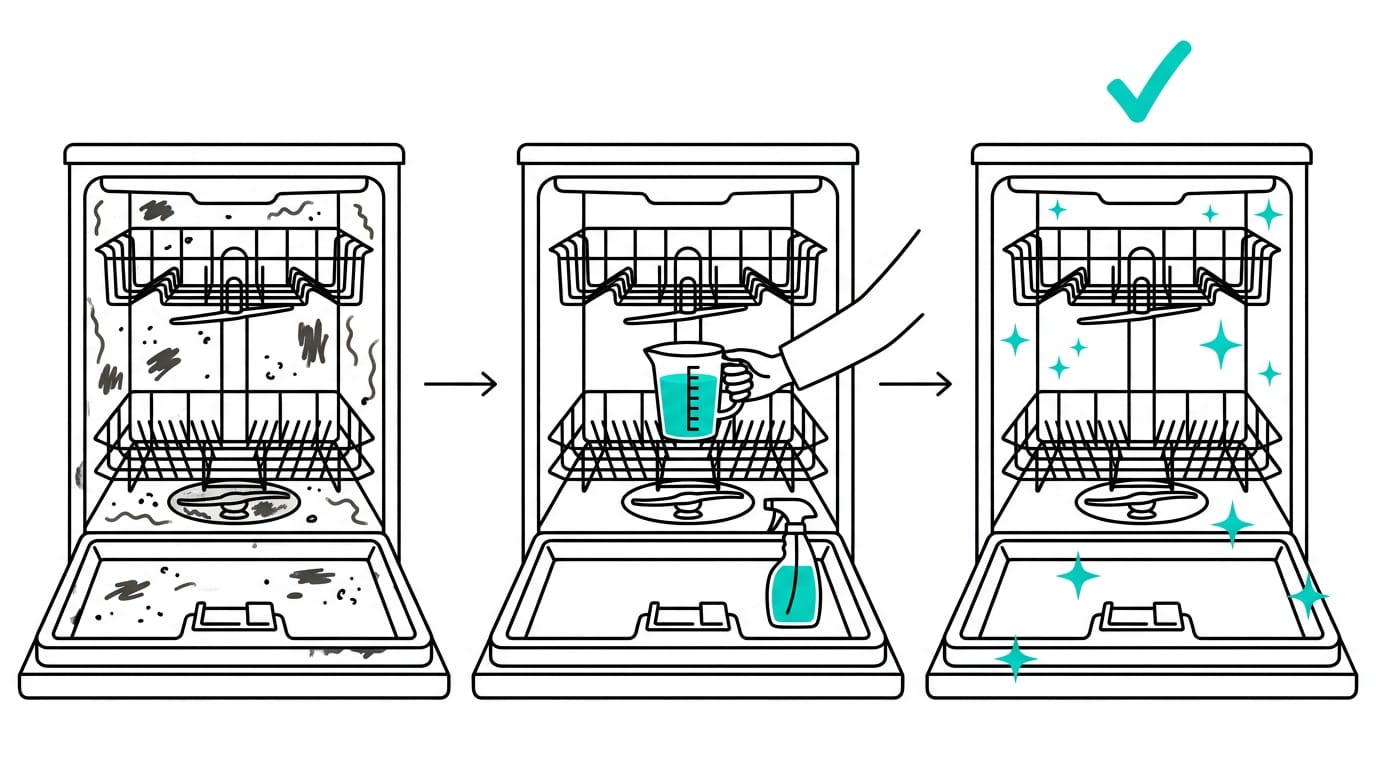
Cleaning a dishwasher with vinegar means using a small amount of white vinegar in an empty machine to loosen limescale, grease, detergent film, and hard-water marks. First clean the filter, spray-arm holes, door, and seal, then run a full hot or normal cycle with vinegar in a dishwasher-safe bowl on the bottom rack, following your manual and never mixing it with bleach. Limit vinegar cleaning to once a month to protect the machine and seals, and use baking soda afterward if odors or residue remain.
Picture the dishwasher humming through a full cycle, then you open the door and catch a sour smell drifting out. Something’s building up in there: grease, food bits, and a cloudy film that dulls the glasses, all tucked out of sight.
That’s where vinegar comes in. It’s a simple store-cupboard option for loosening that buildup, and we’ll cover when to use it, how to prep the parts first, the exact steps, which store-bought cleaners you can skip, and how to keep smells from coming back.
When to Clean a Dishwasher with Vinegar
Your dishwasher usually shows warning signs before it slips. Spot them early and you’ll know when a vinegar clean is the right move.
Signs of buildup and what causes it
Buildup creeps in slowly, and it tends to show up in a few ways:
- Grease and grime that cling to the inner walls and spray arms
- Limescale, the chalky mineral deposit left behind by hard water
- A cloudy film on glasses and plates
- Spots, streaks, and food traces that survive a normal cycle
- Bad smells that greet you the moment you open the door
Think of a parent loading the dishwasher every evening. Within a few months, glasses look hazy and the door smells faintly sour. That’s buildup at work.
Why regular upkeep pays off
Regular upkeep is less about fixing problems and more about preventing them. A few minutes of care keeps the machine working at full strength. Little and often wins.
- Better cleaning performance: clear spray arms and filters let water reach every dish.
- Longer appliance lifespan: a well-kept machine doesn’t strain its parts as much.
- Fewer clogs and leaks: keeping debris out of the drain stops blockages before they start.
How often to clean and check
Frequency depends on usage. A household that runs the dishwasher once a day needs more attention than a couple who run it a few times a week. Here’s a simple plan:
- Deep clean: once a month, with vinegar.
- Filter check: weekly or monthly.
- Filter rinse: every week or two.
For example, a tenant sharing a flat with three housemates might rinse the filter weekly, catching food debris before it clogs the drain. A single person running the machine twice a week can stretch that to every two weeks.
Prepare and Clean the Parts First
Before the vinegar goes anywhere near the machine, clear out the parts that trap grime. Skip this step and the cycle spends its effort loosening debris instead of cleaning.
Finding and cleaning the filter
The filter sits under the lower spray arm, near the bottom of the tub. Remove it, scrub away food bits with an old toothbrush under warm water, rinse well, and put it back until it sits firmly in place.
Some filters are self-cleaning, so check your manual before you scrub by hand.
Picture a parent who wakes to a sour smell from the dishwasher. Rinsing the filter first gives the vinegar a clean start to work with. Clean it before the vinegar run, not after.

Unclog spray arms and empty racks
Empty the racks and utensil holder first so nothing is in the way. Then check the small holes along each spray arm, the openings that shoot water over your dishes.
If food is stuck inside them, poke it out with a wooden toothpick or the bristle end of a toothbrush. Be gentle, so you don’t widen the holes.
Wipe the door, gasket and interior
Work through the door and interior in this order:
- Remove food residue from the inside of the door and the tub walls.
- Wipe the door edges and control panel, which pick up grease from every load.
- Clean the gasket, the seal around the door, with a soft toothbrush, working along the folds where crumbs hide.
- Finish with a damp microfiber cloth to lift what’s left behind.
Keep that cloth damp, not dry, or you’ll just smear the grime around.
Cleaning the outside without scratching
Fingerprints and grease build up on the outside quickly. Wipe with mild detergent on a damp cloth, then go over it again with clean water so no soap is left behind.
If the front is stainless steel, use a stainless steel cleaner and wipe with the grain so the finish stays even. Avoid abrasive products such as scouring pads, which leave fine scratches that trap grime. Gentle wins.
Take a tenant who scrubs a streaky front with a pad. The new scratches only make the next smudge stand out more.
Using Vinegar to Clean the Dishwasher
Vinegar is a simple way to clean a dishwasher, and it works best when you know why it works.
Why vinegar cleans so well
It works in four ways:
- Natural acid. The work is done by acetic acid, vinegar’s natural acid. Acid does the heavy lifting.
- Breaks down limescale. Limescale is the chalky buildup hard water leaves behind, and vinegar’s natural acid breaks it down. Research on how acetic acid dissolves calcite looks at the chemistry behind it.
- Cuts grease and detergent residue. It also cuts through grease and the film detergent leaves behind over time.
- Removing hard water stains. Those cloudy, chalky marks on glassware are hard water deposits, so yes, vinegar can remove them.
Think of a tenant whose glasses come out cloudy every week. A monthly vinegar run clears that film, and the next load comes out clearer. It’s maintenance, not an emergency fix.
Run a vinegar cycle, step by step
- Start with an empty machine. Pour the vinegar into a lidless, dishwasher-safe bowl or glass and set it on the bottom rack, where Jones, quoted by EatingWell, says it belongs.
- Add no detergent.
- Run a full hot or normal cycle.
- Choose air dry or the energy-saving dry option, if your machine has one.
- Once the cycle ends, wipe any stubborn spots.
- Run the baking soda step after the vinegar, not before.
Does vinegar need rinsing? No separate rinse is needed, since the full cycle carries it through. Can vinegar work as a rinse aid?
The cycle above is a cleaning run, not a stand-in for your usual rinse aid, so check your owner’s manual before trying it in that role.
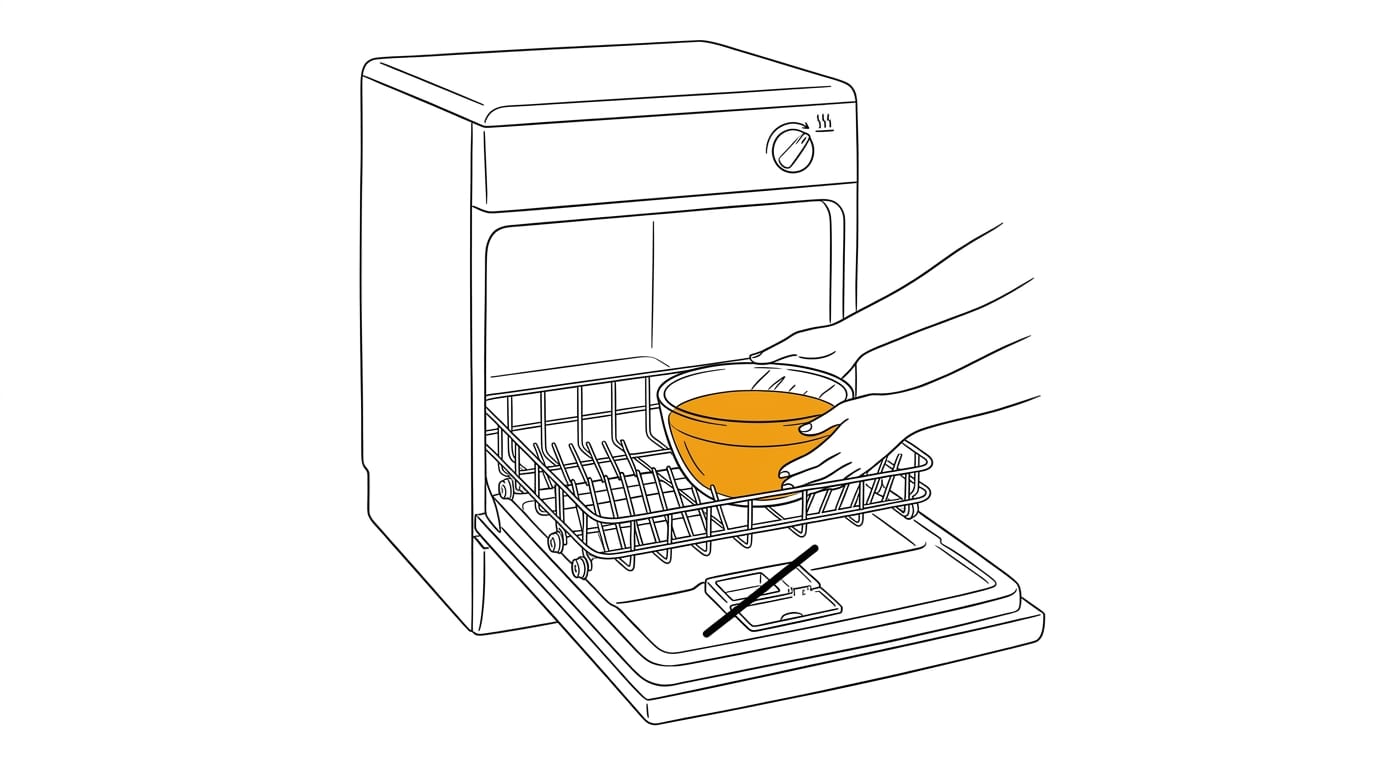
How much vinegar to use
Advice varies. One source says a cup, while others, including Jones, quoted by EatingWell, say two. Use whichever amount your owner’s manual backs up.
Mistakes to avoid with vinegar
- Don’t overuse it. Acid can damage the machine, so keep it to once a month at most.
- Check your owner’s manual first. Your machine’s rules come before any tip here.
- Never use chlorine bleach. Keep it away from the vinegar cycle entirely.
- Watch the rubber seals. Repeated vinegar use can put them at risk, so stick to the monthly limit.
Cleaning with Baking Soda
Baking soda is your gentle, store-cupboard starting point. Here’s how to use it, and when a paste helps.
Sprinkle baking soda, then run a cycle
Think of a renter whose dishwasher smells sour after a fortnight of takeaway containers. Here’s the fix:
- Sprinkle half a cup or one cup of baking soda across the bottom of the dishwasher.
- Run a short hot cycle.
- Let it air dry before you load anything.
That’s the whole method, and the kitchen smells fresh again before dinner.
What baking soda does in your machine
Baking soda works on what you can’t see. It absorbs odours rather than masking them, and it helps remove marks from the surfaces it touches. Because it’s mildly abrasive, it also lifts residue that’s clinging on.
So, can you use baking soda and vinegar to clean your dishwasher? Yes, and they pair well. Baking soda handles the odours and stains, while vinegar is the partner you bring in alongside it.
Scrubbing stubborn spots with a paste
When a spot won’t budge, make a paste: stir baking soda with a little water until it’s thick enough to stay put. Scrub the rubber seals with a toothbrush rather than wiping over them, since a cloth alone won’t reach in.
Then wipe with a damp cloth and run a rinse cycle to clear any leftovers.
Picture a host who spots a grey film in the door seal the night before guests arrive. A little paste and a toothbrush sort it out with what’s already in the cupboard. Quick, simple, done.
Store-bought Dishwasher Cleaners
Prefer not to measure anything? A ready-made product does the work for you. Here’s what to look for and how to use it.
Descaling tablets like Affresh and Finish
Affresh and Finish both sell tablets designed to clean inside the machine. Their main job is descaling, which means removing the chalky mineral build-up that hard water leaves behind.
Look for a label that mentions both descaling and removing film, since those are the jobs behind cloudy glasses and greasy residue.
Before you start, check the manual and instructions. Your machine’s guide will say whether a cleaner suits it, and the packaging tells you how to use the product.
So which to buy? If you already keep white vinegar in the cupboard, you may not need a tablet for routine upkeep. Choose a tablet when you want a ready-made clean rather than a homemade one, or when you’d rather skip the measuring altogether.
Using Affresh, one tablet or two
- Tablet in detergent tray. Drop one tablet into the detergent dispenser and close the lid.
- Second tablet for heavy buildup. If the interior is badly coated, a second tablet is the usual step up, but check the packaging first.
- With or without dishes. Run it empty so the tablet works on the machine instead of leftover food.
- Normal wash cycle. Choose a normal wash and let it run to the end.
Consider a flatmate who keeps spotting a cloudy film on the glasses after every load. One tablet, one empty normal cycle, and no scrubbing: that’s a quick test of whether the film lifts. Simple as that.

Getting Rid of Dishwasher Smells
Most dishwasher smells come from a few common causes, and each one has a simple fix. Here’s what to check first.
Common odor causes and easy fixes
Think of a busy parent who loads the dishwasher each night and opens it on Monday morning to a sour smell. Odors like this often start with leftover food, so the goal is to remove the source, not mask the smell.
- Standing water and rancid food. Water that sits in the base after a cycle lets food bits turn rancid. Scrape plates before loading and clear out the filter when you can.
- New appliance plastic smell. A new dishwasher can give off a plastic smell the first time it runs. Run an empty cycle before the first real load of dishes.
- Daily rinse-only cycle. Running a rinse-only cycle after each meal, rather than leaving dishes to sit until the next day, flushes food away before it has a chance to go off. Catch it early.
- White vinegar rinse. A rinse with white vinegar is a simple way to tackle lingering smells using something you probably already have in the cupboard.
- Affresh cleaner reduces odors. If a smell hangs on after a vinegar rinse, a dedicated cleaner such as Affresh reduces odors, so it’s a useful next step.
Habits That Keep It Clean
Small problems in a dishwasher usually start with trapped food, a damp seal, or an empty rinse dispenser. A few routines stop that buildup before you ever need a deep clean.
Small daily habits that prevent buildup
- Scrape first. Clear food off plates into the bin before you load.
- Check the drain. Remove any food trapped there after each cycle.
- Wipe the seal. Give the door seal a regular wipe.
- Leave it ajar. Leave the door slightly open once the cycle ends so the inside can dry out.
Take a busy parent who runs through this routine every evening. The payoff comes the next morning, when the glasses come out clear and the kitchen doesn’t smell of yesterday’s dinner.
Whether to rinse dishes before loading
A light scrape is all you need: scrape the big bits off rather than rinse the plate. You don’t need a full rinse, and pre-washing isn’t recommended, because detergent needs a little food residue to work on. Skip the pre-rinse.
Handling hard water and rinse aid
Rinse aid is the liquid that helps water drain off dishes so they dry without spots. Use a liquid rinse aid and keep the dispenser filled, so it’s ready for every load.
If your home has hard water (water with lots of dissolved minerals), this matters even more. If you have a water softener, set it to 15 grains, the unit used to measure water hardness.
What can you substitute for rinse aid? If the dispenser is empty, white vinegar is a common stand-in, and it’s the same cupboard staple this article is built around.
Cleaning your dishwasher doesn’t call for fancy products, just the right order of steps and a little patience. Prep the parts, run the vinegar, and follow up with baking soda when grime or odour lingers.
Keep up a few simple habits and the machine will keep working hard for you, with clearer glasses and fresher loads. A clean dishwasher makes every meal a little easier, and that’s well worth a few minutes of your time.
References
- The kinetics of calcite dissolution in acetic acid solutions — doi.org (1998)
- Maytag Settles Your Household Debate—There Is a Right Way to Load the Dishwasher — eatingwell.com (2025)
Questions
How do I clean the filter in my dishwasher?
Remove the filter from beneath the lower spray arm, near the bottom of the tub. Scrub food debris away with an old toothbrush under warm water, rinse it well, and reinstall it securely. Check your dishwasher manual first, since some filters are self-cleaning.
Can vinegar be used as rinse aid in a dishwasher?
White vinegar can be used as a rinse-aid substitute, but check your dishwasher manual before putting it in the rinse-aid dispenser. A liquid rinse aid is the recommended option for helping water drain off dishes and reduce spots.
What causes a smelly dishwasher?
Food scraps and standing water can turn rancid and cause sour smells. A clogged filter or food trapped in the drain may contribute; clear debris, clean the filter, and leave the door slightly open after a cycle so the interior can dry.
Will vinegar remove hard water stains?
Yes. Vinegar’s acetic acid can break down limescale, the mineral deposits that cause cloudy, chalky hard-water stains on glassware. For a dishwasher clean, use it no more than once a month and check your manual first.
Does cleaning vinegar need to be rinsed off?
No separate rinse is needed after a vinegar cleaning cycle. The full cycle carries the vinegar through the dishwasher.
Can I use baking soda and vinegar to clean my dishwasher?
Yes. They can be used as a pair: vinegar helps break down limescale and residue, while baking soda absorbs odors and helps lift marks. Use baking soda after the vinegar cycle, not before.
Can I add vinegar to my dishwasher to clean it?
Yes. Put vinegar in a lidless, dishwasher-safe bowl or glass on the bottom rack of an empty machine, add no detergent, and run a full hot or normal cycle. Check your manual first and limit vinegar cleaning to once a month, since repeated or excessive use can damage parts such as rubber seals.
What can I substitute for rinse aid in my dishwasher?
White vinegar is a common substitute if the rinse-aid dispenser is empty, but check your dishwasher manual before using it in the dispenser. Regular liquid rinse aid is the recommended choice to help water drain off dishes and prevent spots.
Sources
More in Cleaning Products
- Dish Soap on Grease Stains: A Complete GuideDish soap on grease stains can help save a favourite jumper. Prep the fabric, lift the oil, and wash and dry it safely, with options if soap falls short.
- Baking Soda Smell Removal: How It Works and Where It StopsBaking soda smell removal can freshen bins and gym bags, but it won’t fix the source. Find where odors start and choose cupboard-first fixes that work.

- Hydrogen Peroxide and Baking Soda: A Complete GuideHydrogen peroxide and baking soda can tackle coffee on sofa cushions. Get the simple mix, safe application steps, and when a store-bought remover is smarter.
Stain Finder: a free stain removal guide
Find your stain