Dish Soap on Grease Stains: A Complete Guide
Dish soap on grease stains can help save a favourite jumper. Prep the fabric, lift the oil, and wash and dry it safely, with options if soap falls short.

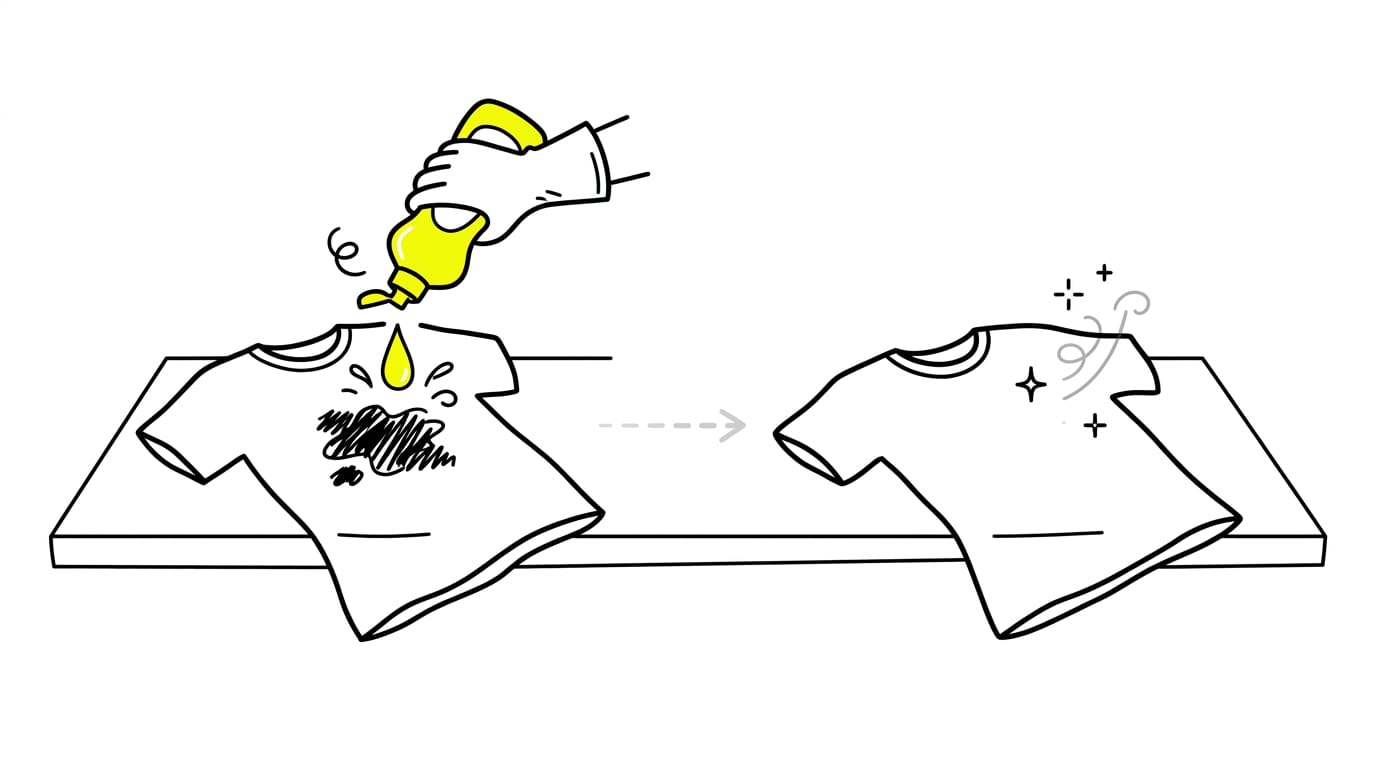
Dish soap is a grease-cutting liquid that can help lift oily stains from washable clothes when used as a spot treatment. Blot fresh grease, absorb what you can with powder, work in a little soap, then rinse and wash according to the care label; avoid the dryer until the stain is gone. It may take repeat treatments or a different remover for stubborn marks, while delicate and colored fabrics need extra care.
Picture a greasy roasting tin after Sunday dinner. A squirt of washing-up liquid cuts through the oil in seconds, leaving the tin ready to scrub. Now picture that same oily smear on your favourite jumper.
Good news: the same bottle in your kitchen can help with grease stains on your clothes too. Dish soap is made to break down oil, so it’s a sensible first step, provided you use it the right way.
Here, we’ll cover prepping the stain, lifting it, and drying it safely, plus what to try when dish soap falls short.
Prep Grease Stains Before Using Dish Soap
Dish soap cuts grease best when the mark is still fresh and some of the oil is already lifted. Here’s how to prep it so the washing-up liquid has an easier job.
Blot instead of rubbing, and act fast
Start by blotting, not rubbing: press to lift the oil rather than scrubbing it in.
Act fast on fresh stains. The sooner you deal with them, the less time the grease has to settle in. Older stains are harder to lift, so a mark that’s been sitting on the sofa cushion since last night needs more patience. Fresh is always easier.
Consider a parent who spots cooking oil on a school jumper just before the school run. Blotting it straight away with a clean cloth gives the mark far less time to set, so the jumper can go in the wash with the rest of the load instead of the bin.
Powders that soak up the oil
Before any liquid touches the stain, try a dry powder. Each one works by soaking up the grease, so the dish soap has less to cut through:
- Baking soda: the one most people already have in the cupboard.
- Cornstarch: a fine powder that soaks up oil from the fabric.
- Chalk: a powdered chalk that works as a simple absorbent.
- Salt: plain table salt, an everyday absorbent for oil marks.
Sprinkle a generous layer over the stain and leave it for anywhere from 5 to 30 minutes. Then brush off the powder before you reach for the dish soap. Your job is to absorb the grease, not to push it deeper.
Lifting Grease Stains with Dish Soap
Dish soap is built to cut grease, so the washing-up liquid under your sink is a handy stain fighter. Here’s how to use it, and when a grease mark needs a helping hand.
Applying dish soap, step by step
- Patch test first. Try a little on a hidden spot, such as the inside of a hem, to check the fabric can handle it.
- Work it in. Dab washing-up liquid onto the mark and rub it in with a toothbrush or your fingertips, rather than leaving it on top of the fabric.
- Let it sit. Leave it for 5 to 15 minutes to do its work.
- Rinse, then wash. Rinse the area, then wash the item as normal.
Think of a parent with a greasy pasta sauce smear on a school jumper. A squirt rubbed in and left for ten minutes gives the stain a head start before the wash. Refills are fine too. What matters is the soap you already have, not a pricier stain remover.
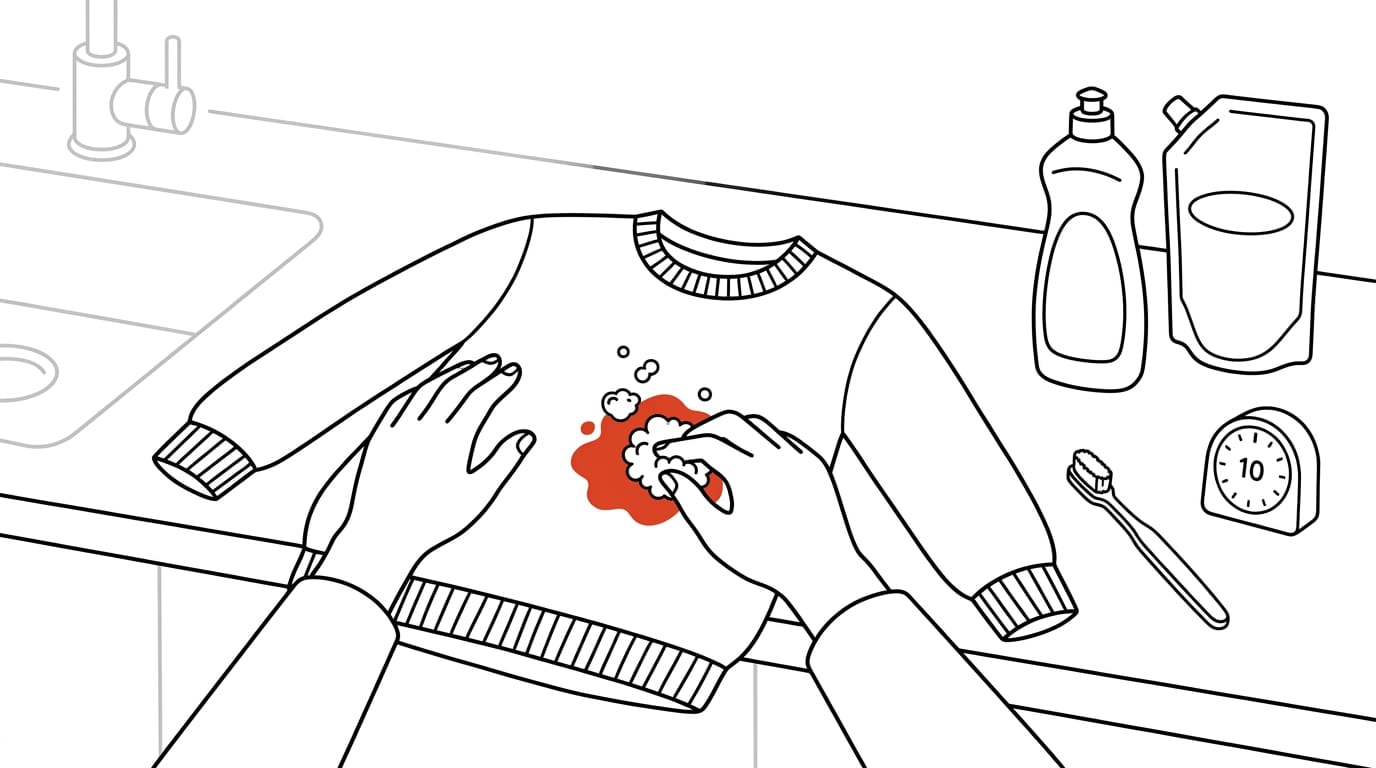
Combining dish soap with absorbents
- Absorb oil first. Use kitchen paper to take up as much oil as you can before any soap touches it.
- Baking soda, then dish soap. Sprinkle baking soda over the mark, then follow with a little dish soap.
- Dish soap plus baking soda scrub. Mix the two into a paste and scrub gently with a toothbrush for a tougher mark.
Can Dawn Powerwash remove stains on its own?
In one test on bacon grease, Dawn Powerwash removed much of the stain but not all of it, earning a rating of 3 out of 5 and beating toothpaste along the way. Close, but not finished.
So can it work alone? It can lift a good deal of a grease mark, but it may leave some behind. If it doesn’t finish the job, follow the steps above.
Rules for Washing and Drying Stained Clothes
Once the stain is pre-treated, the wash and the dryer decide whether it stays gone.
Choosing water temperature and wash cycle
Use the hottest water the fabric allows, and check the care label first. Hot water helps loosen grease, so it’s the best bet for sturdy cottons. Pick a heavy-duty or stain cycle if your machine has one, since it gives a tough mark more agitation.
Use a quality detergent too. Dish soap handles the grease, while your laundry detergent cleans the rest of the load.
Can you mix Dawn and laundry detergent together? We’d keep them apart. Use dish soap as a spot treatment, rinse, then wash with your usual detergent. Mixing both in the drum can create too many suds, which is a messy way to lose a wash.
Picture a parent who finds butter smeared on a school jumper. A dab of dish soap on the spot, a quick rinse, then the hottest wash the label allows. The jumper goes back in the drawer, not the bin.
Skip the dryer until stains are gone
Heat sets grease, so don’t put stained items in the dryer. A faint mark that’s warm gets much harder to shift.
Confirm the stain is gone before the dryer, not after. Hold the item up to good light and check the spot. If you can still see grease, treat it again.
Air-dry and inspect. Hang the item on an airer or line and look once it’s fully dry, because ghost stains appear as the fabric dries. A ghost stain is a faint shadow of the original mark. If you spot one, the grease is still there, so treat it again.
Patience now saves the garment.
Other Stain Removers and Home Remedies
Plenty of other products and kitchen fixes promise to beat grease. Here’s what each one offers, where it falls short, and how they stacked up side by side.
Store-bought spot treatments for grease
Shop shelves are full of dedicated spot treatments, and most cost more than the washing-up liquid you already own. Here are three you’ll see most:
- Shout grease-busting foam: a targeted foam made for grease spots.
- Enzyme or citrus degreasers: products built to break down oil, though they tend to cost more than your washing-up liquid.
- OxiClean color-safe remover: a stain remover labelled as safe for coloured clothes.
The real question is whether these get better results than the bottle under your sink.
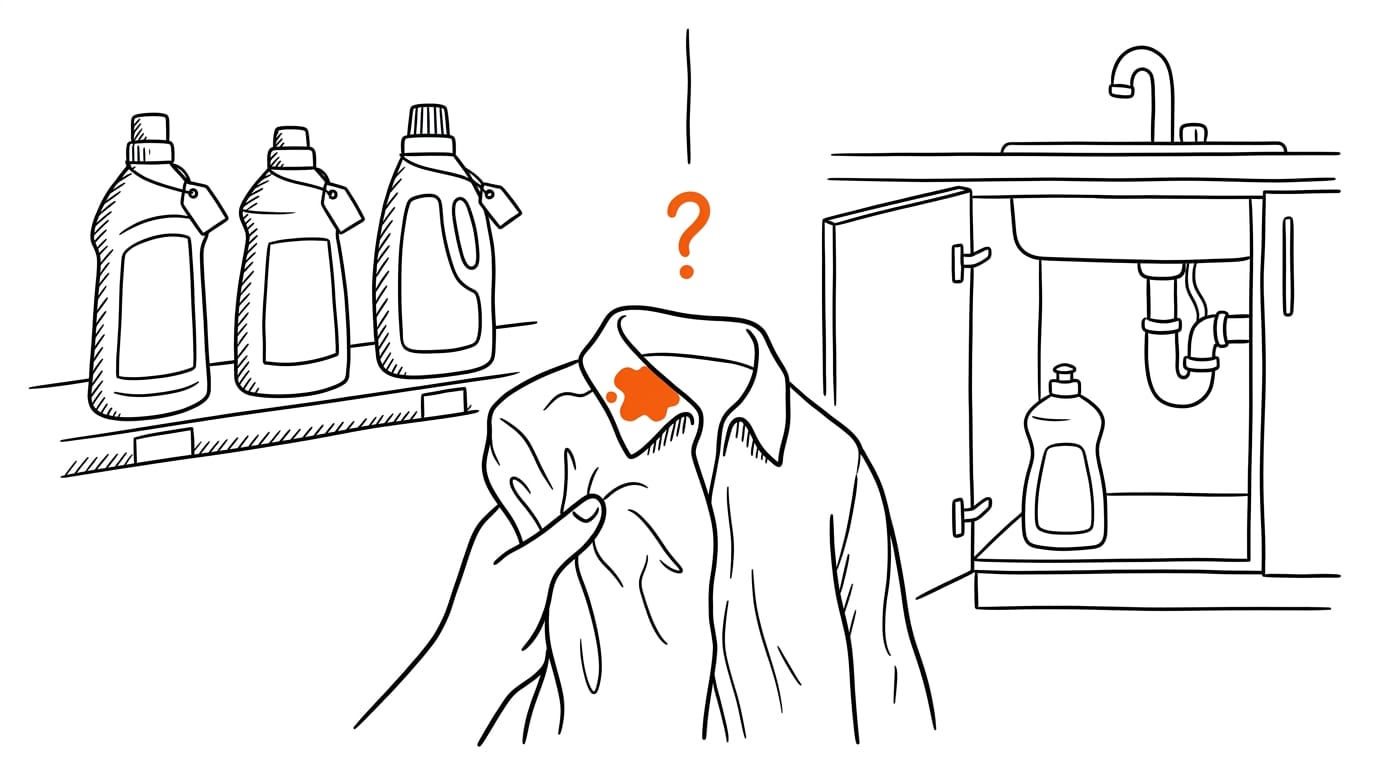
Everyday household remedies and their limits
Cupboard fixes seem like the obvious choice, but each comes with a catch:
- White vinegar hot soak: vinegar is a store-cupboard staple, but hot water can be risky on delicate fabrics, so check the care label first.
- Aloe vera gel: made for skin rather than fabric, so it’s a shaky bet on oily marks.
- Hairspray: tested as a quick fix, but it’s a shortcut rather than a method we’d reach for first.
- Toothpaste: often suggested, but it’s not dependable.
How the methods stacked up in testing
The five methods were compared on the same stain: bacon grease on white cotton. The Seattle Times notes that bacon grease can be relatively easy to remove if you act promptly and the fabric is washable, so timing matters.
According to Yahoo Life UK, each method received two ratings out of five, one for results and one for ease of use, with 5 being the highest.
Picture a parent with a bacon-greasy school shirt at 7:40 a.m. Shout plus salt came out on top, so a pinch of salt and a squirt of Shout may save the shirt before the school run. Simple, and worth a place on your shelf.
Stain Situations for Different Fabrics
Grease doesn’t behave the same on every fabric, so your approach shouldn’t either. Delicates like silk and wool need extra care, so check the care label before you try any of these steps.
Treating stains that have already dried
Found a greasy mark on the tea towel this morning? Dried grease can still come out. Work through these steps:
- Re-wet the area with warm water to soften the grease.
- Reapply dish soap and work it in gently with your fingers.
- Wait 15 minutes so the soap has time to loosen the grease.
- Wash again as normal.
Let the soap do the work, so skip the scrubbing.
Getting black engine grease out of clothes
Engine grease is thicker and stickier than kitchen grease. Think of a mechanic who comes home with black smears on a work shirt.
- Mechanic’s pumice hand cleaner: Work a little into the dry mark first. This gritty soap is made for workshop grime.
- Dish soap and baking soda: Follow up with a dab of dish soap and a sprinkle of baking soda, working both into the mark.
- Hot heavy-duty wash: Finish with a hot, heavy-duty cycle once you’ve checked the care label.
That’s a work shirt you can keep wearing instead of binning.
Treating stains on colored fabrics
Colored clothes need a gentler touch. Think of a parent who gets oily salad dressing down a favorite navy top.
- Color-safe removers: If dish soap isn’t enough, reach for a color-safe remover instead of a harsh one.
- Skip bleach: Bleach can fade color, so keep it off colored fabric.
- Cold or warm cycle: Wash on a cold or warm cycle, not hot.
- Clear liquid: Pick a clear dish soap, which avoids dye transfer, the risk of a colored soap tinting the fabric.
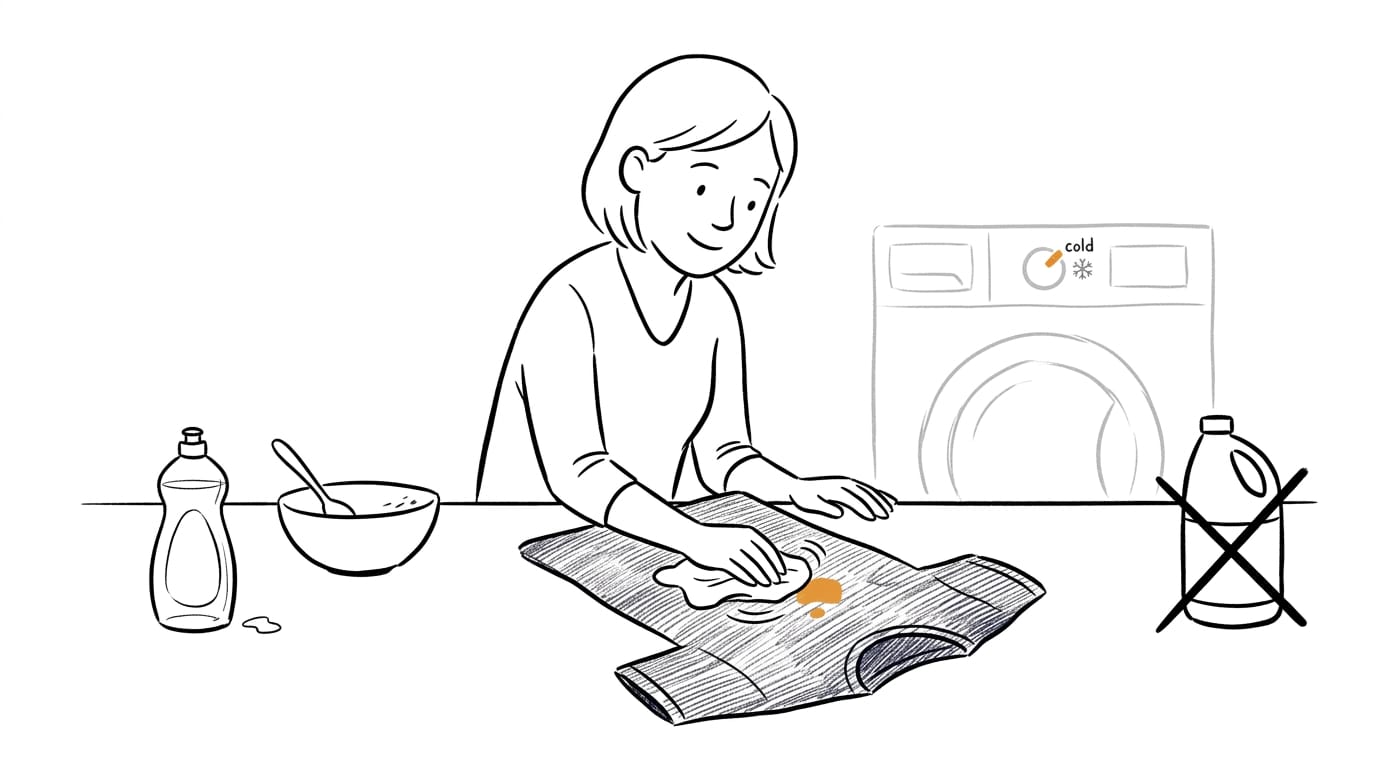
Lifting stains from white fabric without yellowing
White fabric shows every mark, so bleach can look tempting. Reach for dish soap, not bleach, as your first move. If a shadow remains, try an oxygen-based whitener, a bleach alternative that works without chlorine.
Skipping bleach also helps keep white fabric from yellowing over time. Keep it simple.
Washers and Features That Fight Stains
Some washers are built with stains in mind, including the Electrolux SmartBoost, GE Profile, Miele WWD160, and Maytag Extra Power. Check each model’s spec sheet to see which stain settings it actually includes, because a name on the box won’t tell you.
Washer features worth looking for
Most of the stain help comes from a handful of settings you can check for on many models:
- Stain soak cycles. The machine holds clothes in water and detergent for a set time before the main wash, giving the soap a head start on grease.
- Automatic detergent dispensing. The machine releases detergent at the right point in the cycle, so you aren’t measuring it out every time.
- High agitation setting. This controls how vigorously the drum moves your clothes. Agitation, the tumbling and rubbing that loosens dirt from fibres, is the part you’re adjusting.
Think of a parent with a greasy school jumper from lunch. They dab washing-up liquid onto the smear by hand, then run a soak cycle so the grease has time to loosen before the main wash.
By the time the main wash starts, the stain has already started to loosen.
A washer with a soak cycle doesn’t replace pre-treatment, it supports it. Pre-treat first, then let the machine finish the job.
Common Stain Questions, Answered
Here are the questions that usually come up when a stain is still fresh, with straight answers you can act on right away.
Can dried oil stains come out? They can, but it takes patience. Once the grease has set into the fibres, it’s harder work than a fresh spill.
Put a little dish soap on the mark, work it in gently with a damp cloth, and repeat rather than scrubbing hard. Some marks need a second round.
Does vinegar work? It’s handy for plenty of jobs, but it’s the wrong tool for grease. Picture a parent dabbing vinegar on a pizza drip on the hallway carpet: it may tidy the surface, but the oil stays put.
Dish soap breaks grease down rather than just spreading it, so it’s the one to reach for first.
Does bleach work? Bleach is made for whitening and disinfecting, not lifting grease, and on coloured fabrics it can leave pale patches.
Never mix it with vinegar or other cleaners, as the combination can give off harmful fumes. Stick with dish soap for grease.
Does baking soda help, and when? It’s a useful helper, but timing is everything.
Sprinkle it onto a fresh, oily mark while the grease is still soft, let it soak up as much as it can, then brush the powder off before you treat the spot with dish soap. Fresh beats dried every time.
Which solvents work? A solvent is a liquid that dissolves another substance, and some stain removers use them to shift oil. Start with dish soap, and save solvents for the stains that don’t respond.
If you do try one, test it on a hidden patch first, since it can affect some fabrics and dyes.
Dish soap can be a surprisingly capable stain fighter, but its success depends on acting quickly, using the right method, and knowing when to switch tactics. Handle the mark with care, and you’ll give that grease stain its best chance.
Next time an oily mark lands on your favourite top, skip the panic and the pricey remover. Check the cupboard first, because sometimes the best stain remover is already sitting by your sink.
References
- The best way to get stubborn grease spots out of your clothes — seattletimes.com (2025)
- I Tried 4 Methods for Removing Oil Stains on Clothes — uk.style.yahoo.com (2025)
Questions
How to get out grease stains that have set?
Blot away any remaining oil, then re-wet the dried spot with warm water to soften the grease. Work dish soap gently into the fabric, leave it for 15 minutes, and wash according to the care label; repeat if needed. Air-dry and check that the stain is gone before using a dryer, since heat can set grease.
Is it better to wash grease stains in hot or cold water?
Use the hottest water the fabric care label allows, because heat helps loosen grease. For colored fabrics, choose a cold or warm cycle to protect the color.
Can you mix Dawn and laundry detergent together?
It’s better not to mix Dawn with laundry detergent in the washer, as the combination can create too many suds. Use Dawn as a spot treatment, rinse it out, then wash with your usual detergent.
Does Dawn dish soap get grease stains out?
Yes. Dish soap such as Dawn is made to break down oil, so it can help remove grease from washable clothing. Dab it onto the stain, work it in gently, let it sit for 5 to 15 minutes, then rinse and wash.
Can Dawn Powerwash remove stains?
Yes. Dawn Powerwash can lift much of a grease stain, but it may not remove all of it. If a mark remains, treat it again with dish soap and wash; keep the garment out of the dryer until the stain is gone.
What removes oil out of clothing?
Blot up excess oil, then sprinkle baking soda, cornstarch, chalk, or salt over the stain for 5 to 30 minutes and brush it off. Apply dish soap, work it in gently, leave it for 5 to 15 minutes, then rinse and wash according to the care label. Air-dry and check the stain before using a dryer.
Can dish soap and baking powder be used to remove stains?
Yes. Baking powder can absorb some oil, but baking soda is the powder commonly used for this purpose. Sprinkle it on the stain, brush it off after a short wait, then apply dish soap; you can also mix baking soda and dish soap into a paste and scrub gently.
Sources
- The best way to get stubborn grease spots out of your clothes | The Seattle Times, seattletimes.com,
- I Tried 4 Methods for Removing Oil Stains on Clothes - Yahoo Life UK, uk.style.yahoo.com,
More in Cleaning Products
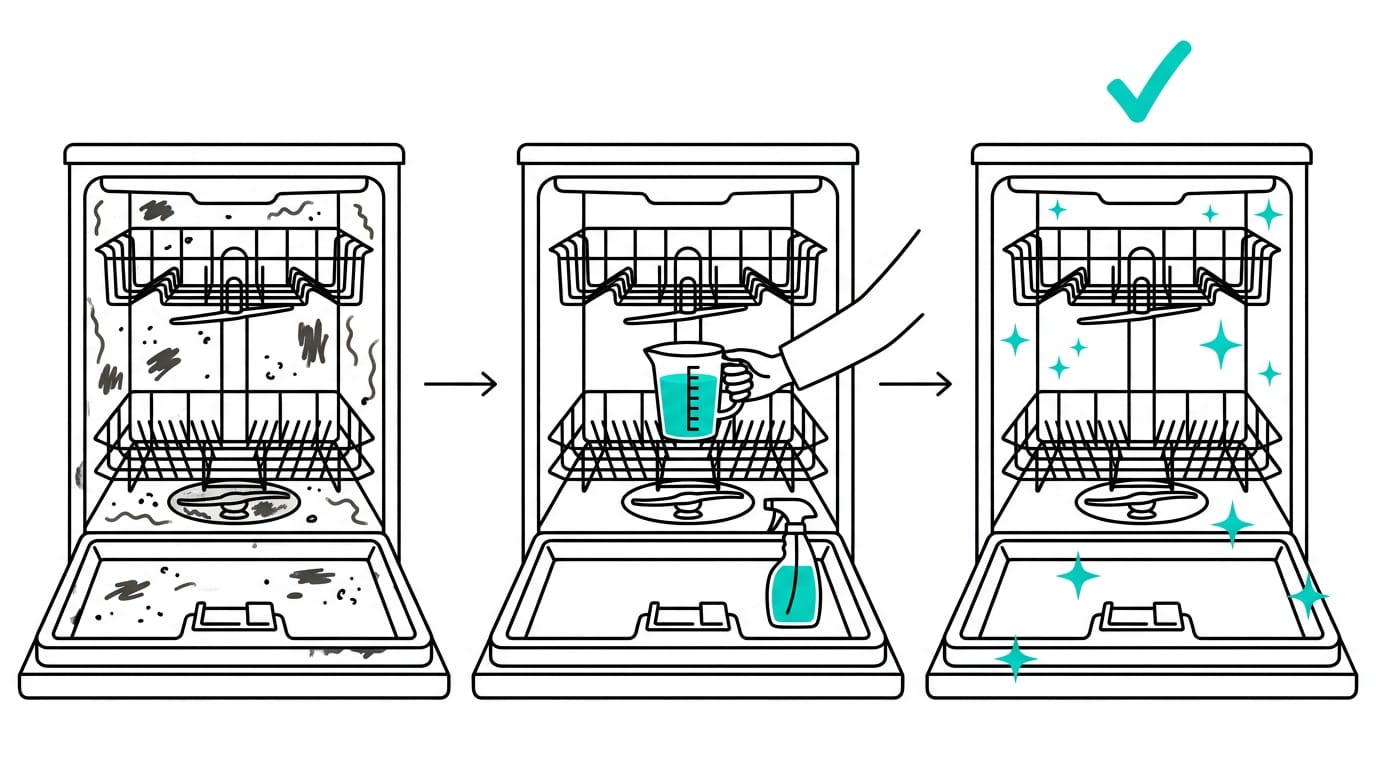
- How to Clean a Dishwasher with Vinegar, Start to FinishHow to clean a dishwasher with vinegar: prep the parts, follow the cleaning steps, then use baking soda and habits to keep sour smells from returning.
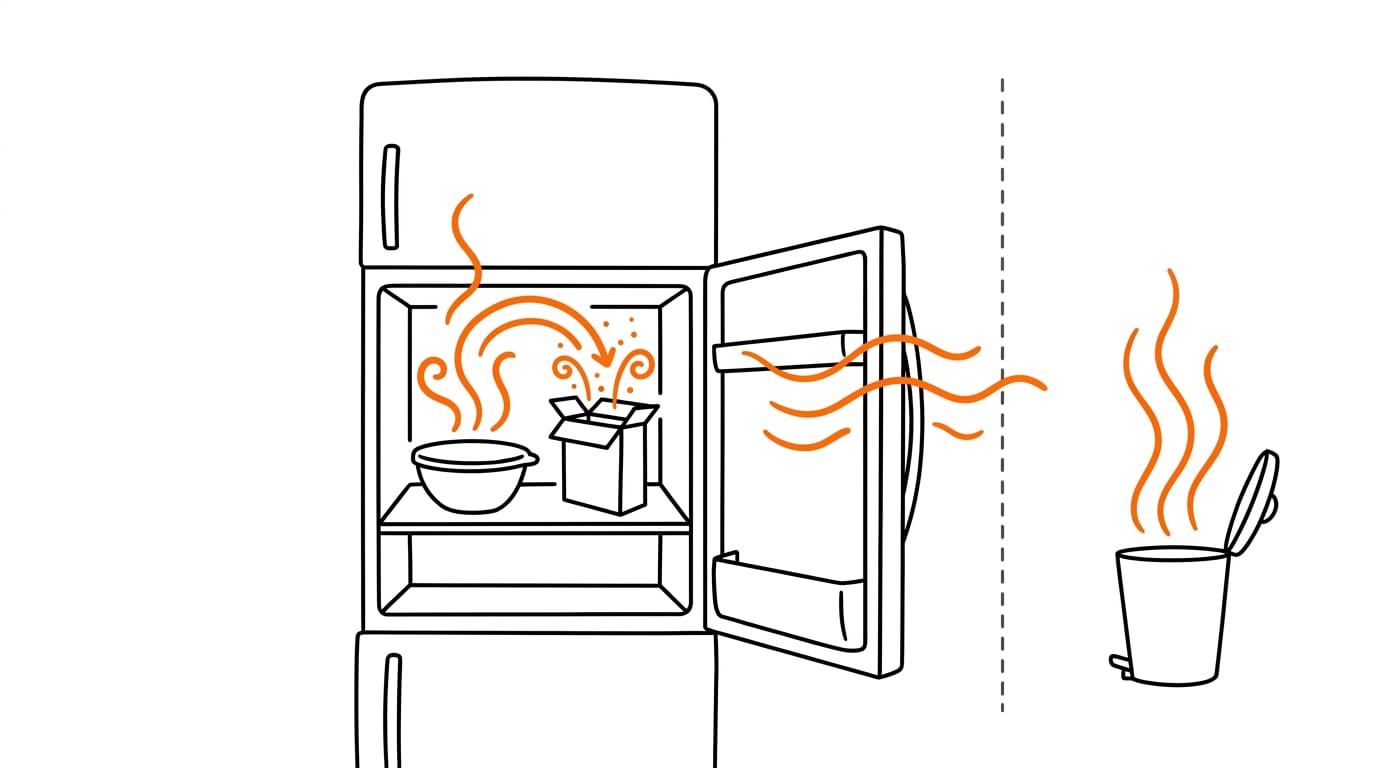
- Baking Soda Smell Removal: How It Works and Where It StopsBaking soda smell removal can freshen bins and gym bags, but it won’t fix the source. Find where odors start and choose cupboard-first fixes that work.
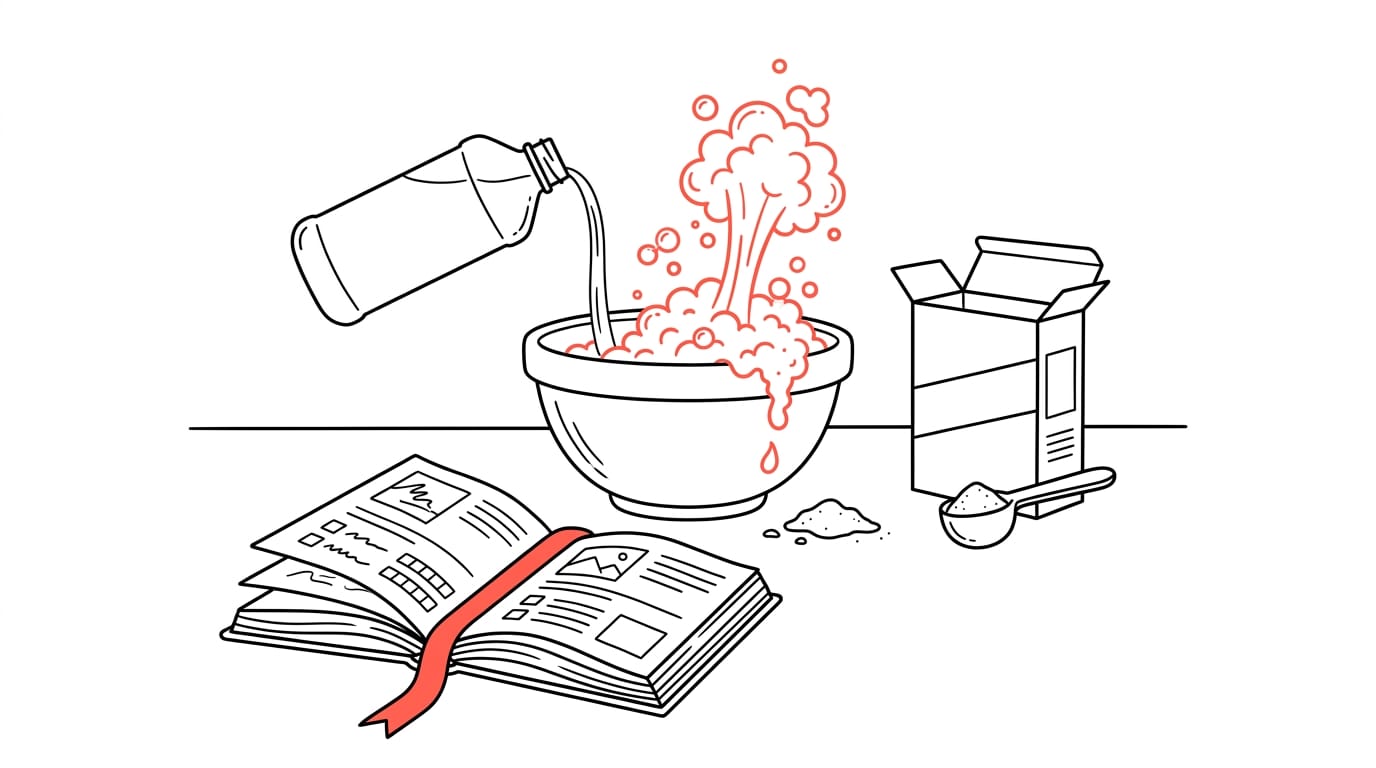
- Hydrogen Peroxide and Baking Soda: A Complete GuideHydrogen peroxide and baking soda can tackle coffee on sofa cushions. Get the simple mix, safe application steps, and when a store-bought remover is smarter.
Stain Finder: a free stain removal guide
Find your stain