Cleaning Floors with Bleach: Safe Dilution and Method
Cleaning floors with bleach can harm some surfaces. Check which floors are safe, how to dilute and mop, and when gentler options work better for sticky spots.

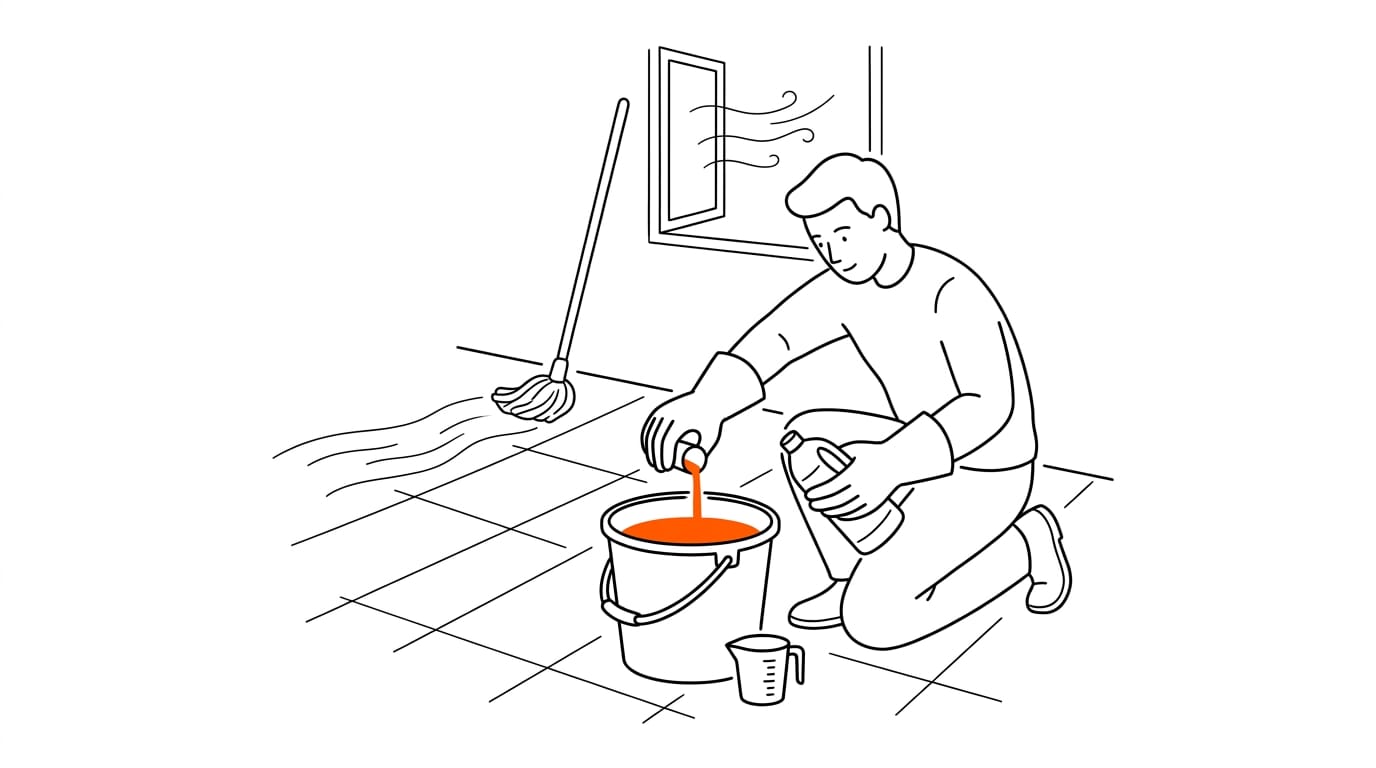
Cleaning floors with bleach means using a diluted bleach solution to disinfect compatible, non-porous surfaces such as vinyl and ceramic or porcelain tile, not every floor. Sweep and remove dirt first, follow the product label for dilution and wet contact time, ventilate, wear protection, never mix bleach with other cleaners, and rinse afterward. Keep bleach off wood, laminate, marble, and porous stone, and use a surface-appropriate mild cleaner for routine mopping to avoid damage and residue.
Picture this: you’re halfway through mopping when you spot a sticky patch by the fridge, and the bleach under the sink suddenly looks like the answer. It’s a fair instinct.
Bleach is a familiar cupboard staple, but it isn’t a one-size-fits-all fix for every floor or mark.
In this guide, we’ll cover which floors can handle bleach, how to dilute it, a simple mopping method, and the safety steps that matter. We’ll also look at where bleach falls short and the gentler options worth reaching for instead.
Floors Safe for Cleaning with Bleach
Can you use bleach to mop your floors? Yes, on the right surface. Bleach suits hard, non-porous floors that liquid can’t soak into, and it can ruin others. Check first.
Non-porous surfaces that handle bleach well
Bleach works well on these, when diluted:
- Vinyl: a common kitchen and bathroom floor.
- Non-porous tile: sealed tile that liquid can’t sink into.
- Grout: the lines between tiles.
- Concrete: a dense, solid base.
- Ceramic and porcelain tile: hard tile that holds up to a mop.
A parent mopping vinyl after a breakfast juice spill can clean the whole kitchen in one pass, with the spill gone before the school run.
Surfaces to keep bleach away from
The question isn’t whether bleach cleans, but whether it’s safe for that floor. Keep it away from:
- Unsealed or unfinished wood: bleach soaks in and does damage.
- Marble, laminate, and porous stone: bleach can damage these.
- Finishes: bleach can dull or damage the protective finish.
- Metals and chipped enamel: bleach can corrode metal and attack chipped enamel.
A tenant with a marble hallway and a laminate kitchen keeps bleach for the bathroom vinyl only, so the marble and laminate never see it.
Why hardwood usually needs a different cleaner
Hardwood is the big exception. Bleach is generally not recommended on it.
- Sealed wood in good condition: still a risk with bleach, so treat it as the exception, not the rule.
- Pine-Sol alternative: reach for a pine-based cleaner such as Pine-Sol instead.
- Test an inconspicuous area first: try a small, hidden spot before going across the floor.
A home cleaner with oak floors keeps pine cleaner for the hardwood and bleach for the bathroom, so nobody grabs the wrong bottle in a rush.
Keeping Yourself Safe While You Clean
Bleach is strong stuff, so protecting yourself and the air in your home is part of the job.
Protecting yourself with gear and airflow
- Gloves and eyewear. Wear gloves and eye protection.
- Clothes you can splash. Wear old clothes, since a drip can ruin a favourite top.
- Good ventilation. Open a window and run a fan.
It’s less about how hard you scrub and more about where the fumes go. Never mix bleach with vinegar or ammonia, even when a stain is stubborn.
Keeping pets and kids safe
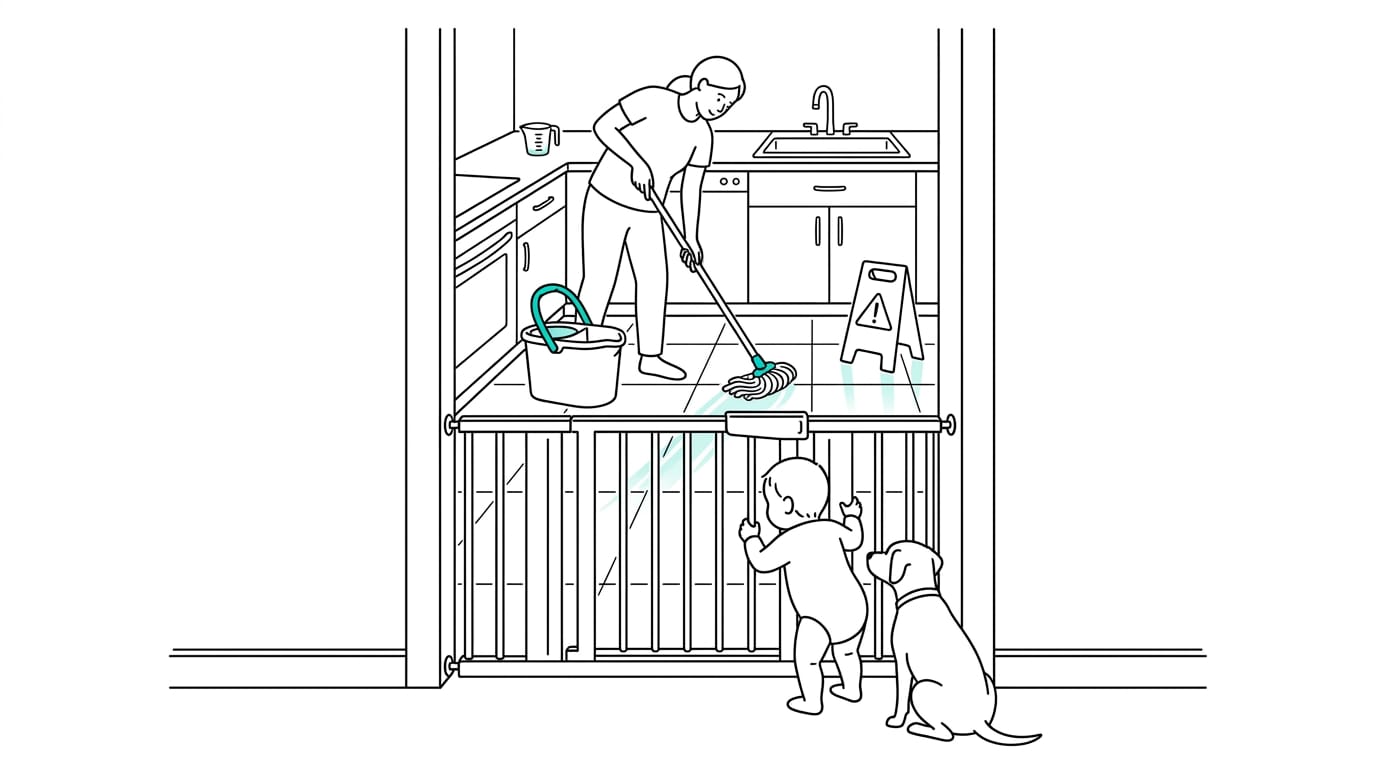
Bleach is safe when diluted, so mix it as the label directs before kids or pets come near. Consider a parent mopping the kitchen floor while a toddler heads for the cupboard under the sink.
A baby gate keeps the toddler out until the floor is dry, and the only cost is a short wait. Pets need to stay out too until the floor is completely dry.
How bleach changes the air indoors
Bleach doesn’t stop at the surface you’re cleaning. An indoor air study shows it can release chlorine gas and hypochlorous acid (HOCl), both strong oxidants (reactive chemicals that can change other substances).
Those compounds can linger, and Oak Ridge National Laboratory researchers describe droplets that may stay airborne for minutes to hours. Reactions can also happen on other surfaces in the room, not just the floor you’re cleaning.
Light adds another step. Other chlorinated chemicals from cleaners can break down in light, forming free radicals, highly reactive fragments that act as oxidants, as described by an Earth and Space Chemistry study from the American Chemical Society.
The health impacts of these indoor reactions still need study, so keep the air moving every time you clean. Fresh air is the simplest fix.
Gear and Bleach Brands to Choose
Getting your kit ready first saves a rushed trip to the cupboard halfway through the mop. Here’s what to gather, and which bottle to reach for.
Tools to have on hand
Most of this is probably already under the sink or by the back door:
- Broom or vacuum: clear loose dirt and crumbs first, so the bleach isn’t turning grit into a muddy paste.
- Bucket and measuring cup: the cup keeps your mix accurate, so you’re not guessing.
- Mop or sponge: pick whichever suits the floor and the size of the job.
- Scrub brush: for grout lines and stubborn spots a mop skims over.
- Gloves: protect your hands before you open the bottle.
- UK bleach: check the label for the dilution before mixing, then measure to match it, not by eye.
Choosing between brands and store versions
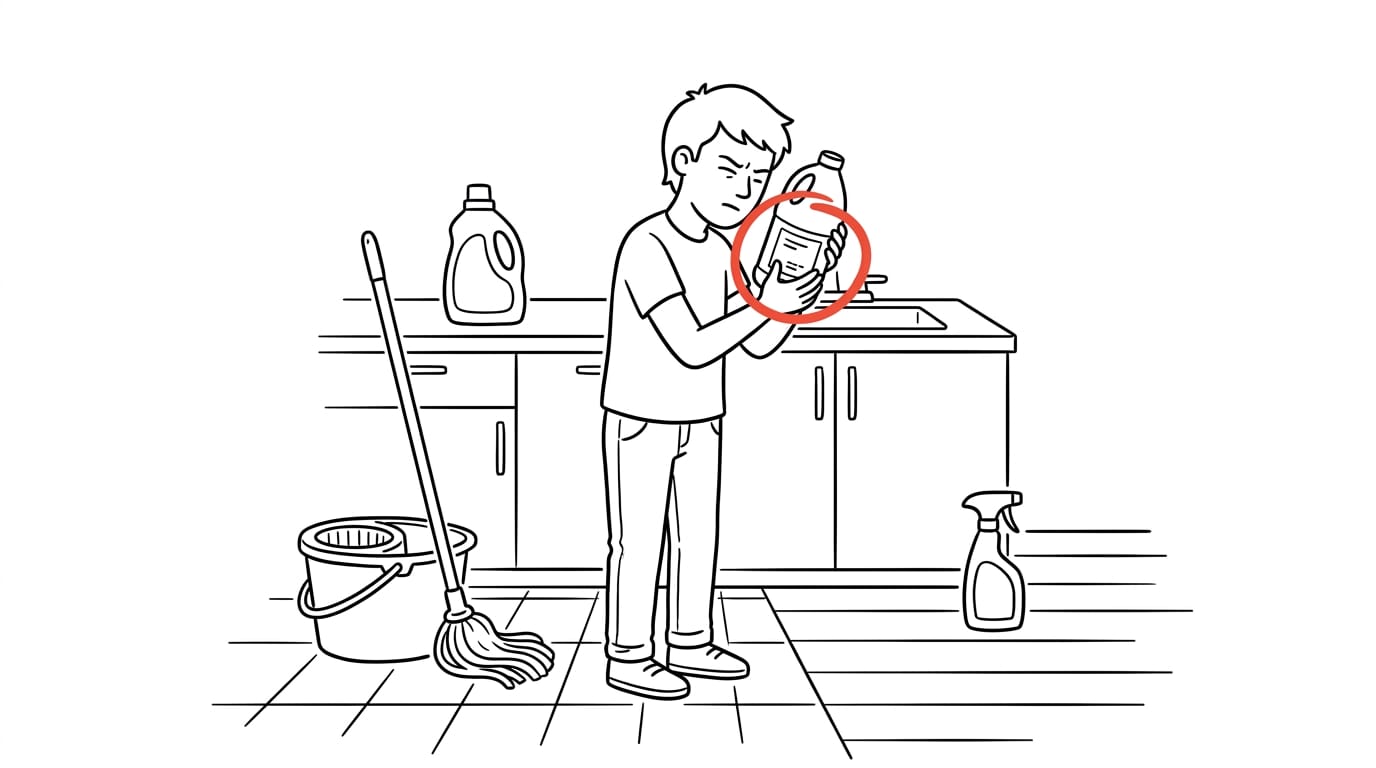
Standing in the aisle, the real question is simple: which bottle will you measure and use exactly as its label says?
- Clorox bleach: our recommended pick for this job.
- Store-brand equivalents: a budget-friendly option, but read the label rather than assuming it matches the big-name bottle.
- Hardwood: reach for Pine-Sol instead of bleach, since bleach belongs on the floors that tolerate it.
Consider a flatmate who grabs the store-brand bottle to save a few pounds. Reading its label before mixing means the cheaper bleach still gets measured properly, and the kitchen floor cleans up without a guessed splash. Label first, then mop.
Step by Step Mopping with Bleach
Bleach works fast, but only when you prep, mix, and rinse in the right order. Follow these steps in sequence and you’ll know exactly what to do at each stage.
Prep the room and test first
Start by getting air moving: open windows and run fans before you open the bottle. Then work through these steps:
- Sweep or vacuum loose debris so it doesn’t turn into muddy streaks in your mop water.
- Pre-clean organic matter like food, grease, and pet hair, so the bleach goes to the stain, not the crumbs.
- Spot-test the grout in a hidden corner, so you see how it reacts before you commit the whole floor.
What can I mix with bleach for mopping?
Only water. Mix your bleach solution with cool water, not hot, in a plastic bucket.
- Ratio: 1/3 cup of bleach per gallon of water.
- No-Splash bleach: use 1/2 cup per gallon instead.
- Other chemicals: never mix bleach with any other chemical.
If you accidentally mix bleach with another cleaner, stop mopping, leave the room, and get fresh air right away. If anyone feels unwell, call your local poison control line or emergency services.
Apply in small areas and scrub stains
Apply the solution with a mop or sponge, working in small areas at a time so the bleach doesn’t dry out before you scrub. For stubborn marks, switch to a soft or nylon brush and scrub gently.
Think of a tenant cleaning a tiled bathroom floor before moving out. They tackle one small section at a time, scrub the grout lines with a nylon brush, and move on, so the whole room gets done without the solution drying in patches.
Aim for a 6-minute contact time, which is how long the solution stays wet on the floor.
As a practice update on infection prevention and control in residential facilities advises, follow the label directions on the bleach product for how long it should remain wet.
Rinse well and let it air dry
Rinse the floor with clean water, not more bleach. Rinsing removes the sticky residue left behind, so don’t skip it. Then let the floor air dry completely before anyone walks on it. Don’t rush this part.
Where Bleach Helps and Falls Short
Bleach is powerful, but it’s the wrong tool for some jobs. It’s the wrong choice when the floor is visibly dirty, for routine mopping, or when you’d be tempted to let it sit for a long time.
Killing germs versus removing dirt
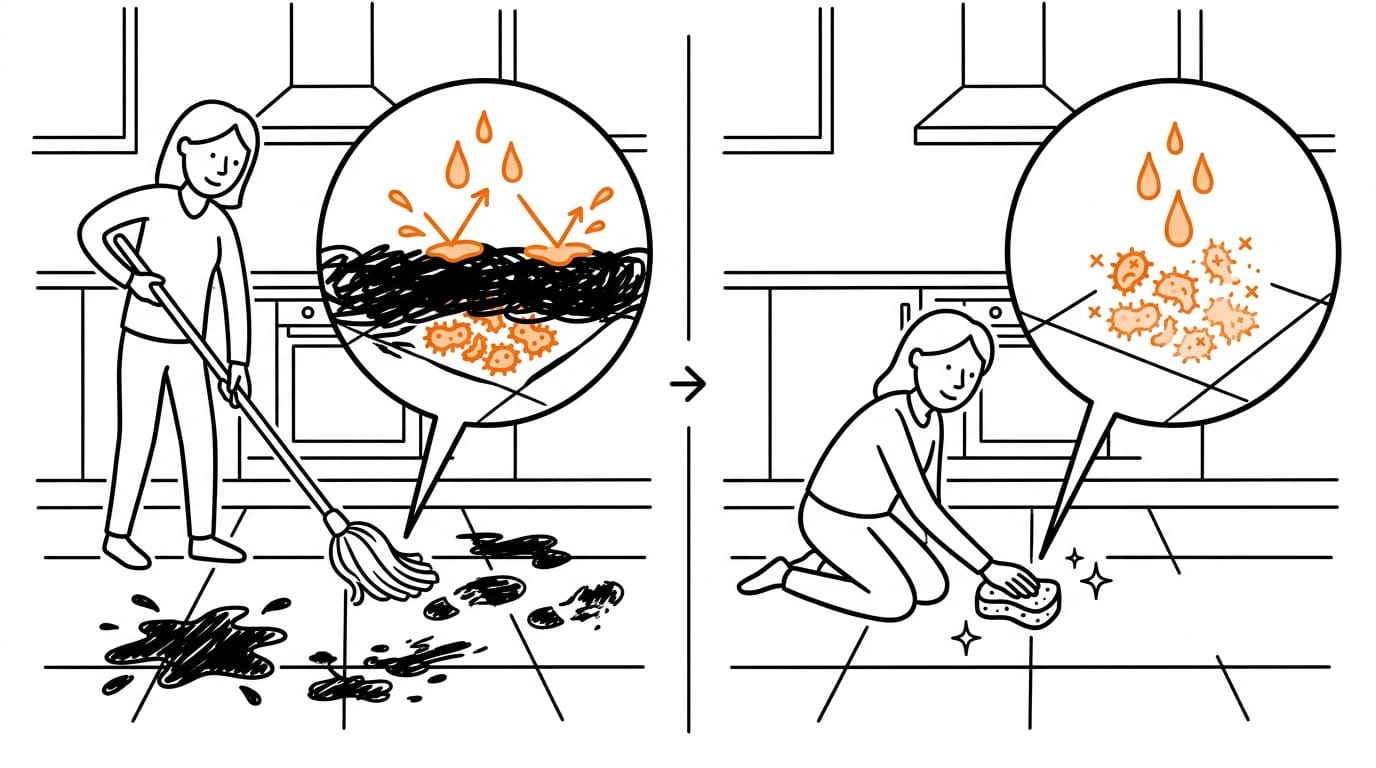
Bleach can disinfect floors that tolerate it, so it kills germs a basic wipe would leave behind. It’s poor at lifting surface dirt, though, which means cleaning and disinfecting are two separate jobs.
A paper on cleaning and disinfection in health care settings during the COVID-19 outbreak explains why the order matters: soil, or organic matter, can stop a disinfectant from making direct contact with a surface, so it can’t destroy the microorganisms that may be present.
Think of a parent who mops the kitchen floor with bleach straight after a juice spill and muddy footprints. It looks finished, but the grime is still there, blocking the bleach from reaching the germs it’s meant to kill.
A quick wash to lift the soil first fixes that. Clean first, then disinfect.
How repeated bleach use wears floors
Bleach isn’t gentle, and the damage adds up. Regular use is harsh on floors, so save it for jobs that truly need it. Any leftover residue can turn sticky and attract fresh dirt, so the floor looks grubby again sooner than you’d like.
Letting bleach sit on the surface for a long time is another trap, because long contact can damage floors even when you’re only trying to be thorough.
Picture a tenant who bleaches their hallway lino every Saturday. Over time the finish takes a beating and the floor seems to collect grime faster.
They stop using it for routine mopping and save it for the occasional job that calls for it, so the floor stays in better shape for longer.
Gentler Options to Try Instead of Bleach
Bleach isn’t your only option, and for many floors it’s the wrong one. Most everyday grime lifts with a milder cleaner, as long as you match the product to the surface underfoot.
Matching milder cleaners to each floor type
Here’s how the common choices line up:
- Soap and water. For light, everyday dirt, a mild soap in warm water is the first thing to try.
- Dish soap for stone. A small drop of dish soap in warm water is the gentle choice for stone floors.
- Vinegar for hardwood, laminate, and vinyl. A splash of vinegar in water suits these surfaces.
- Specialty floor cleaners. Pick a cleaner labelled for your exact floor. The label tells you which surfaces it suits.
- Avoid ammonia and acids on stone. Keep ammonia and acidic cleaners away from stone, vinegar included.
Bleach vs vinegar: which is better? For everyday mess on hardwood, laminate, or vinyl, vinegar is the gentler pick and the better first try. It’s less about which bottle is stronger and more about what your floor is made of.
Keep bleach for stains that won’t lift with a milder cleaner.
Pine-Sol for finished hardwood floors
Picture a parent grabbing the pine-scented bottle from under the sink to mop their finished hardwood hallway after a muddy school run. Read the label first.
If it doesn’t name finished wood as a suitable surface, skip it and choose a cleaner made for finished wood. Test any cleaner on a hidden corner before you mop the whole floor. That small check keeps the guesswork out of mopping day.
Bleach can be a useful ally on the right floor, but it works best when you know its limits. Match the tool to the surface, mix it with care, and keep yourself protected while you work.
When bleach isn’t the right call, a gentler option may do the job just as well. Knowing the difference is what keeps a clean floor looking good for the long haul.
The right tool, used the right way, is what makes a floor truly clean.
References
- Light-Induced Formation of Volatile Organic Compounds from Bleach Cleaning in Indoor Environments — doi.org (2026)
- Influence of Application Method on Disinfectant Byproduct Formation during Indoor Bleach Cleaning: A Case Study on Phenol Chlorination — ornl.gov (2026)
- Particulate Matter and Total Volatile Organic Compound Emissions Following Surface Cleaning: Comparison of Cleaning Agents and Locations | ACS Earth and Space Chemistry — pubs.acs.org (2025)
- SHEA practice update: infection prevention and control (IPC) in residential facilities for pediatric patients and their families — pmc.ncbi.nlm.nih.gov (2024)
- Cleaning and disinfection in health care settings during the COVID-19 outbreak — pmc.ncbi.nlm.nih.gov (2020)
Questions
Is it safe to clean my floors with bleach?
Bleach can be used on suitable hard, non-porous floors, such as vinyl, sealed tile, ceramic, porcelain, and concrete, when diluted according to the product label. Avoid it on wood, marble, laminate, and porous stone, and ventilate the room, wear gloves and eye protection, and keep children and pets away until the floor is dry.
Is it better to clean floors with bleach or vinegar?
For everyday mess on hardwood, laminate, or vinyl, diluted vinegar is the gentler choice. Bleach is better reserved for disinfecting compatible, non-porous floors when needed; never mix bleach and vinegar.
What can I mix with bleach to mop my floors?
Mix bleach only with cool water, using the dilution stated on its label. Never add vinegar, ammonia, or any other cleaner.
Can I use bleach to mop my floors?
Yes, if the floor is hard, non-porous, and compatible with bleach, such as vinyl or ceramic tile. Dilute it as directed on the label, ventilate the room, and rinse the floor with clean water; avoid bleach on wood, marble, laminate, and porous stone.
Sources
- SHEA practice update: infection prevention and control (IPC) in residential facilities for pediatric patients and their families, pmc.ncbi.nlm.nih.gov,
- Light-Induced Formation of Volatile Organic Compounds from Bleach Cleaning in Indoor Environments, doi.org,
- Influence of Application Method on Disinfectant Byproduct Formation during Indoor Bleach Cleaning: A Case Study on Phenol Chlorination – Oak Ridge National Lab, ornl.gov,
- Particulate Matter and Total Volatile Organic Compound Emissions Following Surface Cleaning: Comparison of Cleaning Agents and Locations | ACS Earth and Space, pubs.acs.org,
- Cleaning and disinfection in health care settings during the COVID-19 outbreak, pmc.ncbi.nlm.nih.gov,
More in Home Routines
- Cleaning Silver with Aluminum Foil: A Complete GuideCleaning silver with aluminum foil uses baking soda and hot water to lift tarnish; get the quick setup, safe-item checks, and aftercare for a bright finish.
- Gas Burner Cleaning: Heads, Caps, Grates and TestingGas burner cleaning can clear food-clogged ports and restore an even flame. See how to clean heads, caps, and grates, then test your flame safely at home.
- How to Get Odor Out of House: A Complete GuideHow to get odor out of house starts with finding the source, then matching it to room-by-room cleaning, pantry staples, and odor-fighting tools.
Stain Finder: a free stain removal guide
Find your stain