- Rinse
- Brush
- Wipe
Cleaning Trex Decking: Routine Care and Stain Removal
Cleaning Trex decking takes gentle washing; get practical steps for stains, mold, winter care, and warranty limits before scrubbing or sanding.

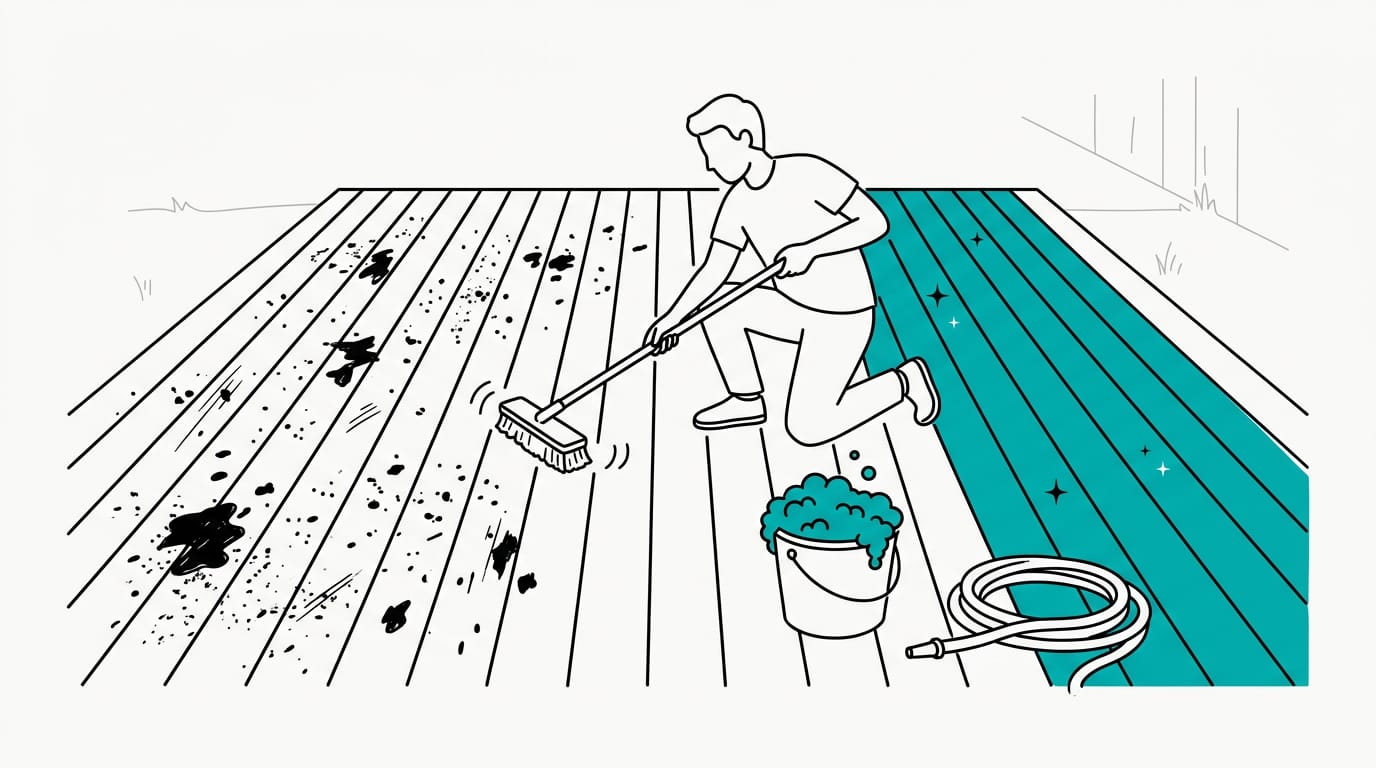
Cleaning Trex decking means removing dirt, spills, stains, and debris with methods suited to composite boards, without damaging their surface. Rinse and wash routinely with mild soap and a soft brush, treat stains according to their type, clear debris to limit mold, and follow product-specific guidance for cleaners, pressure washing, and winter care. Gentle, timely maintenance helps preserve the deck’s appearance and avoid damage or warranty problems; repair unsafe boards promptly and call a composite-deck professional for extensive damage or stubborn stains.
Picture firing up the grill on a warm evening, only to find a splash of tomato sauce and a few damp leaves already soaked into the deck boards. Trex decking is designed to be low-maintenance, but it still needs the right care to keep looking its best.
The good news is that most marks lift easily when you treat them early and gently.
This guide covers routine washing, stain-first triage, mold, winter care, railings, warranty limits, and when to call in a pro, so you can tackle the mess without damaging your boards.
Routine Care for Cleaning Trex Decking
Wondering how to make Trex look new again? A proper routine clean is where it starts, and you won’t need anything fancy to get there.
Does fairy liquid clean decking?
Yes, a mild washing-up liquid will clean decking, as long as you use it gently. Picture a homeowner on a Saturday morning with a bucket of warm soapy water and a soft-bristle brush, working through the deck one section at a time. Follow this order:
- Rinse first. Hose off loose debris so it doesn’t get worked into the boards.
- Add warm soapy water. Mix in a little mild soap and apply it to one section at a time.
- Brush gently. Use a soft-bristle brush, including the gaps between boards.
- Wipe and rinse. Finish with a soft cloth, then a final rinse with the hose.
Is washing-up liquid safe? Yes, as long as it’s a mild formula. Skip anything harsh, and the boards stay in good shape.
How often to clean your deck
A twice-yearly clean is a sensible baseline for most decks. Schedule one for spring and one for fall, and add an annual deep clean to reset the whole surface. Railings get touched often, so give them a quick wipe every month.
Think of a parent who blocks out two weekends a year for the big jobs and wipes the railings on the first Saturday of each month. Small, regular sessions beat one marathon scrub, and the deck never gets so grimy that harsh fixes start to look tempting.
Cleaning differences across product lines
Trex sells Transcend, Enhance, and Select, so check which line you have before you start. If your deck uses first-generation composites, read its care notes first, since older boards can differ from newer ones.
A composite deck cleaner formulated for composite boards is the simplest option if you’d rather not mix your own. If you have Escapes boards, follow their own cleaning note instead.
Stick to manufacturer-approved cleaners
Your first choice should be a manufacturer-recommended cleaner, since it’s designed for the boards you’re cleaning. Avoid harsh chemicals and abrasive cleaners, and aim for a clean that’s gentle, not a scrubbing one.
Before you use anything new, test it in a discreet area, such as underneath a railing. Test first, and you won’t be surprised on the boards everyone sees.
Getting Rid of Stains and Spots
Got a mark on the deck? Start by identifying the stain type, since a grease spill and a tannin stain need very different treatment. Match the mark to the method below and you’ll avoid the wrong fix.
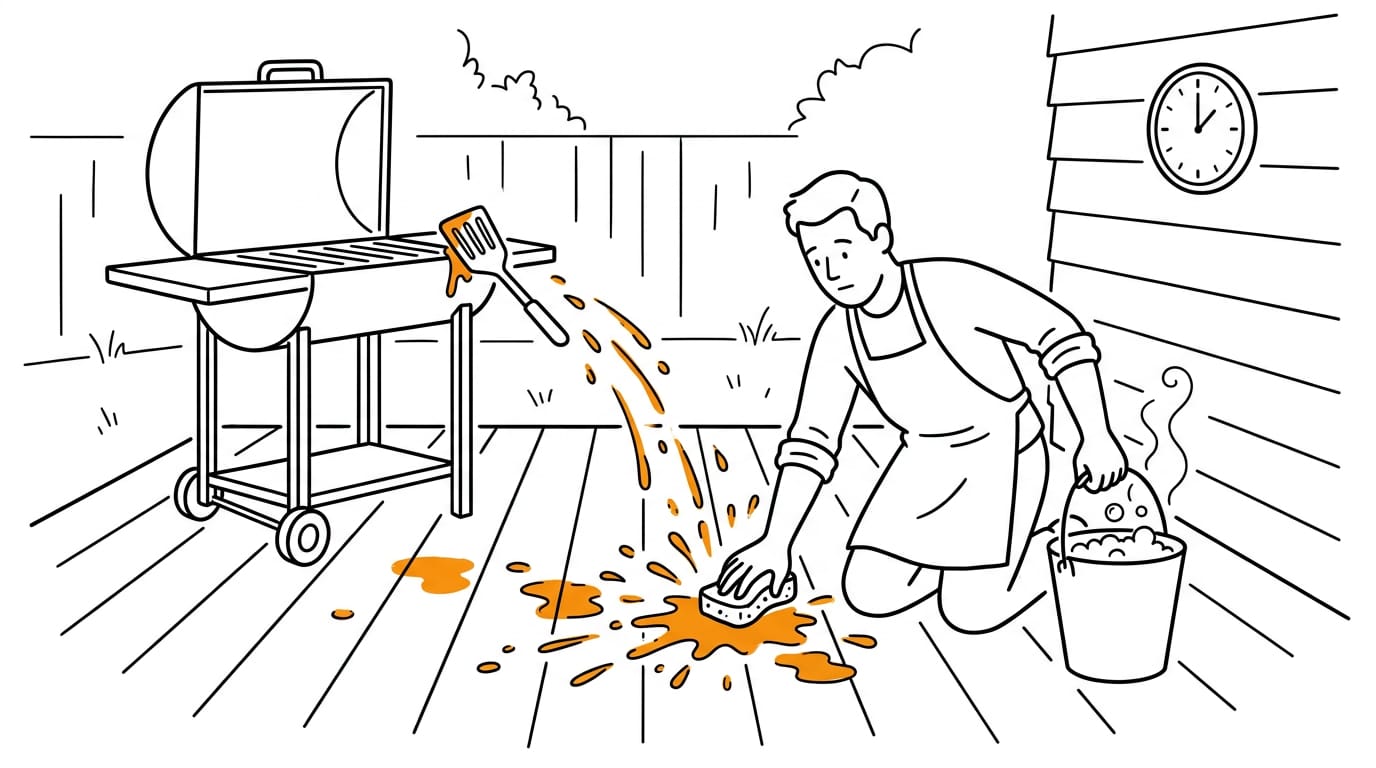
Tackling oil, grease and food spills
Speed matters most here. Work through these steps:
- Act quickly. The sooner you deal with a barbecue drip, the less time it has to soak in.
- Warm soapy water. Wash the spot with it first.
- Pour-N-Restore for residue. Use it on any film that remains.
- Blot rather than scrub. You want to lift the spill, not spread it.
Think of a home cook who splashes oil across the deck while grilling. Grabbing warm soapy water straight away, rather than waiting until the weekend, keeps the grease from setting.
Removing tannin, leaf and water spot stains
Some marks come straight from nature, such as leaf stains and water spots. Tannin leaches out of leaves and wood, leaving brownish marks. Because this is natural leaching, wait about 12 weeks before you treat it.
If the stain remains, use a deck brightener with oxalic acid, but remove debris first so the product reaches the stain.
Lifting rust, dirt and ground-in grime
These marks need more than a quick wipe. Use an oxalic or phosphoric brightener and let it sit for 10 to 15 minutes; that pause is your dwell time.
Bleach and acid both lighten the surface, not just the stain, so keep to that window. Rinse afterward. Don’t skip it.
Dealing with hard water deposits
Hard water leaves mineral deposits on the board as it dries. Start with white vinegar from the kitchen cupboard, then dry the boards with a cloth or a blower. Drying is about preventing spots rather than removing them.
If deposits still won’t budge, a brightener may be needed in some cases.
Picture a parent who hoses down the deck after the kids’ paddling pool session. Drying the boards with an old towel straight after rinsing saves a clean-up job later.
Erasing scuffs, printing and chalk lines
Light scuffs fade in 12 to 16 weeks, so they often need only patience. For printing that shows on the board, acetone can lift it, but test a hidden spot first. When you’re marking the boards, use Irwin dust-off chalk, or baby powder as an alternative.
Can you use a magic eraser on Trex? Yes, for light scuffs. It’s a mild abrasive, so keep it gentle rather than aggressive, and test a hidden board first. Go easy on it.
Concrete dust and rubber mat stains
If you’re doing masonry work nearby, cover the deck first, since concrete dust settles onto the boards. Once concrete residue has landed, Sakrete concrete dissolver is the product to reach for.
Rubber-backed mats can discolor the boards, so lift them now and then to check underneath. Vinyl and PVC additives can also migrate into the deck from plastic items left resting on it.
Take a tenant who finds a doormat stain only when they finally lift the mat for a sweep. Protect first. Clean second.
Getting rid of static buildup
Static buildup tends to show up in dry climates. For that, reach for ACL Staticide and apply it with a mop across the boards. You may need to reapply it, so check the deck from time to time.
Imagine a host in a dry, windy area who wants the deck fresh for a weekend barbecue. Mopping on ACL Staticide the day before gets it ready for guests.
Keeping Mold and Mildew Away
Mold on decking rarely appears out of nowhere. Knowing what feeds it makes the routine much easier to stick with.
What makes mold grow on decking
Mold needs a surface to cling to, something to feed on, and moisture to thrive. Most decks supply all three:
- Pollen and dirt biofilm: Pollen, dust, and grime bond into a thin, slimy film on the boards, and that film gives mold a surface to grip.
- Debris feeds mold: Leaves, grass clippings, and other organic matter pile up in gaps and give mold a food source.
- Trapped moisture: Water that sits in gaps and on the surface instead of draining away keeps the boards damp for long stretches.
Think of a home cleaner who sweeps the deck every few weeks but leaves a pile of damp leaves against the rail all autumn. By spring, there’s a dark green patch right where they sat. Mold had plenty to work with.
Preventing and removing mold buildup
Stopping mold is far easier than removing it, so build these habits in rather than waiting for a green patch to appear:
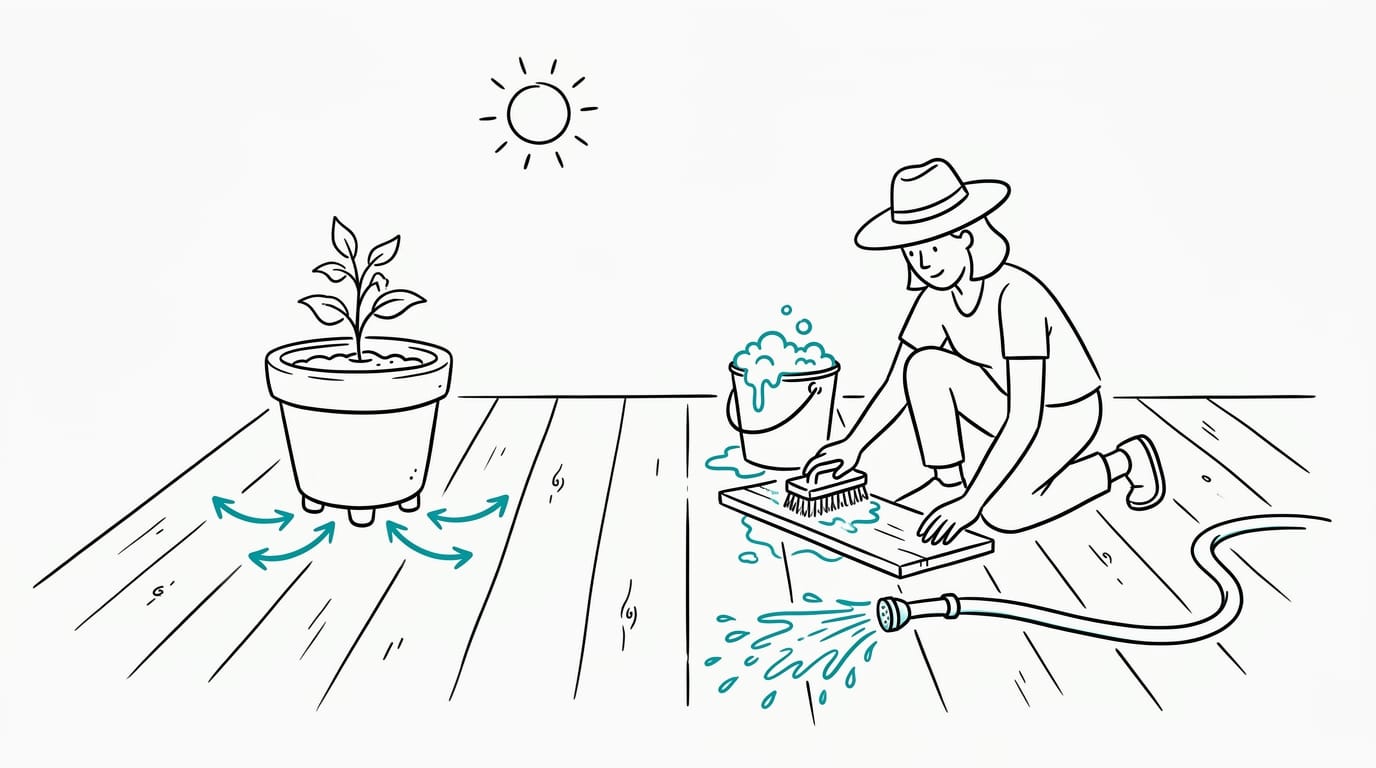
- Spring and fall cleaning: Give the whole deck a thorough clean each spring and fall to clear out whatever has built up over the season.
- Hose, soapy water, brush: Hose the boards down, scrub with soapy water and a brush, then rinse well so no soap residue is left behind.
- Mold technical bulletin: Read the mold technical bulletin for the recommended approach on your boards before you choose a cleaner.
- Elevate planters for airflow: Lift pots and planters off the boards so air can move underneath and moisture can dry out.
A clear, airy deck gives mold very little to work with.
Caring for Decking Through Winter Weather
Snow, ice, and sun each ask something different of your decking, so it helps to know which tool and which step fits each one. Here’s how to handle the two jobs that matter most through the colder months.
Clearing snow and ice safely
Think of a parent clearing the back deck after an overnight snowfall so the kids can get outside by lunchtime. The job goes faster when you keep a few simple rules in mind:
- Use a plastic shovel only.
- Keep metal shovels off the deck entirely.
- If ice has formed, reach for calcium chloride or rock salt.
- Rinse the boards when it’s practical to do so.
Keep the same plastic shovel for the whole season, so you’re never tempted to grab the metal one from the shed.
Shielding boards from sun damage
Think of a host who’s just given the deck a thorough clean ahead of spring barbecues and wants the boards to look as good in June as they did in March. That’s where a little planning pays off.
A UV-protectant sealer is the suggested way to shield boards from sun damage, so make it part of your plan. Reach for a sealer, not paint or stain. Seal it, don’t paint it.
Keeping Railings in Good Shape
Railings take plenty of hands-on wear, so a little care goes a long way. Knowing what to skip is just as useful as knowing what to use.
What to avoid when cleaning railings
The strongest bottle under the sink isn’t the answer. Resist it. Think of a home cleaner who spots a sticky mark on the handrail after a summer barbecue. A bowl of soapy water, not a harsh product, keeps that rail in good shape.
Choose gentle over strong every time, and keep these three rules close:
- Never use acetone. Skip it entirely, even for stubborn marks.
- No harsh solvents. Save strong chemicals for another job.
- Gentle soap and water. It’s your everyday go-to for railings.
Can I use a magic eraser on Trex?
A Mr. Clean Magic Eraser can look like a quick fix, but there are a few things you’ll want to watch for. First, color transfer from spacers can move onto the decking, so check the area before you rub.
Next, keep a scratch sealer pen handy in case you mark the surface. Let soap and water handle everyday grime. Light touch, always.
Warranty Limits for Washing and Sanding
Trex decking is tough, but its warranty comes with rules about how hard you can clean it. Stay inside those limits and your protection stays intact.
Safe pressure washer settings and steps
Pressure washing feels like the fast option, but on composite it’s about control, not power.
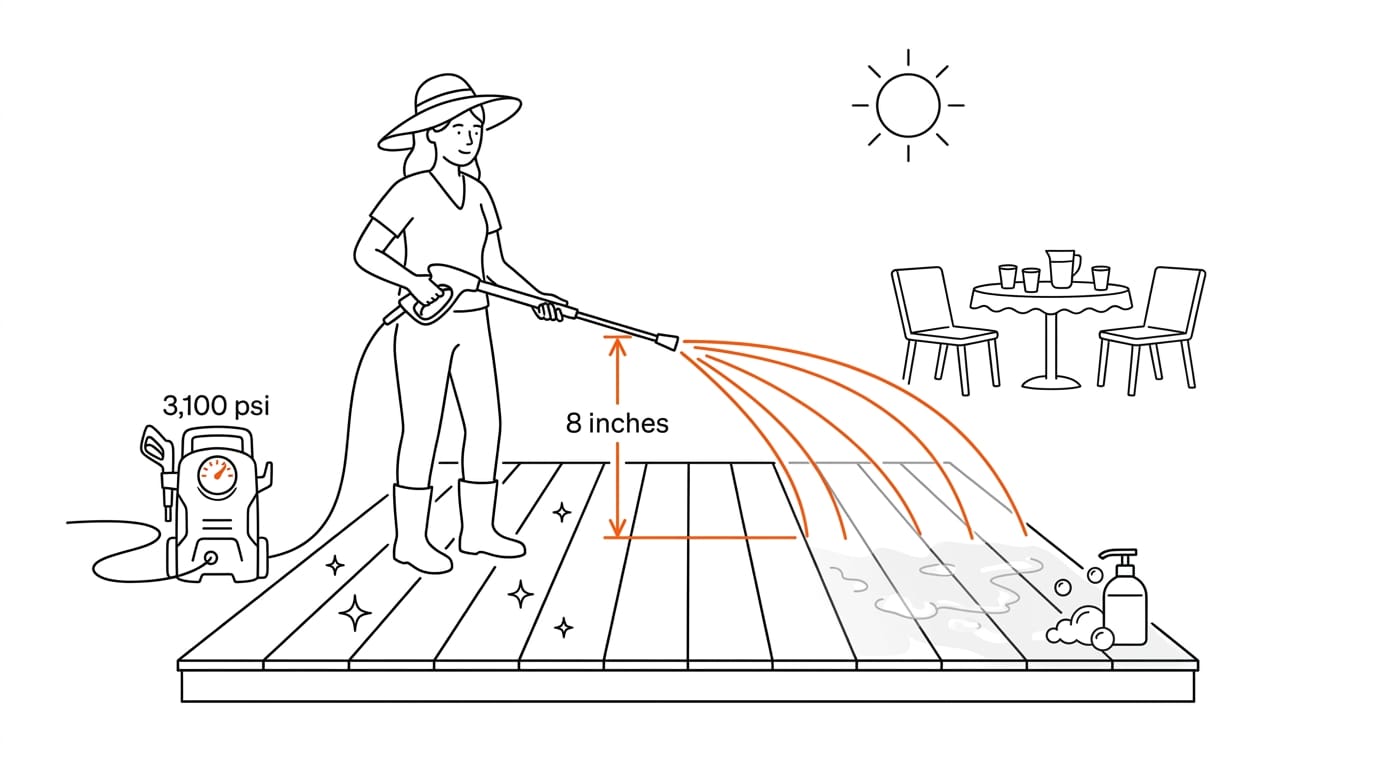
Trex’s decking care and cleaning guide allows a washer of up to 3,100 pounds per square inch (psi) if it has a fan attachment and soap dispenser. Set it up like this:
- Keep the machine at or below 3,100 psi, which is roughly 214 bar (the metric unit for pressure).
- Fit the fan tip and hold it 8 inches from the boards.
- Spray soap on first, then scrub.
- Rinse thoroughly.
Consider a homeowner who wants the deck spotless before a summer party. With the fan tip on and the machine within limits, the boards are clean in one afternoon and the deck stays within the warranty rules.
Skip the pressure washer on first-generation boards
Pressure washers aren’t for first-generation boards, so skip the machine altogether. Think of a host who has just blasted the driveway and is tempted to do the deck the same way.
On those boards, the force can damage the surface and void your warranty, so the slower, hands-on approach is the safe call.
Sanding and other warranty-voiding mistakes
These habits can cancel your coverage:
- Sanding. It isn’t recommended, and it changes how the surface looks.
- Metal shovels. Scratches from a metal shovel void the warranty.
- Food spills. Clean them up within 7 days. Trex’s warranty disclosures describe resistance to permanent staining from food and beverages, so don’t let a spill sit.
Stay gentle and clean up fast.
Storing, Handling and Disposing of Boards
Boards that sit around badly on site can be hard to get looking right later, so good habits start the moment they’re delivered.
Storing boards safely on the job site
Lay the boards on a flat, firm surface, never bare or sloping ground. Place dunnage (the spacers that separate each layer) so the stack stays level, not tilted. Then keep these three rules in mind:
- Space the dunnage to guidance. Follow the spacing in the manufacturer’s instructions rather than guessing.
- Respect the maximum stack height. Stay under the limit the manufacturer gives for your product.
- Cover until installed. A tarp or sheeting keeps rain and debris off until the last board is fixed.
Consider a home cleaner booked to tidy a brand-new deck a week after the build. If the boards sat unprotected on the ground, you’ll be scrubbing site grime off day one, so a flat, covered stack saves you that extra work.
Disposing of decking as construction waste
Treat offcuts, damaged boards and old decking as construction waste, not household rubbish. Put them through the same waste route as other building materials, and if you’re unsure which skip or bin applies, ask whoever is running the job.
Never burn them, not even small offcuts in the garden fire pit. Burning is simply off the table.
Checking, Fixing and Calling in a Pro
A yearly look catches small problems while they’re still easy to fix, and it tells you when a pro is needed.
Yearly checkup for boards and hardware
Pick a dry day and walk the full deck slowly, checking the boards and the fasteners (the screws and clips that hold them down). Consider a homeowner who does this every spring.
When one board gives underfoot, they tighten the nearby fastener that same afternoon, before the wobble gets worse.
Your checkup covers three things:
- Cracks and warping: Look along each board for splits, and check for any that bow up or dip.
- Loose fasteners: Press on each board and tighten any screw or clip that has backed out.
- Rusted screws: Replace any that show rust, since a corroded screw can’t grip as firmly.
Handle these sooner rather than later. A loose screw takes a minute to tighten, while a bigger repair takes far longer.
Fixing damaged boards and hiring a pro
Replace damaged boards promptly. A split or warped board is a trip hazard, and waiting usually makes the job bigger. For example, a parent whose kids play barefoot on the deck can spot a split board on Saturday and swap it out that week.
Call in a pro when the damage spans more than a board or two, when the framing underneath (the beams that carry the boards) feels soft, or when you’re uneasy working at deck height.
For deep mould or stains that won’t lift with your usual routine, a professional cleaning service can help. Before booking, ask whether they’ve worked on composite decking, and keep your warranty paperwork handy so you can check it first.
Gentle, consistent care is the secret to a deck that looks great for years. Wash routinely, tackle stains while they’re fresh, and check your warranty before you reach for a pressure washer or sander.
When a job feels bigger than your toolkit, don’t be afraid to call in a pro. Keep these habits in mind, and your boards will stay fresh, safe, and ready for every barbecue to come.
References
- Trex® Decking Care and Cleaning — online.flippingbook.com
- Trex Co (TREX) Lawsuits & Legal Proceedings (2015-2025 10-K) — app.edgar.tools (2026)
Questions
What is the best way to clean pressure treated wood?
Rinse the pressure-treated wood to remove loose dirt, then scrub it gently with warm water and mild soap using a soft-bristle brush. Rinse well and let it dry; avoid harsh chemicals and check the wood manufacturer’s care instructions before using a specialized cleaner.
How to make Trex look new again?
Wash the deck with a hose, warm soapy water, and a soft-bristle brush, working in small sections before rinsing thoroughly. Treat stains according to their type, use a composite-deck cleaner approved for your Trex product when needed, and test new products in a hidden spot first.
How do I clean my wooden deck?
Sweep away leaves and debris, rinse the boards, then scrub with warm soapy water and a soft-bristle brush. Rinse thoroughly and let the wood dry; use a cleaner suited to the wood and its finish for stubborn marks.
How to clean composite decking without a pressure washer?
Hose off loose debris, then clean one section at a time with warm water and mild soap. Gently scrub with a soft-bristle brush, including between boards, and rinse thoroughly with the hose.
How do I get stains off my deck?
Identify the stain first and treat it promptly. Start food, oil, or grease stains with warm soapy water; use a suitable deck brightener for tannin, rust, or ground-in grime, and white vinegar for hard-water deposits. Test cleaners in an inconspicuous spot and rinse as directed.
What should you not use on a composite deck?
Avoid harsh chemicals, abrasive cleaners, and aggressive scrubbing on a composite deck. Do not sand it, and avoid pressure-washing first-generation Trex boards; for other Trex products, follow the manufacturer’s pressure and nozzle limits.
Does fairy liquid clean decking?
Yes. A little mild washing-up liquid in warm water can clean decking; rinse away loose debris first, scrub gently with a soft-bristle brush, then rinse the boards thoroughly. Avoid harsh or abrasive formulas.
Can I use a magic eraser on Trex?
Yes, a Magic Eraser can be used gently on light scuffs, but it is mildly abrasive. Test it on a hidden area first and avoid aggressive rubbing, which could mark the surface.
Sources
- Trex® Decking Care and Cleaning, online.flippingbook.com
- Trex Co (TREX) Lawsuits & Legal Proceedings (2015-2025 10-K) | edgar.tools, app.edgar.tools,
Read next
- Cleaning Granite Countertops: Care, Sealing, and StainsCleaning granite countertops: match cupboard-based stain treatments to each stain, disinfect safely, and learn when sealing matters most.
- How to Clean a Dutch Oven: Daily Care to Stain RemovalHow to clean a Dutch oven: remove burnt-on food with cupboard fixes and protect the enamel, lid, and cast-iron rim. Get dishwasher care, too.
- Cleaning AC Condensate Drain Line: Complete GuideCleaning an AC condensate drain line can stop a clog from turning into ceiling or floor leaks. Spot warning signs and choose a safe clearing method.
Stain Finder: a free stain removal guide
Find your stain