Can You Wash a Comforter at Home? What to Know
Can you wash a comforter? Check its care label, fill, and washer capacity, then pretreat coffee stains and dry it fully to keep it fluffy at home.


Yes, you can usually wash a comforter at home, but the care label determines whether it can go in a washing machine, needs hand washing, or should be professionally cleaned. Pretreat stains, use a gentle cycle with mild detergent, and make sure the comforter has room to move; dry it completely on low heat or in the air to prevent clumps and mildew. If your machine is too small, use a larger washer or wash it by hand.
Picture this: the bed is made, and there’s a coffee ring right in the middle of the comforter. Your first instinct might be to bundle it into the washer and hope for the best.
The good news is that many comforters can be washed at home, once you know what to check.
Short answer: usually, yes. Check the care label, match the fill and drum size to your machine, and dry it fully so it stays fluffy. We’ll also cover prepping stains first, so a stubborn mark comes out clean the first time.
Can You Wash a Comforter Safely?
Usually, yes, but the care label has the final say. Can you wash a duvet? Yes, and the same checks below apply to it.
Machine washing often works fine
A comforter is usually safe in the washing machine, but whether yours is depends on its label. Consider a parent with a bulky family comforter that’s been hit by juice at a sleepover.
The label says machine wash, but the standard home drum is too small for it to move freely. Checking the drum before loading saves a wasted cycle, and a trip to a large-capacity washer at a launderette gets it clean without the wrestling match.
What the care label tells you
The label is less about what you’d like to do and more about what the maker recommends. It dictates the wash method, so treat it as instructions, not suggestions:
- Machine wash: follow the settings printed on the tag
- Hand wash: keep it out of the machine and wash it by hand
- Dry-clean only: take it to a professional
Always follow the manufacturer’s instructions. They’re written for that exact comforter, so they beat any general guide, this one included.
Down and feather fills, or dry-clean tags
Wash rules change by fill, so check the label to see whether yours is down, feather, or something else. Down needs special care, so don’t guess. A dry-clean tag is a warning as well as an instruction.
Ignore it and you may have no claim against the maker if something goes wrong.
Dry-cleaning uses harsh chemicals, so ask the cleaner what they use before you hand it over. If the tag says dry clean only, or you’d rather not risk a wash at home, a professional cleaner is the safest route.
Washing won’t ruin it if done right
Done right, a wash refreshes a comforter rather than damages it. The right settings help prevent damage, so pick the gentle cycle and a mild detergent.
Give a new comforter a wash before its first use, so it’s fresh when it reaches the bed. Read the tag, then press start.
How Often to Wash a Comforter
How often you wash a comforter depends on its fill, who shares your bed, and what ends up on it.
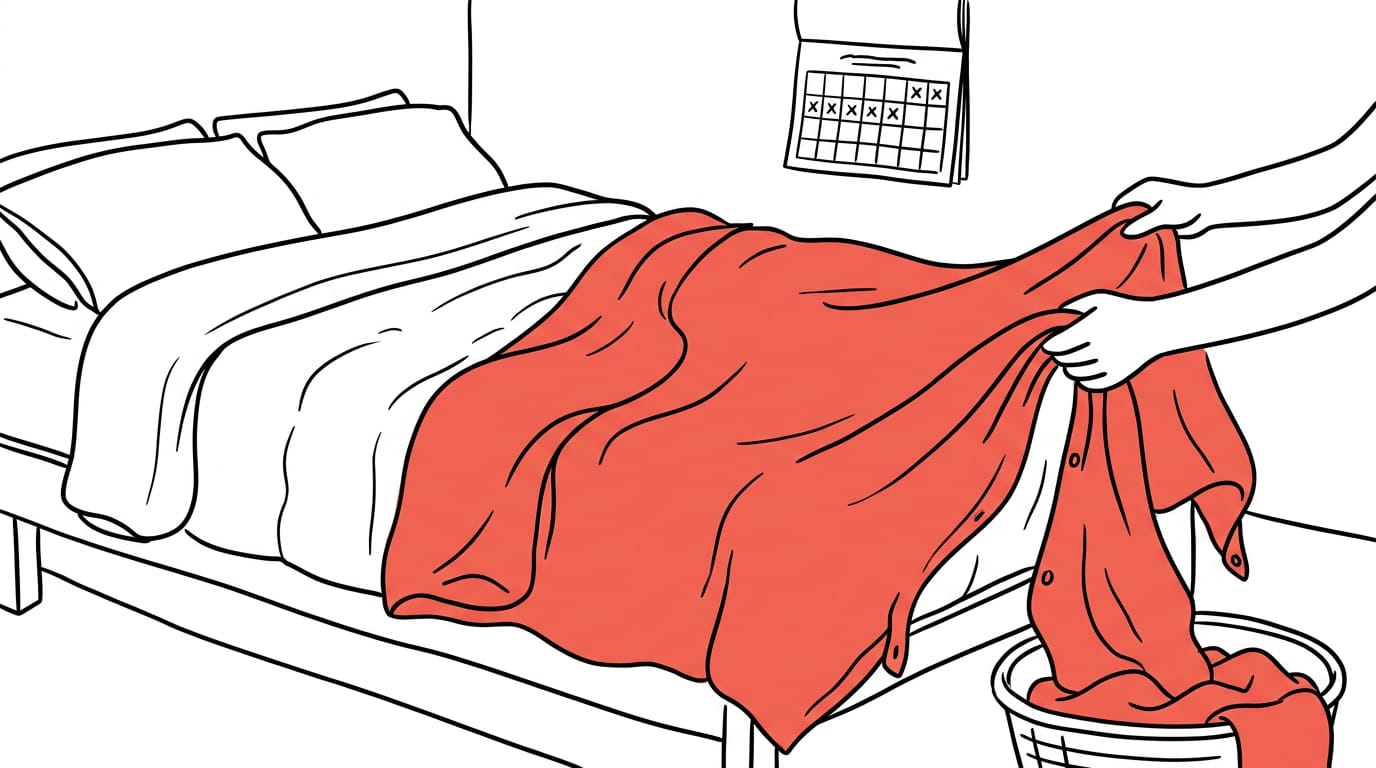
Suggested washing schedule
Use this as a general timing guide:
- Two to three times per year
- Every three to six months
- Down-filled comforters: every two to three months
- Duvet cover: monthly or weekly
The duvet cover takes the daily wear, so it gets washed most often, while the comforter can go much longer between washes.
What changes how often to wash
It’s less about how much you wash and more about when the bedding needs it. Several factors shift that timing:
- Allergies and pets: Wash more often if someone has allergies or a pet shares the bed.
- Material type: The fabric and fill set your baseline, so check the schedule above first.
- Sharing bed or illness: Two sleepers or a cold in the house means more sweat and germs.
- Humid environment: Damp air holds moisture in bedding, so humid rooms call for sooner washes.
- Using a duvet cover or sheet: A layer between you and the comforter catches sweat and oils, stretching its schedule.
- Spills and sweat: Treat spills right away rather than waiting for wash day.
Think of a parent whose child is sick in bed for three nights. Changing the sheets and pillowcases each morning keeps things fresh, and the comforter goes in the wash afterward, so nobody climbs back into a mess.
Washing schedules for other bedding
- Sheets: weekly
- Pillowcases, blankets, and duvets: time these to how often they’re used and how dirty they get.
- Mattress covers and bed skirts: wash them when they look or feel like they need it.
Set a reminder for each item, and the bed stays fresh. No marathon laundry day required.
Getting the Comforter Ready
A few minutes of prep can decide whether your comforter comes out fresh or ruined. Here’s what to sort out first:
Mend holes and tears first
Look over the shell for holes and tears before anything else. Think of a student who spots a rip while stuffing the duvet into the laundry bag: a quick stitch keeps the filling from escaping.
- Fix loose threads: Snip dangling threads so they don’t snag in the drum.
- Prevent further damage: Repair holes first, since tumbling can widen a small tear.
Pretreat stains before the wash
Pretreating means treating a mark before the wash, not after, when it may already have set. Think of a host who spills red wine on the guest comforter the night before visitors arrive: a quick dab while it’s still damp means no morning scramble.
Spot-treat fresh marks with your spot remover first. For older or stubborn ones, try a baking soda paste (baking soda stirred with a little water) or a vinegar mixture. Let either sit for a few hours before washing.
Treat sweat yellowing before washing too, rather than hoping the cycle will handle it.
Patch-test any cupboard remedy on a hidden corner first, since a home fix can leave its own mark. Test first, then treat.
What you’ll need on hand
Gather these before you start:
- Spot remover: Keep one you already trust for fresh marks.
- Mild liquid detergent: A gentle liquid suits the whole comforter.
- Large washer and dryer: A comforter needs room to tumble, so a roomy machine is ideal.
- Laundromat alternative: If your machine is too small, an oversized laundromat machine is the backup.
Machine Settings for Washing a Comforter
Machine settings decide whether a comforter comes out fresh and fluffy or flat. Here’s what to dial in.
Choosing the right water temperature
Start with the care label, since it names the safest temperature for your comforter. Cold water protects softness, so it’s the go-to when the label is vague. Warm water helps kill dust mites, so it’s the pick when they’re on your mind.
Hot water may shrink the shell, so skip it unless the label says otherwise. It’s less about hot and more about matching the label.
Choosing detergent and whether to add softener
Pick a mild detergent, and steer clear of harsh chemicals that can wear down the fabric. Fabric softener is the tricky one. Check the label first. If it’s silent, use a small amount or skip it.
Pick the cycle and rinse options
Choose a gentle or delicate cycle, which moves the comforter more softly. Skip any cycle labeled bulky or heavy duty, since those are built for towels and jeans.
Check drum size against comforter size. Think of a renter squeezing a queen comforter into a compact apartment washer. Stuffed in tight, it can’t move, so the wash and rinse come out patchy. Room to move matters.
If you’re worried about leftover soap, run an extra rinse without soap. A sanitizing cycle can help with germs or dust mites, but check the label first, since these cycles often run hot.

How to Dry Your Comforter
Drying decides whether your comforter comes out soft and bouncy or flat and lumpy. Choose between the dryer and air drying, depending on how soon you need it back on the bed.
Using the dryer on low heat
The fastest route is the dryer. Choose low heat over high, use a gentle cycle, then toss in a few dryer balls or tennis balls to keep the filling from clumping. Remove it as soon as it’s dry.
Take a flatmate who washes the duvet on Saturday morning and needs it that night. Low heat takes a few hours, so it’s ready well before bedtime.
Air drying outdoors or on a rack
Air drying works well if you’ve got the time. Hang the comforter outdoors in the sun or over a drying rack indoors. Expect it to take days. Once it’s dry, give it a short spin on low to re-fluff the filling. Patience wins here.
Keep mildew, odor, and lumps away
Four habits keep mildew, odor, and lumps at bay:
- Dry completely. Aim for completely dry, not just dry on the outside, since trapped moisture is what leads to mildew.
- Start drying immediately after the wash so the fill doesn’t sit damp.
- Leave enough room in the machine, since a packed drum leaves no space to fluff.
- Shake out clumps by hand before drying.
Ever wondered why hotel duvets are so fluffy? It’s the same thing these habits protect: the filling stays dry and loose, so it springs back.
Washing by Hand and Other Options
Not every comforter has to go in the machine. Here are the gentler routes, from a full hand wash to quick freshening that skips the water altogether.
Washing it by hand in the tub
Hand washing works well when your comforter is too bulky for the drum or the label calls for gentler handling. Picture a renter whose king-size comforter won’t fit the launderette machine. A soak in the bath and a flat spot to dry means no second trip.
Here’s how it goes:
- Fill the tub with lukewarm or cold water and submerge the comforter.
- Let it soak for 15 to 30 minutes.
- Rinse with cold water.
- Lift it out and let it drain, but don’t wring it. Then lay it flat to dry.
Patience does most of the work.
Freshen it up without a full wash
Sometimes a comforter just needs refreshing. This is about freshening it, not washing it, so each option below skips the tub and the washer.
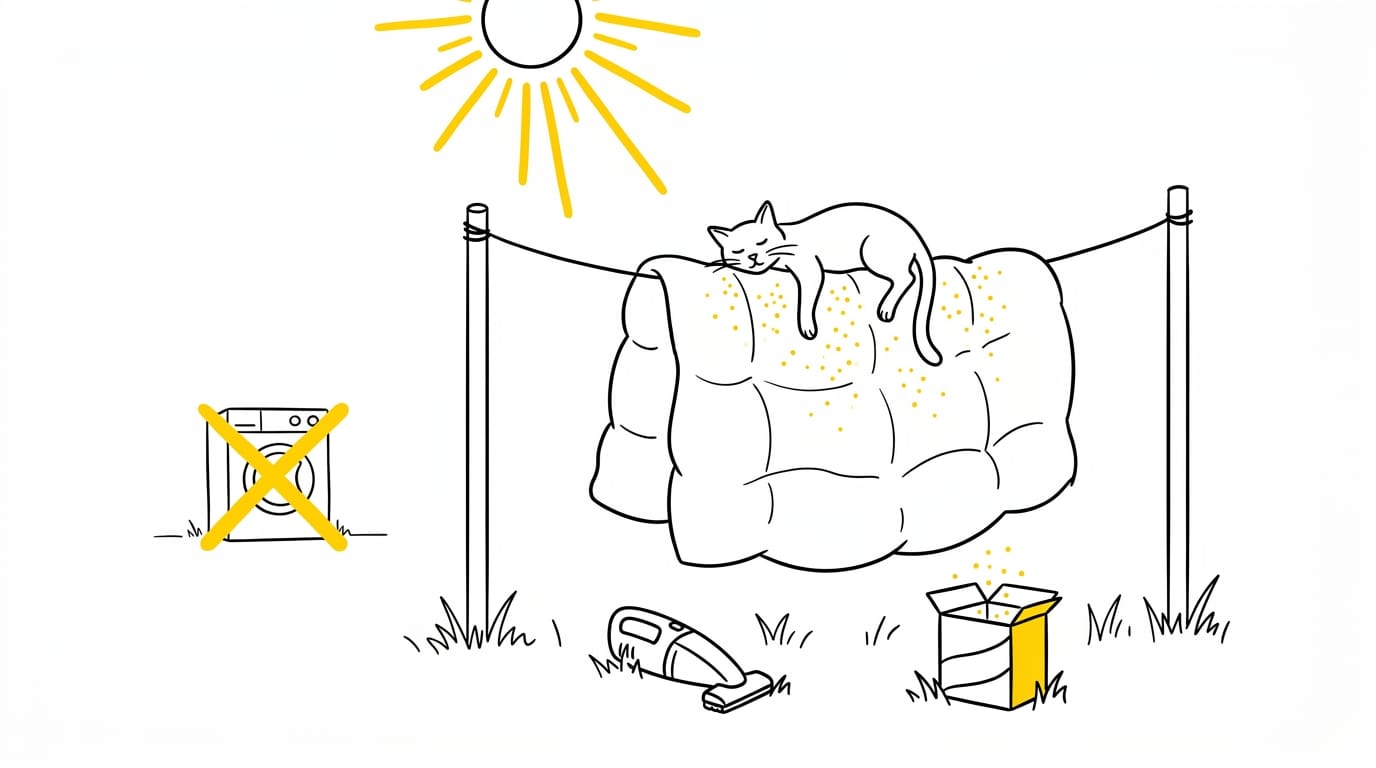
Consider a pet owner whose cat has claimed the comforter. A baking soda sprinkle, a vacuum, and a morning outside refresh it between full washes, with no trip to the machine.
- Baking soda and vacuum. Sprinkle baking soda over the comforter, let it sit for a while, then vacuum it off.
- Sun airing. Hang it out in the sun to air out.
- Spot cleaning only. Treat individual marks as soon as you see them, rather than washing the whole comforter.
- Tumble in dryer. Run it through the dryer on its own to fluff it up and refresh it.
Less water, less fuss.
Making Your Comforter Last Longer
Simple habits mean fewer washes, and an easier job when one’s due. Here’s where to start.
Using a duvet cover to protect it
A duvet cover is a removable shell that goes over your comforter, taking the daily sweat, dust, and spills. The goal is to protect the comforter, not wash it more often. Cover it, and you’ll reduce wash frequency, since only the cover needs laundering.
Covers are also easier to wash, since they’re lighter and simple to remove. For example, a parent whose child has a nightly juice habit can strip and wash the cover on Sunday while the comforter stays put. Less handling means less wear.
A duvet is an insert that lives inside a cover, while a comforter is a finished piece you usually use on its own. That’s the key difference, so check which one you own before buying a cover.
Caring for it between washes
Three habits do most of the work:
- Spot-treat promptly: Act the moment you see a mark. For example, a pet owner who finds a muddy paw print on the comforter can blot it with a damp cloth that evening, turning a full wash into a quick wipe.
- Use a top sheet: Put a sheet between you and the comforter so sweat and skin oils land there first. Less dirt gets in, so there’s less to take out.
- Replace periodically: Filling and stitching wear out over time. Swap in a new one once it stops springing back when you shake it out.
What Comforter Brands Tend to Claim
Before you reach for the washing machine, it helps to know what the packaging promises. Brands lean on a few familiar claims, and each one is worth checking against the care label.
What brands say about fill and washing
Walk down any bedding aisle and the same phrases keep popping up. Here’s what they usually mean for your comforter:
- Microfiber fill: Brands often describe the filling as synthetic microfiber, a man-made alternative to natural down. It’s pitched as the easier option for home washing, which is why it shows up so often.
- Machine washable, dryer safe: This is the claim that matters most when you’re staring at a mess. It says the whole piece can go through a home machine and a dryer. Treat it as a starting point, not a guarantee.
- Hypoallergenic features: Brands use hypoallergenic, meaning less likely to trigger allergies, to describe the materials. That’s not the same as how well the comforter cleans up, so it tells you nothing about the right wash.
- Comforter vs quilt: A comforter is usually a single filled piece, while a quilt is typically layered and stitched in patterns. Brands sometimes blur the two, so check the construction and label rather than trusting the name.
Think of a parent who finds a sleepover accident on a child’s comforter at 7am. The tag says machine washable, so they toss it in on hot. Reading the full care label first would have pointed them to a gentler cycle and a blanket ready for movie night.
The front of the packet makes the promise, but the care label is the proof. The tag has the final say.
Washing a comforter at home is very doable when you work from the label up. Check what it says, match the fill and drum size to your machine, and give it plenty of time to dry all the way through.
Stain prep is what makes the difference, so tackle marks before they go in the wash. Careful prep, gentle settings, and patient drying keep a comforter clean, fluffy, and ready for another good night’s sleep.
Questions
How often should you change your sheets if you shower every night?
Shower habits don’t change the usual sheet-washing schedule: wash sheets weekly. Wash them more often if you sweat heavily, share the bed, are ill, or have allergies or pets.
Why are hotel duvets so fluffy?
Hotel duvets stay fluffy when their filling is kept dry and loose. Thorough drying and shaking or tumbling the duvet help prevent clumps and let the filling spring back.
Can I wash my comforter in a regular washer?
Yes, if the care label allows machine washing and the comforter fits with room to move in the washer. Use a gentle cycle and mild detergent, then dry it completely on low heat or air-dry it to prevent clumping and mildew.
Can you wash a duvet?
Yes. Check the duvet’s care label first, since it specifies whether to machine wash, hand wash, or dry-clean it; make sure a machine has enough room for it to move freely, and dry it completely.
More in Laundry
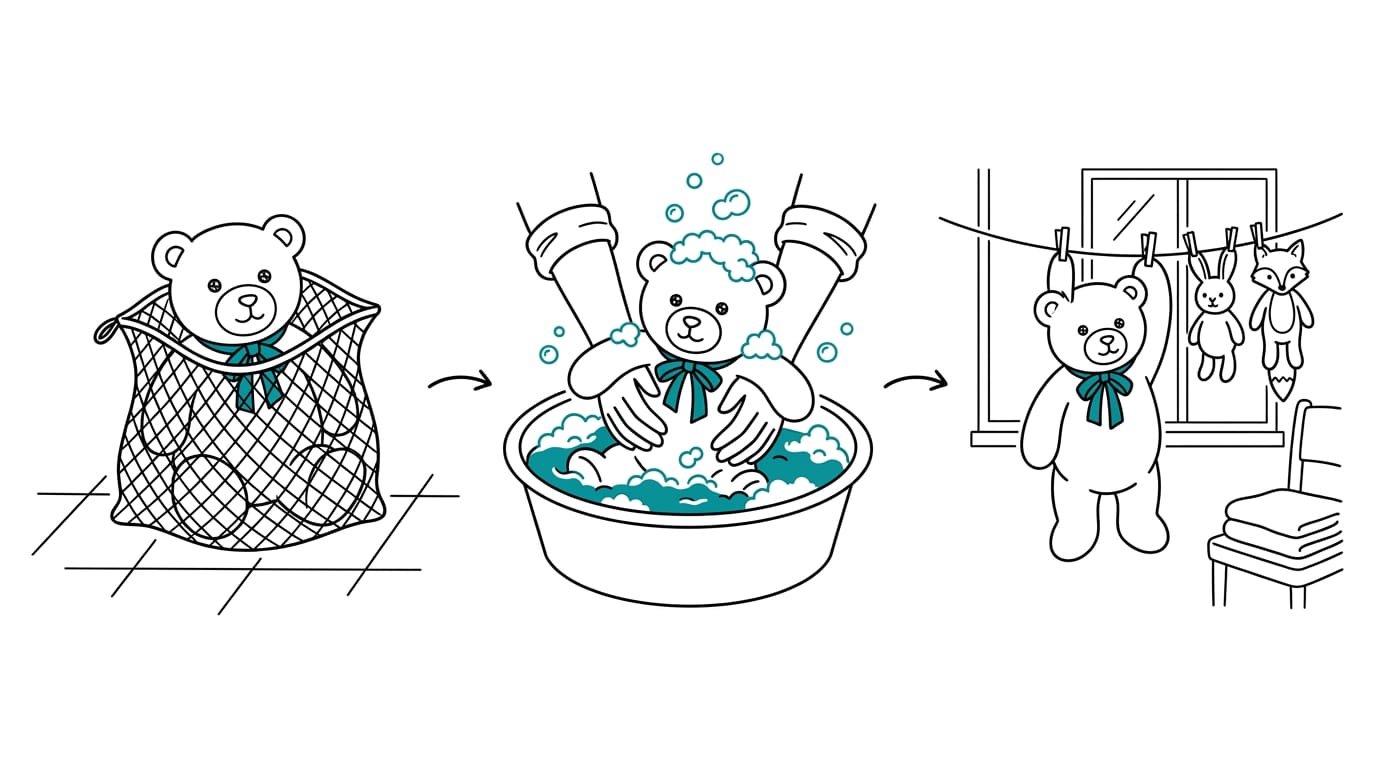
- How to Wash Stuffed Animals at Home, Step by StepHow to wash stuffed animals safely: check labels, treat stains, choose hand or machine washing, then dry and fluff toys without losing their shape.
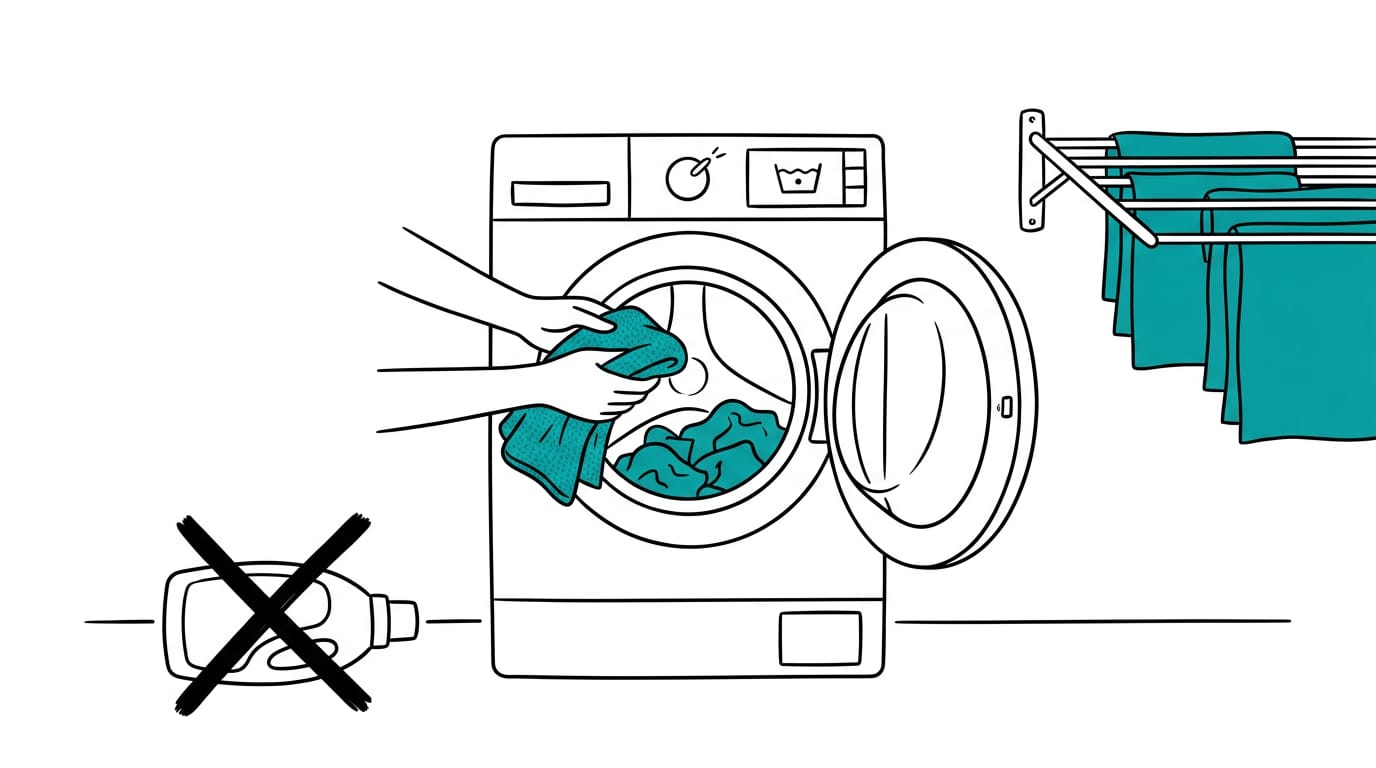
- How to Wash Microfiber Cloths Without Ruining ThemHow to wash microfiber cloths without losing their grip: sort them, skip fabric softener, choose a gentle wash, and revive stiff cloths again.
- How to Wash Merino Wool: Machine, Hand and SpotHow to wash merino wool without shrinking it: compare machine, hand, and spot washing, choose safe detergents, and dry it without stretching the fibres.
Stain Finder: a free stain removal guide
Find your stain