How to Wash Merino Wool: Machine, Hand and Spot
How to wash merino wool without shrinking it: compare machine, hand, and spot washing, choose safe detergents, and dry it without stretching the fibres.

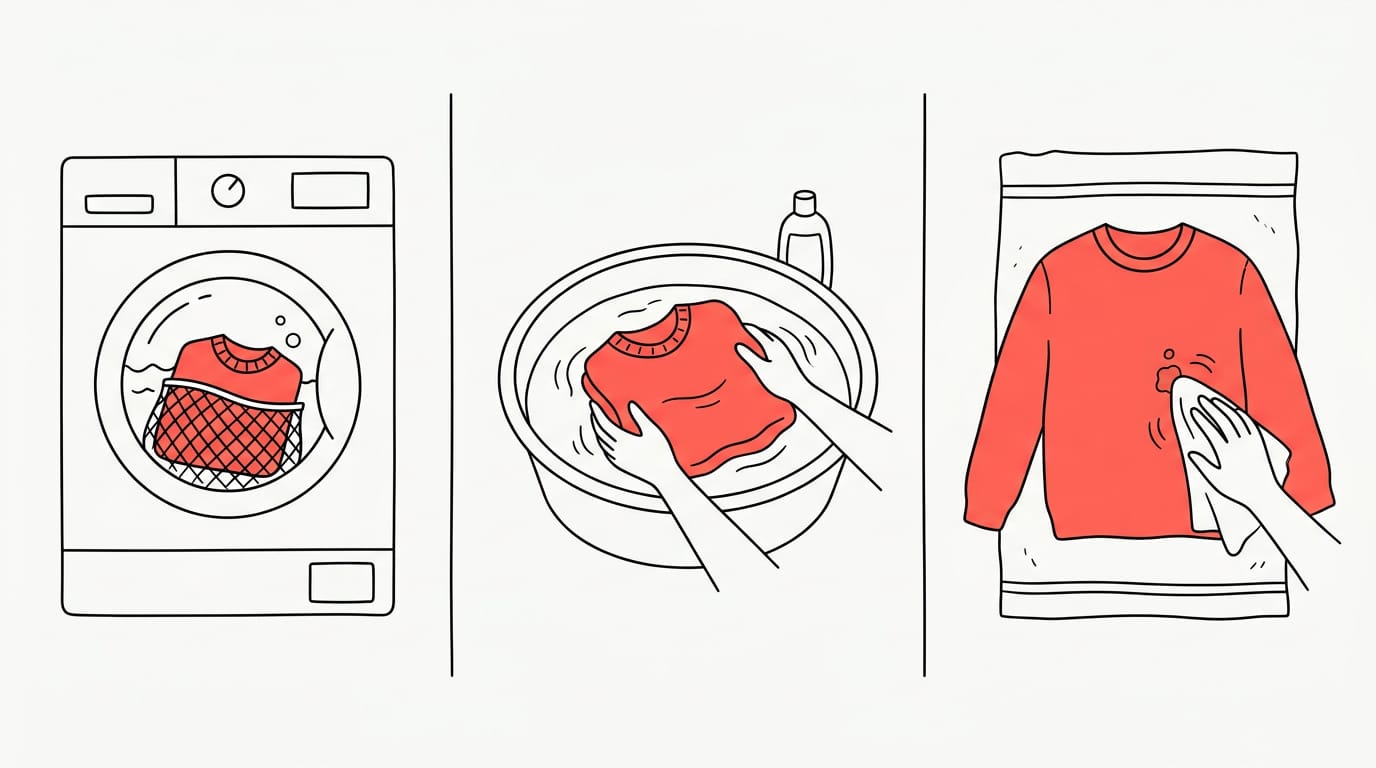
Merino wool is a fine, soft natural fibre that resists everyday odors and stains, so garments often need washing less frequently than ordinary laundry. When washing is needed, follow the care label and use cool water, a gentle cycle or hand washing, and mild wool detergent; avoid bleach, softener, wringing, rough loads, and heat. Dry garments flat and reshape them while damp to help prevent shrinking and stretching, keeping merino soft and wearable for longer.
Think of your favourite merino jumper like a good pair of walking boots: treat it well and it lasts for years.
Merino is a fine, soft wool, and the way you wash it makes the difference between a garment that keeps its shape and one that’s felted, stretched, or shrunk.
We’ll walk you through machine, hand, and spot washing, plus drying and damage prevention. You’ll also get a stain-first method for lifting specific marks without harming the fibre.
How to Wash Merino Wool Less Often
Merino can go longer between washes than you might think, which is good news for your wardrobe and your washing machine. Here’s why, and how to tell when it really does need a wash.
Why merino fights odor and stains naturally
Merino has a self-cleaning protective layer that helps stop dirt from sinking in, so everyday grime tends to sit on the surface. It also resists the growth of odor-causing bacteria.
According to a 2025 review of textile laundering and body odor by Sania Waqar and colleagues, natural fabrics like wool create a poor environment for bacteria to grow.
Merino also has wicking power. Wicking means pulling moisture away from your skin so it can spread out and dry, and less damp means less room for odor to build up.
That’s why a stray mark is usually a spot-clean job, not a reason for a full wash. Match each spot treatment to the mark and treat only the affected area, rather than soaking the whole garment.
When merino really needs a wash
Merino is about fewer washes, not no washes. Use these rules of thumb:
- Wear it several times. Expect a few wears between washes, not one.
- Air it out overnight. Hang it somewhere with airflow before it goes back in the drawer.
- Wash when it’s visibly dirty. Visible grime and marks are the real signal, not the calendar.
- Wash socks after a day or two. They sit close to your skin and get damp quickly.
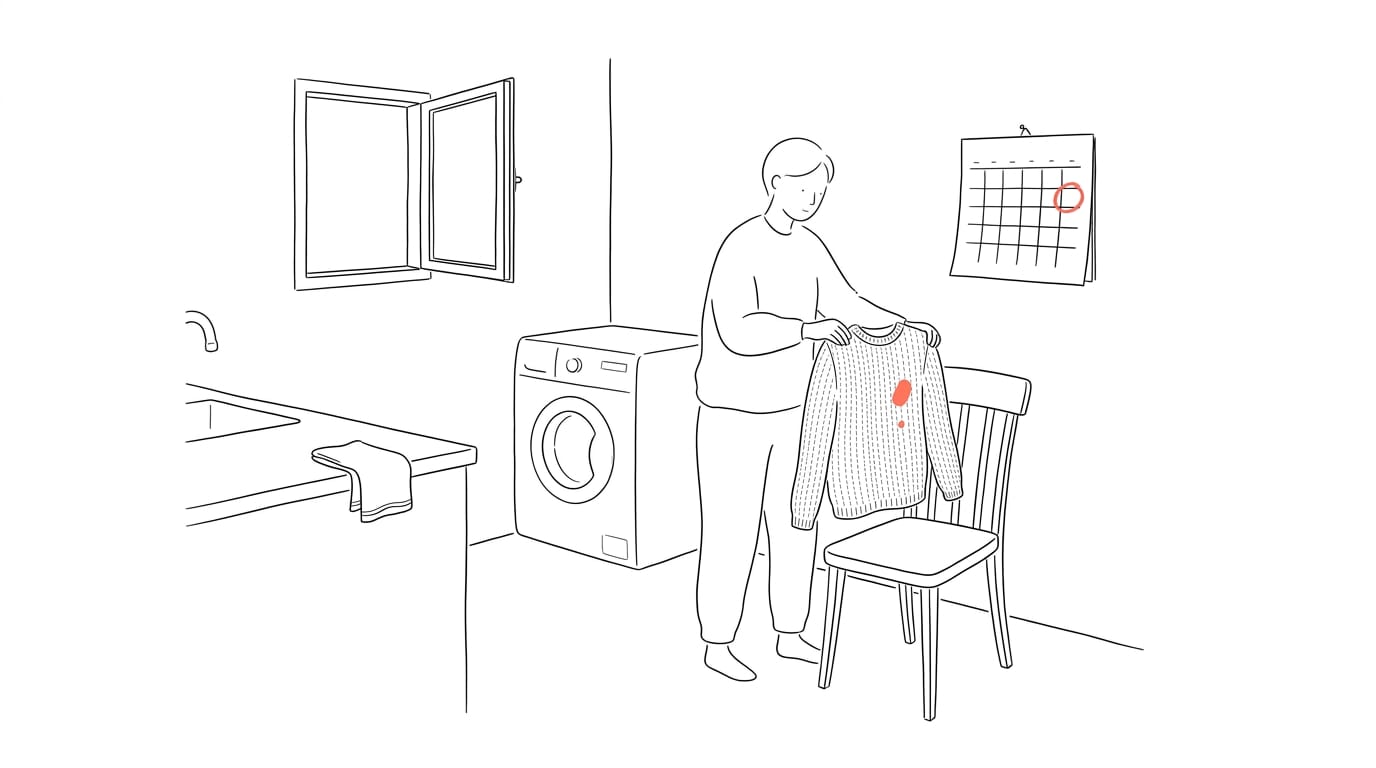
Consider a parent who wears the same merino jumper for school runs all week.
A night on the back of a kitchen chair keeps it fresh, and a quick spot clean on any breakfast splash means it only goes in the machine at the weekend. Air it, then wear it again.
Different Ways to Wash Your Merino
Start with the care label, because it tells you which method suits your merino. Then pick the route that fits your time and how dirty the piece is:
What happens if I machine wash merino?
Merino can go in the washing machine if you follow a few simple rules. Hot water is out.
- Choose a gentle cycle with cold or lukewarm water.
- Turn the garment inside out.
- Zip up any zippers.
- Put it in a delicate laundry bag.
- Wash it with soft fabrics only.
If it’s already gone through on the wrong setting, don’t panic. Lay it flat to dry and skip the wringing.
Gently hand wash merino in a basin
Fill a basin with cool water, then:
- Swirl the garment gently through the water.
- Soak it for 10 to 15 minutes.
- Rinse in clean water.
- Press out the water, don’t wring it.
Quick washes when you’re out and about
Think of a flatmate who gets coffee down their merino top at lunch and wants it sorted before the afternoon. Rinse the patch in moving water, such as under a running tap, then gently massage the mark with a drop of unscented hand soap.
Next, sponge the area with a damp cloth in soapy water. Finish by blotting the stain, never rubbing it. Fast, but gentle.
Detergents to Use and Ones to Skip
Choosing the right soap is half the job. Here’s what to reach for, and what to leave on the shelf.
Wool-specific soaps worth trying
Look for a wool-specific detergent: a mild formula made for delicate natural fibres. Choose gentle rather than strong. You don’t need a lot of product either.
Consider a parent with one merino school jumper and a heavy-duty laundry liquid under the sink. Switching to a wool-specific wash for that jumper keeps it in good shape for the next school term.
Here are the other options to weigh up:
- Lanolin-enriched formulas. Check the label for lanolin, a wool-derived ingredient.
- Fragrance-free, dye-free options. Fewer added extras means a simpler formula for a delicate garment.
- Brand examples like Eucalan. Ready-made wool washes like this are an easy place to start.
- Check your cupboard. For a light, quick wash, a gentle alternative you already own may do the job.
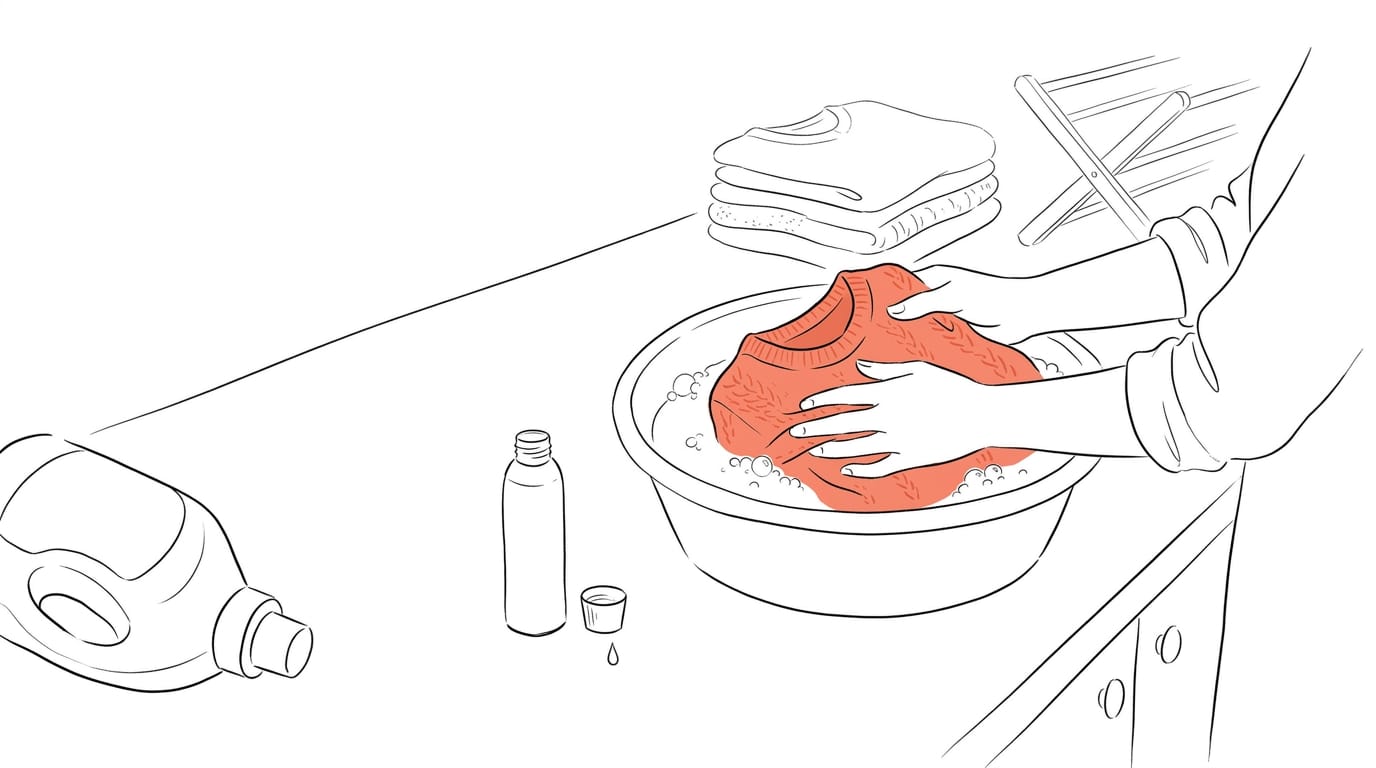
What to keep out of the wash
Some habits from everyday laundry don’t carry over to merino. Here’s what to skip:
- No bleach. Skip it, even on a white jumper.
- No fabric softener. Leave the bottle on the shelf for this load.
- Avoid regular detergents. Your everyday laundry liquid is the wrong tool here, even if it’s the bottle closest to the machine.
- Avoid hot water. Stick to cool water instead.
Leave these out and your merino will thank you.
Drying and Finishing Merino Without Damage
Drying is where many good merino pieces get ruined, so we’ll give this stage the care it deserves.
Lay merino flat to air dry
Flat drying is the safest choice for most merino. Think of a parent who hand-washes a jumper after a messy lunch, lays it on a clean towel, and finds it still fits the child the next morning.
- Dry flat on a towel. Lay the wet garment on a clean, dry towel.
- Reshape to original size. Ease the sleeves, hem, and collar back into shape while it’s still damp.
- Avoid direct sun and heat. Keep it away from radiators and sunny windowsills.
If space is tight, hang or line dry in the shade instead. Merino dries quickly, so it’s usually ready to wear sooner than you’d expect. Flat is kinder to the shape than hanging.
Why tumble drying shrinks merino
Heat is the real enemy here. According to a study on dimensional change in wool fabrics during a tumble-drying cycle, shrinkage is a serious problem for wool garments in the dryer, and avoiding high heat helps prevent it.
If your machine has a low or no-heat setting, use it instead of the standard cycle. Think of a flatmate who always picks the hottest setting, then finds their favourite cardigan a size too small.
Air drying takes longer, but it extends your garment’s lifespan. Patience pays off.
Smooth wrinkles with steam or low heat
Creases don’t need a hot iron. Try these gentler options:
- Low temperature iron. Set it to its lowest wool setting and keep it moving.
- Iron inside out. Turn the garment inside out before pressing so the outside stays clean.
- Garment steamer. Hold it a short distance from the fabric and let the steam relax the fibres.
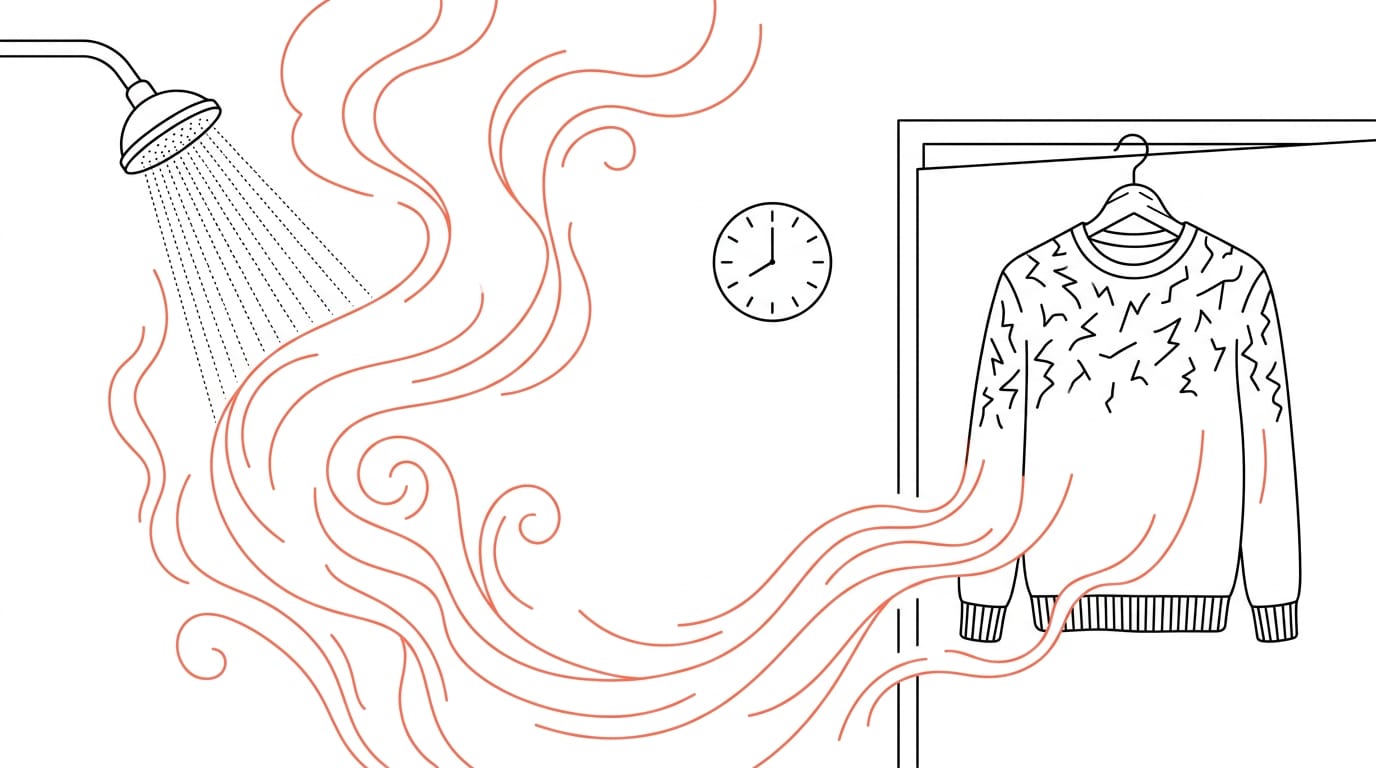
- Shower steam trick. Hang the piece in the bathroom while you shower, and let the steam ease out the creases.
Picture a host with guests due within the hour. A few minutes hanging the merino jumper in the steamy bathroom can smooth it out in time. Quick, simple, and kind to the fibres.
When dry cleaning is the exception
Dry cleaning isn’t recommended for most merino, so treat it as a last resort, not a first choice. Occasionally, though, a tailored piece such as a structured merino blazer is worth a professional clean.
Protecting Merino so It Lasts Longer
Merino stays soft and fitted when you handle it gently at every stage. Most damage comes from heat, friction, and poor storage.
Keeping merino from shrinking
Shrinking comes down to three habits:
- Avoid heat. Hot air from a tumble dryer can tighten the fibres, so lay merino flat to dry.
- No hot washes. Hot water makes the fibres shrink, so stick to cool or lukewarm settings.
- Avoid wringing and stretching. Twisting and hanging a wet jumper pull it out of shape.
A parent who tosses their child’s jumper in the dryer after a muddy Saturday ends up with one a size smaller. Heat is the real culprit.
If a jumper has already shrunk, you can still try to rescue it. Dampen it in lukewarm water, ease it back into shape while wet, and lay it flat to dry.
Stopping and removing merino pills
Pills are the little fuzzy balls that form on knitwear. Areas that rub, such as underarms and cuffs, pill first, and that’s normal. Cashmere knits pill as well, so our guide on how to wash cashmere is worth a read.
- Wash inside out. This keeps the outer face from rubbing against other clothes.
- Avoid rough loads. Zips, jeans, and Velcro act like sandpaper, so wash merino with softer items.
- Fabric shaver removes pills. Glide it lightly over the surface, one small section at a time.
A commuter whose jumper rubs under a rucksack strap will spot pills there first. A quick pass with a shaver keeps it looking fresh for another season.
Storing merino dry and away from moths
- Store completely dry. Put merino away only once it’s fully dry, not just mostly dry, since trapped damp causes problems.
- Protect from moths and pests. Moths find wool appealing, so keep jumpers in sealed boxes or bags.
A renter packing winter jumpers into the loft each spring can seal them away and bring them out next winter without moth holes.
Care tips for socks, fleece, and hats
- Socks. Wash them inside out and avoid hanging them by the cuff, which stretches the fabric.
- Fleece. It can pill too, so use the same inside-out wash and shaver tips.
- Headwear. Lay hats flat to dry so they keep their shape.
Looking after merino comes down to a few habits: wash it less often, choose the right method, pick the right detergent, and take care when drying. Do that, and you’ll keep your wool soft, shapely, and wearable for seasons to come.
When a mark does appear, you don’t have to panic. Treat the stain first, with care, and you’ll lift it without risking the fibre.
Treat your merino kindly, and it will keep you warm for years.
References
Questions
What happens if I put merino wool in the washing machine?
Merino can be machine washed, but hot water, rough cycles, and friction can cause it to felt, shrink, or lose its shape. Check the care label, then use a gentle cycle with cold or lukewarm water, turn the garment inside out, and place it in a delicate laundry bag. Lay it flat to dry rather than wringing it or using high heat.
Can you iron merino wool?
Yes. Use the iron’s lowest wool setting, turn the garment inside out, and keep the iron moving to avoid heat damage. A garment steamer or gentle shower steam can also help smooth wrinkles.
Sources
More in Laundry
- How to Wash a Carhartt Jacket and Keep It Water-ResistantHow to wash a Carhartt jacket without ruining its finish: check the shell, remove stains, choose safe washer settings, and dry it to avoid shrinkage.
- How to Wash a Silk Pillowcase Without Ruining ItHow to wash a silk pillowcase without risking damage: check the label, choose hand or machine washing, remove makeup stains, and dry and iron it safely.
- How to Get Oil Stains Out of a DrivewayHow to get oil stains out of driveway starts with a cupboard-first cleanup, then adapts the method for concrete, block paving, or asphalt for safer results.
Stain Finder: a free stain removal guide
Find your stain