Isopropyl Alcohol for Cleaning: A Complete Guide
Isopropyl alcohol for cleaning can lift ink, grease, and sticky labels. Choose the right strength and protect upholstery and surfaces it can damage.
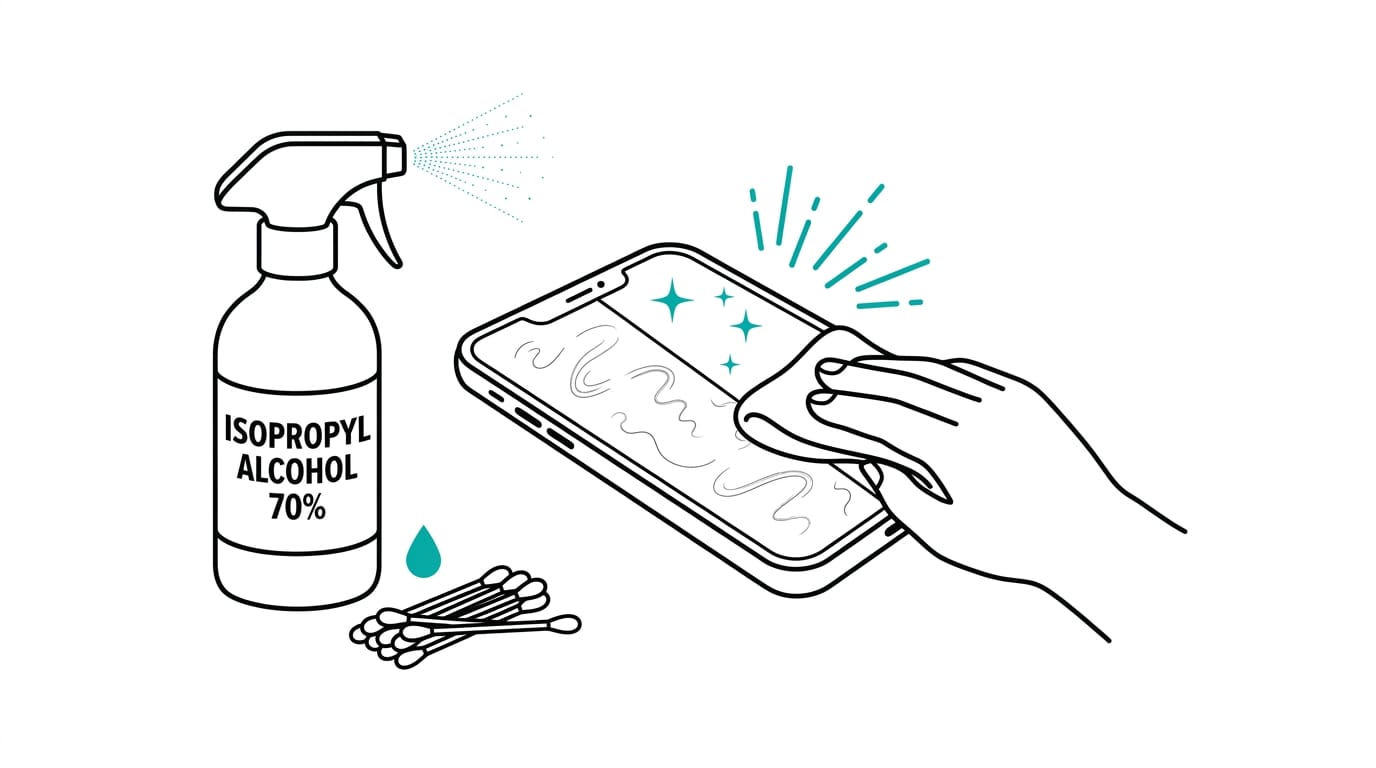
Isopropyl alcohol is a fast-drying cleaner and disinfectant that can help remove germs, ink, grease, fingerprints, and sticky residue from suitable surfaces. For most household cleaning, use 70% alcohol, apply it with a cloth, and spot-test first, especially on fabric; keep it away from wood, leather, delicate finishes, flames, and bleach. Used with ventilation and care, it can tackle quick messes, but it is not a sterilizer or a remedy for health problems.
Ink on the sofa arm, a greasy thumbprint on the cupboard, a sticky label on the new coffee table. Chances are the bottle of rubbing alcohol under the sink is your first stop.
Isopropyl alcohol is a fast-drying cleaner, but it gets better results when you pick the right strength and use it on the right surface.
Here’s what we’ll cover: choosing the right strength, safe everyday uses, surfaces to avoid, lifting ink, grease, and sticky residue, and how to spot-test carpet and upholstery before you commit.
Choosing the Right Isopropyl Alcohol for Cleaning
Is isopropyl alcohol a good cleaner? Yes, for many jobs, as long as you pick the right strength.
Why 70% usually beats 99% at home
Isopropyl alcohol is sold as 70% or 99%, but for most household cleaning, 70% is the better pick. The extra water slows evaporation, so the liquid stays wet a little longer. Stronger isn’t better here: above 80-85%, the power drops.
Think of a parent wiping down the kitchen counter after a child’s sick day. The 70% bottle under the sink does the job without a trip to the shop. Wondering if rubbing alcohol expires? Check the label for a date and the strength before you use it.
What it kills and where it stops
Isopropyl alcohol kills bacteria, viruses, and fungi, which makes it a handy disinfectant around the house.
The Centers for Disease Control and Prevention (CDC) identifies 60-90% alcohol solutions as the preferred concentration range for disinfection, and 70% sits right inside it.
It’s a disinfectant, not a sterilizer, so it isn’t for sterilizing medical equipment. It also can’t kill bacterial spores, a limit the CDC states plainly.
How alcohol compares with vinegar
If you’re deciding between alcohol and vinegar, here’s how they compare:
- Speed. Alcohol works faster.
- Gentleness. Vinegar is gentler but slower.
- Germs. Vinegar is weak on germs, so don’t count on it to disinfect.
For a quick disinfecting wipe, alcohol is the tool. For a gentle everyday clean, vinegar has its place.
Cleaning Surfaces and Personal Items at Home
Counters, door knobs, and car seats see constant use, and so do the small items you grab every morning. Here’s where isopropyl alcohol fits around the house and what to watch for with each one.
Everyday surfaces like counters and knobs
Countertops are an easy win. Wipe them with a cloth dampened with alcohol rather than soaking the surface. Give each door knob about 30 seconds with the cloth, since that’s where hands tend to go.
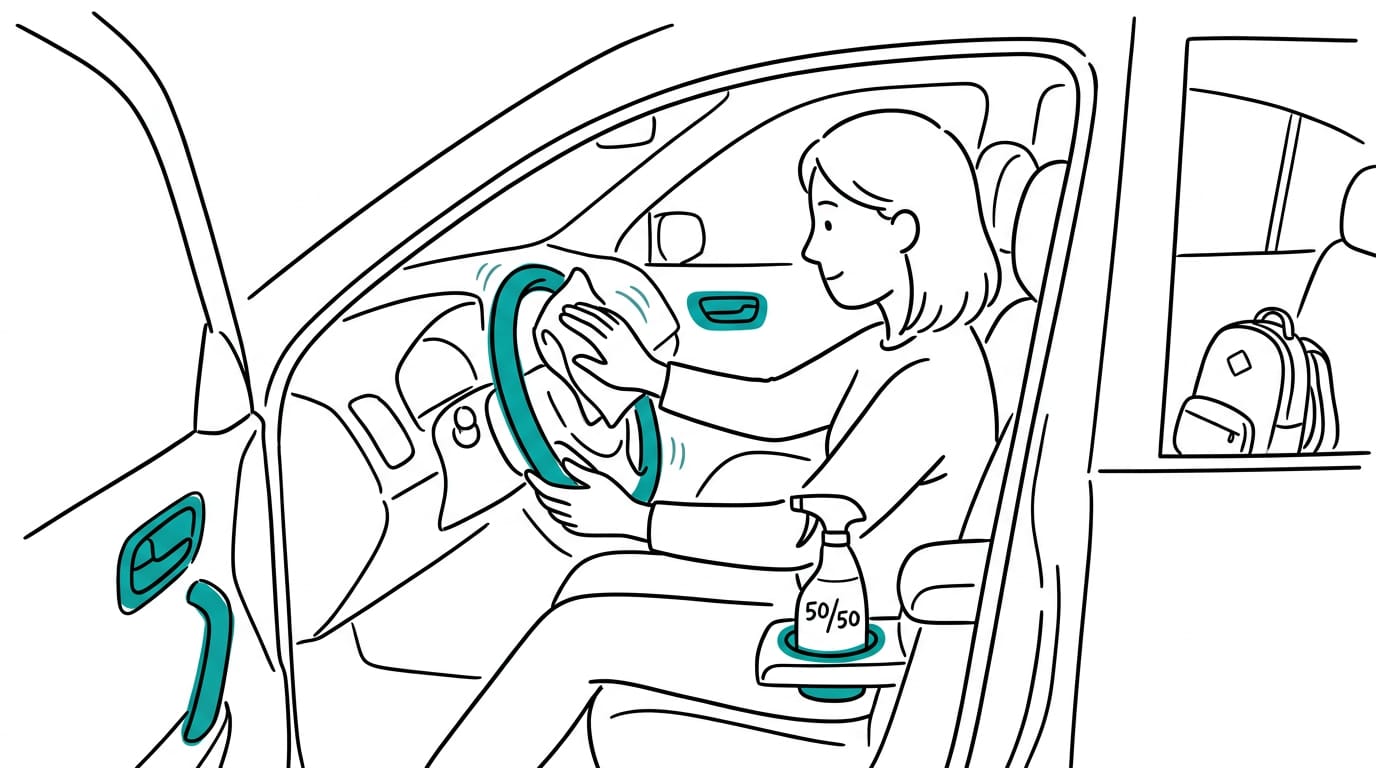
Car interiors work well too. For example, a parent might keep a spray bottle of 50/50 water solution (equal parts alcohol and water) in the glovebox and wipe down the steering wheel and cup holders after the school run.
That’s a quick fix, no car wash required.
That spray bottle needs care too. Empty it, rinse it well, then run a splash of alcohol through the nozzle. Let it air-dry completely before refilling, so nothing gets trapped inside.
Cleaning small tools and gadgets safely
Thermometers need a light touch: wipe the body and avoid the sensor. Tweezers and cuticle cutters clean up quickly with a cloth dampened with alcohol. Small tools like these may also suit a different method, so check how an ultrasonic cleaner works.
For electronics, use a microfiber cloth that’s dampened, not sprayed directly onto a screen or keyboard. Before you start, check the manufacturer’s instructions, since their guidance beats any general tip. Look it up first. Then clean.
Personal items, from brushes to jewelry
A few personal items are cleaned this way:
- Makeup brushes: soak them in alcohol.
- Jewelry: soak for 15 minutes.
- Homemade hand sanitizer: the one that raises the skin question below.
Reusable water bottles can follow the same routine as spray bottles: empty, rinse, and let them dry completely.
So can you use isopropyl alcohol on skin? Only with care, since it’s a cleaning product first. Test a small patch before you rub any homemade mix on your hands, and stop if you notice redness or stinging.
Safety Tips and Surfaces It Can Damage
Isopropyl alcohol is a handy cleaner, but you’ll want to respect its limits. Here’s what never to mix it with, which surfaces to avoid, and how to keep the air safe.
Why bleach and alcohol should never mix
Bleach and alcohol are a dangerous pair. A staff safety weekly briefing on mixing household cleaners puts it bluntly: “Bleach + rubbing alcohol = chloroform.”
The mix can produce chloroform and other toxic fumes, so keep the two bottles apart and never let them meet on the same surface or in the same bucket.
If you’ve breathed in fumes and feel unwell, get into fresh air straight away and see a doctor.
Surfaces that alcohol can easily damage
Keep it off these surfaces:
- Wood and finishes
- Leather
- Lacquer, shellac, and varnish
- Acrylic, which turns cloudy
- Delicate fabrics, pearls, and opals
There’s no one-size-fits-all substitute for rubbing alcohol, since the right choice depends on the surface. Check the product or care label, test a small hidden spot, and don’t grab bleach as a stand-in.
Keep flames away and ventilate the room
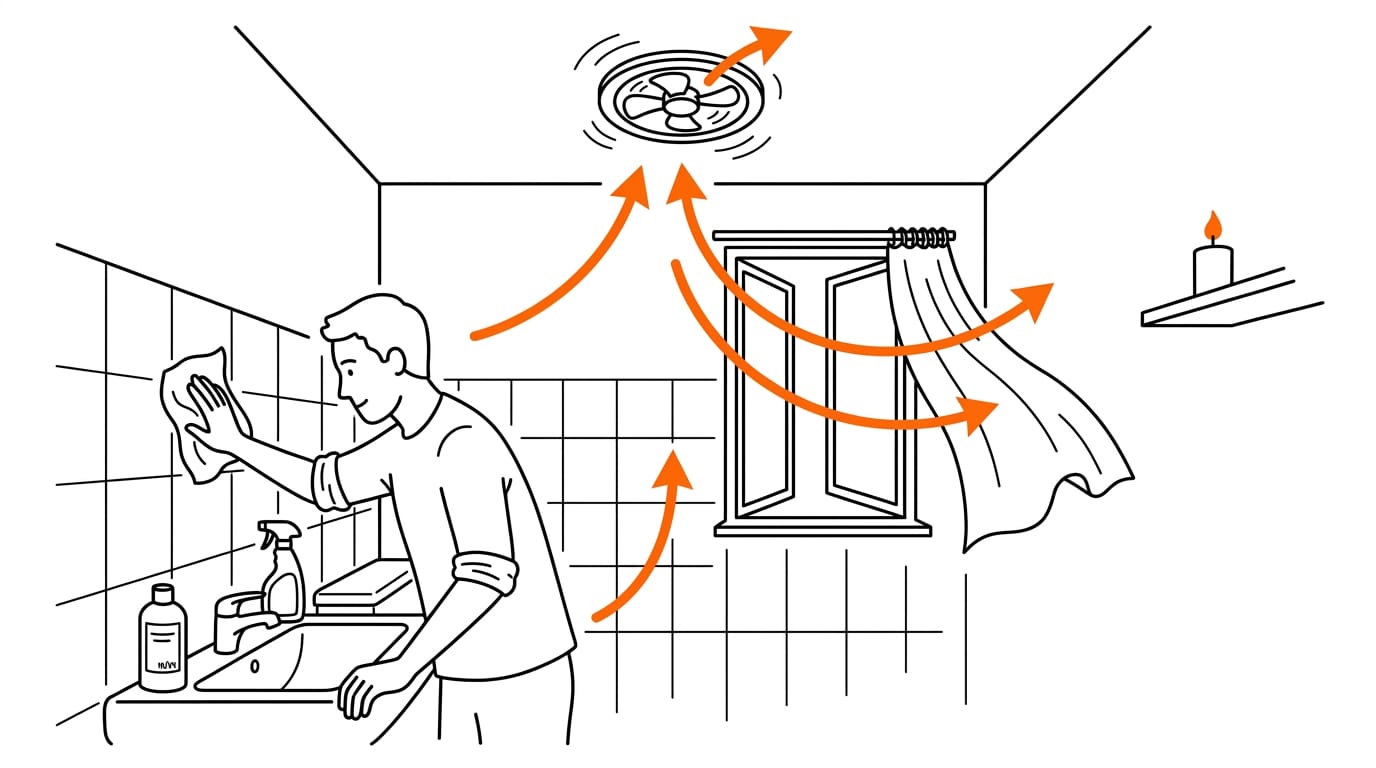
Keep isopropyl alcohol well away from open flames, such as candles, gas hobs, and lit cigarettes. Ventilation matters just as much. Think of a tenant cleaning the bathroom on a damp afternoon with the window shut and the fan off.
Open the window, switch on the fan, and let fresh air circulate. The goal is moving air, not just opening a door, so the room stays safe to work in.
Store any diluted mix in a clearly labelled bottle, with the contents and the date written on it. Keep it away from heat and bleach, and out of reach of children and pets. Clear labels mean no guessing later.
Lifting Ink, Grease, and Sticky Residue
Ink, grease, and sticky residue are among the marks people most often reach for isopropyl alcohol to tackle, and each needs a slightly different touch. Whatever the mark, run a patch test on a hidden spot first.
Tackling ink and marker stains
Consider a parent who spots a permanent marker line on the sofa arm just before guests arrive. Dab a cotton pad with isopropyl alcohol, then work from the outside in, not the middle out. That stops the ink spreading.
Act quickly on ink, while it’s still fresh. Change your pad as soon as it soaks up colour, or you’ll just move the mark around. One dab, a fresh pad, and the sofa is sorted before anyone sits down.
Clearing grease, hairspray, and sticker gunk
For greasy marks, blend a little isopropyl alcohol with your grease-cutting solvent mix, then dab it on with a cloth. Wipe away hairspray residue with a cloth lightly soaked in isopropyl alcohol.
For sticker residue, soak the sticky patch with isopropyl alcohol, let it sit briefly to loosen, then wipe it off. Dry-erase marks on a board can be wiped away with a cloth lightly dampened in isopropyl alcohol.
Spot cleaning sofas, carpets, and car messes
Dry-clean-only upholstery needs the lightest touch. If you use a spray, apply it to a cloth rather than the fabric, and run your patch test first. Gentle wins.
For bug splatter and tree sap on the car, dab with a cloth dampened with isopropyl alcohol, starting at the edge of the mark.
For carpets and sofas, follow these steps:
- Run a patch test on a hidden spot.
- Use a cloth dampened with isopropyl alcohol to blot the mark rather than rub it.
- Work from the outside in.
Getting Glass, Metal, and Fixtures Shining
Fingerprints on the mirror and rings on the tap can make a spotless room look tired. A few simple mixtures and some quick wiping will sort them out, and you’ll use what you already have.
Homemade mirror cleaners that dry streak-free
You can mix a glass cleaner from what’s already under the sink. Two options cover most jobs:
- Alcohol, water, and vinegar: Add a splash of isopropyl alcohol and a little vinegar to water in a spray bottle, then shake gently.
- Ammonia and detergent: Mix a small amount of ammonia and a drop of dish detergent into water.
Isopropyl alcohol evaporates quickly, so it dries before it can leave streaks. Picture a parent wiping the bathroom mirror before guests arrive: one light spray and one pass with a dry cloth, and the mirror is clear before anyone rings the doorbell.
It’s the drying that matters, not the scrubbing.
Clearing water spots from faucets and steel
Water spots are the chalky rings left behind when water dries on metal. Dab a little of the alcohol mixture onto a cloth and rub until the ring lifts. Stubborn rings may need a different approach, and citric acid for cleaning is worth a look.
Chrome fixtures respond to the same treatment, so buff them dry with a clean cloth to keep them shining rather than hazy.
On steel, wipe along the metal grain, the faint lines you can see in the surface. Keeping your strokes in that direction keeps the finish looking even. Same direction, every time.
Blinds, microwaves, and sponges
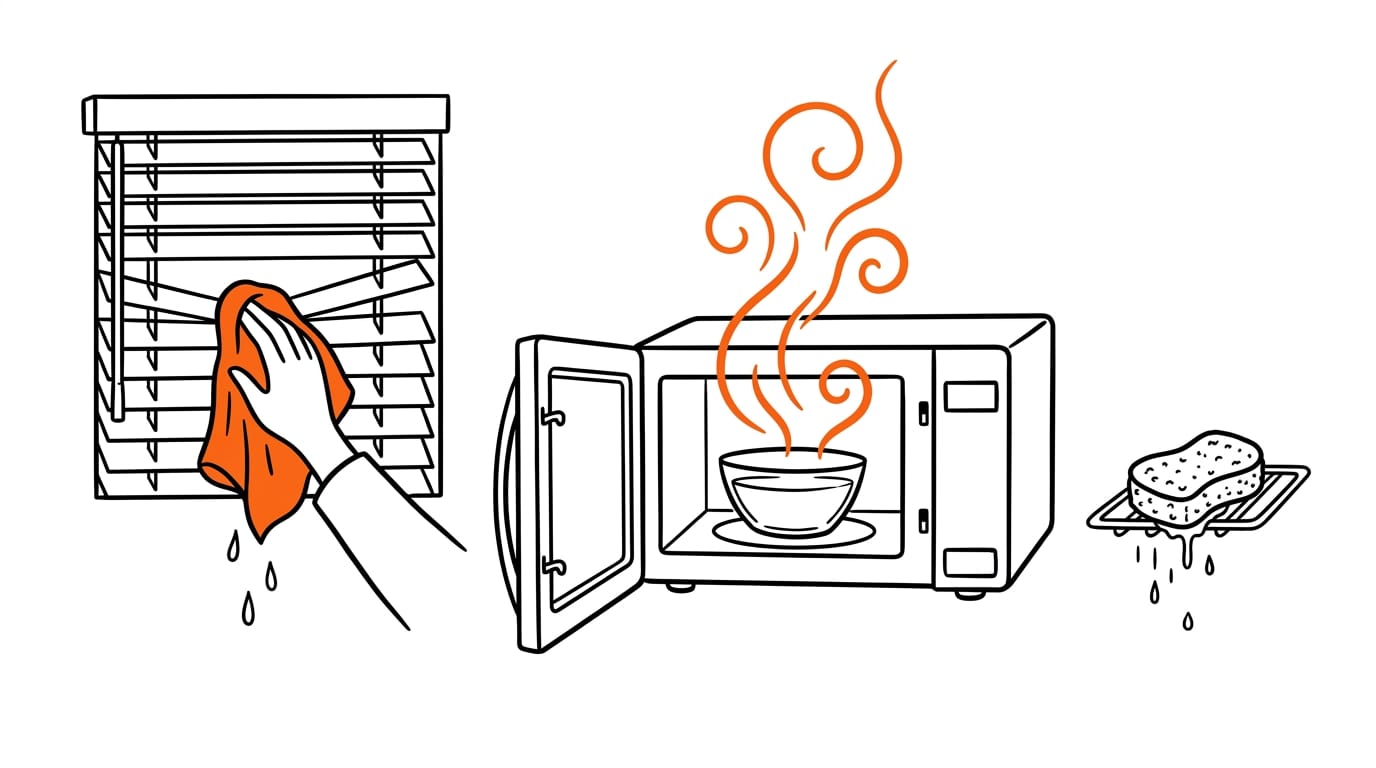
- Blinds: Run a cloth dampened with the solution along each slat.
- Microwave steam cleaning: Heat a bowl of water with a splash of vinegar until it steams, then wipe the inside with a cloth.
- Sponge sanitizing: Soak a sponge in the alcohol mixture and let it air dry so it’s ready for the next job.
Other Handy Uses Beyond Cleaning
Isopropyl alcohol does plenty beyond wiping surfaces. Some uses are handy, and we’ll flag the health myths to avoid.
Dealing with fruit flies and plant pests
Think of a host with fruit flies circling the fruit bowl before guests arrive. A quick spray kills them on contact, so you can clear the swarm right away.
For houseplants, dab alcohol onto a cotton swab and wipe pests off the leaves. Swabbing targets the problem spots instead of soaking the whole plant.
Freshening smelly shoes and room air
A commuter whose trainers smell after a wet week can mist the inside of each shoe, then let them air out before wearing.
For the rest of the house, mix alcohol with a few drops of essential oil in a spray bottle for a simple room spray.
Making a simple cold pack at home
Here’s the science in plain terms. Alcohol lowers the freezing point of water, so the mix stays pliable instead of freezing solid.
Consider a parent with a bumped knee at bedtime. Pour alcohol and water into a zip-top bag, measuring both, since the ratio shapes how the pack freezes. Seal the bag tightly and freeze it flat.
The result is a cold pack that shapes around the knee instead of a hard lump. A leak in the freezer is a mess nobody wants.
Health myths and risks to know
Isopropyl alcohol is a cleaner, not a home medicine.
You may hear that wiping skin with rubbing alcohol brings a fever down. It won’t.
According to Poison Control, people have laid alcohol-soaked towels or blankets on the skin to reduce fever, but that doesn’t work and can easily lead to rubbing alcohol poisoning.
Post-surgery nausea is another area where inhaled alcohol gets mentioned.
A study in the Journal of Chitwan Medical College notes that inhaled isopropyl alcohol offers a rapid, low-cost alternative to ondansetron, a common anti-nausea drug given through a vein.
That was a clinical study with surgical patients, so please don’t try it at home.
Some tips also suggest drying your ears with vinegar. Check with a pharmacist or doctor before putting anything in your ear.
Keep the bottle for cleaning, and leave your body out of it.
Used with care, isopropyl alcohol is one of the most useful things in your cleaning kit. Pick the right strength, check the surface, and spot-test carpet or upholstery first.
Keep it away from materials it can damage, and a fresh mark won’t feel like a crisis.
Keep this guide handy for the next spill, scribble, or sticky label. With the right approach, you’ll protect your fabrics and finishes and sort the mess before it sets. Test first, clean with care, and that stubborn mark won’t stand a chance.
References
- Chemical Disinfectants | Infection Control — cdc.gov
- Inhaled isopropyl alcohol vs. intravenous ondansetron for postoperative nausea following laparoscopic cholecystectomy under general anaesthesia: A comparative study — jcmc.com.np (2025)
- Chemical Disinfectants | Infection Control — cdc.gov
- Reminder of the dangers of mixing household cleaners — afrh.gov
- No, you can’t drink rubbing alcohol — poison.org (2025)
Questions
What are the differences between 70% and 99% isopropyl alcohol?
70% isopropyl alcohol contains more water, so it evaporates more slowly and is generally more effective for household disinfection. 99% evaporates quickly and is not necessarily a stronger cleaner; for most home cleaning, 70% is the better choice.
How to thoroughly clean a spray bottle?
Empty the bottle, rinse it thoroughly with clean water, then run a small amount of alcohol through the nozzle. Let the bottle and nozzle air-dry completely before refilling.
Is isopropyl alcohol a good cleaner?
Yes. Isopropyl alcohol can clean and disinfect many suitable surfaces, and it dries quickly, but it can damage materials such as wood finishes, leather, lacquer, acrylic, and delicate fabrics. Use a damp cloth rather than soaking a surface, and spot-test first.
Does rubbing alcohol expire?
Isopropyl alcohol can remain usable for a long time if its container stays tightly sealed, but it can evaporate and lose strength if exposed to air. Check the label for an expiration date and inspect the bottle before use.
Can you use isopropyl alcohol on skin?
Isopropyl alcohol is primarily a cleaning product, not a skin-care product. Avoid routine use on skin, and if you use it, test a small area first and stop if you notice redness or stinging; never use it to treat a fever.
What kills bacteria in a water bottle?
Wash the bottle with hot, soapy water, scrubbing the inside, cap, and any removable parts, then rinse well and let it dry completely. For extra disinfection, use a food-safe sanitizing method recommended for the bottle’s material, such as a dishwasher cycle if the bottle is dishwasher-safe.
Where can I buy a mini spray bottle?
Mini spray bottles are commonly available at pharmacies, beauty-supply shops, travel sections of supermarkets, and online retailers. Choose a bottle made from material compatible with the liquid you plan to use.
Can I buy spray bottles at Dollar Tree?
Yes. Dollar Tree stores often carry spray bottles in their cleaning or household sections, though product selection and availability can vary by location. Check the store or its website for current stock.
Sources
- Chemical Disinfectants | Infection Control | CDC, cdc.gov
- Chemical Disinfectants | Infection Control | CDC, cdc.gov
- No, you can’t drink rubbing alcohol | Poison Control, poison.org,
- Inhaled isopropyl alcohol vs. intravenous ondansetron for postoperative nausea following laparoscopic cholecystectomy under general anaesthesia: A comparative, jcmc.com.np,
- Reminder of the dangers of mixing household cleaners, afrh.gov
More in Floors & Carpets
- Citric Acid for Cleaning: A Complete GuideCitric acid for cleaning loosens kettle limescale and cloudy shower deposits. Find the right mix, surfaces to avoid, and how it compares with vinegar.
- Rubbing Alcohol for Pen Stains: The Complete GuideRubbing alcohol for pen stains can lift ink from clothes, hands, notebooks, and wood. Get steps for carpets, sofas, and hard floors, too, with care.
- Cleaning Smoke Detectors: A Complete Step-by-Step GuideCleaning smoke detectors takes minutes with cupboard-only steps for dust, pet hair, and grease, plus checks for damage, batteries, and replacement.
Stain Finder: a free stain removal guide
Find your stain