How to Get Mustard Out of Clothes Fast, Step by Step
How to get mustard out of clothes: blot before rinsing, then use cupboard staples in the right order to lift yellow stains without special products.

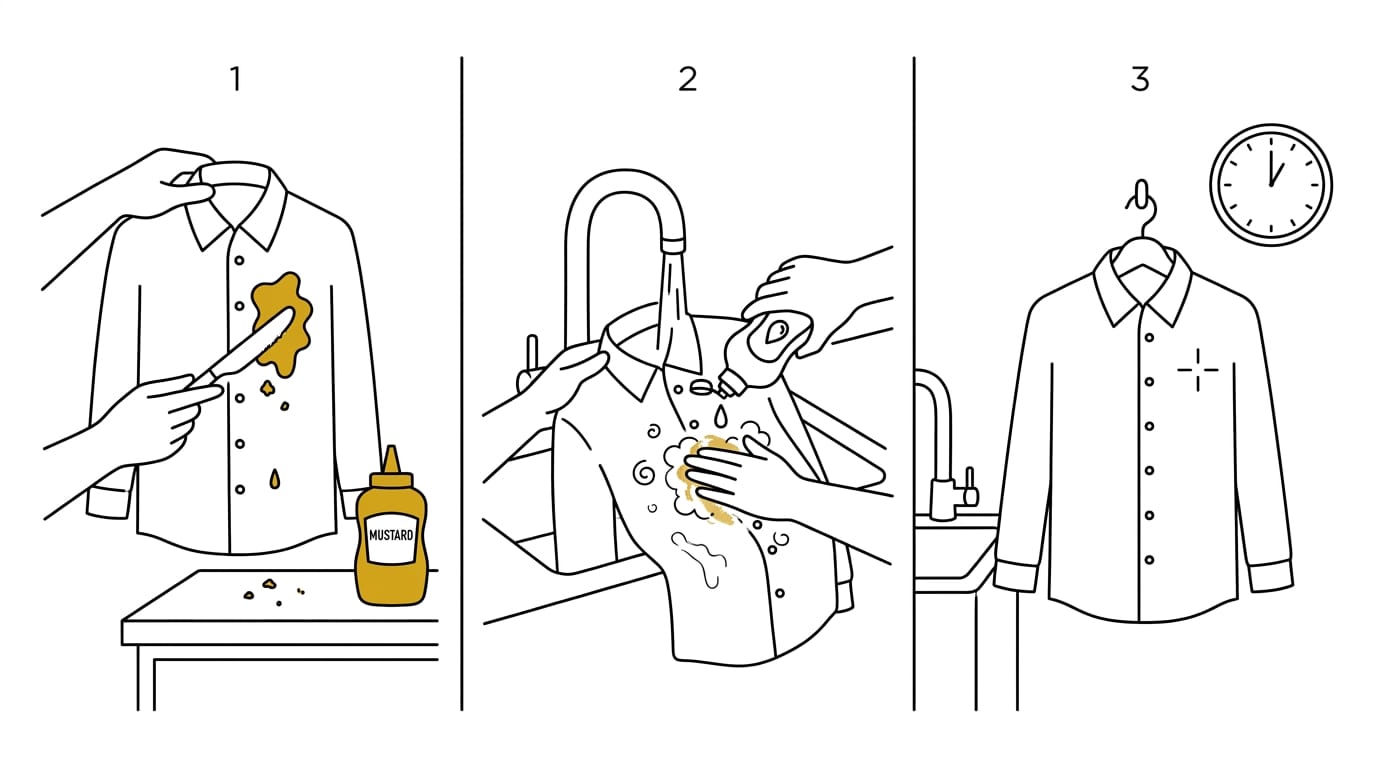
Mustard stains clothes because turmeric’s yellow colouring can bind to fabric fibres, especially when the stain sits or gets damp. Scrape off excess, blot rather than rub, rinse from the back with cold water, then use a fabric-safe household treatment or stain remover and follow the care label. Check the mark before drying and air-dry until it is gone, because dryer heat can set any stain that remains.
Picture a summer barbecue: a hot dog, a generous squeeze of mustard, and then a bright yellow streak down the front of your favourite shirt. Mustard looks like it’ll never come out, but you don’t need a special product to tackle it.
In this post, we’ll look at why mustard clings to fabric, the right order of treatment for different materials, and what to do when the yellow stays put.
The short answer is to act quickly, blot before you rinse, and reach for what’s already in your cupboard first.
Why Mustard Won’t Come Out of Clothes
That bright yellow smear can look like it’s there for good, and it’s easy to see why. Mustard is a simple mix, but one of its ingredients is built to cling to fabric, so knowing what’s in it helps you act faster.
What mustard is made of
Mustard is made from a short list of ingredients:
- Water
- Vinegar
- Mustard seeds
- Salt
The ingredient that matters for stains is turmeric, which gives mustard its bright colour. Its yellow comes from curcumin, the dyeing compound that does the staining once it reaches a shirt or a cushion.
Picture a parent who spreads mustard on a ham sandwich at a picnic, then spots a yellow streak down the front of a school polo shirt at pickup. Turmeric is the part they’re really up against.
Knowing that, they can treat the streak straight away instead of hoping the wash will sort it.
Does mustard stain permanently?
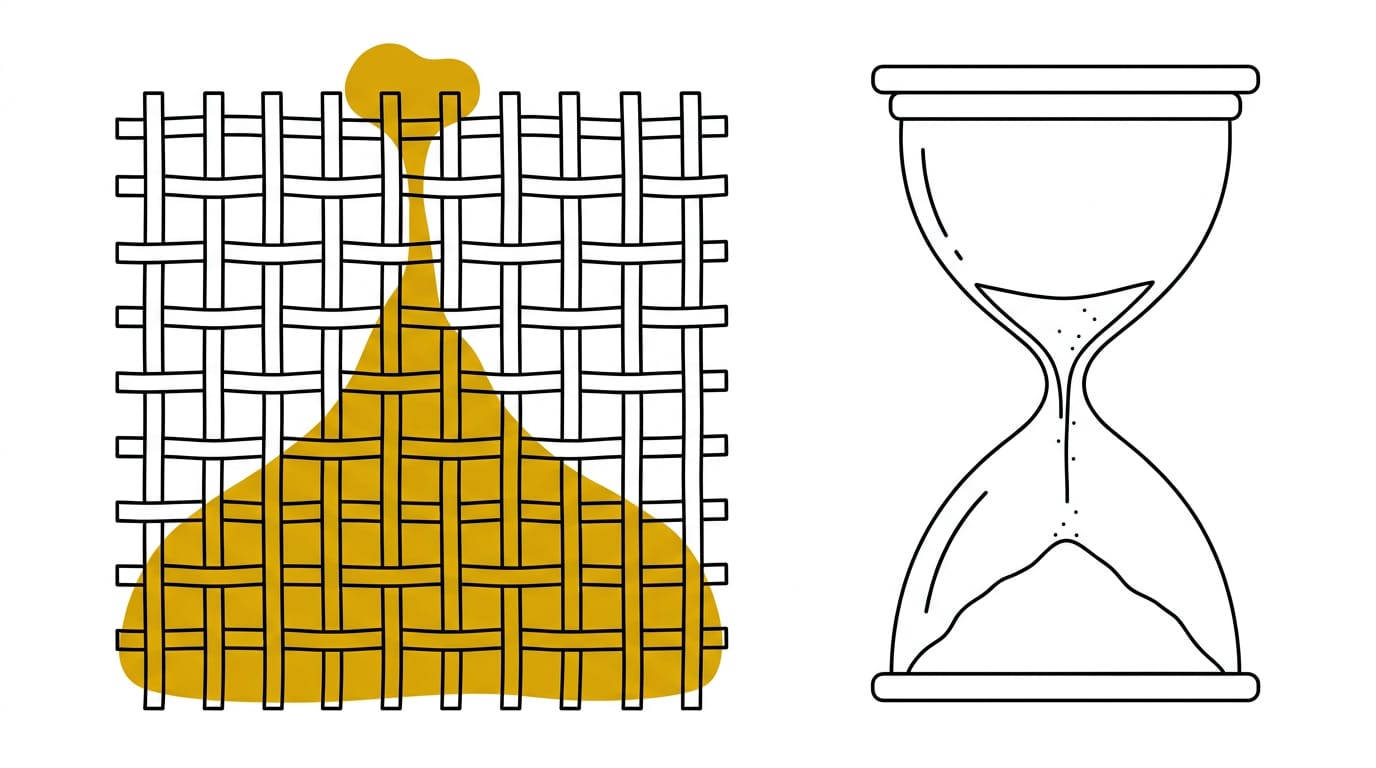
Mustard doesn’t have to be permanent, but it can set in if you give it time. Curcumin binds to the fibres of the fabric, so it works its way in rather than sitting on the surface like a crumb.
The chromophore, the part of a molecule responsible for colour, is what your eye reads as that vivid yellow.
Wet fabric increases penetration, which is why a damp streak can soak deeper into the weave the longer it sits. It’s less about whether mustard stains and more about how long it has to settle in. So does mustard permanently stain?
Not necessarily, but time is the real enemy.
Steps to Take Before Washing
Mustard’s easiest to lift before it sets. These steps, taken in order, get the stain ready for treatment.
Check the fabric and care label
Start with the care label, which shows how hot the wash can go and whether the fabric can take a stronger treatment. Delicates like silk, wool, and lace need a lighter touch and products made for them.
Next, run a patch test on a hidden spot, like an inside seam. Dab on a little product, wait a few minutes, then check for fading.
A parent with a mustard-smeared school jumper, for instance, can test the inside hem in seconds and avoid a faded patch on the front.
Scrape off the excess mustard
Use a blunt knife, such as a butter knife or the back of a spoon, to scrape off the thick mustard. Aim to lift it away, not spread it. Don’t rub or wipe, since that drags the stain across more fibres.
Act quickly: the less time mustard has to sink in, the easier it comes away. Speed matters.
Pick the right pre-treatment product
Your method changes with fabric and colour, so match the product to the fabric:
- Delicates: use fabric-specific products made for silk, wool, and other gentle fibres.
- Sturdy fabrics: oxygen-based cleaners suit cotton, denim, and other tougher materials.
- Follow instructions: read the bottle, since strength and timing vary between brands.
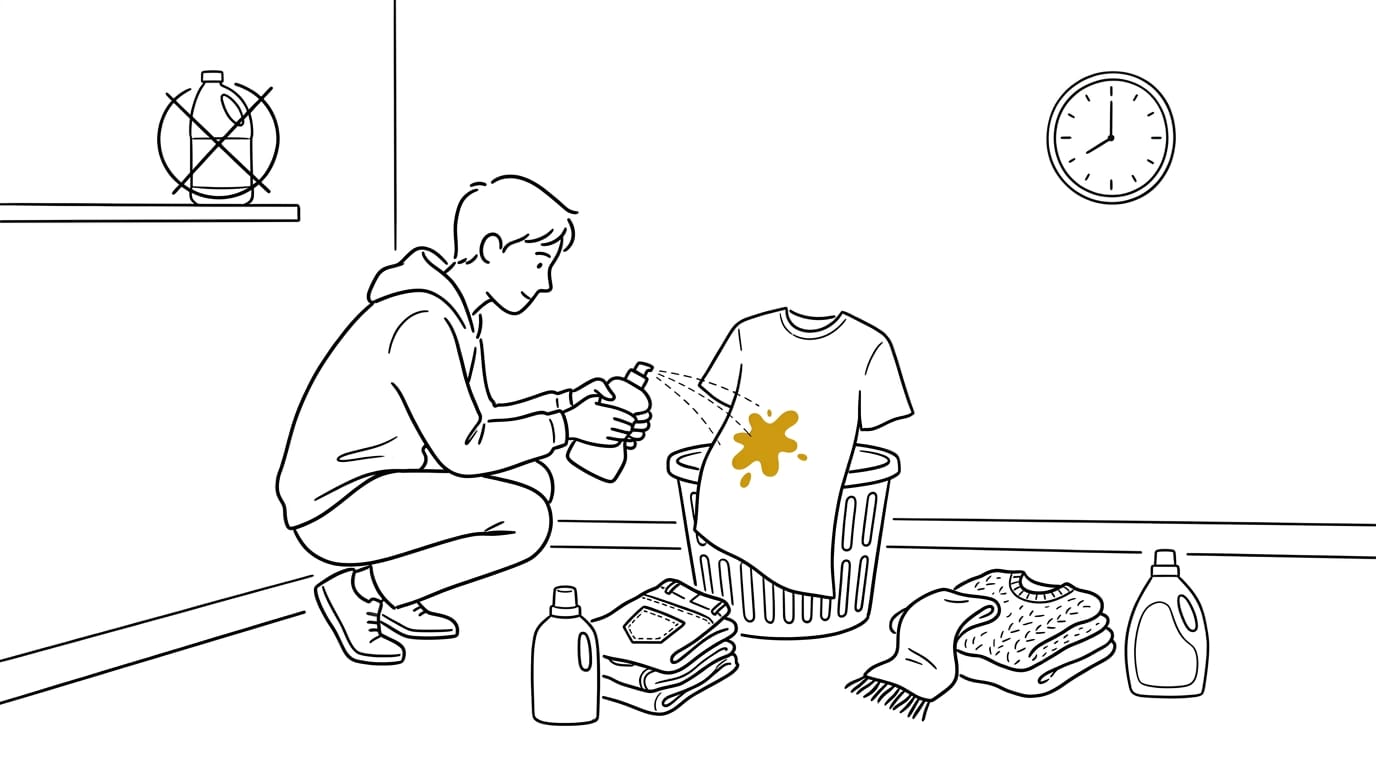
- Avoid bleach: it can damage fabric and colours, so leave it on the shelf for this stain.
A student who keeps an oxygen-based cleaner by the laundry basket can treat a mustard-splashed cotton tee the same evening, instead of wearing it to class with a yellow streak.
Ways to Lift the Stain
Most mustard marks lift with things already under your sink, so you’ll start there. Save store-bought remover for the stubborn ones.
Using products already in your home
Consider a parent who finds mustard on a school jumper at teatime. A few basics can save it from the bin:
- Cold rinse from the back. Push the mustard out with cold water, not further in.
- White vinegar sponging. Dab on white vinegar with a clean cloth, then blot.
- Dish soap and hot water. Work in a drop of washing-up liquid with hot water, if the fabric allows.
- Soft-bristled brush. Scrub gently, working from the edge toward the centre.
- Baking soda paste for tough stains. Mix with a splash of water, spread it on, let it work, then brush it off.
Carpets need a lighter touch. To get mustard out of carpet, scrape off any thick blob, then blot, don’t rub, with cold water and a drop of washing-up liquid. Finish with a damp cloth, and avoid soaking it, since carpet is slow to dry.
An old, set-in stain needs the baking soda paste left on longer before you brush, rather than scrubbing harder. Give it time.
Using a commercial stain remover
When home methods leave a mark, reach for a commercial remover. Apply enough to cover the stain completely, let it sit for the time on the packaging, then wash per the care tag. Repeat if needed, and do it before the item goes in the dryer.
Deciding between home and store-bought options
- Household options are cost-effective, and you probably have them already.
- Commercial removers work better on persistent stains.
Start at home, and move to store-bought only when the mark won’t shift.
Natural remedies you can try
Soak the stain in lemon juice for 15 minutes, then rinse. Lemon and sun work on whites only, so keep that combo away from coloured fabric. Sunlight air drying works too: hang the item in sunlight rather than using the dryer.
If a faint yellow ghost appears after washing, treat it again before drying.
Caring for Clothes After Cleaning
Once the mustard’s lifted, how you wash, check, and dry the garment decides whether the fix sticks.
Washing tips for stained clothes
Start with the care label, then work through these:
- Follow the tag: Use the garment tag settings for temperature and cycle, so your treatment isn’t undone by the wrong wash.
- Go bleach-free: Choose a bleach-free detergent for everyday washing.
- Try an enzyme detergent for sturdy fabrics: Enzymes help break down food residue, which suits work trousers, towels, and other tough cloth.
Check for stains before drying
Work through these steps before anything goes near the dryer:
- Inspect the garment for any remaining stain.
- Repeat the treatment if you can still see it.
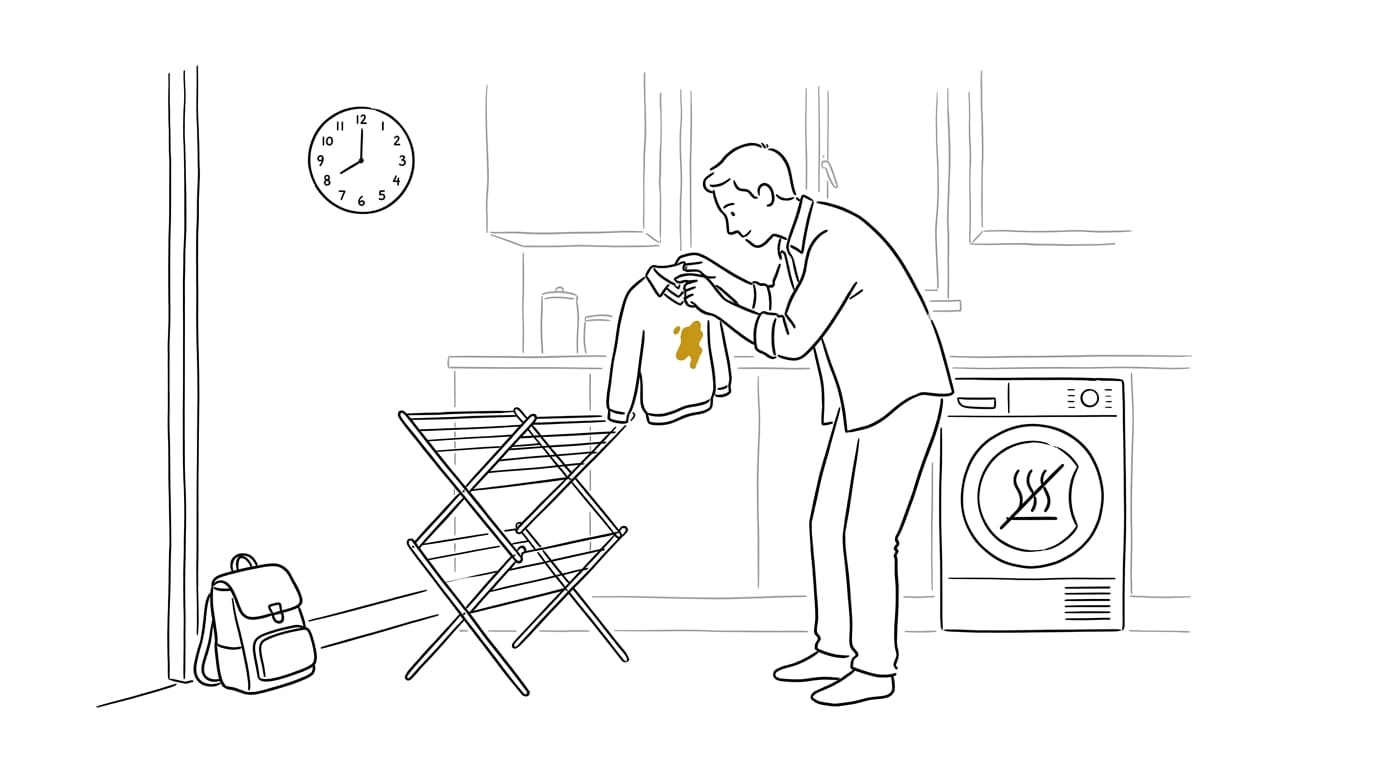
- Air-dry until the stain’s gone.
The dryer is where a nearly beaten stain can become permanent, because dryer heat sets stain into the fibres, so check before it goes in, not after. Heat is the enemy here.
Think of a parent who’s just pulled a mustard-smeared school jumper from the wash. If the yellow’s still there, they repeat the treatment and air-dry it, and the jumper goes back to school with no replacement needed.
Avoiding Mustard Stains in the First Place
Stopping a mustard stain is far easier than fixing one. Three simple habits do most of the work:
- Blot immediately with a white cloth. Press up the mustard the moment it lands, using a clean white cloth so no colour can transfer onto your clothes. Blot, don’t rub: rubbing pushes the yellow deeper into the fibres, where it’s much harder to lift.
- Use a napkin or bib. For example, a parent at a birthday tea tucks a bib under a toddler’s chin before the sausage rolls arrive. When the first splash lands, it hits the bib instead of the party dress, so the outfit comes home clean.
- Keep stain supplies on hand. Store a few clean white cloths and your usual washing-up liquid somewhere easy to reach, like the laundry cupboard. Picture a parent whose school jumper comes home with mustard down the front. With supplies already to hand, treatment starts in seconds instead of after a frantic hunt for a cloth.
Act fast, and the stain has less time to win. A few seconds of effort now saves a lot of scrubbing later.
Mustard is a stubborn stain, but it’s rarely a lost cause. Blot first, treat it before it goes in the wash, and check that the mark is gone before it goes near the dryer.
Match your method to the fabric in front of you, and you’ll save yourself a lot of worry.
Act fast, treat it right, and that bright yellow streak becomes just a story you tell at the next barbecue.
Questions
How to get mustard out of carpet?
Scrape off any thick mustard without spreading it. Blot the spot with cold water and a drop of washing-up liquid, then dab with a damp cloth to remove residue. Avoid rubbing or soaking the carpet, and blot up excess moisture so it can dry.
Does mustard permanently stain?
Mustard stains are not necessarily permanent, but they can set into fibres if left untreated. Treat the stain promptly, and avoid putting the item in a dryer until the yellow mark is gone, since heat can set it permanently.
More in Laundry
- What Does Fabric Softener Do to Your Clothes?What does fabric softener do? It smooths fabrics for softer towels, but knowing when to skip it helps avoid downsides and choose other ways to soften clothes.
- How to Wash Stuffed Animals at Home, Step by StepHow to wash stuffed animals safely: check labels, treat stains, choose hand or machine washing, then dry and fluff toys without losing their shape.
- How to Get Hot Glue Off Clothes Without Damaging the FabricHow to get hot glue off clothes without tugging fibers? Freeze the blob, then use heat or rubbing alcohol to lift residue safely from most fabrics.
Stain Finder: a free stain removal guide
Find your stain