How to Get Hot Glue Off Clothes Without Damaging the Fabric
How to get hot glue off clothes without tugging fibers? Freeze the blob, then use heat or rubbing alcohol to lift residue safely from most fabrics.

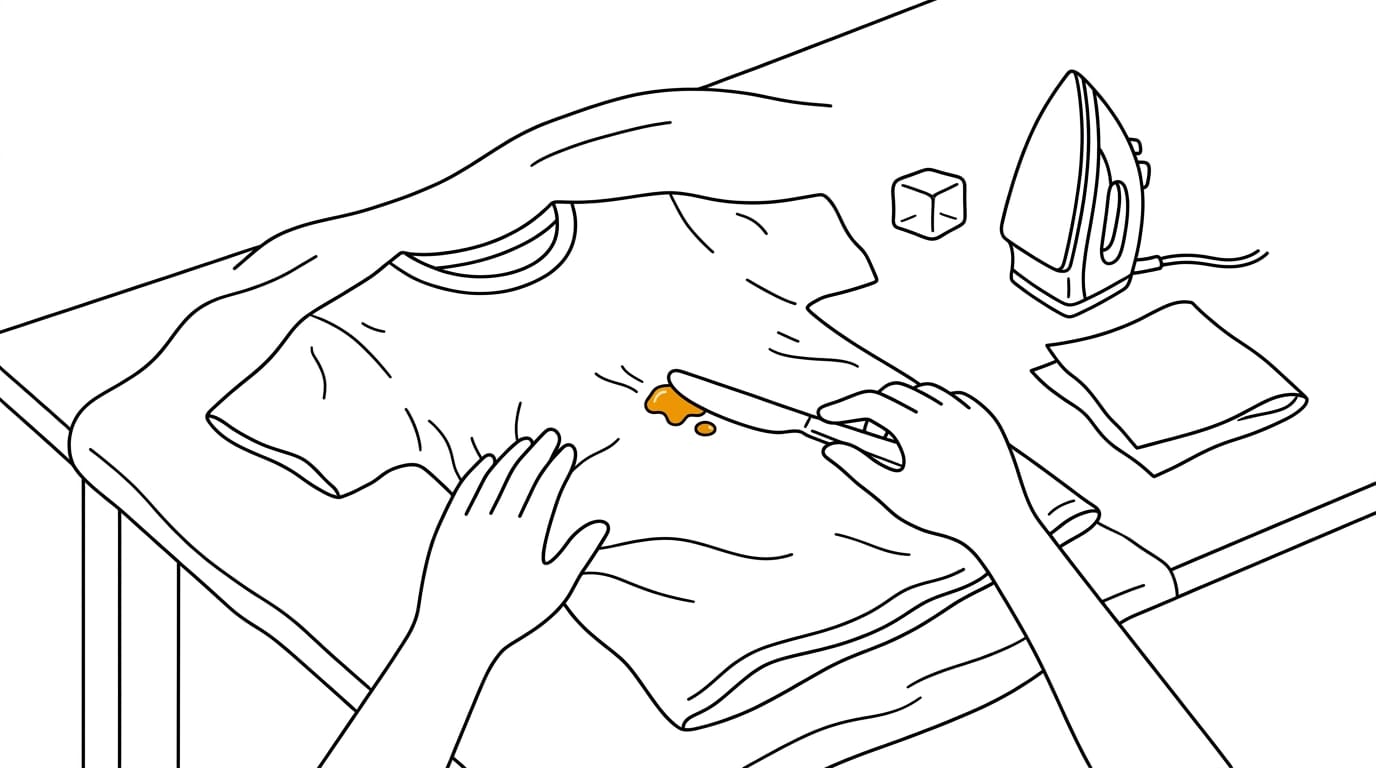
Hot glue on clothes is hardened adhesive that can often be removed without damaging the fabric if you treat it carefully. Freeze the glue first and lift it with a dull edge, then soften remaining residue with rubbing alcohol or, if needed and fabric-safe, a little acetone; heat and detergent can help with what remains. Check the care label and test treatments on a hidden spot, and keep the garment out of the dryer until the glue is gone.
Picture the scene: the craft session is over, but a blob of hot glue has landed on your favourite jumper and is already setting into a stiff, stubborn bead. It’s tempting to pick at it, but that usually drags the fibres along with it.
The good news is that most hot glue can be removed if you work in the right order: freeze it so it turns brittle and lifts away, soften what’s left with heat or a little rubbing alcohol, and keep a solvent in reserve for stubborn residue.
In this post, we’ll cover each method, how to match it to your fabric, and what to do when glue survives a wash.
How to Get Hot Glue off Clothes
Hot glue sets fast, so the method depends on your fabric and how stuck it is. Start with the gentlest option.
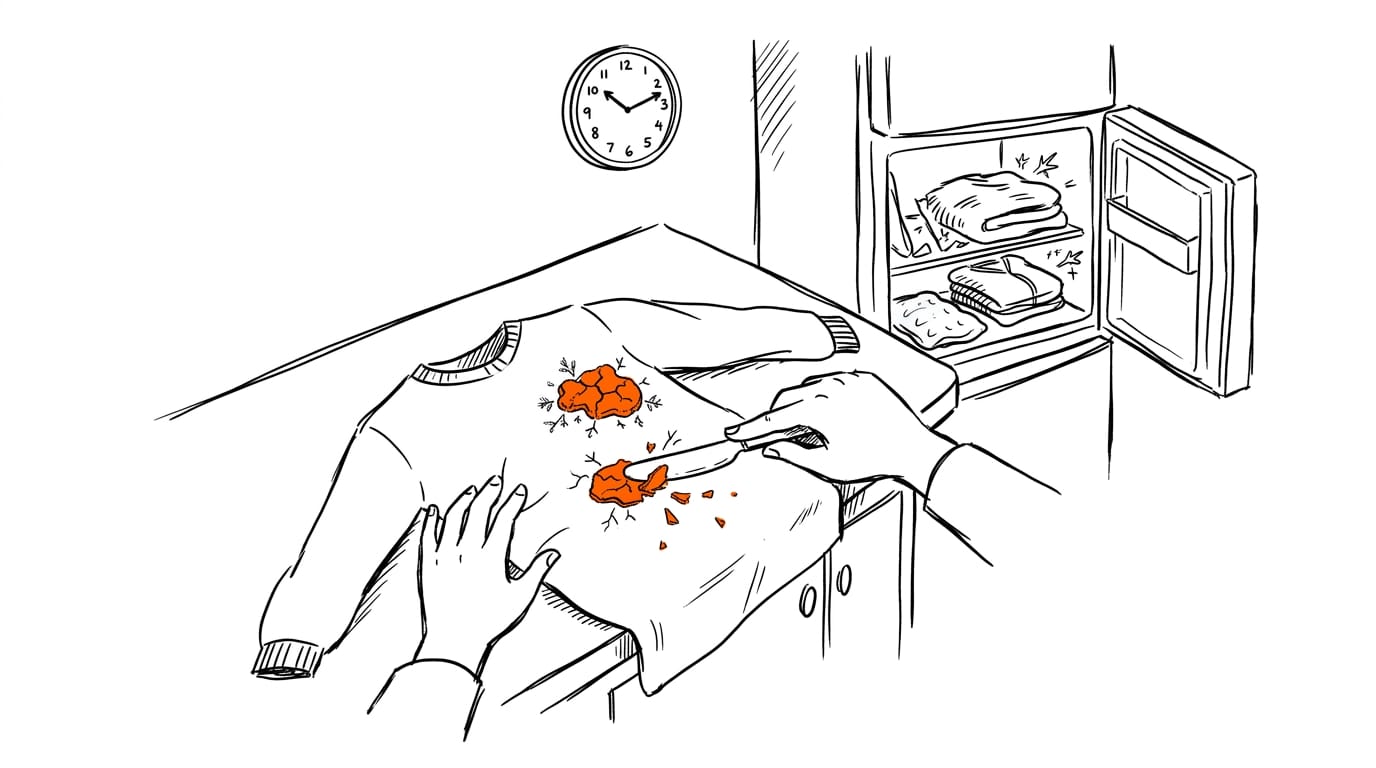
Freeze the glue, then scrape it off
Cold makes hot glue brittle, so work in this order:
- Remove dried glue first. Break off any loose, hardened bits by hand.
- Freeze with an ice pack, not something wet. Alternatively, leave the whole garment in the freezer overnight.
- Scrape with a dull edge. Use a blunt tool so you don’t cut the fabric.
- Try your fingernail. Once the glue is frozen, it can often pick off what’s left.
For example, a parent with glue on a school jumper can freeze it overnight, then lift it off before the school run. The freezer does the hard work.
Try isopropyl alcohol first for gentler removal
Isopropyl alcohol, sold as rubbing alcohol, is the answer to reach for next, and it’s probably already under your sink. It’s gentler on fabric than harsh chemicals, so it’s the right move before anything stronger.
Use it on the sticky residue left once most of the glue is off. It works on nearly any surface.
Using acetone or a dedicated glue remover
If alcohol doesn’t do the job, try acetone or nail polish remover. Dab it on with a cotton swab, then blot the softened glue away with a clean cloth. A commercial or dedicated glue remover is another option.
Keep these cautions in mind:
- Synthetic fibers: acetone can dissolve them, so check the fabric first.
- Acetate fabrics: avoid acetone on these, since acetate is a man-made material.
Can you wash hot glue out of clothes?
Sometimes you can, but washing alone often leaves some glue behind. Rub a heavy-duty detergent into the spot, let it sit, then launder as usual. Check the spot before it goes in the dryer, since high heat can lock in any glue that remains. Delicate knits such as cashmere need extra care when you launder them after treatment.
Treating leftover glue stain residue
Melting hot glue is all about heat: it softens the glue so you can lift it away. For leftover residue, try the iron and paper towel method. Lay a paper towel over the spot, press a warm iron on top, and the softened glue soaks into the towel.
Check the care label first, then move to a clean section of towel as it fills. Heat does the heavy lifting here.
Handling Other Glues and Keeping Fabric Safe
Not every sticky mess is hot glue. Super glue, epoxy, and sticker residue each need their own approach, and a little testing first keeps your fabric safe. Oil and grease stains also need their own approach.
Lifting super glue and other adhesives out
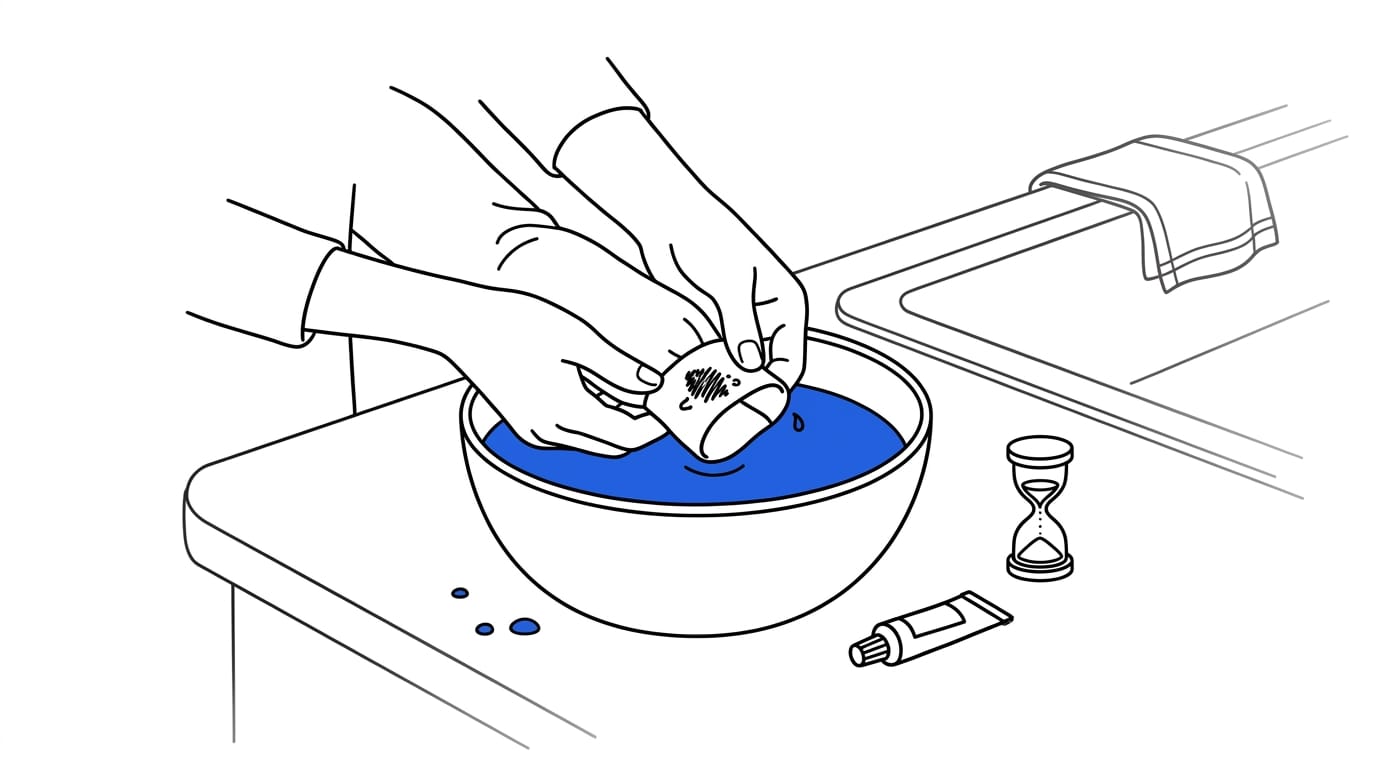
Wait until the adhesive is dry, not tacky, before you treat it. Then soak the spot in cold water. Epoxies need a longer soak, so give them more time. For sticker residue, reach for warm white vinegar instead.
For example, a parent who gets super glue on a school shirt cuff can wait for it to dry, then soak the spot in cold water instead of rubbing at it while it’s still sticky.
Test and check before you treat
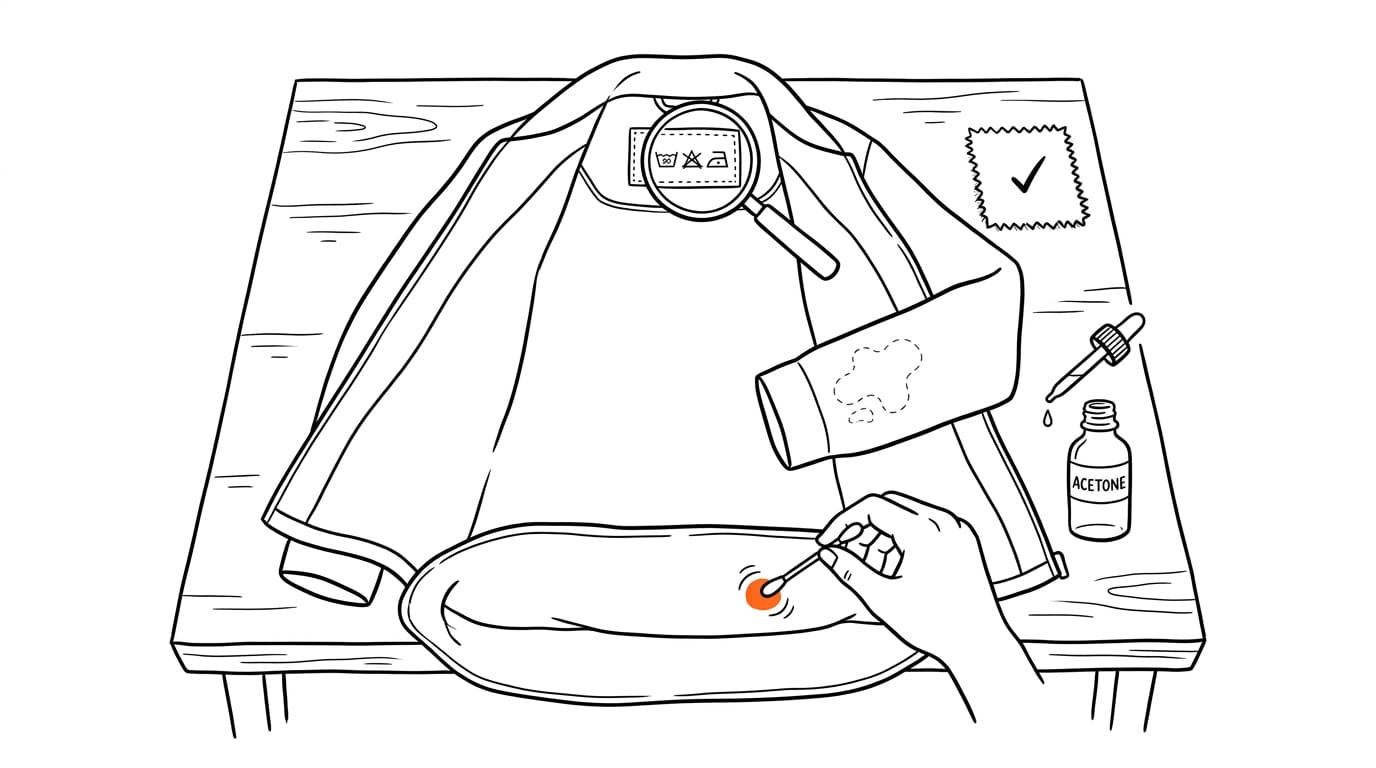
Run a spot test on a hidden area, like the inside hem, before you touch the visible stain. Apply a small amount of your treatment and see how the fabric and colour respond. Test first, treat second.
Don’t over-apply acetone. Use it sparingly, a little at a time, rather than soaking the area.
Before any treatment, run through these checks:
- Check the fabric type first, so you know what you’re working with.
- Check the care label before you reach for any heat.
For example, a tenant with glue on a jacket runs both checks, then tests the inside hem before anything else touches the stain.
Choosing glues made for fabric repairs
If you need to bond fabric back together, use a fabric-formulated adhesive made for fabric rather than whatever general glue is in the drawer.
Look for repair glues that are flexible and waterproof, since a fabric mend has to bend with the garment and hold up in the wash.
For example, a student re-attaching a loose patch on a work jacket can pick a repair glue made for fabric so the patch stays put.
When you’re shopping, look for the words fabric repair on the label and read the instructions before you commit.
Where This Method Came From
Before the steps, it helps to know where this approach started. It’s a practical technique born from hands-on work, not a product pitch.
How the author found this method
The technique was found while the author was reworking defective parts, meaning fixing faulty items so they can be used again. That kind of job forces a practical question: how do you lift glue without wrecking what’s underneath?
Most people reach for harsher chemicals first. If you’ve ever stood at the sink with a strong bottle in hand, you’ll know the temptation. The author’s approach is different, and it’s less about stronger products and more about smarter ones.
Picture a parent who has glued sequins onto a school costume the night before the show and found a stiff blob on the sleeve at breakfast. Starting with the gentle method gives the costume a fair chance and keeps the morning calm.
A video demonstration accompanies this article, so you can watch each step before trying it on your own item. Seeing the motion for yourself removes a lot of guesswork, especially with a fabric you’re nervous about. Watch it once, then get to work.
Freeze first, soften second, and reach for a solvent only when you have to. Working through what’s already in your cupboard often clears the glue in one go, saving you a trip to the dry cleaner and a jumper that ends up in the bin.
Glue that survives a wash isn’t a lost cause either: run back through the same steps, matched to your fabric, and give the garment a fair chance to come back good as new.
Patience and the right order will do more for that jumper than any single product ever could.
Questions
How to remove hot glue from a car?
Let the hot glue cool and harden, then gently lift it with a plastic scraper or your fingernail. If residue remains, warm it slightly with a hair dryer and wipe it away, or use an automotive adhesive remover that is safe for your car’s finish. Test any product on an inconspicuous spot first, and avoid metal tools or excessive heat that could damage paint or trim.
How to melt hot glue?
Hot glue softens when heated. Use a hot-glue gun to melt the stick for application, or warm hardened glue carefully with a hair dryer or iron-and-paper-towel method so it can be lifted away. Keep heat away from materials that may melt or scorch, and check care labels before using an iron.
How to remove stains from clothes caused by other clothes at home?
For color transfer, treat the garment before drying it, since dryer heat can set the stain. Soak or wash it with a color-safe oxygen bleach according to the product and care-label directions, then check the stain before drying; repeat if needed. Avoid chlorine bleach on colored fabrics, and wash the affected item separately until the color stops bleeding.
Can you wash hot glue out of clothes?
Sometimes, but washing alone often leaves hot glue behind. Rub heavy-duty detergent into the spot, let it sit, and launder as usual; check the garment before putting it in the dryer. If glue remains, freeze and gently scrape it off, or use a suitable residue-removal method for the fabric.
What will hot glue peel off of?
Hot glue often releases more easily from smooth, nonporous surfaces such as glass or metal once it has cooled and hardened. It can be harder to remove from fabric and may pull fibers, while paint, some plastics, and delicate finishes can be damaged during removal. Test a gentle method first and avoid forceful scraping.
Does vinegar remove hair dye?
Vinegar is not a reliable way to remove hair dye. It may slightly fade some fresh or semi-permanent color, but it will not reliably strip permanent dye. Use a color-removal product intended for hair, following its directions, or consult a stylist.
Does hairspray remove hair dye?
Hairspray is not a dependable hair-dye remover. Older formulas containing alcohol were sometimes used to fade color, but current products vary and may irritate or dry the hair and scalp. Use a product made for hair-color removal instead.
Will Dawn dish soap remove hair dye?
Dawn dish soap may fade some fresh or semi-permanent hair color, but it will not reliably remove permanent dye. It can strip natural oils and dry or irritate the scalp, so use it sparingly and condition afterward if you try it.
More in Laundry
- How to Wash Microfiber Cloths Without Ruining ThemHow to wash microfiber cloths without losing their grip: sort them, skip fabric softener, choose a gentle wash, and revive stiff cloths again.
- How to get colour run out of clothesWhites came out pink or grey? Keep them damp and out of the dryer, rewash cool without the culprit, then try an oxygen soak before a colour run remover.
- What Does Fabric Softener Do to Your Clothes?What does fabric softener do? It smooths fabrics for softer towels, but knowing when to skip it helps avoid downsides and choose other ways to soften clothes.
Stain Finder: a free stain removal guide
Find your stain