How to Get Musty Smell Out of Clothes
How to get musty smell out of clothes: tackle fresh or dried laundry safely, check fabric labels, and stop damp-storage odors from returning.

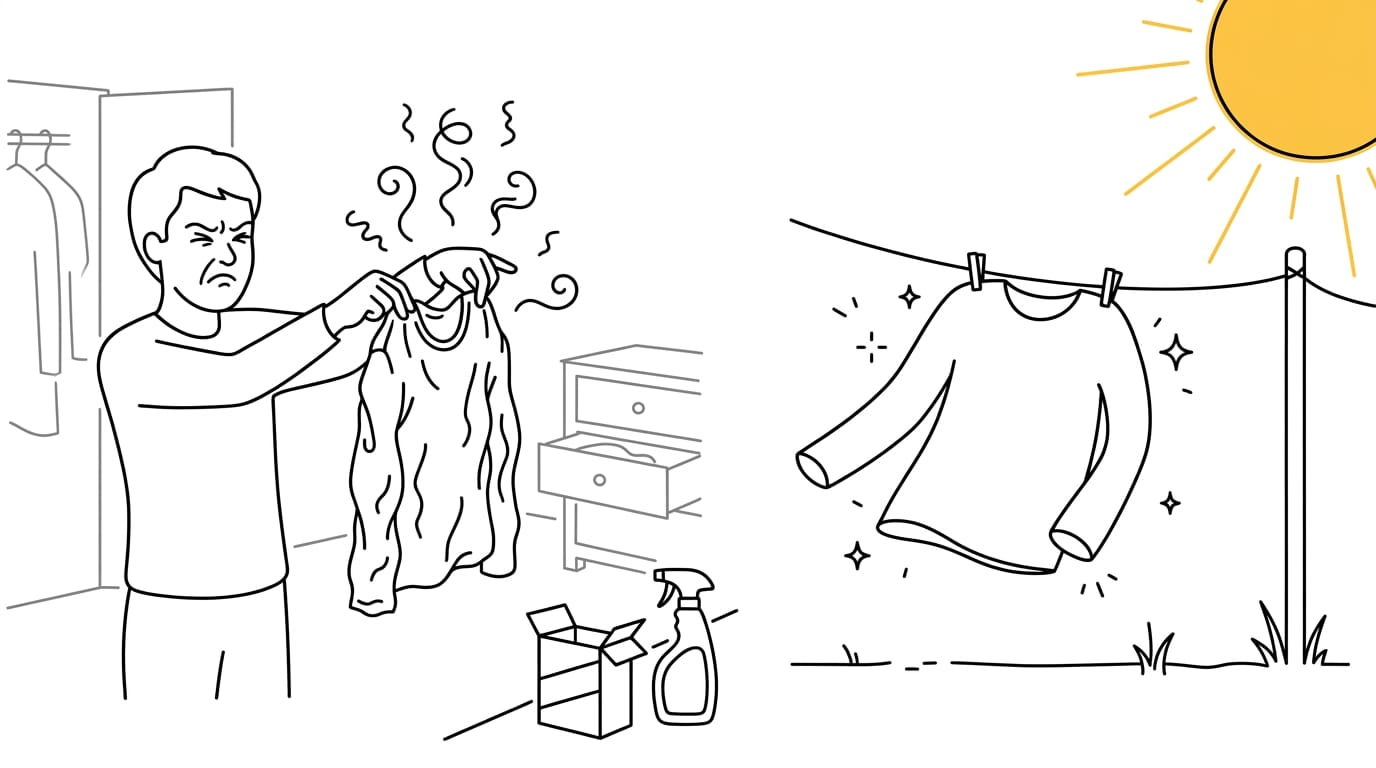
A musty smell in clothes usually develops when fabric stays damp, allowing mildew and stale odours to build up. Check the care label, treat visible mildew, then wash with white vinegar or baking soda and dry the garment completely; for odour that remains after drying, soak with an oxygen-based laundry product and rewash. Remove laundry promptly, keep the washer clean, and store fully dry clothes with room for airflow to help prevent the smell from returning.
You pull a jumper from the back of the wardrobe and there it is: that damp, stale smell. Musty clothes are a lot like a stain you spotted too late. Treating them works the same way: find the cause, then act before it takes hold.
That smell usually comes from mildew, a fungus that thrives when fabric stays damp, whether it sat in the washing machine too long or got packed away before it dried.
In this guide, we’ll cover the causes, fixes for fresh and already-dried laundry, fabrics that need extra care, and how to keep the smell from coming back.
How to Get Musty Smell Out of Clothes
Musty clothes rarely come from one single problem. Usually it’s a mix of damp, poor airflow, and a grimy washer, so let’s look at each one.
Why damp lets mould and mildew grow
Mould and mildew need moisture to take hold, so damp is where it starts. High humidity keeps fabric wet for longer, even when it feels dry.
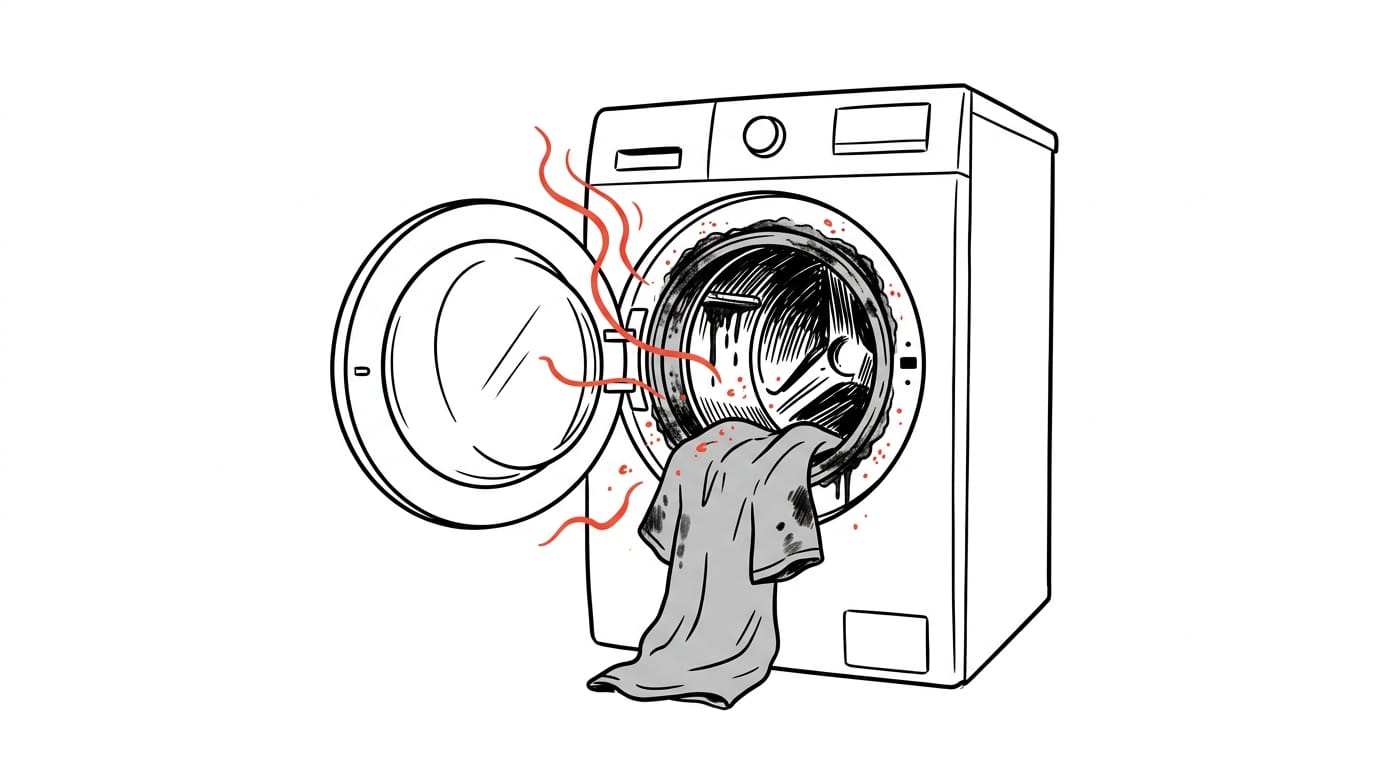
Clothes left sitting in the washer after the cycle ends are a common culprit, since the water stays trapped in the drum. Bacteria thrive in that same damp, which is part of why clothes end up smelling stale.
Think of a parent who leaves football kit in the machine overnight. Rewashing it straight away beats finding a bag that stinks all week.
Clothes stored without enough airflow
Clothes can turn musty in storage when there isn’t enough airflow. Damp clothes hung in a wardrobe trap moisture against the fabric, and packed closets leave no room for air to move.
Plastic bags trap moisture too, so a slightly damp garment sealed inside has nowhere to go.
It’s less about how neat your storage looks and more about air reaching the fabric. Give clothes room to breathe.
A grimy washer and detergent buildup
Your washing machine can add to the problem. Three things can cause it:
- Odour transfer. An unclean washer passes its smell onto every load that runs through it.
- Detergent buildup. Residue can collect inside the machine and cling to what you wash.
- Sweat and dirt. What’s left behind from earlier loads can end up on your next batch.
Keep the drum clean, and your clothes get a fair start.
Check Fabric Safety and Care Labels
Before you treat anything, make sure the garment can handle it. A few quick checks can save a musty shirt from turning into a ruined one.
Whether your garment can take treatment
Work through these four checks first:
- Read the care label first. It’s usually sewn into the collar or side seam and tells you what the maker considers safe, such as washing cold or skipping the dryer. Check the label before you reach for the strongest option.
- Delicates may be damaged. Silk, wool, lace, and other delicates can be harmed by soaking, scrubbing, or strong cleaners. Think of a parent rescuing a musty wool jumper from the back of a wardrobe. A scrub that works on cotton could leave it misshapen, but a gentle hand gives it a far better chance of keeping its shape.
- Spot test unusual fabrics. If the label is missing or the fabric is unfamiliar, dab a little of your solution on a hidden spot like an inside seam or hem. Let it dry, then check for colour change, stiffness, or water marks. Test first, treat second.
- Heat can damage fabric. High heat from a dryer or iron can shrink, warp, or weaken some fibres. Heat can also lock in a stain, so air dry the garment until the smell and any spots have fully lifted.
Ways to Clear a Musty Smell
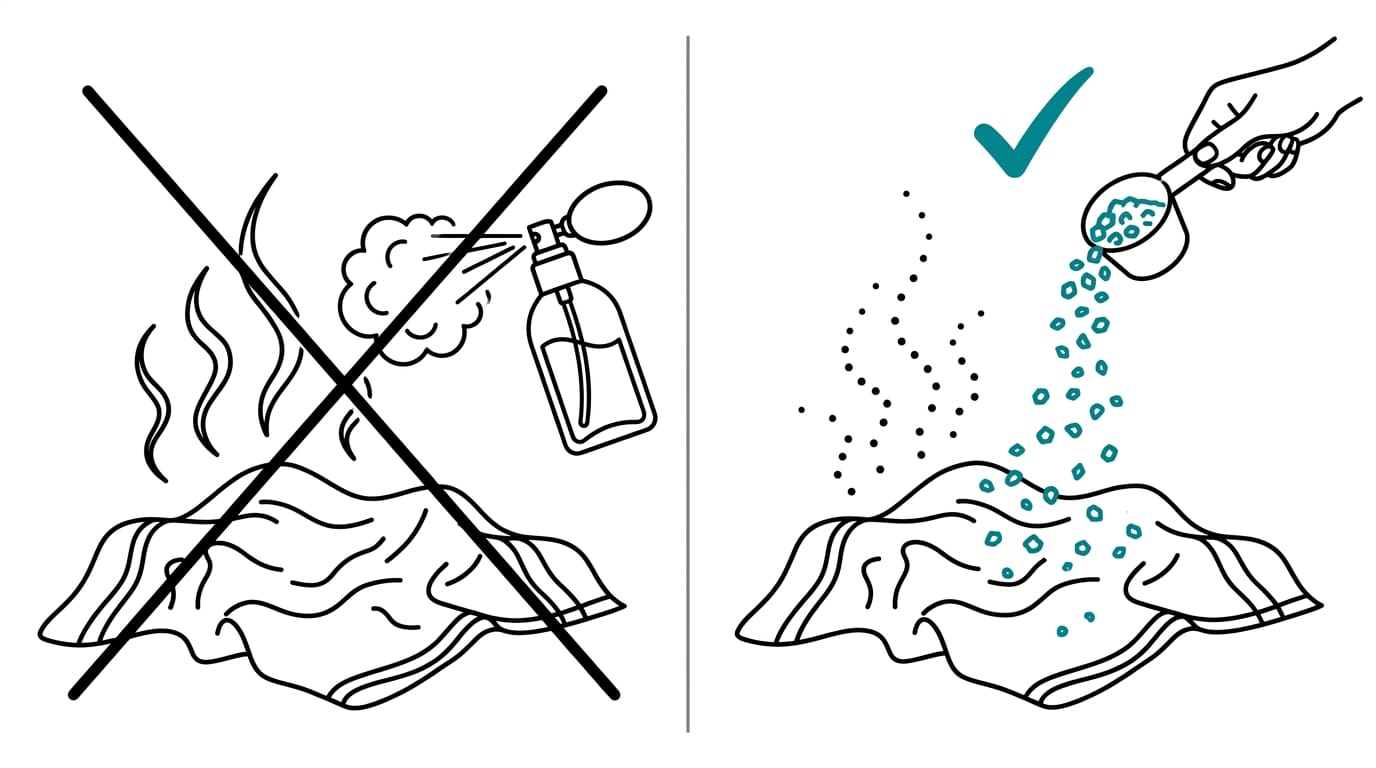
Musty smells cling to sweat, body oils, and damp, so the goal is to lift them out, not cover them up. Treat any visible mildew spots first, then work through the methods below.
Using vinegar to freshen clothes
Start with white vinegar, a cupboard staple. Add it to the final rinse, or dilute it with water in a spray bottle and mist the smelly area before washing. For a deeper fix, soak the items in that diluted mix for 30 minutes before washing.
Skip vinegar on acid-sensitive fabrics, and check the care label if you’re unsure. Never mix vinegar and bleach.
How does baking soda remove odors?
Add half a cup of baking soda to the wash with your usual detergent. It works by neutralizing odors rather than masking them, so the smell is dealt with, not hidden.
Pair it with vinegar: baking soda in the wash, vinegar in the rinse, each doing its own job.
Washing and drying smelly clothes properly
Think of a parent whose child’s polyester football shirt comes out of the wash still smelling of the pitch. Polyester tends to hold onto body oils and sweat more than natural fabrics do, so a standard cycle often falls short.
A few targeted steps save the shirt from the bin. Here’s how:
- Separate smelly clothes. Wash them apart from the rest of the laundry.
- Follow the care label. Use the temperature it allows, and never go hotter.
- Dry fully, ideally outdoors. Damp is where the smell comes back.
- Repeat if the smell remains. Wash again before you put it away.
For detergent, choose one labeled for odors and use the amount on the pack. There’s no single best brand for every load. For food smells like curry or fried onion, rinse the spot first, pretreat it with the vinegar spray, then wash as usual. Food that is fried can leave oil behind, so oil stains out of clothes may need treating first.
Is hot or cold water better for stinky clothes? Go by the care label first. If it allows a range, a warmer setting is worth trying on a stubborn smell, but stay within the limit.
Rescuing clothes that smell after drying
If the smell persists after drying, soak the item in water with an oxygen-based laundry product, a booster that lifts odors, then rewash it as normal. Don’t bin it yet.
Using steam on delicate wool and silk
Steam is a gentle option for wool and silk when you’d rather not put them through a full wash. Run a handheld steamer over the item, holding the nozzle a safe distance from the fabric. No steamer?
Hang it in the bathroom during a hot shower and let the hot shower steam do the work. Think of a tenant whose wool jumper has sat in a damp wardrobe all winter. A few minutes of steam and it’s ready to wear, with no trip to the dry cleaner.
Mistakes People Make with Laundry
Most musty smells start in the wash, not the wardrobe. A few common habits can leave clothes smelling stale before they’ve even dried, so let’s look at what to skip.
Laundry habits that backfire
It’s tempting to add an extra glug when a load looks grimy, but more isn’t better. Too much detergent can leave behind detergent residue that traps odour. The goal is less detergent, not more, so follow the dose on the pack for your load size.
Leaving clothes in the washer is another easy slip. Consider a parent who runs a school load, then forgets it until morning. By then the damp fabric has sat in warm, soapy water, giving mildew, the fungus behind that smell, a head start.
Move everything to the line or dryer as soon as the cycle ends.
Storing slightly damp clothes causes the same problem. Only put clothes away once they’re fully dry, because trapped moisture is what lets mildew take hold. Damp is the enemy.
Laundry sheets are a different story. Good Housekeeping’s testers found that ultra-soluble sheets left no sticky residue on clothes, even on low temperatures and quick cycles.
With less residue for odour to cling to, they’re worth trying if you’re prone to build-up.
Keeping the Smell from Coming Back
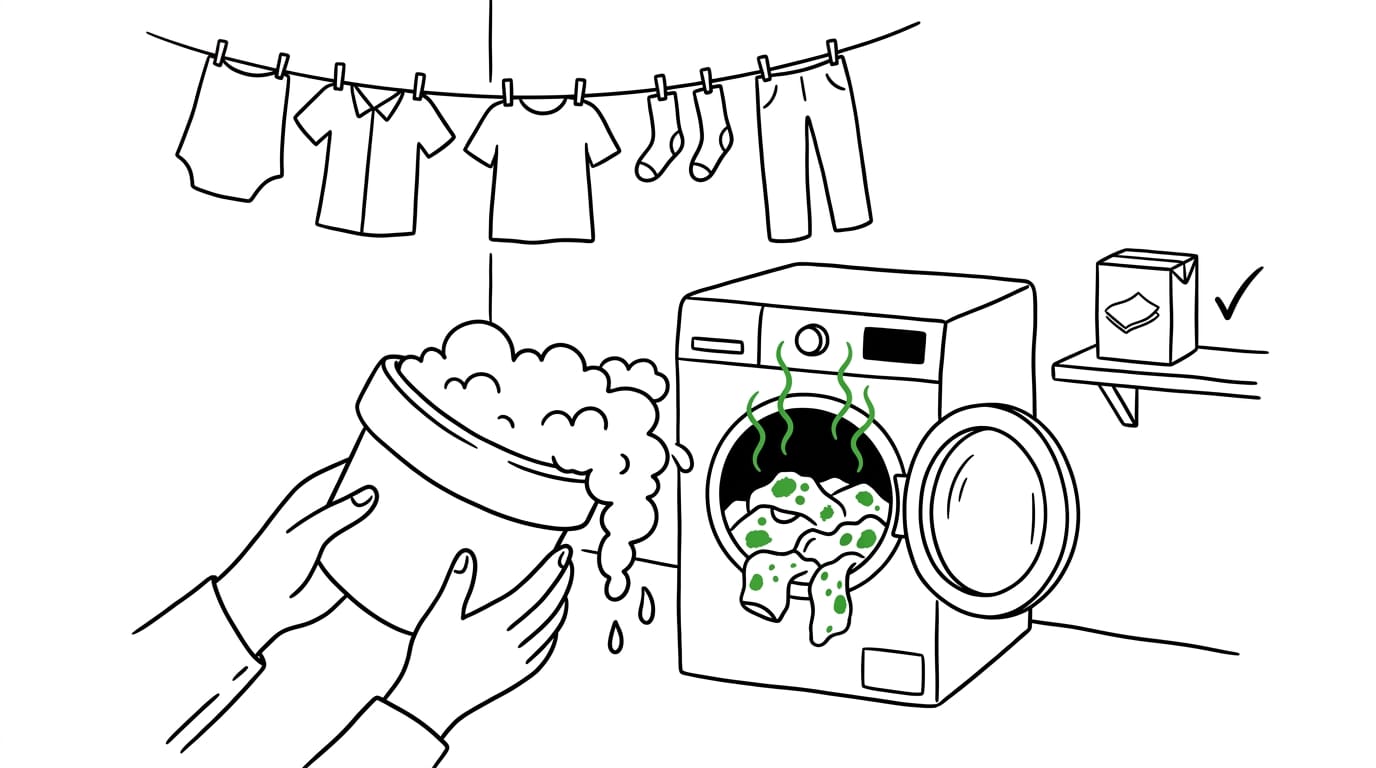
Most musty smells return because of damp fabric or a grimy machine, so these habits target both.
Let clothes dry and air out fully
Remove laundry promptly. Don’t leave a finished load in the drum. Think of a parent who hangs a muddy football kit outside as soon as the wash ends, so it’s fresh by morning. Speed matters.
Dry completely before storing. Clothes put away damp invite that smell back, so dry them first.
Sunlight as disinfectant. Airing clothes outdoors lets sunlight help disinfect them. According to a PubMed study on sun exposure and fungal contamination in used clothes, sun exposure lowered the contamination rate.
Air jackets and jeans. Thick layers take longer to dry, so give them extra time on a rack or line.
Storing clothes so they stay fresh
Leave space in closets. Packed wardrobes block airflow, so leave room between garments.
Avoid plastic bags. Sealed storage traps damp, so let your clothes breathe rather than seal them in.
Low-humidity storage. Pick a dry spot for your clothes, such as a bedroom rather than a damp cellar.
Odour-absorbing scent sachets. They can soak up light odours in drawers, but they won’t fix clothes stored damp.
Keeping your washing machine clean
A dirty machine passes its smell to your laundry, so stick to a simple routine:
- Clean machine regularly. Wipe down the drum so residue doesn’t build up.
- Check door seal. Look at the rubber ring around the door for trapped water or mould, and wipe it dry.
- Clean detergent compartments. Pull out the drawer and rinse away leftover powder.
- Use right detergent amount. Too much soap leaves residue that holds odour, so measure rather than guess.
- Run monthly hot cleaning cycle. Once a month, run an empty hot cycle to flush out buildup.
A musty smell is really a warning sign that clothes stayed damp for too long. Once you know the cause, the fix is simpler than it seems: act quickly, check the care label, and treat any visible mildew spots before you tackle the smell itself.
Dry things fully, store them somewhere airy, and don’t let damp laundry sit around. Catch it early, treat it right, and your clothes will smell fresh again.
References
- “Sunlight is said to be the best of disinfectants”*: the efficacy of sun exposure for reducing fungal contamination in used clothes — pubmed.ncbi.nlm.nih.gov (2014)
- The best laundry sheets 2026 UK, tried and tested — goodhousekeeping.com (2026)
Questions
What is the best temperature to wash clothes?
The best temperature depends on the garment’s care label and the type of laundry. Use the temperature the label allows; for stubborn odors, try a warmer setting only if it is within the garment’s limit.
How to get rid of food smell from clothes?
Rinse the food-stained area, then pretreat it with diluted white vinegar before washing as usual. Check the care label first, and avoid vinegar on fabrics that are sensitive to acids.
How does baking soda remove odors?
Baking soda neutralizes odors instead of covering them with fragrance. Add half a cup to the wash with your usual detergent.
How do rich people keep their houses smelling so good?
Keep rooms and fabrics dry, clean, and well ventilated, and avoid letting damp items sit around. For a light lingering smell, air the home and use odor absorbers such as scent sachets, rather than relying on fragrance to cover the source.
How often should I wash my clothes?
Wash clothes when they are visibly dirty, sweaty, or starting to smell; items worn close to the skin often need washing after each wear, while outer layers can usually be worn more than once. Wash towels and workout clothes promptly, and follow each garment’s care label.
Why does my polyester shirt smell?
Polyester can hold onto sweat and body oils more than natural fabrics, so odors may remain after a standard wash. Wash it separately with an odor-focused detergent, follow the care label, and dry it fully; repeat the wash if the smell persists.
What kills bacteria smells?
Wash odor-causing residue away with detergent, and dry clothes completely so dampness does not encourage mildew and stale smells. For musty laundry, an oxygen-based laundry product can help lift odors; use it according to its instructions and the garment’s care label.
Is hot or cold water better for stinky clothes?
Follow the care label first. If it allows a range of temperatures, warmer water may help with a stubborn smell, but do not exceed the garment’s limit.
Sources
- "Sunlight is said to be the best of disinfectants"*: the efficacy of sun exposure for reducing fungal contamination in used clothes - PubMed, pubmed.ncbi.nlm.nih.gov,
- The best laundry sheets 2026 UK, tried and tested, goodhousekeeping.com,
More in Stain Removal
- How to Wash White Clothes So They Stay BrightHow to wash white clothes without letting them turn grey. Sort loads, choose water temperature, treat stains first, and revive dingy whites safely.
- How to Remove Static From Clothes: Causes and FixesHow to remove static from clothes: stop cling with quick fixes, identify charge-prone fabrics, and change laundry habits to keep it from returning.
- How to Get Foundation Out of Clothes, Fabric by FabricHow to get foundation out of clothes? Match liquid or powder stains to your fabric, use cupboard products, and know whether a wash will finish the job.
Stain Finder: a free stain removal guide
Find your stain