How to Remove Urine Smell from Mattress, Fresh or Old
How to remove urine smell from a mattress: use a stain-first method with cupboard ingredients for fresh, dried, or pet accidents, then dry it fully.

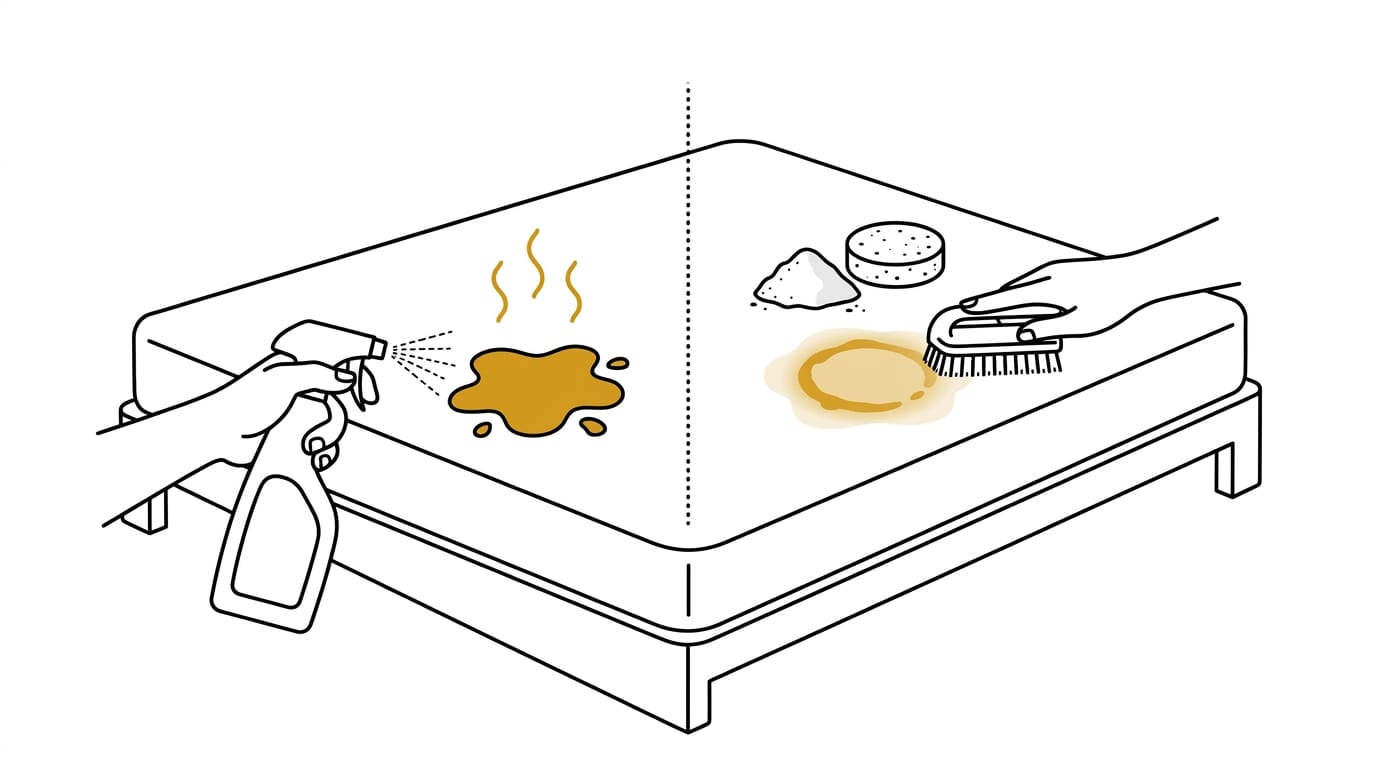
Urine smell can linger in a mattress because liquid seeps beneath the surface, so removing the odor means treating the stain and the layers it reached. Blot fresh urine with cold water rather than rubbing, use suitable cleaners such as diluted vinegar, baking soda, or an enzyme cleaner for pet urine, and dry the mattress fully with airflow before replacing the bedding. Acting quickly and using a waterproof protector can make cleanup easier and help prevent repeat stains.
Think of a sponge left out in the rain. The top looks dry, but the water has soaked deep inside. A urine stain on a mattress works the same way: it seeps past the cover into the layers beneath, so the smell lingers even when the surface looks clean.
The good news is you don’t need a professional or a pricey product.
We’ll cover fresh accidents, old dried stains, and pet urine, then drying and prevention, followed by a simple, stain-first method using cupboard ingredients that works on any mattress type.
How to Remove Urine Smell from Mattress
Getting the smell out comes down to what you do in the first couple of hours, and the steps are simpler than you might expect.
Remove bedding and blot instead of rubbing
Work through these steps in order:
- Remove sheets and bedding first. Clear everything off so you can reach the wet spot.
- Blot with dry towels. Press a dry towel onto the spot and lift it away.
- Never rub or wipe. Blot up, never rub in.
- Rotate cloths until nearly dry. Swap to a fresh section whenever the old one soaks through.
- Optional wet/dry vacuum. If you have one, use it after blotting to pull up leftover moisture.
For example, a parent who finds a child’s accident at 2 a.m. can strip the bed, blot with a stack of old towels, and keep rotating fresh sections until the mattress is nearly dry before anyone heads back to bed.
Why speed matters for fresh stains
Time is your biggest ally here, so keep an eye on the clock. Aim to act within 2 hours of the accident. After 24 hours, uric acid crystals form, and the stain gets much harder to treat.
Fresh stains are easier than old ones, so the sooner you start, the less work you’ll have. Act fast.
Home Cleaners That Tackle the Odor
Urine soaks into the padding, which is why the smell can linger after the surface looks clean. A few cupboard staples can help, and each one has a different job.
Spray a 50/50 vinegar and water mix
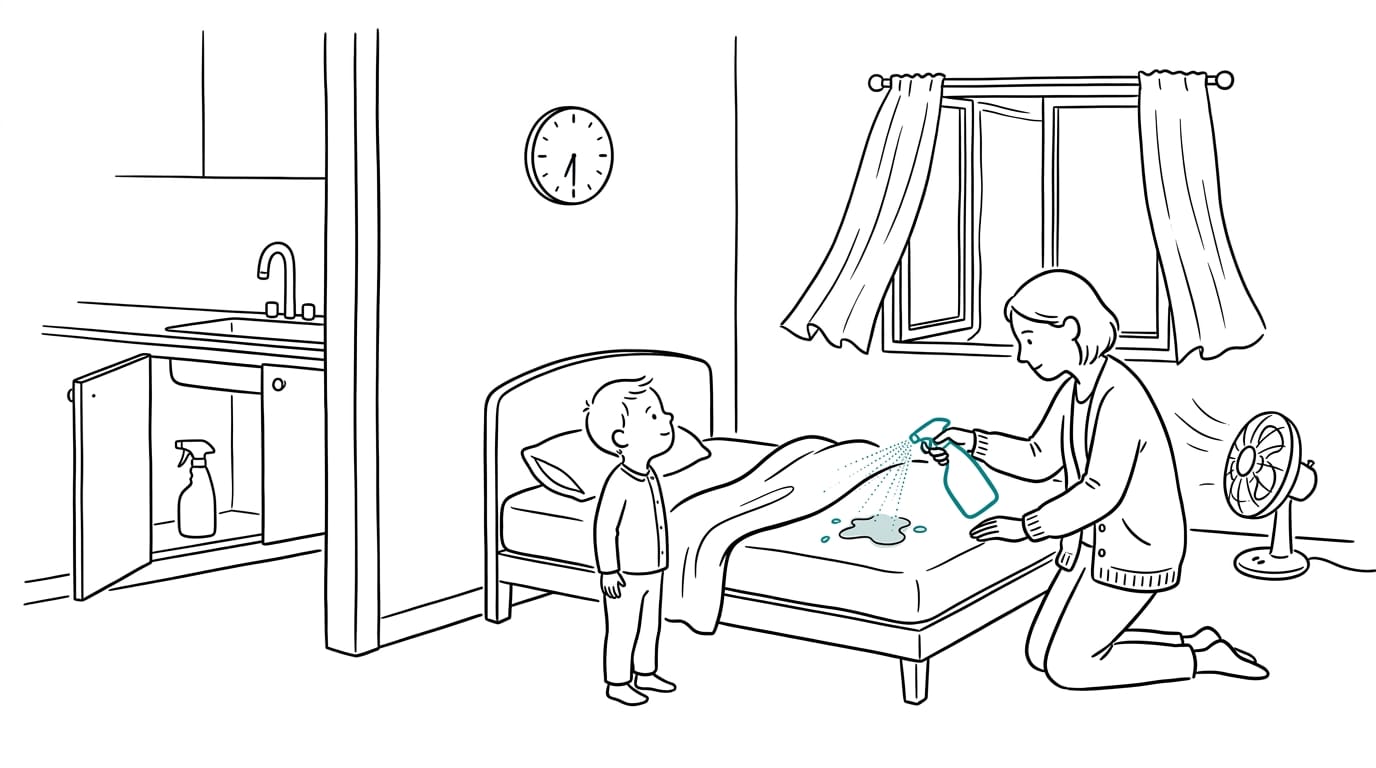
Picture a parent who finds a toddler’s overnight accident before school. A bottle already under the sink means they can start right away.
Mix equal parts white vinegar and water in a spray bottle. Spray it on lightly, not until it’s dripping, so the mix works on the stain rather than running through the mattress. Vinegar helps neutralize the odor and ammonia that urine leaves behind.
Open a window or run a fan so the vinegar smell clears as the mattress dries. Keep vinegar and hydrogen peroxide apart: never mix them, even if you’re tackling two stains at once.
Let baking soda pull out odor
So what draws urine out of a mattress? Baking soda is the cupboard staple that draws the odor out. Work through it in order:
- Cover the stain generously with baking soda.
- Leave it for 8 to 10 hours.
- Vacuum it up afterward.
- Repeat if the smell remains.
Don’t rush it. Patience does the work.
Can peroxide lift old pee stains?
So can old pee stains be removed? They can, with patience and a second pass if the first doesn’t do the job. Combine these for the mix:
- Hydrogen peroxide, a common first-aid liquid
- Baking soda
- A drop of dish soap
Mix it fresh before each use. Spray it on, then let it dry or sit, depending on how stubborn the stain is. On dark fabrics, spot-test a hidden corner first. It takes a minute.
Enzyme cleaners and gentle detergents
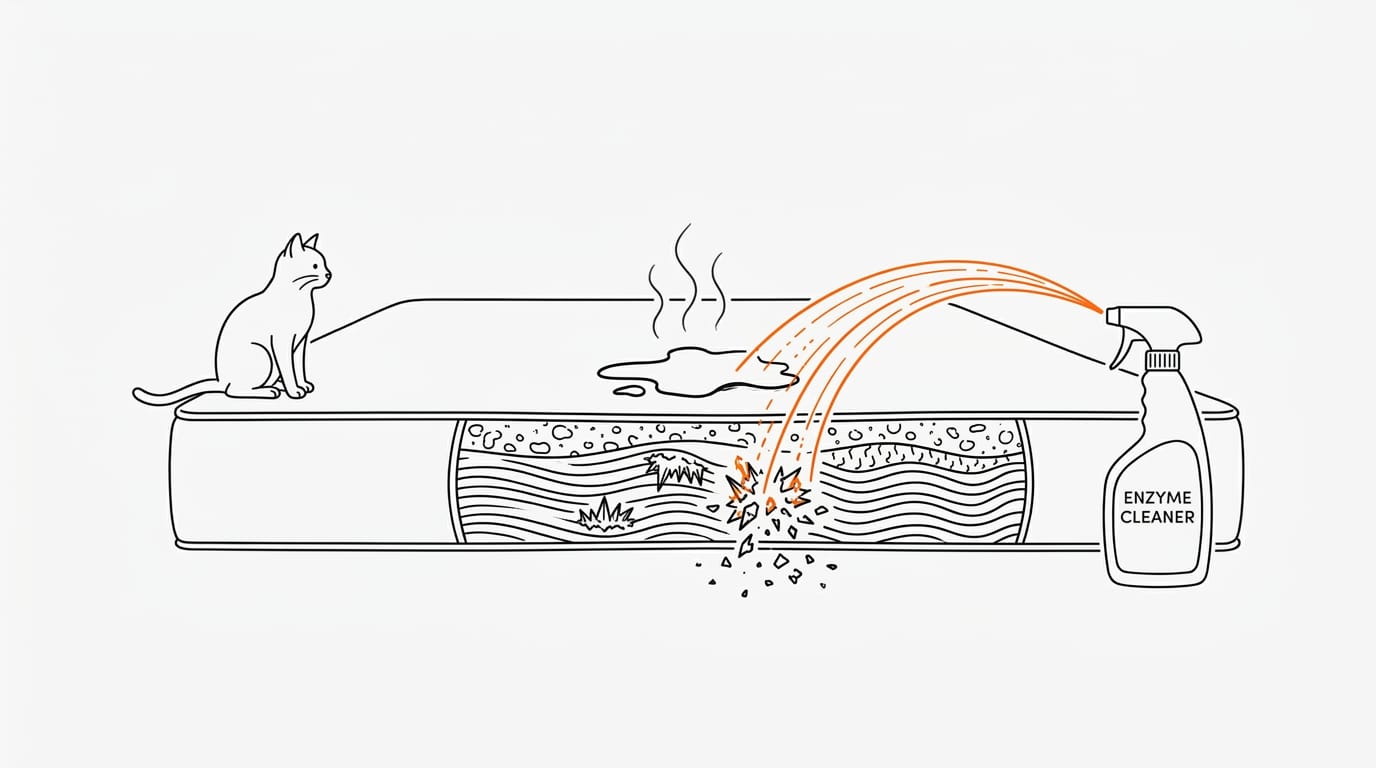
Enzyme cleaners are commonly used on pet urine, and a research paper on eco-enzyme cleaners explains why: enzymes break down protein and organic matter, which diminishes the odors from staining agents like urine.
For a gentler route, mix a mild detergent with warm water, dab it onto the stain, and blot it off. Ready-made commercial sprays save the mixing, but check the label to confirm they contain enzymes.
Care homes deal with urine odor daily, but we can’t confirm which products they use, so these options are ones you can keep at home or pick up easily.
Getting the Mattress Fully Dry
Drying is what keeps the smell from coming back, so give it as much care as the cleaning itself. Here’s how to get it done and what to skip along the way.
How long until a mattress dries?
It depends on how much urine soaked in, how thick the mattress is, how humid the room feels, and how much airflow it gets. There’s no single answer, so go by feel. The goal is a mattress that’s fully dry, not one that just feels dry on top.
Don’t expect a soaked mattress to be ready in the time it takes to finish a cup of tea.
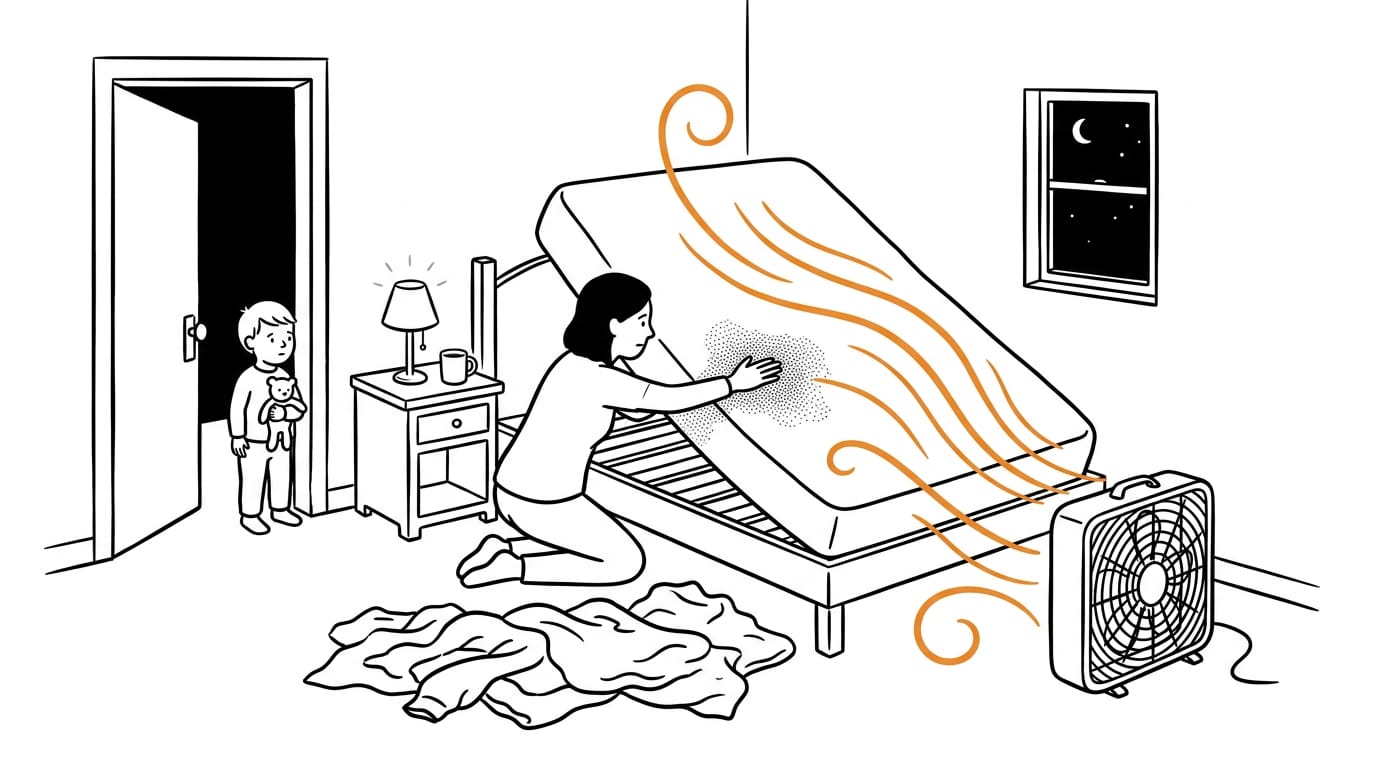
Picture a parent who finds a damp patch on a child’s mattress at bedtime. Stripping the bed, aiming a fan across the mattress, and checking the spot later means the child gets a dry bed that night.
- Use a fan. Keep air moving across the damp area until it’s dry.
- Flip the mattress and dry both sides. Moisture can soak through to the underside, so turn it over and dry that side too.
- Make sure it’s fully dry before remaking. Sheets on a damp mattress trap the moisture against the fabric.
- Watch for mildew. Damp fabric that stays closed up is where mildew takes hold, and it brings its own musty smell.
Skip steam heat and heavy perfumes
Two popular shortcuts can make things worse, so leave them out.
Steam cleaners add moisture to a mattress that needs to dry out, so they work against the whole job, even if you already own one.
Heavy perfume doesn’t remove the smell. It only masks it. The scent sits on top, the urine stays put, and the smell can return once the mattress is damp again.
A light air freshener is fine once the mattress is completely dry, as a finishing touch rather than a fix. Dry first, then freshen.
Common Mistakes and Tricky Cases
Most failed attempts come down to a few avoidable habits, and pet accidents add a harder layer on top.
Mistakes that lock the smell in
- Hot water sets the stain. Keep it cold from the first touch.
- Rubbing pushes urine deeper. On memory foam it sinks between the layers, and on springs it can reach the padding and coils below. Reach for a towel and blot, don’t rub.
- No bleach or fabric softener. Skip both, since softener only masks the smell.
- Ammonia cleaners on cat urine. Keep them away from that patch.
A parent who finds a fresh patch on a child’s mattress at dawn and grabs hot water and a scrub brush has made the job harder. Blotting it with a towel gives it a far better chance. Cold first, every time.
Why pet urine is harder to fix
Cat urine can be particularly difficult to remove from a mattress. A study on eliminating cat urine odors from carpet found that a few products were considered of little value for removing urine odor, so you’ll want to choose your product carefully.
- Higher uric acid concentration. Cat urine carries more uric acid, a waste compound that helps explain why the smell lingers.
- Enzyme cleaners required. Choose an enzyme cleaner, a product designed to break down the compounds behind the odor rather than just covering them.
- Lower salvage rate. The odds of fully saving a cat-soaked mattress are lower than with most other accidents.
Get sheets and bedding clean
The order matters here:
- Cold rinse first. Rinse the sheets in cold water before anything else touches them.
- Vinegar pre-soak. Soak them in vinegar before they go near the washer.
- Wash hot with baking soda. Hot water comes last, once the urine’s out and there’s far less for the heat to set.
- Sun-dry. Dry them in direct sunshine when the weather allows.
Hiring a pro and your warranty
- Pro cleaning costs. Professional cleaning has a price, so get a quote before you book.
- Worth it for old stains. A pro makes sense when a stain is old and has dried deep, since home methods have less to work with.
- Stains may void warranty. Read your warranty terms before you scrub hard or use a strong product.
Think of a renter whose cat stain has dried into a spring mattress after a week of scrubbing. A professional quote beats another round that could put the warranty at risk.
Preventing Stains and Understanding Bedwetting
Would you rather block a leak or scrub one out later? A good barrier stops urine before it reaches the mattress.
Protectors and pads that block leaks
Prevention starts with a waterproof mattress protector, a cover that sits over the mattress. A clinical guideline on hygienic requirements for patient beds says liquid-proof mattress covers should be used to protect the mattress from contamination.
Think of a parent who keeps two washable mattress pads in the linen cupboard. After a wet night, they swap in a dry one and toss the soiled pad in the wash, so the mattress never needs treating.
Disposable underpads are the single-use option: use one, then bin it, which suits anyone who’d rather skip the laundry.
A protector is a small outlay before a leak, not a bigger bill after one, like replacing a ruined mattress.
What bedwetting is and how to help
Nocturnal enuresis is the medical term for bedwetting during sleep, so it’s a health matter, not something to hide. The Mayo Clinic notes that bed-wetting remains a problem for some children between the ages of 5 and 7.
Here’s how we’d help:
- See a healthcare provider. If it keeps happening, a doctor or other healthcare provider is the right person to ask.
- Be supportive. Keep bedtime chats calm and matter-of-fact, so your child feels backed, not blamed.
- Try nighttime underwear. Absorbent pants protect your child and the bedding on a wet night.
Blocking the leak is the easy part. Staying calm is the real skill.
Getting urine smell out of a mattress comes down to three habits: act fast, blot before you scrub, and let every layer dry completely before the sheets go back on.
Treat the stain itself, not just the odor, and you’ll avoid the cycle of masking that never quite works.
Follow the steps in order, be patient with drying, and your mattress can smell fresh again. A few careful minutes now means you can sleep easy, knowing the stain is gone for good.
References
- S2k Guideline: Hygienic requirements for patient beds, bed linen, bed accessories and personal protection when handling beds — pmc.ncbi.nlm.nih.gov (2025)
- Eco-enzyme: fermented organic waste as multipurpose cleaner — ir.uitm.edu.my (2023)
- Effectiveness of products in eliminating cat urine odors from carpet — doi.org (1989)
- Bed-wetting - Symptoms and causes — mayoclinic.org
Questions
How long does it take for a mattress to dry after peeing?
Drying time depends on how much urine soaked in, the mattress thickness, room humidity, and airflow. Keep a fan moving air across the damp area, flip the mattress to dry both sides, and wait until it is fully dry before putting the bedding back on.
How to get rid of new mattress smell?
Air the mattress in a well-ventilated room and use a fan to help fresh air circulate. Avoid heavy perfumes, which only mask odors rather than remove them; if the smell persists, check whether the mattress is fully dry and follow the manufacturer's care instructions.
How to clean foam mattress topper?
Check the topper’s care label first, since some foam toppers should not be soaked or machine-washed. Blot spills with a dry towel, then lightly dab the affected area with mild detergent mixed with water; avoid rubbing, excess moisture, and steam. Let it dry completely with good airflow before using it again.
How to get urine out of a mattress when dry hydrogen peroxide?
For a dried urine stain, mix hydrogen peroxide with baking soda and a drop of dish soap, and make a fresh batch before use. Apply it to the stain and let it dry; repeat if needed, and spot-test a hidden area first because peroxide can lighten dark fabric. Never mix hydrogen peroxide with vinegar.
How can I make a homemade carpet stain remover?
For a basic carpet stain remover, mix equal parts white vinegar and water in a spray bottle. Apply it lightly, blot rather than rub, and test it on an inconspicuous spot first; do not combine vinegar with hydrogen peroxide.
What draws urine out of a mattress?
Baking soda helps draw odor from a mattress. Cover the stain generously, leave it for 8 to 10 hours, then vacuum it up; repeat if the smell remains.
Can old pee stains be removed?
Yes, old urine stains can sometimes be removed, though dried stains are harder to treat and may need a second application. A mixture of hydrogen peroxide, baking soda, and a drop of dish soap can help; spot-test first, especially on dark fabric.
What do nursing homes use to get rid of urine smell?
There is no single product used by all nursing homes. Enzyme cleaners are commonly used for urine because their enzymes break down organic compounds that contribute to odor; mild detergent is another option, following the product label and facility procedures.
Sources
- Eco-enzyme: fermented organic waste as multipurpose cleaner, ir.uitm.edu.my,
- Effectiveness of products in eliminating cat urine odors from carpet, doi.org,
- Bed-wetting - Symptoms and causes - Mayo Clinic, mayoclinic.org
- S2k Guideline: Hygienic requirements for patient beds, bed linen, bed accessories and personal protection when handling beds, pmc.ncbi.nlm.nih.gov,
More in Kitchen
- Remove Water Stains from Wood, Gentlest Fixes FirstRemove water stains from wood by first telling white rings from black marks and finish-level stains from damage in the wood, then choosing the right fix.
- How to Remove a Sink Stopper: Every Type ExplainedHow to remove sink stopper: identify pop-up, push-down, or lift-and-turn hardware, free a stuck plug, and know when to put it back or call a pro.
- How to Clean a Dutch Oven: Daily Care to Stain RemovalHow to clean a Dutch oven: remove burnt-on food with cupboard fixes and protect the enamel, lid, and cast-iron rim. Get dishwasher care, too.
Stain Finder: a free stain removal guide
Find your stain