Can You Vacuum Glass Safely? When It Works
Can you vacuum glass? Pick up large shards by hand first, then choose a safe vacuum and find tiny slivers hiding in carpet and under appliances.

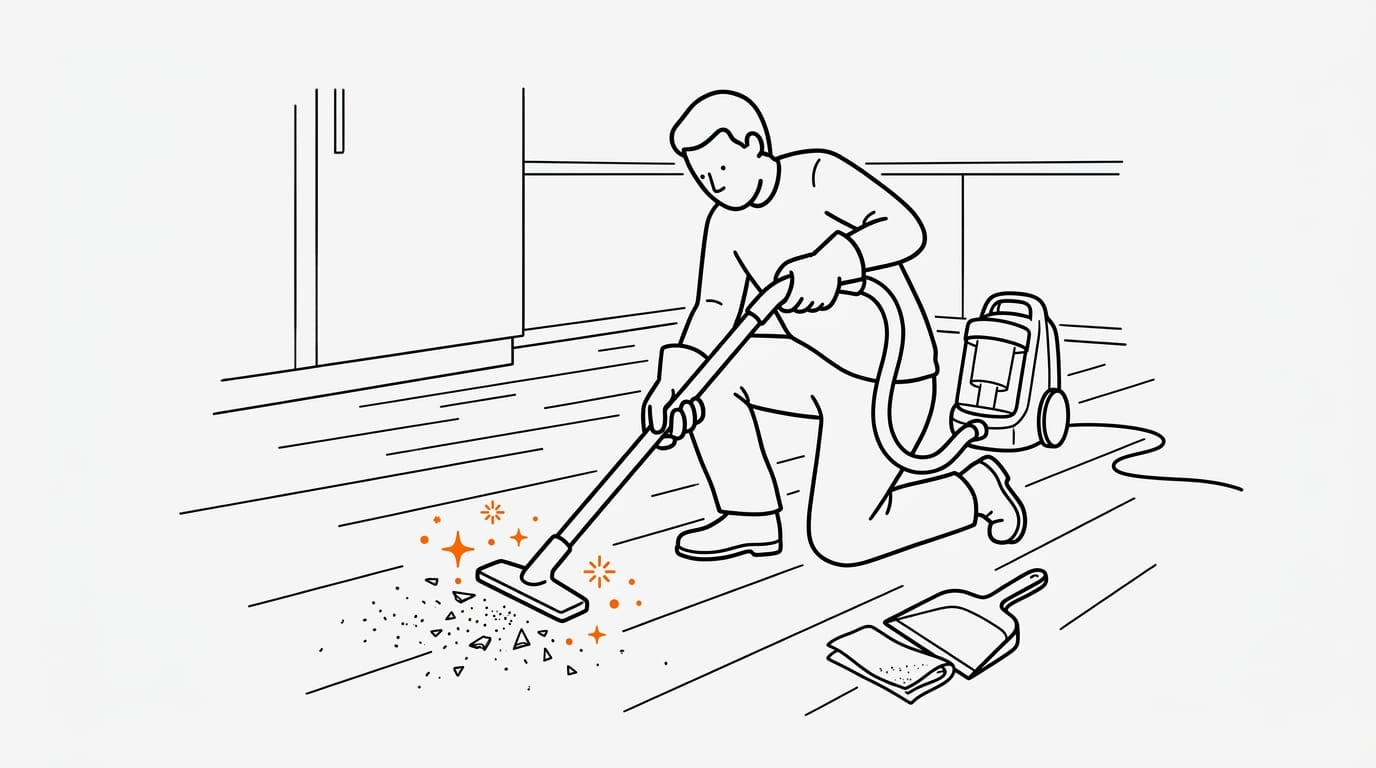
You can vacuum glass, but a vacuum is best for fine slivers and dust, not large, sharp pieces. Wear gloves and closed-toe shoes, pick up big shards first, then use a durable vacuum’s hose attachment without a beater brush; check carpets, corners, under appliances, and nearby food for missed fragments. Inspect the vacuum afterward and wrap glass securely for disposal to protect people and the machine.
Picture this: a wine glass slips off the counter and shatters across the kitchen tiles, with a few shards skittering under the fridge. Your first instinct might be to reach for the vacuum, but can you vacuum glass without making things worse?
The short answer is yes, but only for fine slivers and dust, and only with the right machine and a little prep. Large shards need to be picked up by hand first.
In this post, we’ll cover when vacuuming is safe, how to prep the area, which vacuum to choose, and how to clear and dispose of the pieces, including the spots people often miss, like carpets, under appliances, and near food.
Prepare the Area Before You Vacuum Glass
Tiny shards are easy to spread and hard to see, so the real work happens before the vacuum comes out. Get the room ready, protect yourself, then search with good light.
Clear the room and block it off
Think of a parent who’s just knocked a jar of pasta sauce off the counter with a toddler nearby. Move the little one and any pets to another room and close the door, so nobody wanders into the mess. Then:
- Block off the area with a gate, a closed door, or a chair.
- Remove obstacles like toys and loose rugs, so you can see the whole floor.
- Move barefoot family members out too, since bare feet and glass don’t mix.
Protect your hands and feet
Glass cuts fast, so cover up before you touch a single piece. Wear gloves and closed-toe shoes, even for a small patch. If you don’t have gloves to hand, use tongs to lift larger pieces rather than your fingers.
And don’t kneel on the glass, since a shard can easily press into your knees.
Find every shard with bright light
Glass is hard to spot in ordinary light, so switch on a flashlight or bright lamp and sweep it low across the floor. Look for reflective fragments: anything that catches the beam is worth a closer look.
It’s less about where the glass landed and more about where it went. Check the soles of your shoes for tracked glass before you walk into another room. Then shine the light into open cupboards and over counters, since glass can land in food or on a shelf.
If it’s landed in food, it’s safest to throw that food away.
Risks of Vacuuming Glass and Better Options
Your vacuum handles dust and crumbs well, but it isn’t built for shards. Here’s where it can go wrong, and what to reach for instead.
How glass can damage your vacuum
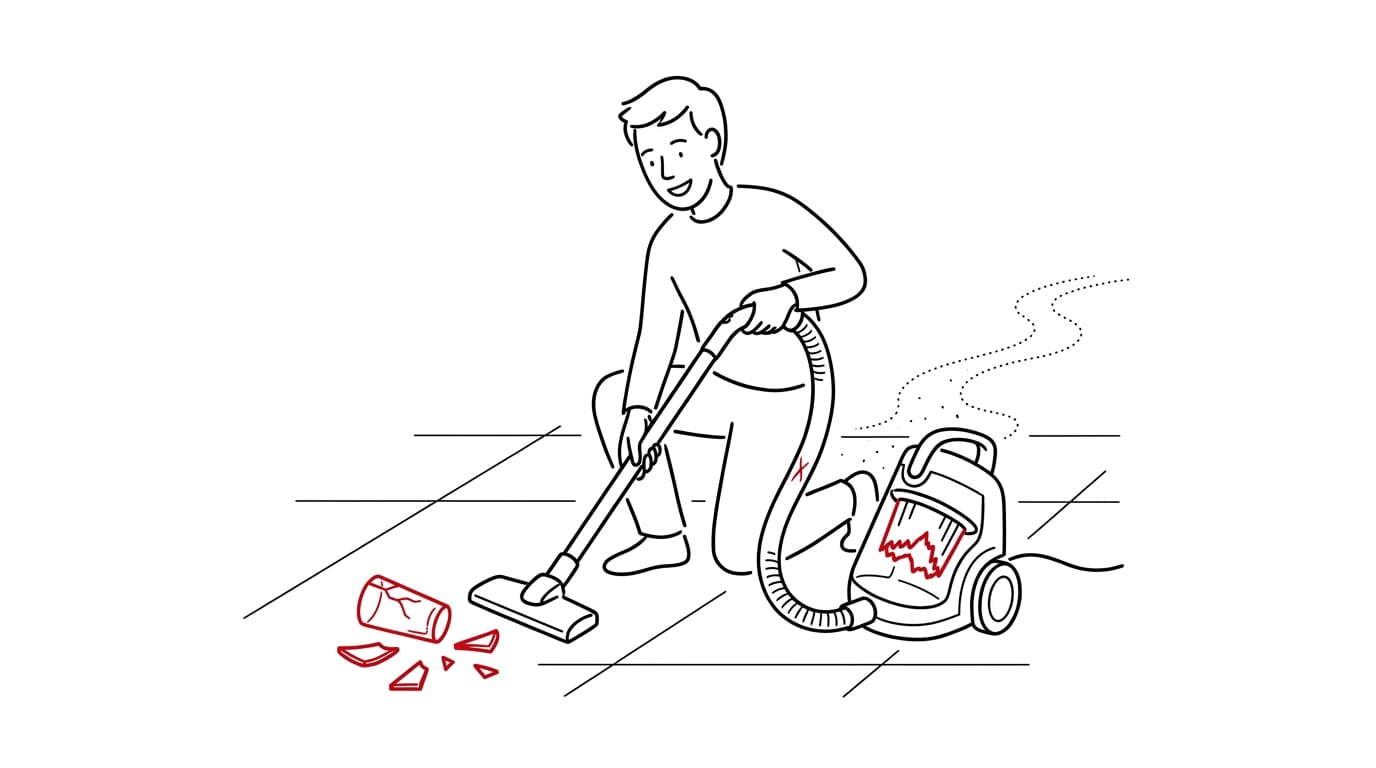
Glass is hard and sharp, and it can do real harm inside the machine. Picture a parent who vacuums up a cracked drinking glass from the kitchen tiles, only to find the hose scratched and the filter torn. Glass can:
- Damage hoses and filters
- Clog air pathways
- Reduce suction
- Void your warranty
Reduced suction means a weaker clean every time you use it, and a voided warranty means any repair comes out of your own pocket.
Hand and broom methods, and their limits
For large pieces, your hands are the safest tool. Pick up big shards by hand and drop them into a rigid container, not a bag a sharp edge could tear through. Manual removal is safest on hard floors like tile, wood, or lino, where you can see every piece.
A broom helps with loose fragments, but it has limits. It can miss the smallest pieces, nudge them into gaps, and scatter them further across the room.
Picture a flatmate who sweeps a broken mug across the kitchen lino and misses the splinters that slide under the fridge. Those pieces are still there the first time someone walks in barefoot.
Sweep first to avoid spreading shards
Sweep first, vacuum after. Your goal is to gather the pieces into one spot, not push them further across the floor. Use short, gentle strokes so tiny shards stay in the pile. Slow strokes win here.
Once the visible pieces are gathered, the vacuum can handle the fine dust left behind. That order keeps the sharpest pieces away from your machine’s hose and filter.
Picking a Vacuum That Can Handle Glass
Not every vacuum survives broken glass, so don’t pick one by suction alone. Choose for durability rather than suction power.
Vacuums that hold up to broken glass
- Durable shop vacuums. Built for rough work, they shrug off sharp fragments better than household models.
- Bypass motors. Air flows around the motor, not through it, so fine glass dust is less likely to harm it.
- Wide rigid hoses. Shards pass without snagging, and the hose is easier to clear if one jams.
- Wet/dry vacs with durable canisters. They handle spilled liquid too, and a tough canister resists sharp edges.
Think of a renter who knocks a wine glass onto the hallway carpet. A wet/dry vac with a wide hose clears the shards and the wine before it sets.
Skip cordless, robot, and standard models
These are great for everyday dust, but glass is a different job that can jam, crack, or spread shards. Keep them for the dust.
- Cordless stick vacuums. Narrow tubes can jam or crack on sharp pieces.
- Robot vacuums. Low bodies can roll shards into corners and under furniture.
- Standard household vacuums. Thin hoses are easily punctured or blocked.
Shield the hose from sharp edges
Even a tough machine has a weak spot at the hose, so protect it before you start.
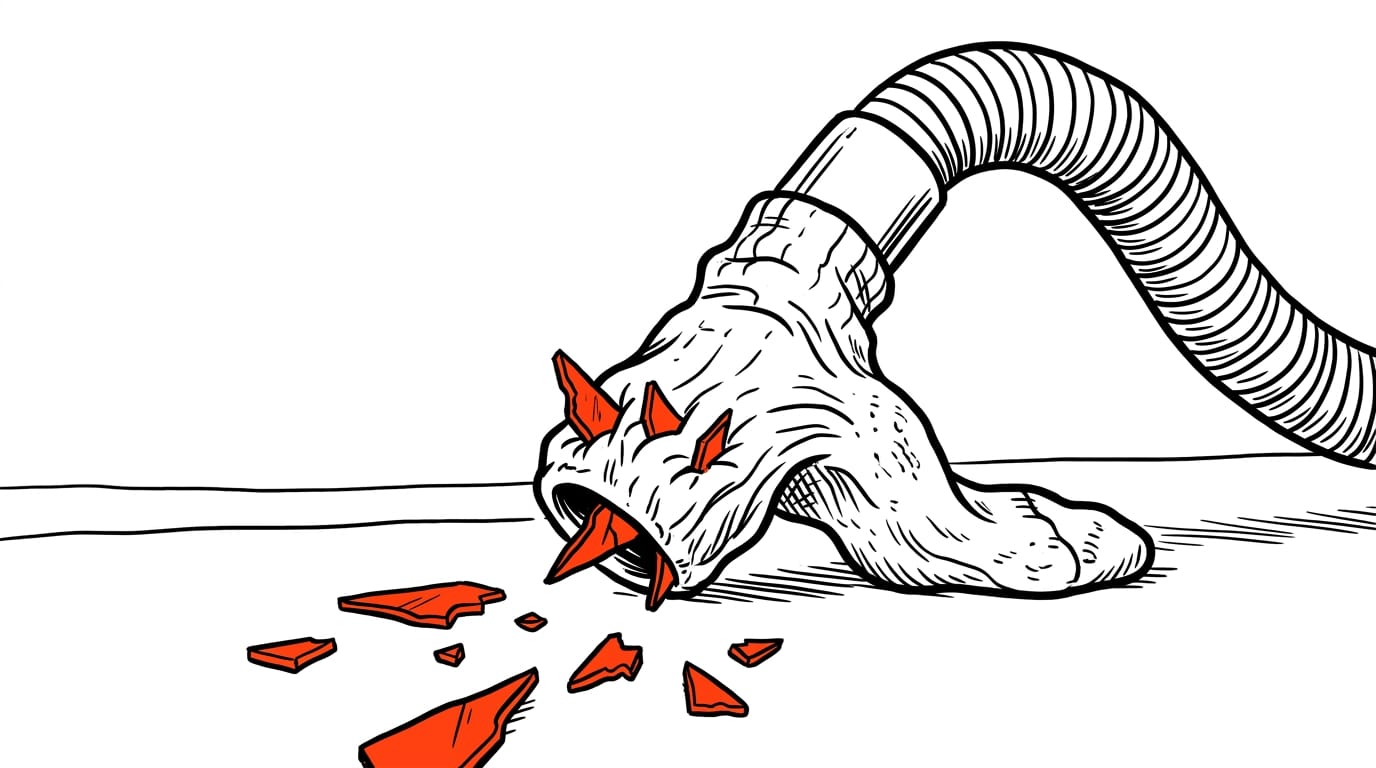
- Cover the hose with a sock. Pull an old sock over the hose end so shards catch in the fabric.
- Use a thin napkin barrier. A folded paper napkin over the opening screens out fine fragments.
- Dispose of the cloth carefully. Wear gloves, seal it in a sturdy bag, and bin it.
That’s a small step that protects the hose and the next person who empties the bin.
How to Pick up Tiny Glass Slivers?
Tiny slivers are the hardest part of a broken glass cleanup, since a broom only pushes them around. The good news is that the fix is already in your home.
Use a folded damp towel
Fold a damp towel into a thick pad and put on gloves before you touch anything. Press the pad gently over the area and lift it away, since the damp fabric grabs the shards without scattering them. The goal is to lift the glass, not sweep it.
Think of a tenant who knocks a tumbler off the kitchen counter: one careful press of the towel can gather most of the glass in one place. Go slow.
Tape and lint rollers for corners
Corners and baseboards are where a towel won’t reach, and that’s where sticky tools earn their place. Press a strip of duct or packing tape onto the sliver, then peel it away. A lint roller works the same way and covers more ground in a few passes.
Kitchen floors need a look under the fridge and cooker too. For glass in carpets and rugs, roll gently over the pile and check the roller before you move on.
Consider a host who drops a wine glass beside the rug: a few slow passes catch the slivers the broom missed, so nobody’s bare feet find them later. Check twice.
Try bread or potato to lift slivers
Out of tape? A slice of bread can lift small pieces in a pinch. Press it onto the glass, then lift it away. Cut potato flesh works the same way, so a spare potato is a handy backup.
Finish by holding a torch low across the spot to catch any glint you missed. It’s low-tech, but it works.
Care for Your Vacuum and Dispose Safely
Once the floor is clear, two jobs remain: checking your vacuum for hidden shards, then getting the glass out safely.
Check hoses, filters, and canister afterward
Tiny fragments hide where you won’t see them, so give the machine a proper look. Start with the hose and brushes, checking the brush roll for slivers. Clean or rinse the filters if they’re washable, and let them dry fully before refitting.
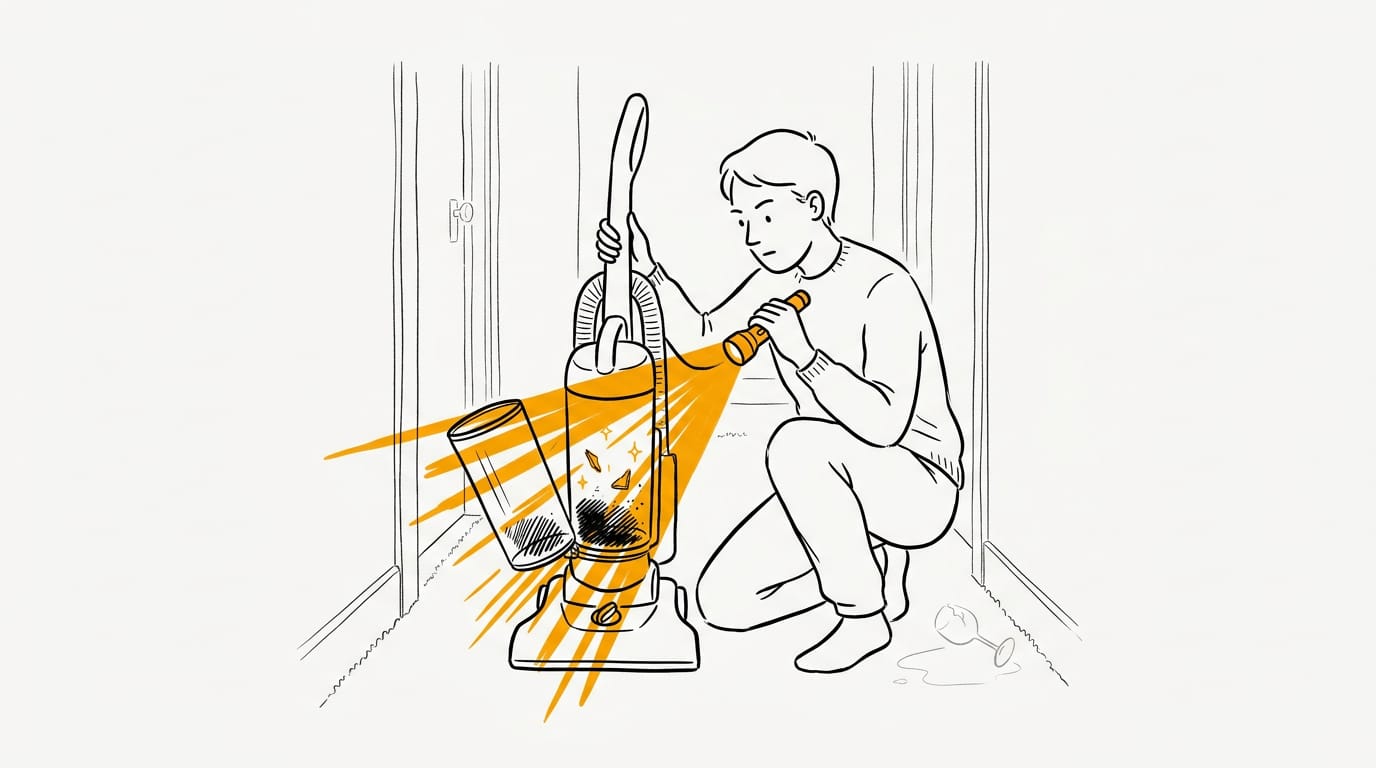
Then empty the canister outside, not over the kitchen bin, so loose pieces don’t scatter. Finish with a flashlight, shining it into the nozzle and canister, since glints of glass are easy to miss in ordinary light.
Last, give the floor a damp wipe and recheck it with the same light.
Think of a tenant who’s just vacuumed a broken wine glass from a hallway carpet. Checking the canister now means no surprise shard turns up next week.
Wrap and bag broken glass for disposal
Loose shards stay sharp until they’re sealed away, so don’t just tip them into a bag. Instead, wrap the pieces first.
- Wrap it in an old rag. Fold the edges in so no point pokes through.
- Use a sturdy, labeled container. Mark it ‘broken glass’ so anyone emptying the bin knows.
- Avoid tearing the trash bag. If the box goes in a bag, lift it in gently so edges don’t rip through.
- Wipe worktops and wash nearby utensils. Tiny fragments can land on them.
Consider a parent who’s swept a broken jam jar off the kitchen tiles. A wrapped, labeled box means the bin collector, and the kids, won’t meet a sharp edge. Take the extra minute.
Quick Answers to Common Questions
Before you switch the vacuum on, it helps to know what it can handle and what it can’t.
Concerns about vacuums, sweeping, and vinegar
Yes, it can, if big pieces go straight in. Shards can jam the hose, scratch the tube, or catch in the brush roll, while fine glass dust slowly wears down the filter.
Picture a parent who vacuums up a smashed pasta sauce jar without picking out the large pieces first. A sliver lodges in the hose, and the machine is rattling by the weekend. Two minutes of picking up by hand would have saved it.
The safe order looks like this:
- Pick up the large pieces by hand, wearing gloves, and drop them into a sealed container.
- Lift the fine slivers with a damp paper towel or a folded piece of card.
- Vacuum the area with the hose attachment, skipping the beater brush, which can fling tiny fragments back out.
Sweeping pushes tiny shards deeper into carpet fibers and across the floor, so a broom alone rarely finishes the job. A vacuum captures fine pieces instead of scattering them. Use a dustpan only for the big bits, then switch to the vacuum for the rest.
Plain white vinegar won’t harm ordinary glass, so a diluted solution is gentle enough to wipe residue from a glass tabletop or window once the shards are gone. Delicate or antique pieces deserve a test on a small patch first. Residue on oven door glass, especially between the panes, needs its own method.
Just don’t use it to gather fragments, since liquid spreads them. Dab, don’t soak.
Vacuuming glass works, but only for the fine stuff. Clear the big pieces by hand, protect your feet, and check the easy-to-miss spots under appliances, in carpets, and near food before you switch the machine on.
Then choose a vacuum built to handle debris, empty it carefully, and dispose of the waste in a sealed bag or box so it can’t cut anyone later.
A slow, careful cleanup turns a shattered mess into a safe floor.
Questions
How to make glass look new again?
Wear gloves and closed-toe shoes, then pick up large pieces by hand and put them in a rigid container. Lift tiny fragments with a folded damp towel or tape, and use a suitable vacuum only for fine dust after the larger shards are removed. Finish with a low flashlight check and a damp wipe.
How to remove tiny glass sliver?
Wear gloves and press a folded damp towel gently onto the area to lift the sliver; do not sweep it around. For corners, use packing tape or a lint roller, then seal the used towel or sticky material for disposal and check the spot with a flashlight.
Is it better to vacuum or sweep glass?
For broken glass, pick up large shards by hand first, then sweep gently to gather visible loose pieces. A broom can miss tiny slivers or scatter them, so use tape or a damp towel for small fragments and a suitable vacuum for fine dust.
What do professionals use to clean glass?
Professionals commonly use glass-cleaning solutions or diluted soap and water with microfiber cloths and a squeegee for windows and other smooth glass. For broken glass cleanup, use gloves and tools such as a broom and dustpan for large pieces, then a damp towel or suitable vacuum for fine fragments.
More in Kitchen
- Baking Soda for Coffee Stains: What Works and What Doesn'tBaking soda for coffee stains can help, but the right order matters. See how to treat fresh spills on clothes, sofas, carpet, wood, and mugs safely.
- How to Unclog a Sink: Simple Fixes That WorkHow to unclog a sink: start with simple natural fixes, then use tools or take apart pipes if needed. Avoid chemical cleaners that can backfire.
- What Is an Enzyme Cleaner and How Does It WorkWhat is an enzyme cleaner? See how its proteins break down stains, where it works best, and how to match the cleaner to your stain and surface.

Stain Finder: a free stain removal guide
Find your stain