How to Get Oil Stains Out of a Driveway
How to get oil stains out of driveway starts with a cupboard-first cleanup, then adapts the method for concrete, block paving, or asphalt for safer results.

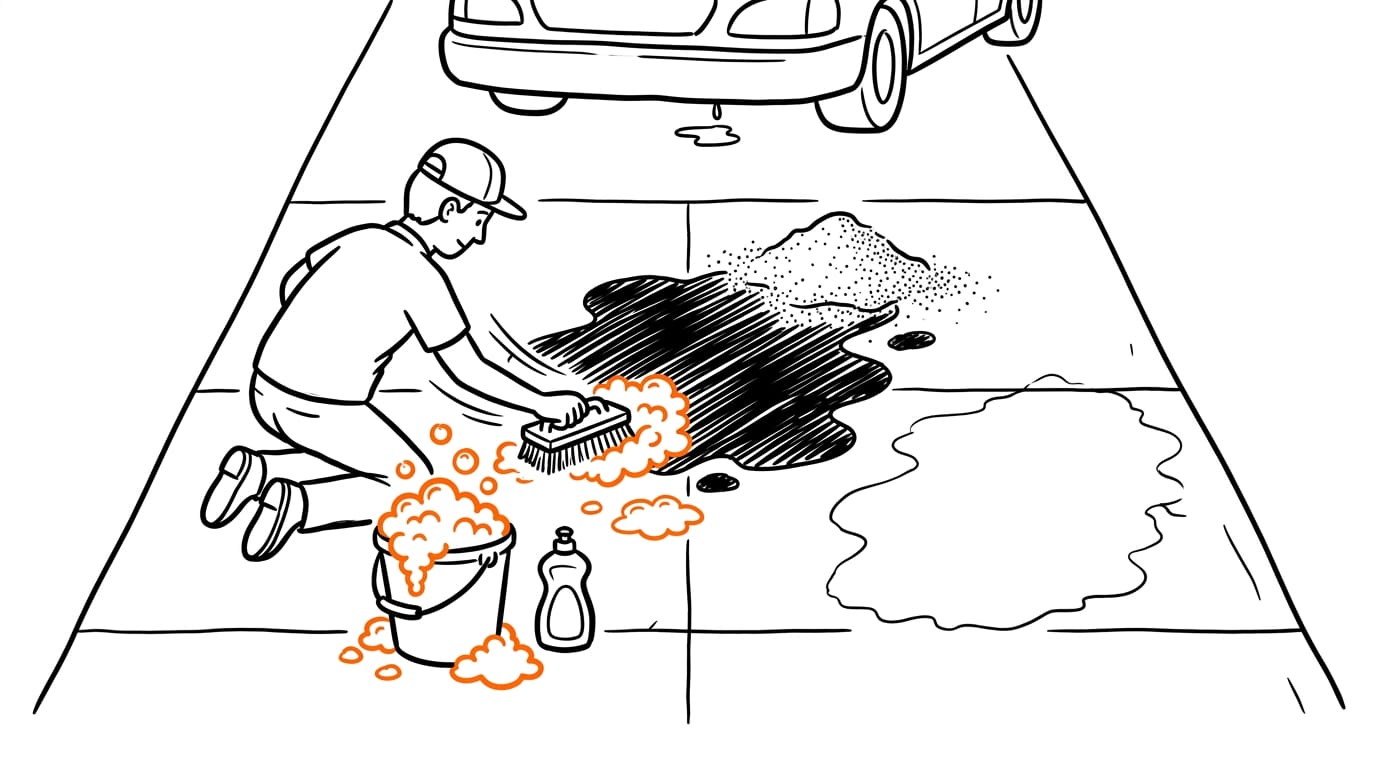
Getting oil stains out of a driveway means absorbing excess oil, then cleaning the remaining mark with a method suited to the surface. Blot fresh spills instead of wiping, use an absorbent such as non-clumping cat litter, and try gentle household cleaners before stronger products; take extra care with asphalt, which can be damaged by solvents or hard scrubbing. Acting quickly, rinsing safely, and sealing the driveway help limit lasting stains.
You step out to the car and spot a dark puddle spreading across the driveway, right where the engine has been sitting.
Oil is a stubborn stain, but it doesn’t have to mean a ruined surface. Treating it works like any other spill: the faster you act and the better you match your method to the surface, the easier it gets.
In this guide, we’ll cover where these stains come from, how concrete, block paving, and asphalt each change the cleanup, and a simple cupboard-first method you can start on right away.
Where Oil Stains on Driveways Come From
Driveway marks usually start small: a drip, a splash, or a leaf left out in the rain. Knowing where they come from helps you act while they’re still easy to lift, so let’s look at the usual suspects.
Everyday sources of stains
Most stains come from a handful of everyday sources:
- Oil changes and leaks. Fresh engine oil or a slow drip from a worn gasket leaves dark spots right where the car parks.
- Grease spills. Cooking fat, a greasy bike chain, or a splash of lubricant can soak into the surface before you notice.
- Rust from metal items. Rusty tools, bike parts, and old bins leave orange-brown marks, especially after rain.
- Chemical spills. Paint thinner, brake fluid, and strong cleaners can stain or damage the surface, so they need careful handling.
- Leaves and mulch. Damp leaves and bark mulch leave dark, tea-coloured marks that can look like oil at first glance.
Consider a homeowner who does the weekly cleaning and parks the family car on the drive. A drip spotted on Saturday takes one quick wipe, but the same drip found a week later has had time to soak in.
It’s the difference between a fresh spill and a set one. Fresh beats old, every time.
How Your Driveway Surface Changes Cleanup
Oil doesn’t behave the same way on every driveway, so start by identifying what you’re standing on. Concrete, block paving, and asphalt each need their own approach, and a sealed surface changes the picture again.
Do oil stains fade out of concrete?
Not on their own. Concrete is porous, full of tiny openings that let liquid soak in, so oil sinks into the surface rather than sitting on it.
Stains set in over time. The longer oil sits, the deeper it travels and the more firmly it bonds, so time works against you. A sealant on block paving or concrete slows that soaking in, giving you a head start.
Do oil stains eventually come out of concrete? Not without help, but many can still be lifted if you act quickly. Do old oil stains ever fully fade? Rarely. Waiting usually leaves the mark behind.
Be careful cleaning on asphalt
Asphalt is more sensitive than concrete, so the cleaner that works there isn’t always right here. Keep three cautions in mind:
- Skip solvent or citrus cleaners. They cut grease fast, but they can break down the very surface you’re trying to protect.
- Corrosive to asphalt. Many strong products can soften the surface and leave a discoloured ring around the stain.
- Scrubbing can wear the surface. Hard scrubbing grinds away the top layer, so work gently.
Think of a homeowner with a dark patch under the car on their asphalt drive. They grab the citrus cleaner from under the sink, scrub hard, and end up with a pale, roughened patch beside the stain.
A gentler start would have spared the drive that extra damage.
Prep and Act Fast on Fresh Spills
Oil on the drive is much easier to lift before it has time to soak in. Here’s how to soak up fresh spills and clear loose debris, so the cleaning that follows has the best chance of working.
Blot up excess oil quickly
Speed matters most here. Treating a fresh spill is far easier than tackling a stain that’s had time to set, so act quickly on spills the moment you see them. Older stains are harder to remove, and the sooner you act, the better your chances.
Consider a homeowner who spots a drip under the car on the drive. They grab a cloth straight away and blot the puddle before it spreads, so there’s far less left to scrub later.
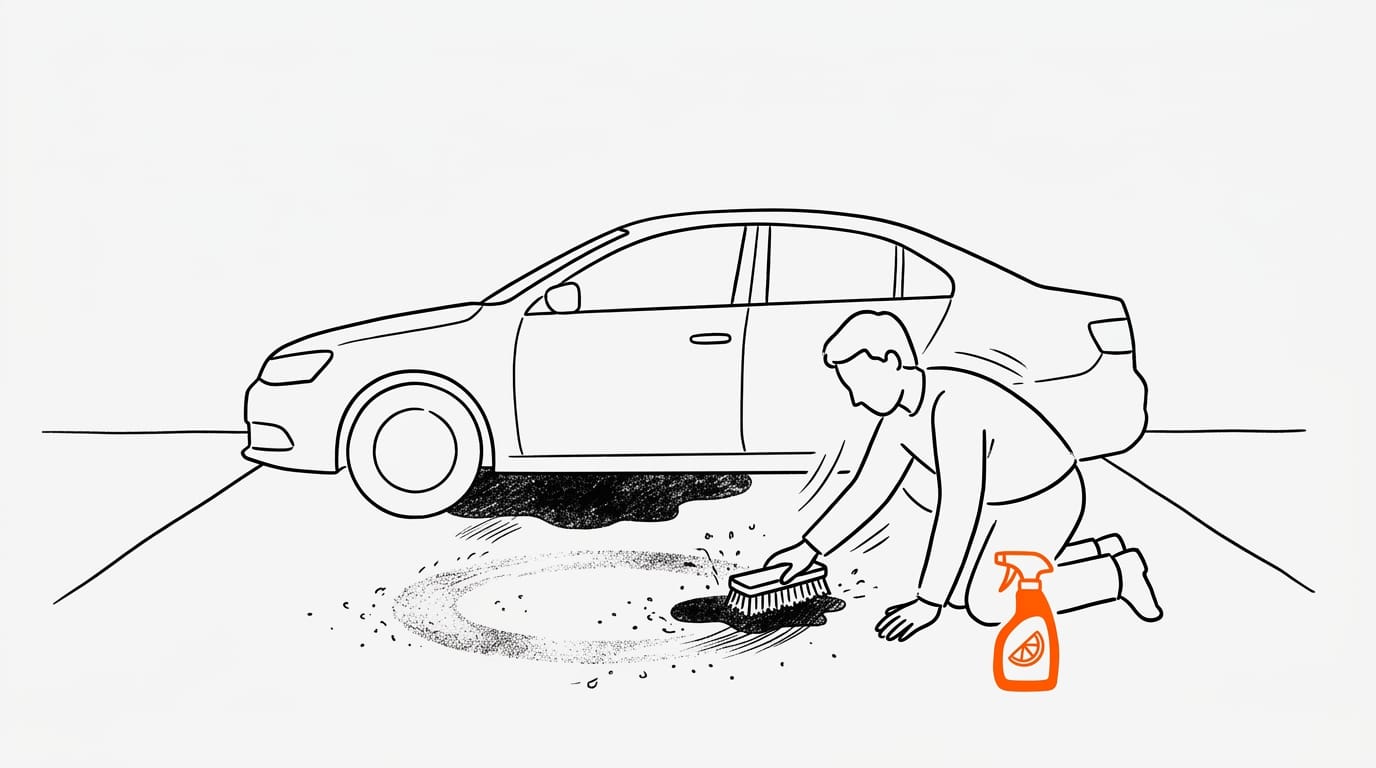
Work by blotting the excess: press the cloth onto the oil and lift it up. Wiping across the surface only smears the oil wider, so resist the urge to rub. For the mess itself, you’ve got two easy options:
- Paper towels for small drips and spots you can reach easily.
- A mop for larger puddles, where paper towels won’t keep up.
Sweep debris away before cleaning
Sweep away debris first. Leaves, grit, and loose dirt should go before any cleaner touches the oil, so you’re not grinding muck into the surface.
Hold off on the pressure washer for now, since blasting a fresh spill early can spread the oil across a wider patch. The broom goes first. The pressure washer can wait.
Soak up Oil with Absorbent Materials
Speed matters with oil, so soak it up before you try anything else. Here’s how to do that, from fresh spills to tougher marks:
Cat litter and other oil soakers
Picture a home cleaner who’s just spotted a drip under the car on the driveway. A bag of cheap cat litter from the utility room is the quickest fix, as long as you pick the non-clumping kind rather than the clumping one. Other oil soakers include:
- Cornstarch, cornmeal, or talc
- Sawdust, coconut husks, or gravel
- Commercial oil absorbers, if you’ve got some on hand
Cover the spill generously, leave it overnight, then sweep it up.
Sawdust and thinner paste for tough stains
Old stains that have soaked in need a stronger approach. Mix sawdust with thinner to make a paste, spread it over the stain, and let it sit for half an hour. This paste is suggested for tough old stains, not fresh spills.
Think of a tenant who inherits a years-old oil patch on a rented driveway: this paste gives them a practical place to start.
Cover the pile to keep pets away
Once the soaker is down, lay a towel over the pile. It deters pets and wildlife from wandering over while the soaker does its work. Easy to forget, so make it a habit.
Common Household Cleaners That Cut Grease
Before you reach for anything harsh, check what’s under your sink or in the laundry room. Several everyday cleaners cut through oil, and they’re a sensible place to start.
Try baking soda paste, then vinegar
Mix baking soda with a little water into a thick paste, spread it over the oil mark, and leave it for 20 to 30 minutes. Then scrub and rinse. Give the paste time to work rather than scrubbing harder.
Picture a homeowner who spots a drip under the car on their block paving. They mix a paste, leave it while they make a cup of tea, and save a trip to the shop.
If the mark is still there, vinegar is your backup. On asphalt, dilute it 1:1 with water first, then use it on the stain.
Dish soap and detergent you already own
Dish soap and heavy-duty liquid detergent are made to cut grease, so they’re a natural first pick. Picture a flatmate with engine oil on the drive and only the washing-up liquid to hand. Nothing new to buy.
Here are your options:
- Heavy-duty liquid detergent: work it neat into the stain with a stiff brush.
- Dish soap: use a squirt from the bottle already in your cupboard.
- Powdered laundry detergent paste: mix the powder with a little water until it thickens, then spread it over the mark.
- Warm water mixture: stir detergent into warm water and pour it over the stain.
Spray oven cleaner, wait, then scrub
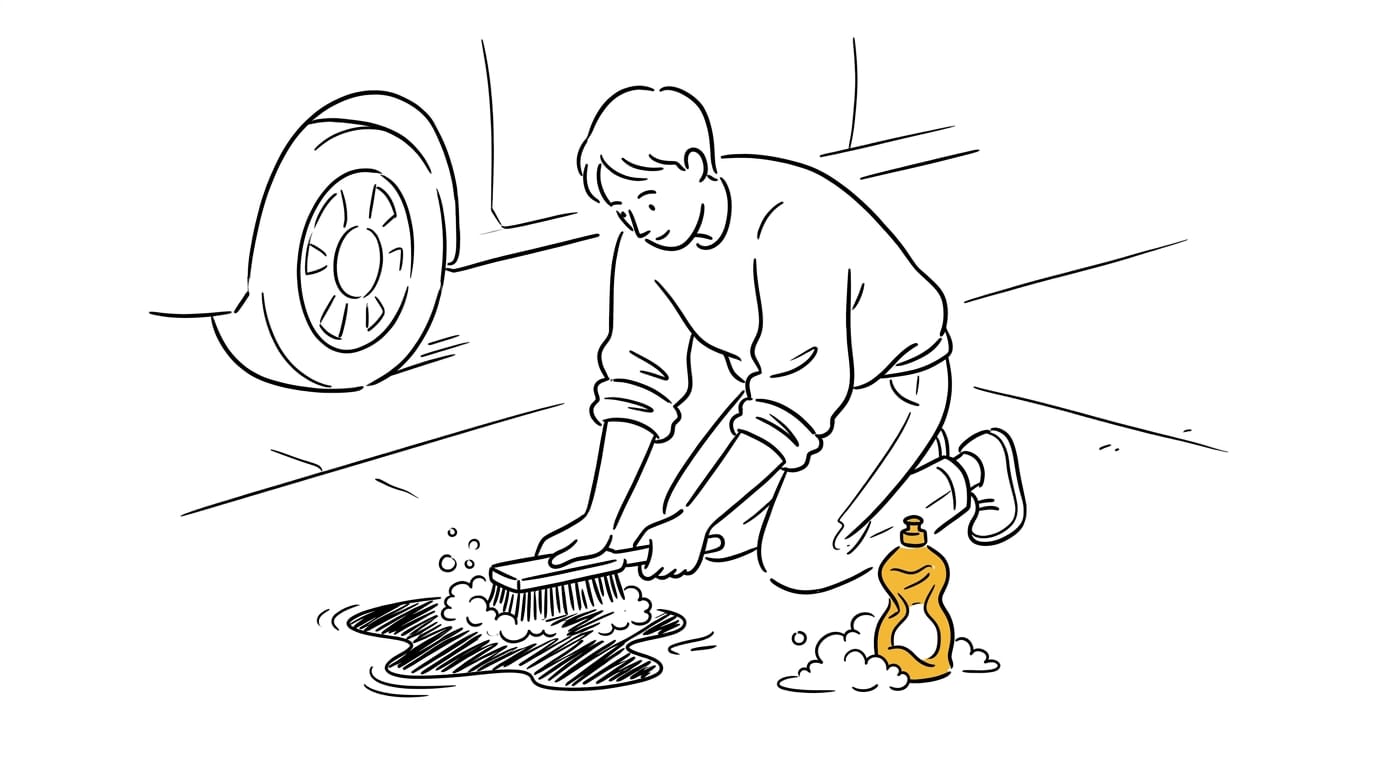
For a stubborn mark, oven cleaner is the next step up. Follow the label, then work through these steps:
- Spray the oven cleaner over the stain.
- Wait ten minutes rather than rushing to scrub.
- Scrub with a hard brush.
- Repeat as needed.
Other options like cola or degreasers
These are options to try before you buy anything, not a shopping list.
- Cola: pour a little over the stain and let its fizzing action work.
- Boiling water over baking soda: sprinkle baking soda over the mark, then carefully pour boiling water on it.
- Commercial degreasers or cleaners: reach for one if the household options don’t shift the stain.
Scrub, Rinse, and Repeat If Needed
Once the oil has loosened, the job is getting it off the surface for good. Work through these steps in order, and only reach for a pressure washer if the simpler methods fall short.
Pick the right brush and scrub
For concrete and block paving, use a stiff bristle brush. On asphalt, a wire brush suits the surface better. Picture a homeowner with a dark patch by the garage door: they scrub vigorously and can see the oil lifting as they go.
Keep your strokes firm rather than harsh, so you lift the oil without scratching the surface.
Rinse away soap and let it dry
Rinse the area thoroughly with a garden hose, then check that no soap residue is left behind. You want the surface clean, not just wet. Let it dry naturally, then take a fresh look.
If the stain remains, repeat the scrub and rinse as many times as it takes. Patience, not pressure, does the job.
Using a pressure washer safely
If you reach for a pressure washer, keep these points in mind:
- Degreaser first. Apply a degreaser to the oil before you spray anything.
- Start low. Begin at low pressure rather than high, and only increase it if the stain won’t lift. Go gently.
- Watch the risk. Too much force can damage the surface, so treat the washer as a last resort.
- Test first. Try a small, hidden patch before you treat the whole drive.
Safety Tips and When to Hire Help
Oil and strong cleaners can harm your skin and your drains, so a little care goes a long way. Knowing when to call for help matters just as much.
Safety rules to follow while cleaning
Keep these in mind before you start:
- Don’t mix cleaners. Two products can react in ways the label never warned you about, so use one at a time and rinse the area well before trying another.
- Wear protective gear. Pull on gloves and eye protection before you start, especially when you’re scrubbing.
- Follow manufacturer instructions. Read the label before you start, not halfway through the job, then follow the dilution, wait time, and rinse steps exactly as printed.
- Runoff and drain protection. Dirty water carries oil toward drains and the street, so cover nearby drains and keep the rinse water away from them.
- Wash oily clothes separately afterwards. Oily work clothes and rags belong in their own wash, away from the rest of the laundry.
Think of a weekend cleaner who scrubs a drive barehanded, then tosses the oily rag in with the family laundry. Gloves and a separate wash would have spared their hands and the rest of the laundry. Safety first, every time. If oil has already reached your laundry, the next step is learning how to get oil stains out of clothes.
When to hire a cleaning service
Some jobs are better left to the pros. If the stain is large, has soaked deep into the surface, or hasn’t budged after a careful try, it’s time to call a specialist.
A full-service driveway cleaning means a company takes on the whole job, so you don’t have to handle the chemicals, the scrubbing, or the runoff yourself. Picture a homeowner with an old oil patch that’s been baking into the drive for months.
After a tough afternoon of scrubbing, the mark is still there, so they book a professional and get their weekend back.
Getting Rid of Other Driveway Stains
Not every mark on the drive is oil, so we’ll match the method to the stain you’re dealing with.
What causes orange spots on my driveway?
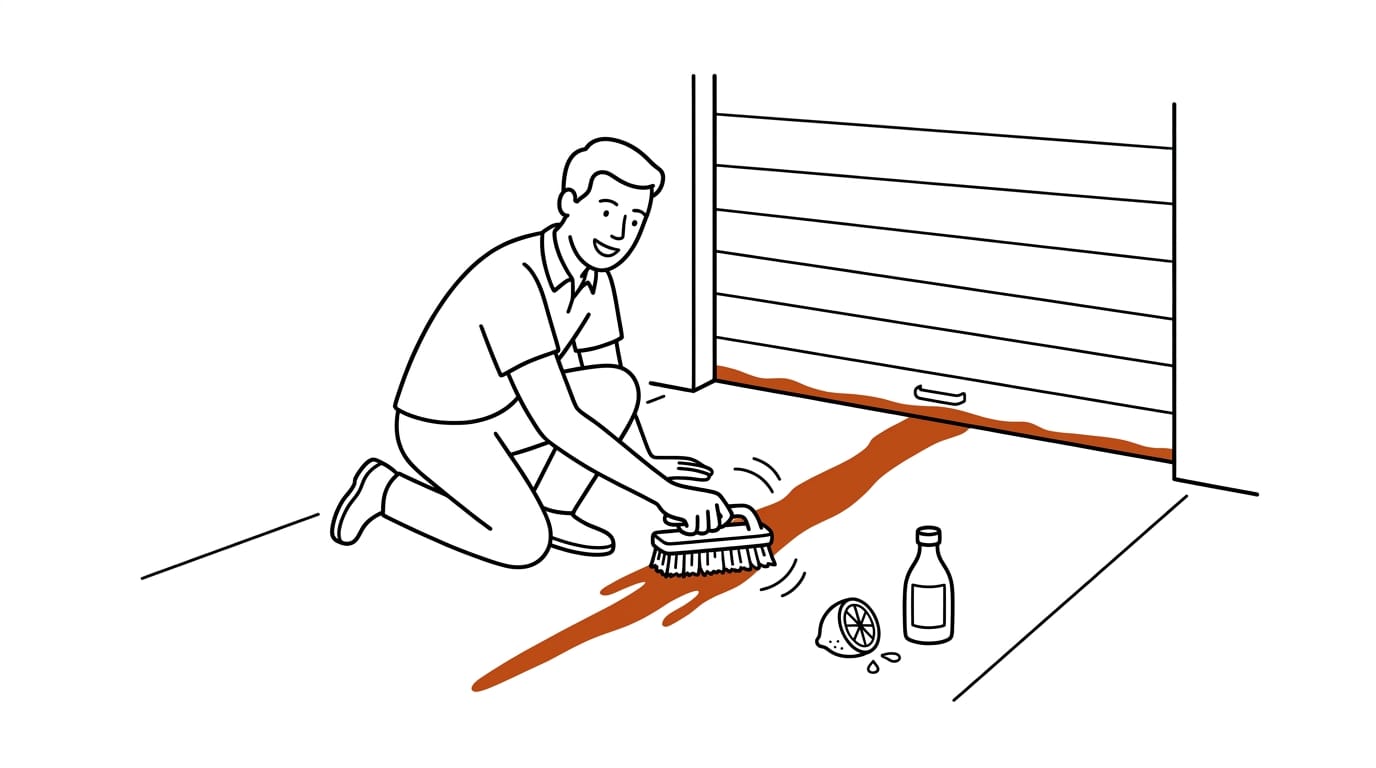
Orange spots are usually rust, which forms when iron in or on the surface reacts with water and air. Try the cupboard first:
- Lemon juice or vinegar: Mild acids you probably already have. Apply, scrub, and rinse.
- Oxalic acid removers: Stronger shop-bought products made for rust. Save them for stubborn spots, and wear protective gloves when you use them.
Think of a homeowner with a rusty streak below the garage door. A squeeze of lemon and a stiff brush may be enough, saving a trip to the shop.
Lift fresh and dried paint spots
Fresh paint is about speed, while dried paint is about the right product. Blot wet paint with a cloth rather than rubbing, since rubbing tends to spread it.
Once it’s dry, a paint stripper suited to your surface will do the job, but check the label and test a small corner first. A power washer is a second option for dried spots, and it’s best aimed at a test patch before you go wider.
Chalk is the easy exception: plain water and a stiff brush usually lift it, so try those first.
Clean pet stains and their odor
Pet messes leave a smell as well as a mark. Enzymatic cleaners break down the organic matter behind that smell, so they tackle the source, not just the odor. For a cupboard option, mix baking soda and vinegar, work it into the spot, and rinse.
Then treat the smell as its own job: once the spot dries, check it, and repeat if you can still catch it.
Consider a pet owner who keeps a jar of the mix by the back door, so an accident on the drive gets dealt with in minutes instead of lingering for days.
Let leaf stains soak before scrubbing
Leaves stain as they break down, a process called organic decay, and it leaves brown or dark marks. The fix is patience. Apply vinegar or a squirt of dish soap, and let it sit for hours before you scrub.
Soak first, then scrub, because scrubbing too early tends to smear the stain across the surface. Let the solution do the hard work.
Preventing Stains with Sealing and Upkeep
The best oil stain is the one that never sets in. A good seal and a few simple habits do most of the heavy lifting, so you spend less time scrubbing later.
Protect the surface with sealcoat
A sealcoat is a protective layer over your driveway’s surface. It gives spills a barrier to sit on, so you can wipe them up before they soak in. That’s prevention rather than cleanup, and it’s the easiest win you’ll get.
Sealers come in two types:
- Water-based sealers are easier for home cleaners to handle, with simpler cleanup.
- Solvent-based sealers are the heavier-duty option, but they need more care with fumes, so open a window and read the label first.
Sealcoat doesn’t last forever. Reapply it on the schedule given on the product label, and check for worn patches where cars park or turn so the barrier stays intact.
Everyday habits that keep oil off
Small routines make a big difference:
- Regular cleaning. Sweep and rinse the drive often so grime doesn’t build up and trap oil against the surface.
- Fix vehicle leaks. A small drip today becomes a big stain next month, so get any leak checked and repaired promptly.
- Mats or trays under cars. A drip tray or mat catches oil before it reaches the concrete.
Consider a parent who slides a drip tray under the family car every evening. When a few drops of oil appear, the tray catches them and the driveway stays clean. Less scrubbing, every time.
Oil on the driveway doesn’t have to mean a ruined surface. Act quickly, match your method to whether you’re working on concrete, block paving, or asphalt, and start with the gentlest option in your cupboard before reaching for anything stronger.
Keep the surface sealed and check for leaks, and you’ll spend far less time scrubbing next time. A clean drive starts with one fast, careful step.
Questions
What causes orange spots on my driveway?
Orange spots on a driveway are usually rust. Rust forms when iron in or on the surface reacts with water and air; rusty tools, bike parts, or bins can leave orange-brown marks, especially after rain.
Do oil stains eventually come out of concrete?
Yes, many oil stains can be lifted from concrete, especially if you treat them quickly, but they usually need cleaning rather than fading on their own. Because concrete is porous, oil soaks in over time, so older stains are harder to remove and may not fully disappear.
More in Laundry
- How to Get Mustard Out of Clothes Fast, Step by StepHow to get mustard out of clothes: blot before rinsing, then use cupboard staples in the right order to lift yellow stains without special products.
- How to Wash a Backpack by Fabric TypeHow to wash a backpack safely: choose machine or hand cleaning by material, remove stains and smells, then dry it without damaging the fabric.
- How to Wash a Carhartt Jacket and Keep It Water-ResistantHow to wash a Carhartt jacket without ruining its finish: check the shell, remove stains, choose safe washer settings, and dry it to avoid shrinkage.
Stain Finder: a free stain removal guide
Find your stain