- Check
- Dab
- WashLabel
- Check
Baking Soda to Whiten Laundry: What Really Works
Baking soda to whiten laundry can lift some dinginess, but won't replace detergent. See when vinegar helps and how to use a stain-first method.

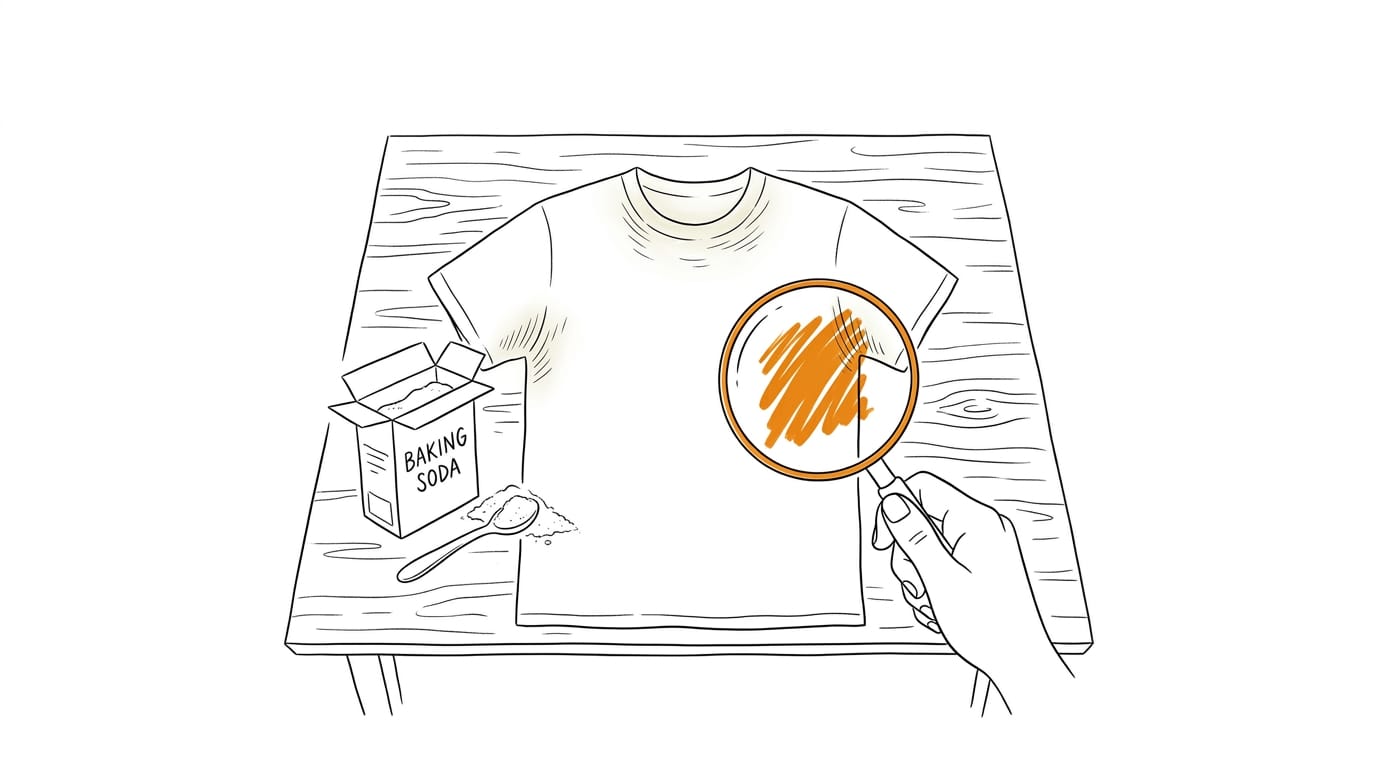
Baking soda can freshen laundry and help lift some everyday dinginess, but it is not a true whitener or a replacement for detergent. Treat fresh stains with detergent, wash whites according to their care labels, and use oxygen bleach when they need more whitening; adding baking soda or vinegar routinely can interfere with detergent or affect delicate fabrics and dyes.
Can a box of baking soda really bring back the brightness in your whites? Think of a tea towel that’s gone dull after many washes: it’s rarely ruined, just tired.
Here’s the plain answer: baking soda can help freshen and lift some dinginess, but it isn’t a magic whitener, and it won’t replace your detergent.
We’ll look at when it helps, when it backfires, and how it compares, then share a stain-first method for whites using cupboard basics.
Baking Soda to Whiten Laundry or Detergent
Baking soda is a handy cupboard basic, but it’s a helper, not a replacement, for detergent. Here’s where it falls short.
Where home remedies fall short of detergent
- Not a substitute. It can’t stand in for detergent.
- Adds time and cost. Extra scoops and pre-soaks add steps without doing detergent’s job.
- Outdated for modern machines. Many baking soda tricks date from older machines and formulas.
- Stain removal needs detergent action. Lifting grease and dirt takes detergent’s cleaning power.
What detergent handles that baking soda cannot
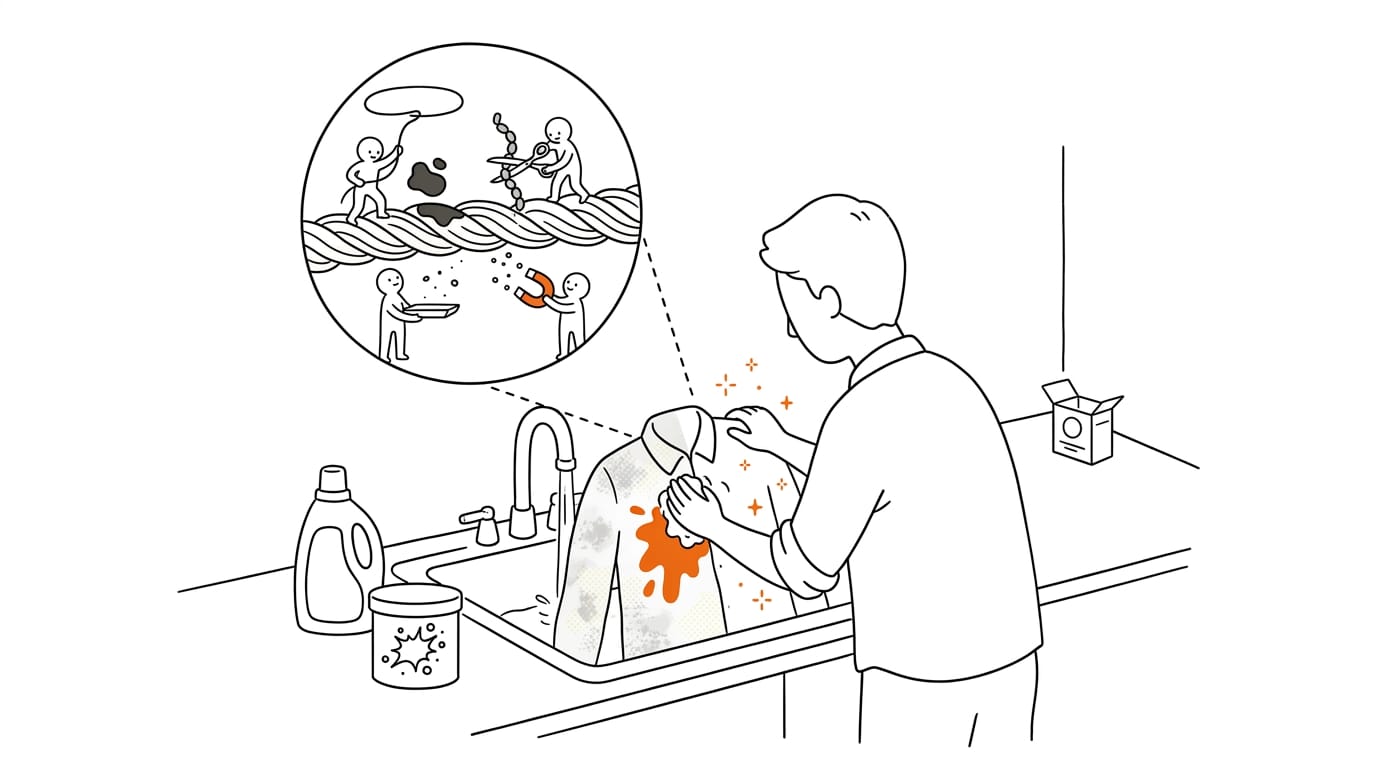
Detergent’s a team of ingredients, each with a job:
- Surfactants lift oil and dirt off fibers, so grease comes out.
- Enzymes break down protein and starch stains, like gravy.
- Polymers keep loosened dirt suspended, preventing soil redeposition (dirt resettling on fabric).
- Chelants bind hard-water minerals that dull whites.
Together they give you whitening, brightening, odor removal, and cold-water cleaning. Baking soda can’t match that range.
Whites turn grey or yellow from buildup: body oils, sweat, and dirt clinging to fibers wash after wash. Think of a parent with a white school shirt and a gravy splash.
A quick dab of detergent and a normal wash lift the grease, with no trip to the dry cleaner.
Here’s how to wash white shirts:
- Check the care label and sort whites from colors.
- Dab detergent on marks and rub gently before washing.
- Wash with regular detergent at a temperature the care label allows.
- If they still look dull, add an oxygen bleach (a whitener that releases oxygen to lift stains).
- Check for marks before drying, since heat sets what’s left.
Oxygen bleach is the better whitening alternative to baking soda.
Where Baking Soda and Vinegar Still Help
Baking soda and vinegar have real laundry jobs, just not the whitening one most people expect.
Small jobs they handle well
They shine on small, specific problems:
- Pretreating small stains: A quick dab before the wash lifts the mark while it’s still fresh.
- Light odor help: They can take the edge off a stale smell in a damp towel or a load.
- Vinegar’s acetic acid: Vinegar gets its punch from acetic acid, a mild acid that helps loosen some residues.
- Controlling overflowing suds: A splash of vinegar can help calm a washer that’s foaming over.
- Reviving aged linens: Tired sheets that have gone dingy in a cupboard can often be freshened up.
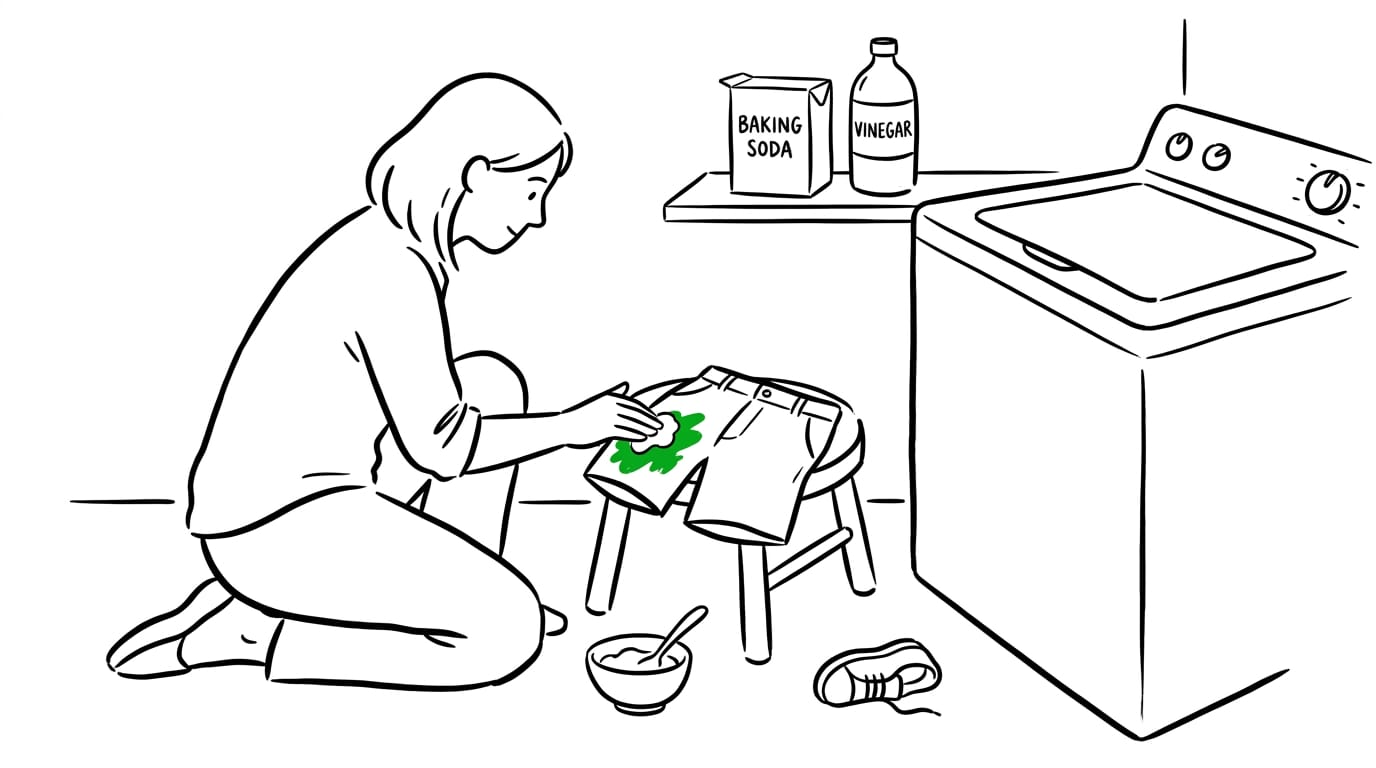
- Bicarbonate paste for small stains: Mix bicarbonate of soda (baking soda) with a little water until it forms a paste, then dab it onto the spot.
Think of a parent with a grass stain on white school shorts. A dab of bicarbonate paste before the wash saves them without a trip to the shop. Small job, big payoff.
Do baking soda and vinegar whiten clothes?
No, and mixing them won’t help. pH measures how acidic or alkaline something is. Baking soda sits at the high end of that scale and vinegar at the low end, so they neutralize each other and cancel out the high and low pH benefits you were after.
Mixing them is not a good idea, and you should never mix them in a sealed container.
Whitening a whole load is a different job. For that, hydrogen peroxide is the one to look at, and you should follow the soak time on its label rather than guessing.
When Adding Either to the Wash Backfires
Both products can help in the right situation, but used the wrong way, they can undercut your detergent or harm delicate fabrics.
How they can undercut your detergent
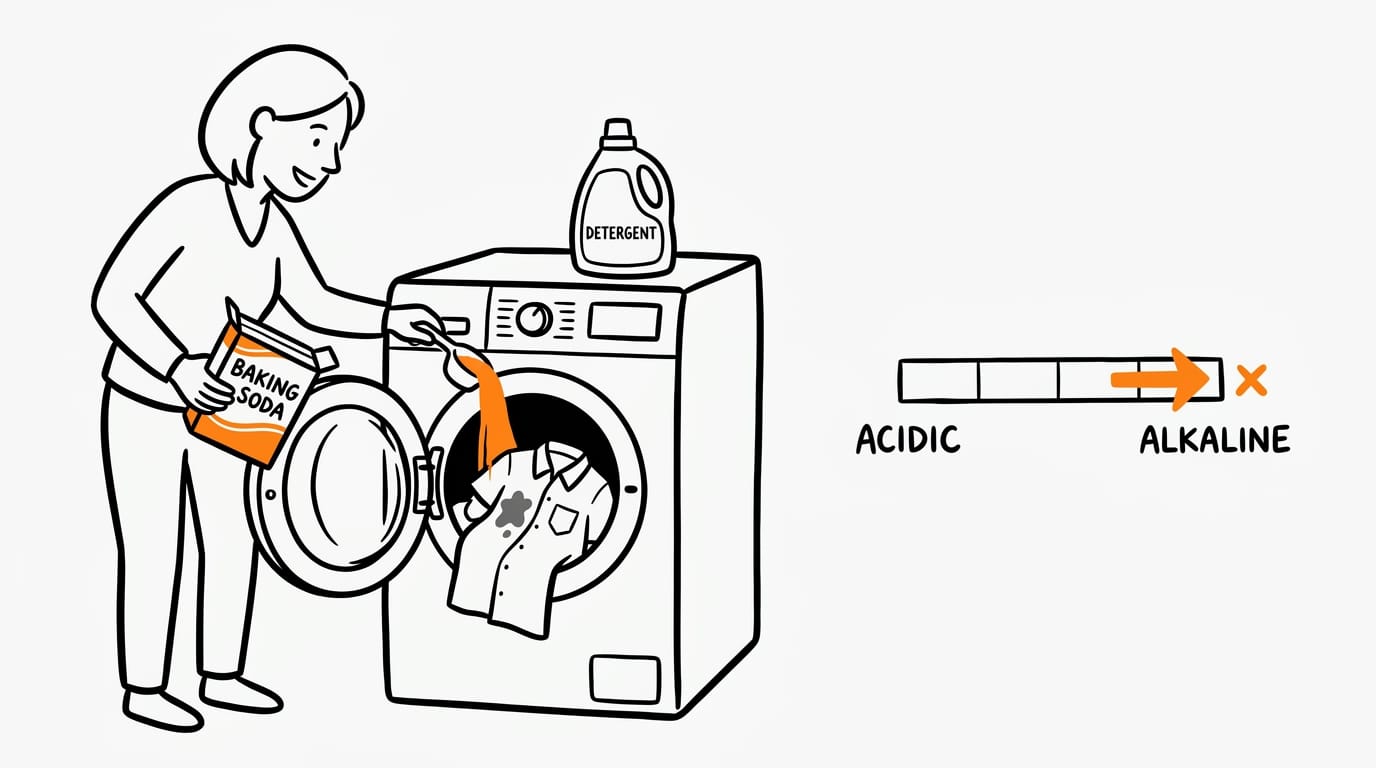
Most detergents work best at a specific pH, the scale that measures how acidic or alkaline a liquid is. Adding baking soda or vinegar shifts the pH of your wash water, so the detergent may not perform as designed. Washing soda is a different product that also shifts wash water pH, so it has its own guide.
Picture a parent who tips baking soda into every load on top of their usual detergent. The school shirts come out no brighter. Dropping the extra scoop lets the detergent work at the pH it was made for.
Two problems tend to follow:
- Poorer cleaning results. Soil may not come out as cleanly.
- Reduced removal of low-pH stains. Stains that need a low-pH treatment may not lift as well.
How baking soda harms fabric and color
Baking soda’s high pH can harm wool and silk. A study of acid and alkali treatments on fabrics found that alkali dissolved protein-based fabrics, the group that includes wool and silk.
The risks don’t stop there:
- Faded colors. Over time, colors can fade.
- Dye changes. pH-sensitive dyes can be affected.
- Hard water. In hard water, fiber breakage becomes more likely.
- Stiff rinses. Using it in the rinse can leave fabric feeling stiff.
Is it okay to soak clothes in vinegar?
Soaking in vinegar calls for caution. The real question isn’t whether it cleans, but what it does to the fabric. Vinegar’s low pH can weaken cellulose fibers, the plant-based fibers in cotton and linen.
A study comparing acid hydrolysis of cellulosic fibers found that fiber structure affects how susceptible each fiber is to acid. Work on black-dyed New Zealand flax suggests acidity may also alter pH-sensitive dyes.
A vinegar soak also needs five cups or more per load.
What it does to your washing machine
Your machine is usually the least of your worries. Baking soda is safe in both regular and high-efficiency (HE) machines. Think of a tenant who adds a little to a weekly wash in a shared laundry room: their machine keeps running as it should.
The question is less about what you add and more about how much. Moderate use isn’t harmful. Extreme use can affect the coatings on the drive shaft.
Baking soda is a handy helper for whites, not a miracle worker. Used with care and alongside your regular detergent, it can freshen a load and lift some everyday dinginess.
The biggest wins come from the same habits: treat a mark while it’s fresh, check the care label, and skip anything that might harm the fabric. Do that, and you’ll often save the shirt without a trip to the dry cleaner.
Your whites don’t need a miracle, just a little timing.
References
- Acid and alkali chemical treatments on synthetic and natural cellulosic, fibroin and keratin-based fabrics: study of structural changes — doi.org (2022)
- Acid hydrolysis of cellulosic fibres: Comparison of bleached kraft pulp, dissolving pulps and cotton textile cellulose — pubmed.ncbi.nlm.nih.gov (2015)
- Factors affecting the deterioration of the cellulosic fibres in black-dyed New Zealand flax ( phormium tenax ) — doi.org (1999)
Questions
How long to soak clothes in hydrogen peroxide?
Follow the hydrogen peroxide product label for its recommended soak time rather than guessing. Soak times vary by product and concentration.
How do I wash white shirts?
Check the care label and separate white shirts from colored laundry. Pretreat marks with detergent, wash with regular detergent at a label-safe temperature, and add oxygen bleach if the shirts still look dull. Check for remaining marks before drying, since heat can set them.
Is it okay to soak clothes in vinegar?
Vinegar soaks call for caution, especially with cotton and linen, whose plant-based fibers can be weakened by acidity. Vinegar may also affect pH-sensitive dyes, so follow the garment care label and avoid soaking delicate or dyed items.
Do baking soda and vinegar whiten clothes?
No. Baking soda and vinegar neutralize each other when mixed, so they do not whiten clothes; for a whole load, use an appropriate whitener such as oxygen bleach, following its label.
Sources
- Acid and alkali chemical treatments on synthetic and natural cellulosic, fibroin and keratin-based fabrics: study of structural changes, doi.org,
- Acid hydrolysis of cellulosic fibres: Comparison of bleached kraft pulp, dissolving pulps and cotton textile cellulose - PubMed, pubmed.ncbi.nlm.nih.gov,
- Factors affecting the deterioration of the cellulosic fibres in black-dyed New Zealand flax ( phormium tenax ), doi.org,
More in Cleaning Products
- Baking Soda Smell Removal: How It Works and Where It StopsBaking soda smell removal can freshen bins and gym bags, but it won’t fix the source. Find where odors start and choose cupboard-first fixes that work.
- Clean Silver with Baking Soda: A Complete GuideClean silver with baking soda safely by matching the method to your piece, spotting when baking soda is the wrong choice, and preventing tarnish.
- How to Clean a Dishwasher with Vinegar, Start to FinishHow to clean a dishwasher with vinegar: prep the parts, follow the cleaning steps, then use baking soda and habits to keep sour smells from returning.
Stain Finder: a free stain removal guide
Find your stain